-
-
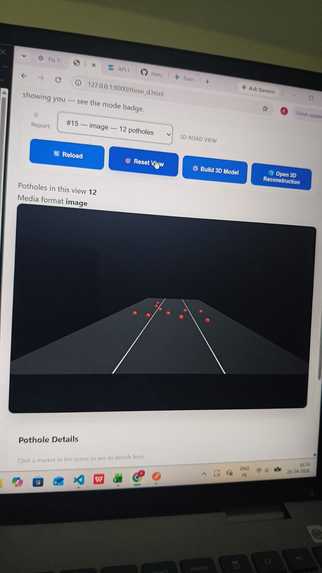
3d image
Inspiration
What it does
How we built it
Inspiration
Road damage, especially potholes, is a major problem that affects road safety, vehicle conditions, and everyday commuting. Manual road inspections can be time-consuming and may not identify damage quickly.
We were inspired to explore how Artificial Intelligence and computer vision could help identify potholes from road images and videos, making road monitoring more accessible and data-driven.
What it does
RoadGuard AI is an AI-powered road monitoring platform designed to detect potholes from uploaded road images and videos.
Key features include:
- AI Pothole Detection: Uses a YOLO-based object detection model to identify potholes in road media.
- Damage Analysis: Estimates pothole counts and provides severity information based on detection results.
- Location-Based Reporting: Stores available GPS coordinates and location details with road damage reports.
- Road Monitoring Dashboard: Allows users to view submitted reports and detection results.
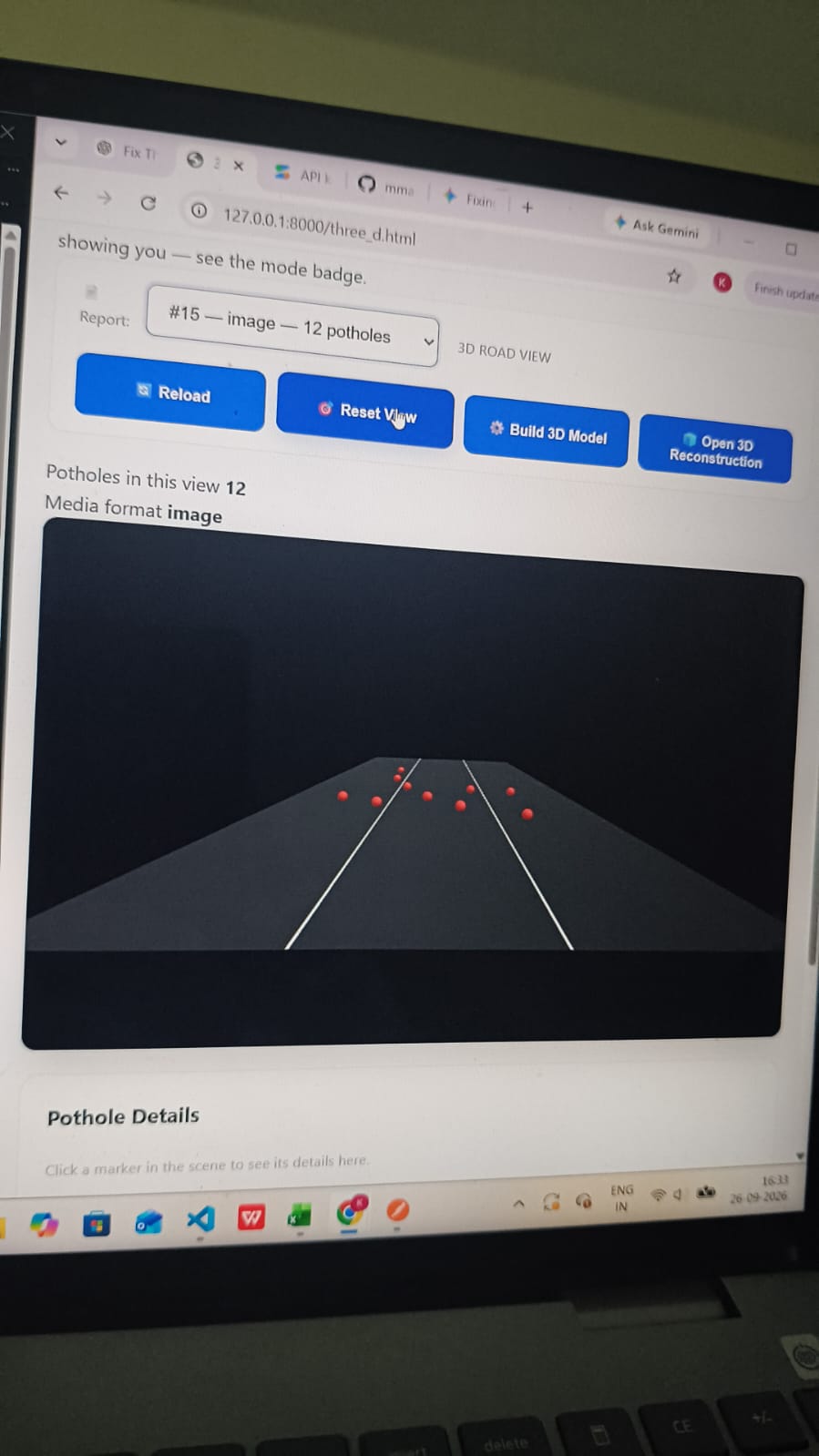
- 3D Road Visualization: Explores the use of uploaded road videos to generate a 3D representation of road conditions as a future development feature.
Our goal is to support smarter road maintenance and help authorities identify areas that may require inspection.
How we built it
We developed RoadGuard AI using Python and computer vision technologies.
The backend is built with FastAPI to handle media uploads, detection requests, and report management. A YOLO-based object detection model processes road images and videos to identify potholes. OpenCV supports image and video processing, while SQLAlchemy and SQLite are used to manage report information.
The application connects the detection system with a dashboard where users can access road damage reports, detection counts, severity information, and location details.
We are also exploring 3D road visualization and map-based reporting to extend the system beyond basic pothole detection.
Challenges we ran into
One of our main challenges was achieving reliable pothole detection in different road conditions. Shadows, water reflections, uneven surfaces, and other objects can sometimes cause incorrect detections.
We also faced challenges in maintaining consistent detection results across multiple video uploads and connecting the AI processing pipeline with the report management system.
Another challenge was exploring 3D road reconstruction from ordinary videos, which requires additional processing and validation.
These challenges helped us understand the importance of testing, model evaluation, and building reliable end-to-end applications.
Accomplishments that we're proud of
We are proud to have developed a working prototype that connects AI-based pothole detection with a road damage reporting system.
We integrated media uploading, object detection, backend APIs, and report storage into one application.
We are also proud of our progress in exploring location-based road monitoring and 3D visualization as ways to make road inspection more informative and accessible.
What we learned
Through this project, we learned how to integrate computer vision models with backend APIs and databases to build a practical AI application.
We gained experience with YOLO-based object detection, FastAPI, video processing, database management, and debugging real-world software issues.
Most importantly, we learned that building a useful AI solution involves more than training a model. It requires reliable data, careful testing, user-friendly design, and an understanding of the real-world problem.
Challenges we ran into
Accomplishments that we're proud of
What we learned
What's next for RoadGuard AI: AI-Based Pothole Detection & 3D Monitoring
Built With
- artificialintelligence
- computervision
- css
- fastapi
- html
- javascript
- opencv
- openstreetmap
- python
- sqlalchemy
- sqlite
- yolov8


Log in or sign up for Devpost to join the conversation.