-
-
Rice Doctor AI Logo
-
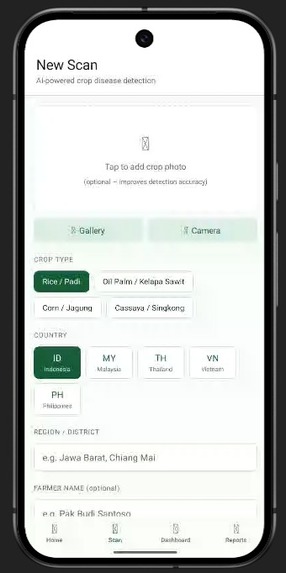
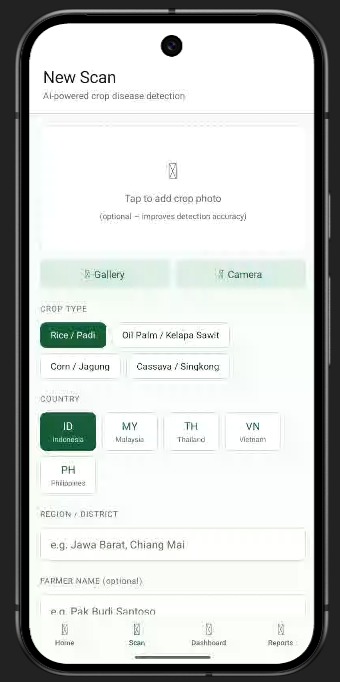
Dashboard Scan AI
-
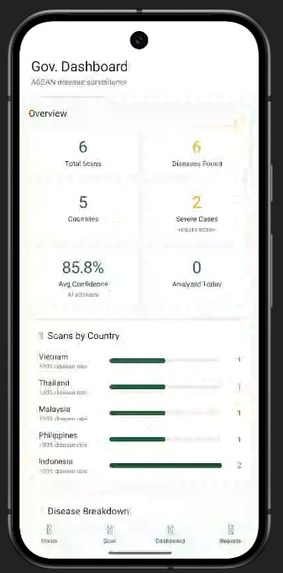
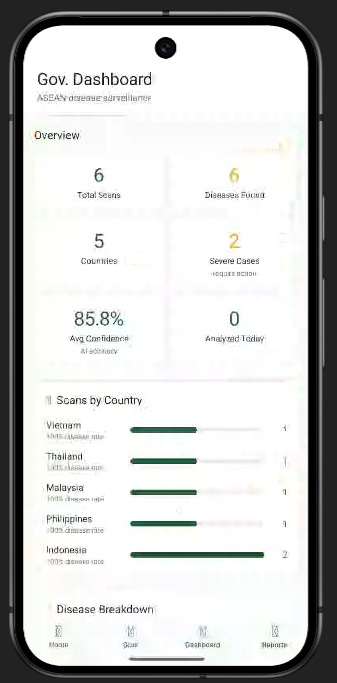
Gov Dashboard
-
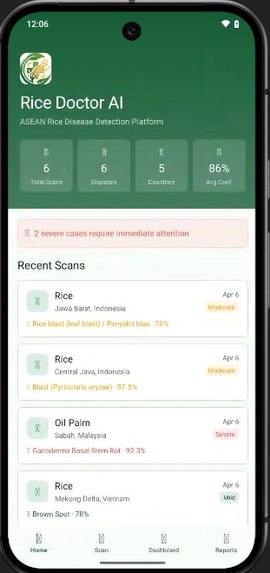
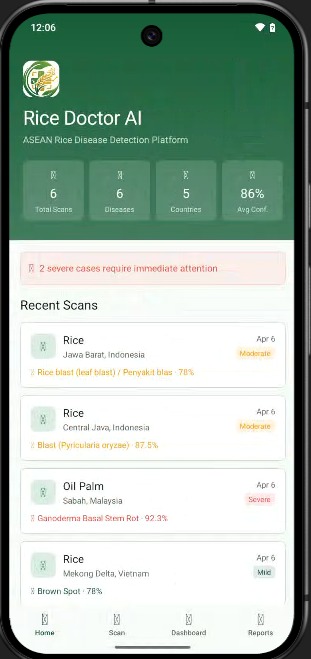
Dashboard Home
-
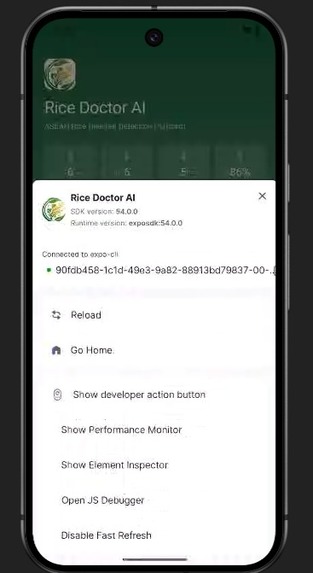
Dashboard About
-
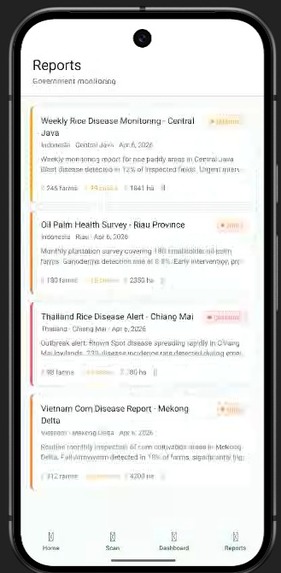
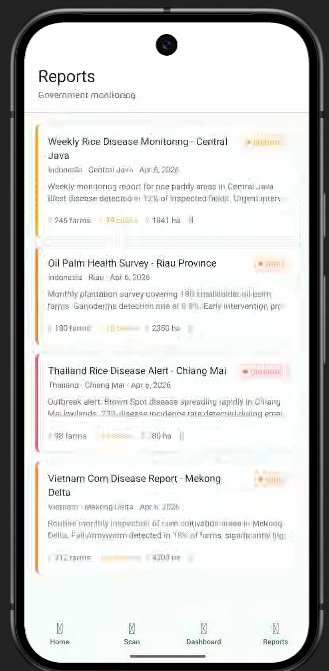
Reports Dashboard
Inspiration
The inspiration for this project comes from the crucial role of agriculture in the regional economy, particularly for farmers in Southeast Asia who face significant challenges with crop diseases. IT creators like the one behind this project have witnessed firsthand how these diseases can devastate entire harvests even before they are identified. The goal of Rice Doctor AI is to empower every farmer by providing a "digital pathologist" in their pocket. This initiative aims to bridge the gap between high-end AI research and rural fields, transforming reactive farming into a proactive, data-driven approach to crop protection.
What it does
ice Doctor AI is an AI-driven surveillance system designed to empower ASEAN agriculture. It functions as a digital pathologist in a farmer's pocket. The core of the system is its "AI Engine," which uses deep convolutional neural networks (CNNs) optimized for mobile. These models are trained to recognize specific pathology markers for crops like Rice, Oil Palm, and Corn. By making AI technology accessible in the field, it enables proactive crop protection.
How we built it
The project is built as a cross-platform ecosystem designed for high performance and low latency. It incorporates geospatial intelligence using GeoJSON data and real-time mapping, allowing the app to track the exact coordinates of every scan. The interface features a dark-mode "Vibe Coding" aesthetic, specifically designed for high visibility in bright outdoor sunlight. To ensure the reliability of the system and that only high-veracity data is acted upon (for instance, on a "Gov. Dashboard"), a confidence scoring mechanism was implemented to quantify detection reliability
Challenges we ran into
Several significant hurdles were encountered during development. Optimizing Large Language Models and Vision models to run efficiently on mobile hardware without draining the battery was a key challenge due to hardware constraints. Fine-tuning the model to maintain an 85.8% average confidence across the ASEAN landscape proved difficult due to data diversity, with different regions having varying lighting and soil conditions. Additionally, ensuring the backend could handle mapping requirements for thousands of concurrent users across regions with varying internet speeds presented infrastructure challenges.
Accomplishments that we're proud of
Although not explicitly listed in the provided paragraph, the project can likely point to achievements in rapid prototyping using "Vibe Coding," successful implementation of complex asynchronous data stream handling for syncing field scans from multiple countries, and the development of an explainable AI system that provides farmers with information beyond just a name, including severity and cures. The ability of the "Gov. Dashboard" to act on high-veracity data is another significant accomplishment.
What we learned
Developing this project demonstrated the value of "Vibe Coding" using natural language and AI-driven IDEs for enabling incredibly rapid prototyping. Valuable experience was gained in handling complex asynchronous data streams to sync field scans from multiple countries (Indonesia, Malaysia, Vietnam, etc.) into a single surveillance dashboard. Most importantly, it became clear that for AI to be truly useful in agriculture, it must be explainable providing farmers with not just a disease name, but also its severity and potential cures.
What's next for Rice Doctor AI
The ultimate goal is for Rice Doctor AI to evolve beyond simple disease detection. Future plans involve integrating predictive weather analytics to forecast disease outbreaks before they occur, using disease progress curve equations. This predictive capability will enable government bodies to issue "Critical Alerts" to specific districts, potentially saving millions in potential crop losses.
Built With
- centers-for-disease-control-(cdc)-content-syndication
- cnns
- confidence
- cross
- flutter
- geojson
- llms
- platform
- react
- scoring
- utilizing-geojson-for-regional-surveillance-and-replit-for-cloud-hosting.-by-combining-vibe-coding-speed-with-rigorous-confidence-scoring-math

Log in or sign up for Devpost to join the conversation.