Inspiration
What it does
How we built it
Challenges we ran into
Accomplishments that we're proud of
What we learned
What's next for RescueNet AI: Multi-Agent Disaster Response Coordinator
Inspiration
Natural disasters, accidents, medical emergencies, and resource shortages often create chaos because information is scattered and response teams struggle to coordinate quickly. We wanted to build a system that could intelligently connect emergency requests, volunteers, and available resources in real time. Our goal was to reduce response delays by using AI to automate decision-making and improve disaster response efficiency.
What it does
RescueNet AI is an AI-powered disaster response and emergency coordination platform.
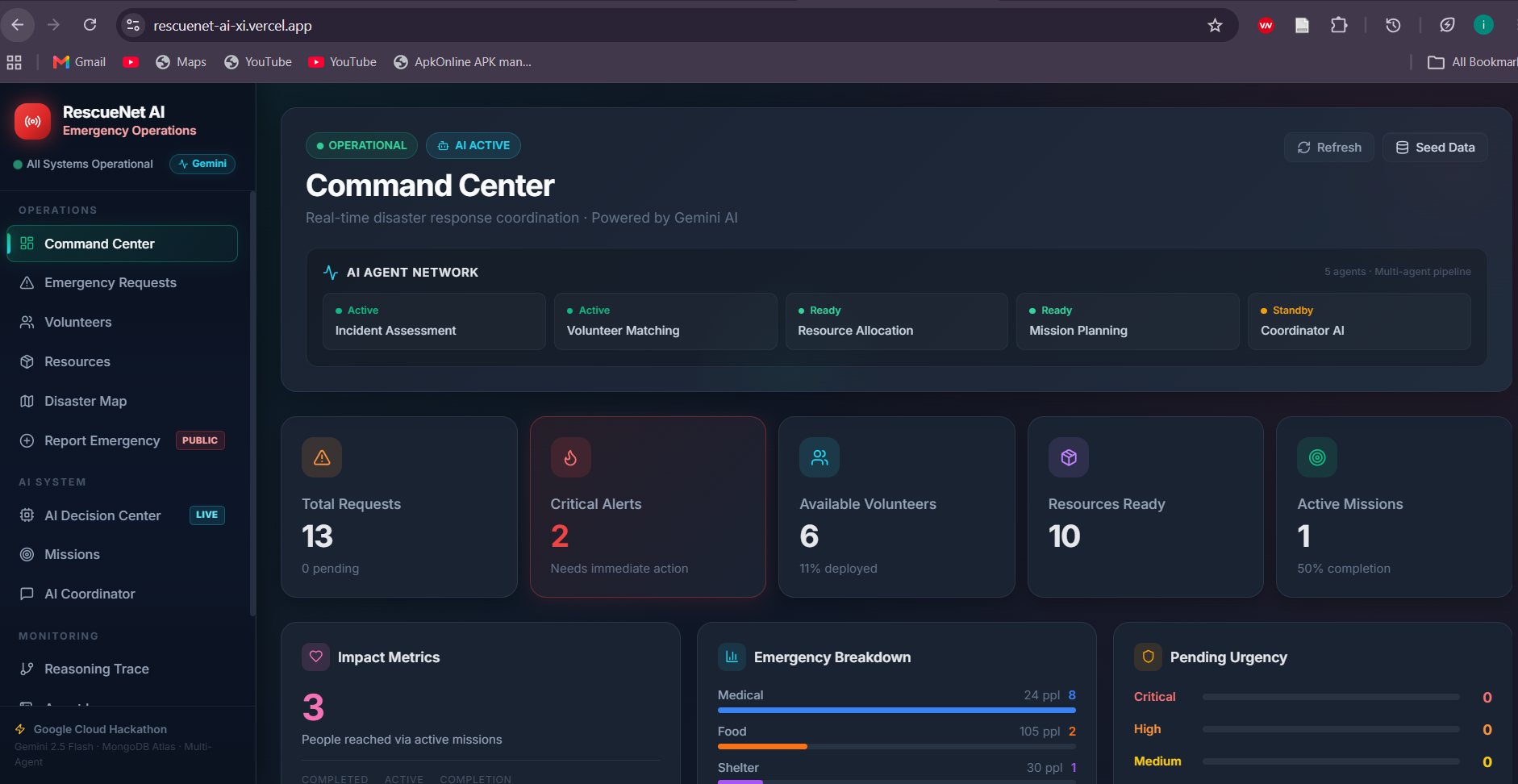
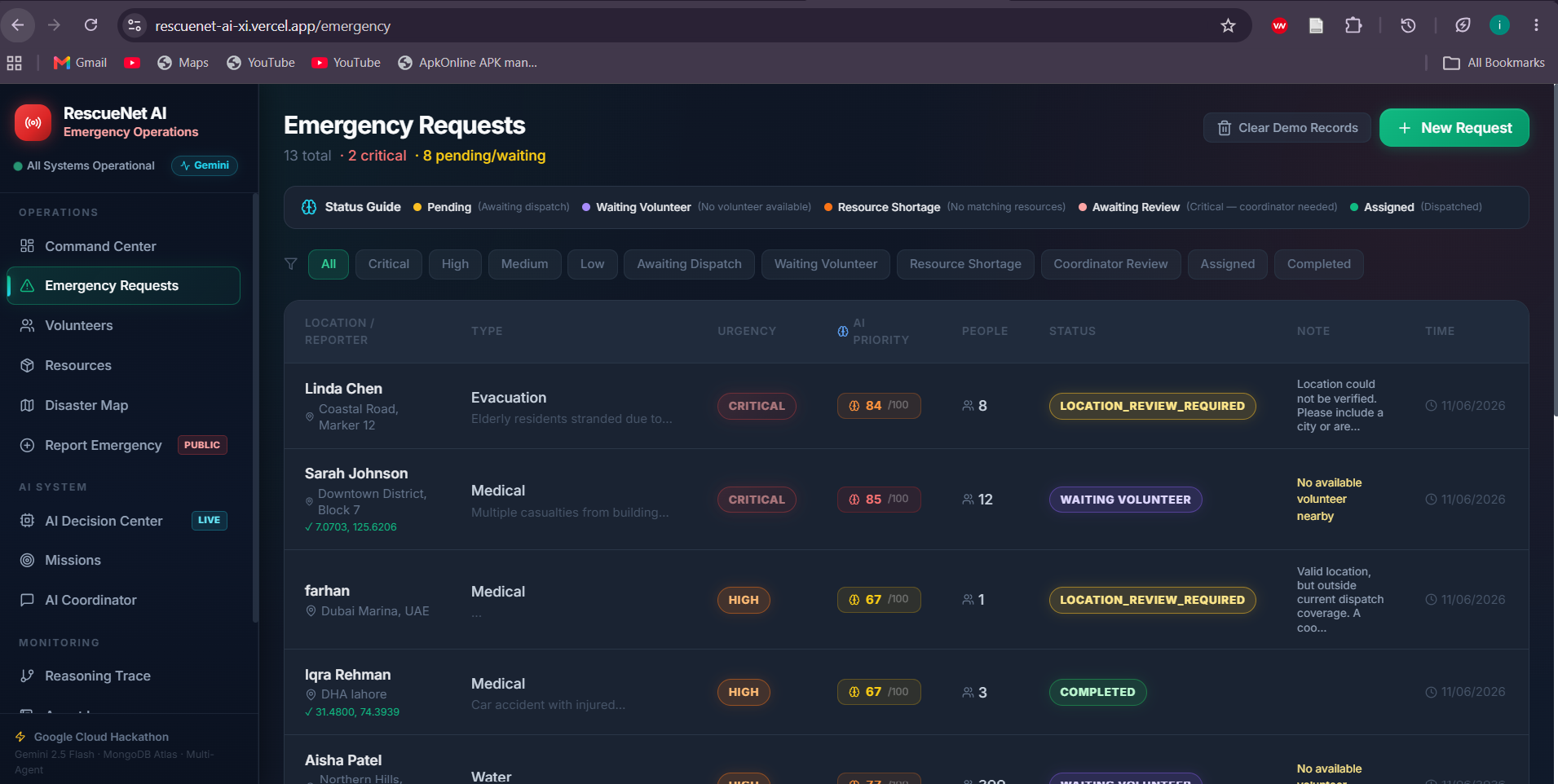
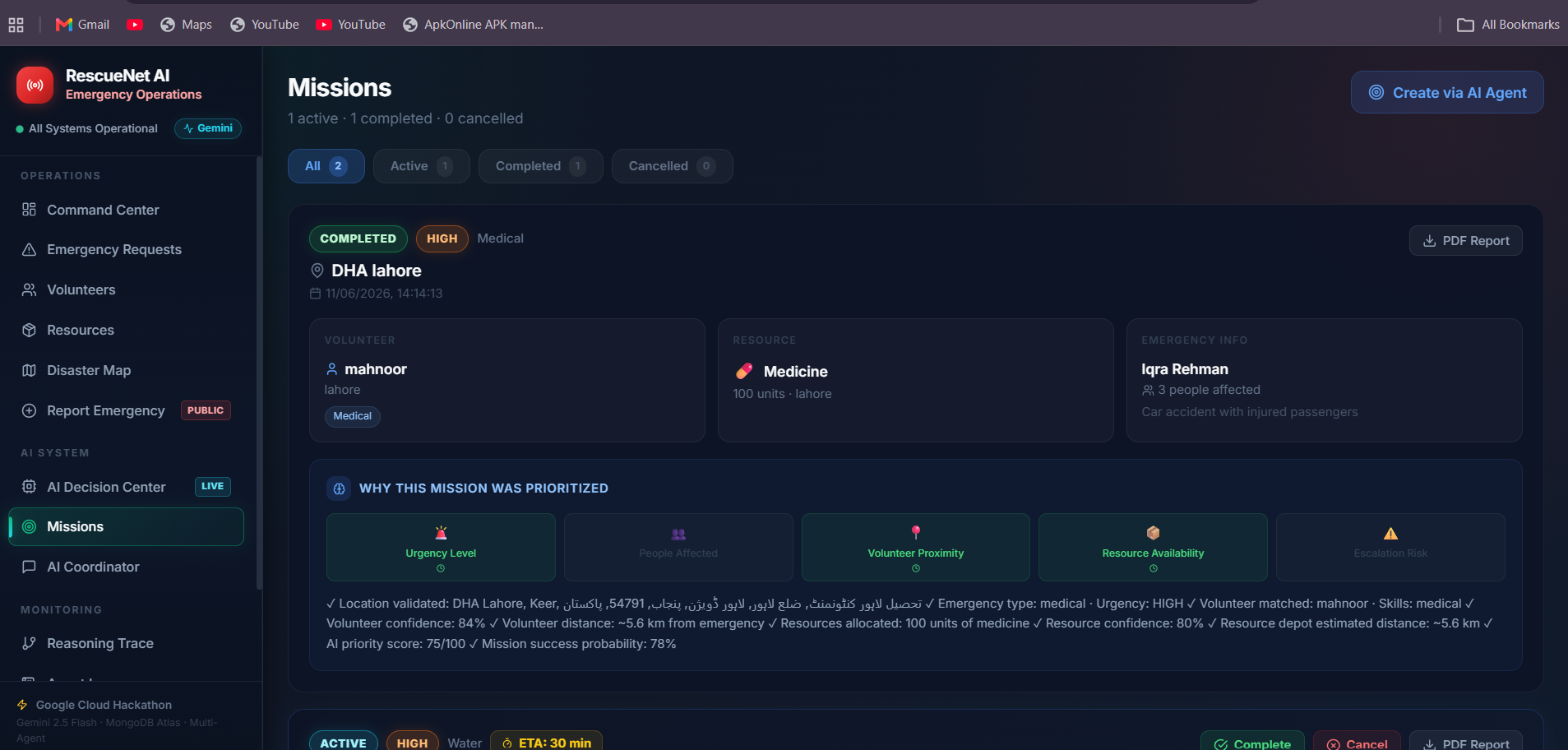
The system allows users to report emergencies, validates locations, prioritizes requests, matches available volunteers, allocates resources, and automatically generates response missions.
Key capabilities include:
- Emergency reporting and management
- AI-based priority scoring
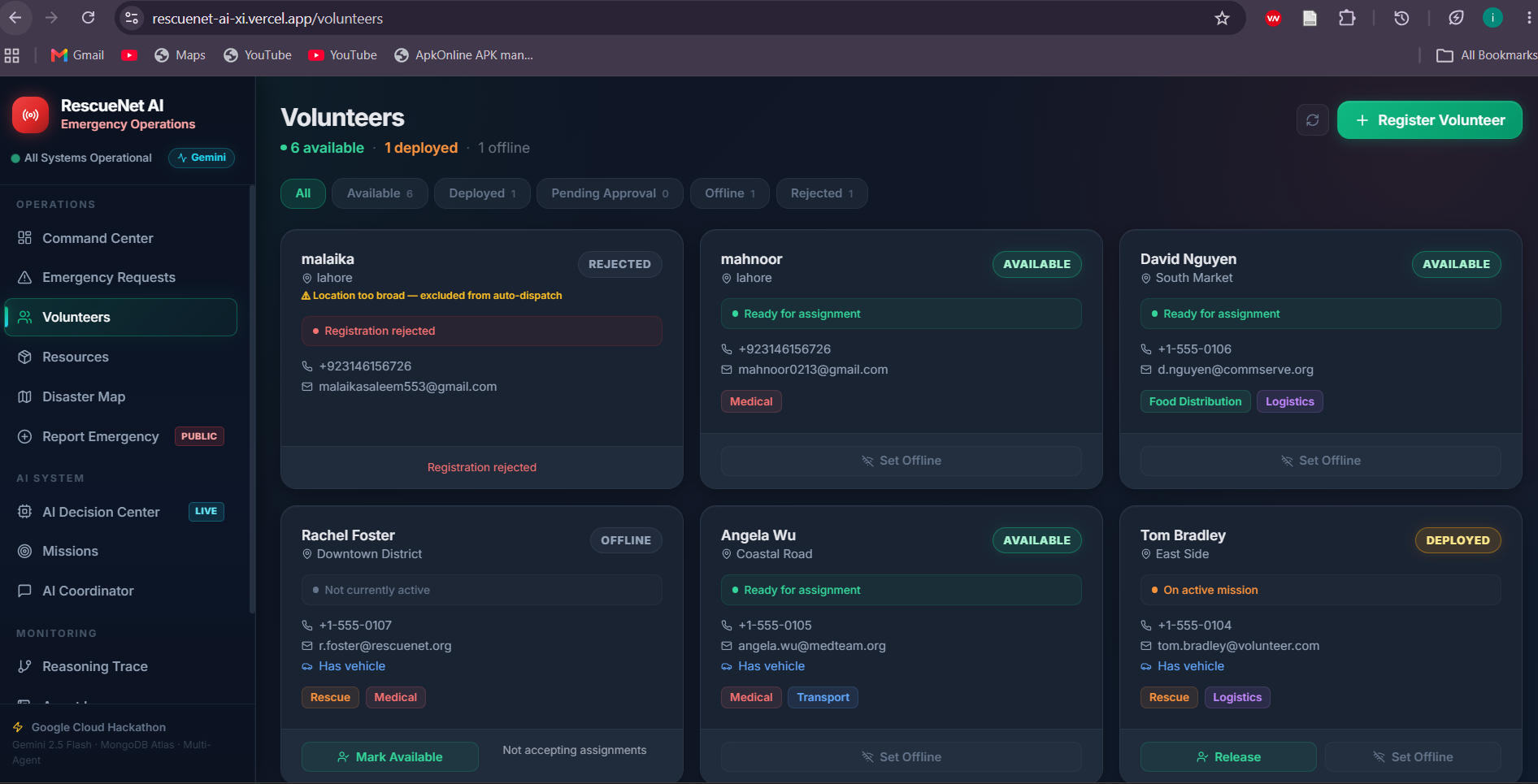
- Volunteer registration and approval
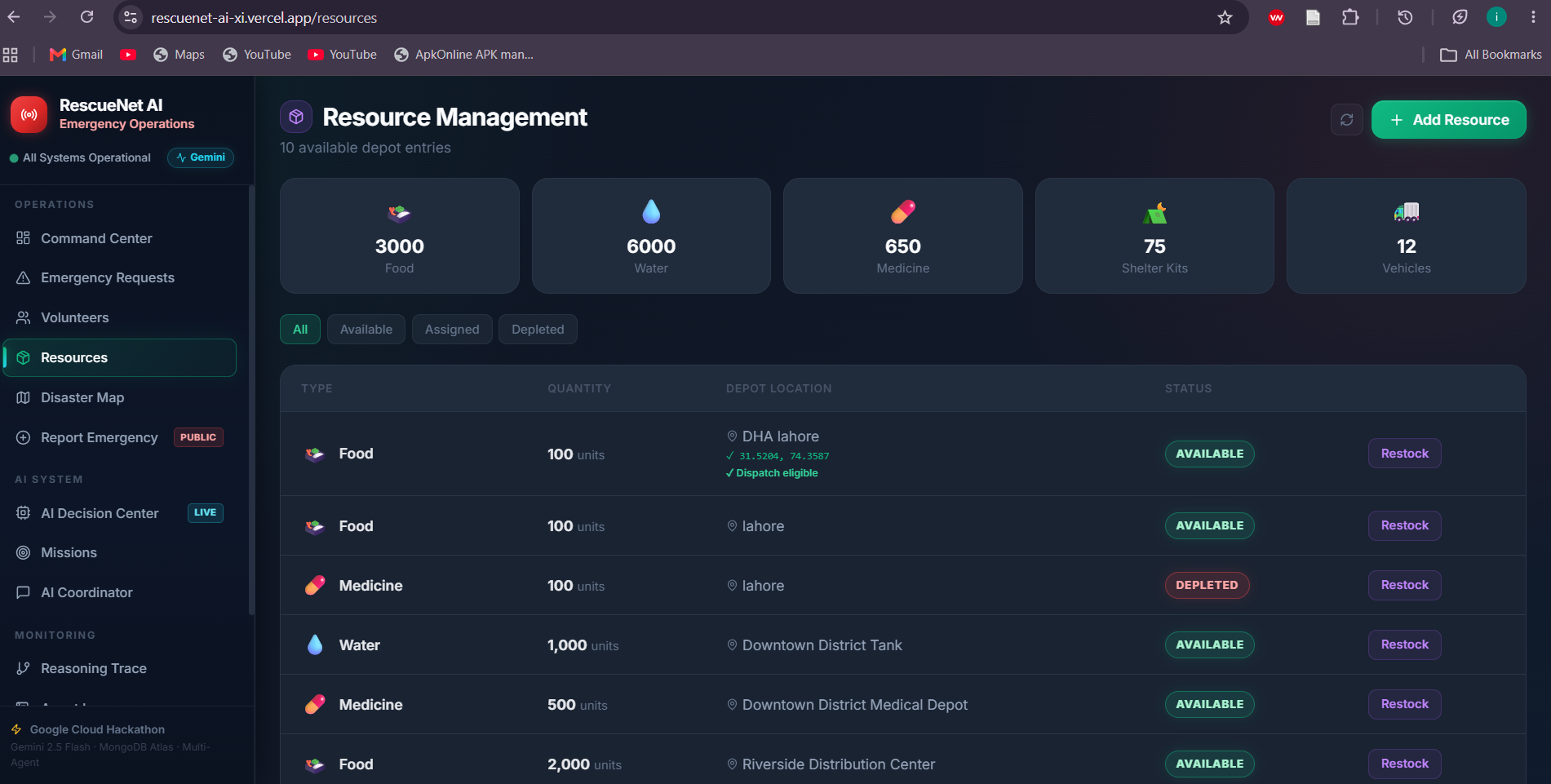
- Resource inventory management
- Distance-based volunteer matching
- Resource allocation based on proximity and availability
- Automated mission generation
- Real-time operational dashboard
- Location validation and geocoding
- Mission tracking and monitoring
How we built it
RescueNet AI was developed using:
- Google Gemini 2.5 Flash for AI-assisted decision making
- Google Cloud services
- MongoDB Atlas for cloud database management
- Next.js for the frontend and backend framework
- TypeScript for application development
- Tailwind CSS for the user interface
The platform uses validated geographic coordinates to ensure accurate dispatch decisions. Emergency requests, volunteers, and resource depots are matched using location data, availability, skills, urgency, and resource requirements.
Challenges we ran into
One of the biggest challenges was implementing reliable location validation. We needed to prevent broad or inaccurate locations from affecting dispatch decisions while still keeping the reporting process simple for users.
Another challenge was designing the matching workflow between emergencies, volunteers, and resources. We had to ensure that assignments considered both resource availability and geographic proximity rather than simple text matching.
We also faced challenges integrating AI-assisted prioritization while maintaining consistent system behavior when handling different emergency scenarios.
Accomplishments that we're proud of
- Built a complete end-to-end emergency coordination platform
- Integrated Google Gemini into the decision-making workflow
- Implemented distance-based dispatch logic
- Created automated mission generation
- Developed volunteer and resource management systems
- Added location validation to improve dispatch accuracy
- Designed a modern operational dashboard for emergency coordination
What we learned
Through this project we gained valuable experience working with AI-powered workflows, cloud databases, geolocation systems, resource allocation strategies, and emergency response management. We also learned how important data quality and location accuracy are when making automated operational decisions.
What's next for RescueNet AI
Future improvements include:
- SMS and email notifications
- Advanced disaster prediction models
- Mobile application support
- Multi-language support
- Real-time map visualization
- Enhanced analytics and reporting
- Expanded deployment for larger-scale disaster response operations
RescueNet AI demonstrates how AI, cloud technologies, and intelligent coordination systems can help emergency responders make faster and more informed decisions during critical situations.

Log in or sign up for Devpost to join the conversation.