Inspiration
During a disaster, emergency information arrives from multiple witnesses, and reports may conflict. Responders need to identify urgent cases, understand what is known, and determine which resources may be required. We built RescueMesh AI to reduce the time spent organizing scattered information and help emergency operators develop a clearer picture of a crisis.
What it does
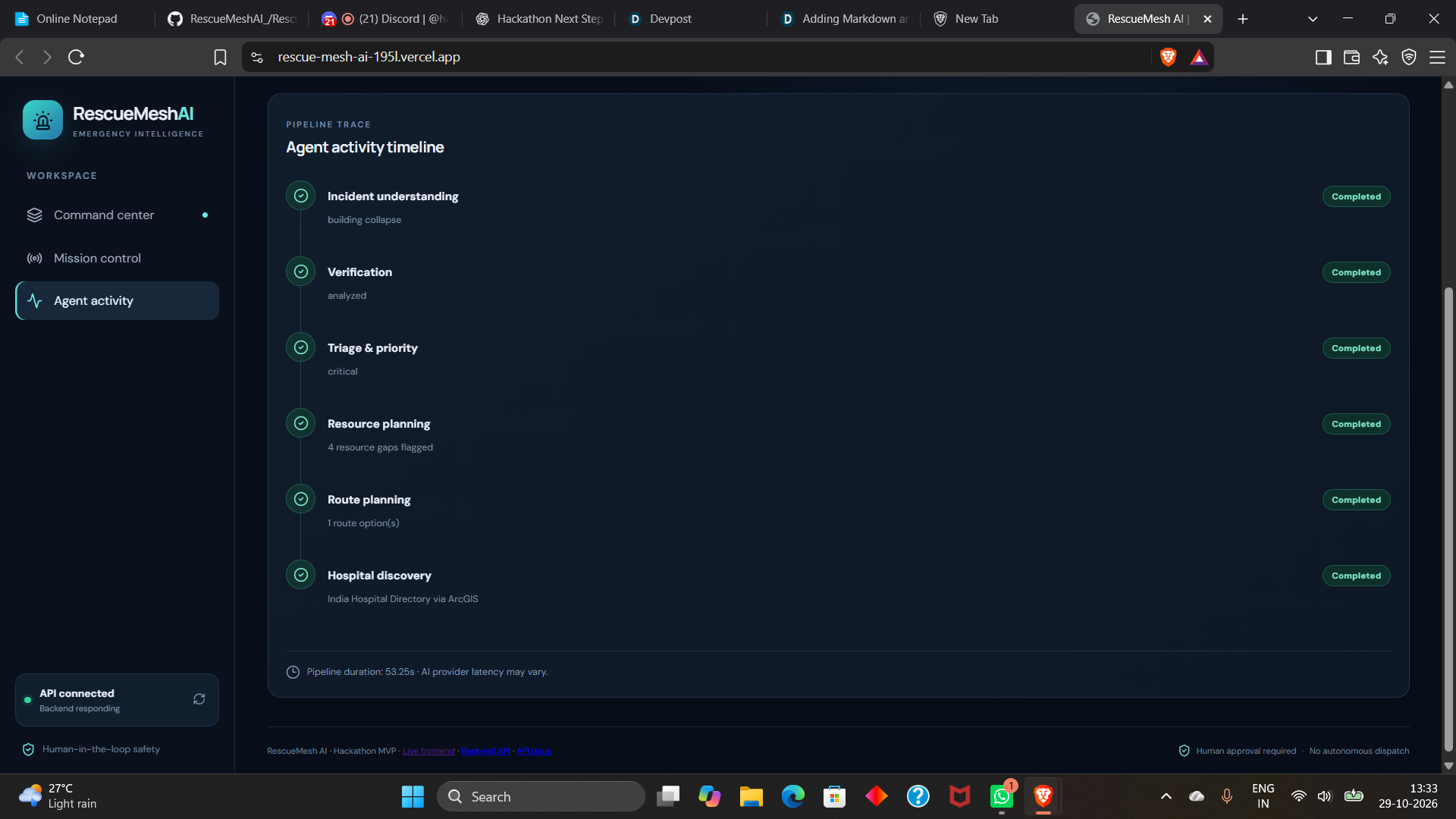
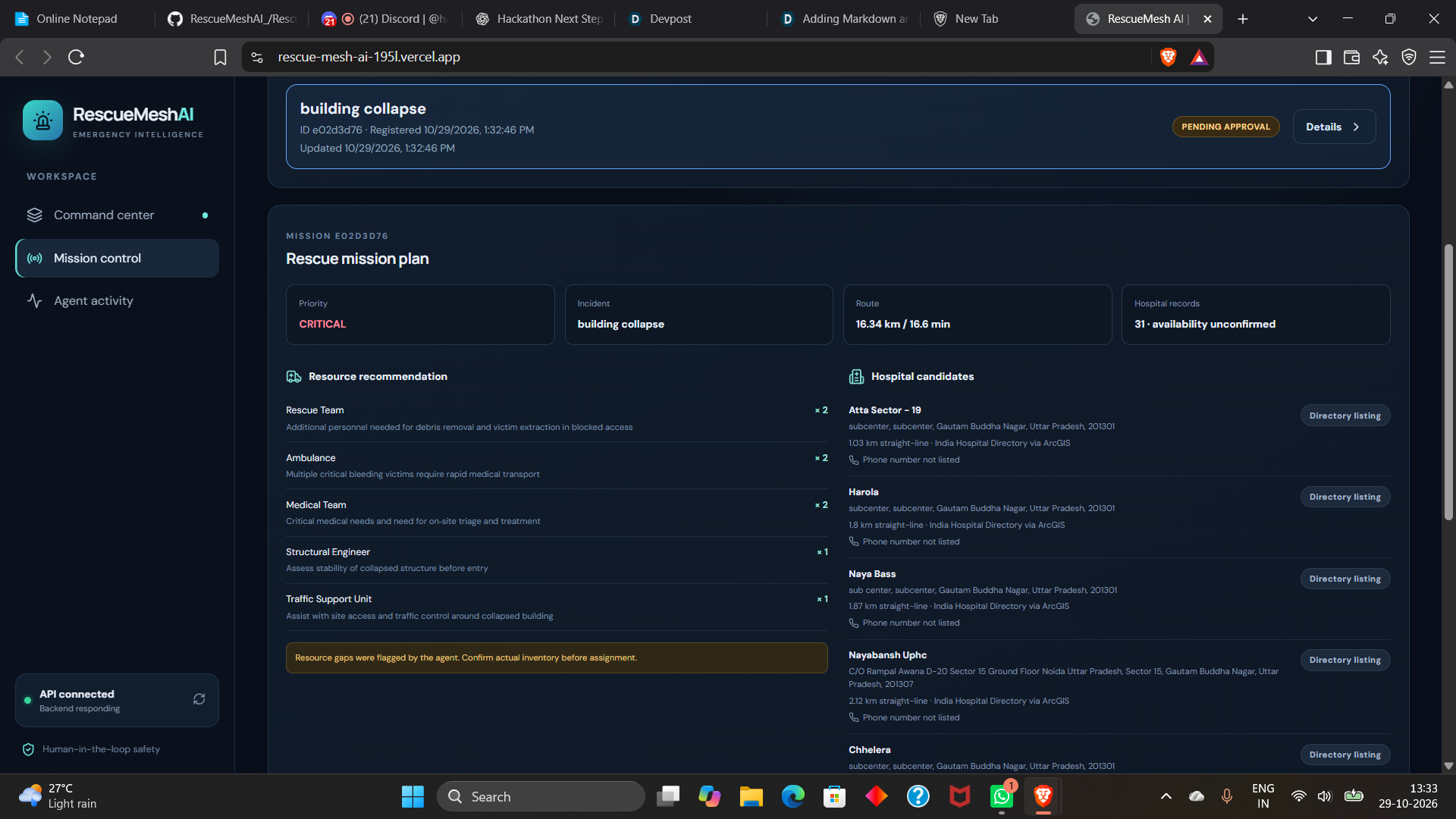
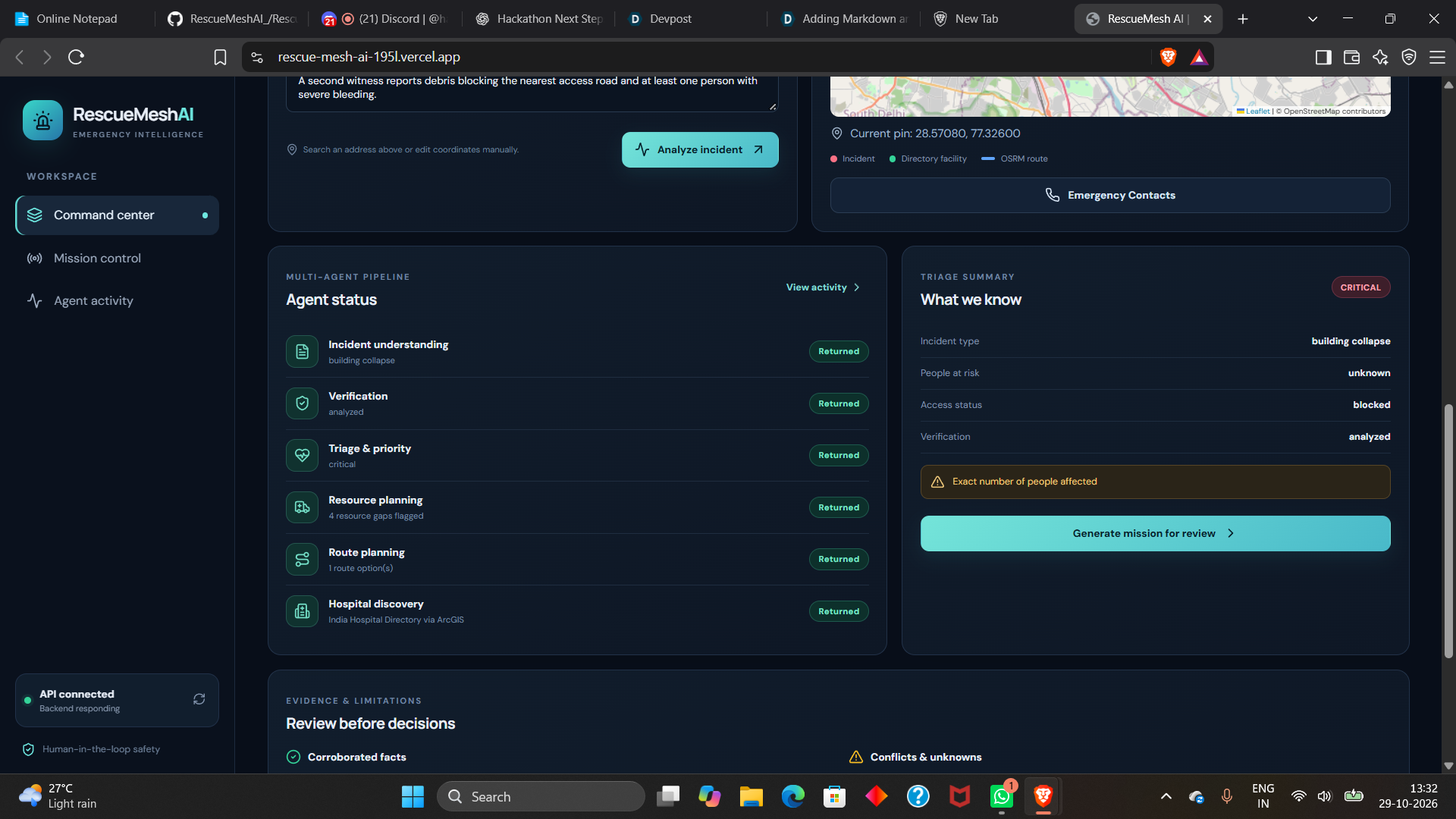
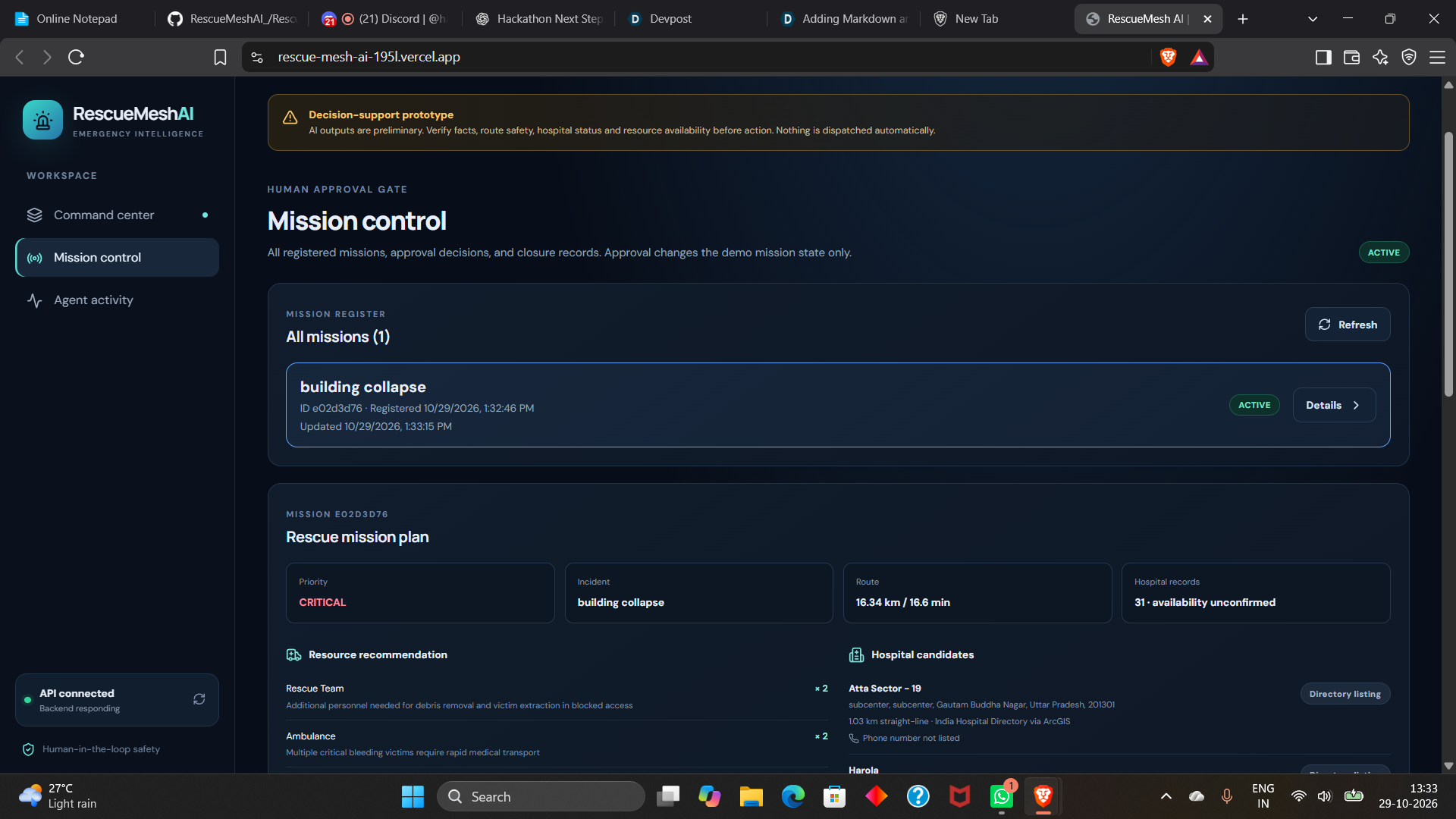
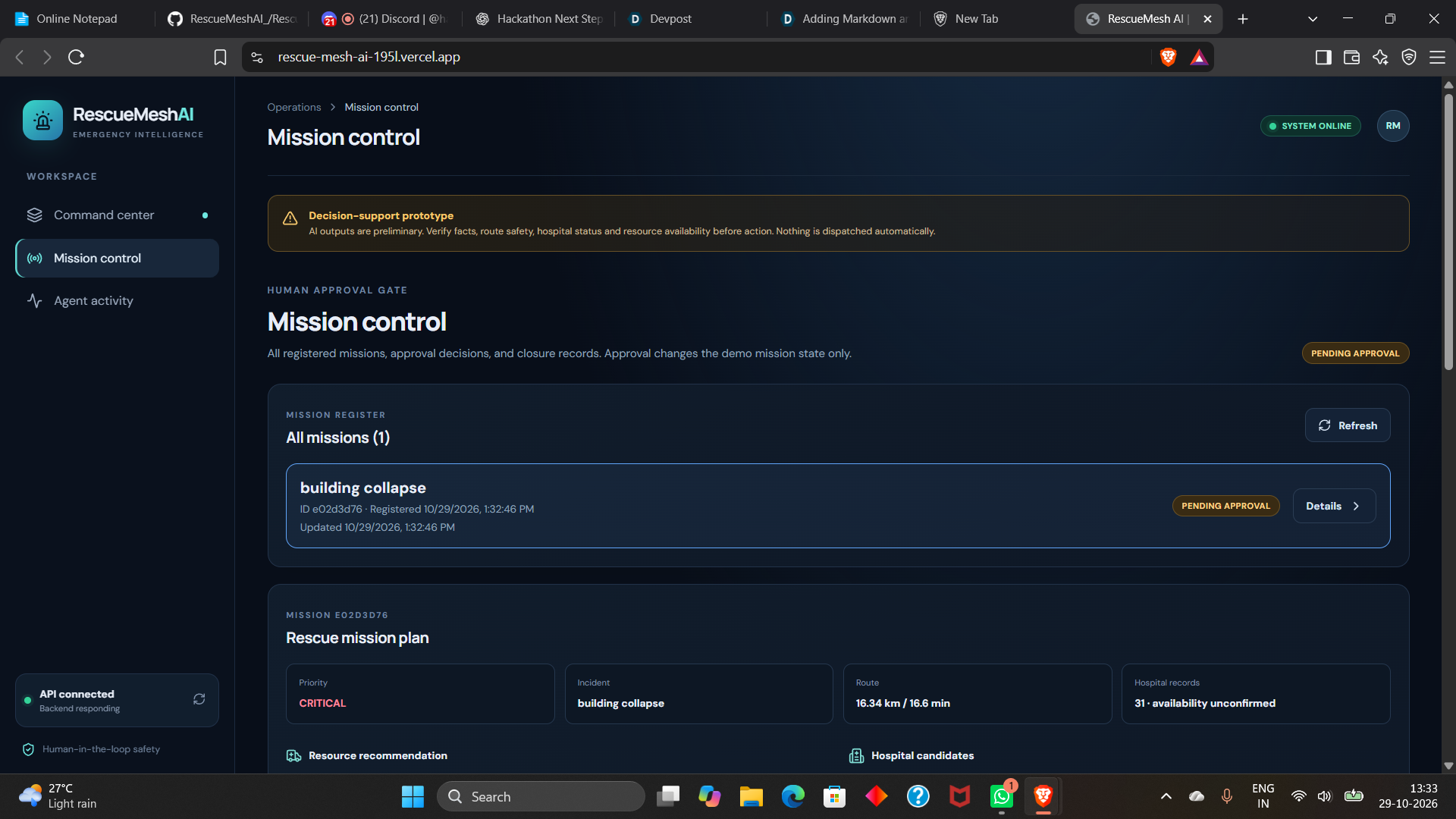
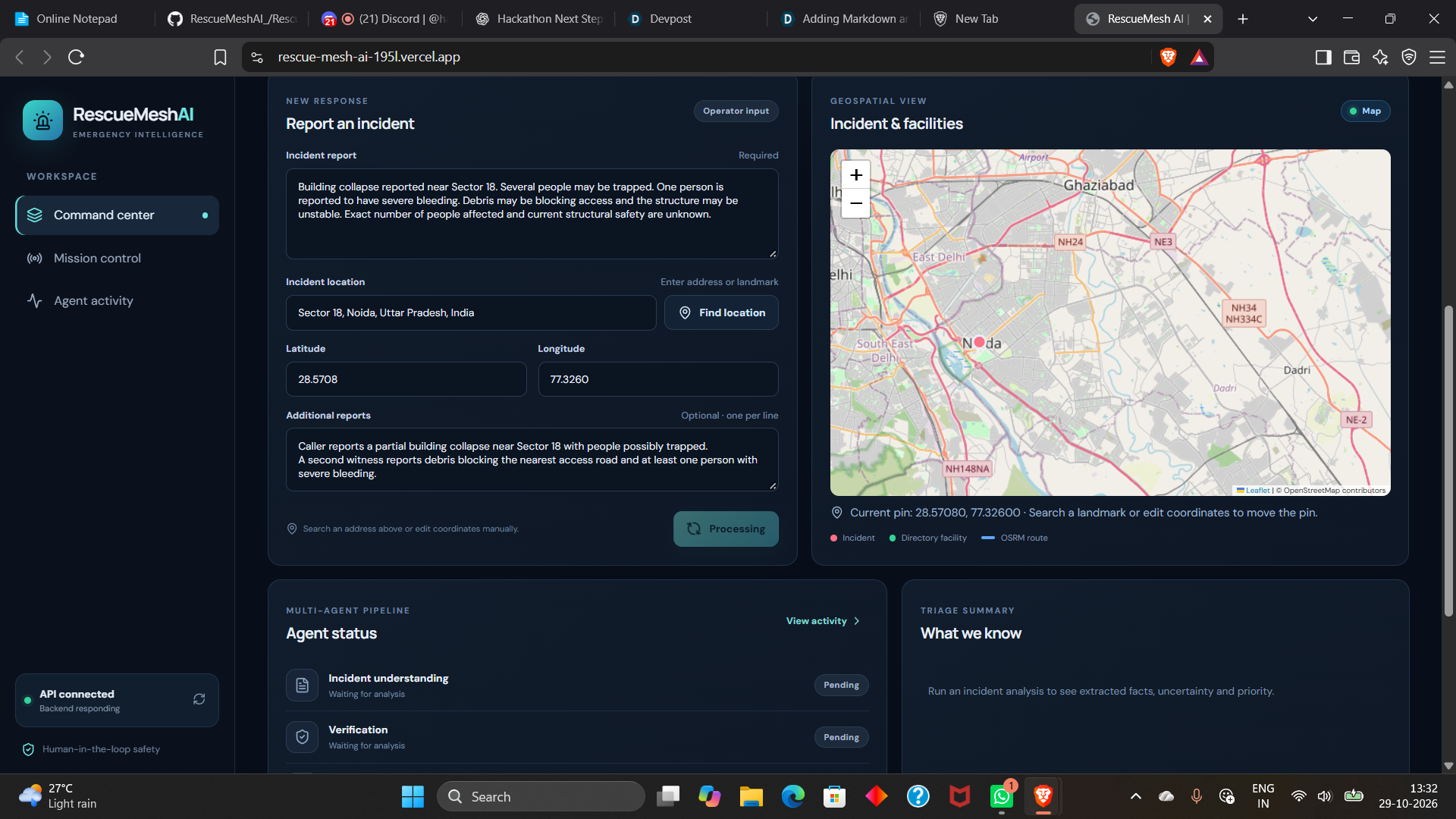
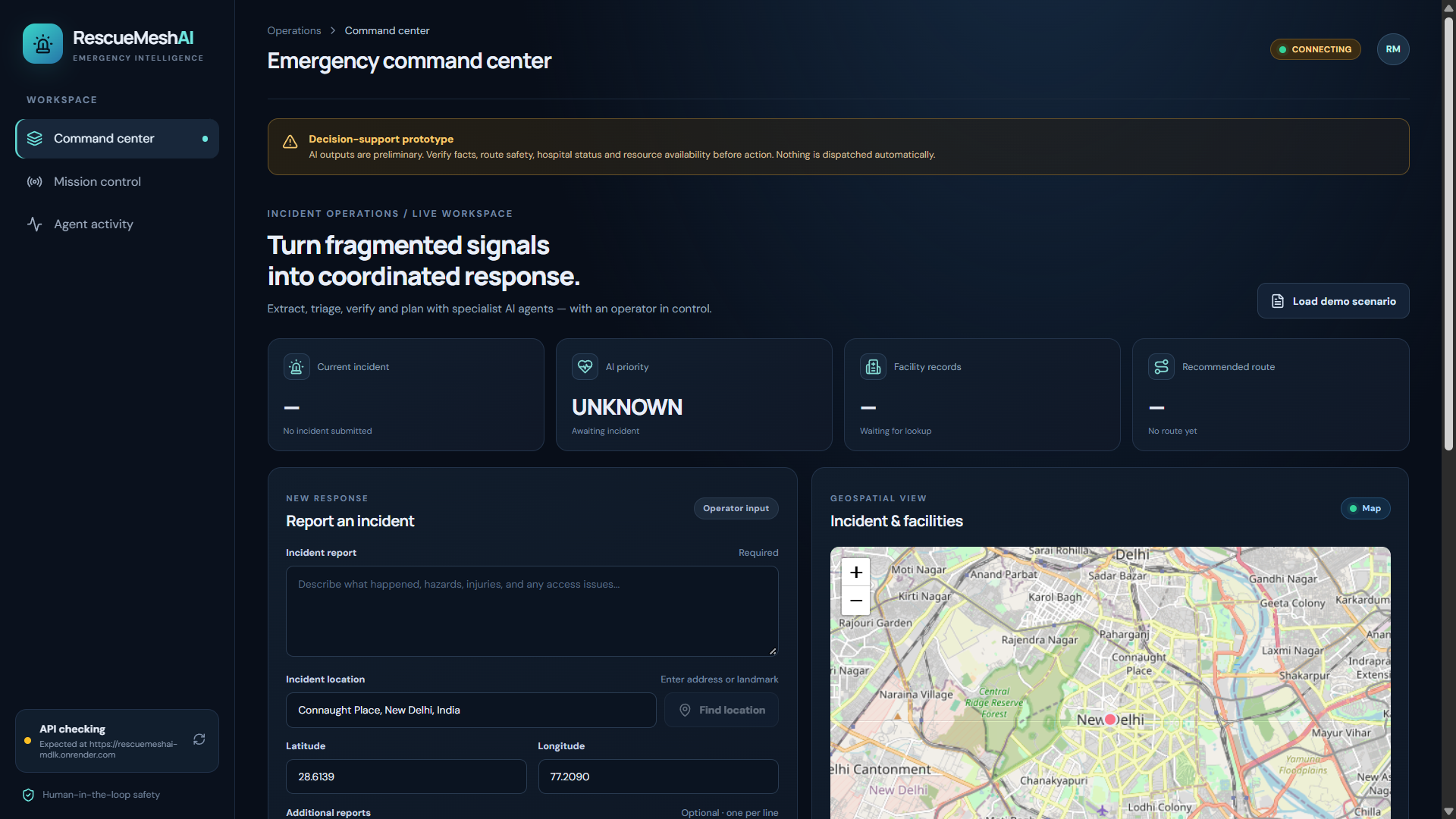
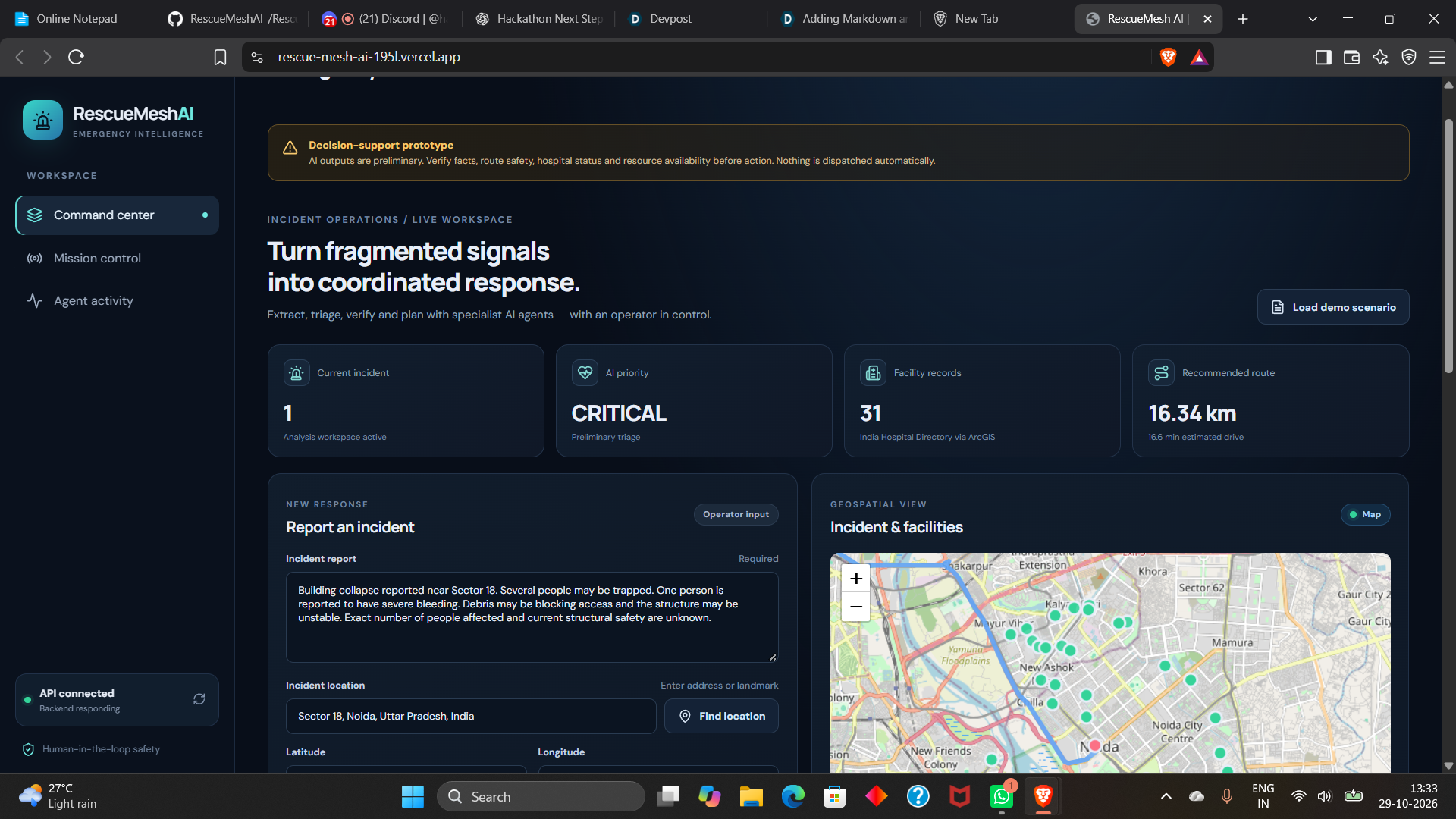
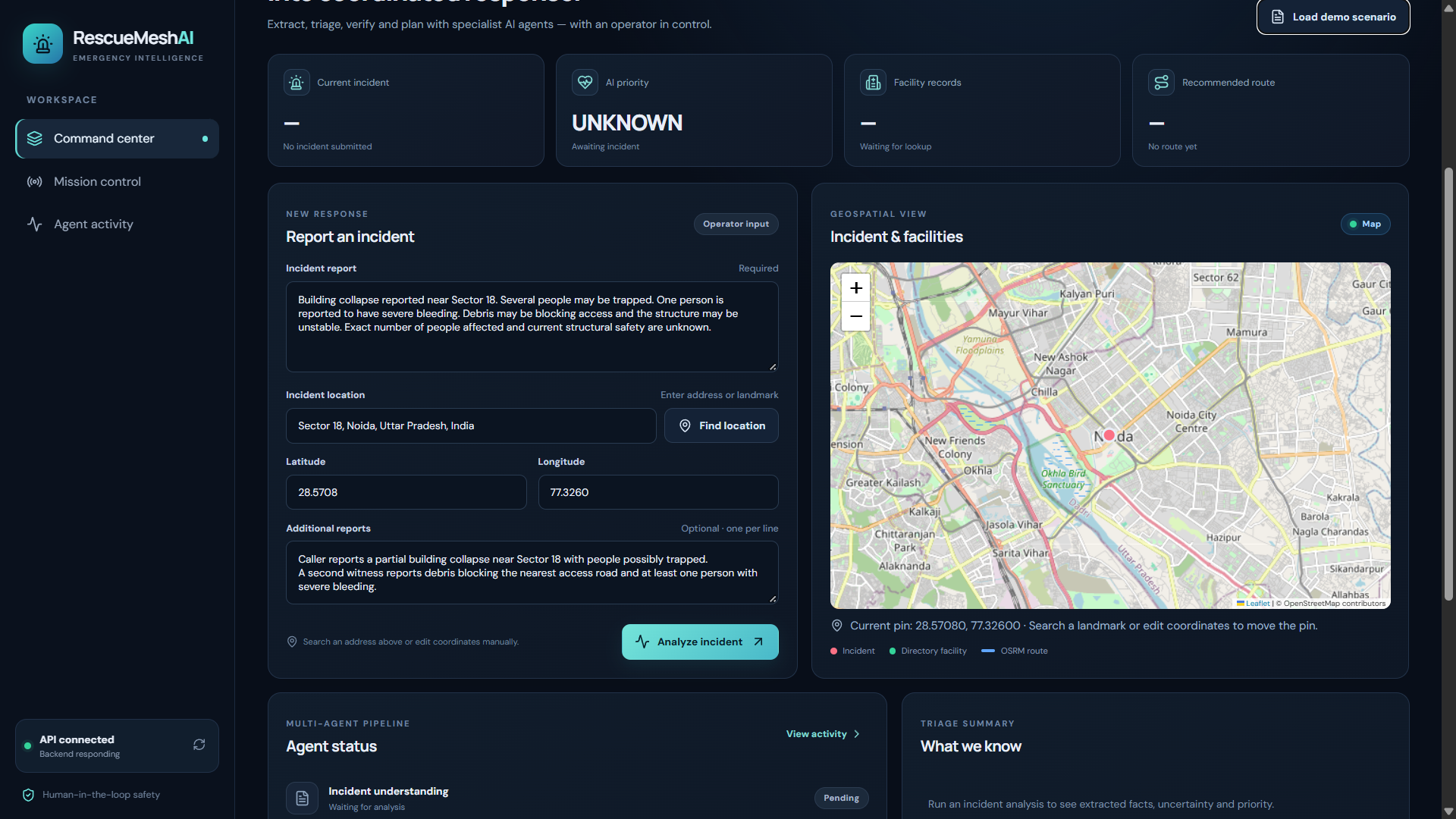
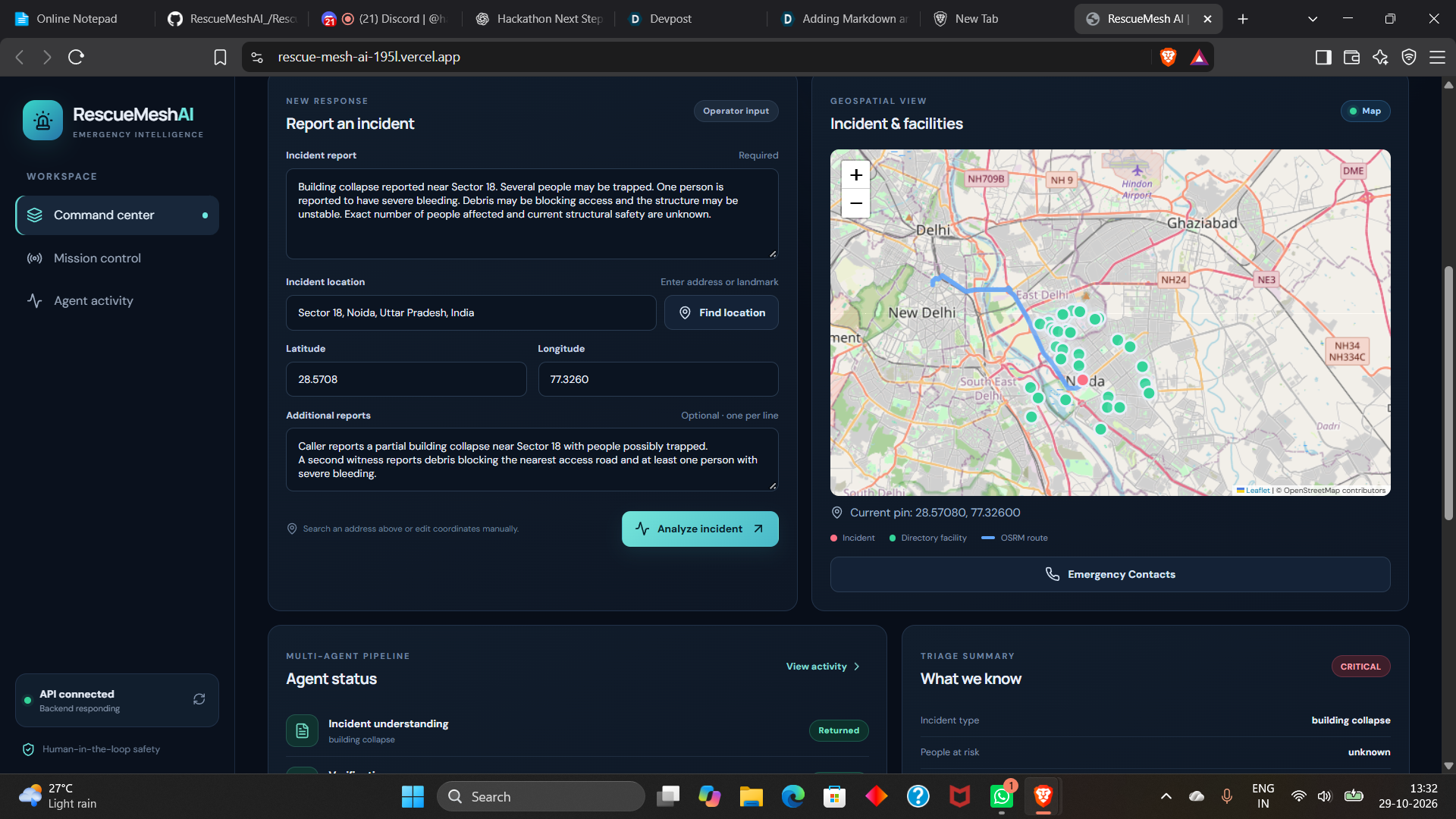
RescueMesh AI turns emergency reports into a structured response plan. Its AI agents analyze incidents, compare reports to identify corroborated details and contradictions, assess urgency, and estimate resource needs. The platform also displays suggested road routes and nearby mapped hospitals.
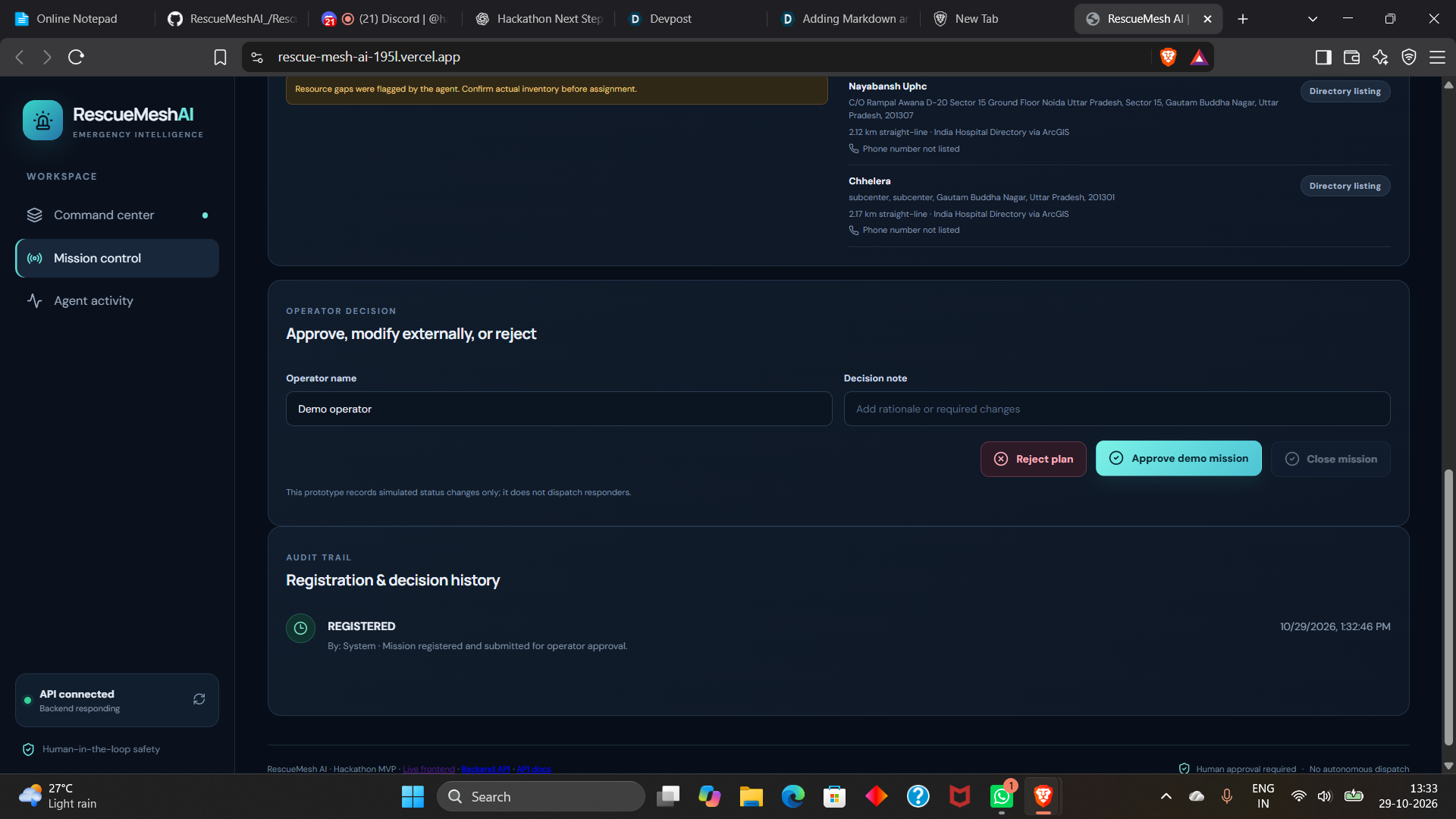
For an emergency operator, this means one dashboard can help answer three practical questions: What has been reported? What needs attention first? What resources may be needed? Instead of manually piecing together information from separate sources, operators receive a consolidated overview for human review.
How we built it
We built the frontend using React, Vite, and CSS, with a Python and FastAPI backend. NVIDIA Nemotron, accessed through Nebius Token Factory, powers our specialized AI agents for incident analysis, report verification, priority assessment, and resource planning. We integrated React Leaflet and OpenStreetMap for mapping, OSRM for route suggestions, and the Overpass API to find mapped hospitals. REST APIs connect these components into one workflow.
Challenges we ran into
Integrating multiple AI agents into a reliable workflow was challenging. We encountered empty model responses, Python import errors, frontend-backend connectivity problems, and external API failures. We worked through these issues by testing endpoints individually, improving error handling, and structuring model outputs as JSON. We also had to distinguish between reported information and independently confirmed facts.
Accomplishments that we're proud of
We built a working prototype that connects AI-generated incident summaries, report comparison, priority assessment, resource estimates, and geographic information. We are especially proud that the system does more than summarize a report: it organizes information into a format that can support operational review. Human oversight is built into the workflow, and uncertain reports, mapped hospitals, and route suggestions are not automatically treated as verified.
What we learned
We learned how to integrate large language models, build specialized AI agents, connect a React frontend to a FastAPI backend, and combine AI outputs with geographic data. We also learned that emergency-response AI must communicate uncertainty clearly and that a confident model response is not the same as a verified fact.
What's next for RescueMeshAI
Our next goal is to measure impact through realistic disaster simulations. We plan to compare manual report processing with RescueMesh AI on time to produce an incident summary, detection of conflicting reports, completeness of resource estimates, and accuracy of priority recommendations. We also want to test performance with larger numbers of reports, improve geographic risk information, and explore model fine-tuning. Ultimately, we aim to help emergency operators spend less time organizing fragmented information and more time evaluating appropriate response options.
Built With
- ai-agents
- disaster-management
- emergency-response
- fastapi
- generative-ai
- geospatial-ai
- human-in-the-loop
- llm
- multi-agent-ai
- nebius-token-factory
- nvidia-nemotron
- openstreetmap
- osrm
- overpass-api
- pydantic
- python
- react
- react-leaflet
- rest-api
- vite

