Inspiration
This project was inspired by the urgent need for faster and smarter emergency response systems in crisis zones. In many affected regions, communication breakdowns and lack of coordination between victims and medical teams lead to unnecessary loss of lives. I wanted to build a solution that bridges this gap using technology—especially AI—to support humanitarian response and save lives.
What it does
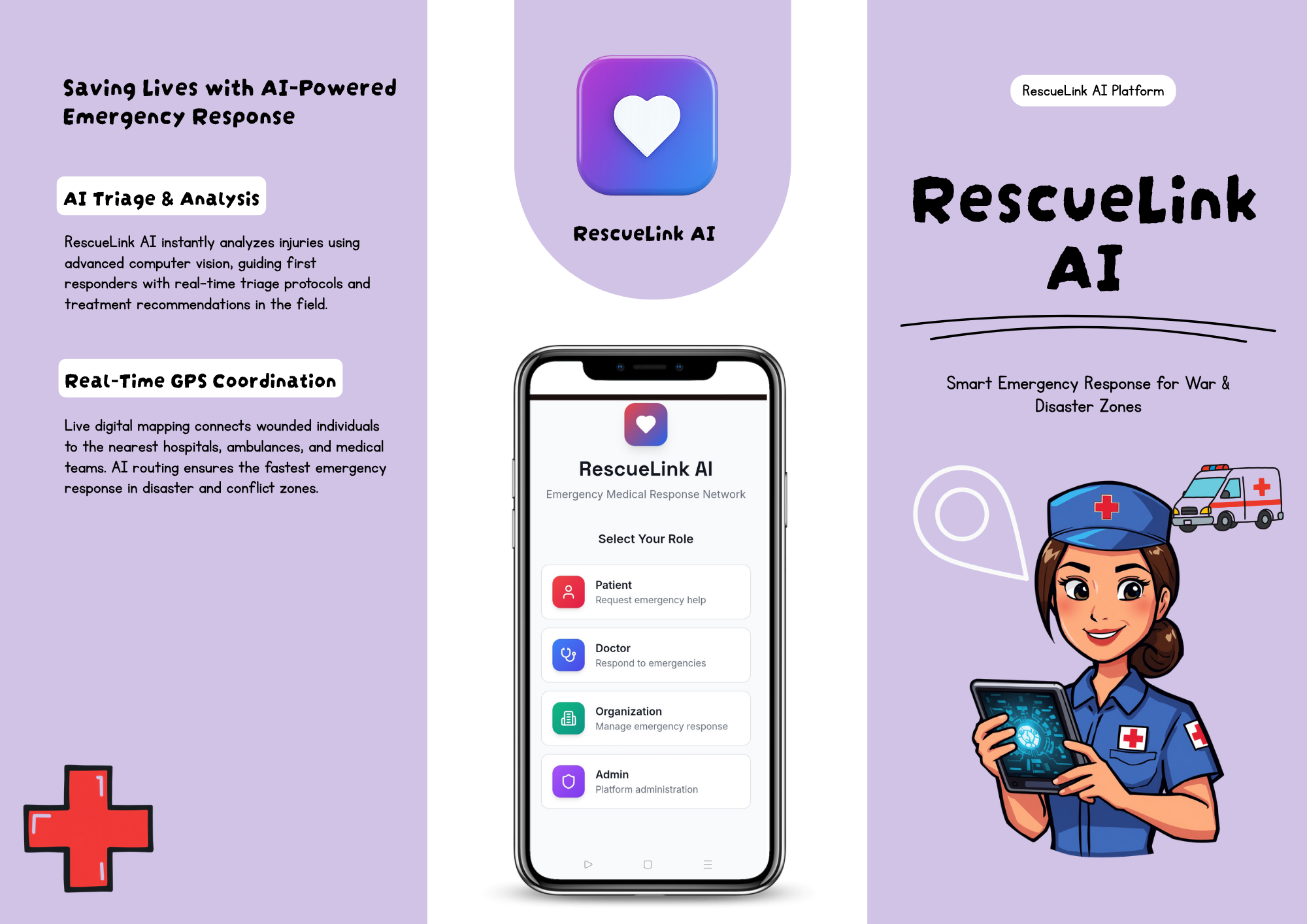
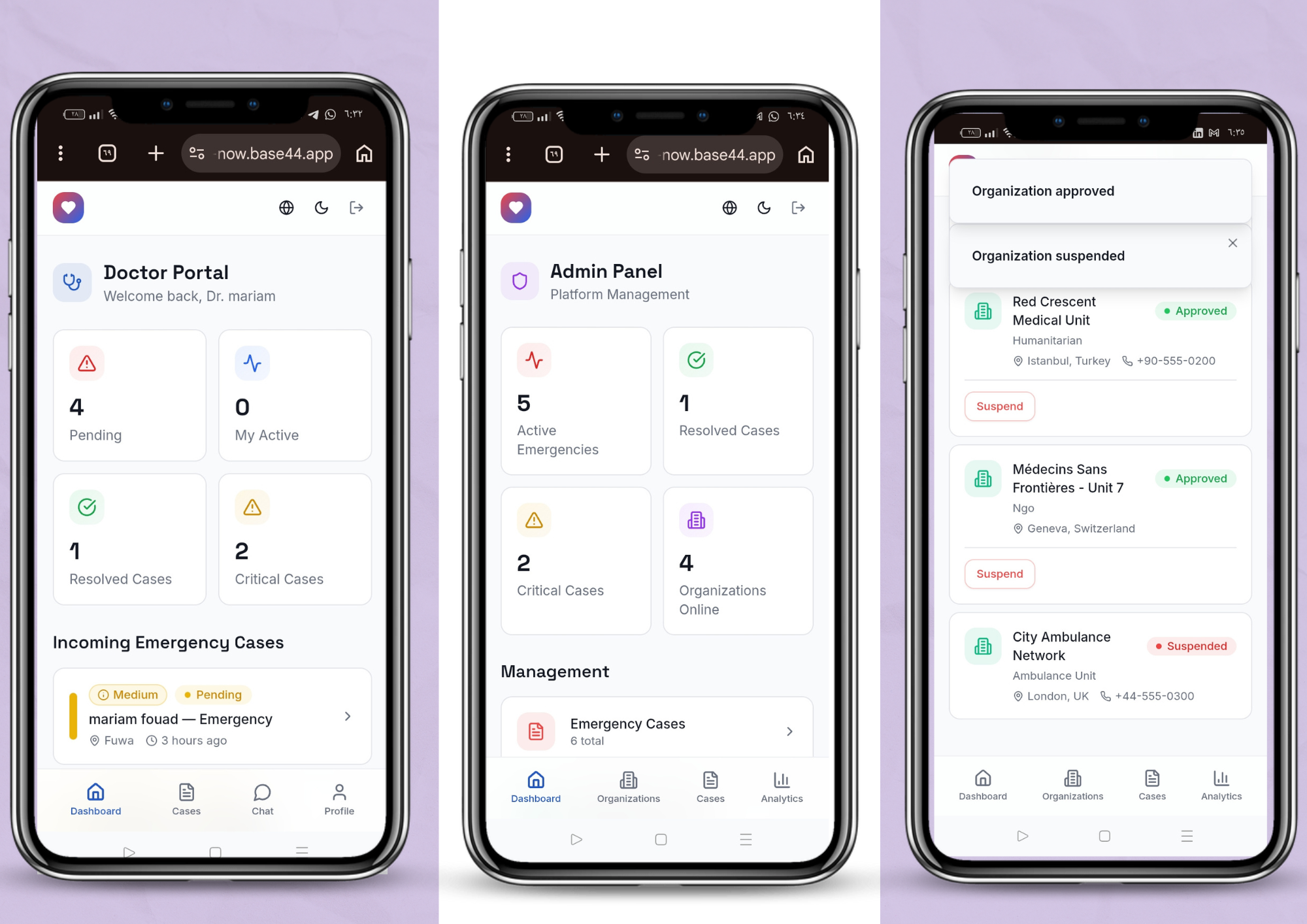
RescueLink AI is an intelligent emergency response platform designed for war zones, disasters, and humanitarian crises. It allows injured individuals or witnesses to upload an image of an injury, which is analyzed by AI to generate a preliminary medical report. The system detects injury type, severity, and location, then automatically sends the case to the nearest available medical authority or rescue organization. If no response is received, the request is escalated to other nearby teams until it is accepted.
How we built it
We designed RescueLink AI as a mobile-first intelligent system combining AI-based image analysis with GPS location services and a smart dispatching network. The architecture includes an AI model for injury classification, a backend system for routing emergency requests, and a verified network of hospitals and humanitarian organizations. We also integrated offline-first functionality to ensure usability in low-connectivity environments
Challenges we ran into
One of the biggest challenges was designing a system that remains functional in disaster environments with unstable or no internet connection. Another challenge was ensuring that AI provides useful medical triage without replacing doctors or making unsafe decisions. We also faced complexity in designing a fair and reliable escalation system that avoids duplication and ensures fast response.
Accomplishments that we're proud of
We are proud of building a complete end-to-end emergency response concept that connects injured people directly with medical help using AI. The system successfully integrates image analysis, geolocation, and smart dispatching into one unified platform designed for real-world humanitarian impact. We also achieved a design that supports offline functionality and scalable emergency networks.
What we learned
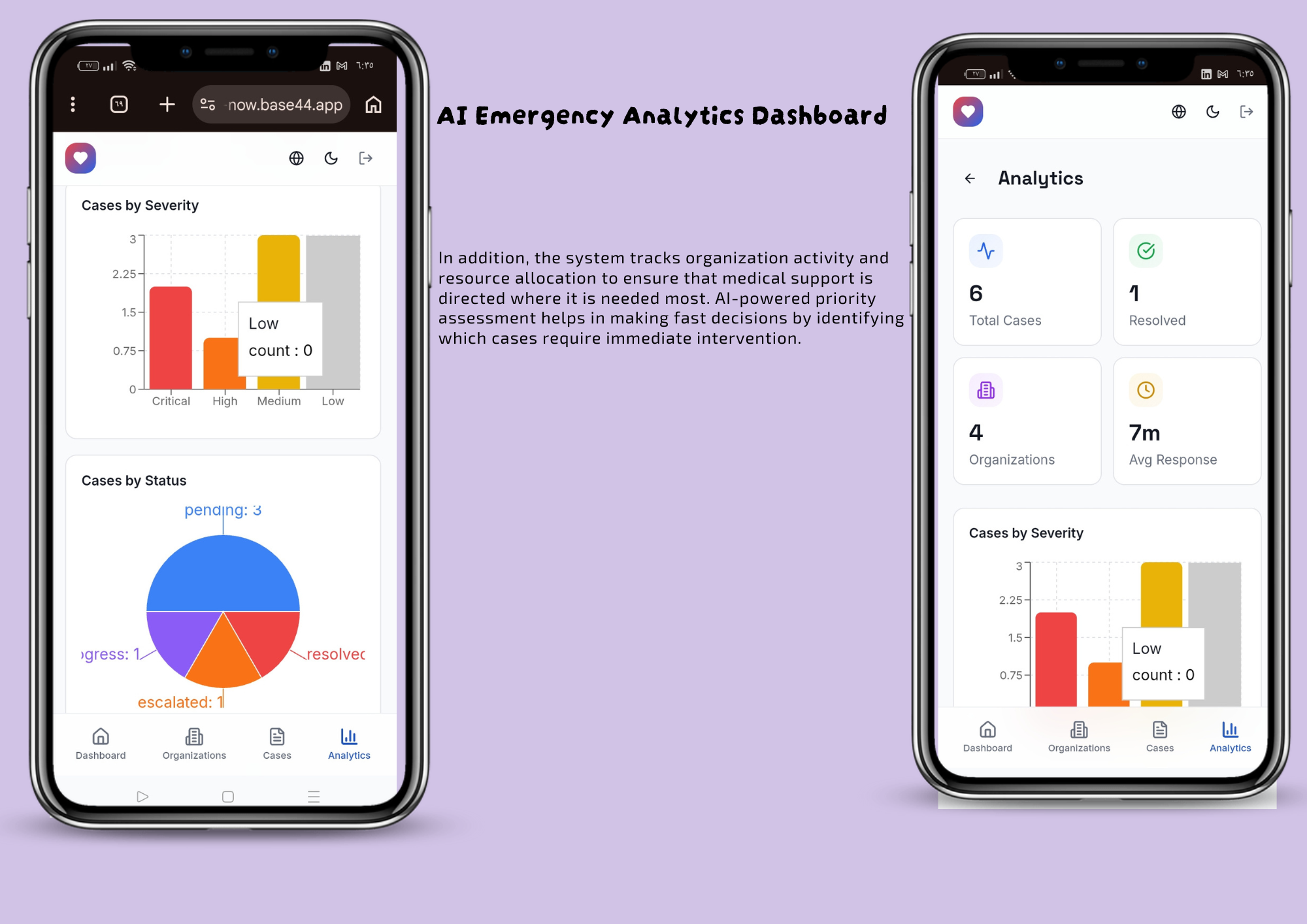
Through this project, we learned how AI can be applied beyond traditional use cases to solve real humanitarian problems. We gained experience in system design for critical environments, prioritization of emergency cases, and the importance of building technology that supports—not replaces—medical professionals. We also learned how essential reliability and simplicity are in life-saving systems.
What's next for RescueLink AI
Next, we plan to improve the AI model with more accurate medical datasets and expand the platform into a fully functional emergency ecosystem. Future updates include real-time ambulance tracking, multilingual support for global deployment, integration with government emergency systems, and wearable device support for automatic distress detection.

Log in or sign up for Devpost to join the conversation.