-
-
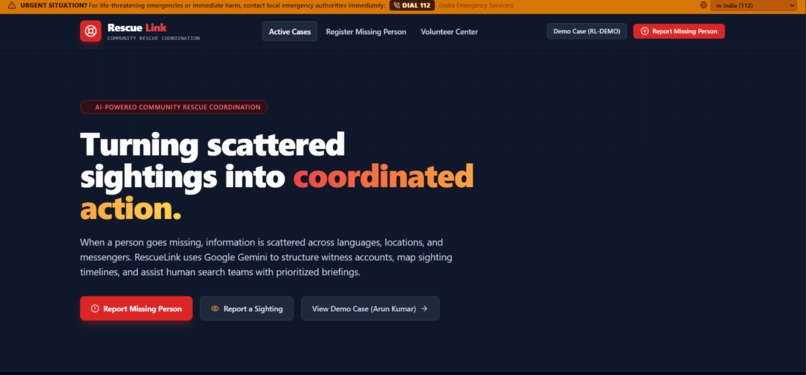
RescueLink: AI-Powered Missing Person Rescue Coordination
-
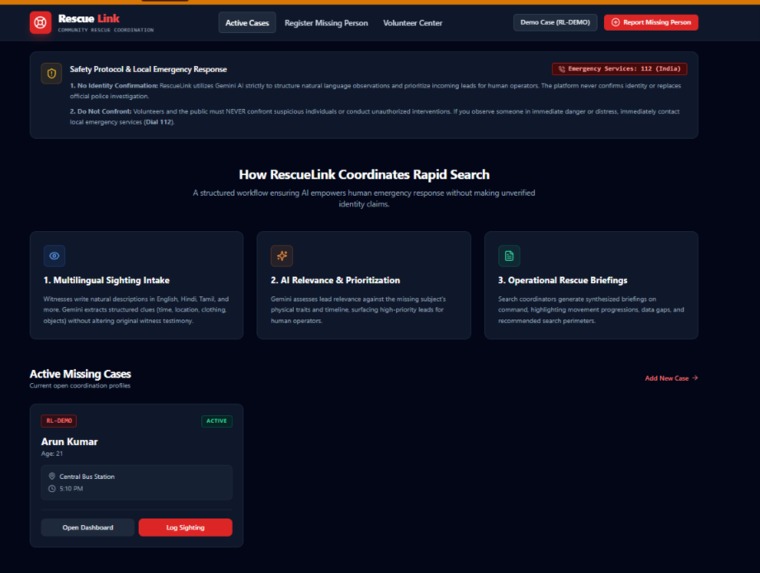
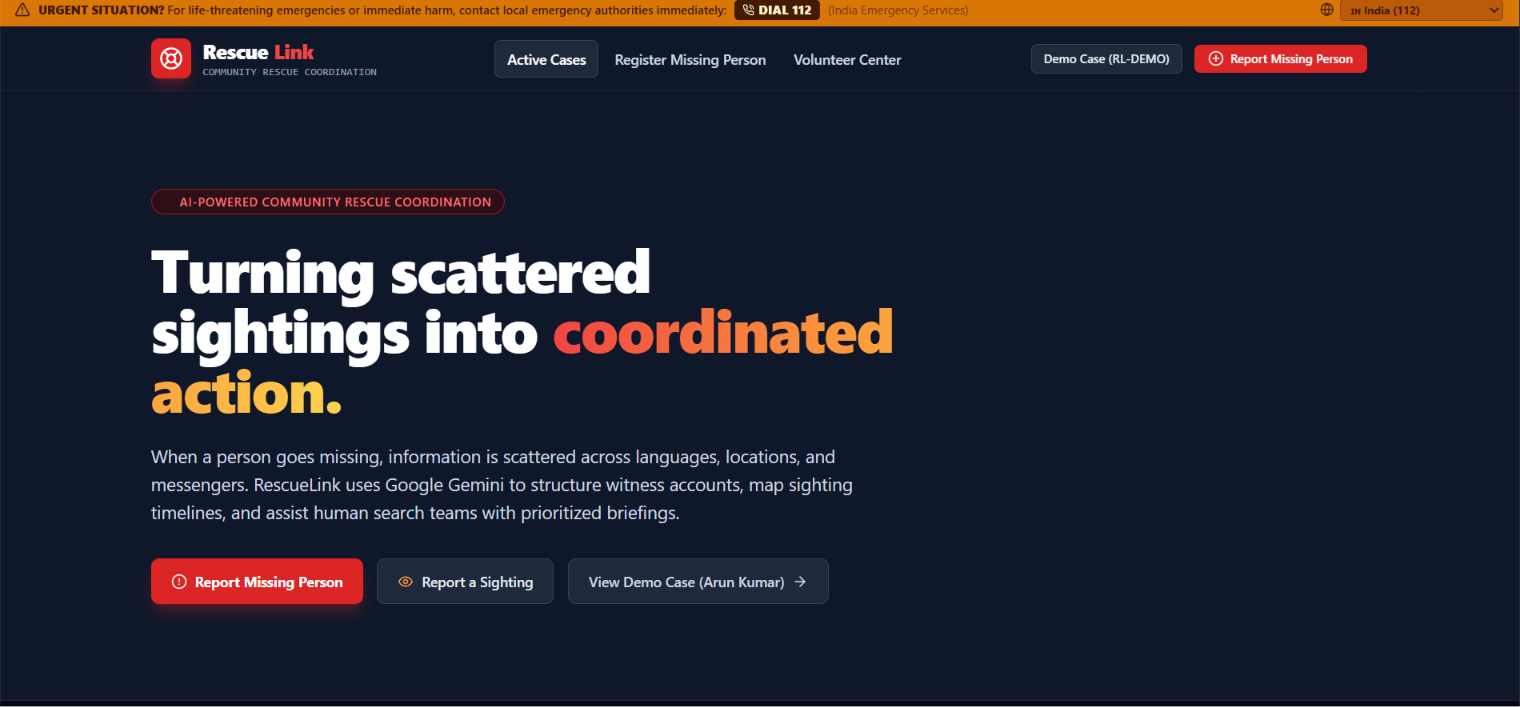
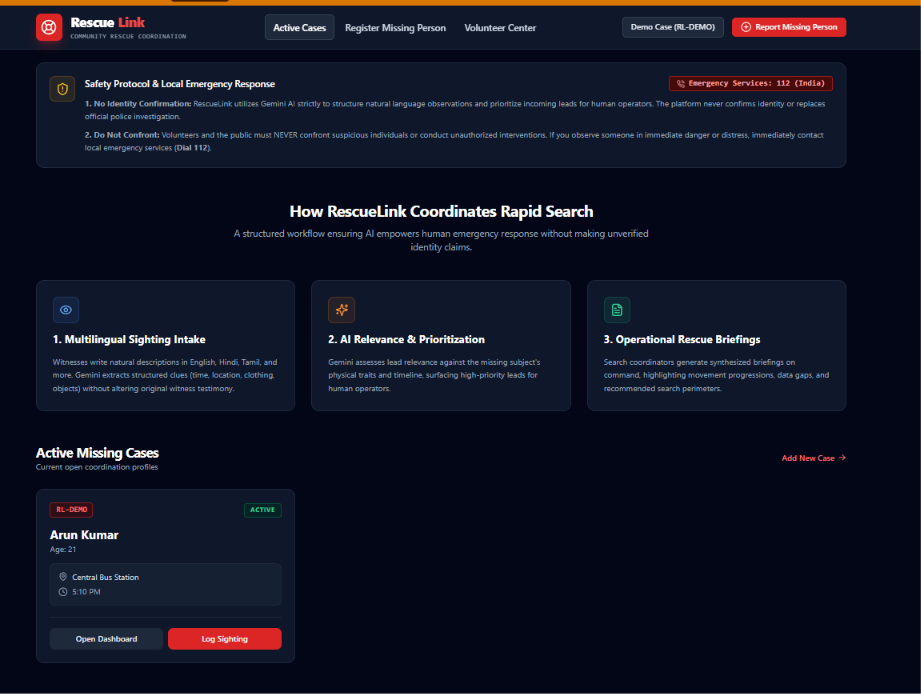
Transforming Sightings into Coordinated Rescue Action
-
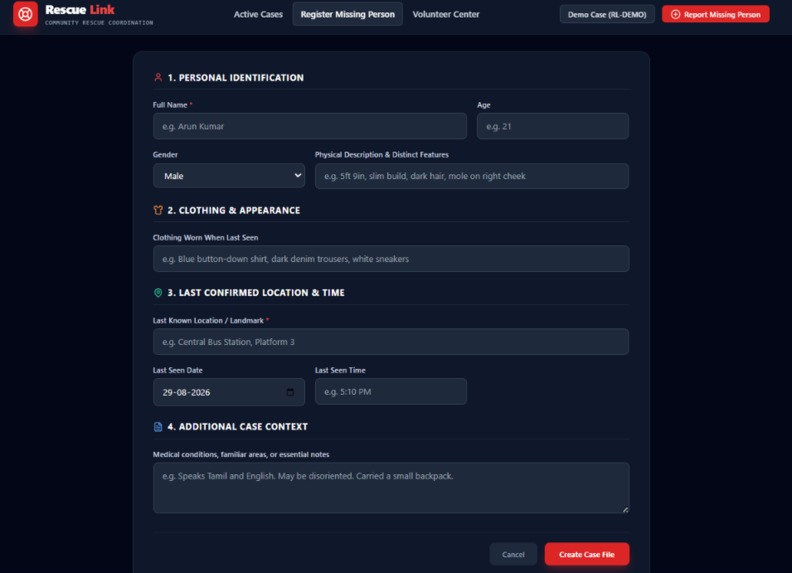
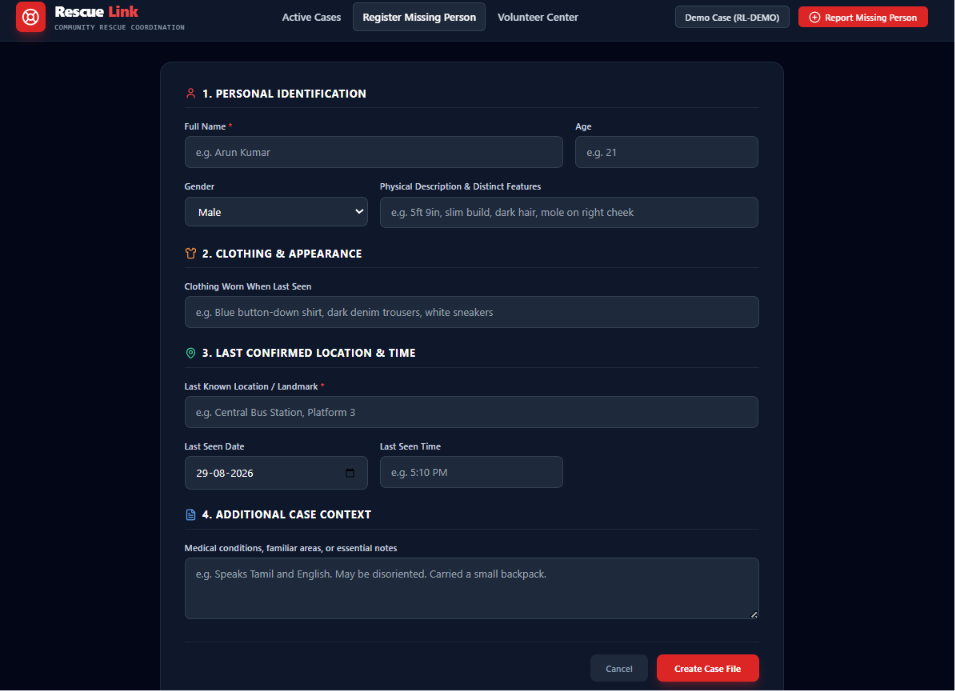
Comprehensive Missing Person Registration
-
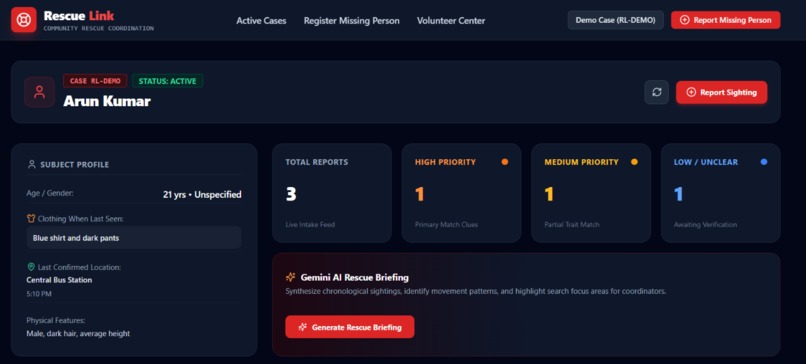
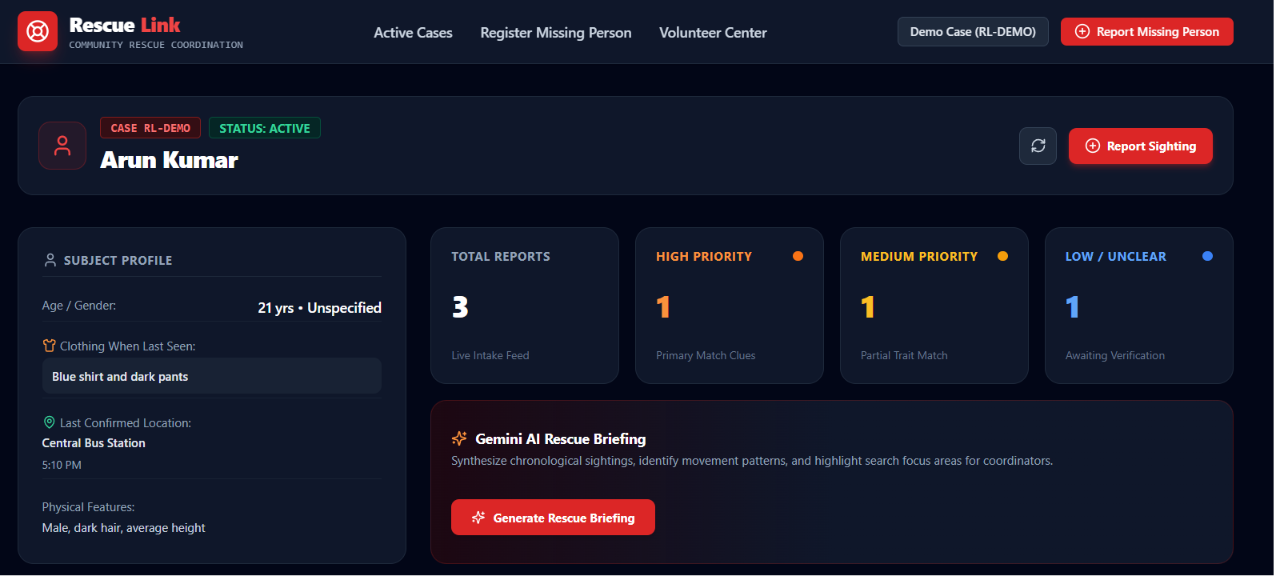
AI-Powered Case Dashboard and Search Coordination
-
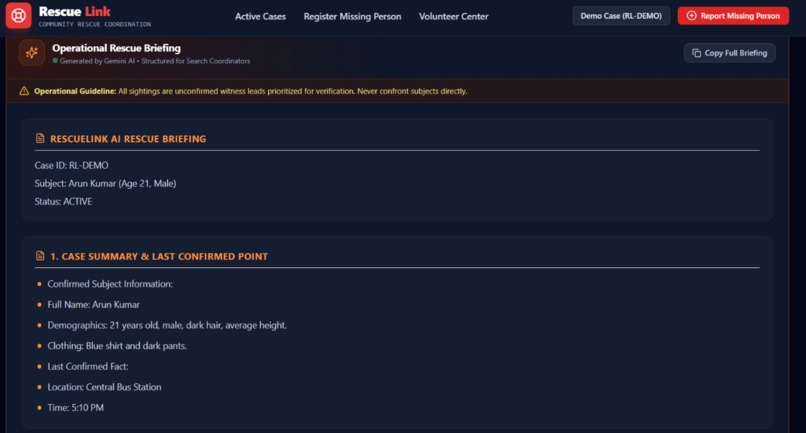
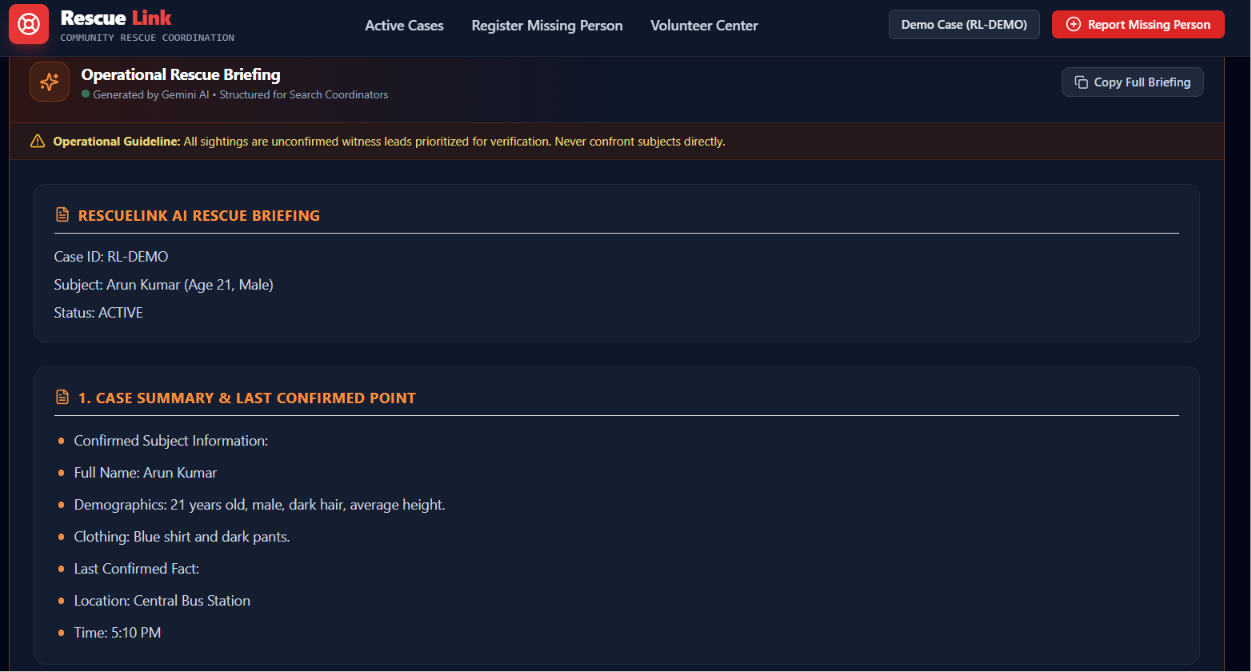
AI-Generated Operational Rescue Briefing
-
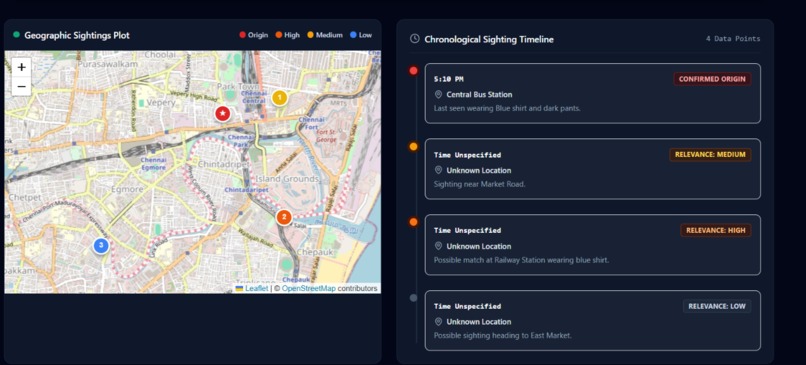
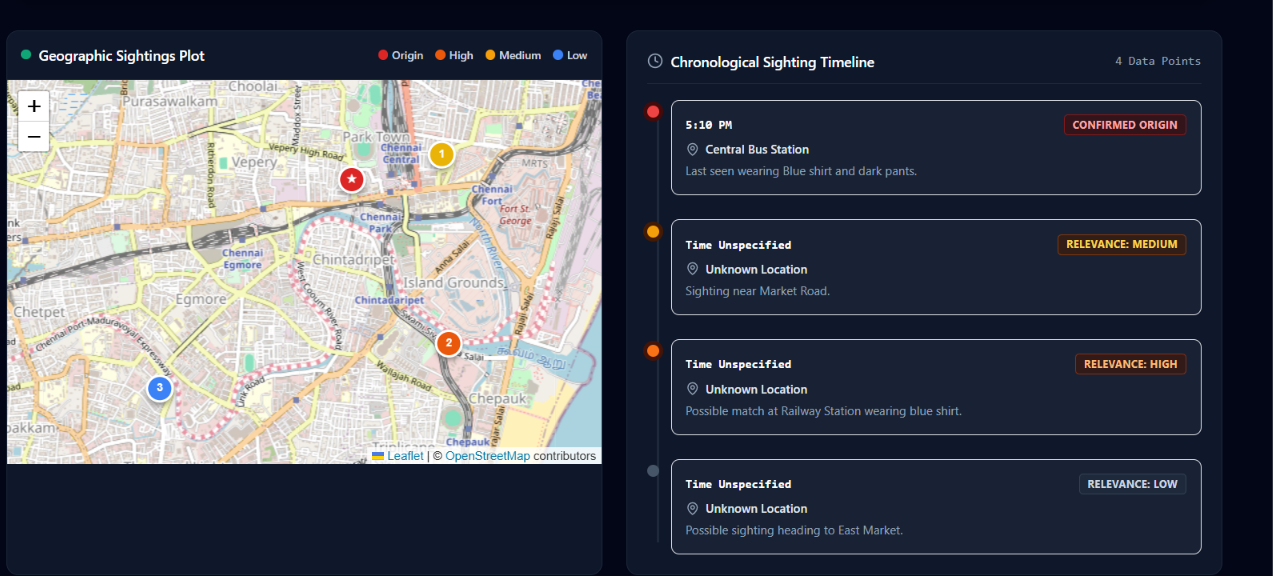
Geographic Sightings Map and Timeline
-
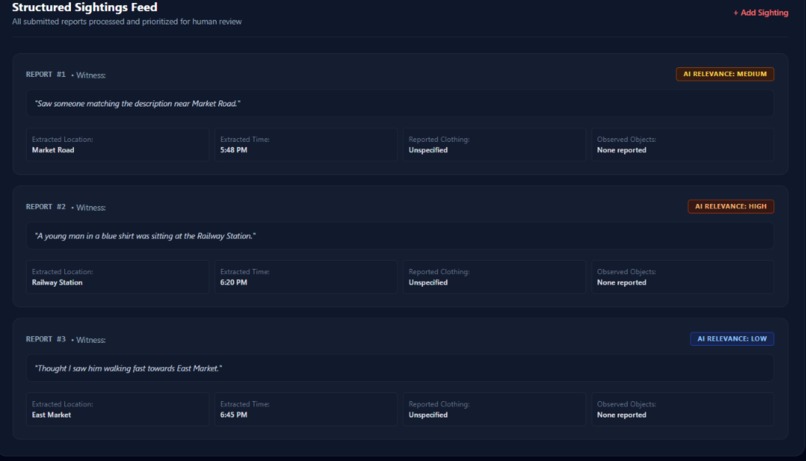
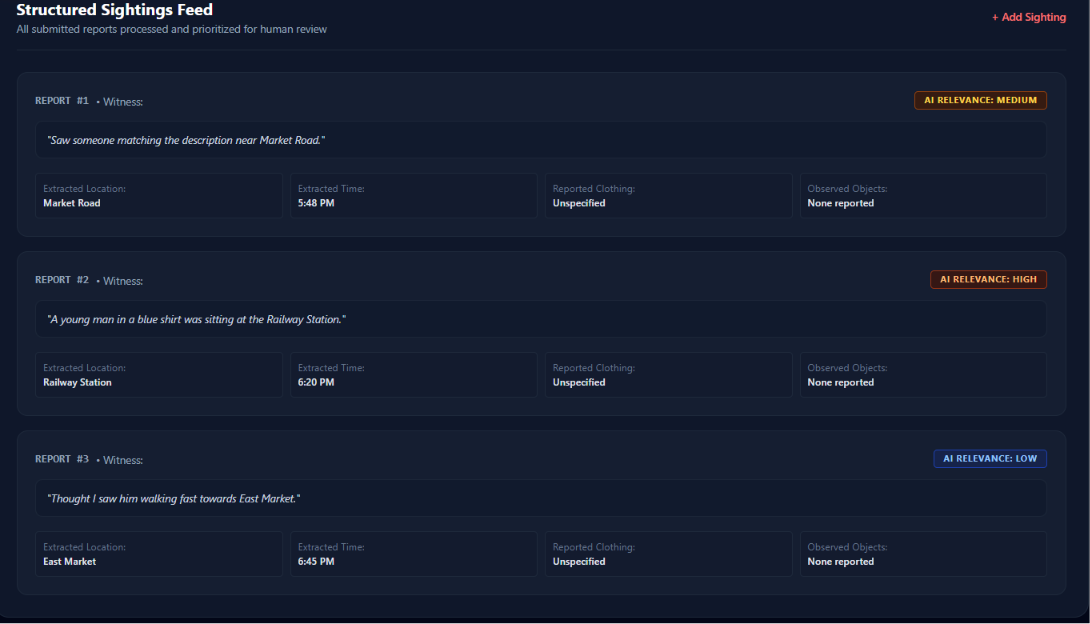
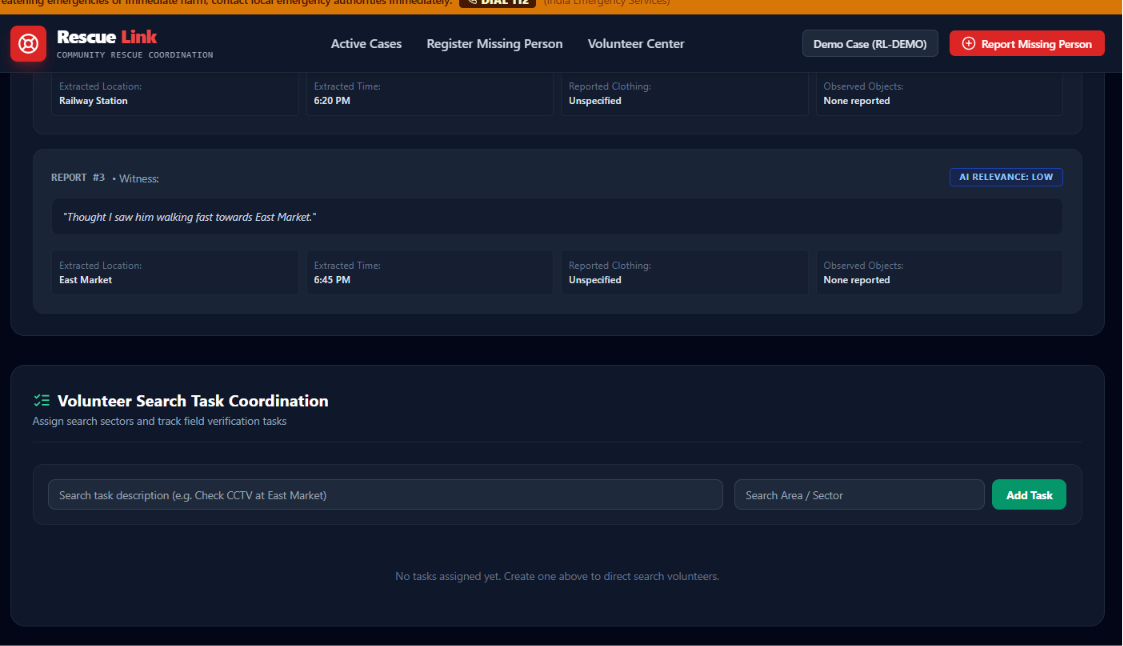
AI-Prioritized Structured Sightings Feed
-
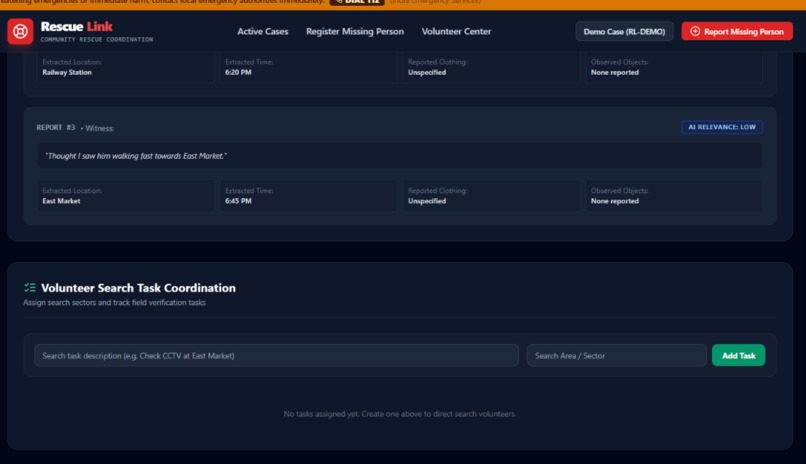
Volunteer Search Task Coordination
-
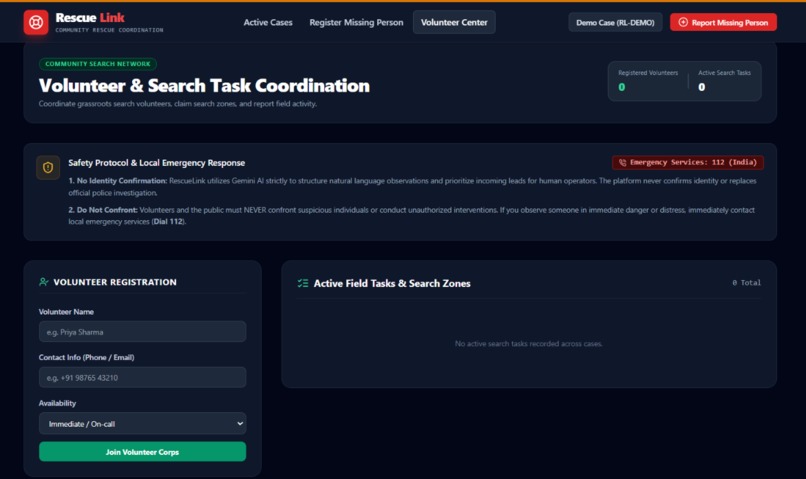
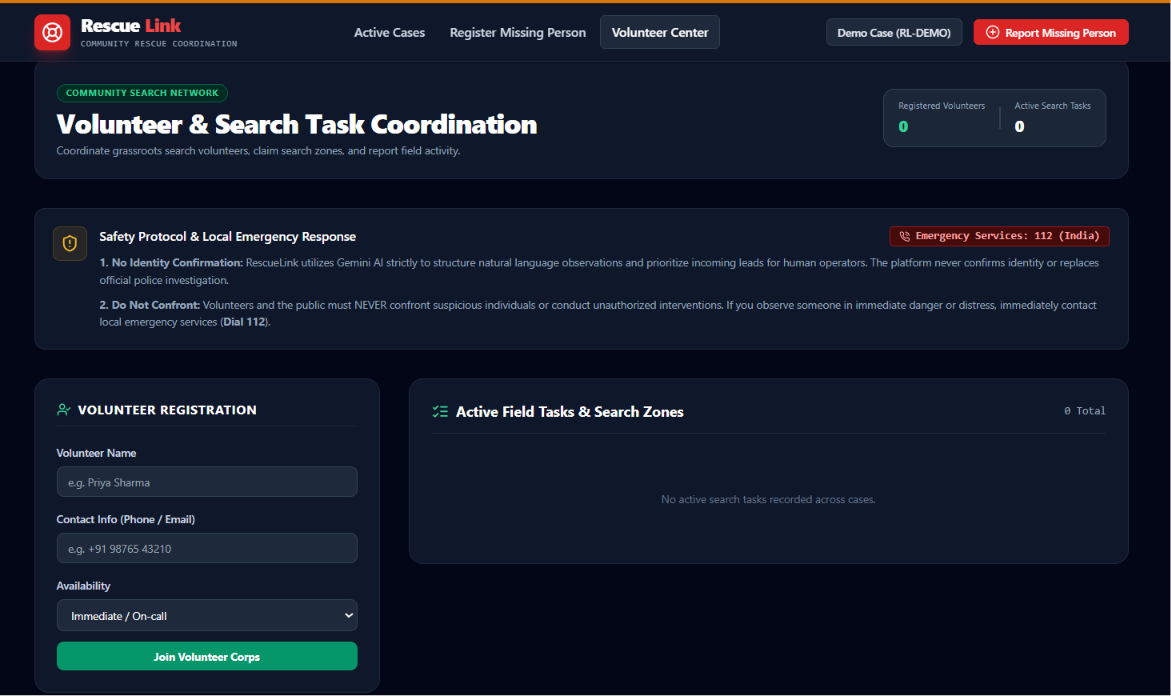
Community Volunteer Registration and Search Management
-
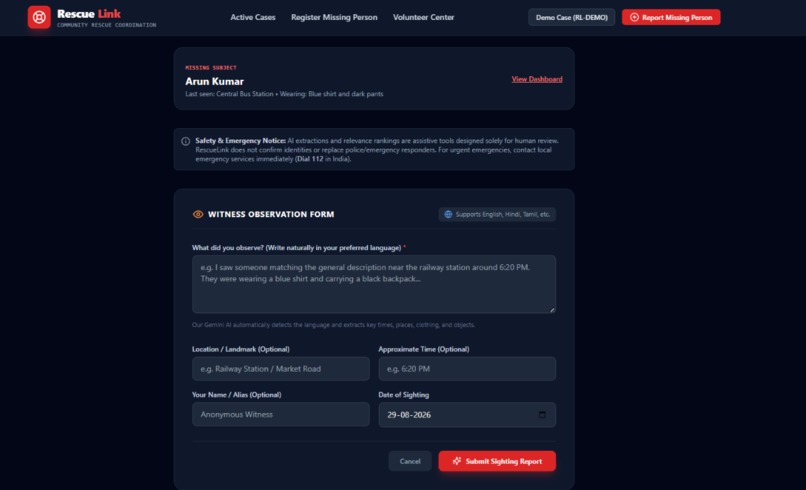
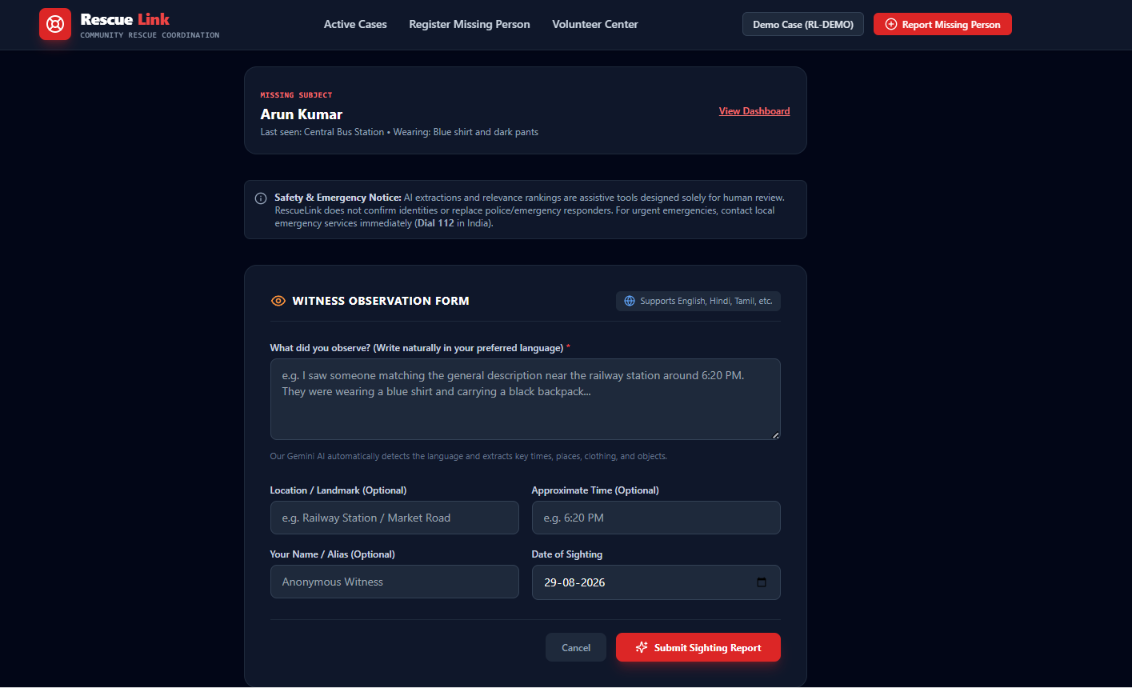
Multilingual Witness Sighting Report Form
Inspiration
When someone goes missing, information can come from family members, friends, witnesses, and volunteers through different channels. Organizing these reports quickly can be challenging.
We were inspired by the idea of using AI to organize scattered reports into structured information and support faster rescue coordination. This led us to build RescueLink, an AI-powered Missing Person Rescue Coordinator.
What We Built
RescueLink allows users to create missing-person cases and collect sighting reports from the community.
The system uses AI to:
- Extract information from sighting reports
- Structure details such as location, time, clothing, and clues
- Prioritize reports for human review
- Organize sightings into a timeline
- Generate an AI-assisted rescue briefing
- Support English, Tamil, and Hindi reports
The platform also includes an interactive map for viewing the last known location and reported sightings, along with volunteer coordination.
How We Built It
We built RescueLink using:
- React + Vite for the frontend
- Python + Flask for the backend
- SQLite for the database
- Google Gemini API for AI processing
- Leaflet + OpenStreetMap for map visualization
AI is used to organize and prioritize information for human review rather than confirm a person's identity.
We also keep the Gemini API key on the backend using environment variables.
What We Learned
Building RescueLink helped us learn how to:
- Build a full-stack AI application
- Integrate the Gemini API with Flask
- Work with structured AI responses
- Handle incomplete information and API failures
- Visualize location-based data
- Design AI systems with human oversight
- Consider privacy and responsible AI
Challenges We Faced
One challenge was ensuring that the AI does not invent information when analyzing sighting reports. We designed it to return unknown or null values when information is unavailable.
Another challenge was ensuring that AI does not treat a sighting as a confirmed identification. AI-generated relevance is therefore used only to assist human review.
We also considered multilingual reports, API failures, privacy, and usability during stressful situations.
Future Vision
We envision RescueLink as a secure rescue coordination platform that could work with verified authorities, NGOs, emergency organizations, and volunteer networks.
Future improvements could include real-time notifications, stronger privacy controls, offline support, advanced geospatial analysis, and integration with authorized rescue organizations.
Turn scattered information into coordinated action when every minute matters.
Built With
- ai
- api
- css
- flask
- gemini
- generative
- javascript
- leaflet.js
- openstreetmap
- python
- react
- rest
- sqlite
- tailwind
- vite


Log in or sign up for Devpost to join the conversation.