Inspiration
As outlandish as it sounds, our project was inspired by kimchi, hydroxychloroquine, and COVID-19.
Telemedicine proliferated during the onset of the COVID-19 pandemic, reducing traffic for in-person physicians drastically. This shift to telemedicine made patient care more efficient and convenient. However, in some countries — where healthcare was (and still is) not available to everyone — people experienced systemic barriers from receiving care by a medical professional.
Whilst some people could see medical professionals virtually, there was another barrier: money. The costs of healthcare soared, making treatment prices overwhelmingly expensive.
With the lack of medical accessibility, people flocked to the internet looking for their own methods to cure COVID-19. Some of the most popular solutions? Eating kimchi and using hydroxychloroquine. The algorithm took notice, and soon enough, these unproven methods against COVID-19 skyrocketed.
Until Facebook labeled both methods as “false news”, real people were duped into thinking fermented vegetables and malaria medication could treat COVID-19.
This is why we developed Remedy. To address the inequities within our healthcare system and combat medical misinformation.
What it does
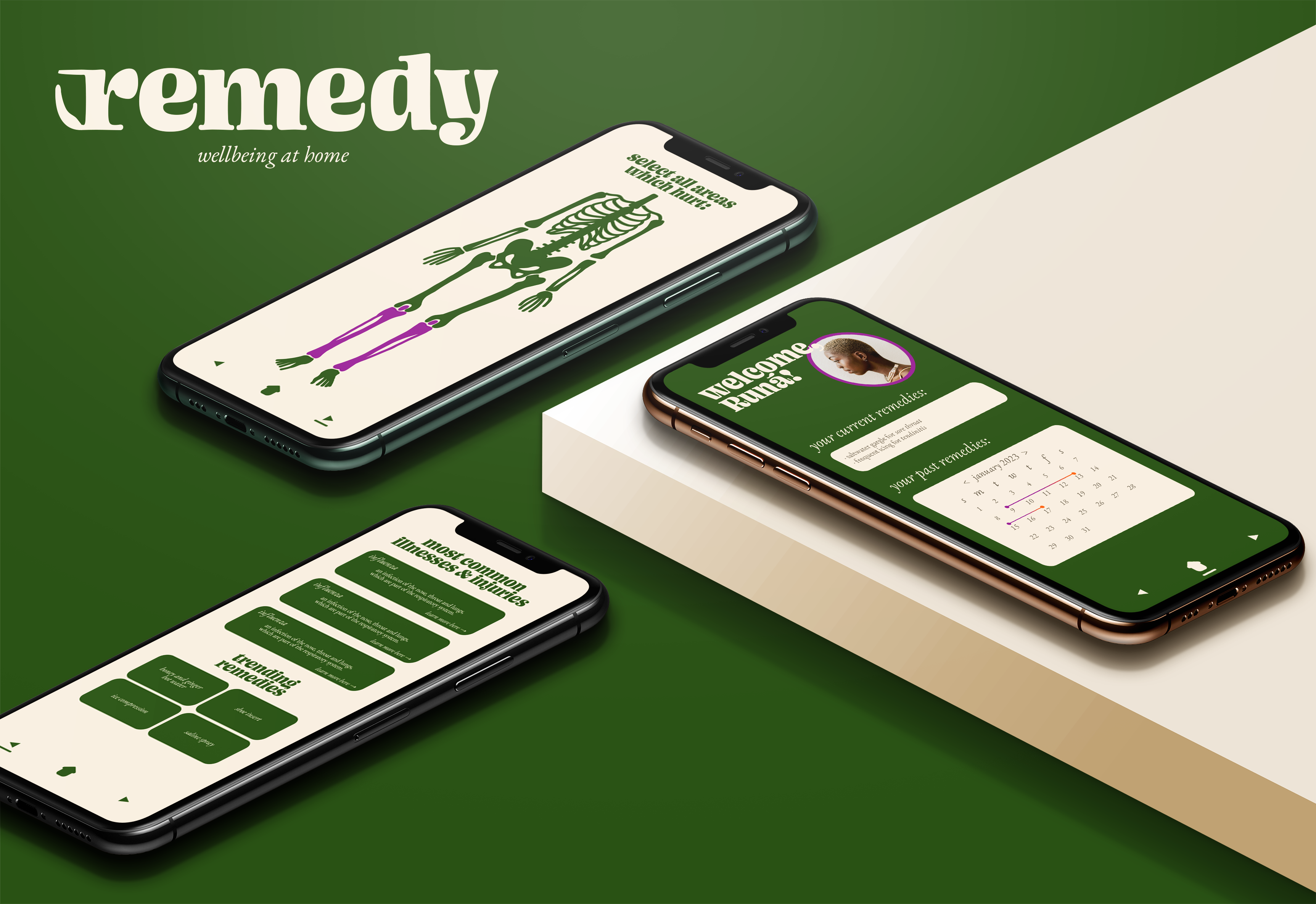
Remedy is a wellbeing app that provides easy at-home remedies for minor illnesses and injuries. The app assesses users’ medical conditions through a personalized questionnaire. From the results of the questionnaire, Remedy provides a diagnosis for the three most likely conditions of the patient. The app then suggests remedies to alleviate or relieve pain.
Once a user chooses a remedy, their progress is tracked, indicating their start and end date. The user rates the effectiveness and efficiency of a remedy after recovery. Remedies with a higher average score are more likely to be recommended to other users. This also works vice-versa; a lower average score makes a remedy less likely to be recommended.
Knowing the circulation of which illnesses and injuries are prevalent within a community is important, too. Remedy highlights the most common injuries and illnesses, and their related remedies — essentially, a trending page.
Remedy’s features offer a safe, accessible experience for users wanting to receive medical treatment. All in one app. It truly is wellbeing at home.
How we built it
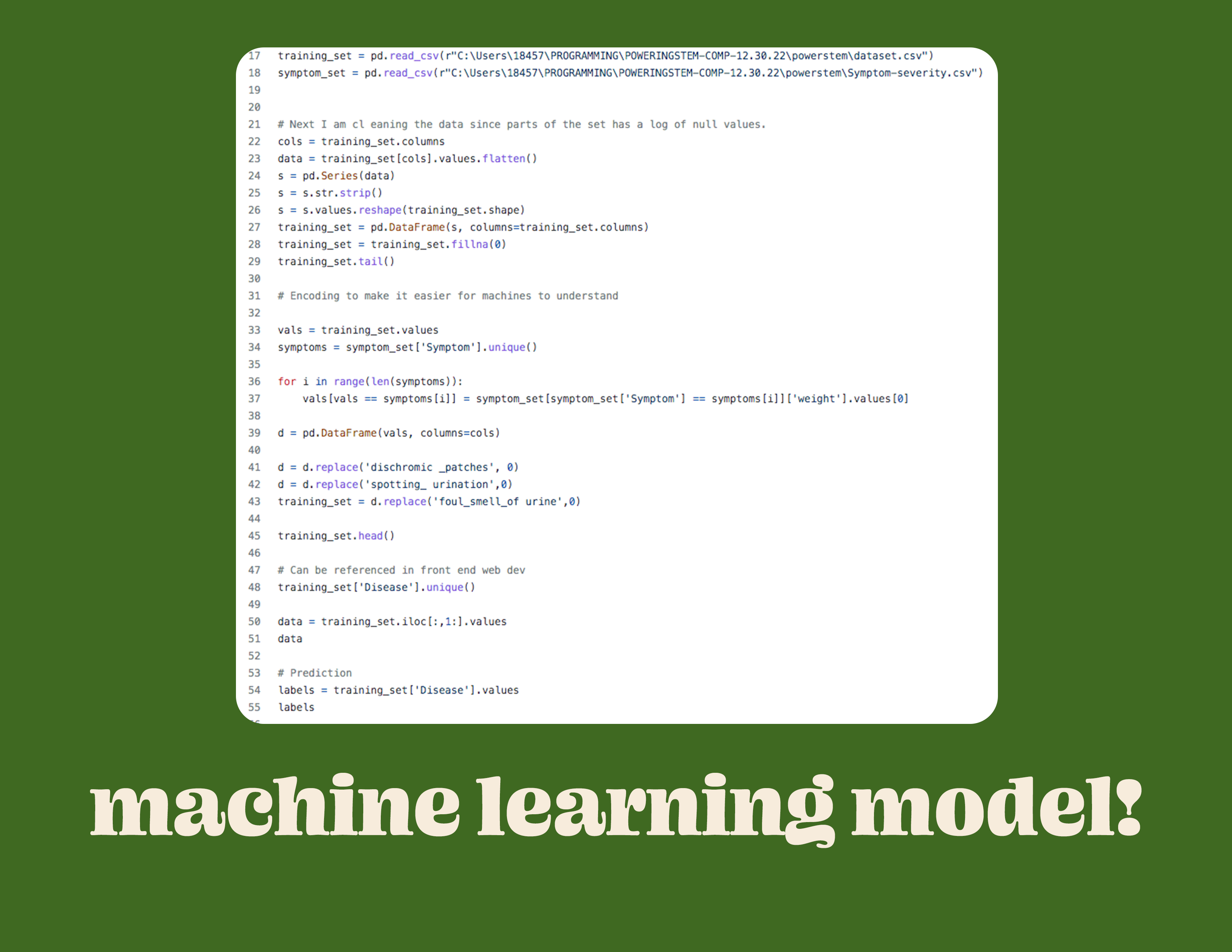
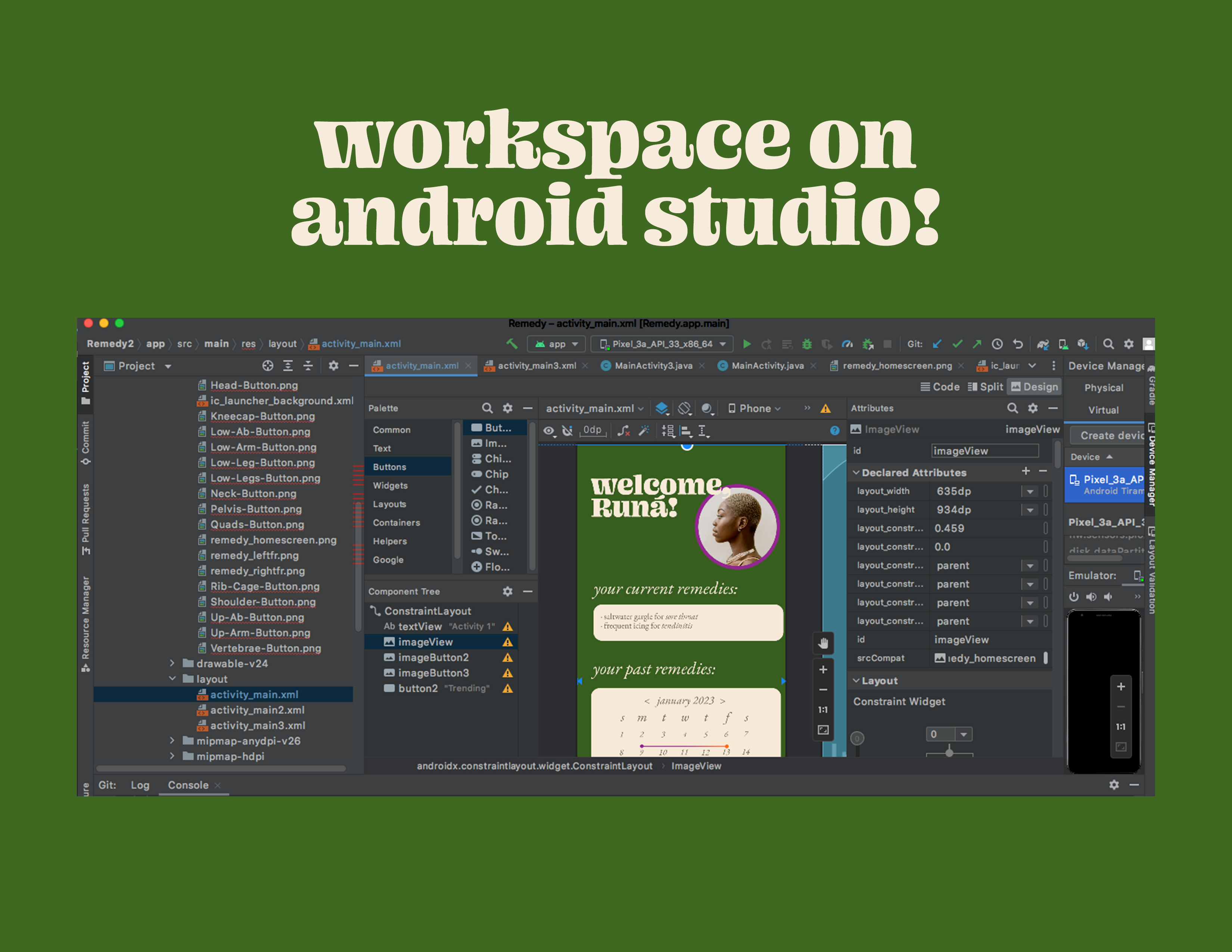
We built Remedy using Android Studio and a machine learning model. The logo and mockup were created with Adobe Photoshop and Illustrator.
Challenges we ran into
Cross-collaboration was somewhat difficult using Android Studio. Its limitations for working with others turned this group effort into a solo approach. We each coded individual aspects and combined them at the end.
The emulator on Android Studio did not work on our end, and unfortunately, we could not demonstrate the app’s features like we had planned.
Accomplishments that we're proud of
Most of us have not participated in that many hackathons nor were we experienced in doing something other than front-end. Although a bit daunting, the switch from Figma (what we previously used) to Android Studio was manageable.
The majority of us had never used GitHub either. Navigating the application was confusing at times, but with many tutorials, we put all of our work together.
Finishing the project was something to be the most proud of. We trudged through this week sluggishly and despite all odds, made it in the end.
What we learned
We decided to incorporate what we learned from the workshops into our project! The app development workshop motivated us to use Android Studio instead of Figma. Learning its quirks was enjoyable.
However, due to Android Studio being incompatible with multiple users on one project, we needed a way to keep organized. This is where the workshop on SCRUM became extremely useful. This project was one sprint; we delegated the app’s features and gave updates through swim lanes.
What's next for Remedy
Some features were scrapped due to time constraints. Incorporating the rating feature for remedies and its likelihood of appearing more/less frequently is something we would like to add. As well, the machine learning model can diagnose one illness or injury — adding the additional two other possibilities would be something to fix in the future!


Log in or sign up for Devpost to join the conversation.