-
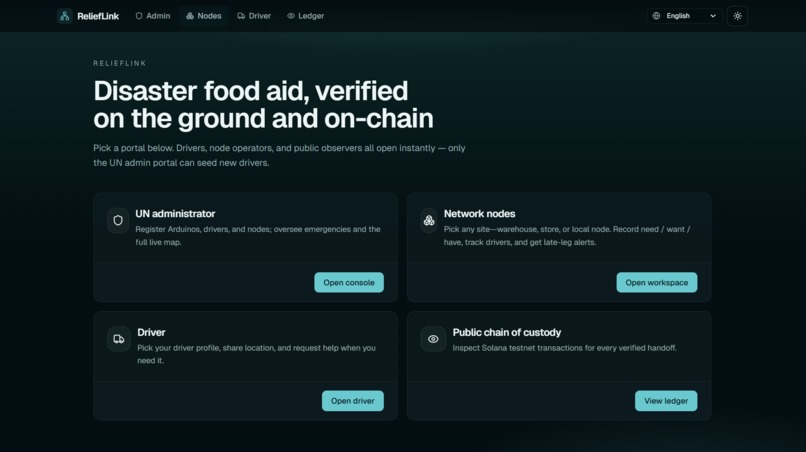
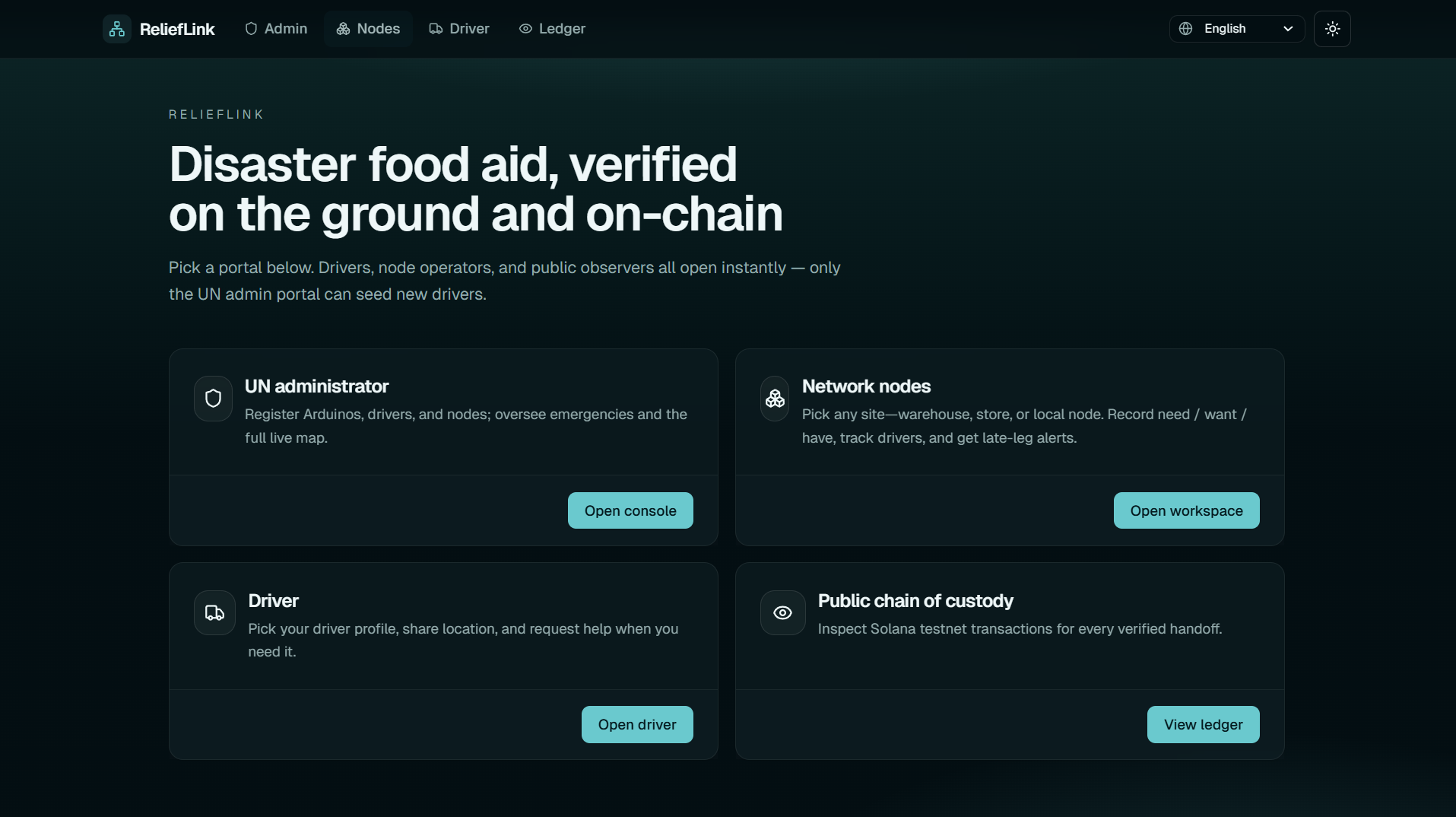
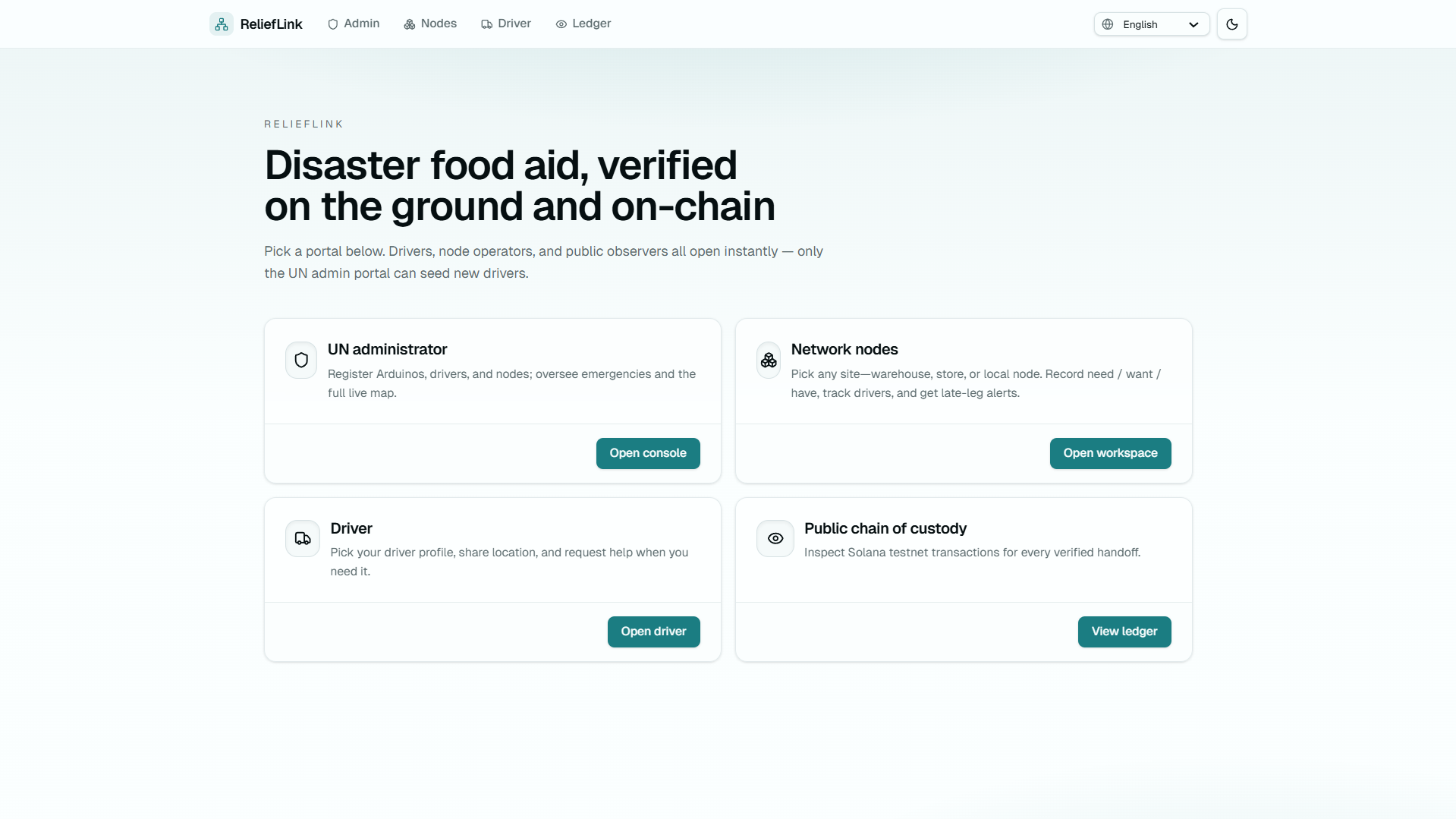
Landing Page
-
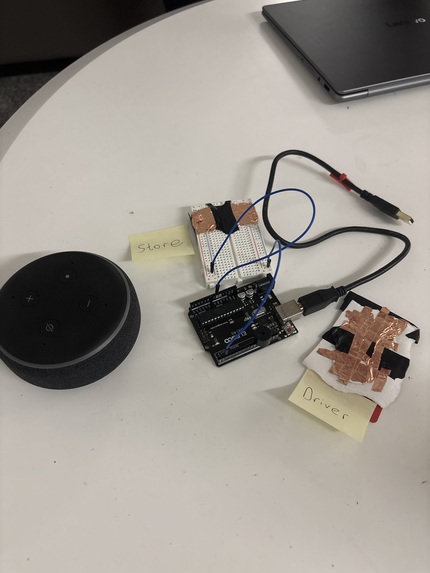
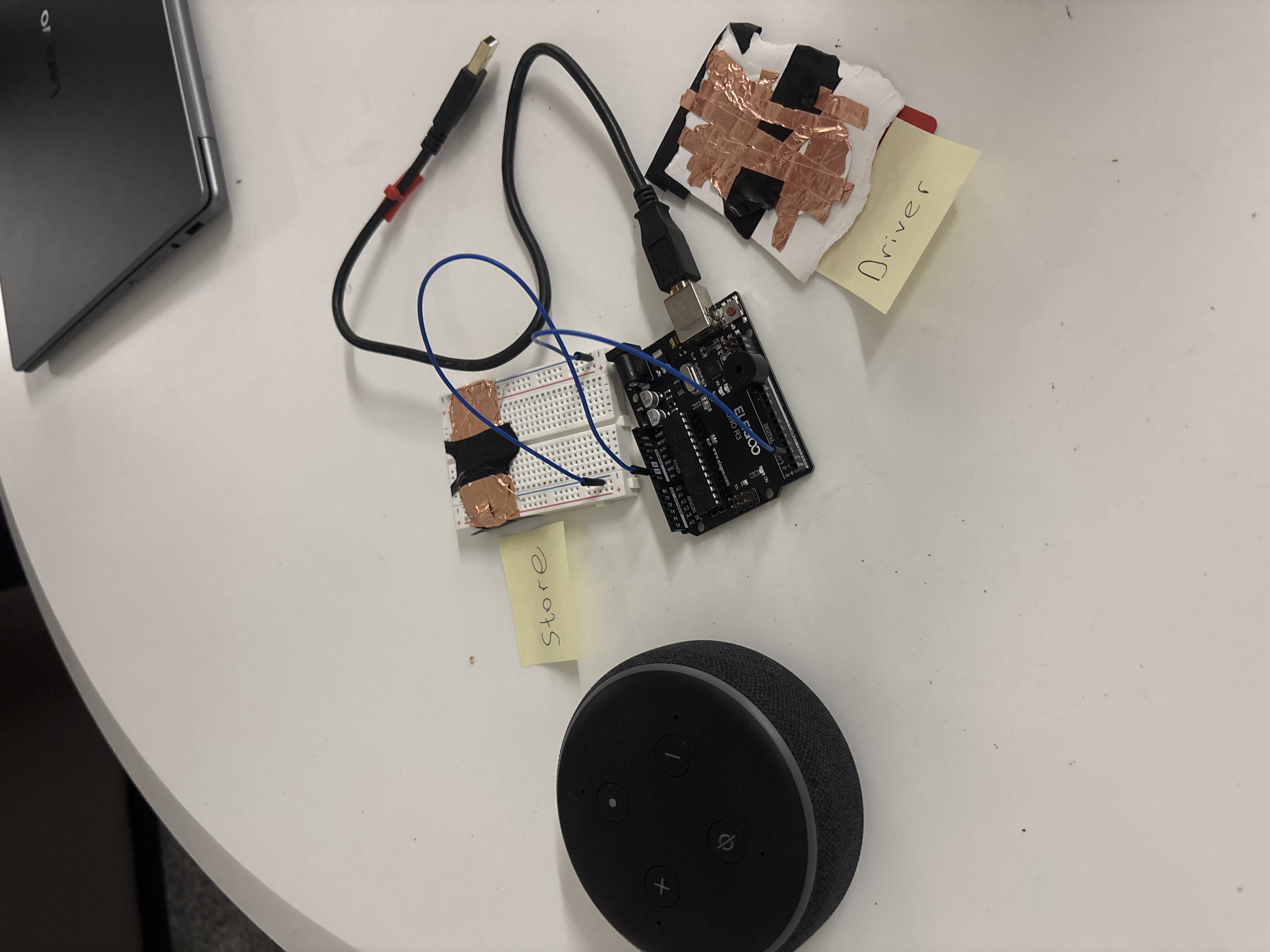
Hardware
-
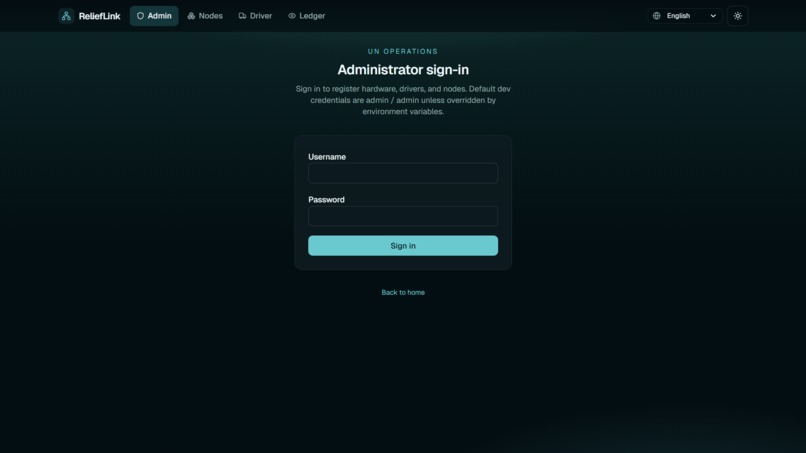
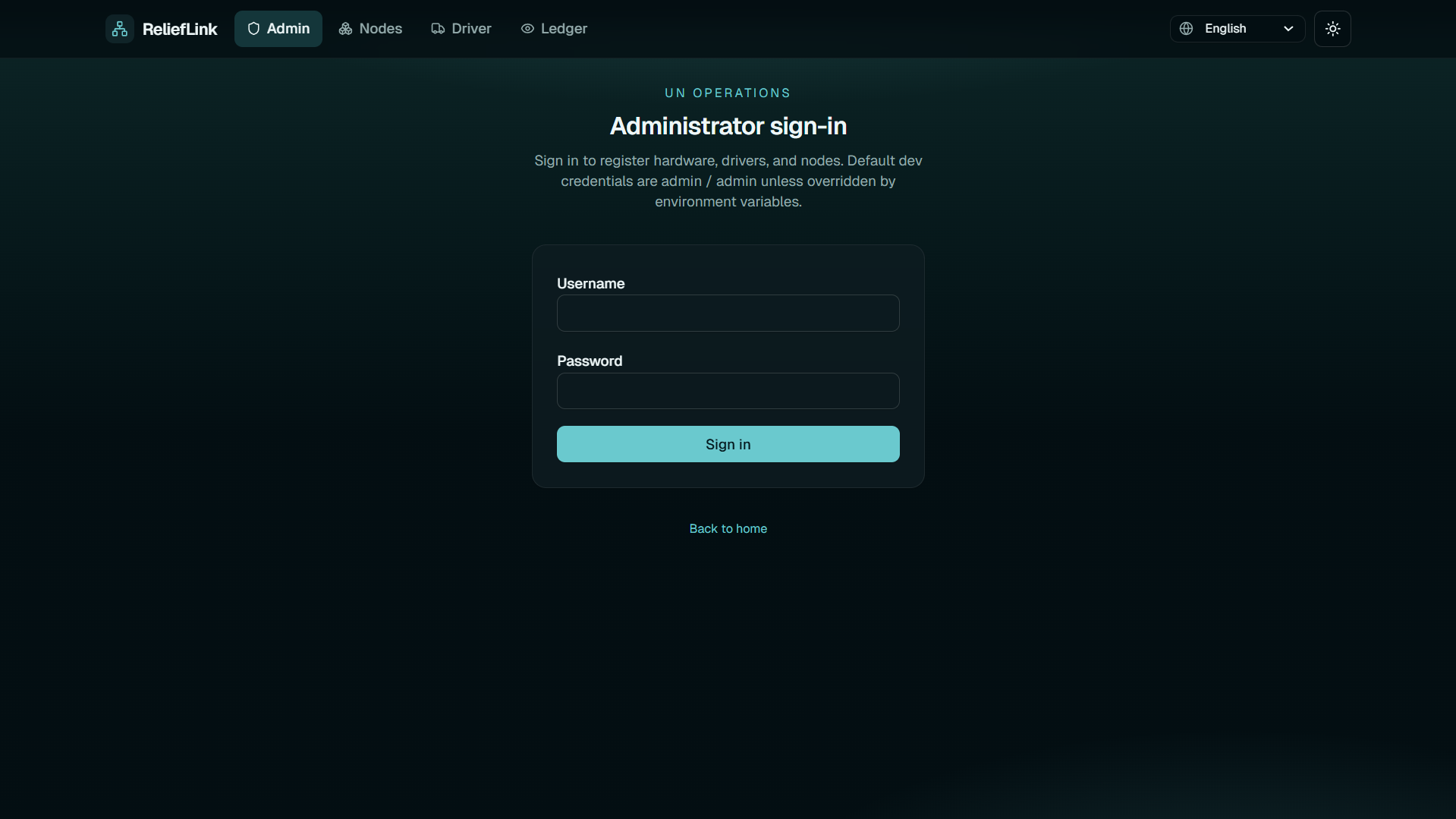
Admin Login Page
-
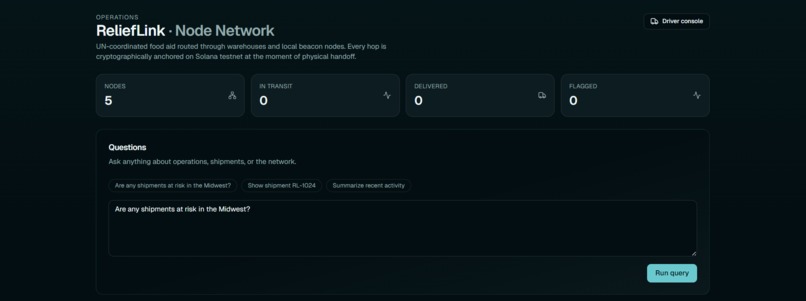
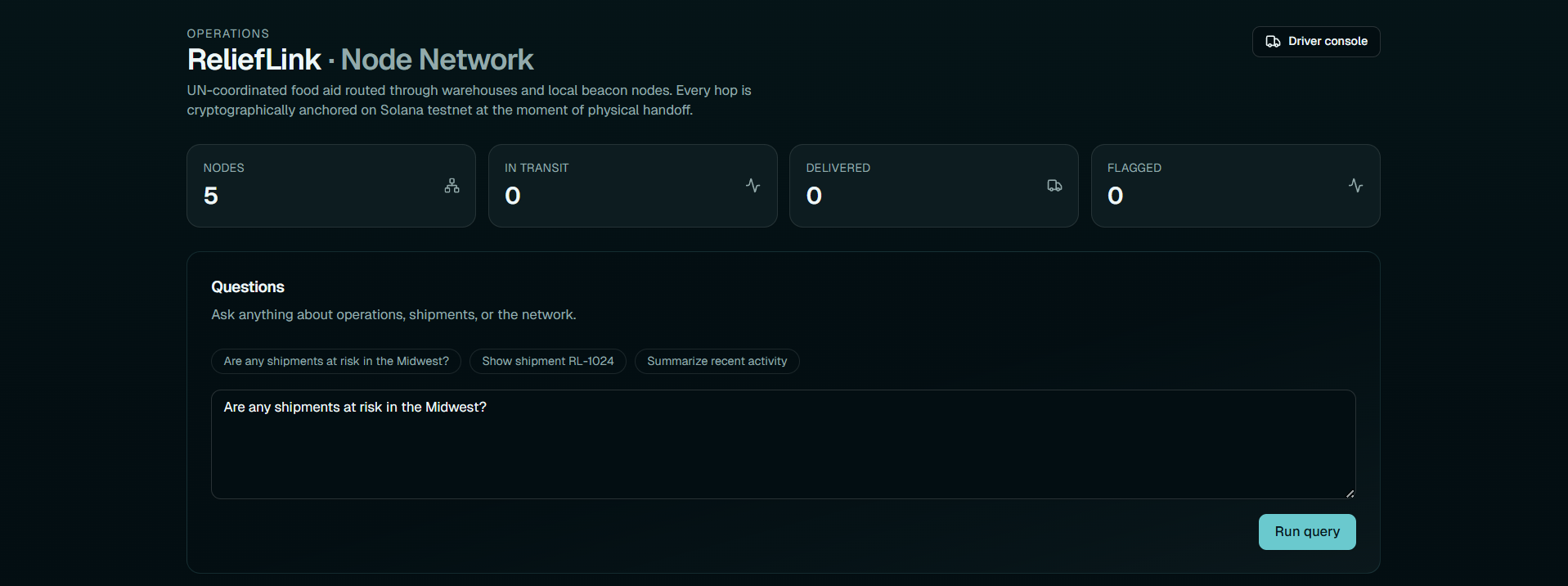
Node Network for Admin
-
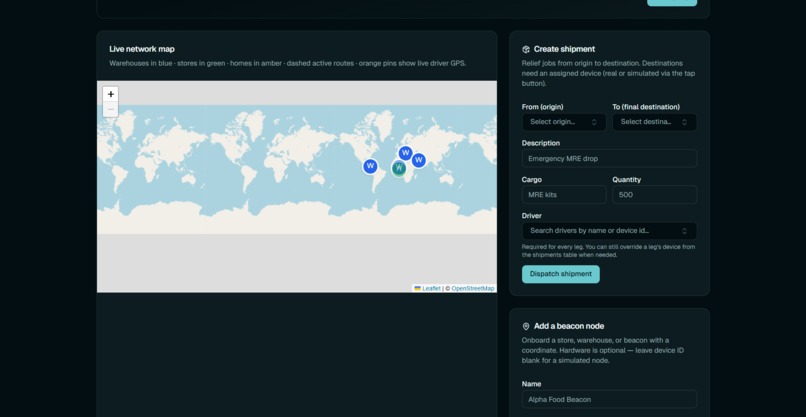
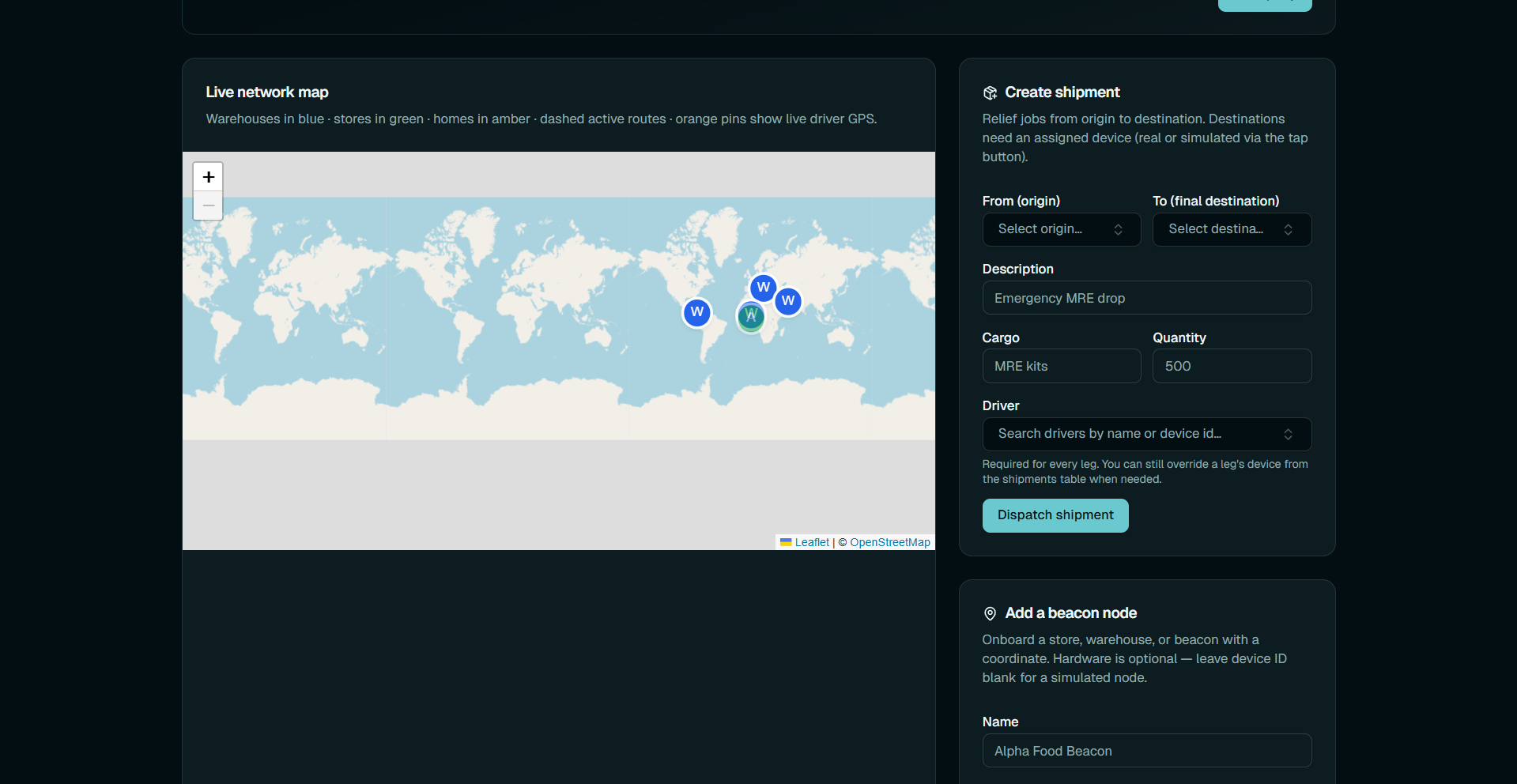
Map for Admin
-
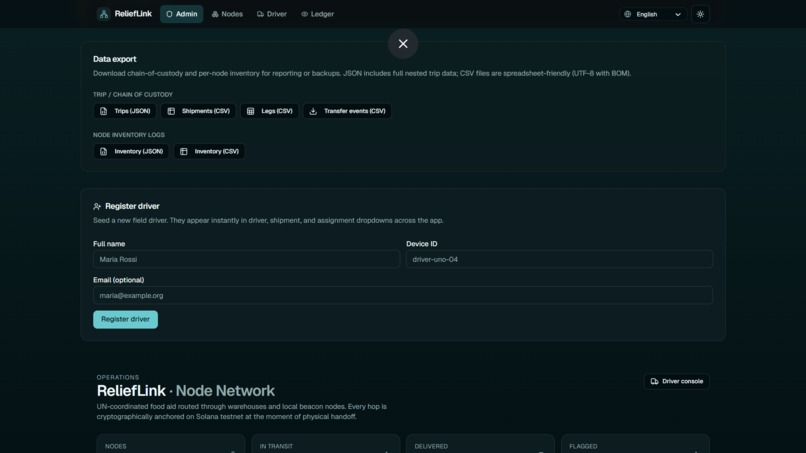
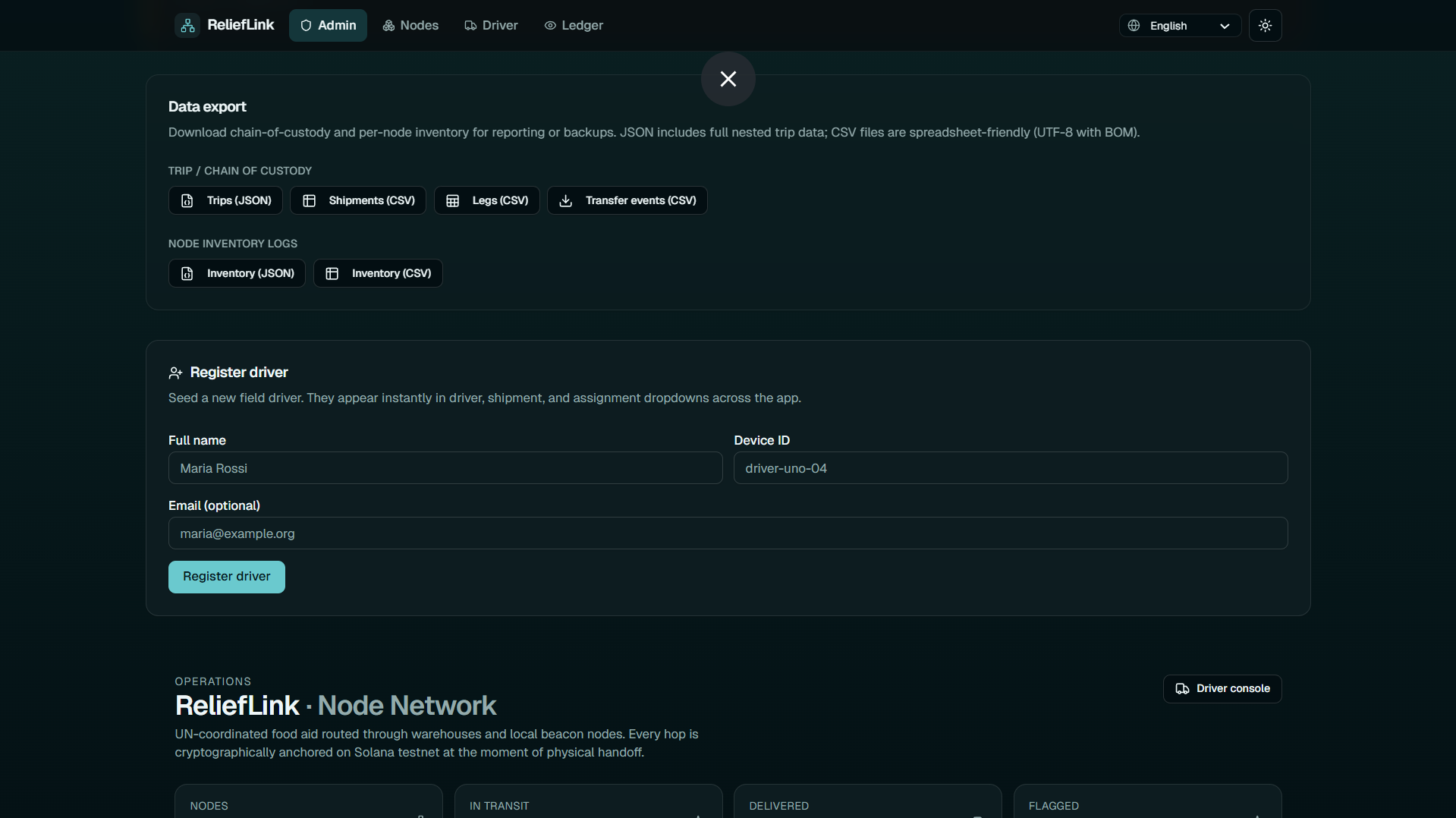
Register Drivers + Data Export for Admin
-
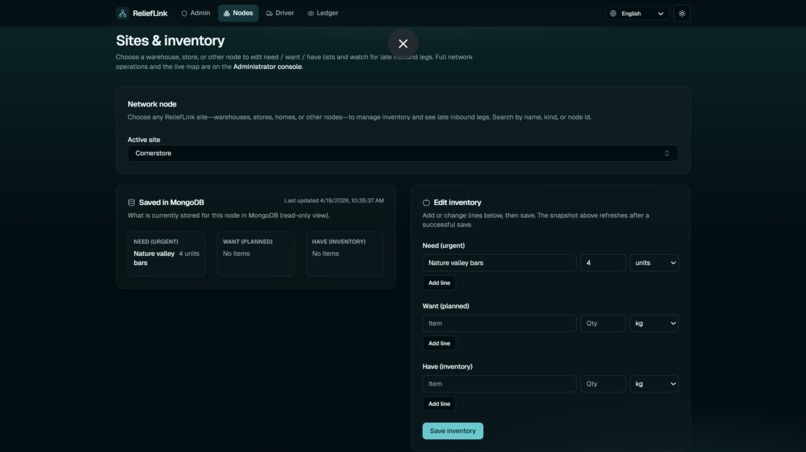
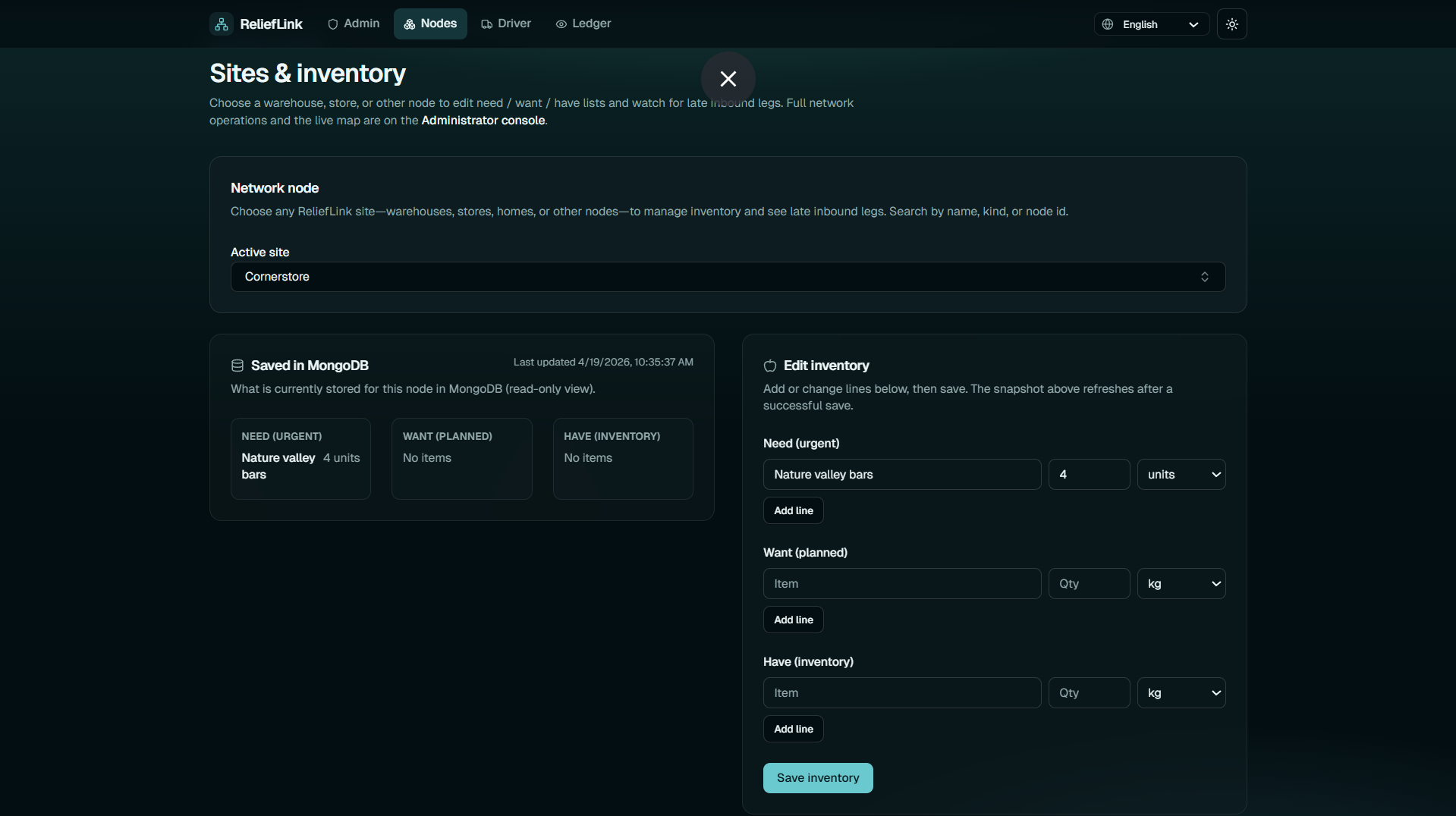
Nodes Page
-
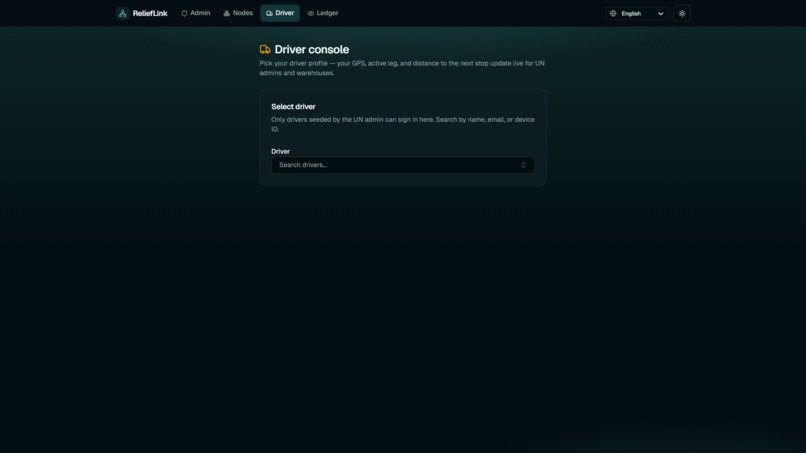
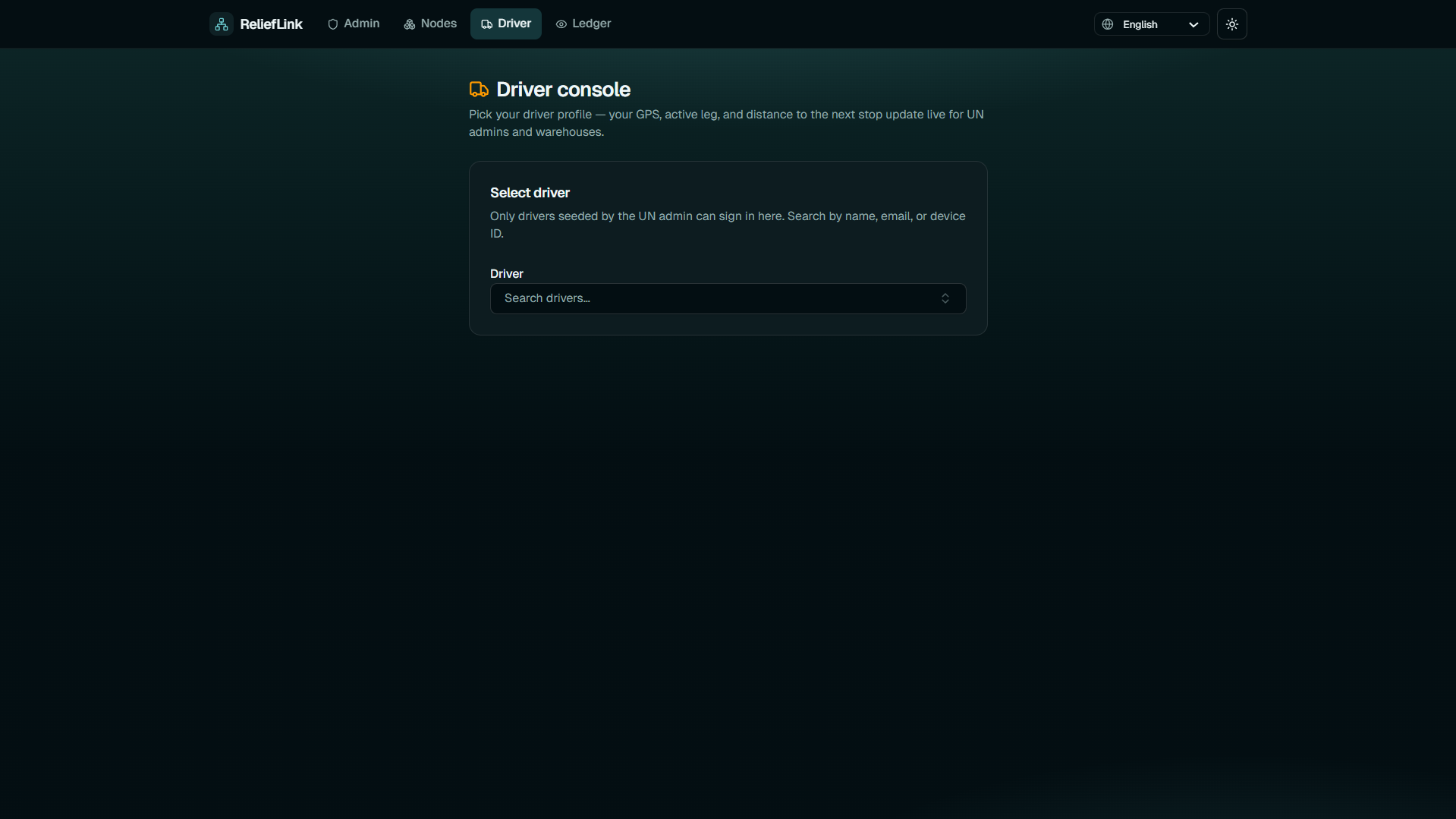
Driver Page
-
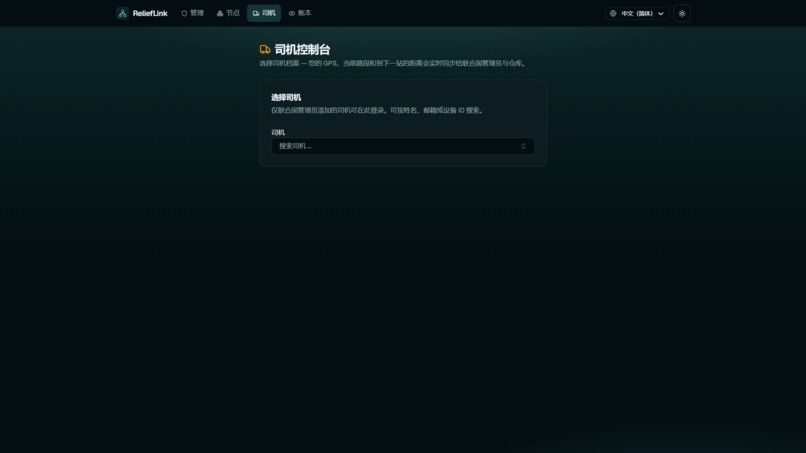
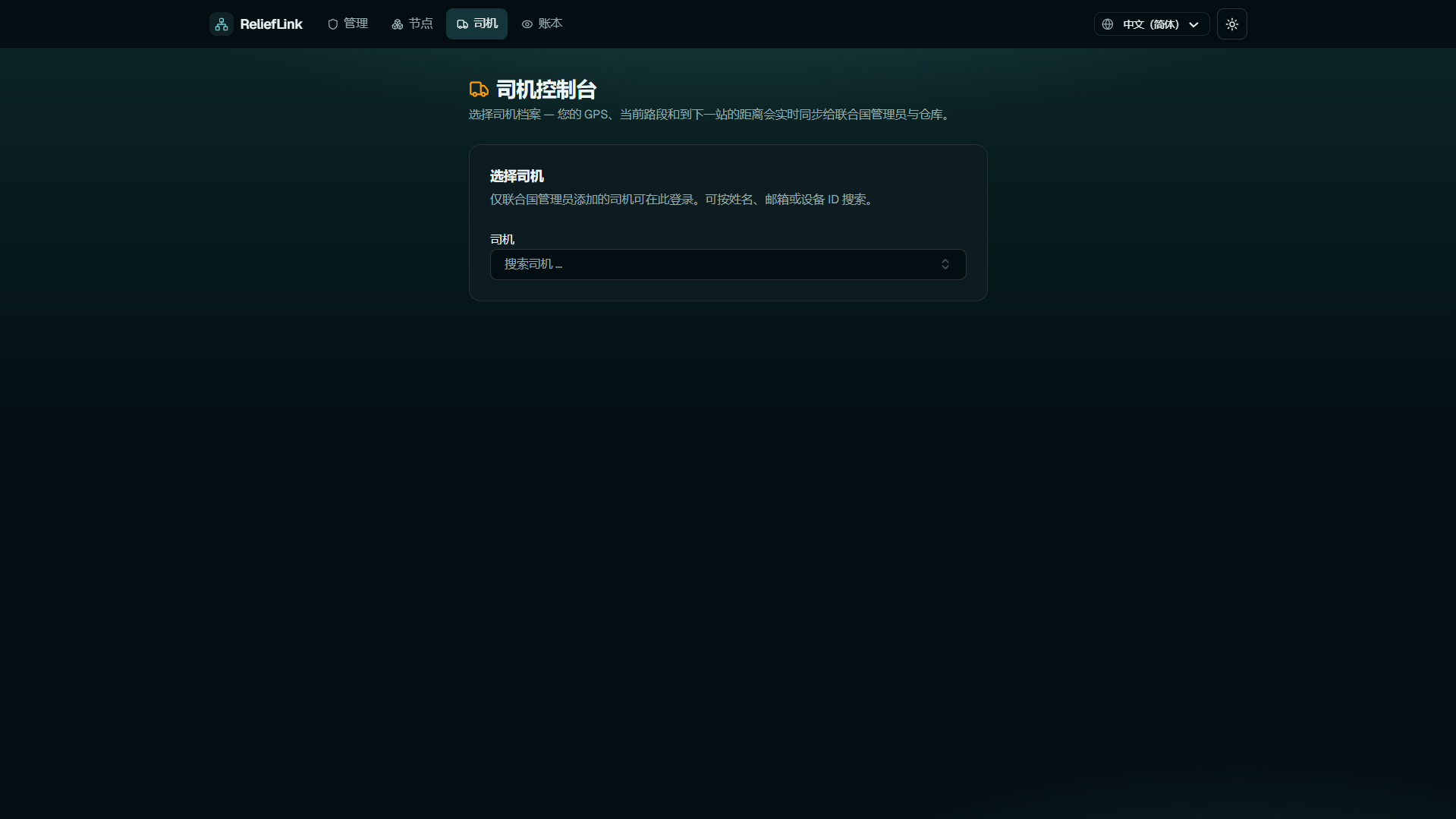
Driver Page in Simplified Chinese
-
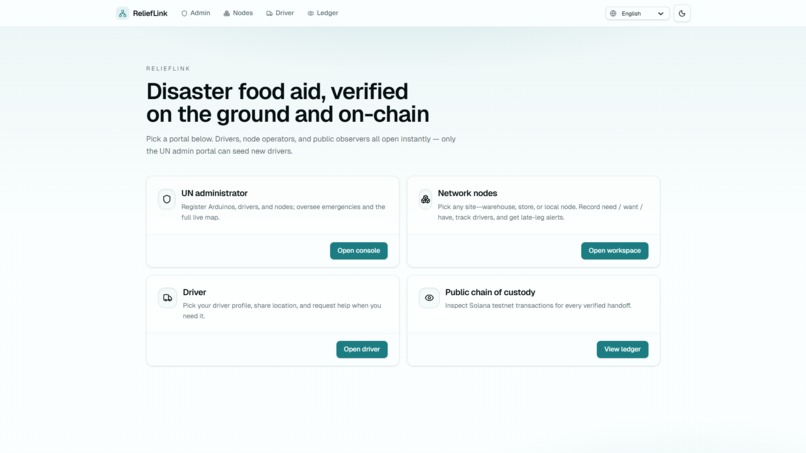
Landing Page in Light Mode
💡 Inspiration
In disaster scenarios, getting food to affected communities is not just a logistics problem, it’s a coordination and trust problem. Food is often delayed, lost, or misallocated due to fragmented supply chains and lack of accountability between organizations.
We were inspired by a simple but critical question:
What if we could guarantee that food aid actually reaches the people it’s intended for?
ReliefLink was born out of the idea of combining hardware, software, and decentralized systems to create a transparent and accountable food distribution network, especially for vulnerable communities during crises.
⚙️ What it does
ReliefLink is a blockchain verified food distribution system that tracks and secures the movement of food aid from origin to destination. It gives the UN a way to tap into hidden local capacity during food crises by turning local stores, businesses, and even homes into emergency distribution nodes. Instead of depending only on centralized warehouses, the network can expand in real time by activating places that already exist on the ground. We call these food beacons, local nodes the UN can immediately plug into when traditional supply chains are too slow, overloaded, or broken.
- Creates traceable food batches
- Logs every transfer between actors (warehouse → transporter → local node)
- Requires physical confirmation via hardware at each handoff
- Displays real-time status in a dashboard
- Detects anomalies like delays or missing transfers
- Uses AI to analyze risk and explain potential failures
At any moment, you can answer:
Where is the food? Who has it? Is it at risk?
🛠️ How we built it
🧩 Architecture
- Frontend: Next.js dashboard for real-time tracking
- Backend: Next.js API Routes + Node.js USB Serial Bridge
- Blockchain: Solana for immutable verification and accountability
- Database: MongoDB for batch + transfer data
- Hardware: Arduino for physical verification
- AI Layer: Google Gemini for risk analysis and natural language insights
- Maps:Utilized OpenStreetMaps for map data
🔌 Hardware System
Arduino-based Verification Layer: We used an Arduino to handle physical confirmation of transfers, ensuring that each handoff in the supply chain requires a real-world interaction rather than just a digital input.
Custom Tap System (NFC-inspired): We engineered a lightweight “tap” mechanism using copper wire connections. When two endpoints physically connect, it completes a circuit, acting as a proof-of-contact between actors and simulating secure handoff verification in low-resource environments.
Voice Interface (Amazon Echo Dot): We integrated an Echo Dot to provide real-time voice updates, announcing events like successful transfers, flagged risks, and delivery confirmations, making the system more accessible in fast-paced disaster scenarios.
🔄 System Flow
- A food batch is created at a warehouse
- Each transfer requires physical confirmation on a Arduino
- The backend logs the transfer and updates the chain of custody
- The dashboard visualizes the full journey
- AI analyzes patterns and flags risks
⚠️ Challenges we ran into
- Time constraints (24 hours): Balancing ambition vs. a working demo
- Hardware integration: Getting reliable communication between Arduino and backend
- Scope control: Avoiding overengineering (especially with blockchain + AI)
- Real-world realism: Designing for low-connectivity, disaster-prone environments
- System clarity: Making sure the project stayed focused on food access, not just tech
🏆Accomplishments that we're proud of
- Built a working end-to-end prototype in under 24 hours
- Successfully integrated hardware + backend + frontend
- Added an AI-powered risk analysis layer
- Designed a solution aligned with real UN disaster-response challenges
- Created a system that is both technically sound and socially impactful
📚 What we learned
Designing for real-world impact requires constraint-driven thinking.
Building for disaster scenarios forced us to consider unreliable infrastructure, limited connectivity, and the importance of local community systems—not just ideal technical conditions.Accountability is as important as access in food systems.
We realized that food insecurity in crises isn’t just about supply—it’s about ensuring aid is delivered transparently and reaches the intended recipients.Simplicity beats complexity under pressure.
In a 24-hour hackathon, prioritizing a clear, working end-to-end system was far more valuable than overengineering features like complex blockchain logic.Hardware integration creates trust in digital systems.
Adding physical confirmation made the system feel more reliable and grounded compared to purely software-based solutions.AI is most effective as an interpretability layer.
Rather than automating decisions, using AI to explain risks and surface insights made the system more understandable and actionable for users.Decentralized systems are about coordination, not just technology.
We learned to think of tools like Solana as a trust and coordination layer between organizations, rather than just a place to store data.
🚀What's next for ReliefLink by Moonshot
- Add offline-first capabilities for low-connectivity regions
- Expand to support multiple NGOs and local organizations, not just the UN
- Build a predictive analytics layer for supply optimization
Built With
- arduino
- echo
- elevenlabs
- gemini
- mongodb
- next.js
- node.js
- openstreetmap
- react
- shadcn/ui
- solana
- tailwindcss
- typescript
- vercel


Log in or sign up for Devpost to join the conversation.