-
-
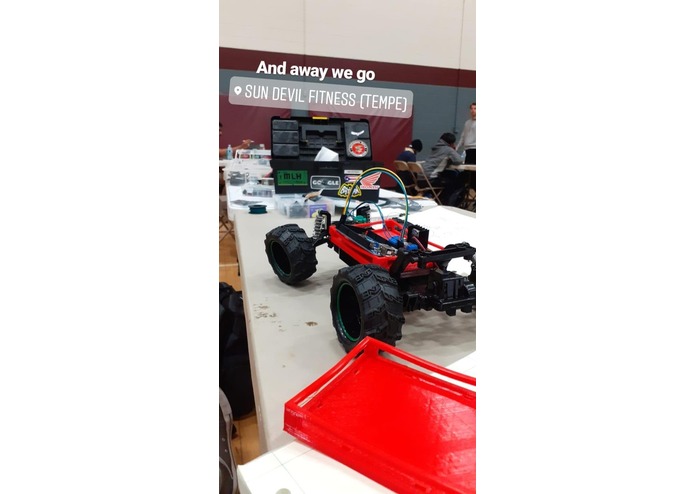
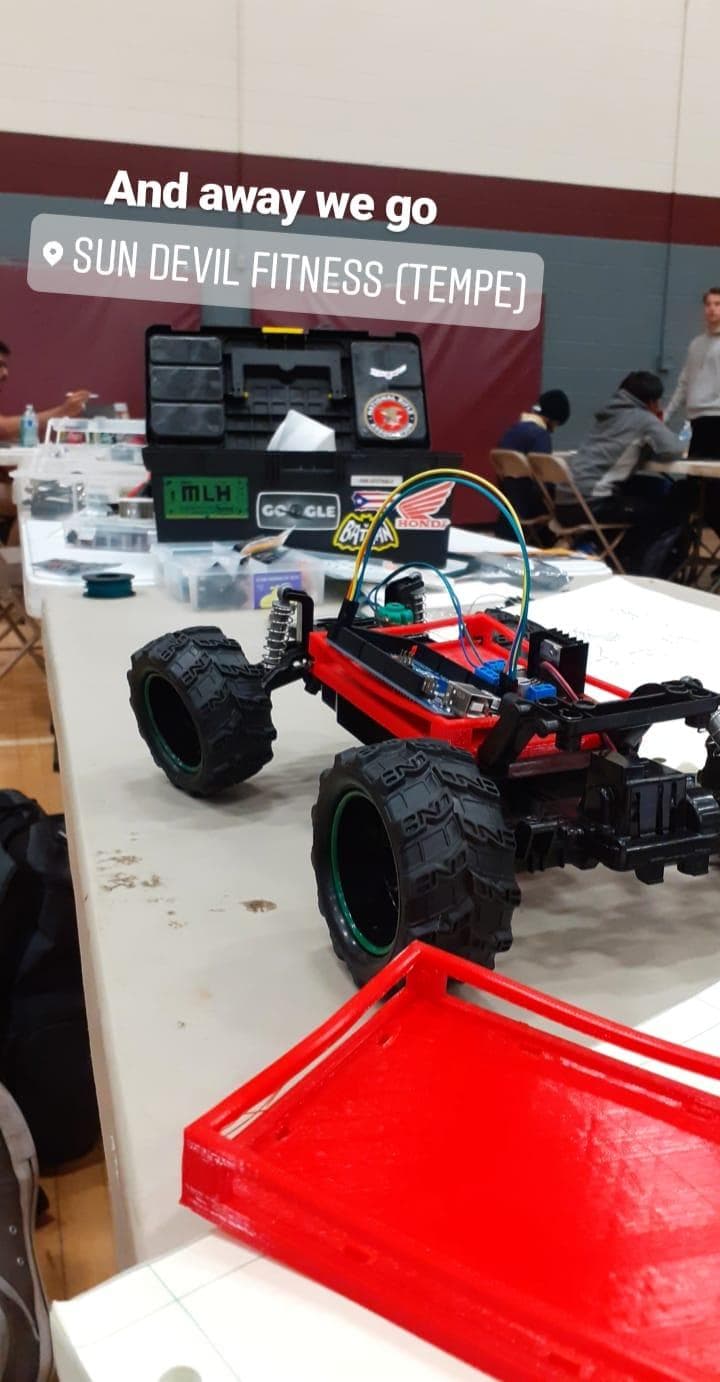
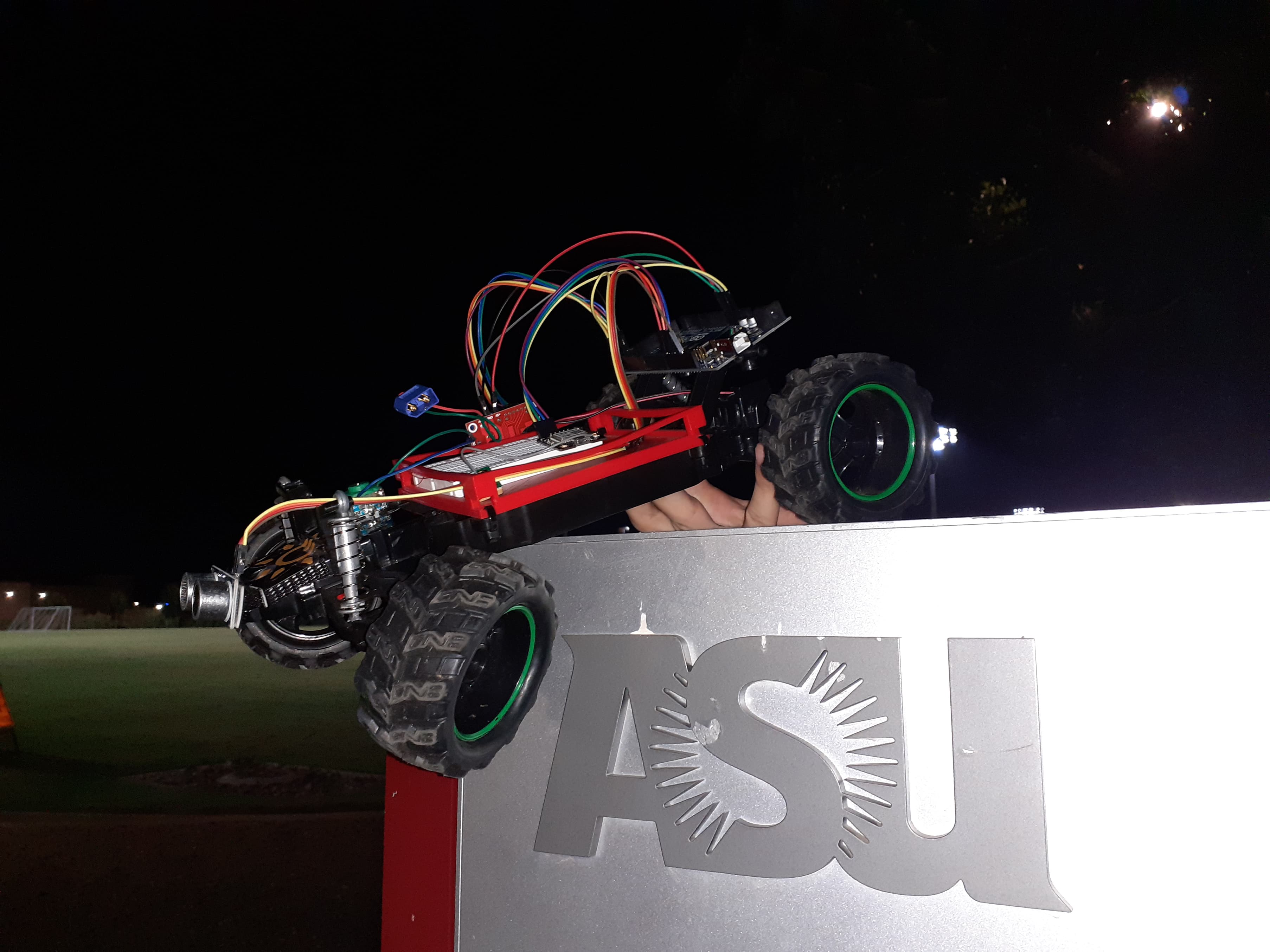
Rover on the test bench receiving the proper coding algorithms to aid in its path to path navigation
-
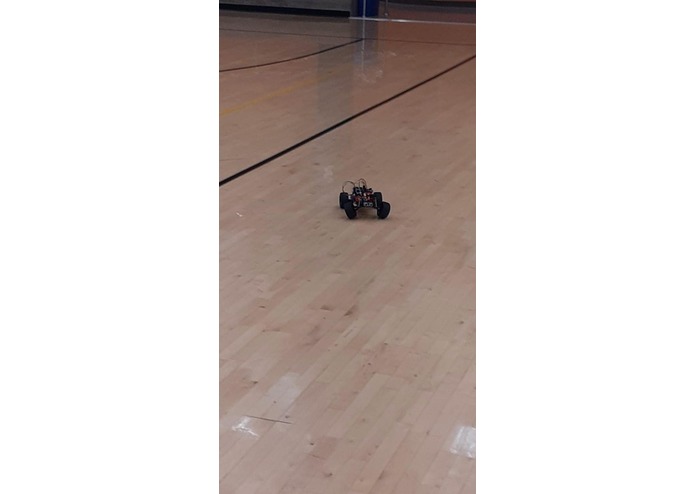
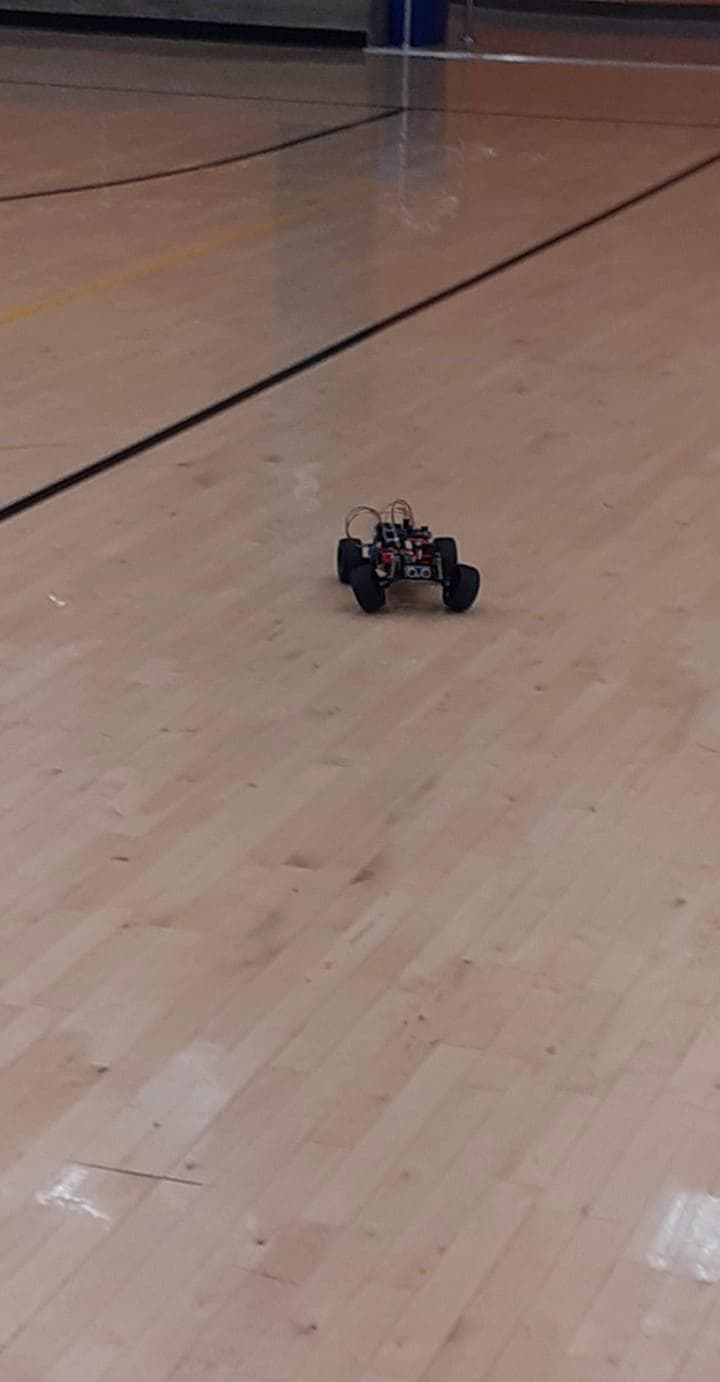
Rover being tested on its path navigation and collision avoidance via the ultrasonic sensor on the front
-
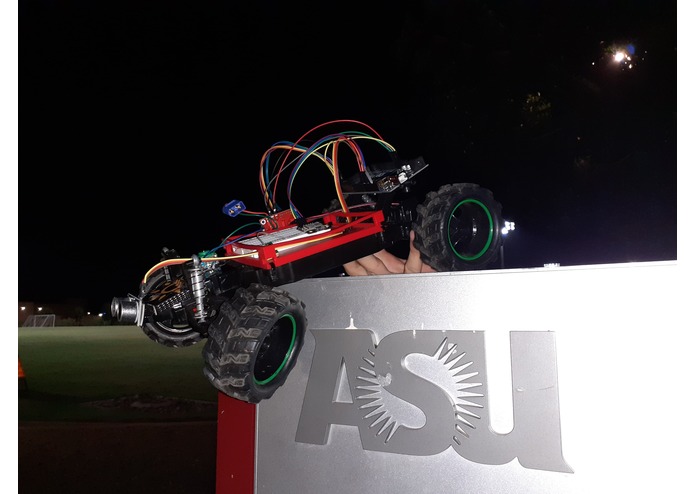
A humble ending for a 36 hour competition
Inspiration
The main driving force for this project has been my fascination with NASA and the attaining of data from various sources in unconventional methods
Application as a tool to explore environments that pose a threat to a researcher, emergency technician, war fighter, technician
This project would as well test the skills and understanding of electrical engineering, software engineering and computer science, due to the amount of coding and wiring needed to get the desired package.
As for the name its only appropriate as this vehicle will be used to receive data and return to the user or and data logger
What it does
There has been a culmination of several parts to this project
These parts have been control and feedback systems
A rudimentary autonomous system to guide the vehicle to its intended way point
Options for a rudimentary radio control system to perform manned vehicle operations
Several sensors receiving and sending data back to the user terminal for further analysis
How we built it
The project is centered around a Arduino Mega 2560 to receive/interpret while having ample memory to run the systems required for the project
Challenges
Issues that arose from this project centered around one central theme of communication. As there was not only a breakdown in communication of the processes on the electronic components but there was a language barrier within the team. This was due to the part of the team primarily speaking in American Sign Language and the other part of the team learning the uses of hardware systems and their implementation.
We would prevail through these challenge by using the technology we have available to us by communicating through slack, using talk to text applications, as well researching fervently throughout google for the proper documentation and libraries to use the sensors and modules on board for this project
Other issues lead back to the hardware available and time available to remedy the issue. *These separate issues focused primarily on the physical limitations of the car chassis as it was not providing a sturdy platform to work from
*The magnetometer (gyroscope) not performing as marketed leading to the limitation of the autonomous system as proper Kilman filter was unable to be applied to the system which would have provided the most optimal way point navigation
Accomplishments that we are proud of
Having the car to drive autonomously uninhibited
Implementation of a collision avoidance algorithm that would be able to have the vehicle go around the obstacle and continue its previous heading in an unobstructed heading
Maintaining space to add more sensors to the system in order to
What we've learned
Hardware safety practices (i.e. Soldering, Insulating, debugging practices on hardware)
Capability of the hardware
Proper communication protocol for the SPI communication and I2C compliant
What's next for Red Rover
Further research into more accurate and more reliable components will be looked too in the near future a secondary underlying reason for this project coming to fruition was to gain experience on autonomous systems
Description of NASA Challenges https://microgravityuniversity.jsc.nasa.gov/docs/2020%20Challenge%20Document%20v2.pdf


Log in or sign up for Devpost to join the conversation.