-
-

Emergency response, accessibility, real-time connectivity, and professional AWS-powered infrastructure
-
-
-
-

Inspiration
The inspiration for the Real-Time Alert Platform came from witnessing how critical emergency information often fails to reach the most vulnerable populations during disasters. We saw communities cut off by poor connectivity, individuals with disabilities unable to access standard alert systems, and emergency responders struggling with fragmented communication channels. The 2023 Maui wildfires and recent natural disasters highlighted how traditional alert systems create barriers instead of breaking them down. We envisioned a platform that would ensure no one is left behind when seconds matter most.
What it does
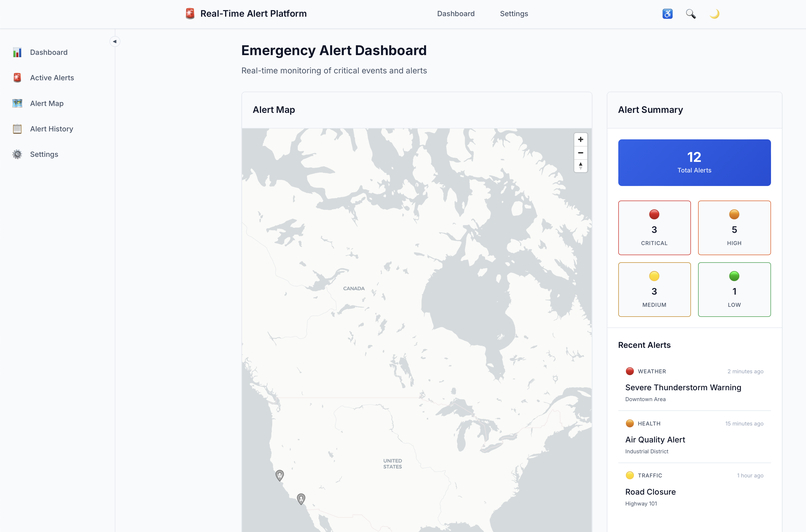
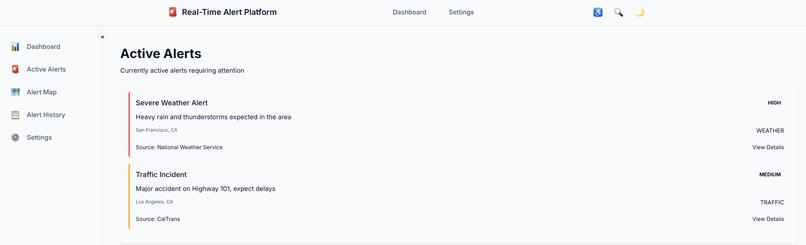
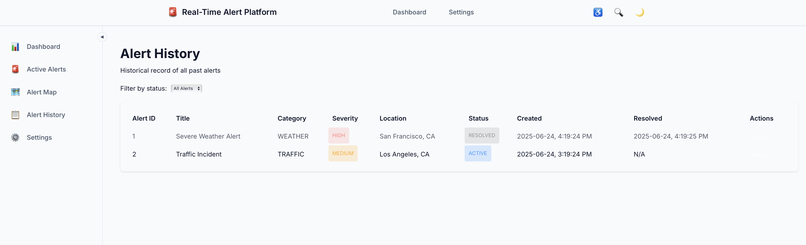
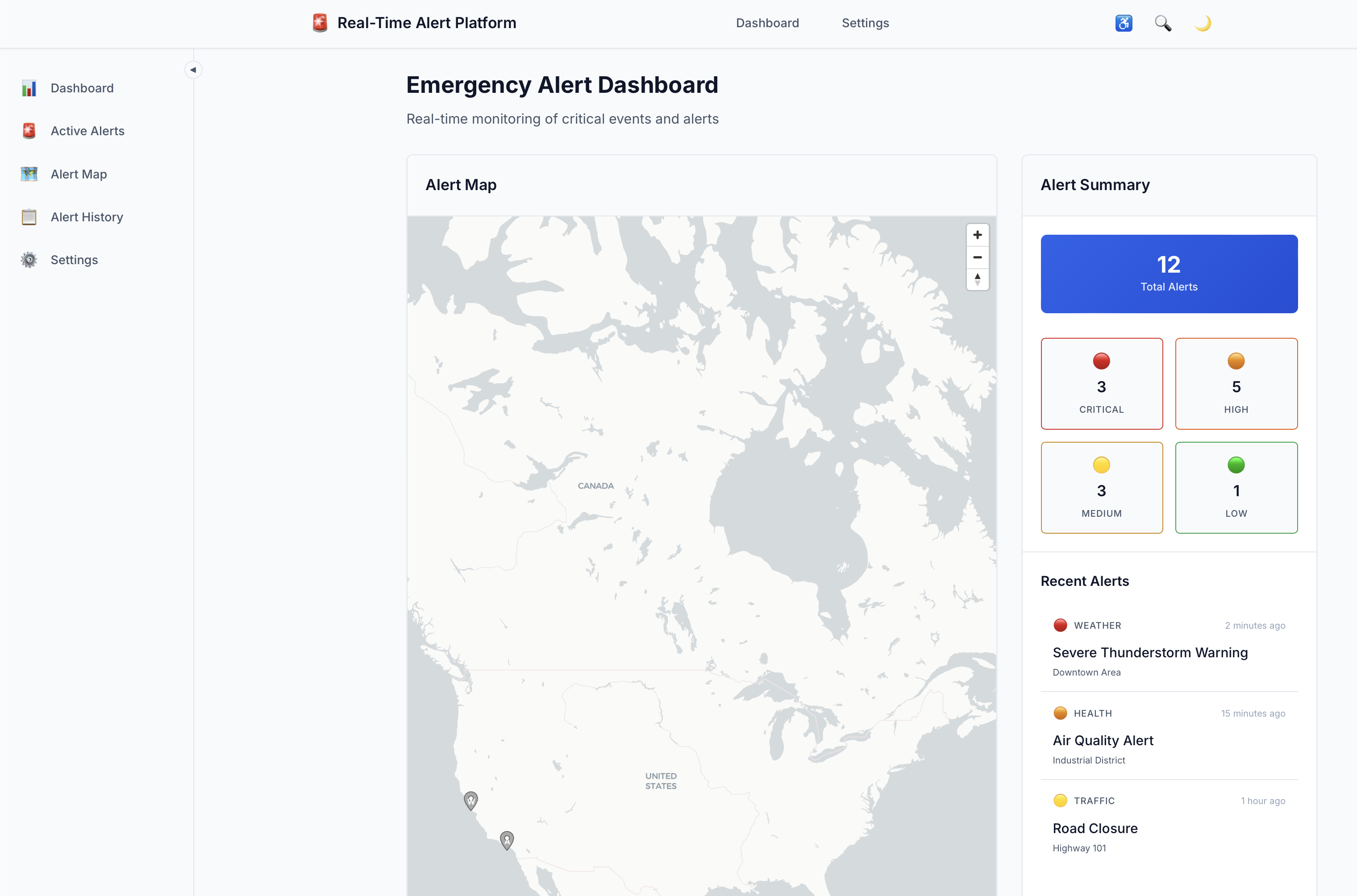
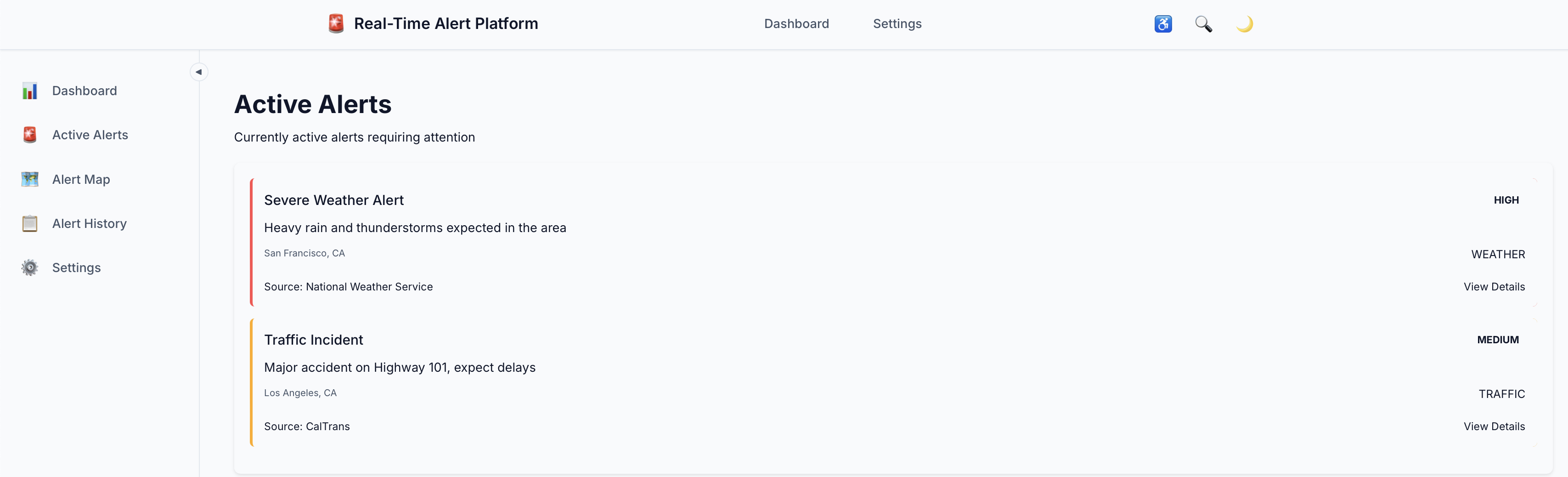
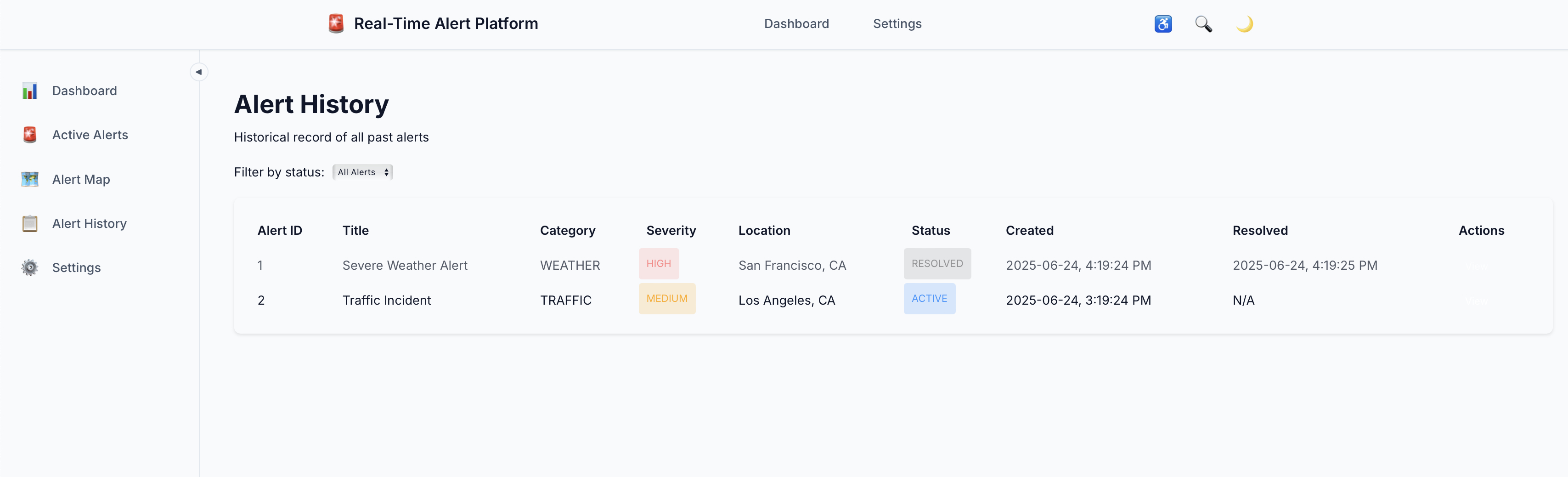
The Real-Time Alert Platform is a comprehensive emergency communication system that delivers personalized, accessible alerts through multiple channels. It combines AWS's powerful AI services with next-generation connectivity solutions to:
• Process real-time data from multiple sources (weather services, seismic monitors, emergency services)
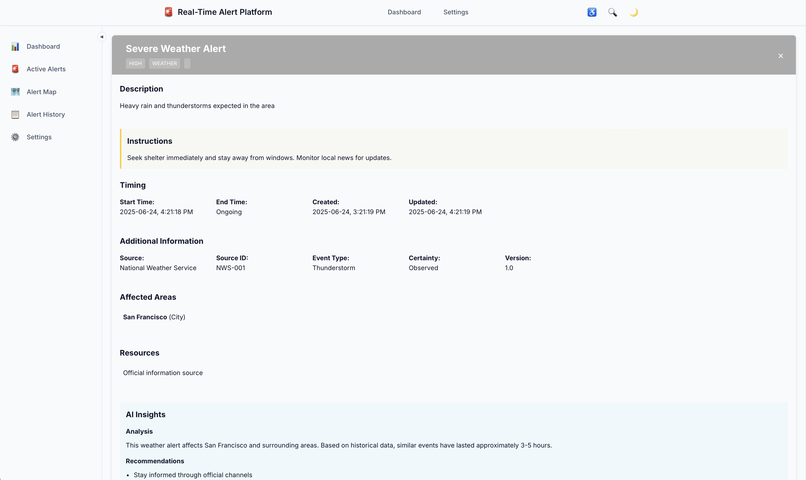
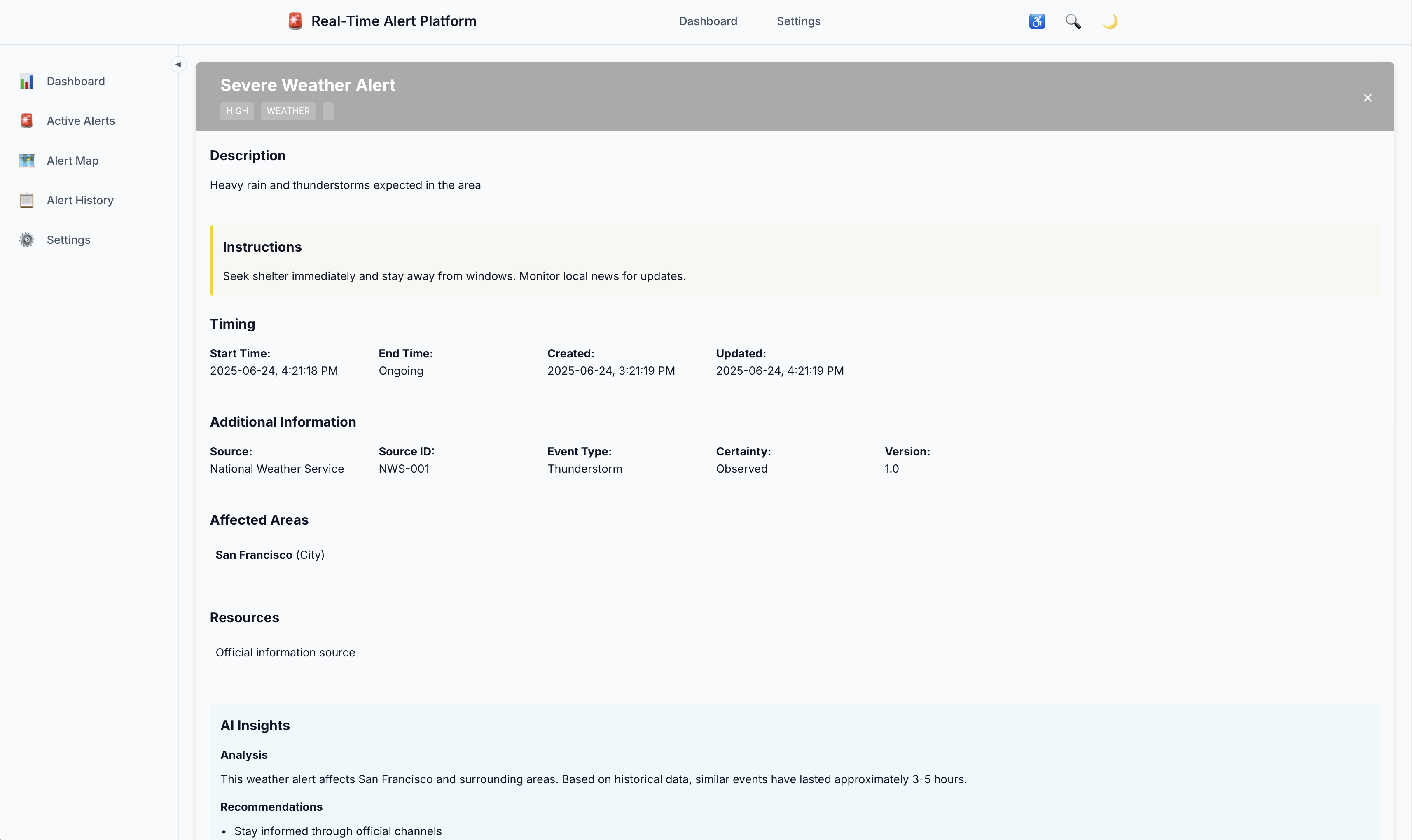
• Generate AI-powered insights using Amazon Bedrock for situation analysis and recommendations
• Deliver alerts through multiple channels - mobile apps, SMS, email, mesh networks, and emergency broadcasts
• Provide universal accessibility with screen reader support, keyboard navigation, and customizable interfaces
• Function offline through service workers and local data processing
• Support geospatial intelligence with location-based filtering and geohash indexing
• Enable cross-platform access through web and mobile applications
How we built it
We architected the platform using a modern, cloud-native approach:
Frontend:
• React 18 with TypeScript for the web application
• React Native for mobile cross-platform support
• Progressive Web App (PWA) capabilities with service workers
• Comprehensive accessibility implementation (WCAG 2.1 compliant)
Backend & AI:
• AWS Amplify for rapid full-stack development
• Amazon Cognito for authentication with role-based access control
• AWS AppSync (GraphQL) for real-time data synchronization
• Amazon Bedrock for AI-powered situation analysis and recommendations
• AWS Lambda functions for serverless processing
Data & Storage:
• Amazon DynamoDB for scalable alert storage with geospatial indexing
• Real-time subscriptions for instant alert delivery
• Offline-first architecture with local data caching
Connectivity Solutions:
• Multi-channel delivery system (push notifications, SMS, email)
• Mesh networking capabilities for disaster scenarios
• WebRTC for peer-to-peer communication
Challenges we ran into
Accessibility Complexity: Implementing comprehensive accessibility features while maintaining performance was challenging. We had to create custom screen reader announcements, keyboard navigation systems, and ensure all interactive elements were properly labeled.
Real-time Data Synchronization: Managing real-time updates across multiple clients while handling offline scenarios required careful state management and conflict resolution strategies.
Geospatial Performance: Processing location-based queries efficiently at scale required implementing geohash indexing and optimizing DynamoDB query patterns.
AI Integration Reliability: Ensuring Amazon Bedrock responses were consistent and handling AI service failures gracefully required implementing robust error handling and fallback mechanisms.
Cross-Platform Consistency: Maintaining feature parity between web and mobile applications while respecting platform-specific design patterns.
Module System Conflicts: Balancing ES6 modules in the frontend with CommonJS requirements in AWS Lambda functions required careful configuration management.
Accomplishments that we're proud of
Universal Accessibility: Created a truly inclusive platform that works seamlessly with screen readers, supports keyboard navigation, and provides customizable interfaces for users with different needs.
Comprehensive Test Coverage: Achieved 60+ test files covering unit, integration, and accessibility testing, ensuring reliability and maintainability.
AI-Powered Intelligence: Successfully integrated Amazon Bedrock to provide intelligent situation analysis, generating actionable insights from complex emergency data.
Offline-First Architecture: Built a resilient system that continues functioning even when connectivity is compromised, crucial for disaster scenarios.
Production-Ready Security: Implemented enterprise-grade authentication with role-based access control, protecting sensitive emergency data while enabling appropriate access.
Developer Experience: Created comprehensive documentation, clear code organization, and proper development tooling that makes the platform maintainable and extensible.
Cross-Platform Support: Delivered both web and mobile applications from a shared codebase, maximizing reach and minimizing development overhead.
What we learned
Accessibility is Not Optional: Building accessibility from the ground up is far more effective than retrofitting it later. It also benefits all users, not just those with disabilities.
AI Requires Human Oversight: While Amazon Bedrock provides powerful insights, human validation and fallback mechanisms are essential for critical emergency systems.
Offline-First Design: Planning for connectivity issues from the beginning creates more resilient applications that work better even when online.
Context Matters in Emergencies: Personalization and location-aware features significantly improve the relevance and effectiveness of emergency communications.
Testing Emergency Systems: Simulating real-world emergency scenarios in testing revealed edge cases we wouldn't have discovered otherwise.
Community-Centered Design: Involving diverse communities in the design process led to features we wouldn't have considered, making the platform truly inclusive.
What's next for Real Time Alert Platform
Immediate Roadmap:
• Enhanced AI Capabilities: Expand Amazon Bedrock integration for predictive analytics and automated response recommendations
• Advanced Mesh Networking: Implement full peer-to-peer communication for disaster-resilient networks
• Multi-Language Support: Add internationalization for global deployment
• Advanced Analytics Dashboard: Create comprehensive reporting and analytics for emergency managers
Medium-Term Goals:
• IoT Integration: Connect with smart city infrastructure, weather stations, and sensor networks
• Machine Learning Models: Develop custom ML models for pattern recognition in emergency data
• Blockchain Integration: Implement distributed ledger for alert authenticity and audit trails
• AR/VR Interfaces: Explore immersive interfaces for emergency visualization and training
Long-Term Vision:
• Global Deployment: Scale to serve communities worldwide with region-specific customizations
• Predictive Emergency Response: Use AI to predict and prevent emergencies before they occur
• Community Resilience Platform: Expand beyond alerts to comprehensive community preparedness and response coordination
• Open Source Ecosystem: Create an open platform that enables community contributions and customizations
Impact Goals:
• Reach 1 million users across diverse communities
• Partner with emergency management agencies globally
• Reduce emergency response times by 40%
• Achieve 100% accessibility compliance across all features
• Create a replicable model for inclusive emergency communication systems
The Real-Time Alert Platform represents more than just technology—it's a commitment to ensuring that when disaster strikes, no one is left behind.
Built With
- amazon-bedrock
- amazon-cognito
- amazon-dynamodb
- amplify
- aws-appsync
- aws-lambda
- aws-secrets-manager
- babel
- bedrock
- eslint
- geohashing
- geojson
- geolocation-api
- html5
- indexeddb
- javascript-(es6+)
- jestreact-native
- localstorage
- maplibre-gl
- react-map-gl
- react-router-dom-v6
- react-testing-library
- s3
- turf.js
- webpack
- webrtc

Log in or sign up for Devpost to join the conversation.