-
-
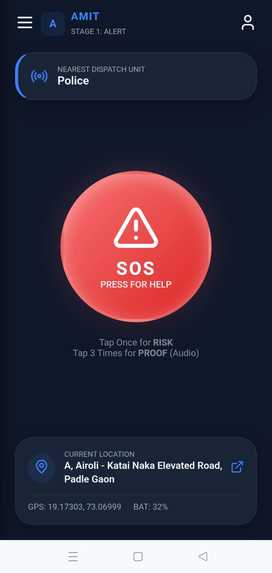
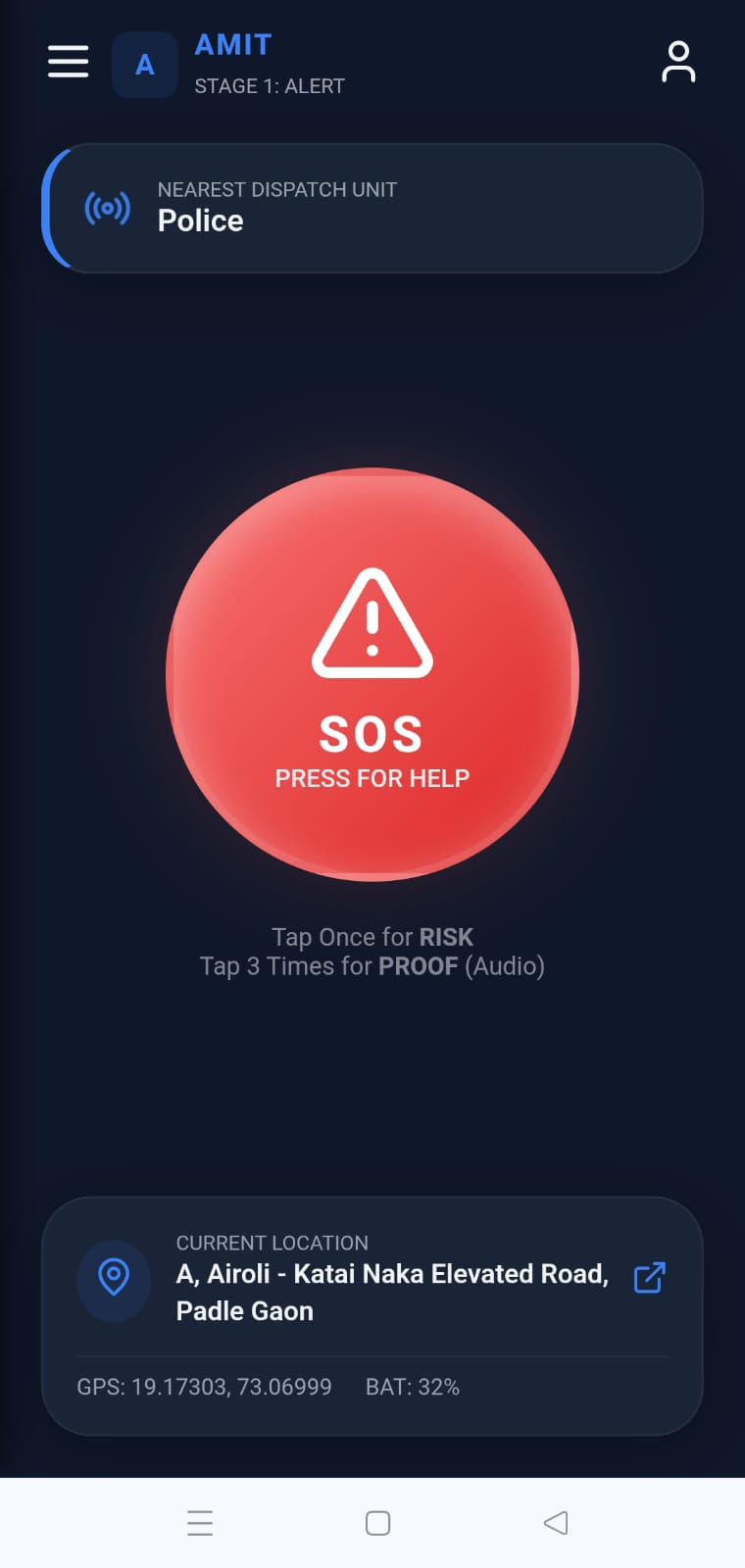
SOS interface
-
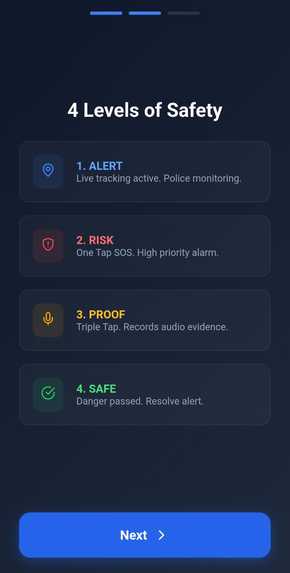
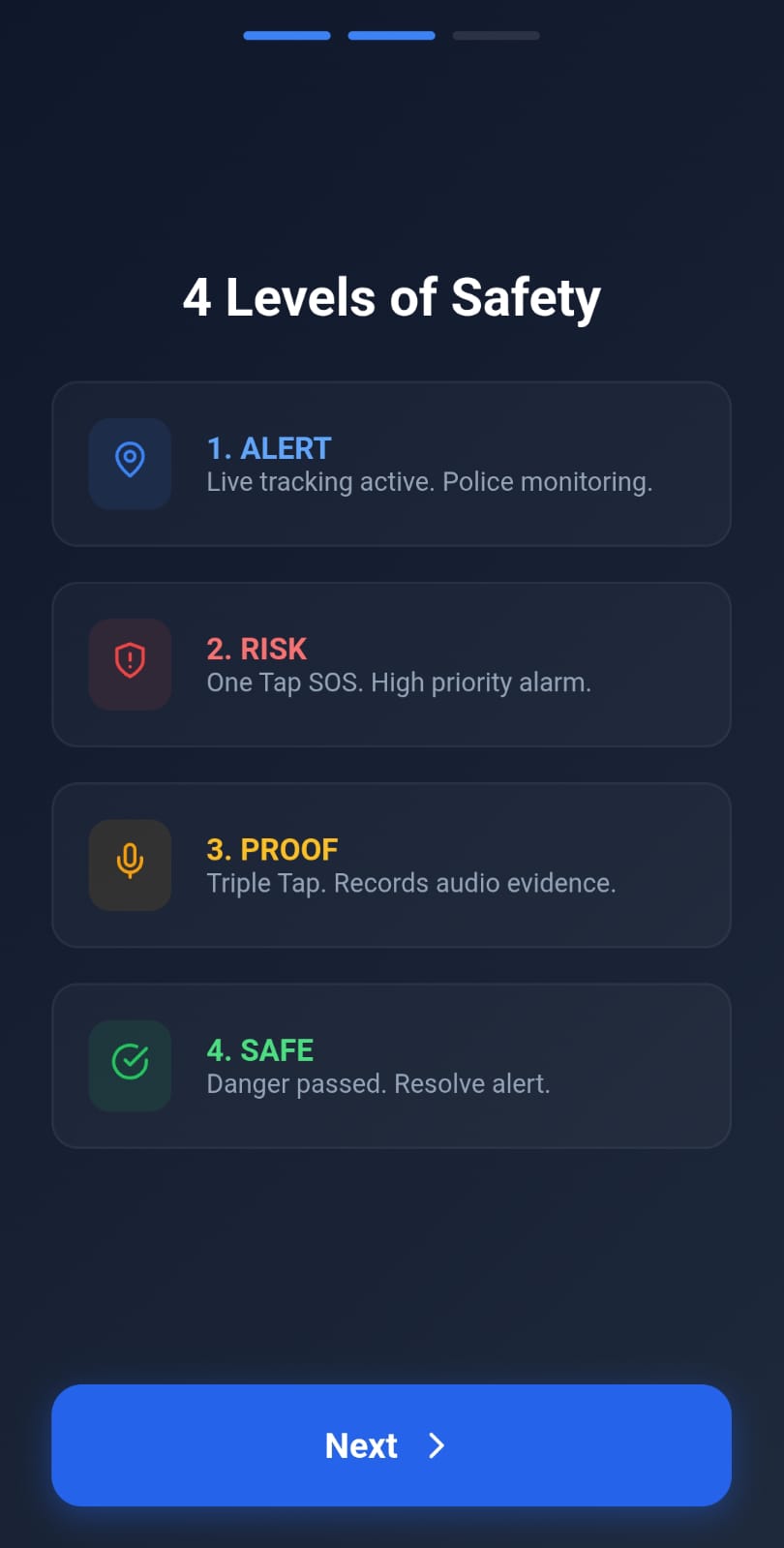
4 type of alerts
-
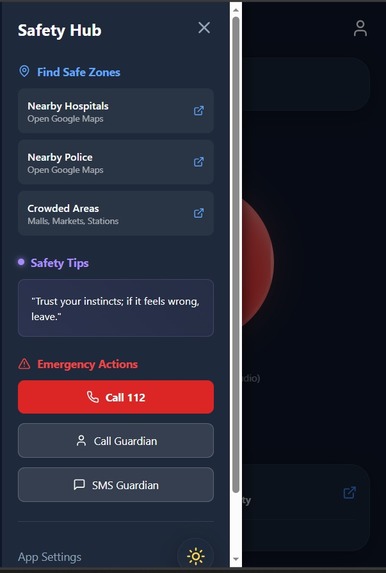
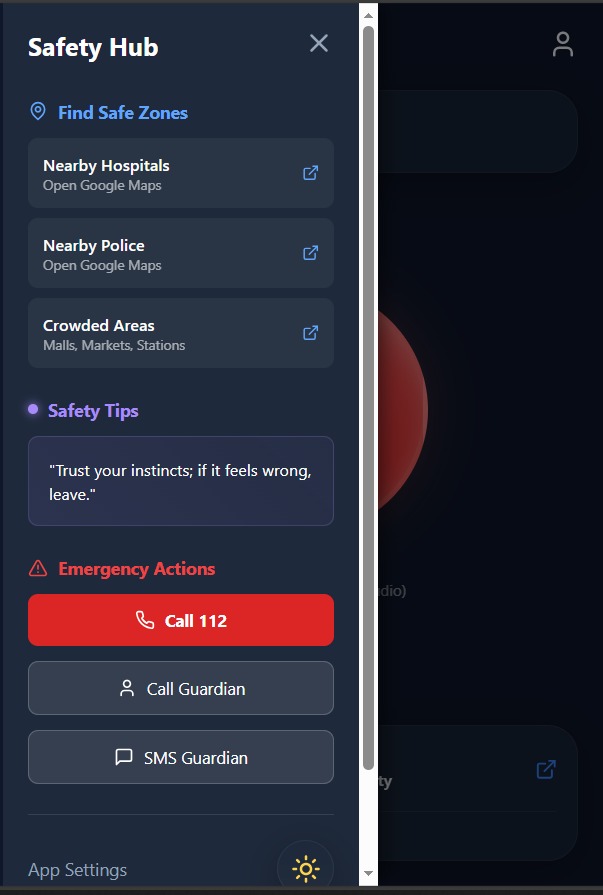
few wtra stuff for user safty
-
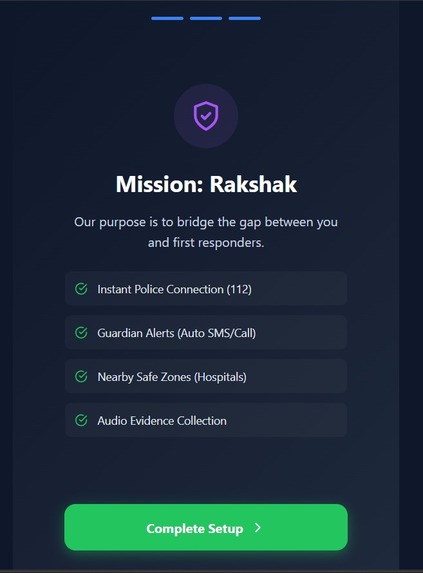
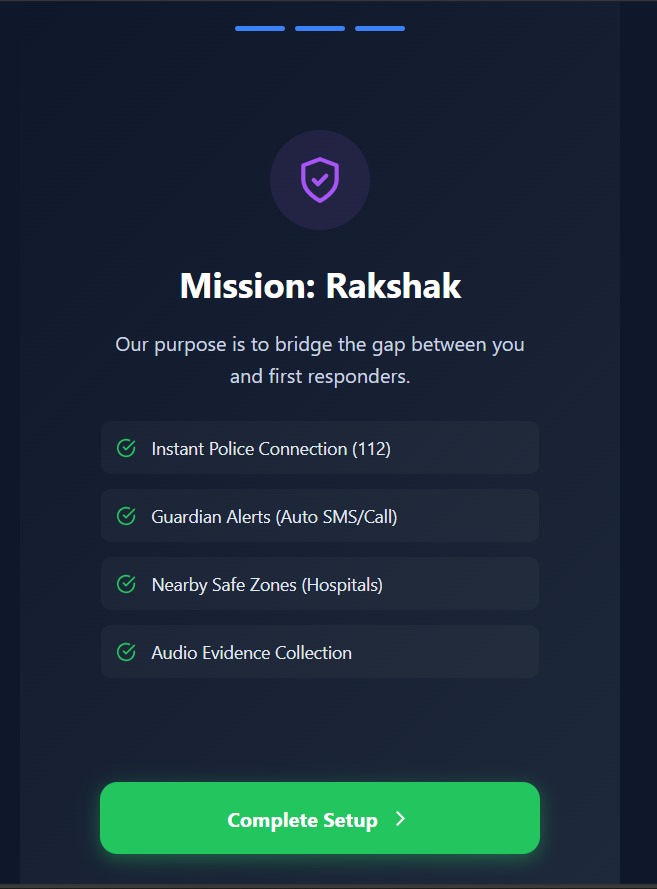
goals of Rakshak SOS
-
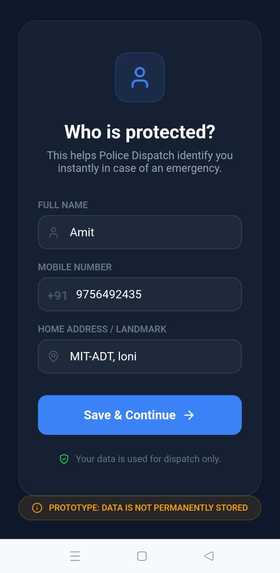
user login
-
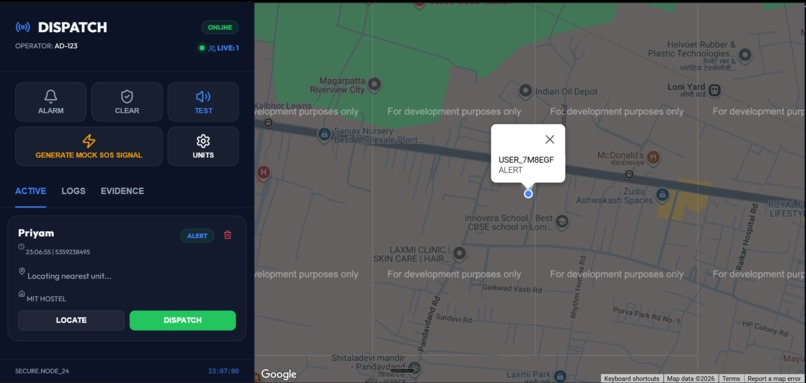
Police dashboard
-
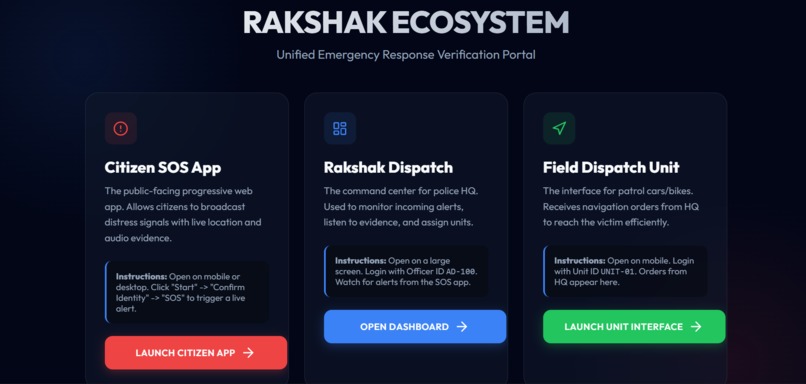
Rakshak Ecosystem link (only for judges)
-
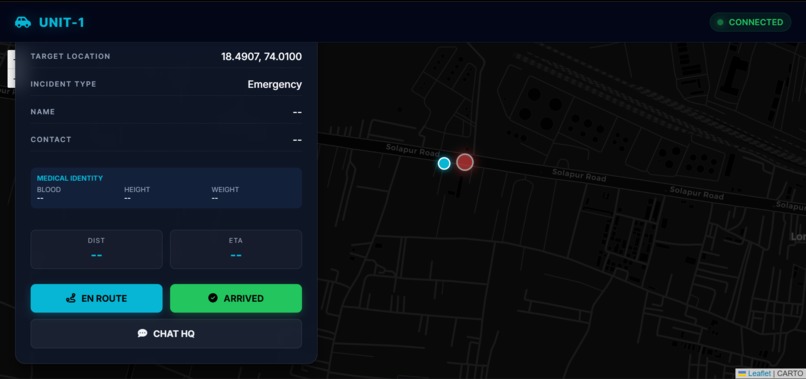
Patroling unit interface
- Inspiration
In emergencies, even a few minutes can make a big difference. Many existing SOS systems only send a location alert, but they don’t provide enough real-time information for responders to understand what is actually happening. We wanted to build something that reduces confusion during emergencies. Instead of just notifying authorities, our idea was to create a system that gives live updates, basic user details, and situational context so that responders can act faster and more effectively. Rakshak was built to connect a person in distress directly to a structured response system, not just sending a notification, but enabling coordination.
- What It Does
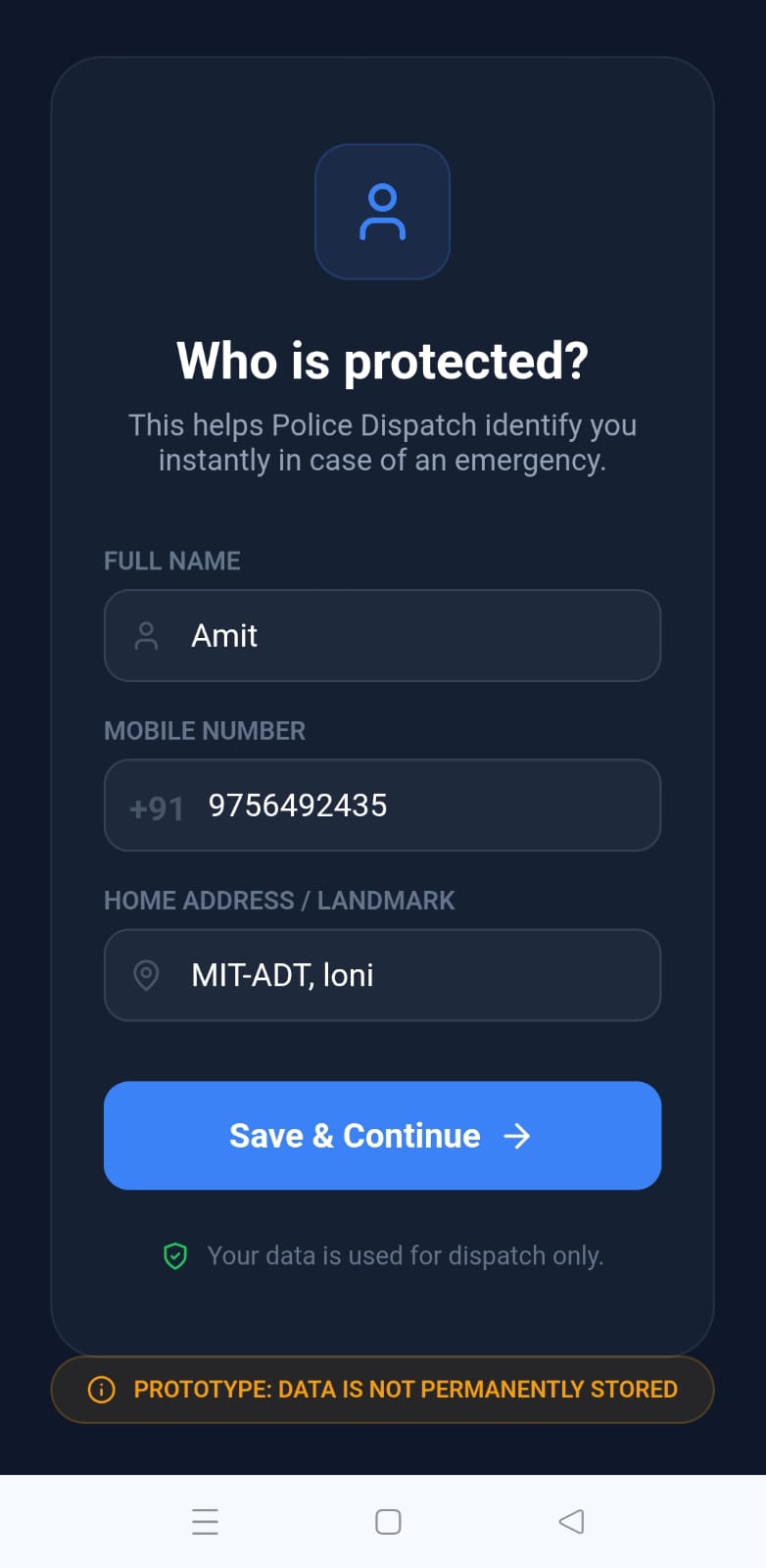
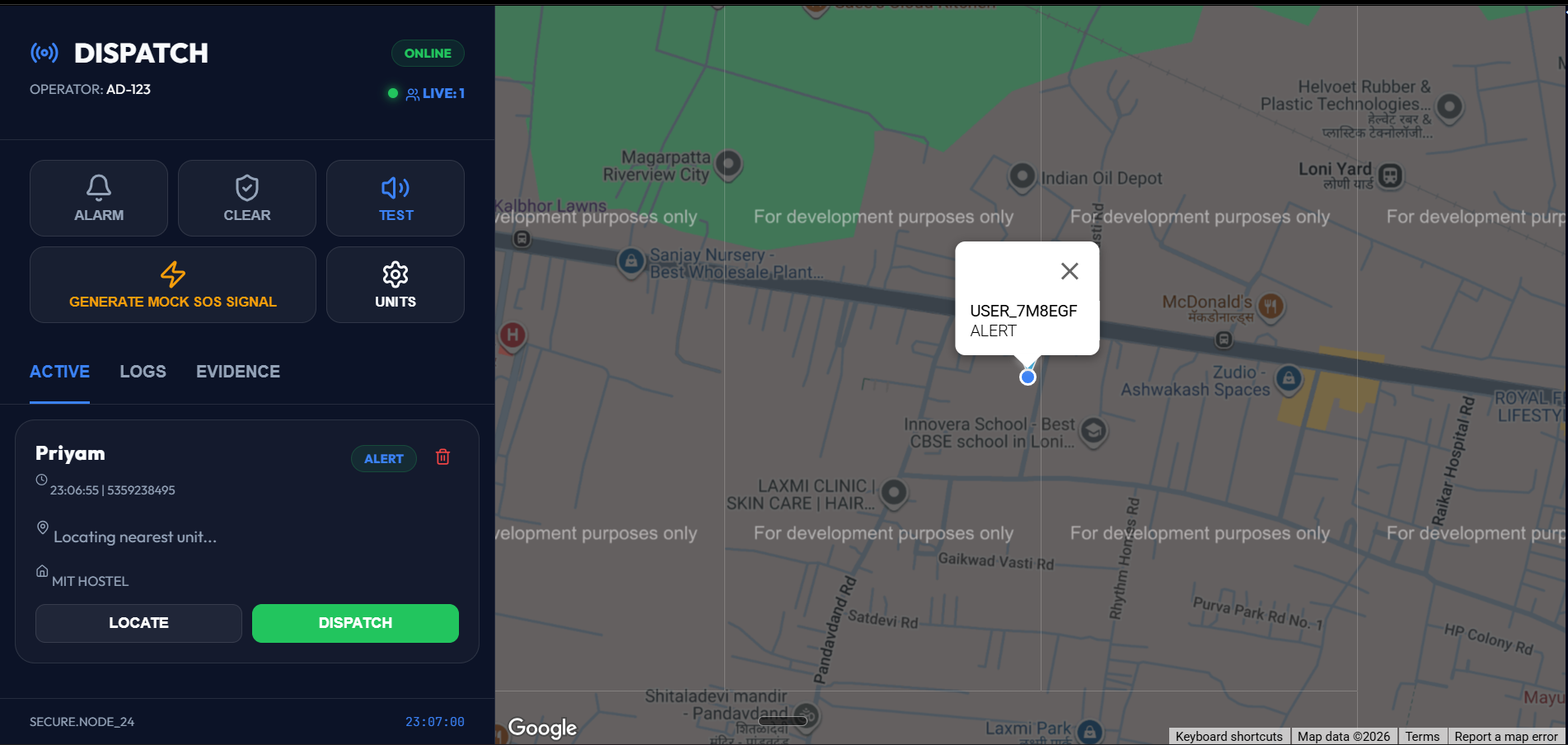
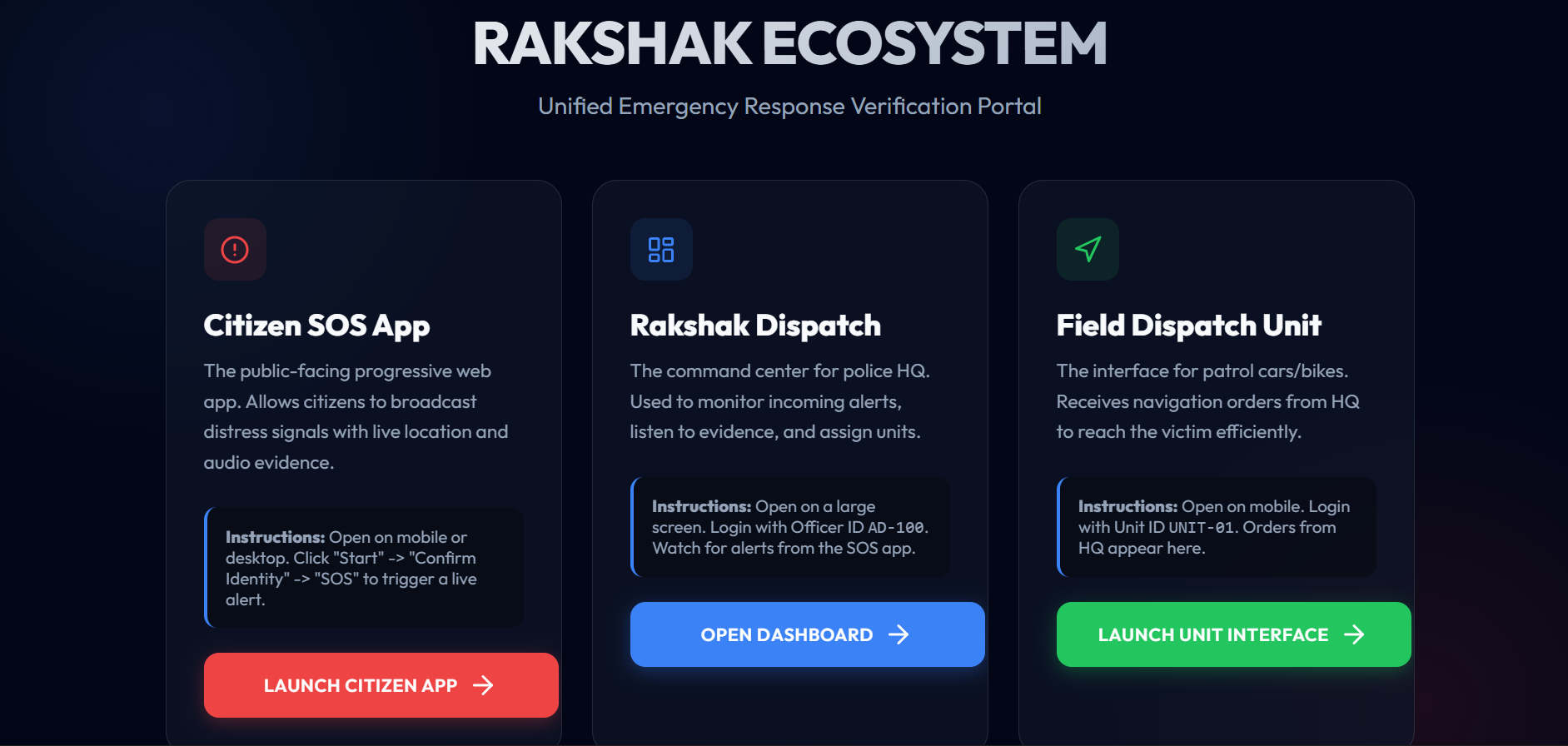
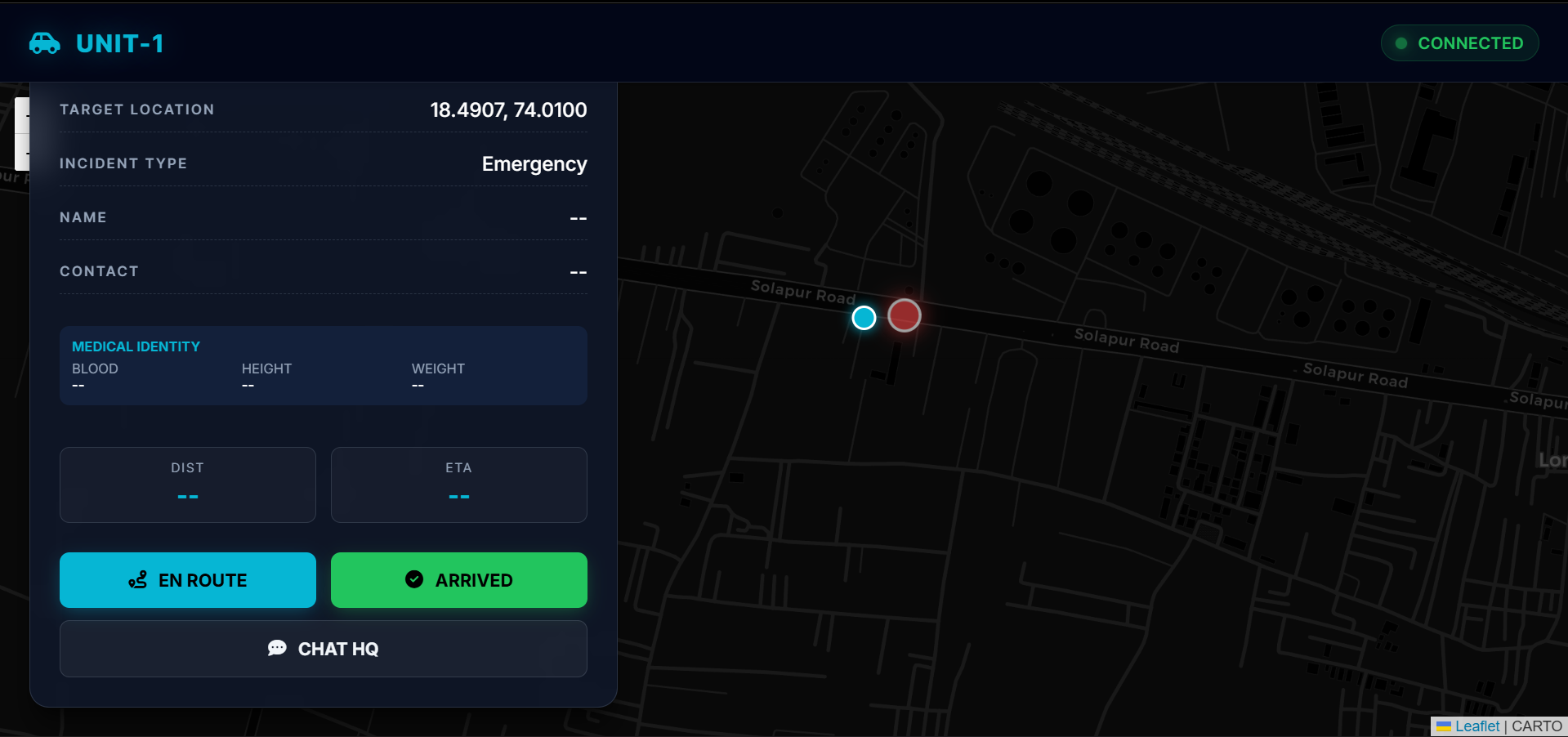
RAKSHAK-SOS is designed as a three-part emergency response system: Citizen SOS Applink The user has a simple panic button. When pressed: Live location sharing begins immediately The system records 10 seconds of surrounding audio The alert is sent to the central dashboard Rakshak Dispatch Dashboardlink This is the control interface. It shows active emergency cases on a live map Operators can listen to the recorded audio The case can be assigned to the nearest patrol unit Patrol Unit Interfacelink Field officers receive: Live tracking of the user Basic details such as blood group, height, weight, and address A direct communication channel with the user This creates a complete loop between the citizen, control room, and field unit instead of isolated alerts.
- How We Built It
Frontend was built using React and Vite to ensure fast loading and smooth interaction. Firebase Realtime Database was used to handle live updates between the user app and the dashboard. It allows instant synchronisation of location data, alerts, and chat messages. We integrated Google Maps for accurate live tracking and navigation. The interface was designed manually using CSS with a dark theme to make important alerts stand out clearly. The entire project is deployed using Firebase Hosting so it can be accessed online.
- Challenges We Faced
One major challenge was choosing the right mapping solution. We initially tried a different library but switched to Google Maps due to better tracking accuracy and stability. We also ran into Firebase configuration issues, including initialisation errors that disrupted database connections. Fixing this required restructuring our setup logic. Making the interface fully responsive on mobile devices was another challenge. The SOS button needed to remain easily accessible on all screen sizes, which required several design adjustments. Deployment also presented issues with npm dependencies and Firebase CLI configuration.
- What We’re Proud Of
We successfully built a working real-time system where pressing a button on a phone triggers an alert on a live dashboard instantly. The integration of short audio recording along with live tracking adds useful context instead of just location data. We also managed to connect all three layers — citizen, dispatch, and patrol unit — into one continuous system. Most importantly, the project is fully deployed and testable.
- What We Learned
We learned that emergency systems must be simple and reliable. Too many options can slow users down in stressful situations. We gained hands-on experience managing real-time data flow between frontend and backend systems. We also understood how sensitive and important accurate location handling is in real-world applications.
- Future Plans
We are planning to expand Rakshak further. One idea is to develop a small physical SOS trigger that can be hidden inside accessories like watches or earrings. This would allow users to activate emergency alerts without unlocking their phones. We also plan to improve live tracking accuracy and add smarter path visualisation features to help responders understand user movement patterns better. Since this is a prototype, we have not implemented a full-scale secure database system yet. In future versions, we plan to build a more robust and encrypted data storage system with proper access control and privacy safeguards. We are currently in discussions with local police personnel to better understand real dispatch procedures and practical challenges. Their feedback will help us improve the system in a more realistic and usable way.
Built With
- api
- css3
- firebase
- google-directions
- gps
- javascript
- jsx
- map
- midearecoder
- react
- vite

Log in or sign up for Devpost to join the conversation.