Inspiration The Indian Railways network is the lifeblood of the nation, transporting millions of people daily. However, the sheer scale of the system means that a single delay can create a domino effect, disrupting schedules across multiple zones and leaving passengers stranded. We were inspired to bridge the gap between static railway schedules and the dynamic, real-world variables that cause delays. We wanted to build a system that doesn't just report a train is late, but actually predicts it before it happens and provides actionable intelligence for both everyday commuters and railway administrators.
What it does RailDrishti is a full-stack intelligence platform that serves two main groups:
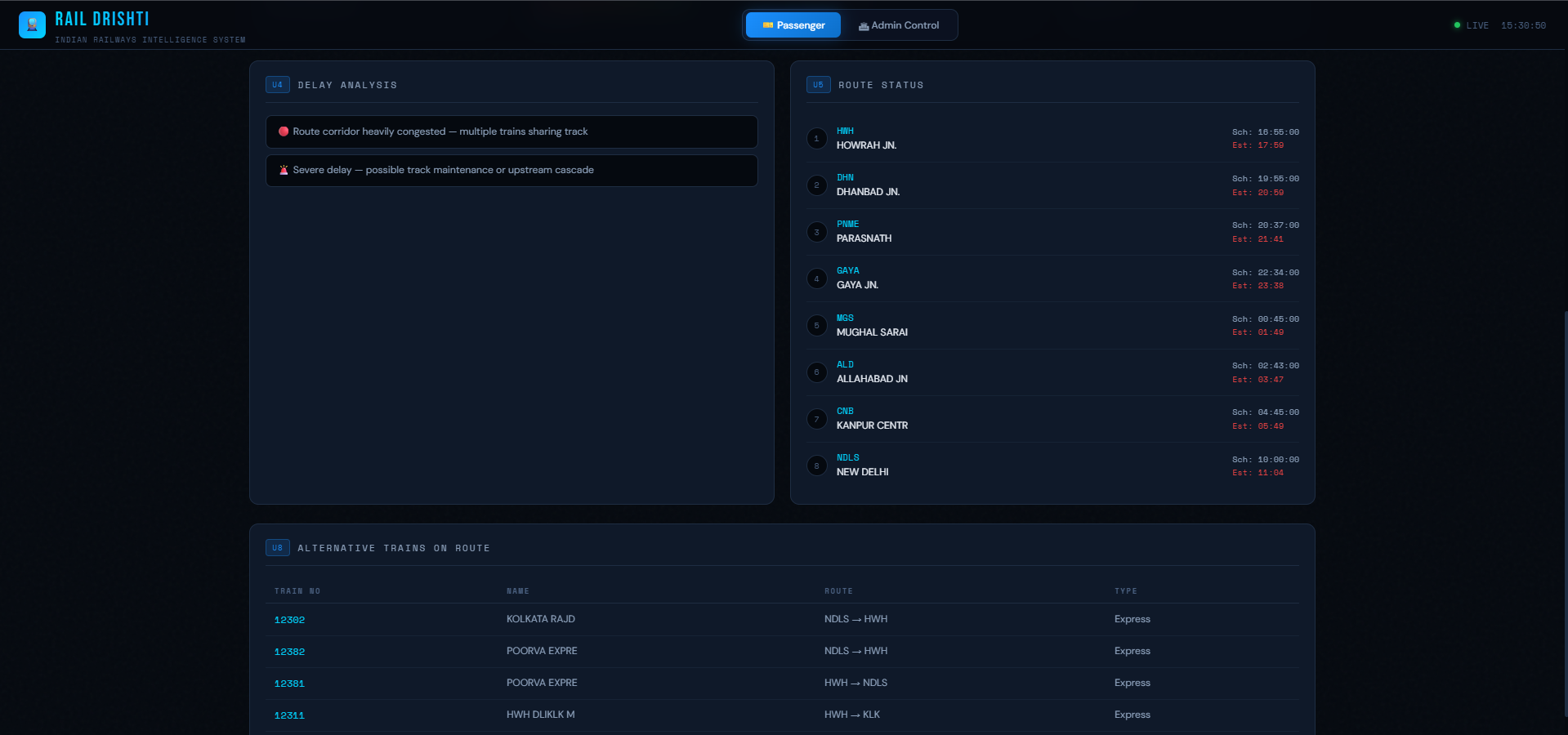
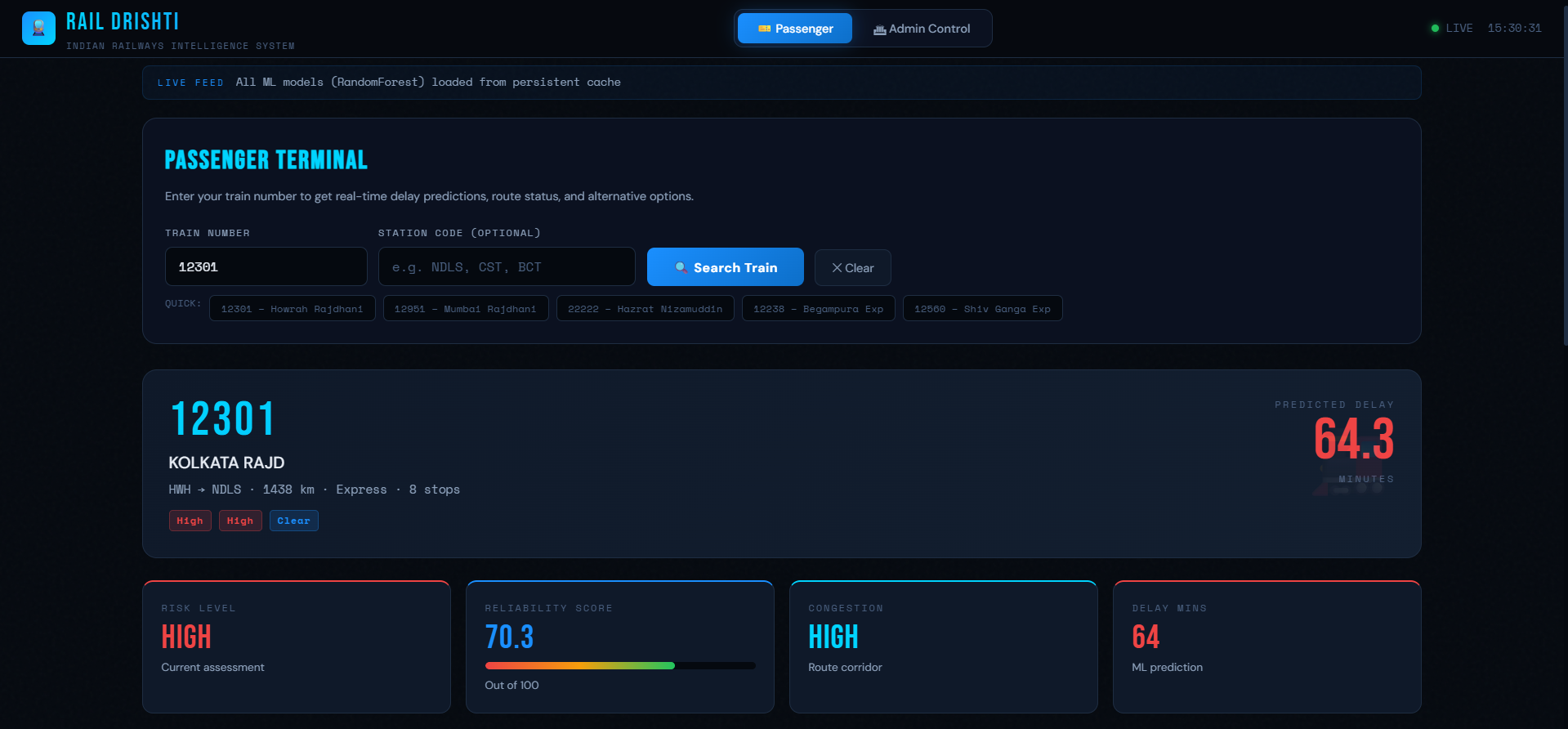
For Passengers: It offers a sleek, glassmorphic UI where users can check real-time delay forecasts, view the historical reliability scores of specific trains, and instantly generate optimized route alternatives if their primary train is severely delayed.
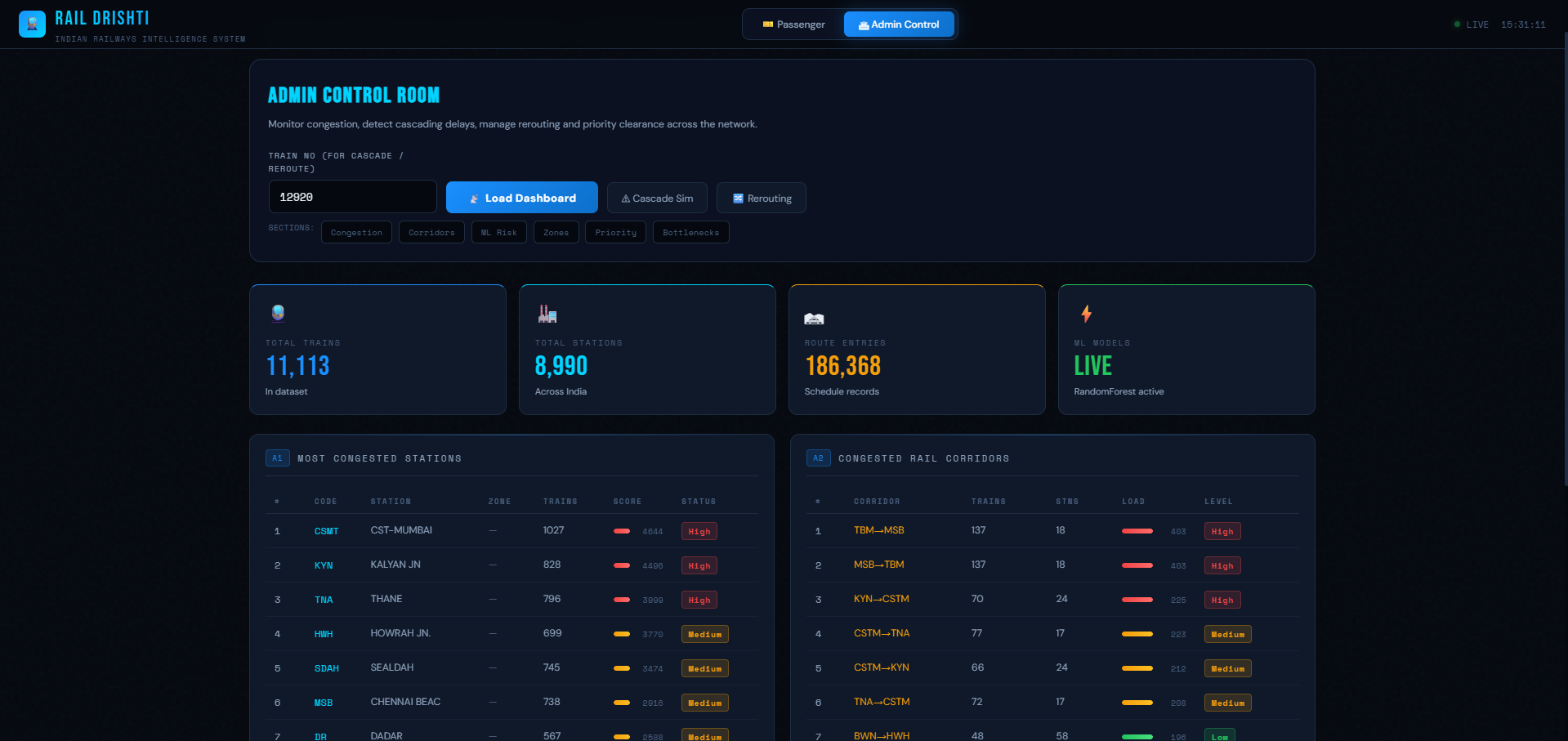
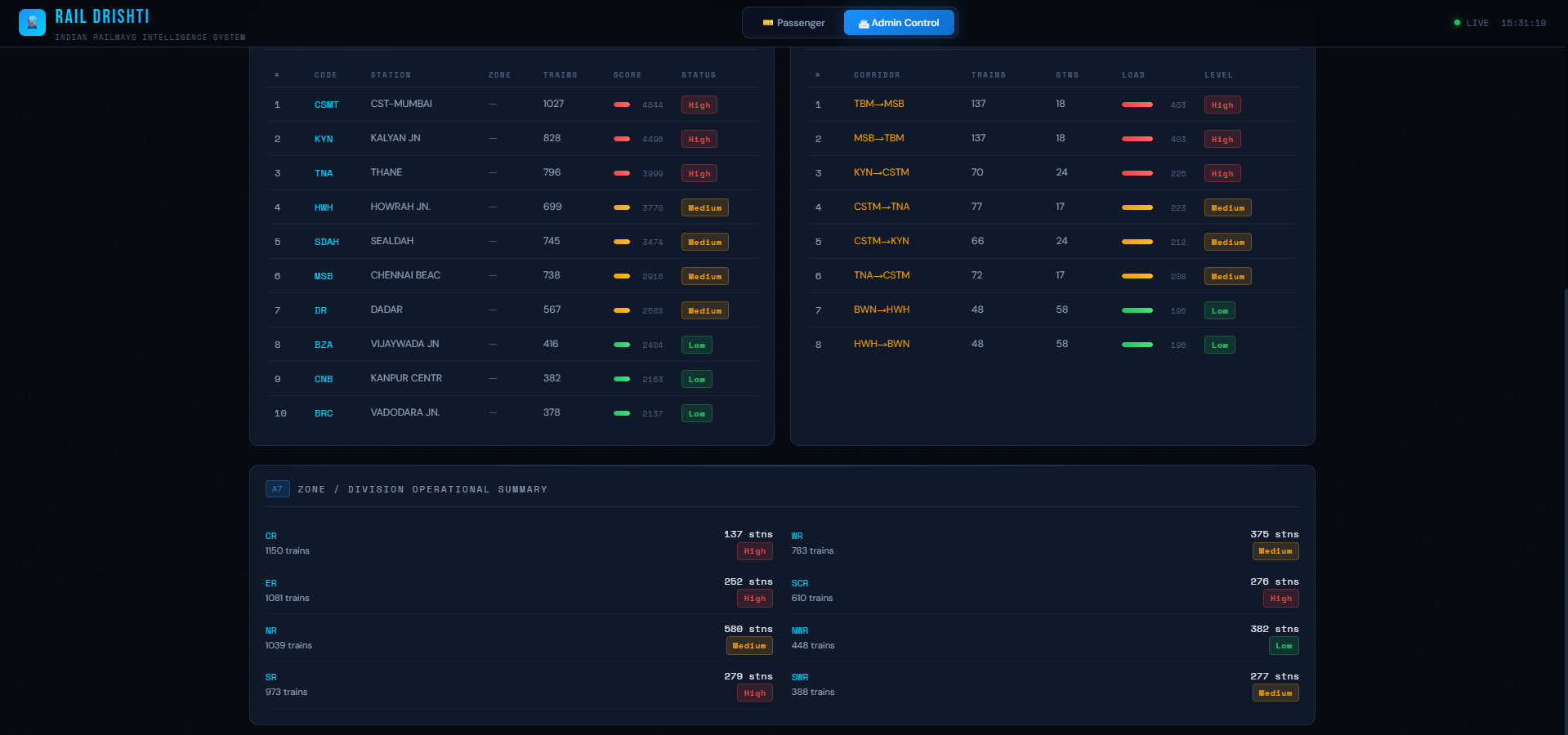
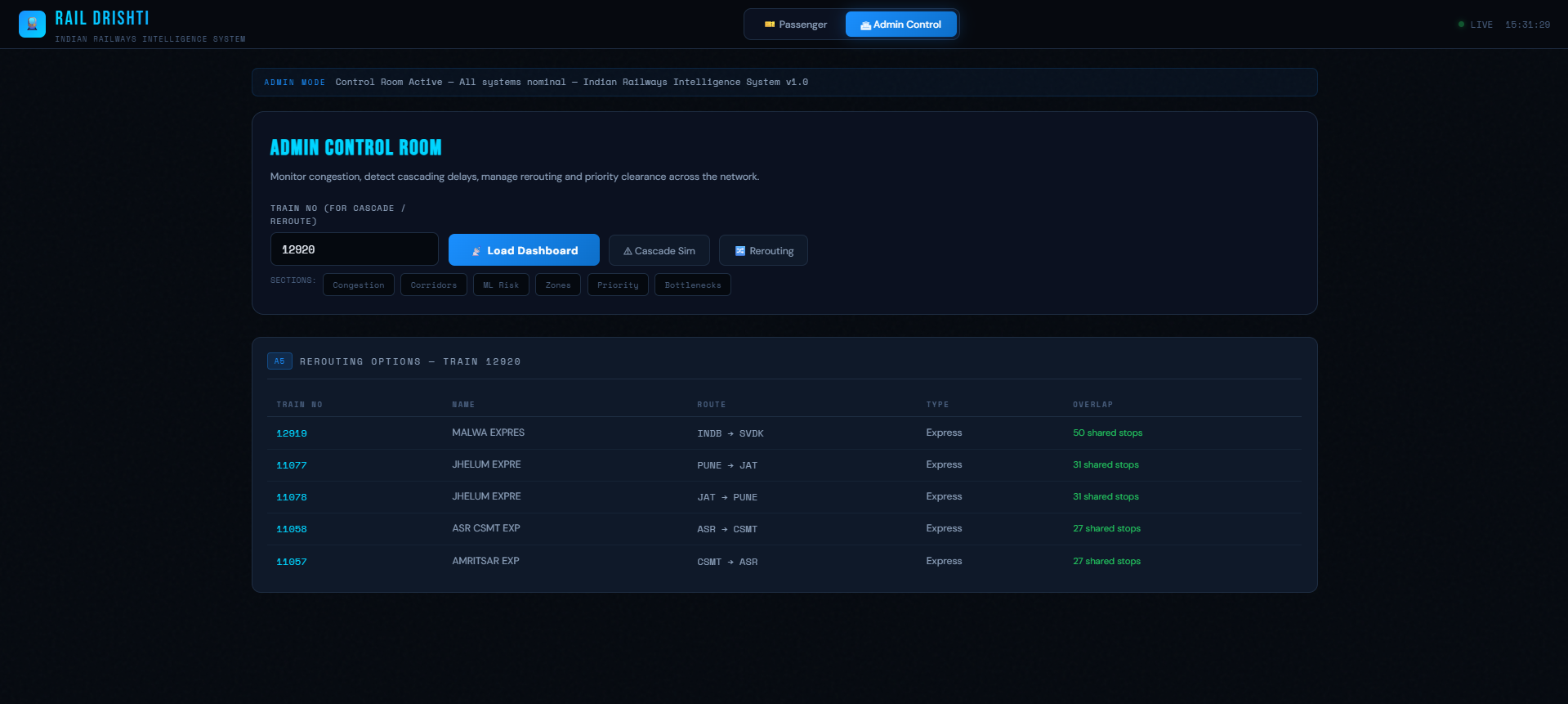
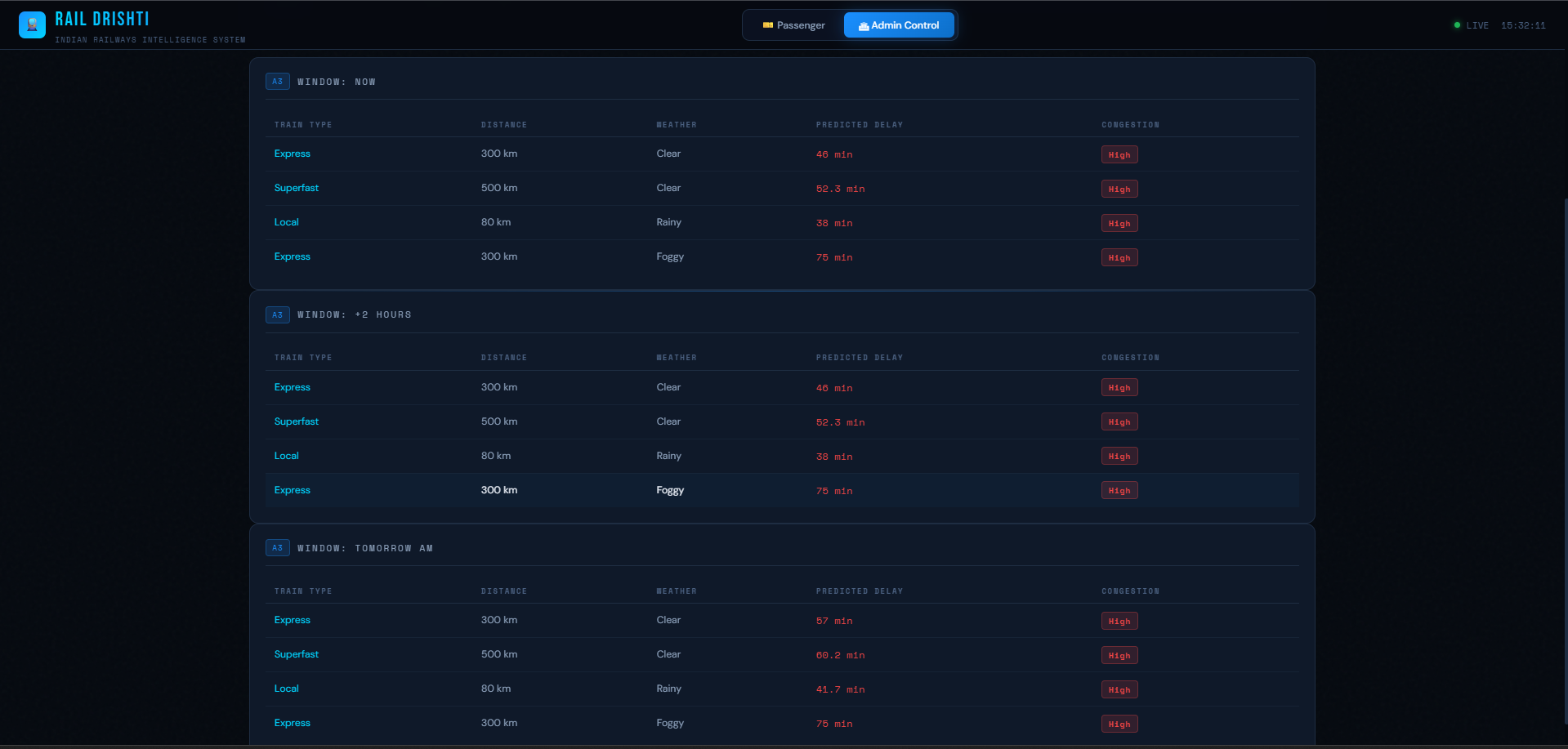
For Administrators: It acts as a command center. The dashboard provides advanced tools for bottleneck detection across different railway zones. The flagship feature is the Cascading Delay Simulator, which visualizes how a delay in one train or track will ripple through the network, allowing officials to take preemptive action.
How we built it The platform is powered by a robust FastAPI backend, chosen for its high performance and asynchronous capabilities. To power the predictive engine, we trained a Random Forest ML model on a massive dataset of over 200,000 rows of historical railway data, factoring in variables like stations, time of day, and historical congestion patterns. The frontend was designed with a modern glassmorphic aesthetic to make complex, data-heavy dashboards feel clean, intuitive, and accessible.
Challenges we ran into Handling and cleaning the 200,000+ data rows was a significant hurdle. Real-world railway data is noisy, with missing entries and inconsistent logging. Training the Random Forest model to achieve high accuracy without overfitting required extensive feature engineering. Additionally, building the logic for the Cascading Delay Simulator was mathematically complex, as it required mapping out network dependencies to calculate how one late arrival shifts the departure times of subsequent trains sharing the same tracks.
Accomplishments that we're proud of We are incredibly proud of successfully processing such a massive dataset and translating it into sub-second predictions served via our FastAPI endpoints. Bringing the Cascading Delay Simulator to life was a major technical win, as it shifts the platform from just being a predictive tool to a strategic planning asset. Finally, wrapping all this heavy data processing in a beautiful, responsive glassmorphic UI makes the platform genuinely enjoyable to use.
What we learned This project pushed our limits in handling large-scale data engineering and pipeline optimization. We deepened our understanding of applying ensemble learning techniques like Random Forest to real-world logistical networks. We also learned a lot about API optimization with FastAPI, ensuring that complex ML inferences don't bottleneck the user experience on the frontend.
What's next for RailDrishti We want to take RailDrishti from a predictive model to a fully real-time analytics engine. The next steps include integrating live WebSocket streaming for GPS-level train tracking. We also plan to explore more advanced ML architectures—such as integrating scaled-down Transformer models—to better understand the complex, sequential relationships between different train routes. Ultimately, we aim to incorporate external variables like live weather patterns to make the delay forecasting even more resilient.
Built With
- css
- fast-api
- geojson
- html
- javascript
- machine-learning
- numpy
- pandas
- python
- random-forestclassification
- scikit-learn


Log in or sign up for Devpost to join the conversation.