-
-
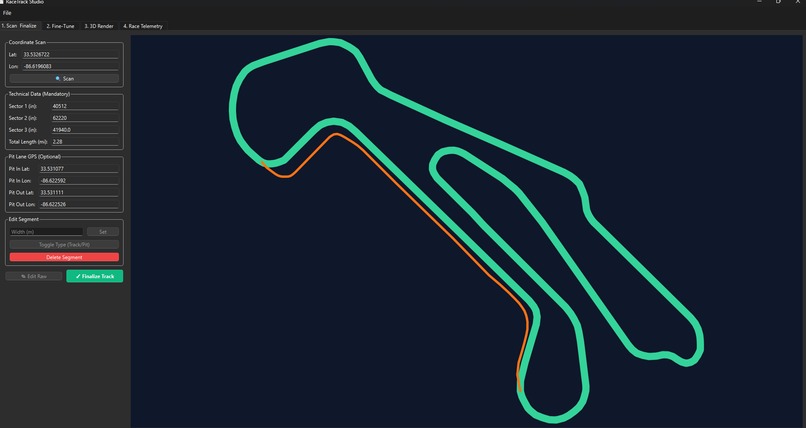
Scanning the track layout
-
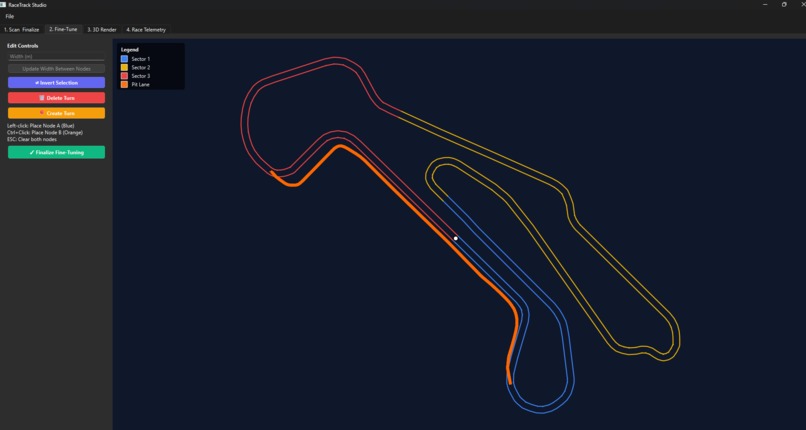
Fine-tuning the track sectors
-
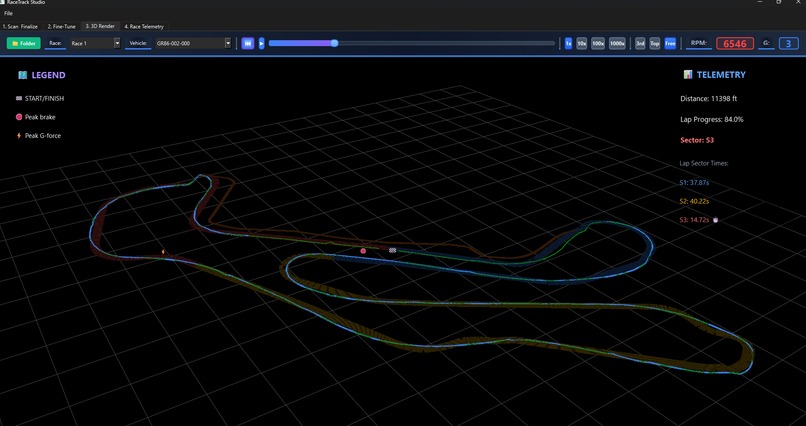
3D render of track layout
-
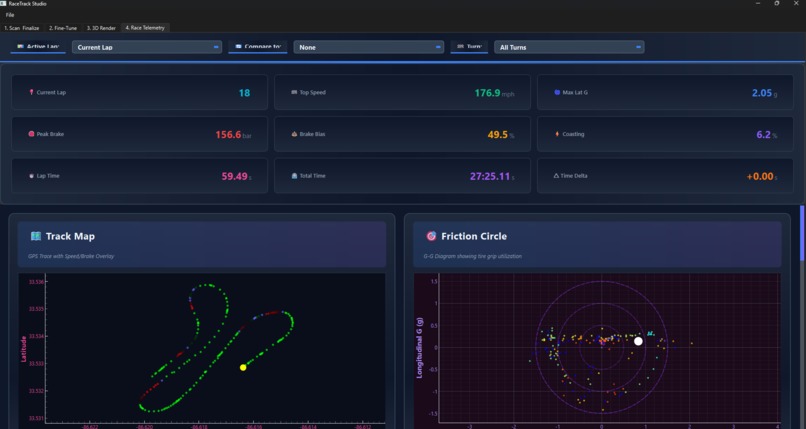
Race telemetry data


RaceTrack Studio: Project Story
Inspiration
This project started from a shared curiosity. We both love racing, but we kept running into the same problem: the best telemetry tools are usually locked behind high price tags or professional ecosystems. Students, hobbyists, and club racers often never get access to the same kind of data that real racing teams rely on. As two mechanical engineering students who were not expert programmers, we wondered if we could build something useful anyway. It became a challenge to see whether we could recreate the basics of a race engineering workflow using open data and Python, and whether motorsport enthusiasts might find it fun or valuable.
What it does
RaceTrack Studio is a complete workflow for track mapping and telemetry analysis. It can:
- Generate accurate track geometry using OpenStreetMap data and GPS traces.
- Build splines, smooth noisy data, and automatically place adjustable turn markers.
- Provide a real-time 3D telemetry viewer.
- Offer a multi-lap comparison dashboard to analyze speed traces, braking and throttle usage, G-forces, sector times, and delta comparisons.
- Store sessions in a custom format that keeps track, turns, geometry, and telemetry organized in one place.
Essentially, it allows users to explore their driving data the way professional teams do, but without expensive hardware or software.
How we built it
We used Python as the core programming language and leveraged open data sources like OpenStreetMap. Key technical steps included:
- Cleaning and projecting GPS data to create accurate track layouts.
- Spline fitting and smoothing techniques to handle noisy telemetry.
- Developing a lap alignment system based on distance rather than time, to account for irregular sampling and missing data points.
- Learning PyOpenGL to build a real-time 3D telemetry viewer with interactive cameras and smooth animation.
- Designing a user interface that is approachable for beginners but still provides detailed engineering insights.
Challenges we ran into
Building RaceTrack Studio was full of hurdles:
- GPS data was noisier than anticipated, requiring careful smoothing and error correction.
- Aligning laps with irregular sampling and gaps demanded a custom distance-based alignment system.
- Developing real-time 3D rendering was entirely new to us, forcing us to learn PyOpenGL, camera mechanics, and animation timing from scratch.
- Balancing the interface between usability and detailed engineering features required multiple redesigns.
Accomplishments that we're proud of
- Successfully created a full workflow from track mapping to telemetry analysis.
- Built a functional, interactive 3D viewer for lap visualization.
- Implemented multi-lap comparisons with delta times, sector times, and G-force analysis.
- Designed a custom session format that organizes complex data efficiently.
- Achieved all of this as students without prior professional software development experience.
What we learned
- How to work with GPS and OpenStreetMap data, including coordinate projections.
- Techniques for smoothing and aligning noisy telemetry data.
- Real-time rendering concepts and building interactive 3D visualizations.
- Basics of race engineering, including apex speed, delta time, and cornering G-loads.
- Bridging mechanical engineering intuition with software development.
What's next for RaceTrack Studio
- Adding AI assistance for racing line optimization.
- Automatically identifying driving styles and providing tailored feedback.
- Running simple real-time pit strategy simulations.
- Continuing to improve usability and expand telemetry analysis features.
- Opening the platform for motorsport enthusiasts to learn and enjoy advanced engineering insights without needing a professional racing team setup.


Log in or sign up for Devpost to join the conversation.