Inspiration
Cities face thousands of emergencies every day, yet reporting incidents and coordinating responses often remains slow, fragmented, and inefficient. Delays in communicating accurate information can lead to greater damage and loss of life. We built QuickAlert AI to help transform emergency response using artificial intelligence, enabling faster reporting, intelligent incident analysis, and smarter coordination between citizens and emergency services. Our vision is to make cities safer through AI-powered decision support.
What it does
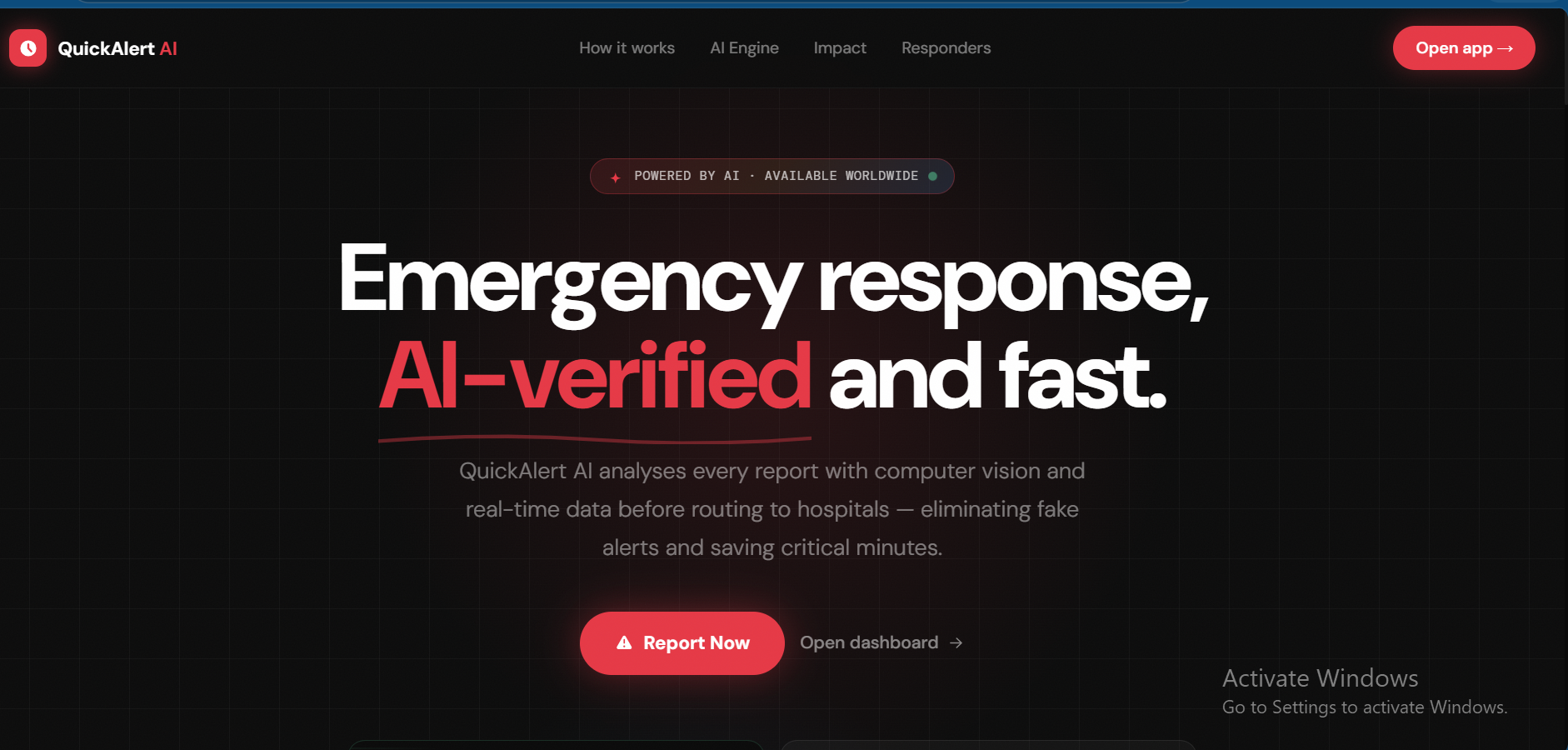
QuickAlert AI is an AI-powered smart city emergency platform that enables citizens to report incidents such as road accidents, fires, floods, medical emergencies, crimes, and other public safety threats in real time. Using AI, the platform classifies the severity and type of incident, summarizes reports, identifies priority levels, and provides relevant response recommendations. It also uses location intelligence to map incidents, notify the appropriate responders, and provide authorities with real-time insights for better emergency management.
How we built it
We developed QuickAlert AI using a modern web stack with a responsive frontend and a scalable backend. Gemini AI powers intelligent incident classification, report summarization, emergency guidance, and decision support. Geolocation services enable precise incident reporting and live mapping, while cloud-based services manage emergency reports, notifications, and real-time updates. The platform is designed to integrate easily with smart city infrastructure and emergency response systems.
Challenges we ran into
One of our biggest challenges was designing an AI workflow that could accurately distinguish between different types of emergencies while remaining fast enough for real-world use. We also worked to create an intuitive reporting experience that minimizes the time required for users to submit emergency information. Balancing AI accuracy, usability, and reliable location-based reporting was a key focus throughout development.
Accomplishments that we're proud of
We're proud of building a platform that combines artificial intelligence, geospatial technology, and real-time communication to improve public safety. Instead of simply collecting reports, QuickAlert AI helps prioritize incidents, organize emergency information, and support faster, more informed decision-making. The project demonstrates how AI can contribute to smarter, safer, and more resilient cities.
What we learned
Developing QuickAlert AI taught us that successful smart city solutions require more than intelligent algorithms—they must also be reliable, accessible, and easy to use during high-pressure situations. We gained valuable experience integrating AI with real-time data, location services, and user-centered design to build technology with meaningful social impact.
What's next for QuickAlert AI
Our vision is to evolve QuickAlert AI into a comprehensive Smart City Emergency Intelligence Platform. Future enhancements include AI-powered disaster prediction, flood and wildfire risk forecasting, IoT sensor integration, live responder tracking, predictive resource allocation, multilingual emergency assistance, offline reporting capabilities, emergency drone integration, and city-wide analytics dashboards. Ultimately, we aim to help governments and emergency agencies build safer, more resilient communities through intelligent, data-driven emergency management.
Built With
- ai
- firebase
- gemini
- gps
- map
- nextj
- tailwindcss
- typescript


Log in or sign up for Devpost to join the conversation.