Inspiration
QuickAlert AI was inspired by a real-world problem: in emergency situations, people often hesitate to help accident victims due to fear of being blamed, lack of clear guidance, or not knowing how to quickly contact the right emergency services. This delay can cost lives. We wanted to build a system that removes hesitation and makes emergency reporting instant, safe, and reliable.
What it does
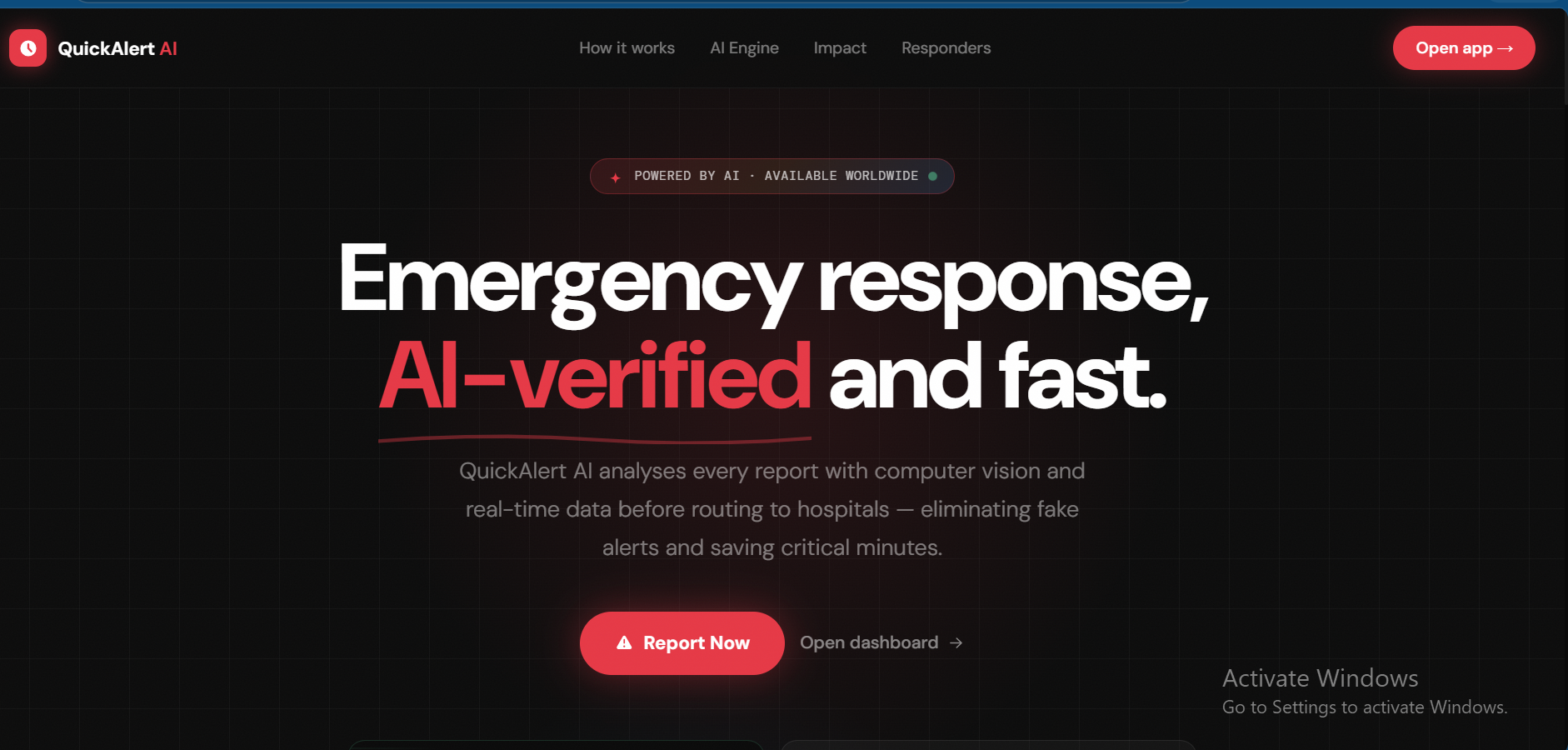
QuickAlert AI is an AI-powered emergency reporting system that allows users to instantly report accidents and emergencies.
It:
Captures live location of the incident Sends emergency alerts to nearby hospitals/responders Enables fast emergency reporting through a simple interface Uses AI to help classify the severity of the situation Reduces delay between accident occurrence and medical response
How we built it
We built QuickAlert AI as a web-based emergency response platform.
Frontend: Simple UI for quick emergency reporting Backend: Handles location data, alerts, and emergency routing AI layer: Analyzes emergency details and helps prioritize severity System design: Focused on speed, simplicity, and real-time communication
The goal was to make the system usable within seconds during stressful situations.
Challenges we ran into
Designing a system that works in high-stress emergency conditions Making the reporting process extremely fast and simple Handling accurate location detection in real-world conditions Thinking through real-world hospital and emergency response integration Balancing AI usefulness with simplicity
Accomplishments that we're proud of
Built a practical AI-driven emergency response concept Designed a system focused on real human behavior (hesitation to help) Combined AI, location services, and emergency communication into one platform Created a solution with clear real-world social impact Focused on reducing emergency response delays
What we learned
How human psychology affects emergency response systems The importance of simplicity in critical-use applications How AI can support decision-making in real-world emergencies Challenges of designing real-time location-based systems How impactful tech must prioritize usability over complexity
What's next for QuickAlert AI
We plan to expand QuickAlert AI into a full emergency response ecosystem:
AI-powered accident severity detection improvements Offline/SMS emergency reporting for low-network areas Integration with ambulance and emergency hotlines Multilingual and voice-based reporting features Emergency responder dashboard for faster coordination Expansion to other emergencies like fire, floods, and disasters
The long-term vision is to make emergency reporting faster, safer, and more accessible for everyone.
Built With
- firebase
- gemini
- gps
- nextjs
- tailwindcss
- typescript


Log in or sign up for Devpost to join the conversation.