Inspiration
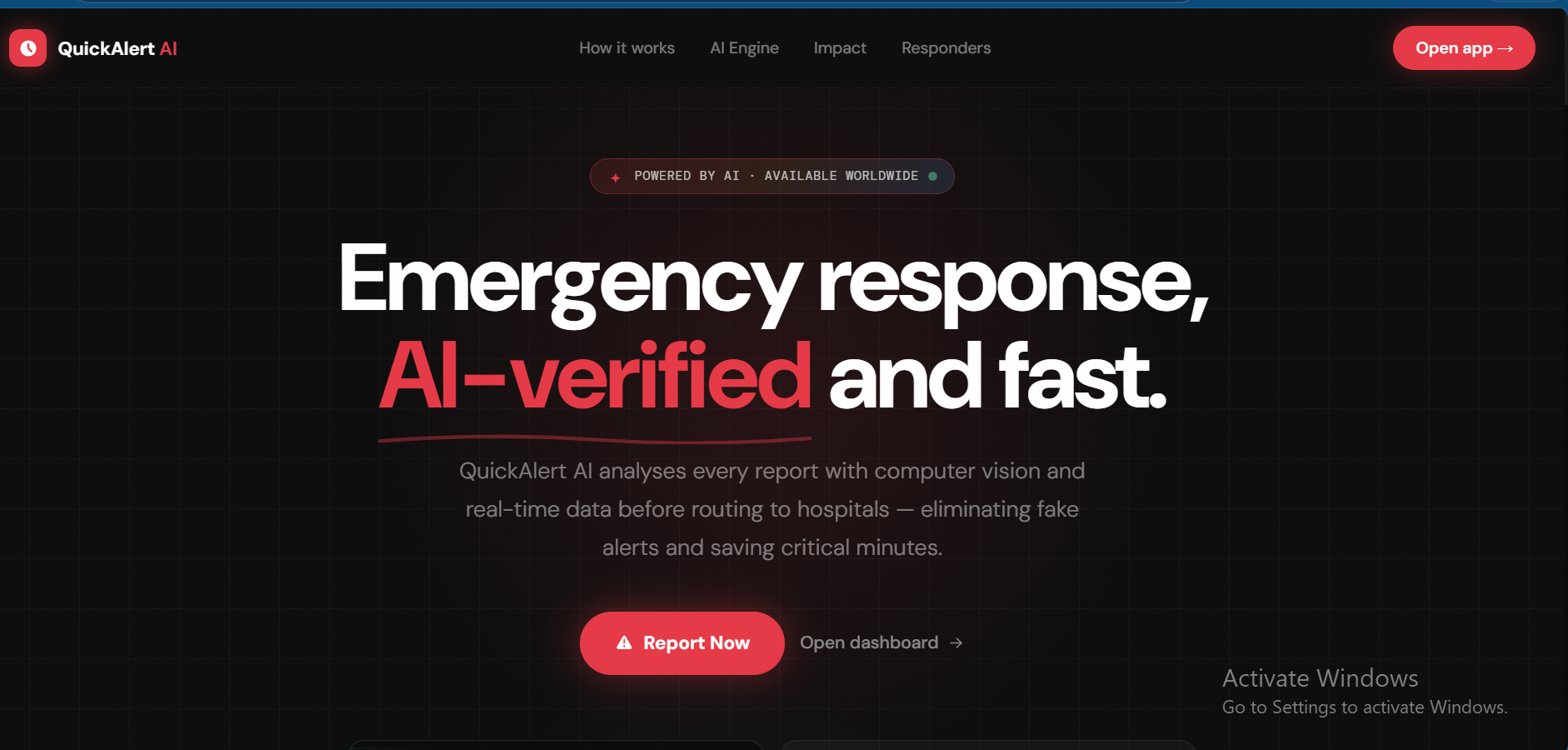
Emergencies can happen anywhere, and every second counts. However, reporting incidents is often slow, confusing, or delayed, reducing the effectiveness of emergency response. We created QuickAlert AI to make emergency reporting faster and smarter by combining artificial intelligence, real-time communication, and location intelligence. Our goal is to help individuals, communities, and responders make informed decisions when time matters most.
What it does
QuickAlert AI is an AI-powered emergency response platform that allows users to quickly report accidents, fires, crimes, medical emergencies, and natural disasters. The platform analyzes each report using AI, classifies the type and severity of the incident, generates a concise summary, provides safety recommendations, and visualizes incidents on a live map using location data. It helps improve emergency awareness and enables faster coordination between citizens and responders.
How we built it
We built QuickAlert AI as a modern web application using Nextjs, Tailwindcss, and Typescript with cloud-based backend services. Google Gemini API powers intelligent incident classification, emergency report summarization, and context-aware safety recommendations. Geolocation APIs enable precise incident reporting and mapping, while cloud services manage emergency data, notifications, and real-time updates to ensure a responsive user experience.
Challenges we ran into
One of the biggest challenges was designing an AI workflow capable of accurately identifying different emergency types while maintaining fast response times. We also focused on creating a reporting experience that remains simple and intuitive during stressful situations. Ensuring reliable location handling, minimizing unnecessary user input, and delivering meaningful AI-generated guidance required continuous refinement.
Accomplishments that we're proud of
We're proud of building an AI-powered platform that addresses a critical real-world problem with practical technology. QuickAlert AI combines artificial intelligence, geolocation, and real-time reporting into a single solution that improves emergency awareness and coordination. We successfully demonstrated how AI can support public safety by providing intelligent insights instead of simply collecting incident reports.
What we learned
Building QuickAlert AI reinforced the importance of designing AI systems that are both intelligent and trustworthy. We gained experience integrating large language models with location-based services, building responsive web applications, and creating user experiences optimized for speed, accessibility, and reliability during high-pressure situations.
What's next for QuickAlert AI
Our vision is to evolve QuickAlert AI into a comprehensive emergency intelligence platform. Future enhancements include AI-powered disaster prediction, multilingual emergency assistance, offline reporting, responder dashboards, live emergency tracking, IoT sensor integration, predictive risk analytics, multimedia evidence uploads, and seamless integration with emergency services. Ultimately, we aim to build a platform that helps communities prepare for, respond to, and recover from emergencies more effectively through intelligent, data-driven decision-making.
Built With
- ai
- firebase
- gemini
- gps
- nextjs
- tailwindcss
- typescript
- webcam


Log in or sign up for Devpost to join the conversation.