Inspiration
When emergencies happen, every second matters. Unfortunately, many incidents are reported too late or with incomplete information, making it difficult for responders to act quickly. We wanted to build an AI-powered platform that simplifies emergency reporting, intelligently analyzes incidents, and provides real-time guidance to help individuals, communities, and emergency services respond faster and more effectively.
What it does
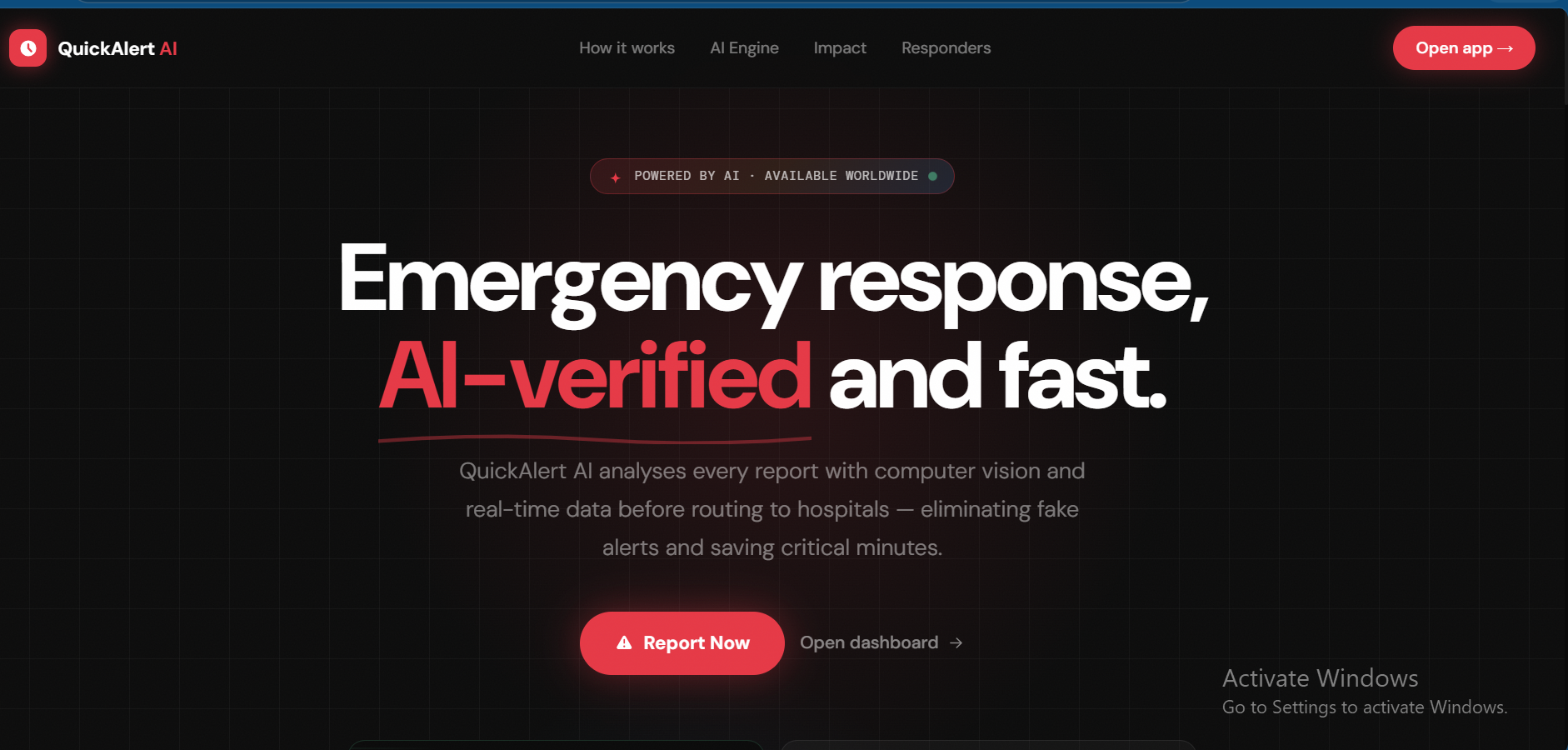
QuickAlert AI is an AI-powered emergency response platform that enables users to report emergencies such as accidents, fires, medical incidents, crimes, or natural disasters. Using AI, it analyzes the report, classifies the type and severity of the incident, summarizes key information, and provides immediate safety guidance. The platform also uses location data to display nearby incidents on a live map and supports real-time notifications to improve emergency coordination.
How we built it
We built QuickAlert AI as a modern web application using HTML, CSS, and JavaScript for the frontend, with cloud services powering the backend. Google Gemini API is used to analyze emergency reports, classify incidents, generate summaries, and provide AI-powered recommendations. Geolocation APIs enable location-based reporting and mapping, while a cloud database stores reports and supports real-time updates across the platform.
Challenges we ran into
One of the biggest challenges was ensuring that AI could accurately classify different types of emergencies while keeping responses fast and reliable. We also worked on designing a simple reporting workflow so users can submit critical information with minimal effort during stressful situations. Balancing usability, AI accuracy, and real-time responsiveness required multiple iterations.
Accomplishments that we're proud of
We're proud of creating an AI-powered platform that addresses a real-world problem with meaningful social impact. QuickAlert AI combines artificial intelligence, geolocation, and real-time communication into a single platform that helps improve emergency awareness and response. We also built an intuitive user experience that makes emergency reporting fast and accessible.
What we learned
This project taught us that effective AI solutions require more than accurate models—they must be practical, reliable, and easy to use when people need them most. We gained experience integrating AI with geolocation services, designing user-centered workflows, and building applications that prioritize both speed and usability.
What's next for QuickAlert AI
We plan to expand QuickAlert AI into a comprehensive emergency intelligence platform by adding AI-powered disaster prediction, emergency responder dashboards, multilingual support, offline reporting, live responder tracking, IoT sensor integration, predictive risk analytics, and direct integration with local emergency services. Our goal is to make QuickAlert AI a trusted platform that helps communities prepare for, respond to, and recover from emergencies more effectively.
Built With
- ai
- firebase
- gemini
- gps
- location
- map
- nextjs
- tailwindcss
- typescript


Log in or sign up for Devpost to join the conversation.