-
-
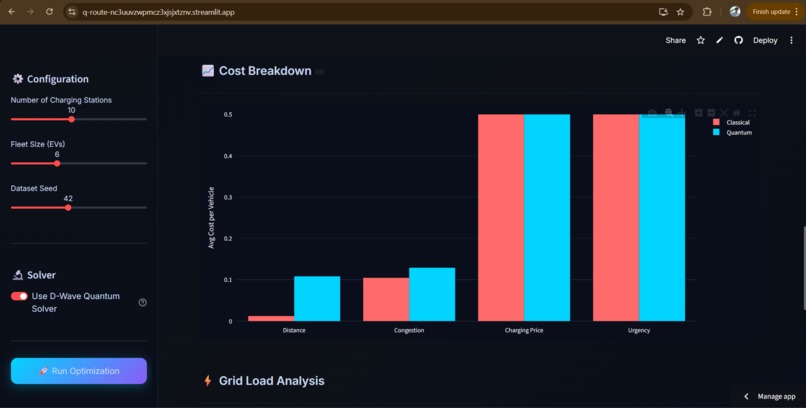
Cost assistance
-
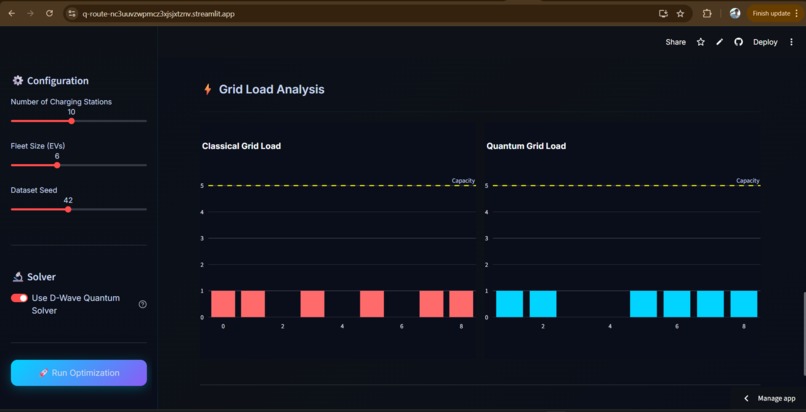
Grid Load
-
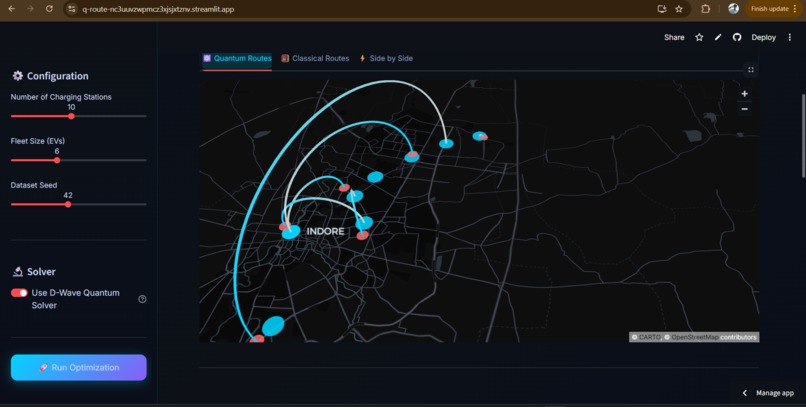
Routing through Quantam
Inspiration
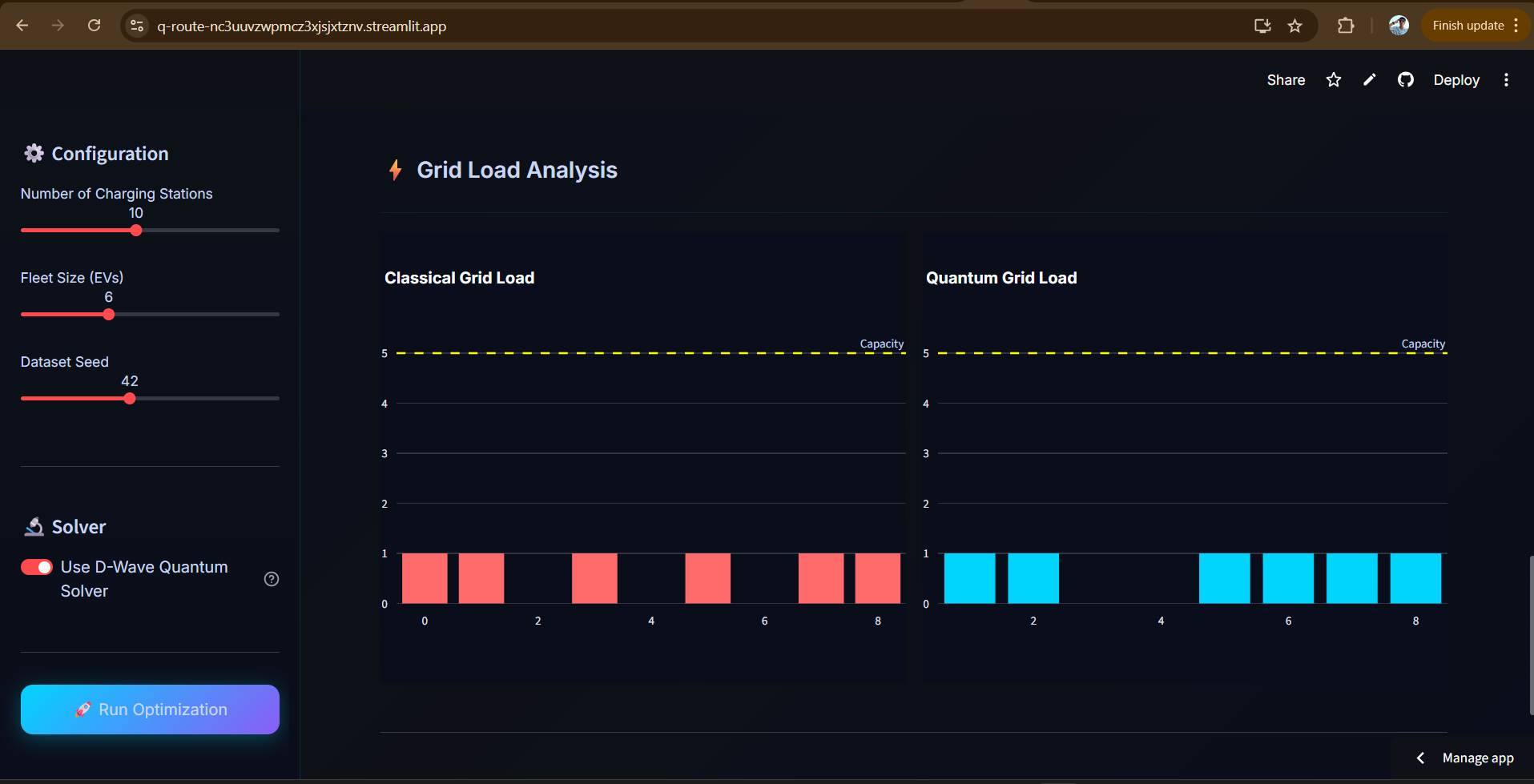
India has 6+ million EVs with charging infrastructure growing rapidly. But classical routing apps send every driver to the nearest station, causing grid overloads and queues. We asked: what if quantum computing could optimize the entire city's fleet simultaneously?
What it does
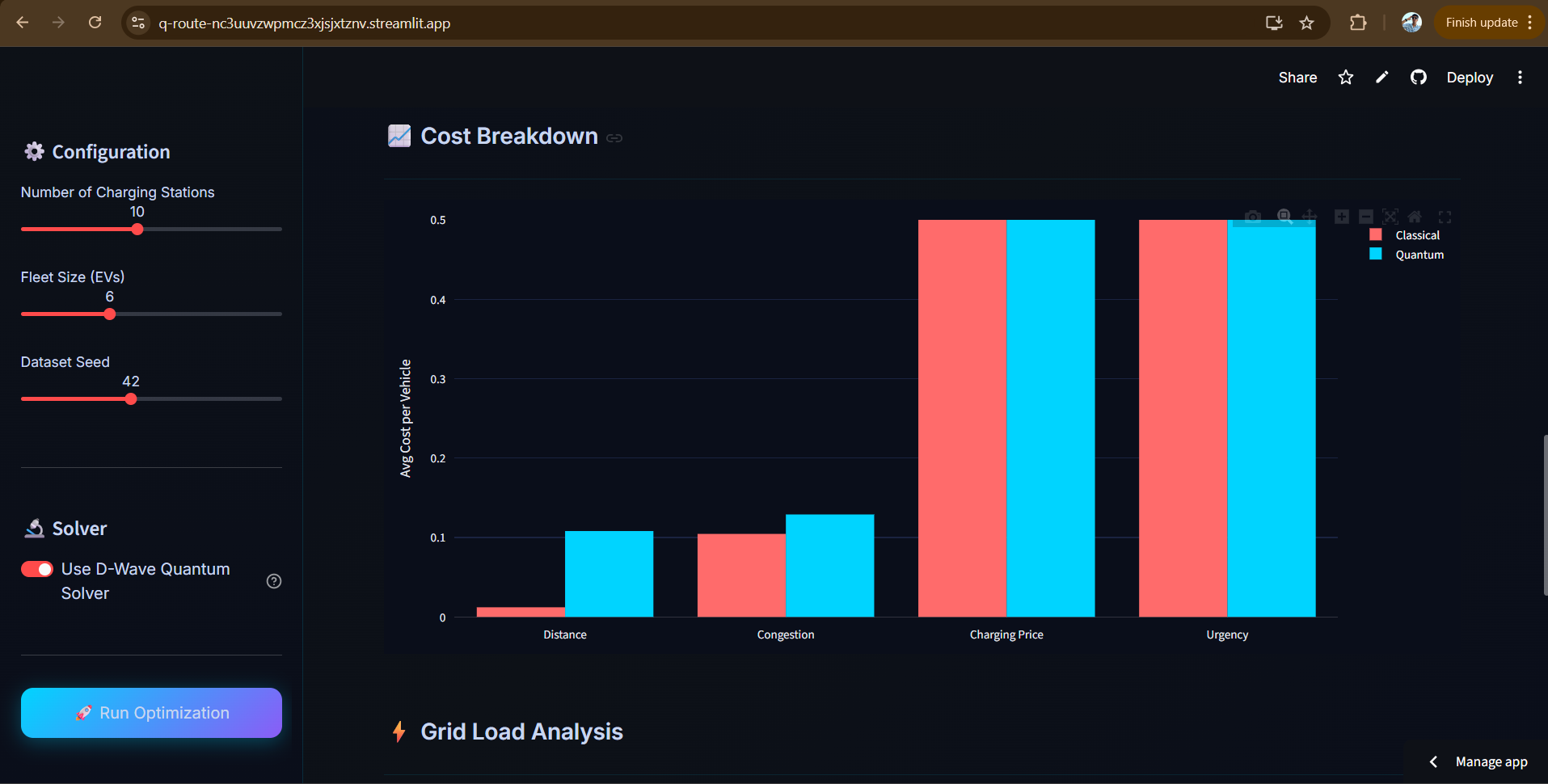
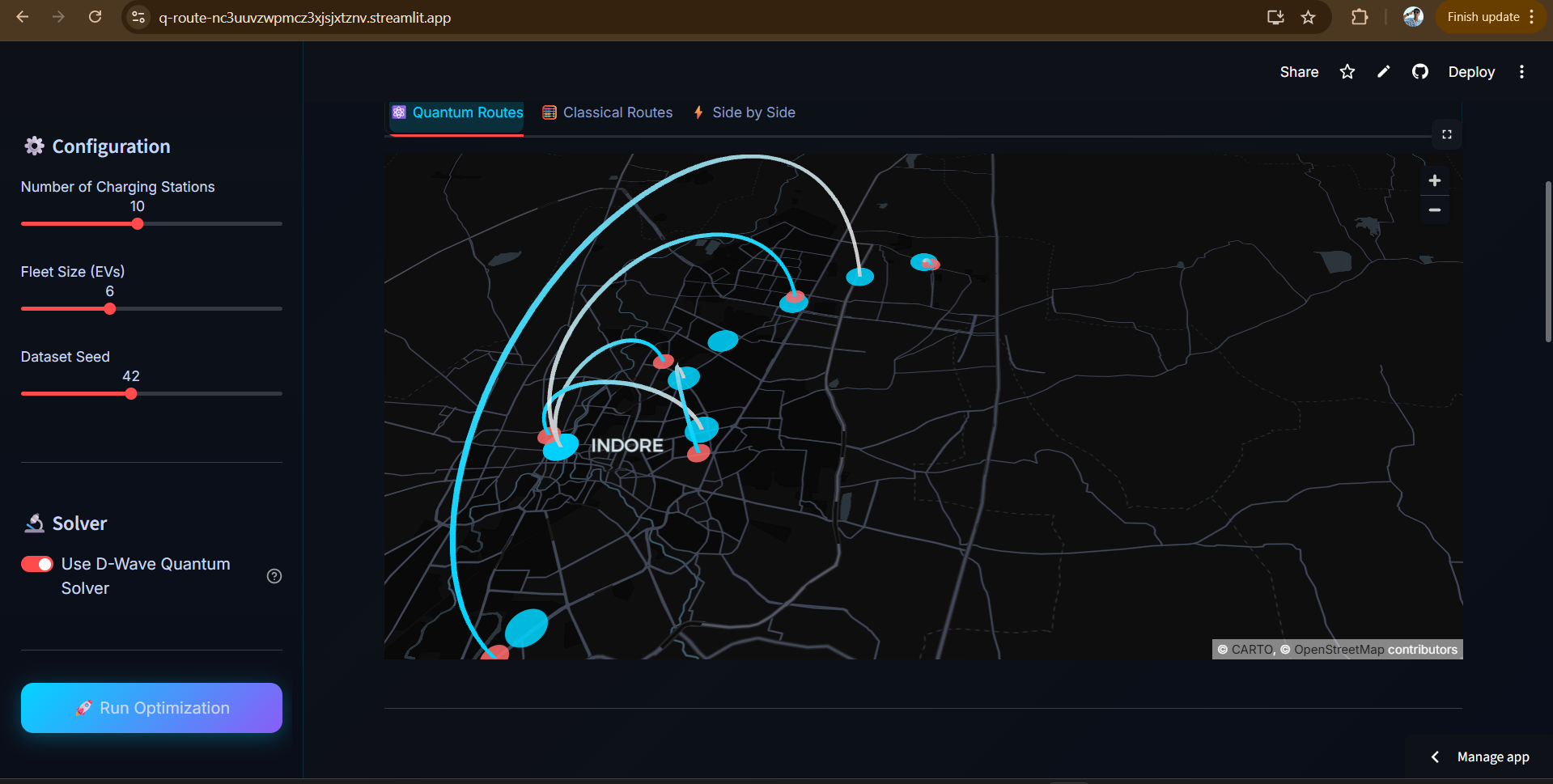
Q-Route assigns every EV in a fleet to its optimal charging station in one shot, balancing distance, station congestion, charging cost, and battery urgency simultaneously. It shows a live comparison between the quantum solution and the classical greedy approach on a real map of Indore, India.
How we built it
- Formulated the assignment problem as a Binary Quadratic Model (BQM/QUBO)
- Solved using D-Wave Ocean SDK (Simulated Annealing + LeapHybrid)
- Built a classical Dijkstra baseline for comparison
- Visualized with Streamlit + PyDeck 3D arc maps + Plotly charts
- Real Indore landmark coordinates via OpenStreetMap
Challenges we ran into
Getting the QUBO penalty weights right was the hardest part, too weak and all vehicles collapsed to one station, too strong and the solver ignored the cost objective entirely. We iterated the penalty coefficient from 3.0 → 10.0 → 20.0 to find the sweet spot.
Accomplishments that we're proud of
A fully working quantum vs classical comparison running on a real Indian city map, built entirely for free , ₹0 spent.
What we learned
Quantum optimization isn't magic, formulating the right cost function and constraints matters more than the hardware itself.
What's next for Q-Route
Real-time fleet API integration, live grid load data from DISCOM, and scaling to 10,000+ vehicles using D-Wave Advantage.
Built With
- d-wave-ocean-sdk
- dimod
- numpy
- openstreetmap
- pandas
- plotly
- pydeck
- python
- streamlit

Log in or sign up for Devpost to join the conversation.