About PulsePoints
Inspiration
PulsePoints was inspired by a common problem: health information is often difficult to understand and difficult to access. Medical reports, prescriptions, and lab results are usually written in professional language, which can make patients feel confused or anxious. At the same time, travelers, elderly users, caregivers, and people in rural or low-connectivity areas may struggle to quickly find clinics, pharmacies, or public health updates when they need them most.
Our goal was to build a tool aligned with UN SDG 3 — Good Health and Well-being: a simple, safer, and more accessible health companion that helps users become more informed without replacing medical professionals.
What it does
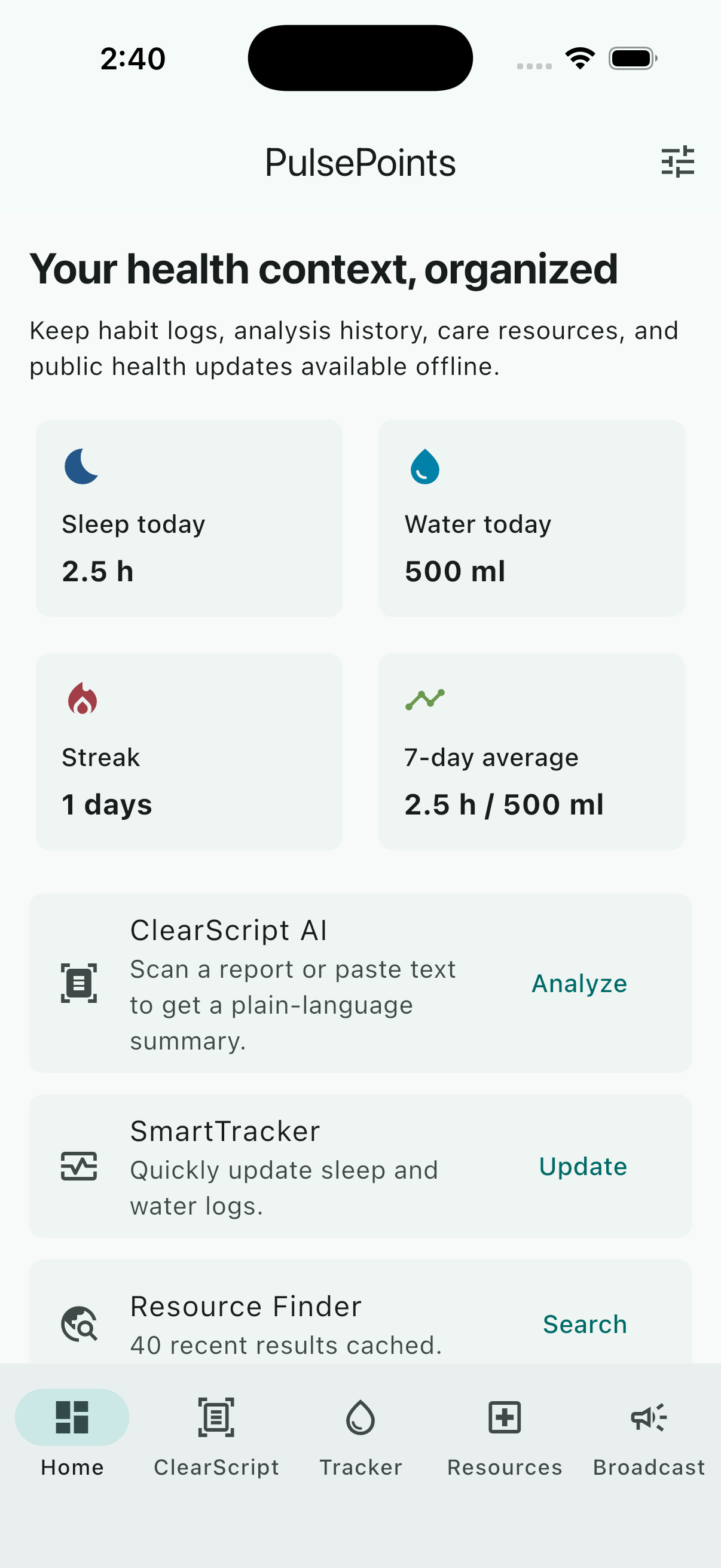
PulsePoints includes four main modules:
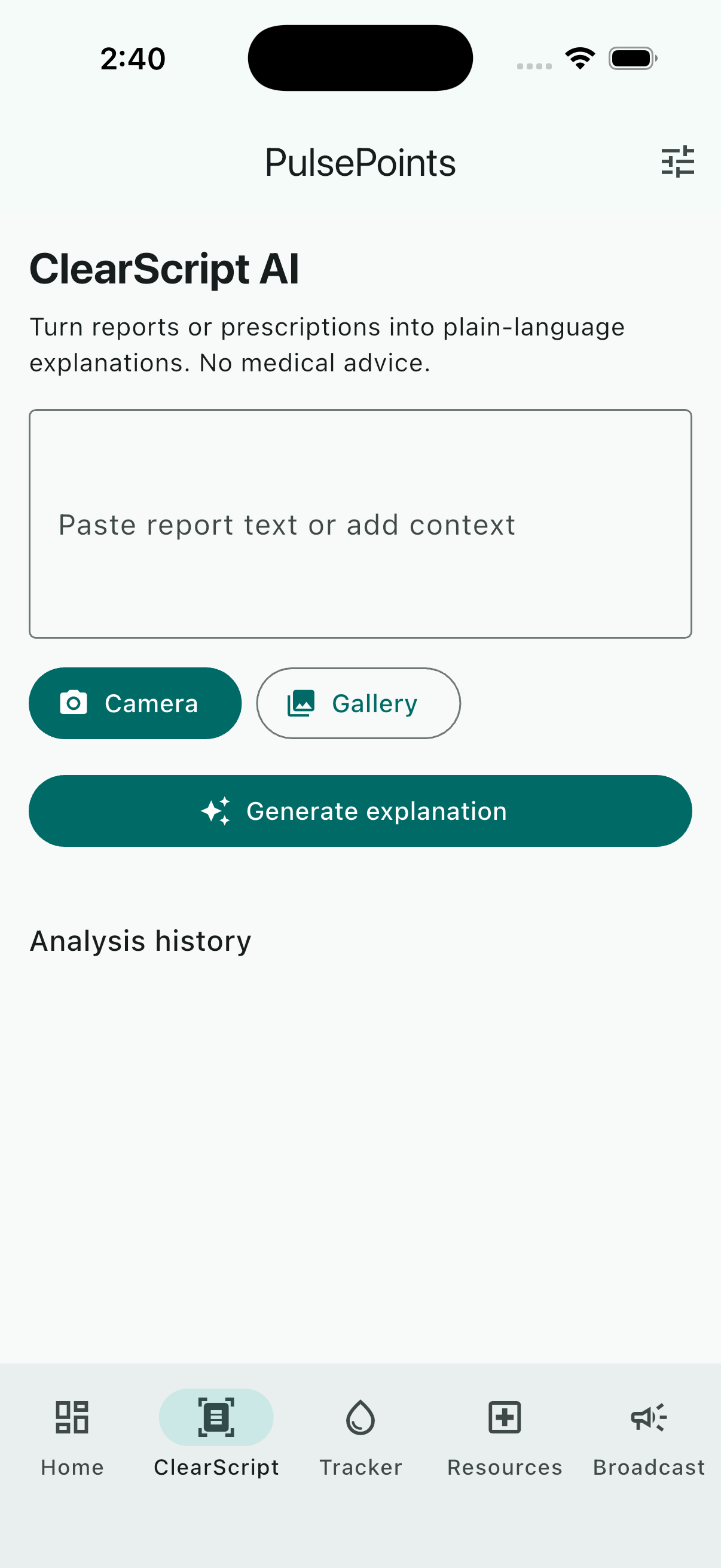
- ClearScript AI: Simplifies medical documents, prescriptions, and clinical terms into plain language.
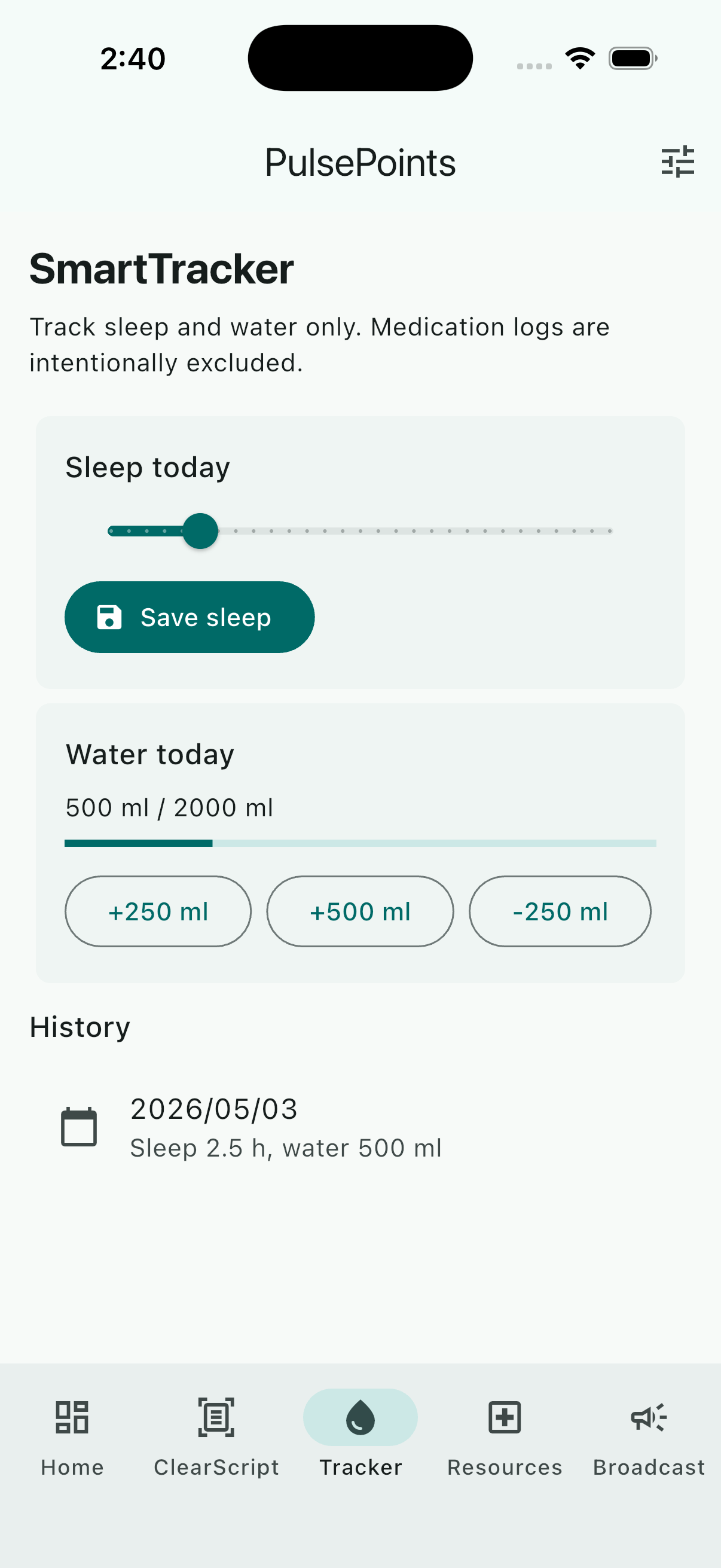
- SmartTracker: Helps users log basic wellness habits such as sleep and water intake.
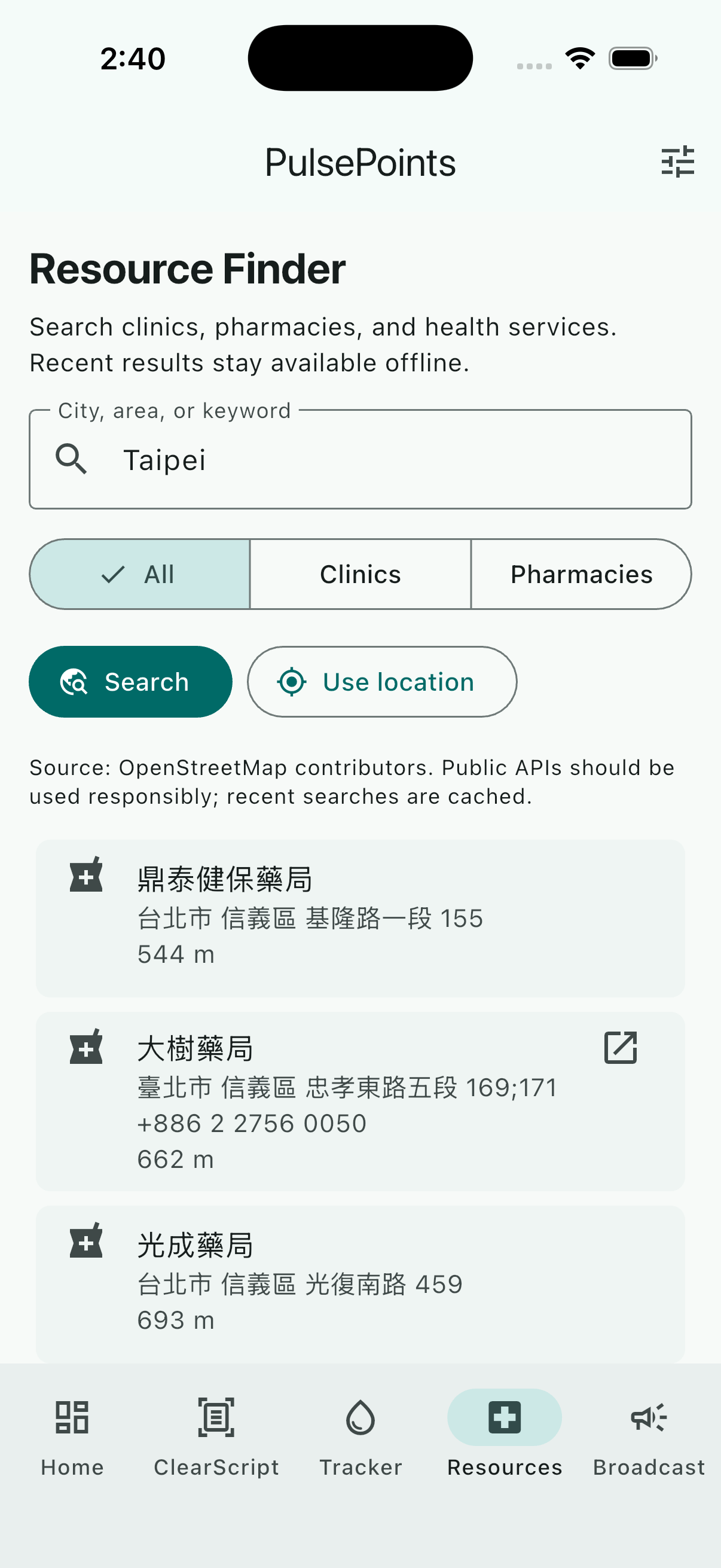
- Resource Finder: Uses OpenStreetMap data to help users find nearby clinics and pharmacies.
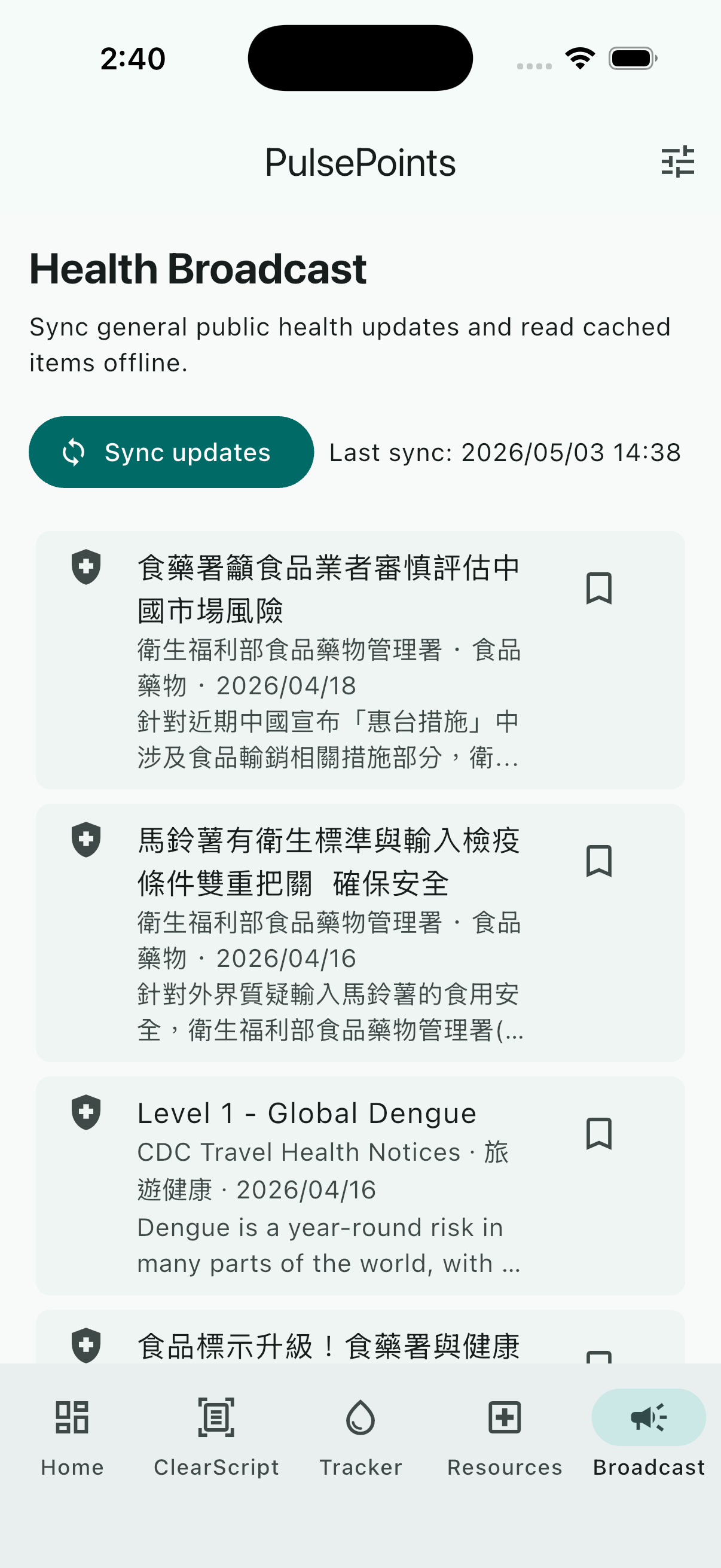
- Health Broadcast: Syncs public health announcements from RSS or JSON feeds for offline reading.
The app is designed around the idea of:
$$ Health\ Support = Literacy + Access + Reliability $$
Instead of trying to diagnose users, PulsePoints helps them understand information, prepare better questions for doctors, and stay connected to trusted health resources.
How we built it
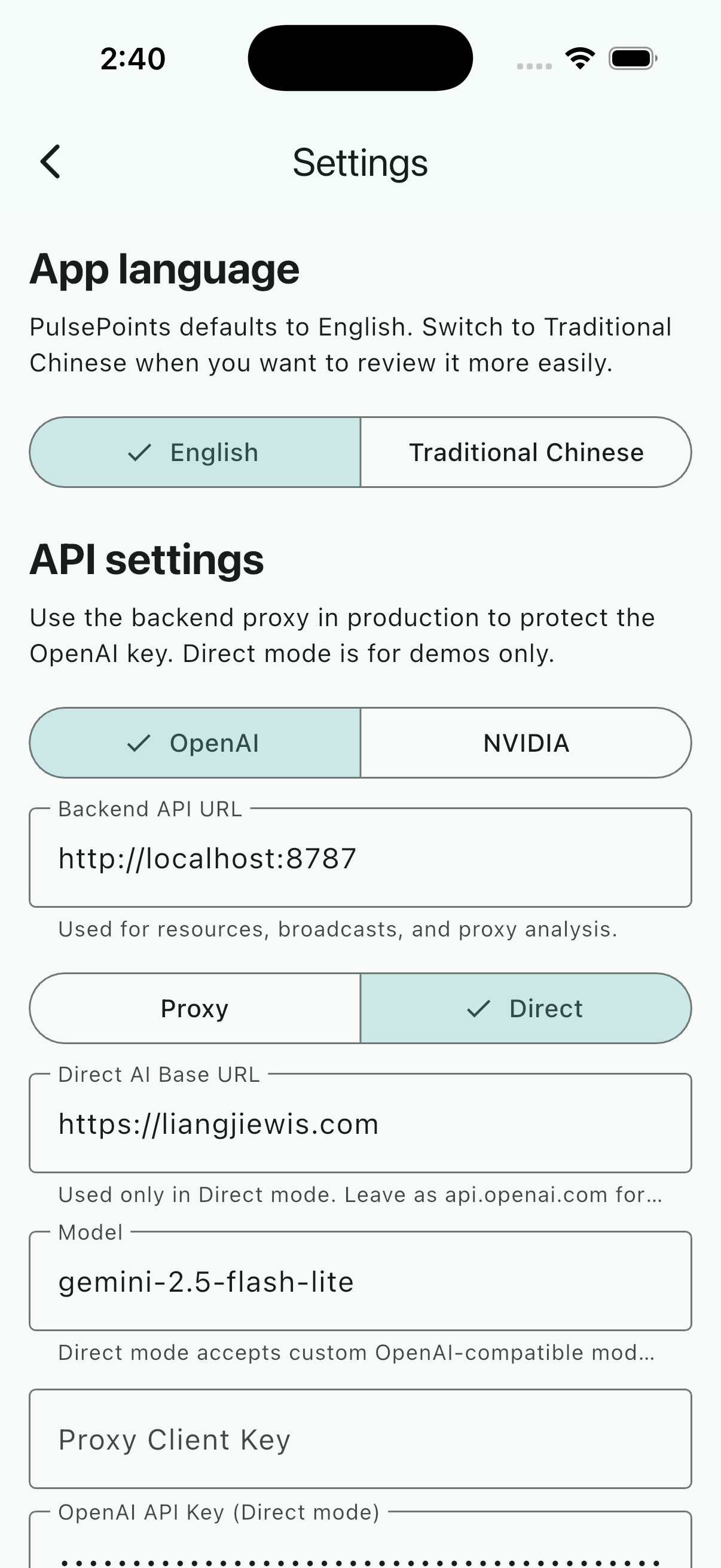
We built PulsePoints as a cross-platform mobile app using Flutter and Dart, with a Material 3 interface. The app stores important information locally using SharedPreferences, so users can continue accessing cached records, habit logs, health announcements, and previous searches even when the internet is unstable.
For the backend, we used Node.js with Express to manage AI requests, protect API keys, and handle communication with external services. ClearScript AI connects to an OpenAI-compatible LLM API through a backend proxy, while Resource Finder uses OpenStreetMap Nominatim and Overpass API for real-world healthcare location search.
What we learned
Through this project, we learned how important it is to design AI tools with clear safety boundaries, especially in health-related contexts. We also learned how to combine frontend development, backend APIs, local caching, and external data sources into one practical app experience.
Most importantly, we learned that accessibility is not only about design. It also includes language clarity, offline reliability, privacy, and making sure users understand what the app can and cannot do.
Challenges we faced
One major challenge was balancing AI usefulness with medical safety. We needed ClearScript AI to explain medical terms clearly, but we also had to make sure it does not provide diagnosis, treatment instructions, medication changes, or emergency advice.
Another challenge was offline-first design. Since PulsePoints is intended for low-connectivity environments, we had to think carefully about what data should be cached locally and how users could still access important information without a stable connection.
We also faced integration challenges while connecting multiple services, including AI APIs, OpenStreetMap data, RSS/JSON health feeds, and local storage. Making these systems work together in a simple and user-friendly way was one of the most important parts of the project.
Built With
- coolify
- dart
- dotenv
- express.js
- flutter
- github
- node.js
- nominatim
- openstreetmap
- overpass
- rest
- rss/json
- sharedpreferences


Log in or sign up for Devpost to join the conversation.