-
-

Pulse Logo
-
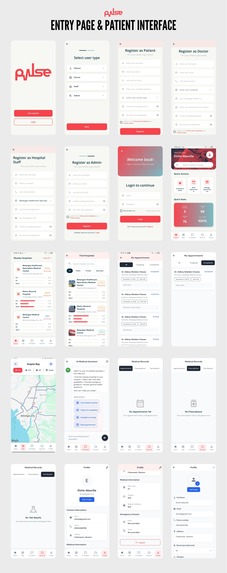
Entry Page and Patient
-
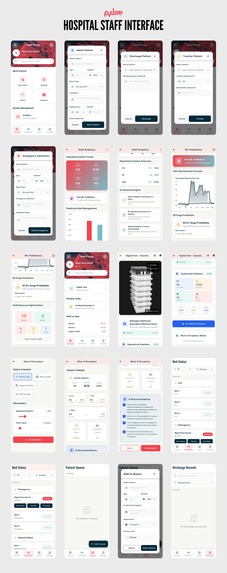
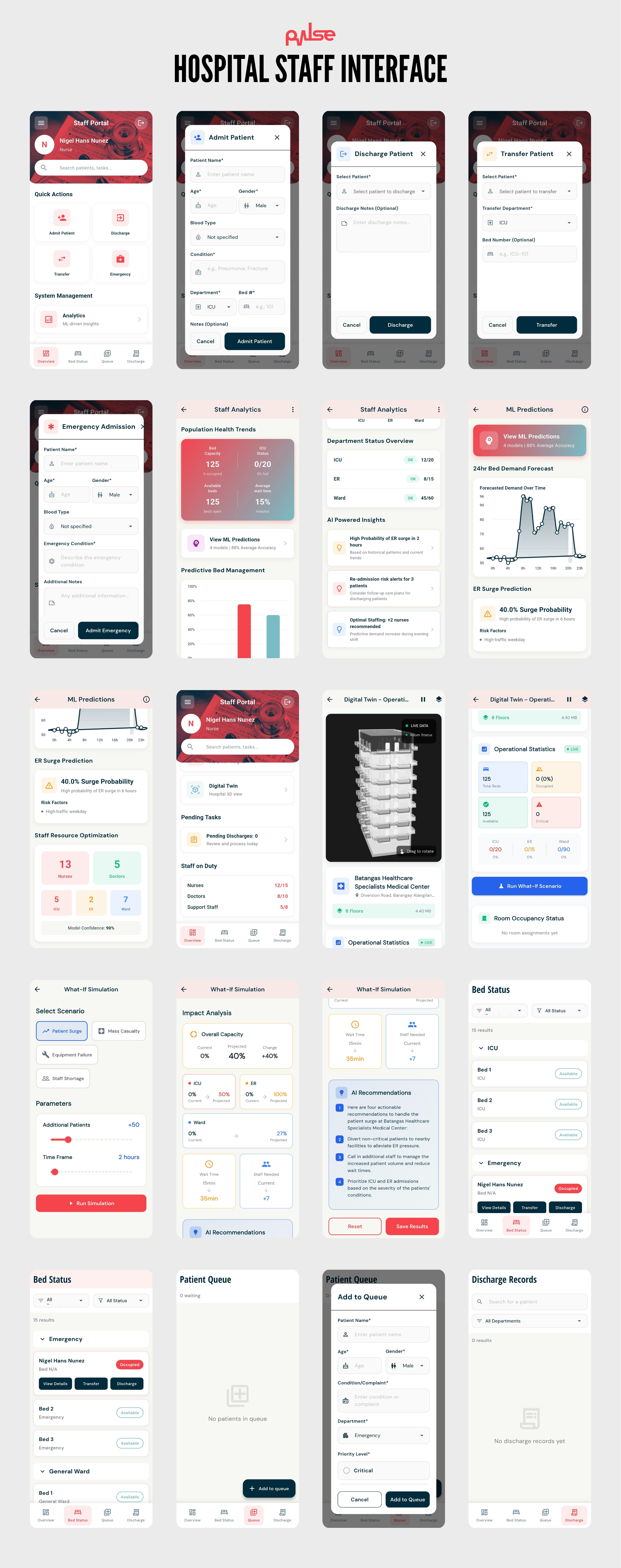
Staff Interface
-
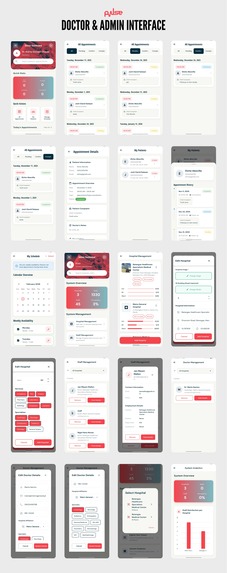
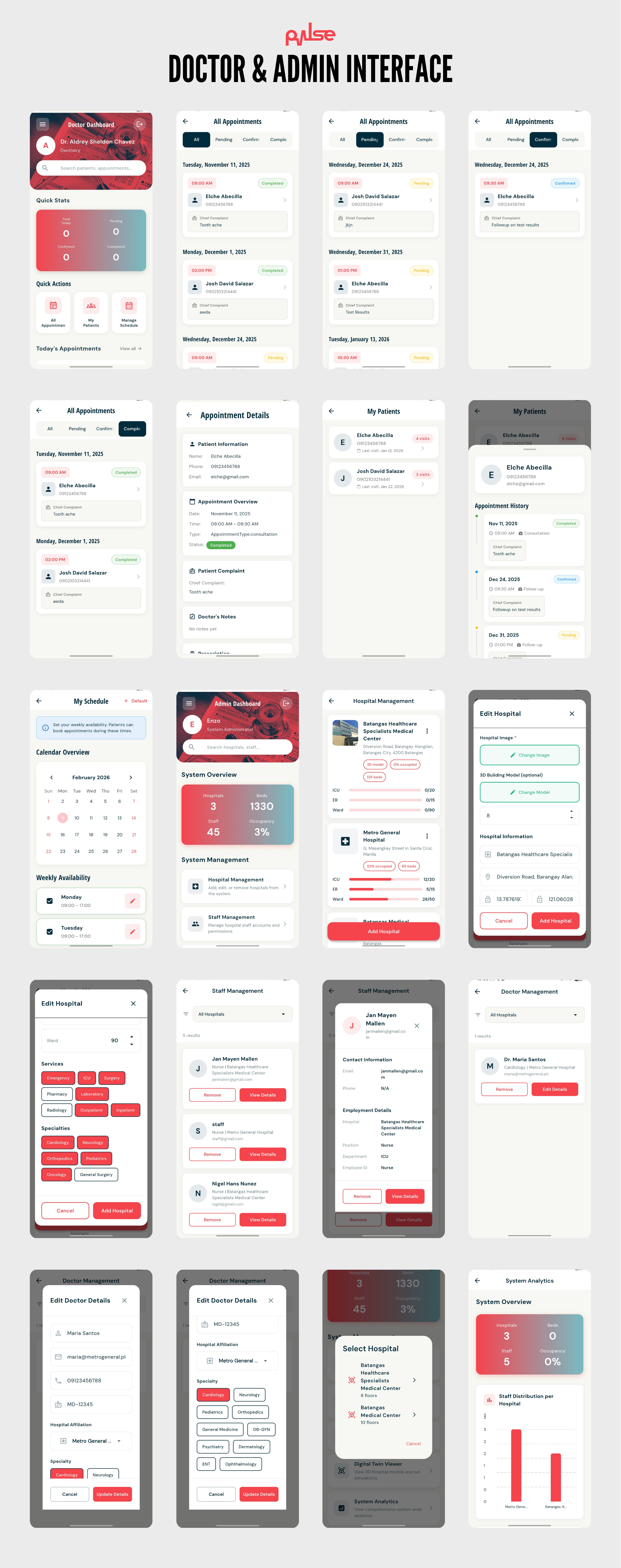
Doctor and Admin Interface

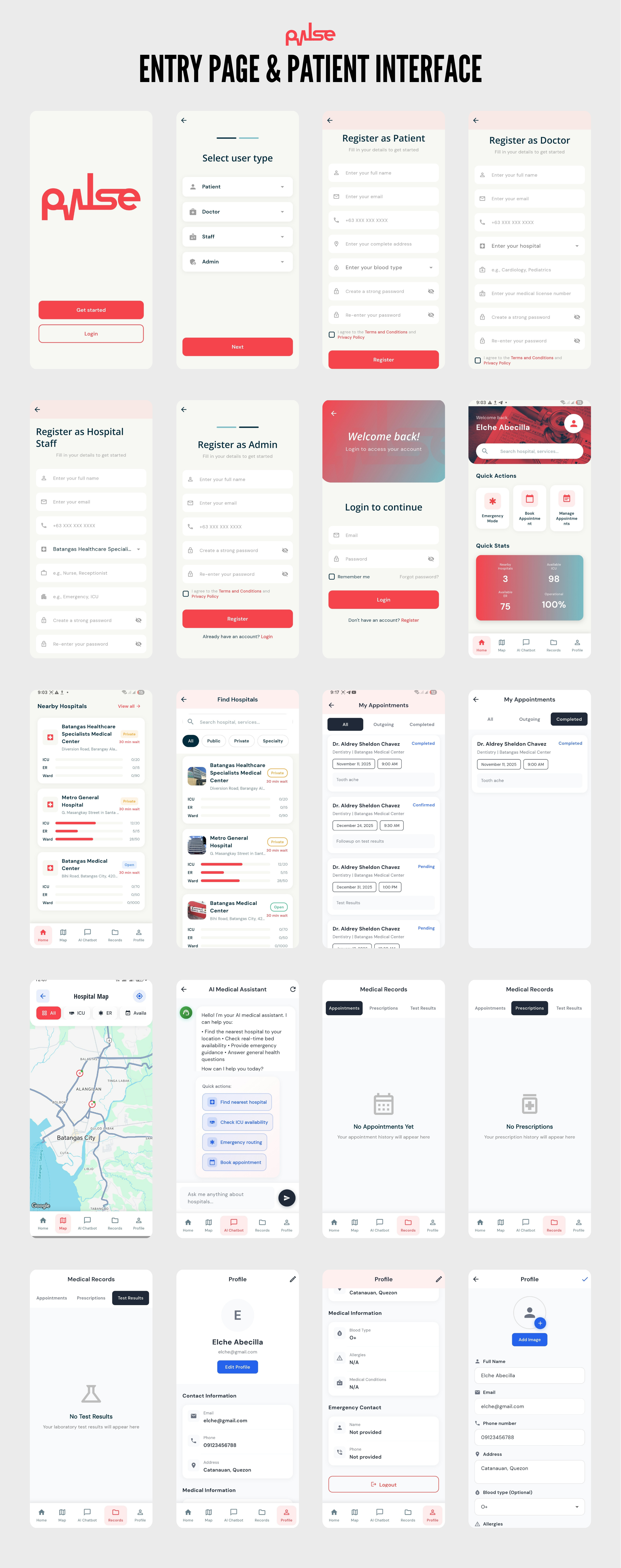
Pulse
Real-Time Healthcare Capacity and Intelligence Platform
Inspiration
Pulse was inspired by a real family emergency. In May, one of our family members had an accident and urgently needed ICU care. We traveled from one town to another searching for a public hospital that could admit the patient. There was no way to know which hospital had available beds, ICU capacity, or doctors on duty. We relied on phone calls, referrals, and guesswork while time was critical.
This experience revealed a major gap in the healthcare system. There is no platform where citizens can see real-time hospital availability, and no unified system for hospitals and local governments to monitor and manage healthcare capacity using historical data, existing records, and artificial intelligence.
What it does
Pulse is a real-time healthcare capacity, navigation, and intelligence platform designed for both citizens and healthcare administrators.
For Citizens
- View nearby hospitals through an interactive GIS map
- Check real-time bed, ICU, and doctor availability
- Receive assistance through an AI health chatbot
- Navigate to the most suitable hospital using optimized routing
For Hospitals and LGUs
- Update and monitor hospital capacity in real time
- View predictive analytics and congestion forecasts
- Receive automated alerts when capacity thresholds are reached
- Use a digital twin simulation to model emergency scenarios and patient flow
How we built it
Pulse was built as a cross-platform mobile and web system combining GIS, real-time databases, machine learning, and Gemini 3 as the intelligence layer.
Core Application
- Flutter for the mobile app interface
- Node.js for backend services and API handling
- Firebase for authentication and real-time database updates
- PostgreSQL for structured hospital and user data
GIS and Mapping
- OpenStreetMap and Overpass API for hospital geolocation data
- Routing and proximity calculations for hospital navigation
Machine Learning and Analytics
- Python, Pandas, and Scikit-learn for analyzing historical hospital data
- Predictive models for forecasting hospital congestion and resource demand
- Analytics dashboards for administrators
Gemini 3 Integration (Core Intelligence Layer)
Gemini 3 plays a central role in transforming Pulse from a monitoring tool into an intelligent decision support system.
We used Gemini 3 in four major ways:
AI Health Chatbot Gemini understands user concerns written in natural language and connects this understanding with real-time hospital data to recommend appropriate hospitals.
Healthcare Data Interpretation Gemini processes live hospital capacity updates and converts raw numbers into meaningful summaries, alerts, and recommendations for the City Health Office.
Predictive Analytics Explanation While machine learning models generate forecasts, Gemini explains these predictions in clear, human-readable insights that administrators can act on.
Digital Twin Simulation Assistance In simulated emergency scenarios, Gemini interprets the results and summarizes possible outcomes and response strategies for decision-makers.
Gemini acts as the bridge between complex data, AI models, and human understanding.
Challenges we ran into
- Accessing reliable and structured hospital data for mapping and capacity tracking
- Designing a system useful for both citizens and healthcare administrators
- Integrating real-time updates while maintaining a simple and intuitive interface
- Explaining complex analytics and simulations in a way that non-technical users can understand
- Ensuring scalability for city-wide use within hackathon constraints
Accomplishments that we're proud of
- Developing a working prototype that demonstrates real-time hospital mapping
- Successfully integrating Gemini 3 for both user assistance and administrative insights
- Designing a digital twin concept for healthcare capacity simulation
- Creating a solution based on a real healthcare problem experienced firsthand
- Building a system designed for LGU integration and real-world adoption
What we learned
We learned how critical real-time healthcare data is during emergencies and how difficult it is to access without a centralized system. We gained experience in combining GIS, AI, analytics, and mobile development into a unified platform. We also learned how to design technology that supports both everyday users and institutional decision-makers.
What's next for Pulse
The next steps for Pulse include onboarding more hospitals, improving AI forecasting accuracy, expanding the digital twin simulation, and fully integrating the platform into the My Naga App. We also aim to include barangay health centers and make the system scalable for other cities and municipalities.

Log in or sign up for Devpost to join the conversation.