-
-
meow
Inspiration
We took inspiration from Zohran Mamdani’s Twitter page and how clearly it explained city decisions. We wondered what that same transparency could look like for Toronto proposals. What if residents could easily understand what was changing, explain what they needed from a proposal, and come back after a revision to see whether their concerns had been addressed?
What it does
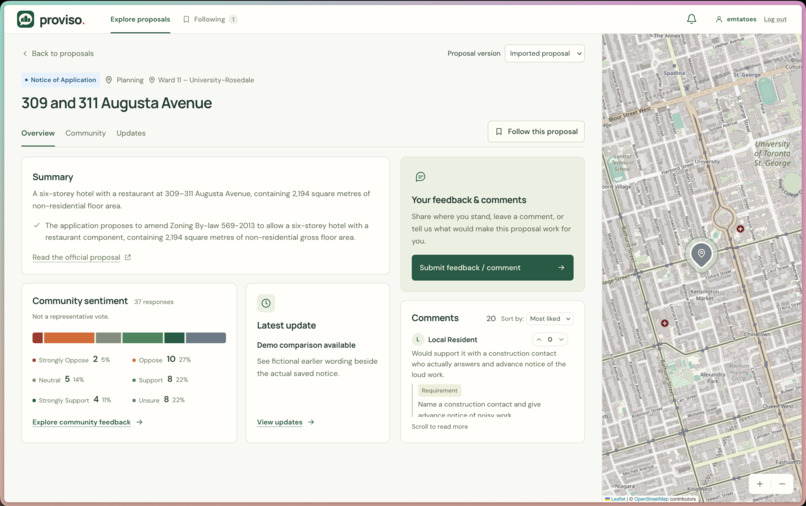
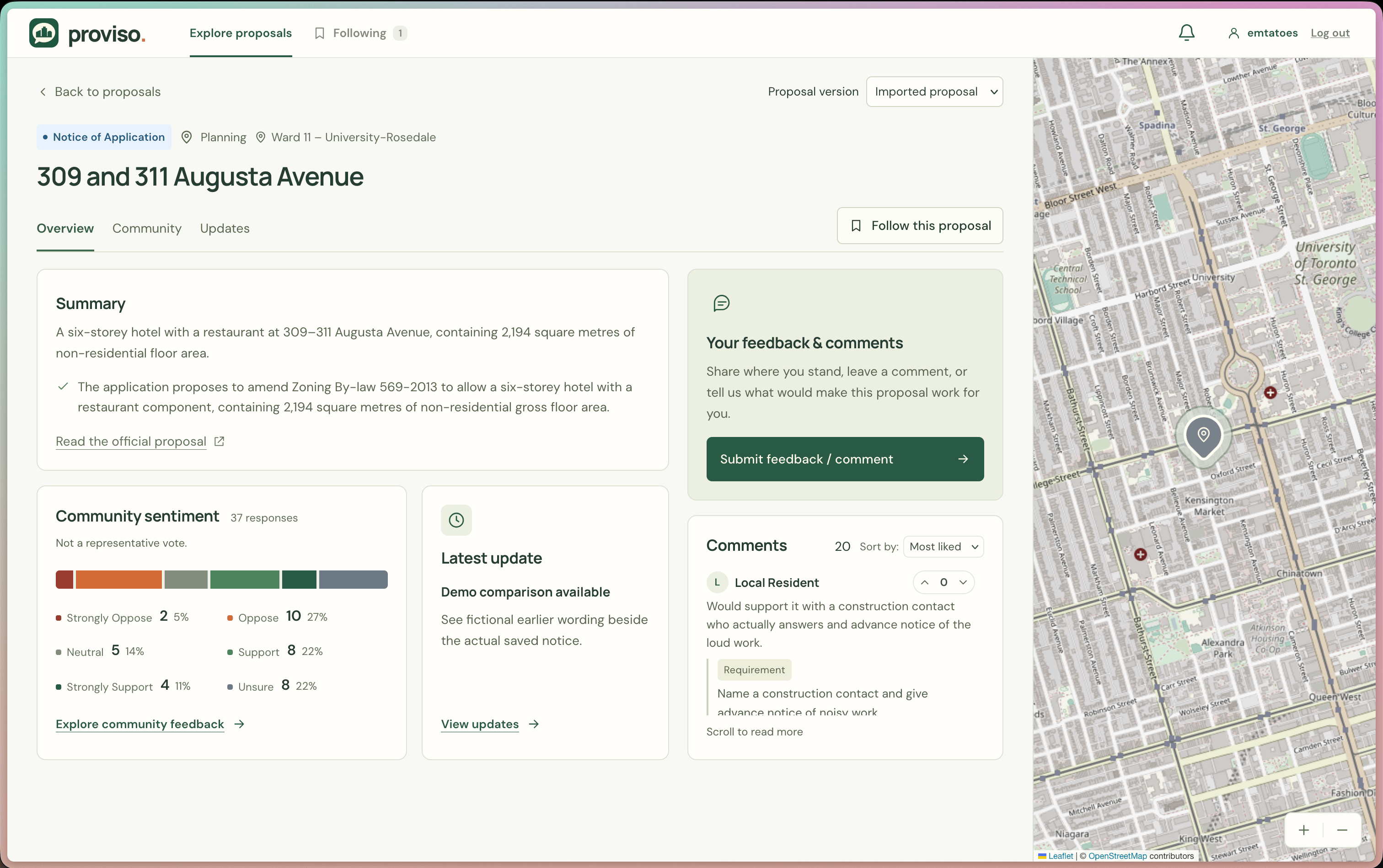
Proviso helps residents discover Toronto proposals through a searchable map and list, understand what's being proposed, and access the official sources.
Residents can share their overall opinion, rate specific aspects of a proposal, and leave comments explaining their concerns or needs. From these comments, Proviso suggests specific requests that residents can review, edit, or remove before submitting. Similar requests are grouped together in a community view, making it easier for both residents and staff to see common concerns, conflicting needs, and the original comments behind them.
Residents can also follow proposals and receive in-app notifications when official notices are updated. Our simulated revision walkthrough shows how this could work over time: residents can compare versions, revisit their earlier requests, and confirm or change their responses based on what's been revised.
How we built it
We imported 24 Toronto public notices into MongoDB and built the frontend using React, TypeScript, and Leaflet, with FastAPI handling the backend. We used Groq to turn comments into editable request suggestions and group similar requests while keeping the original supporting quotes.
The backend periodically checks linked official notices for updates, saves snapshots, and compares changes. These comparisons are used to build the update history and notify residents when something changes.
Challenges we ran into
One of our biggest challenges was grouping feedback based on what people actually wanted, rather than just what they were talking about. For example, a resident asking for deliveries to start after 9 a.m. and a bakery needing deliveries before 7:30 a.m. are both discussing delivery hours, but grouping them as the same request would overlook an important disagreement. We needed to preserve details like the requested change, time, and location while keeping the original comments accessible.
Working with official data also brought some challenges. A meeting date doesn't necessarily mean it's the deadline for feedback, and an updated notice doesn't always mean the proposal itself has changed. We made sure to communicate these uncertainties rather than present assumptions as facts.
Accomplishments that we're proud of
Our Labatt Avenue walkthrough brings together individual comments, common requests, conflicting needs, and a later revision into one connected example. Residents can see exactly what changed in the proposal and update their response, while their earlier feedback remains linked to the original version.
We also built a way to compare feedback from the same residents across different versions, distinguishing those who have reviewed and confirmed or changed their responses from those who haven't returned yet. The development application itself is real, while the feedback and revisions are simulated to demonstrate how Proviso would work in practice.
What we learned
We learned that asking for a specific change doesn't necessarily mean someone would support the entire proposal if that change were made. This led us to separate overall opinions, ratings of individual aspects, and specific requests rather than treating them as the same thing.
We also realized how important it is to know whether residents have actually reviewed a revised proposal. Without that distinction, an old response could be mistaken for someone's current opinion, or feedback from different groups of residents could make it seem like public opinion had shifted when it hadn't.
What's next for Proviso
We hope to work with Toronto municipal staff to bring Proviso into a real consultation process. This would involve connecting official proposal and agenda records, verifying feedback periods, and making sure residents' input reaches the staff responsible for each proposal.
We also want to introduce staff responses that explain which requests were addressed, which weren't, and why. Ultimately, we'd like to test Proviso through a small municipal pilot, while expanding accessibility through multilingual support and assisted participation for residents who may not be able to use the platform on their own.
