-
-
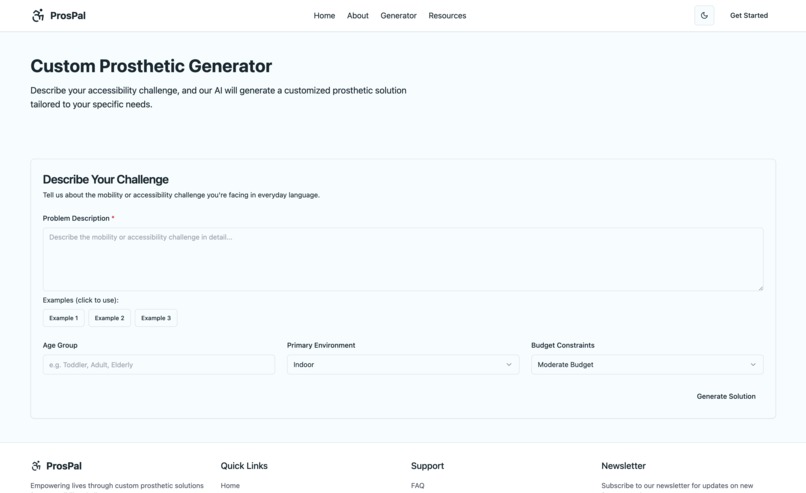
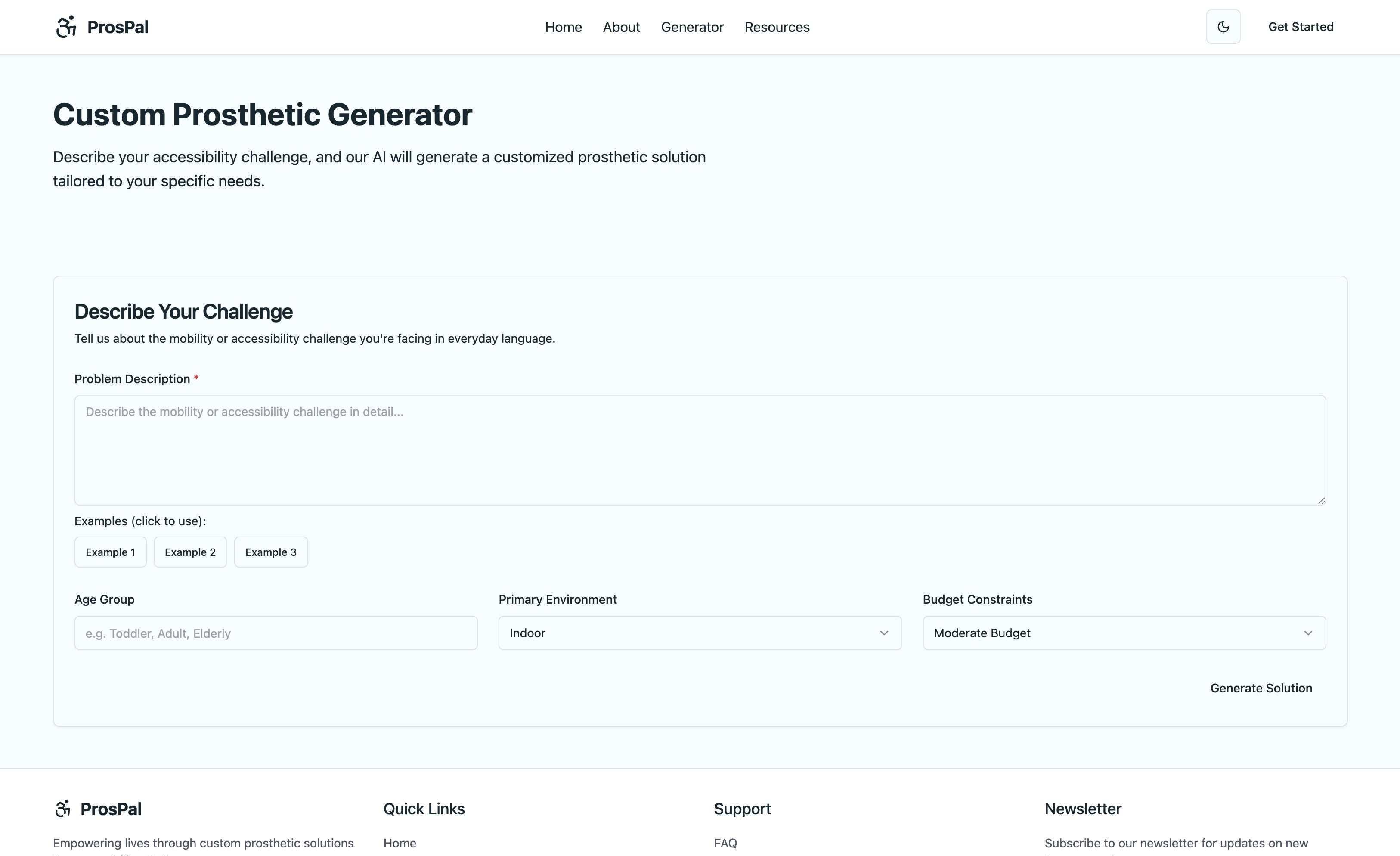
LLM Generator page
-
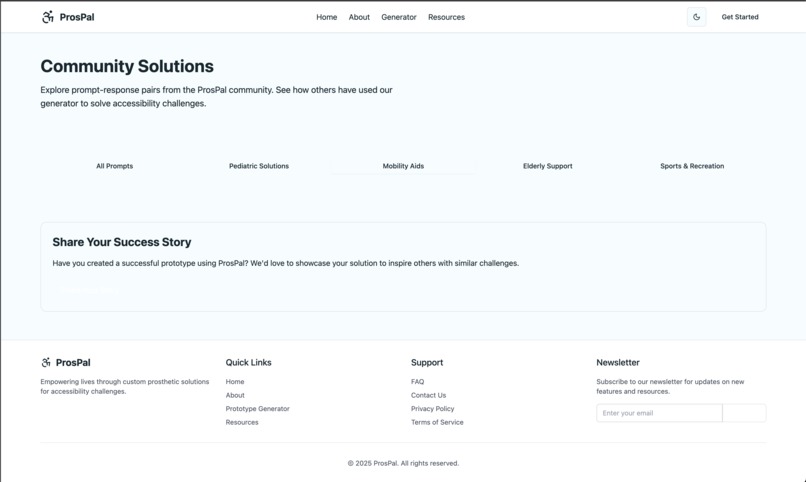
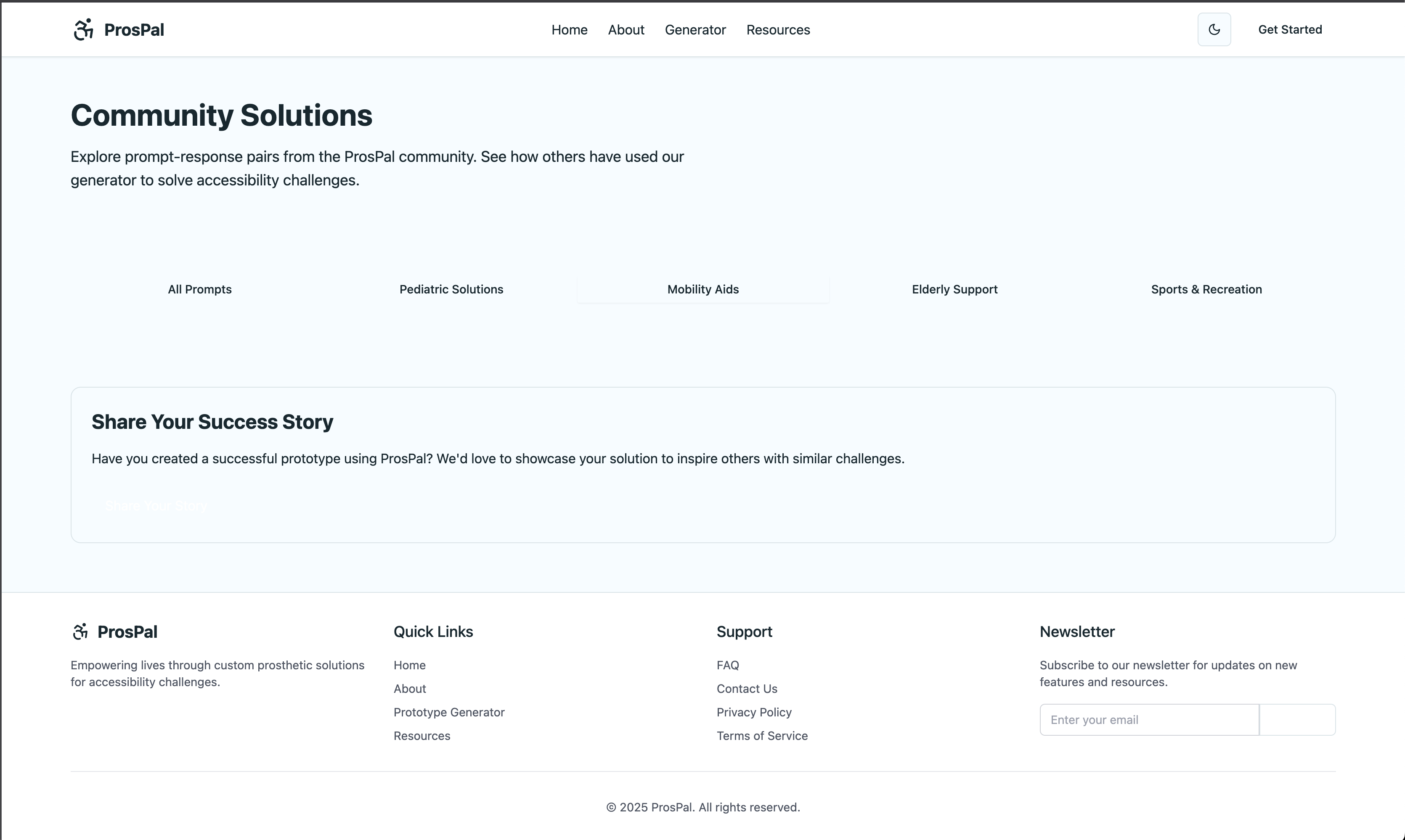
Previously LLM-generated response store to view if something already generated fits the user's problem
-
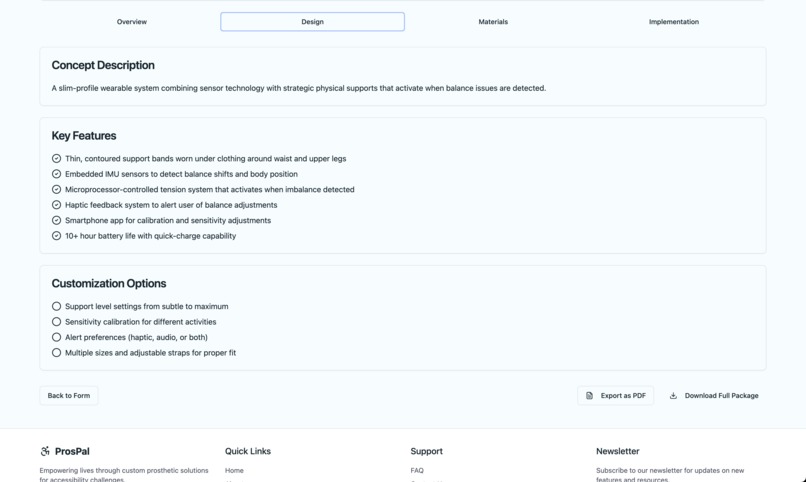
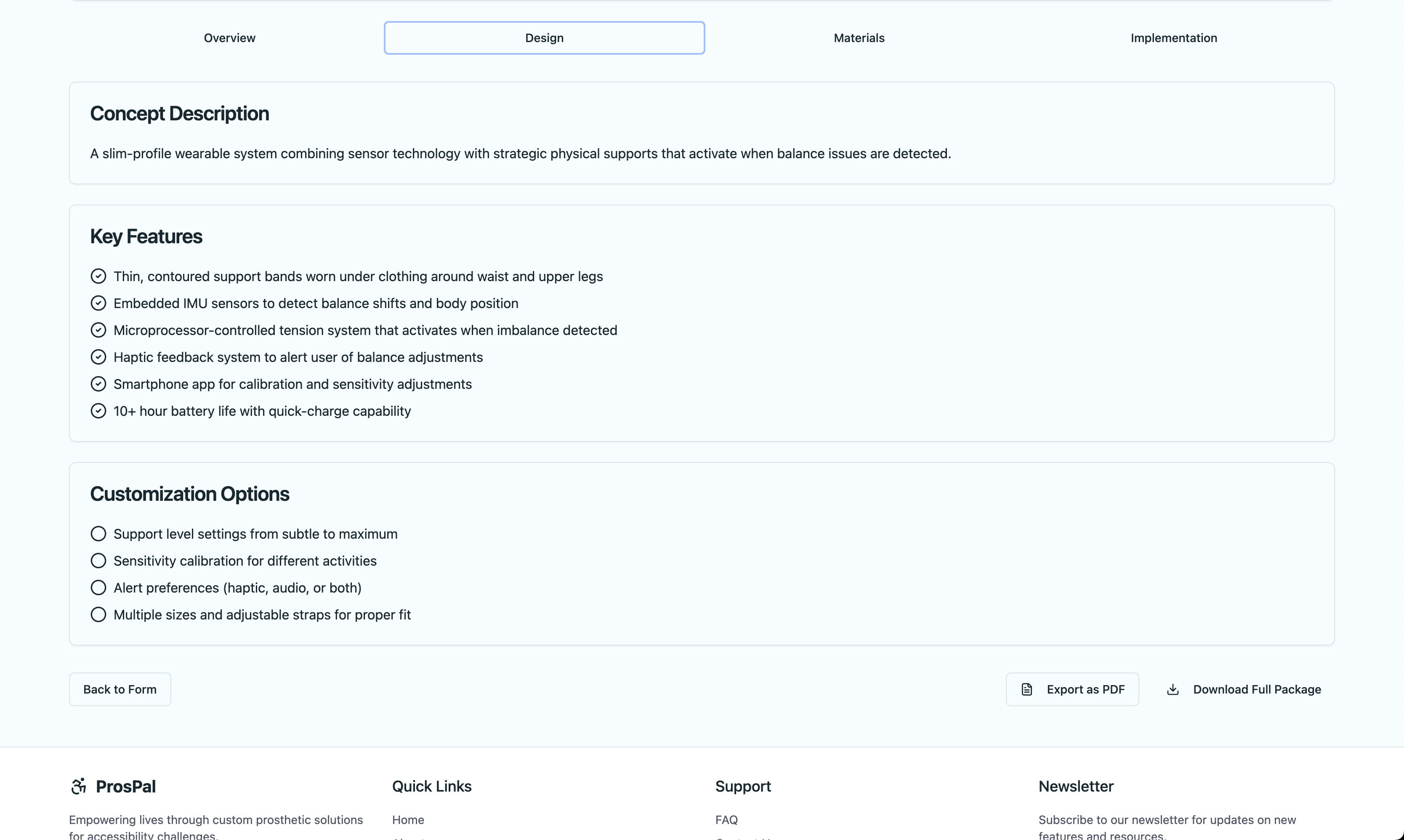
Response generated by LLM
-
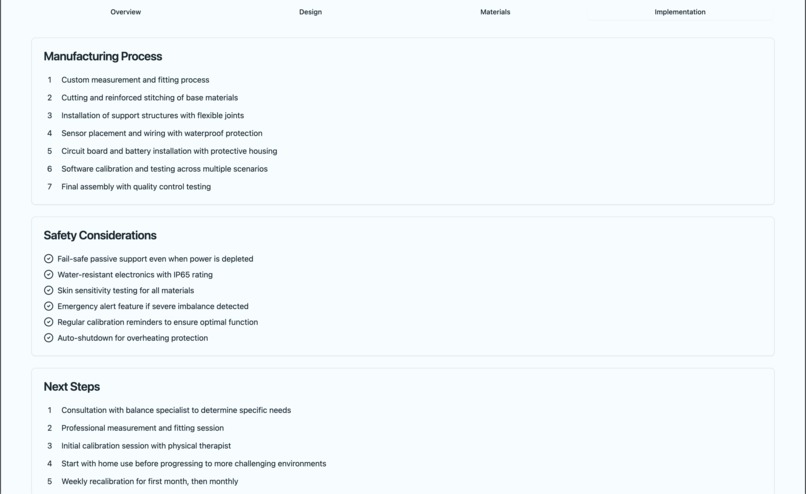
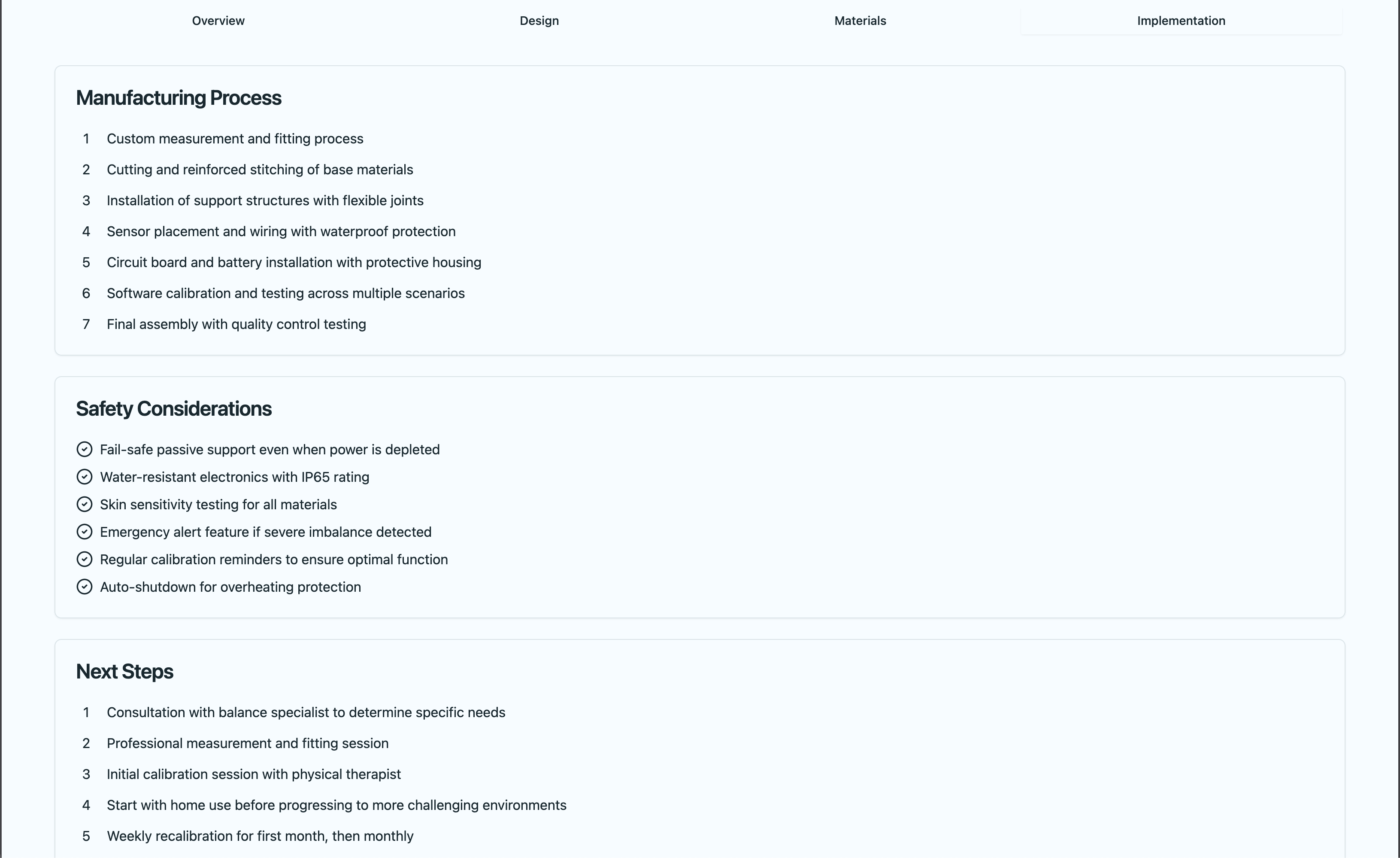
Response generated by LLM
-
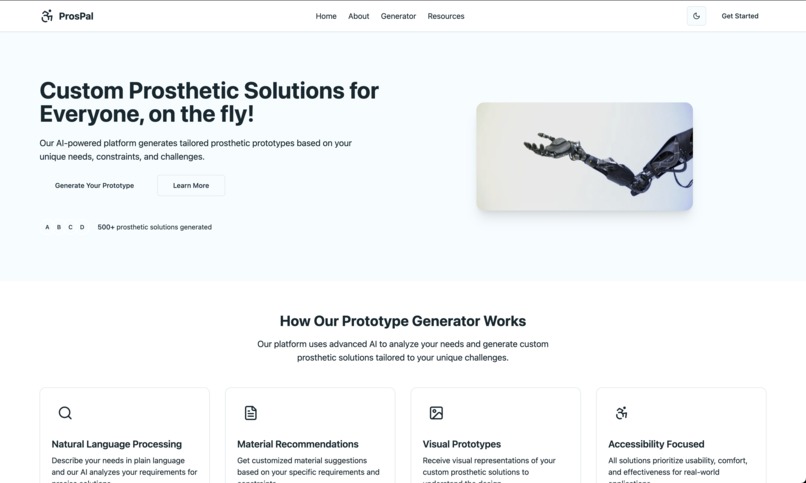
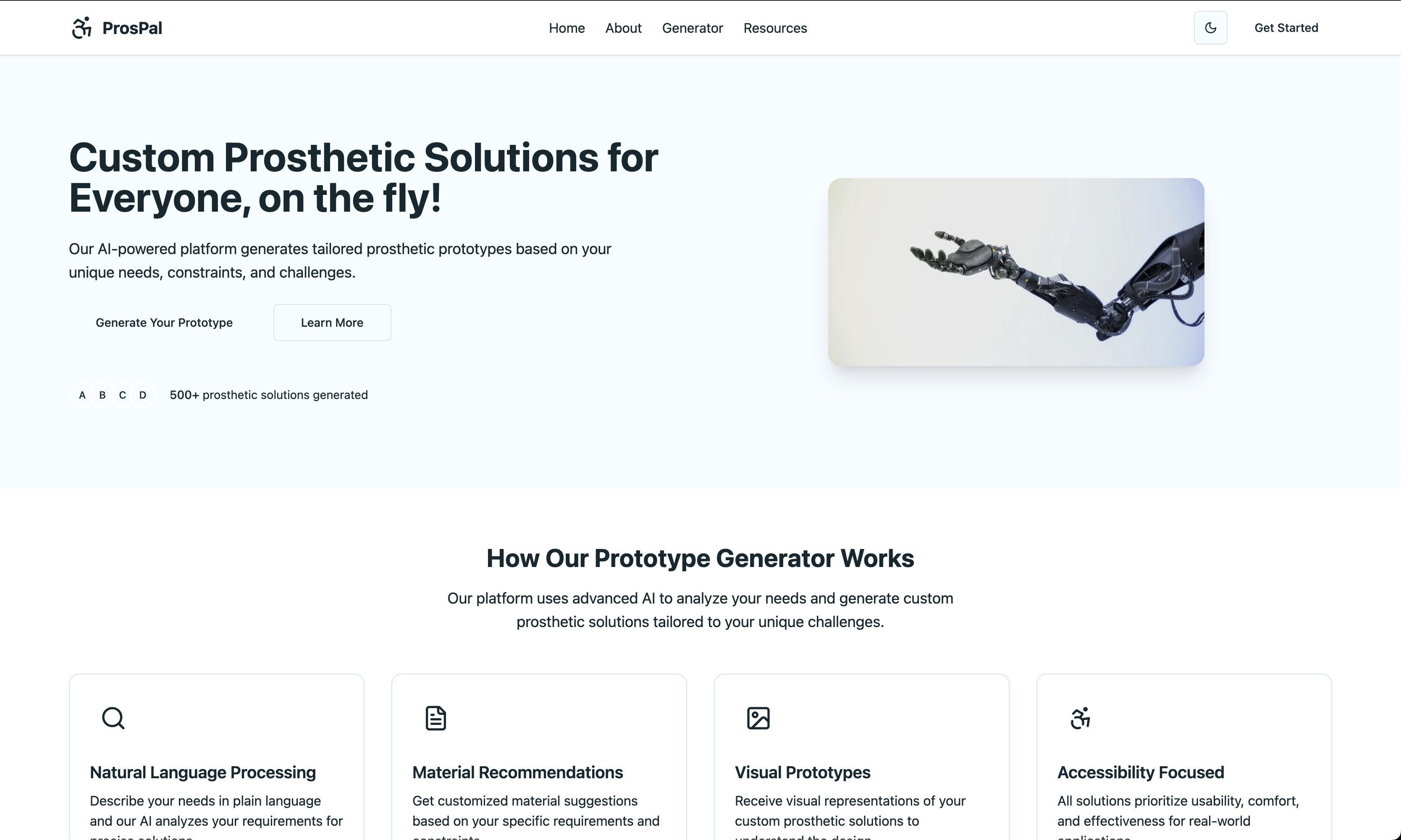
Homepage
-
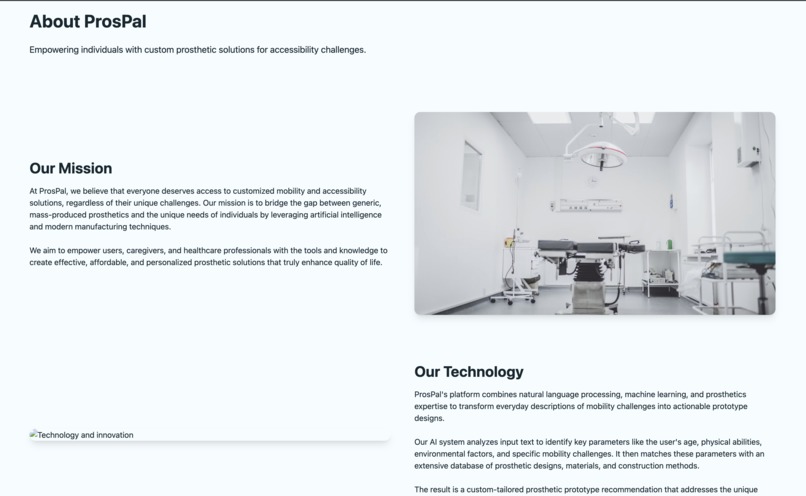
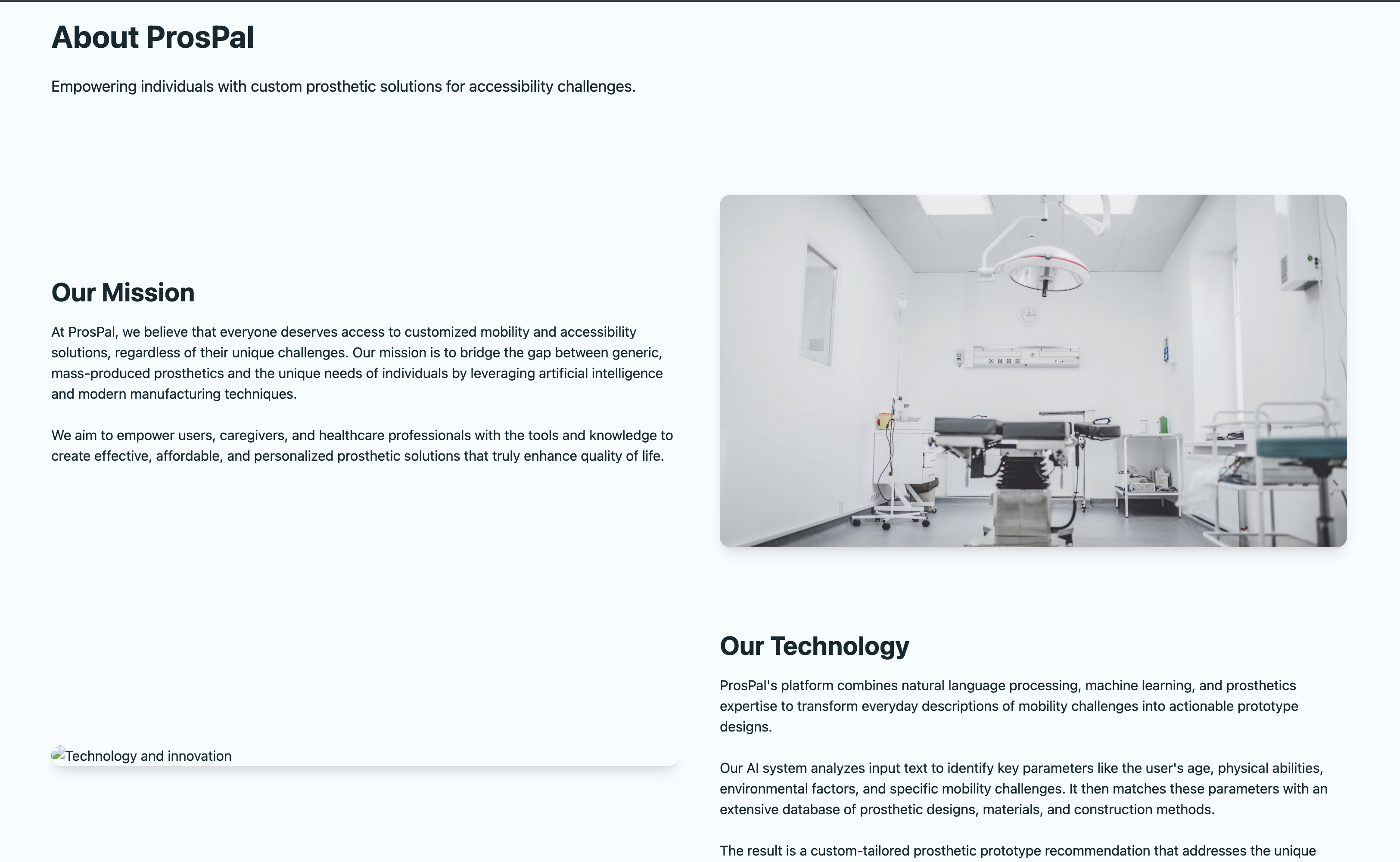
About
-
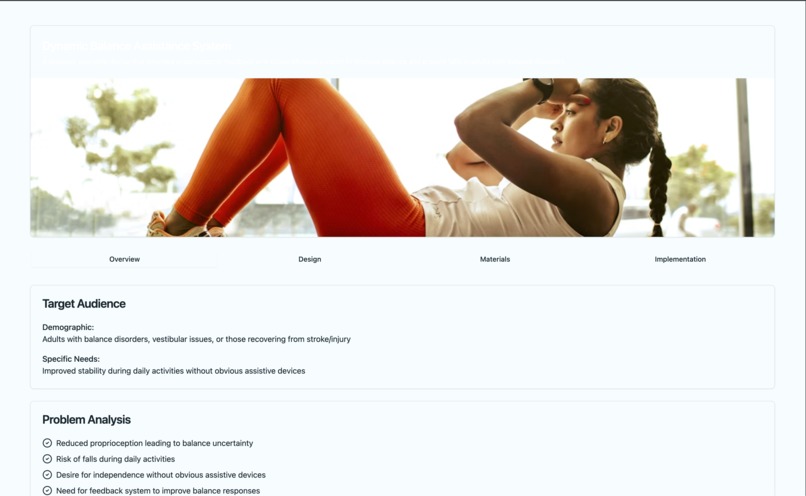
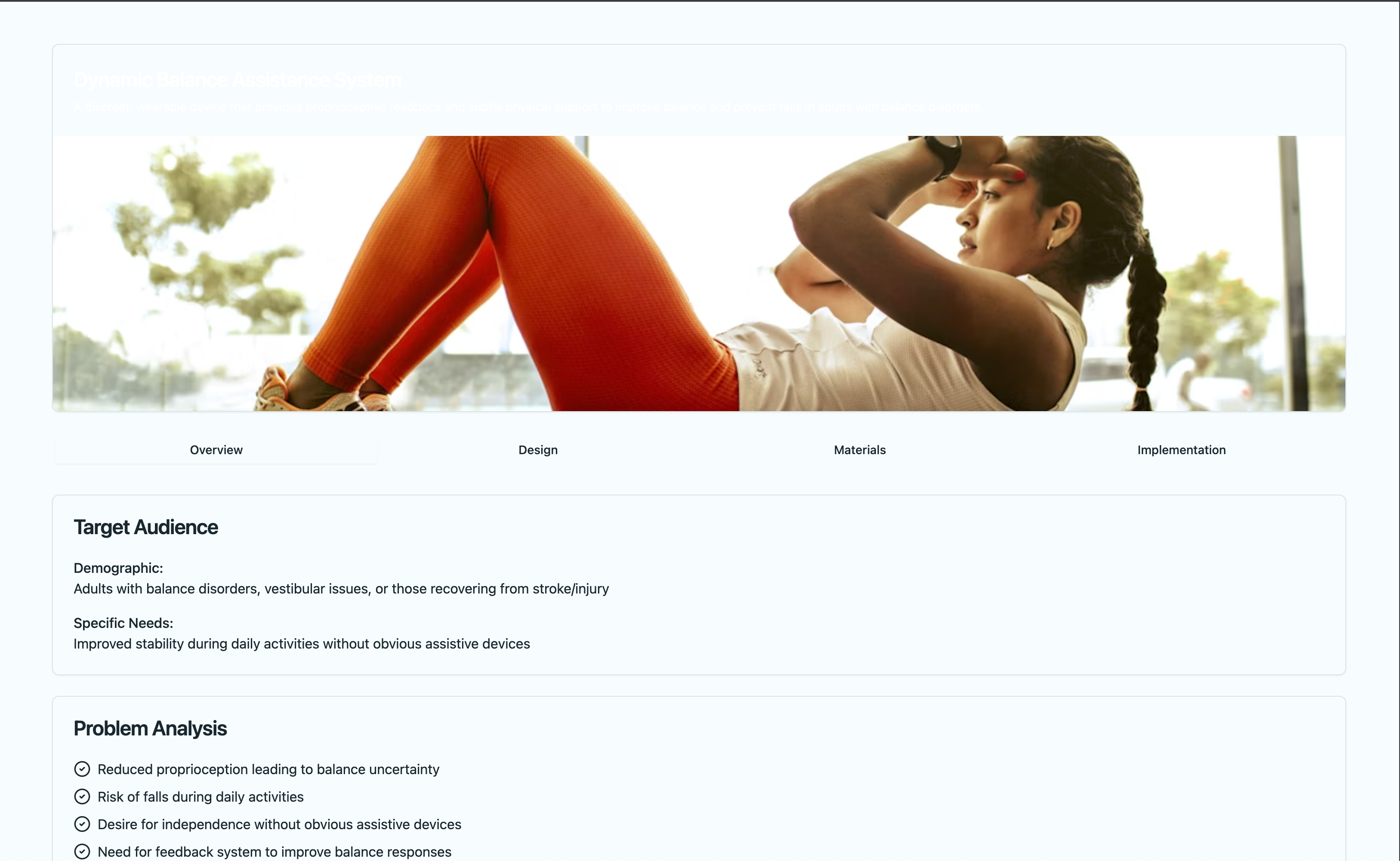
LLM result page
Inspiration
Our project, ProsPal, was inspired by the stories of individuals with disabilities who struggled to find personalized and affordable assistive devices. We recognized a gap in readily accessible solutions and aimed to empower users by providing a way to create custom prosthetics at home. Our mission is to enhance the quality of life for those with unique needs, giving them the tools to create their own solutions.
What it does
ProsPal is a web application that generates customized, text-based instructions for creating prosthetics or assistive devices. Users simply input their specific condition and any constraints they face, and the app outputs detailed, step-by-step guides along with a list of necessary materials. This enables users to start implementing their solutions immediately, fostering independence and creativity in finding their assistive needs.
How we built it
We built ProsPal by fine-tuning the Falcon language model on a custom dataset that includes a diverse array of conditions and corresponding assistive devices. We combined this powerful LLM with a user-friendly web interface, allowing for seamless input of conditions. Extensive testing was conducted to ensure the generated instructions were clear, practical, and tailored to user needs.
Challenges we ran into
One of the primary challenges we faced was curating a comprehensive dataset that encompassed various conditions and potential constraints while maintaining high-quality outputs. Additionally, ensuring the instructions were understandable and accessible to users with differing levels of technical knowledge was an ongoing process. Iteratively testing the app's responses helped us refine and improve the clarity of the guidance. The major problem we faced was finetuning a LLM on custom dataset using just our local GPU with 4GBs of RAM and free cloud-based GPU on Colab with 15GBs of RAM.
Accomplishments that we're proud of
We are proud of successfully fine-tuning the Falcon model to generate quality instructions that users can easily follow. Our user feedback has shown that many find the app intuitive and the outputs highly useful. We've also managed to build a supportive community around our project, collecting insights from potential users that have significantly shaped our development.
What we learned
Throughout the development process, we learned the importance of user-centered design and iterative testing. Engaging with potential users highlighted the diverse needs and preferences people have, emphasizing the need for personalized solutions. Additionally, we gained valuable insights into natural language processing and its impact on accessibility.
What's next for ProsPal: Custom Prosthetic Prototype Generator
Looking ahead, we plan to expand the dataset further, adding more conditions and assistive devices to enhance customization options. We are also exploring partnerships with organizations that support individuals with disabilities to broaden our reach. Ultimately, we aim to incorporate advanced features like community sharing capabilities, allowing users to exchange experiences and improvements, thus fostering an ecosystem of support and innovation. We also intend to provide links to 3D models of the solutions provided via text so one can 3D print various parts or the whole prototypes.
Built With
- huggingface
- javascript
- json
- python
- pytorch
- react
- shadcn-ui
- tailwind-css
- typescript
- vite

Log in or sign up for Devpost to join the conversation.