-
-
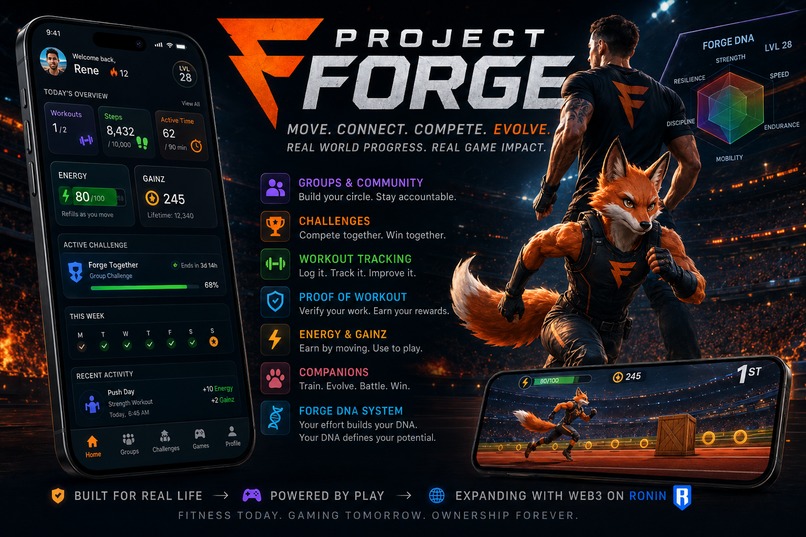
Project Forge turns real-world fitness, community, and consistency into progress that can power evolving companions and games.
-
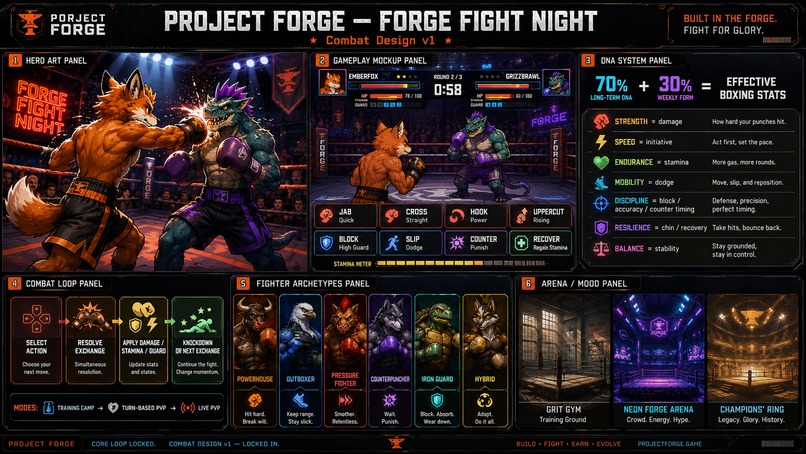
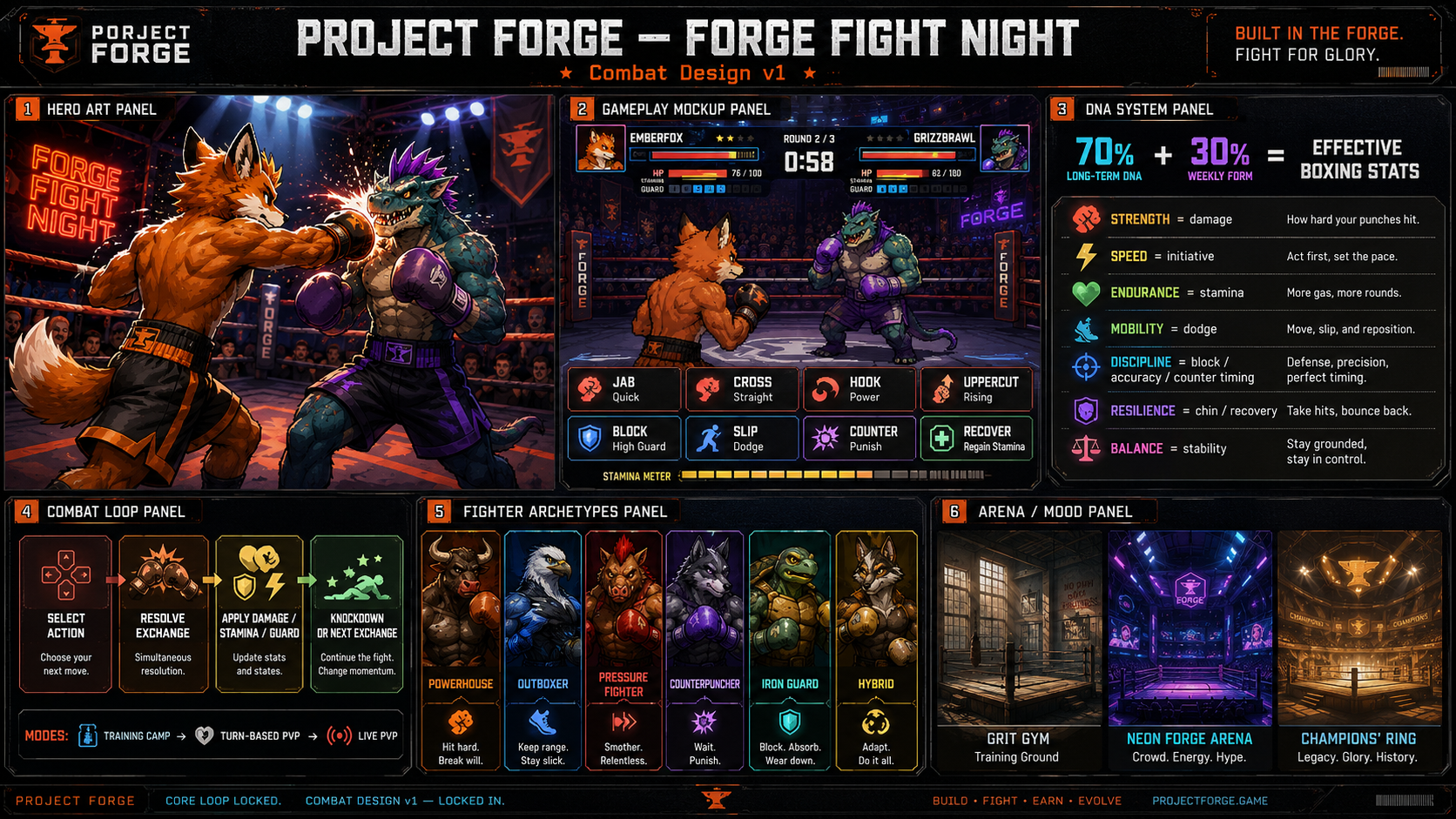
Forge Fight Night expands the vision with fitness-powered combat, Performance DNA, strategic abilities, and competitive gameplay.
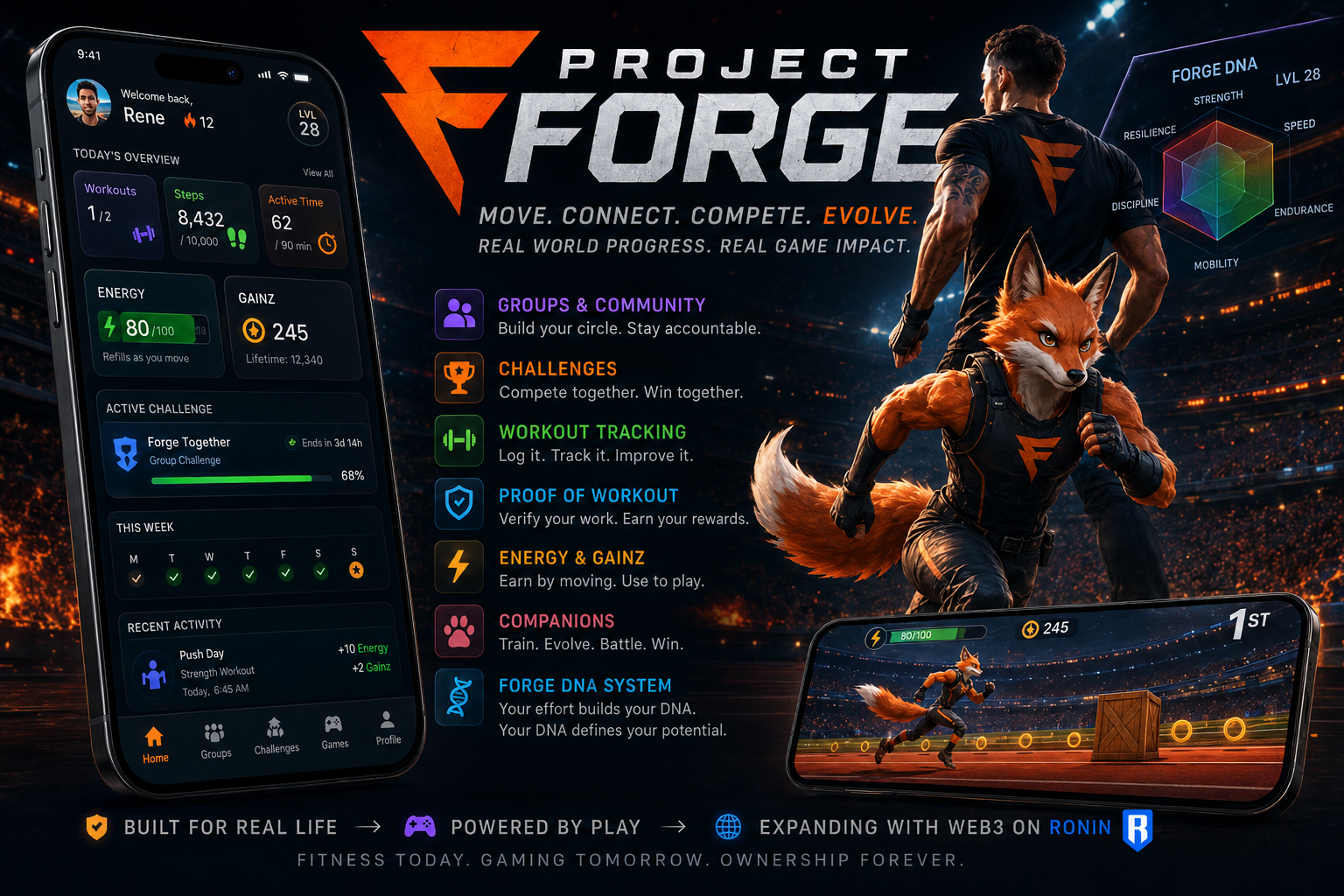
Project Forge did not begin as a Web3 project, a fitness game, or a startup idea.
It began with me, a small group of family, friends, and our spouses trying to get healthier and remain accountable to one another.
We wanted a place where we could track our progress, encourage each other, participate in challenges, and stay consistent without feeling like we were doing it alone. The tools we needed were scattered across different apps, and none of them captured the supportive community we were trying to build.
So I started building it.
The first version of Project Forge was created for a small group of real people with real fitness goals. As they tested it, the platform continued to evolve around their needs.
My wife helped inspire features related to body and health progress. My brother and testers showed me what was confusing, what was missing, and what would make the experience more useful. Groups, challenges, community chat, workout history, nutrition tools, progress tracking, and Proof of Workout all grew from real feedback.
The gaming layer came later.
I am a lifelong gamer, and I began thinking about how fitness could feel more rewarding without becoming a gimmick. What if completing a workout did more than update a progress bar? What if real effort could power a companion, unlock games, shape an evolving identity, and become part of a larger adventure?
That question transformed Project Forge from a fitness accountability app into a fitness-powered gaming platform.
The Web3 layer grew naturally from that vision. Ronin gives us the opportunity to explore embedded wallets, player-owned companions, dynamic NFTs, crafting systems, and identities that evolve through real-world effort.
These systems are optional extensions of the experience. They do not replace the health mission, and users will never need to purchase an NFT to participate in the core Project Forge experience.
At its heart, Project Forge is still about one thing:
Helping people become healthier, stronger, and more consistent together.
It began with my family and friends. It grew through real feedback. Now it is becoming an ecosystem built around fitness, community, accountability, ownership, and play.
What it does
Project Forge connects real-world health and fitness activity to community accountability, game progression, and digital ownership.
Users can create a profile, join groups, communicate with their community, track workouts, record progress, participate in personal or group challenges, manage routines, log nutrition, and review their history.
The platform is designed around three connected layers:
Fitness and accountability
Users can track their activity, build routines, record health progress, complete challenges, and stay accountable through groups and community features.
Proof of Workout
For supported exercises, Project Forge explores camera-assisted verification that can help confirm that a workout was completed. Manual logging remains available so that the platform stays accessible while stronger verification systems continue to be developed.
Proof of Workout is especially important for competitive challenges, fitness rewards, trainers, sponsored events, and future fitness-powered game systems.
Fitness-powered gaming
Completed activity can generate resources used throughout the Forge ecosystem.
Energy represents effort earned through fitness. It powers game sessions and other actions and cannot simply be purchased.
Gainz is the broader ecosystem currency. It can support cosmetics, crafting, upgrades, keys, companion customization, and additional progression systems.
The first playable game experience, The Track, introduces a companion-driven side-scrolling challenge in which players run, avoid obstacles, collect items, and progress through a stylized fitness-powered world.
Project Forge is also developing a DNA system that converts a player’s long-term consistency and recent activity into evolving attributes such as strength, speed, endurance, mobility, discipline, resilience, and balance.
That DNA can influence how a player’s companion develops and how it performs across different games. A player focused on lifting may shape a different companion than someone focused on running, mobility, or balanced training.
The long-term vision is for each player to receive a free native Forge companion that can grow alongside them, enter multiple game experiences, and eventually become an optional dynamic NFT connected to their fitness journey.
How we built it
Project Forge is being built as a cross-platform application using Expo and React Native so that the same core experience can support iOS, Android, and web development.
Supabase powers the backend, including authentication, user profiles, groups, challenges, activity records, progress data, and other shared systems.
React Navigation manages the application structure and user flow, while local storage is used where appropriate to preserve settings and improve the user experience.
The application has been developed incrementally through direct testing rather than being designed entirely in isolation.
Features are introduced, tested by real users, refined based on their feedback, and then connected to the larger platform. This process has helped Project Forge grow from a small accountability tool into a much more ambitious system without abandoning the needs of the people who inspired it.
The gaming experience is being built directly into the application rather than treated as a separate product. Game resources, fitness activity, companion progression, challenges, and player identity are being designed to work as parts of one connected ecosystem.
For the Web3 layer, we are designing around Ronin because of its focus on gaming, accessible transactions, wallet infrastructure, and player-owned assets.
Our planned onboarding experience uses an embedded wallet so that new users can begin participating without needing to understand seed phrases, gas, or blockchain terminology on their first day. The goal is to allow players to learn about ownership naturally as they play, earn, craft, and progress.
Blockchain interactions will be introduced only where they provide meaningful ownership or interoperability. Frequent gameplay actions and fitness records can remain off-chain, while important milestones, companion evolution, crafting outcomes, and ownership events can be recorded on-chain.
This hybrid approach keeps the experience fast and affordable while still allowing Web3 to provide real value.
Challenges we ran into
The greatest challenge has been balancing the size of the vision with the need to build something useful today.
Project Forge combines several difficult systems:
- Fitness and health tracking
- Community accountability
- Camera-assisted workout verification
- Challenges and competitive scoring
- Companion progression
- Game development
- Embedded wallet onboarding
- Token and resource economies
- Dynamic NFT evolution
- On-chain and off-chain data
- Accessibility for people with different fitness levels
Each system must work on its own while also supporting the larger experience.
Another major challenge has been protecting the integrity of fitness-powered rewards. If workouts generate resources, competition entries, companion progression, or valuable assets, the platform must be able to distinguish legitimate effort from manipulated activity.
Proof of Workout is part of that solution, but building verification that is accurate, fair, private, and accessible requires careful development.
We also had to avoid making the blockchain the center of the user experience.
Many people are unfamiliar with wallets, gas fees, network transactions, and NFTs. Requiring that knowledge during sign-up would create unnecessary friction. The challenge is to give users the benefits of ownership while making the technology feel almost invisible.
Game economy design created another challenge. Energy, Gainz, crafting materials, companion progression, rewards, purchases, and blockchain transactions must work together without allowing the system to become pay-to-win or encouraging unhealthy behavior.
We are designing the system so that real effort remains the foundation. Money may provide customization, convenience, or optional collectible experiences, but it should never replace the work required to improve a player’s fitness-powered identity.
Finally, we had to continually manage scope. Project Forge has the potential to become a very large ecosystem, but every new idea must be weighed against the importance of finishing, testing, and improving the core experience.
Accomplishments that we're proud of
We are proud that Project Forge grew from a personal accountability tool into a working platform tested by real people.
The project was not created around hypothetical users. Its earliest features were shaped by friends, spouses, family members, and testers who were actively trying to improve their health.
We built a connected foundation that includes:
- User profiles and progress tracking
- Personal and group challenges
- Fitness groups and community communication
- Workout routines and history
- Nutrition tracking
- Body and health progress tools
- Fitness reward systems
- Proof of Workout development
- Companion progression concepts
- A playable game experience
- A long-term DNA framework
- An economy designed around earned effort
We are especially proud that the gaming layer supports the fitness mission rather than distracting from it.
The companion is not simply a character selected from a menu. It is being designed as a reflection of the player’s consistency, activity, and development over time.
We are also proud of the principle that every player will receive access to a native Forge companion and the core experience without being required to purchase an NFT.
Web3 collectors can gain additional ownership, cosmetic, crafting, and interoperability opportunities, but the platform remains welcoming to people who simply want help becoming healthier.
Most importantly, Project Forge still carries the purpose it began with: helping real people support one another and keep moving.
What we learned
We learned that accountability becomes much more powerful when people feel connected to the experience and to one another.
Charts and statistics can show progress, but encouragement, friendly competition, shared challenges, and visible growth can give people a stronger reason to return.
We also learned that gamification must be meaningful.
Adding points to a fitness app is not enough. The rewards need to connect to something people care about. A companion that grows with you, games powered by your effort, and an identity shaped by your habits can make progress feel personal.
We learned that fitness is not one-size-fits-all.
Strength training, cardio, mobility, recovery, consistency, and resilience all matter. That realization led to the DNA system, which allows different types of effort to shape players and companions in different ways rather than forcing everyone into one universal score.
We learned that Web3 works best when it solves a real problem.
Ownership, portable identities, evolving assets, crafting, and creator economies can add genuine value. However, wallets and transactions should not make the experience harder to understand. The technology needs to support the player rather than becoming the product itself.
We also learned that building with real users changes the product for the better. Features that seem obvious during development may feel confusing during testing. Small quality-of-life improvements can matter as much as major new systems.
Project Forge continues to improve because the people testing it are helping shape what it becomes.
What's next for Project Forge
The next stage is focused on strengthening the core application, expanding the playable experience, and connecting fitness activity more deeply to companion progression.
We plan to continue improving:
- Workout tracking and routine management
- Group and personal challenges
- Community features
- Nutrition and body progress tools
- Proof of Workout verification
- Trainer and client experiences
- Fitness-powered rewards
- Companion customization and development
- The Track and future mini-games
The DNA system will be developed in phases.
First, Project Forge will collect and organize fitness signals. Those signals will then contribute to long-term attributes and weekly form. Eventually, those attributes will shape companion appearance, behavior, performance, and evolution across different games.
We also plan to build an embedded Ronin wallet experience that allows users to enter the ecosystem without a complicated Web3 setup process.
As players progress, they will be able to learn about their wallet, collect rewards, craft items, customize companions, and decide whether they want to participate in optional on-chain systems.
Future blockchain development may include:
- Dynamic companion NFTs
- On-chain evolution milestones
- Crafting and cosmetic assets
- Sponsored competitions
- Creator-designed content
- Portable companions used across multiple Forge games
- Gas-sponsored or batched transactions
- Player-controlled ownership and trading
- A sustainable reward economy
Project Forge will also explore partnerships with personal trainers, gyms, health organizations, brands, creators, and communities that want better ways to motivate people and verify participation.
The long-term vision is larger than a single fitness application or game.
We want to create an ecosystem where taking care of yourself becomes the beginning of an adventure.
Your activity powers the experience.
Your consistency shapes your identity.
Your companion grows because you do.
Project Forge turns the work people put into themselves into progress they can see, experiences they can enjoy, and a journey they can share with others.
Built With
- ai
- authentication
- blockchain
- community
- computer-vision
- expo.io
- fitness
- game-development
- gamification
- gps
- health
- javascript
- mobile
- nfts
- openai
- postgresql
- react-native
- real-time-chat
- ronin
- supabase
- web3


Log in or sign up for Devpost to join the conversation.