-
-
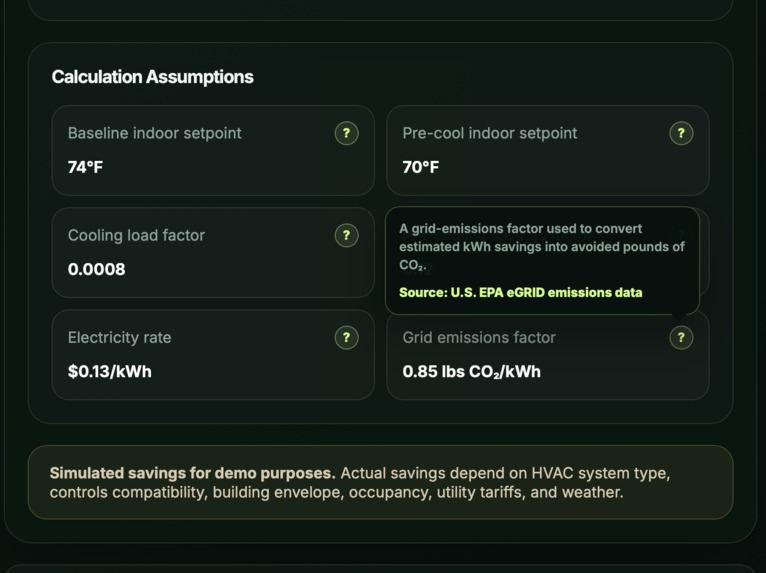
Webpage1
-
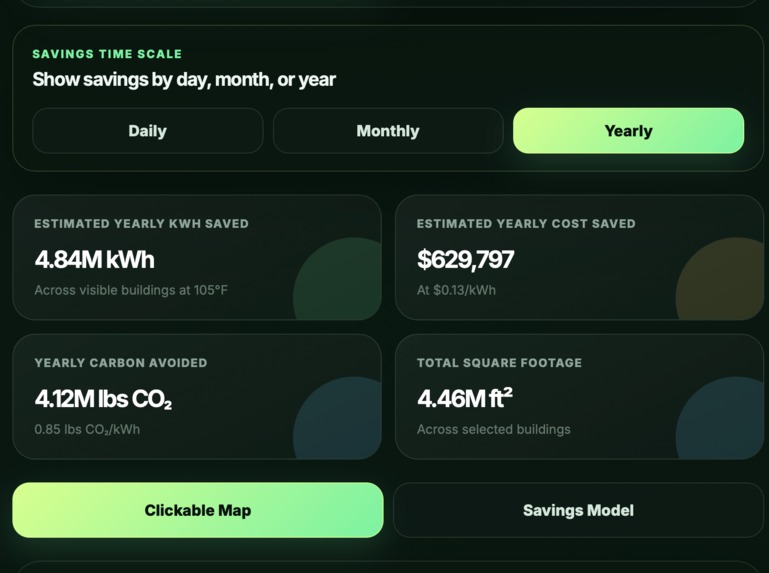
Webpage2
-
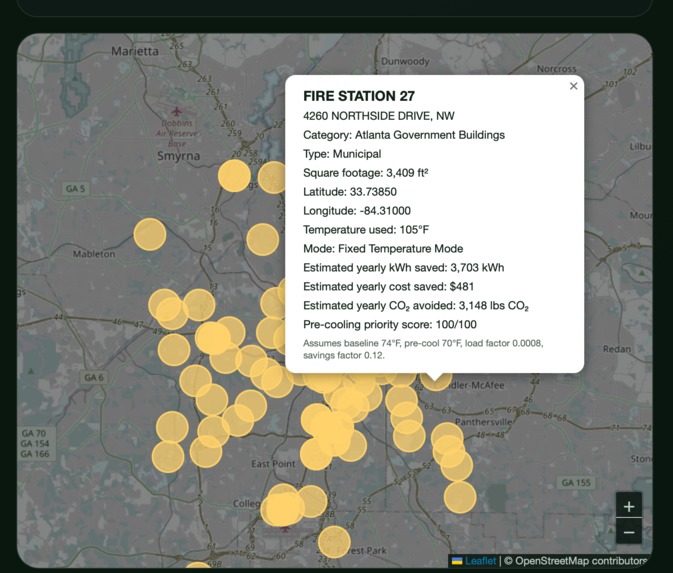
Webpage3
-
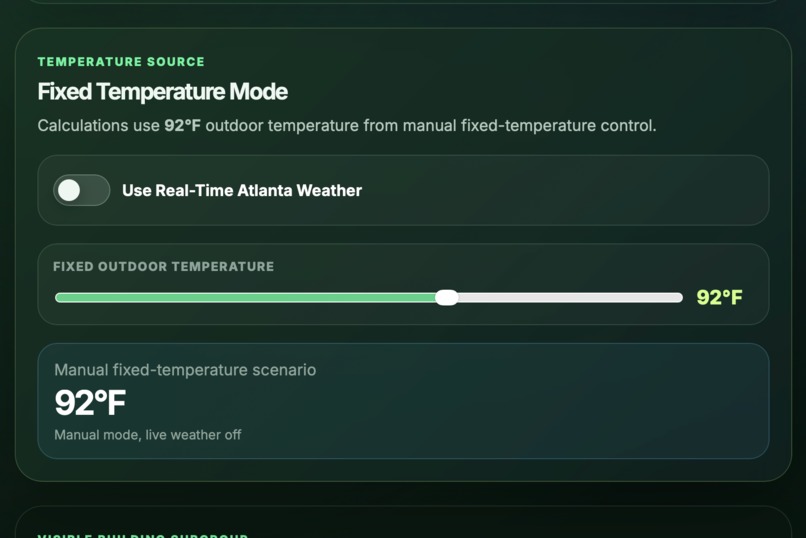
Webpage4
-
Webpage5
-
Webpage6
-
slide5
-
slide8
-
slide7
-
slide6
-
slide2
-
slide4
-
slide3
-
slide 1
Inspiration
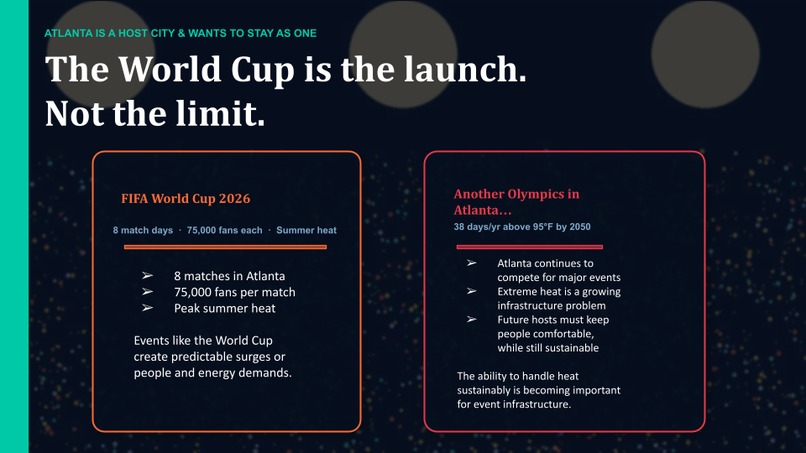
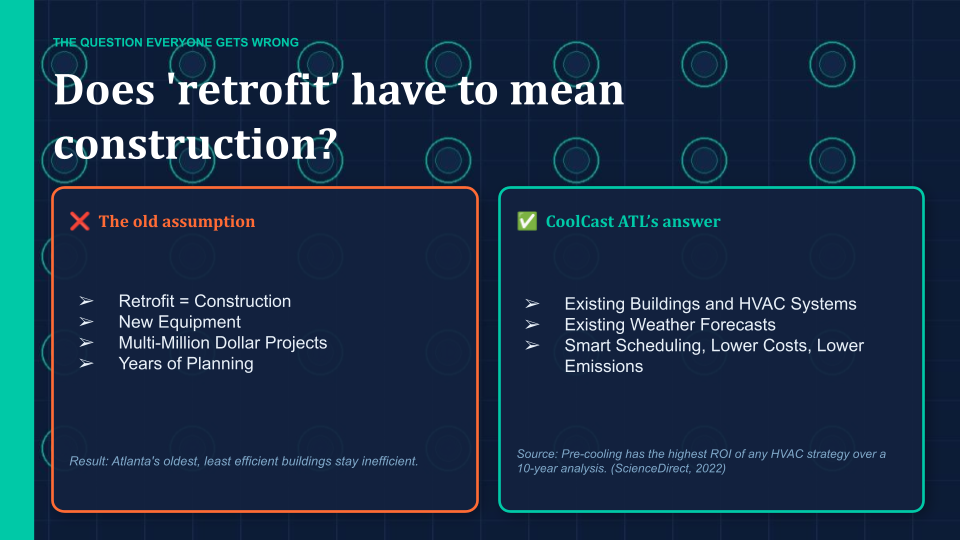
CoolCast ATL began with a simple question: Why are buildings cooling themselves at the most expensive and energy-intensive time of day when we already know the weather in advance? Every afternoon in Atlanta, thousands of HVAC systems respond to rising temperatures at the exact same time. Between roughly 2 PM and 6 PM, buildings across the city are working hardest to stay cool, creating massive demand on both HVAC equipment and the electrical grid. As we researched the problem, we discovered that many buildings are not necessarily using too much cooling—they are cooling at the wrong time. What inspired us most was realizing that solving this problem doesn't require new buildings, new HVAC systems, or expensive construction projects. It simply requires smarter scheduling. That idea evolved into CoolCast ATL: a platform that uses weather forecasts to automatically determine when buildings should begin cooling, reducing energy costs, lowering peak electrical demand, and helping Atlanta use its existing infrastructure more efficiently.
What it does
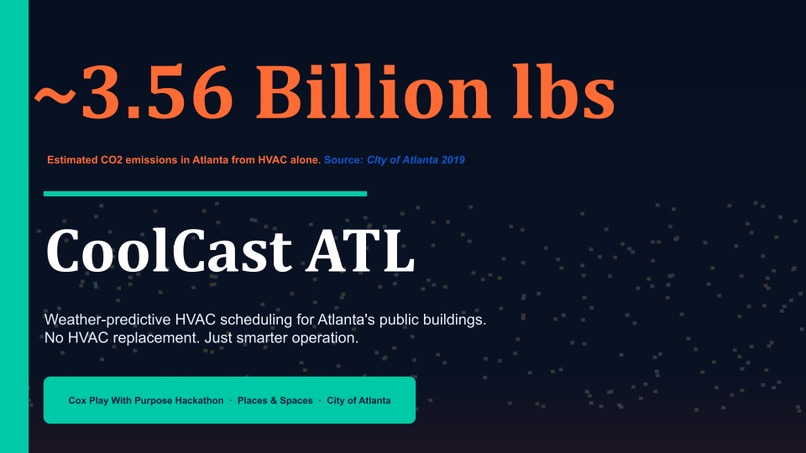
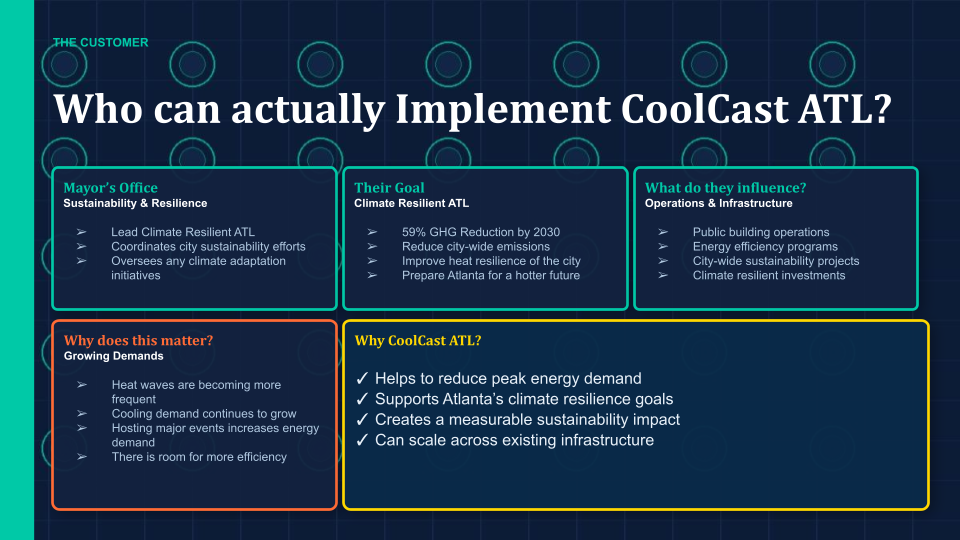
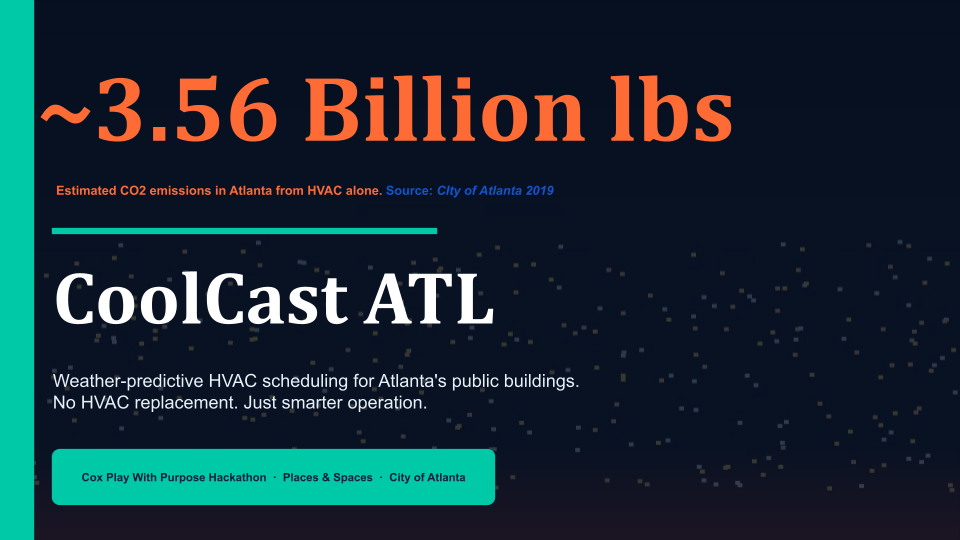
CoolCast ATL is a weather-predictive HVAC scheduling platform for public buildings. The system analyzes weather forecasts and upcoming events to determine when cooling demand will be highest. It then recommends or automatically triggers pre-cooling before peak heat arrives. By shifting cooling earlier in the day, buildings can remain comfortable while reducing HVAC strain during peak demand periods. The result is lower operating costs, lower emissions, and a more resilient city.
How we built it
CoolCast ATL is a weather-predictive HVAC scheduling platform designed to help Atlanta's public buildings operate more efficiently during periods of extreme heat.
The platform combines three primary inputs:
- Weather forecast data
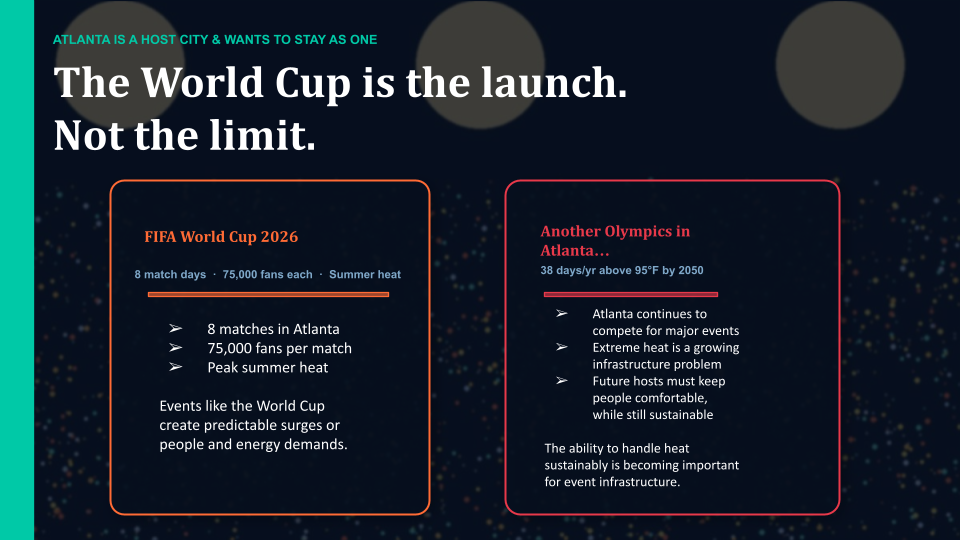
- Event and crowd-surge information
- Building characteristics
Using these inputs, CoolCast ATL determines when a building should begin pre-cooling before a heat event or major surge in occupancy.
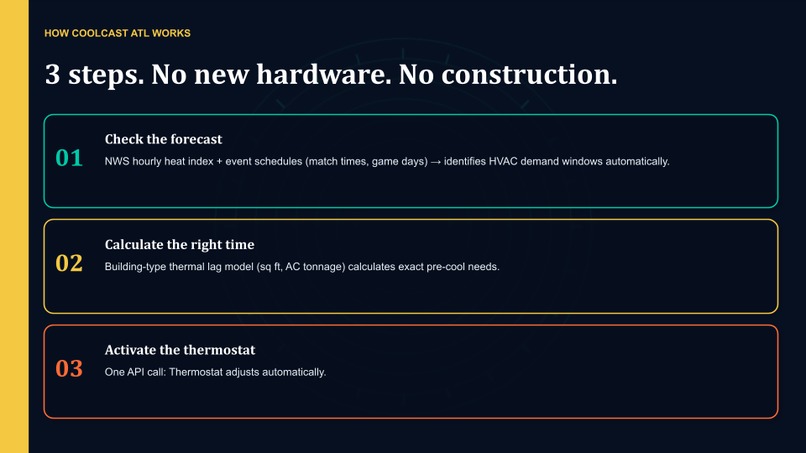
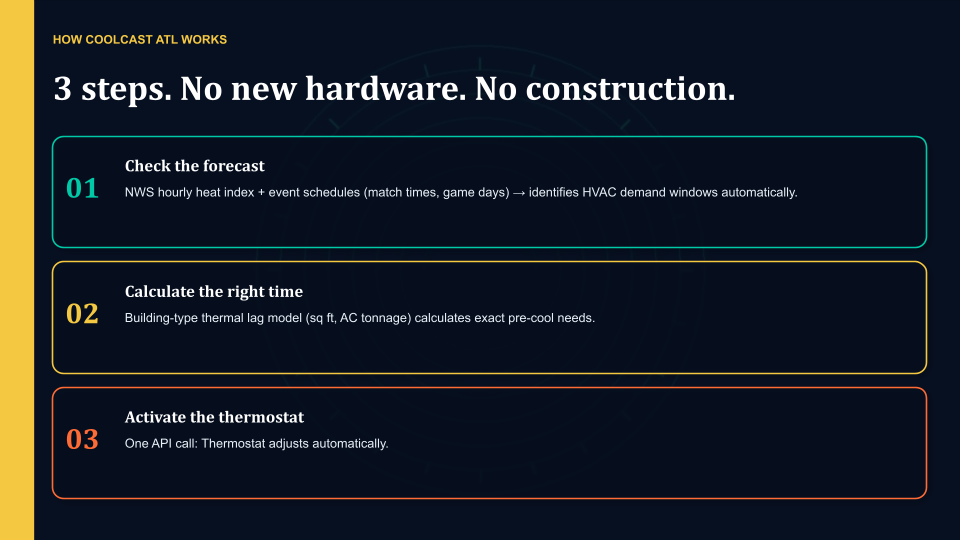
Our workflow is:
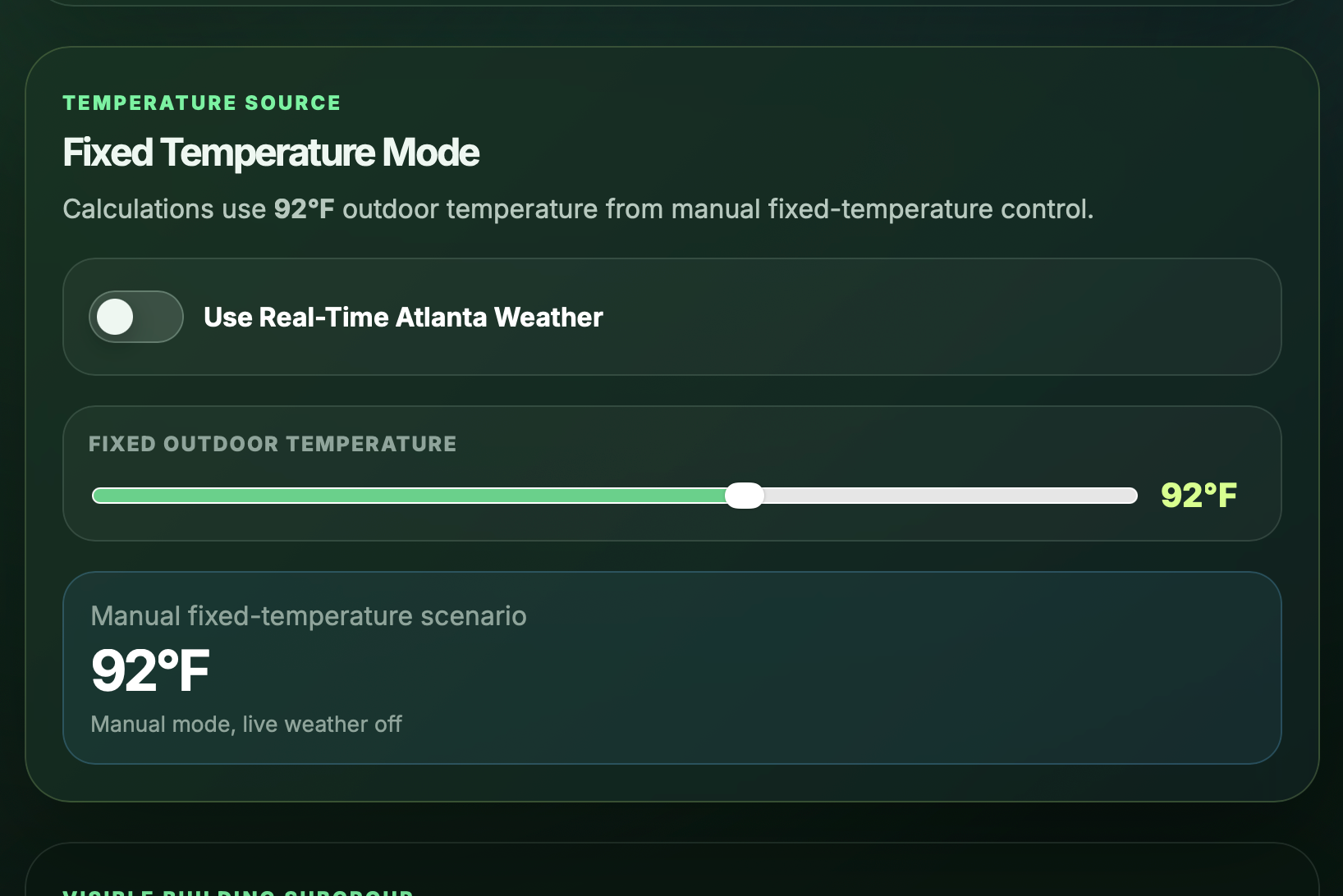
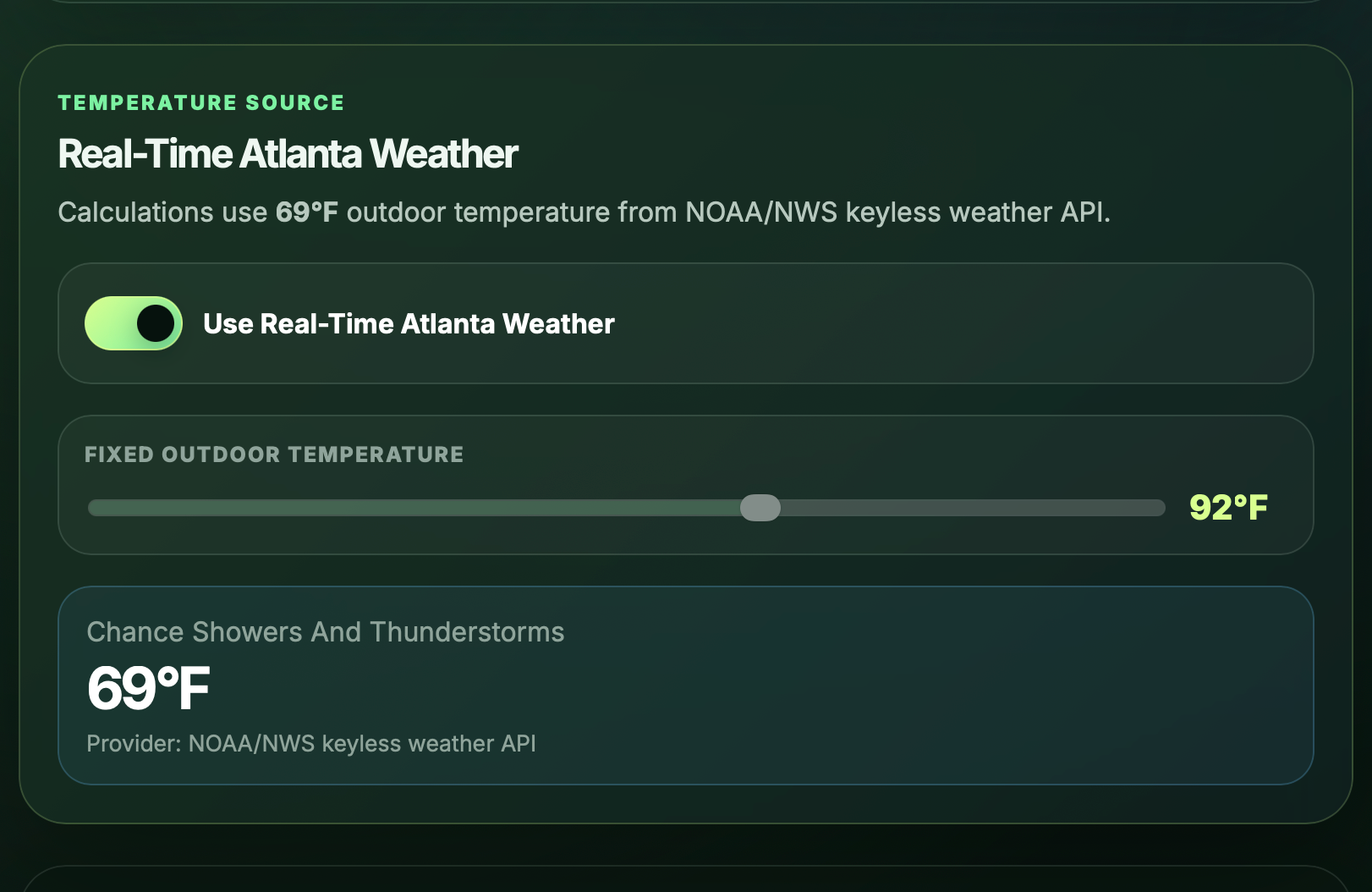
- Pull hourly weather forecasts
- Identify upcoming heat-risk periods
- Estimate building-specific pre-cooling lead times
- Generate thermostat recommendations or automated commands
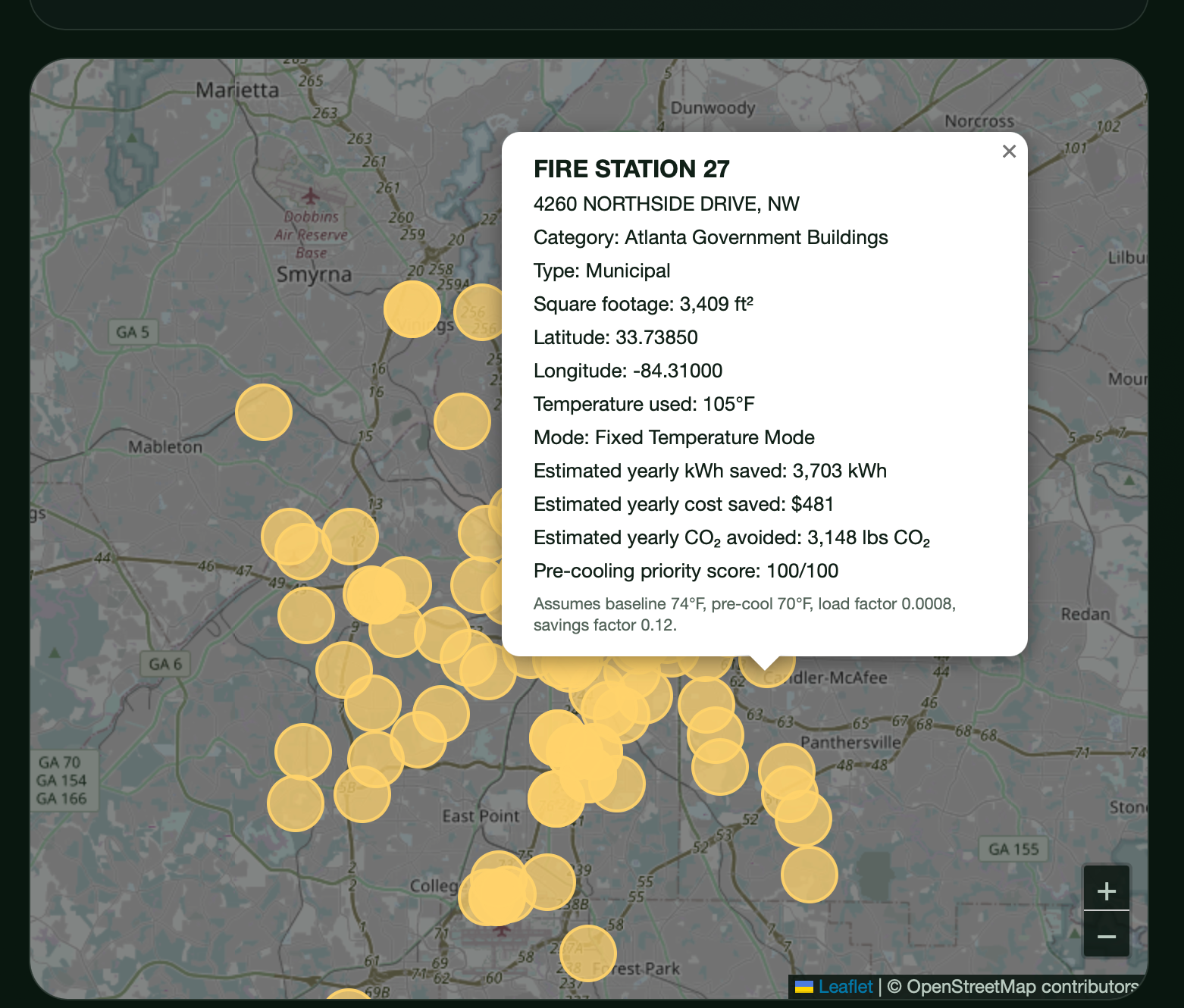
- Display participating buildings as active cooling zones on a public map
To balance comfort and efficiency, our scheduling model is based on the optimization concept:
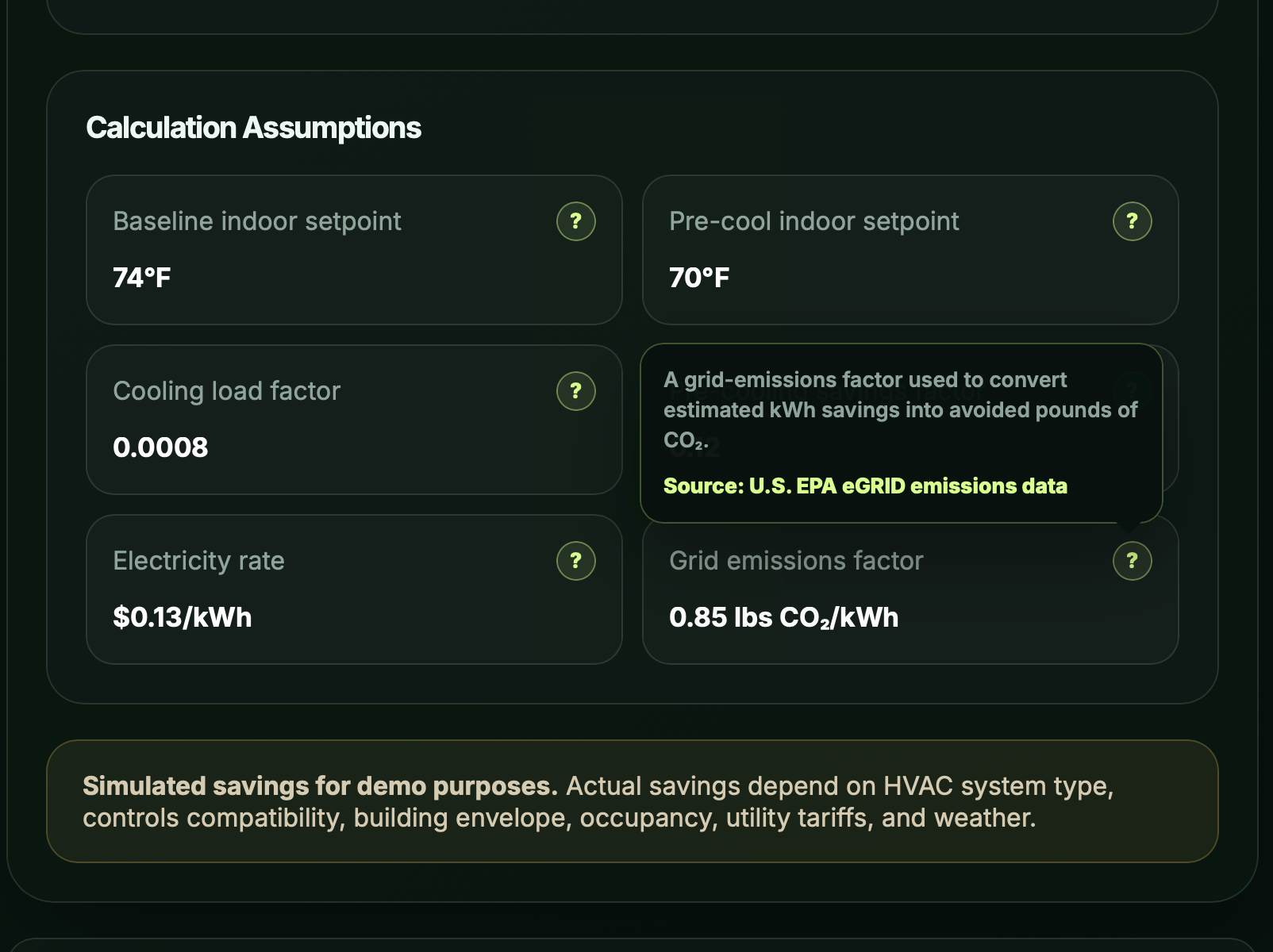
$$ \min f(T_{set}, t)=w_1C_{comfort}+w_2C_{energy} $$
where:
- (T_{set}) = thermostat setpoint
- (t) = pre-cooling start time
- (C_{comfort}) = occupant comfort cost
- (C_{energy}) = HVAC energy cost
The goal is to find the best cooling schedule while maintaining comfortable indoor conditions.
To build the platform, we used:
- React for the dashboard UI
- Vite for frontend development and deployment
- JavaScript / JSX for application logic
- CSS for custom dashboard styling
- Leaflet for the interactive map
- React-Leaflet to use Leaflet inside React
- GeoJSON for Atlanta building location data
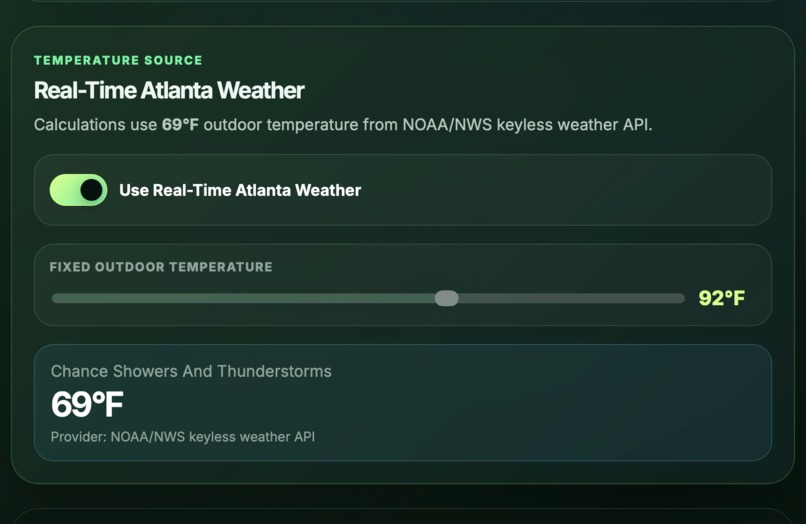
- NOAA / National Weather Service APIs for live weather forecasting
- GitHub Pages for deployment
- GitHub Actions for automated builds and publishing
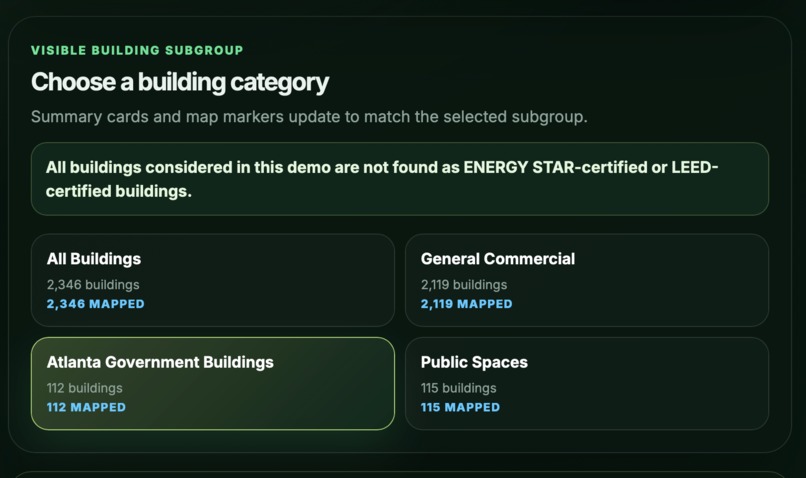
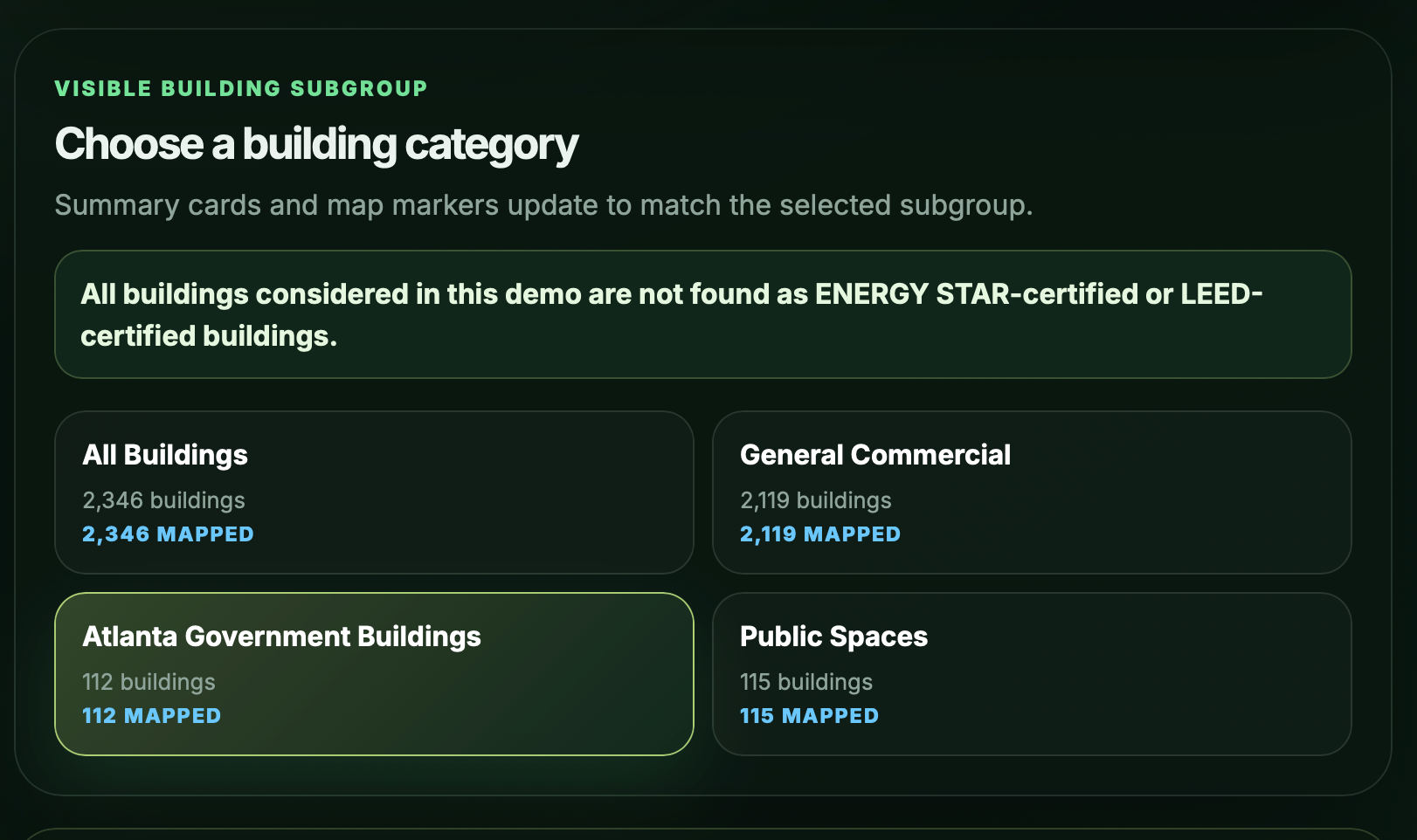
Our building dataset was compiled from publicly available Atlanta building databases, including LEED project directories and ENERGY STAR building data. We filtered these datasets to exclude buildings already identified as LEED-certified or ENERGY STAR-certified, allowing us to focus on buildings with the greatest opportunity for efficiency improvements.
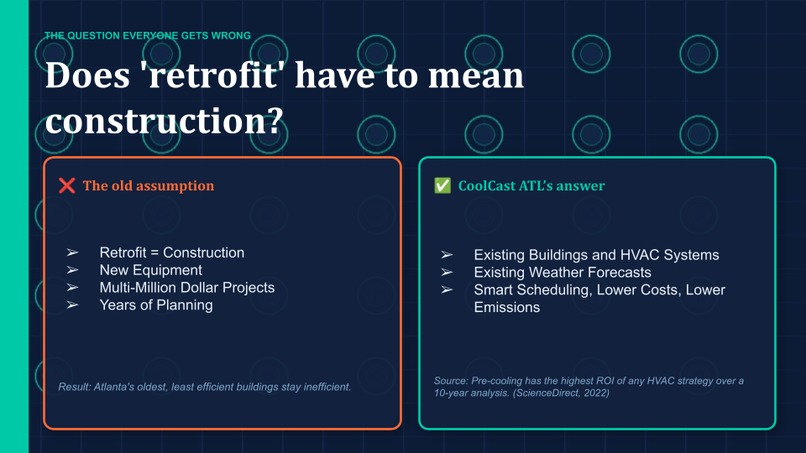
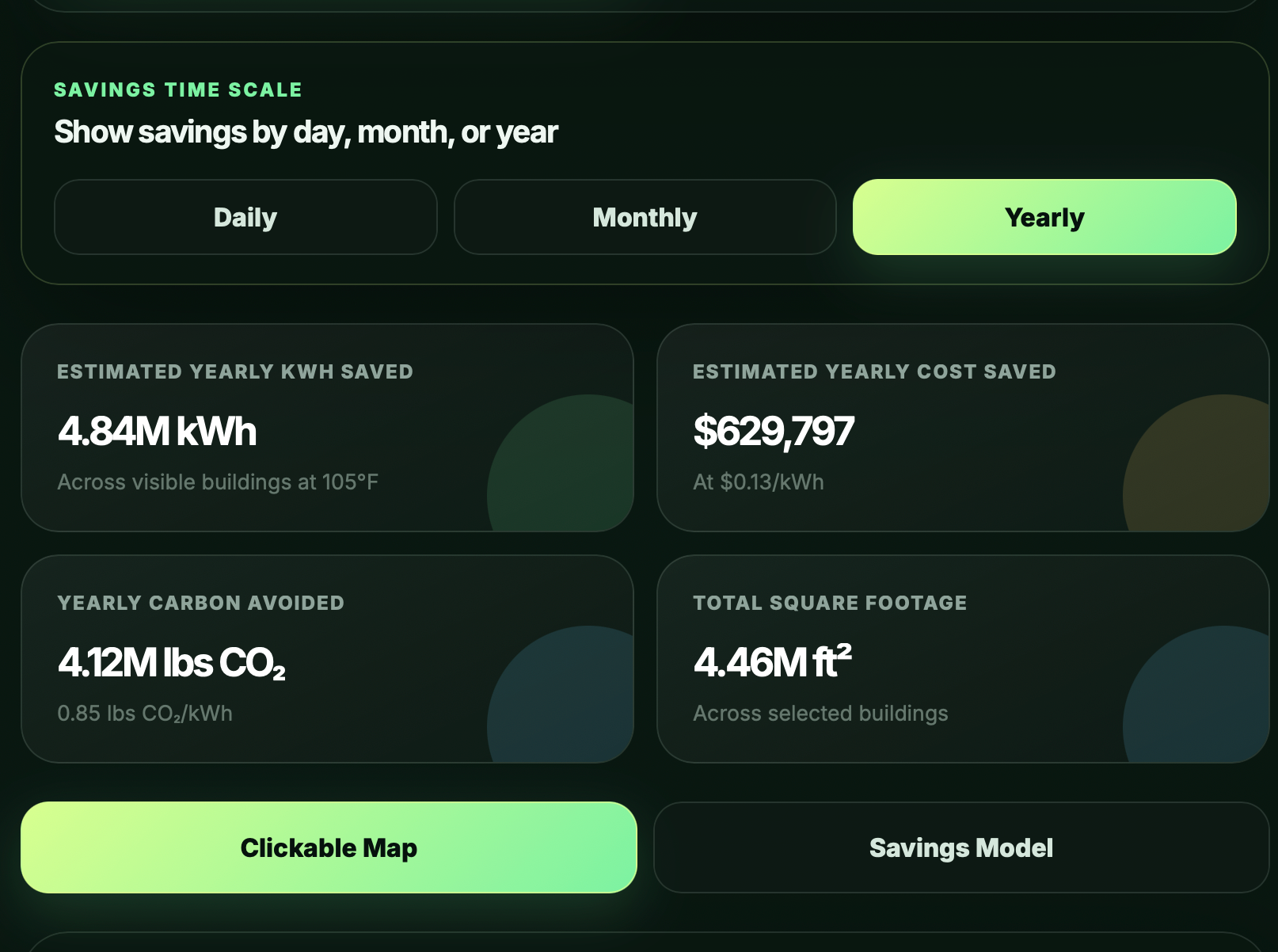
The result is an interactive platform that demonstrates how predictive HVAC scheduling can reduce costs, lower peak energy demand, and improve city-wide heat resilience without requiring expensive building retrofits.
Challenges we ran into
One challenge was designing a solution that could work across a wide variety of buildings. Some buildings use modern smart thermostats while others rely on older HVAC systems. We needed a solution that could provide value regardless of building age or technology level. Another challenge was balancing energy savings with occupant comfort. A cooling center that saves energy but leaves occupants uncomfortable is not a successful solution. Finally, we had to ensure that our idea was realistic for implementation by the City of Atlanta without requiring expensive infrastructure upgrades or large-scale construction projects.
Accomplishments that we're proud of
- Created a software-first alternative to expensive building retrofits.
- Developed a solution that leverages infrastructure Atlanta already owns.
- Connected sustainability, energy savings, and heat resilience into a single platform.
- Built a working dashboard that integrates weather forecasts, mapping, and building data.
- Designed a solution that directly supports Atlanta's Climate Resilient ATL goals.
- Created a framework that can scale across multiple city-owned facilities.
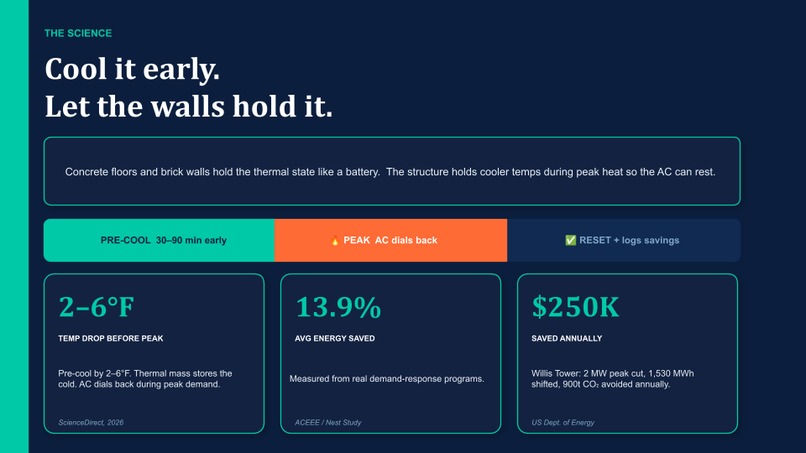
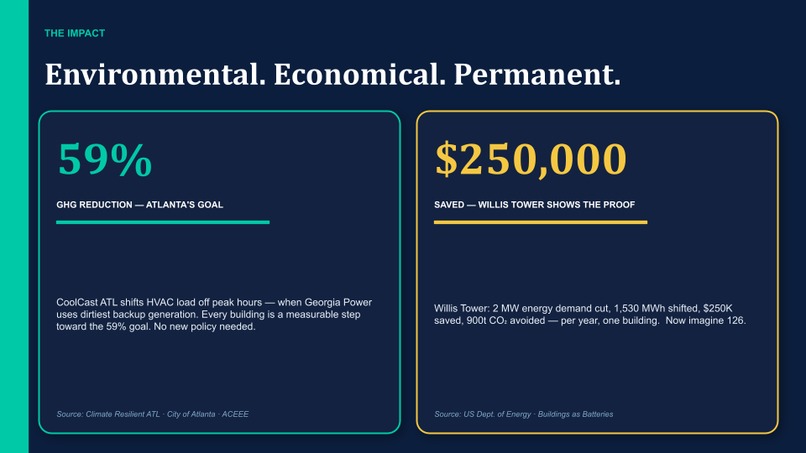
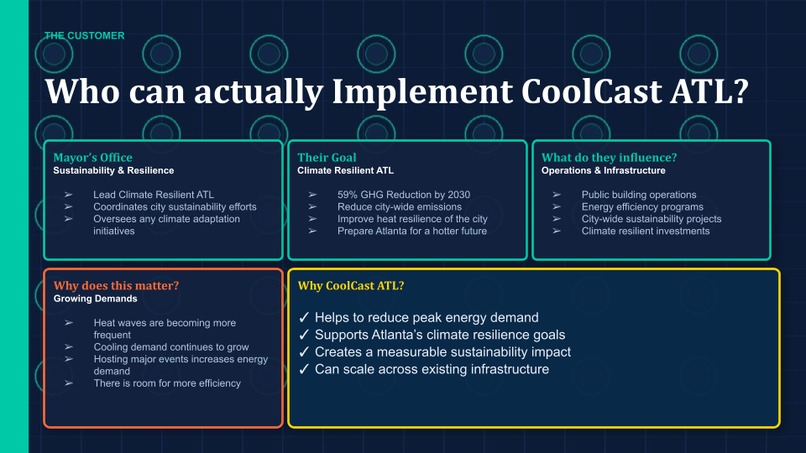
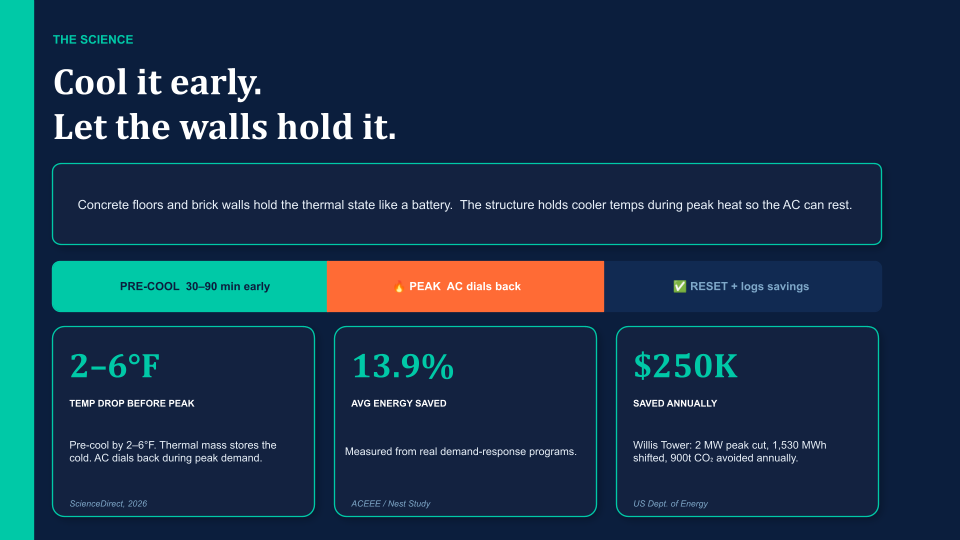
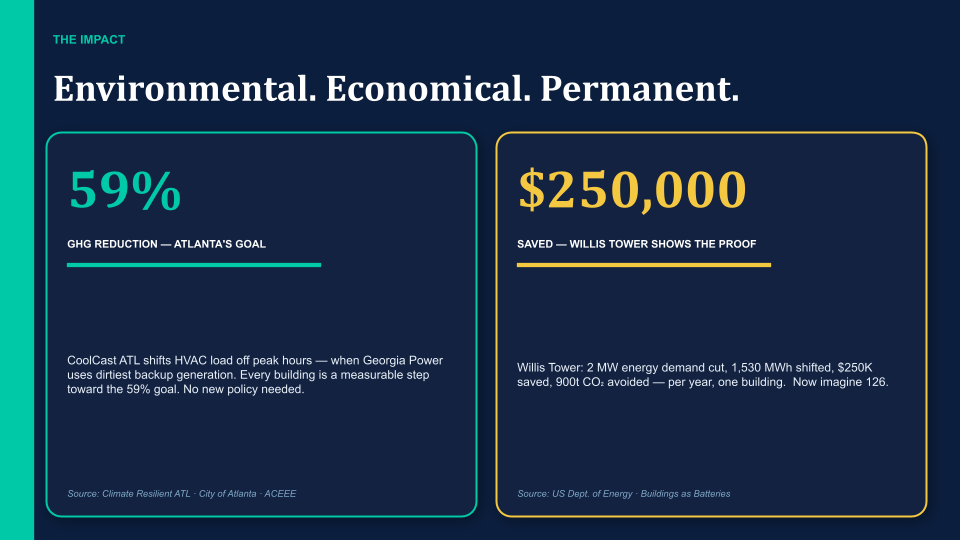
- Demonstrated how existing public buildings can become a coordinated cooling network during periods of extreme heat. ## What we learned Throughout this project, we learned about HVAC load shifting, thermal mass, demand-response programs, and predictive building controls. We discovered that many buildings act like thermal batteries. Concrete floors, walls, and structural materials can store cooling energy during off-peak periods and reduce HVAC demand later in the day. We also learned how predictive HVAC scheduling has already been successfully implemented in large commercial buildings. Willis Tower in Chicago demonstrated that pre-cooling and predictive HVAC control can significantly reduce peak electrical demand, lower operating costs, and reduce carbon emissions. Most importantly, we learned that meaningful sustainability improvements do not always require new infrastructure. In many cases, better data and smarter scheduling can produce significant financial and environmental benefits. ## What's next for CoolCast ATL Our next step is to pilot CoolCast ATL within Atlanta's public building network through partnerships with the Mayor's Office of Sustainability & Resilience. Future development would include:
- Smart thermostat integrations
- Real-time occupancy forecasting
- Public cooling-center maps
- Automated energy, cost, and emissions reporting
- Building-specific thermal calibration
- Expansion across additional city-owned facilities
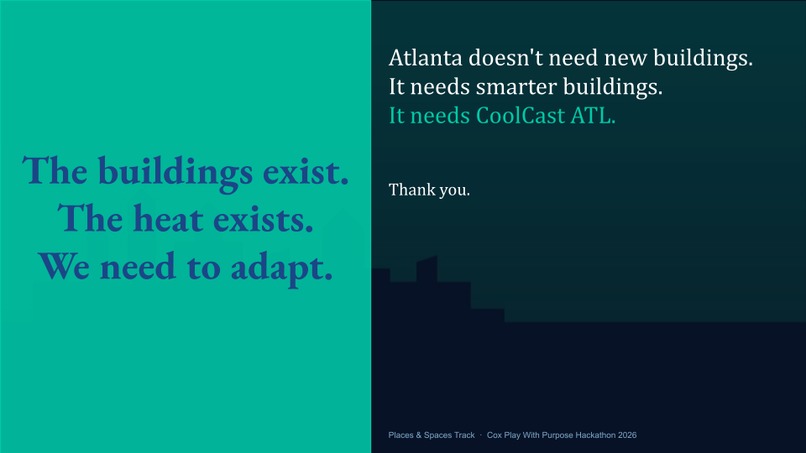
Our long-term vision is to help Atlanta reduce energy costs, improve heat resilience, and become a model for sustainable urban infrastructure through smarter building operations. By turning weather forecasts into cooling action, CoolCast ATL demonstrates how software can help cities do more with the infrastructure they already have.
Built With
- css
- geojson
- github
- javascript/jsx
- leaflet.js
- noaa
- react
- vite


Log in or sign up for Devpost to join the conversation.