-
-
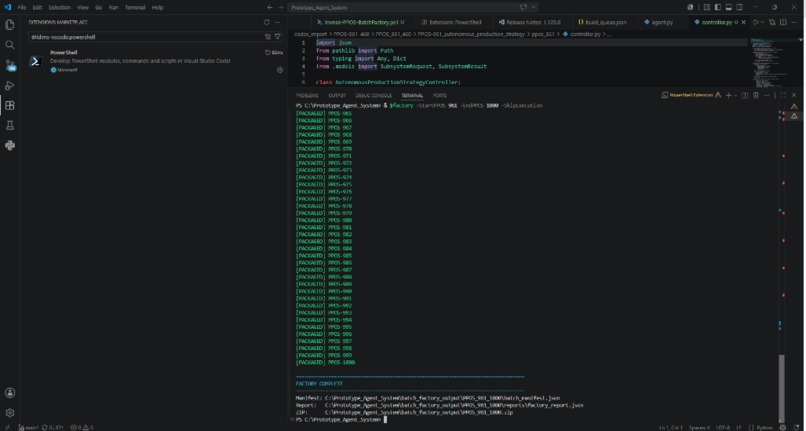
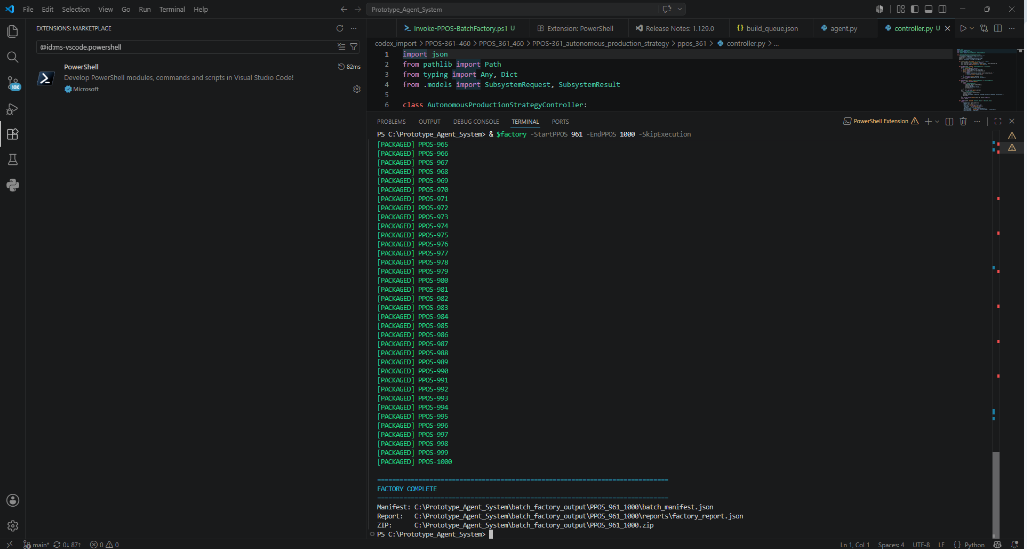
PPOS Automated Subsystem Factory
-
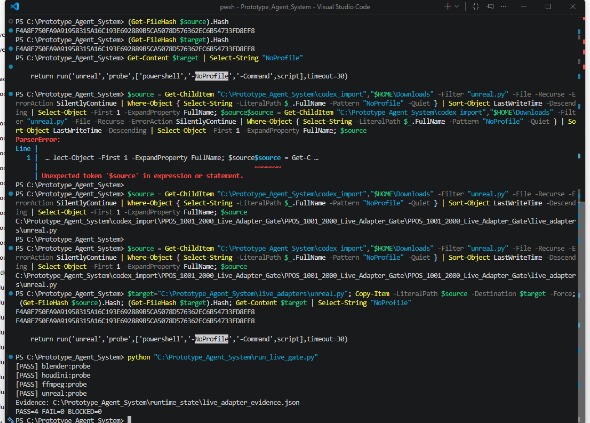
Live Multi-Tool Adapter Verification
-
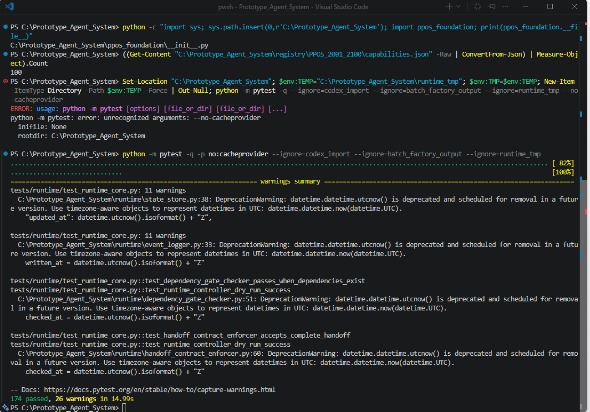
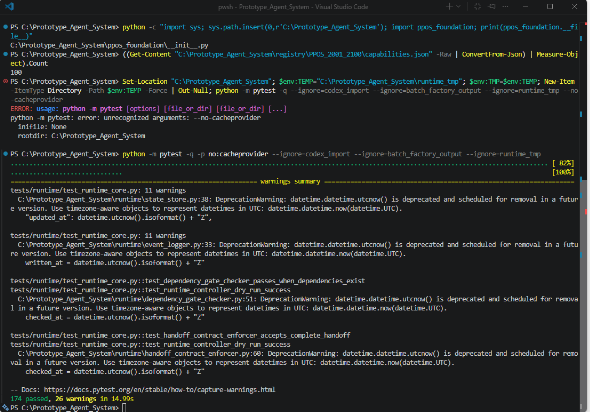
174-Test Project Certification
-
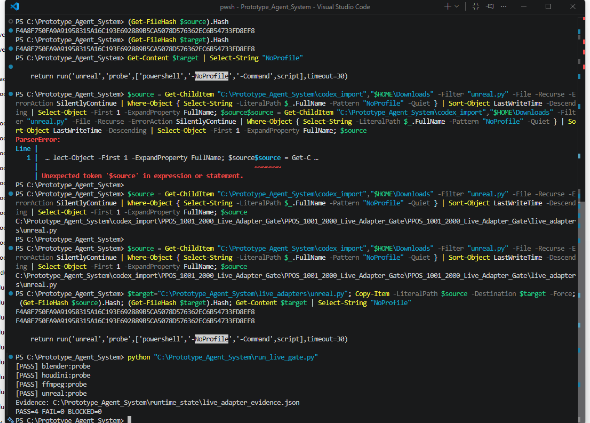
Fail-Closed Unreal Safety Gate
Inspiration
I want to build the end to end movie production pipeline using tools trusted by the film industry. Creative production pipelines are powerful but fragile. A single project may cross AI planning, asset generation, Blender, Houdini, USD, FFmpeg, Unreal Engine, validation, and release tooling. Each handoff introduces opportunities for missing dependencies, inconsistent state, silent failures, and expensive rework.
PPOS—Prototype Production Operating System—was created to make that process structured, observable, resumable, and safe.
What it does
PPOS is an AI-orchestrated production framework that converts creative intent into validated production workflows.
Instead of treating automation as one large script, PPOS organizes work into modular subsystem contracts. Each subsystem has a defined responsibility, validation rules, evidence output, and success or failure state.
The system provides:
- Dependency-aware workflow orchestration
- Fail-stop execution and checkpoint-based recovery
- Persistent subsystem and capability registries
- Validation before execution
- Structured evidence, logs, and reports
- Read-only and controlled-write adapter gates
- Integrations for Blender, Houdini, FFmpeg, USD, and Unreal Engine
- Protection against unauthorized production changes
How we built it
OpenAI Codex served as the primary engineering partner for architecture refinement, implementation, debugging, test design, and repository preparation.
We used Python for the runtime, registry, validation, and adapter layers; PowerShell for repeatable installation and batch workflows; pytest for certification; and GitHub for versioned delivery.
The current practical foundation includes:
- 1,000 ordered subsystem contracts
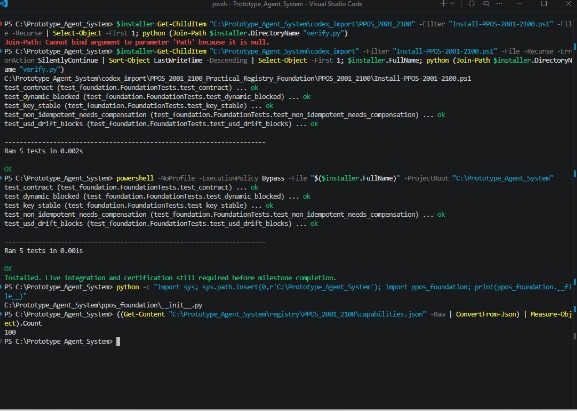
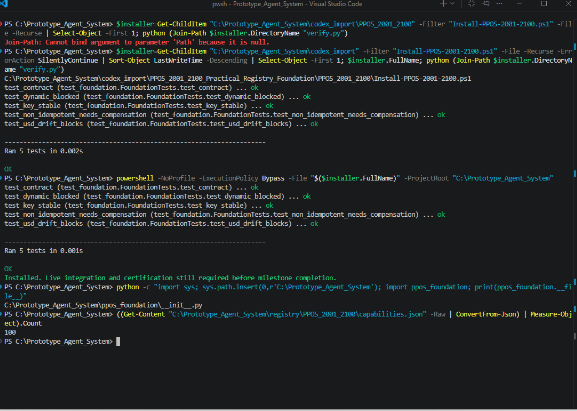
- A 100-capability practical registry
- 174 passing project tests
- Verified Blender, Houdini, FFmpeg, and Unreal read-only probes
- Controlled-write tests for authorized temporary artifacts
- Explicit blocking of Unreal production writes without an approved real project
- Resume, rollback, idempotency, USD-drift, and compensation safeguards
Challenges we faced
The largest challenge was distinguishing generated scaffolding from genuinely operational software. Early iterations could package thousands of subsystem definitions, but packaging alone did not prove real integration.
We refined the architecture by adding persistent state, project-level testing, live-tool discovery, controlled-write gates, and explicit fail-closed behavior. We also corrected Windows temporary-directory permissions, PowerShell execution issues, test-discovery pollution, inconsistent package naming, and an Unreal probe that initially launched the editor instead of reading metadata safely.
Accomplishments
We are proud that PPOS now fails safely instead of pretending that unavailable or unauthorized capabilities succeeded. It records evidence, preserves completed work, resumes from checkpoints, and blocks production mutations unless the required project context is explicitly authorized.
The repository now contains a tested practical foundation rather than only generated concepts.
What we learned
Large AI-generated systems need strong boundaries, measurable contracts, persistent state, and real-world certification. Speed matters, but trustworthy evidence matters more.
What’s next
Next, we will connect an authorized Unreal production project, expand end-to-end creative workflow demonstrations, improve the operator interface, and use the practical registry foundation to build progressively more capable production subsystems.

Log in or sign up for Devpost to join the conversation.