-
-
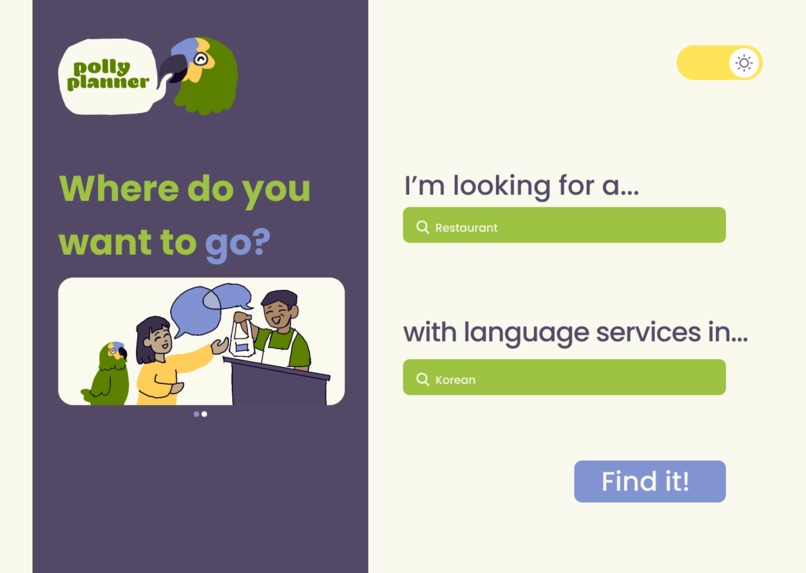
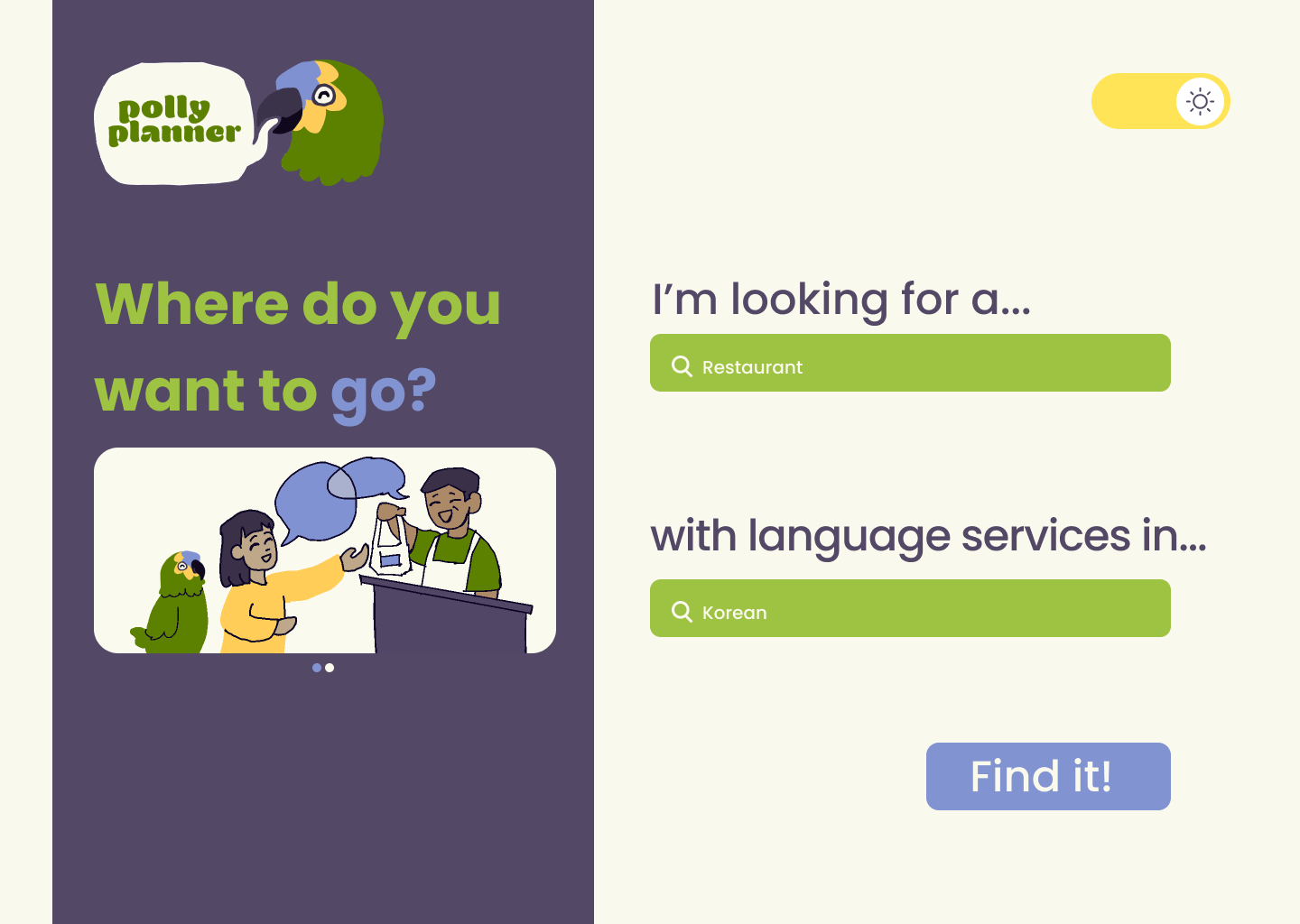
Main Page
-
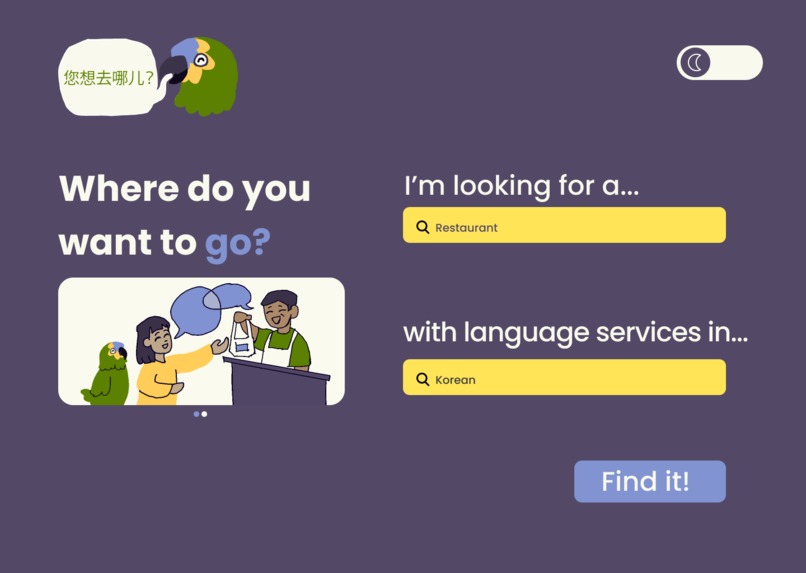
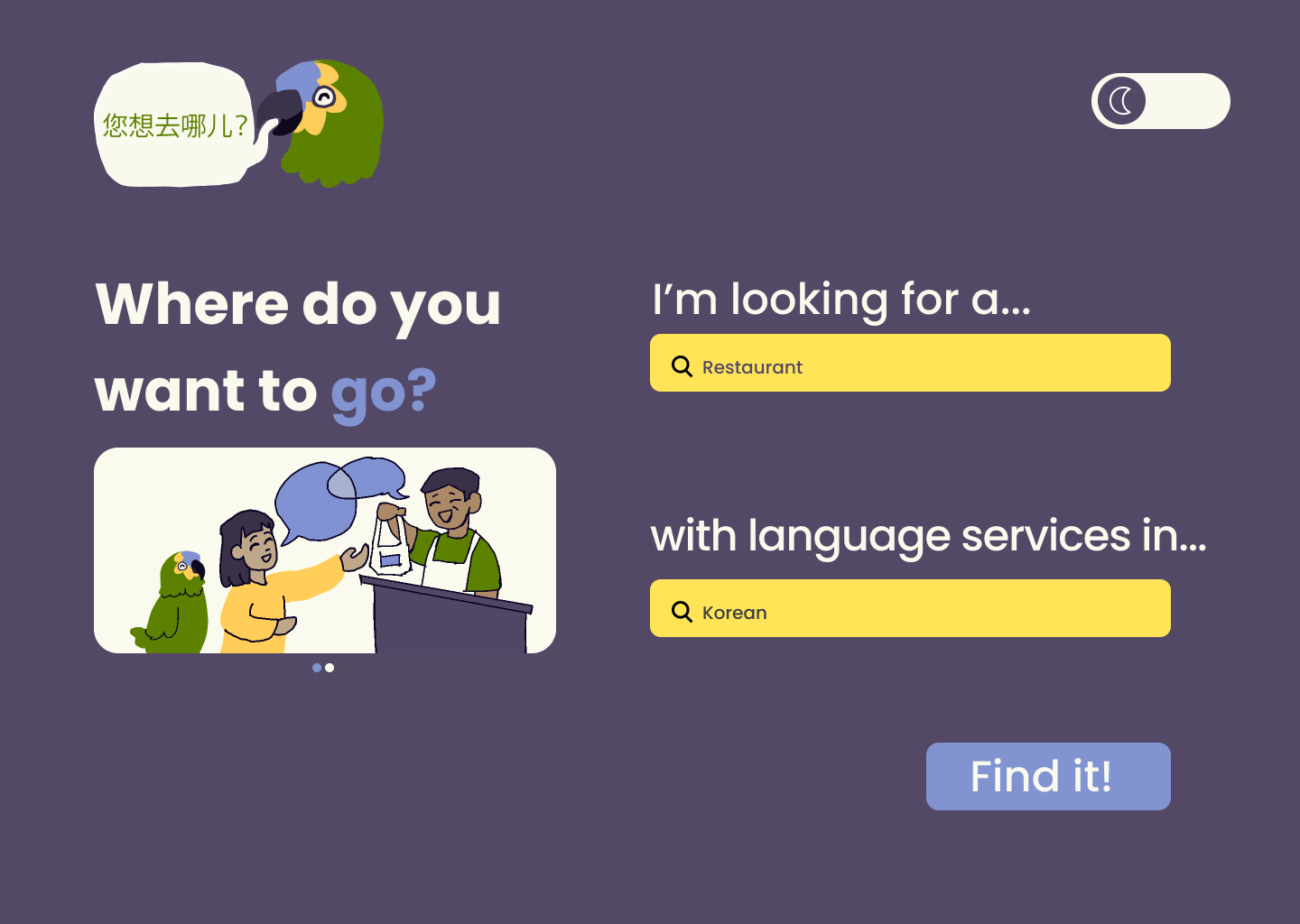
Dark Mode
-
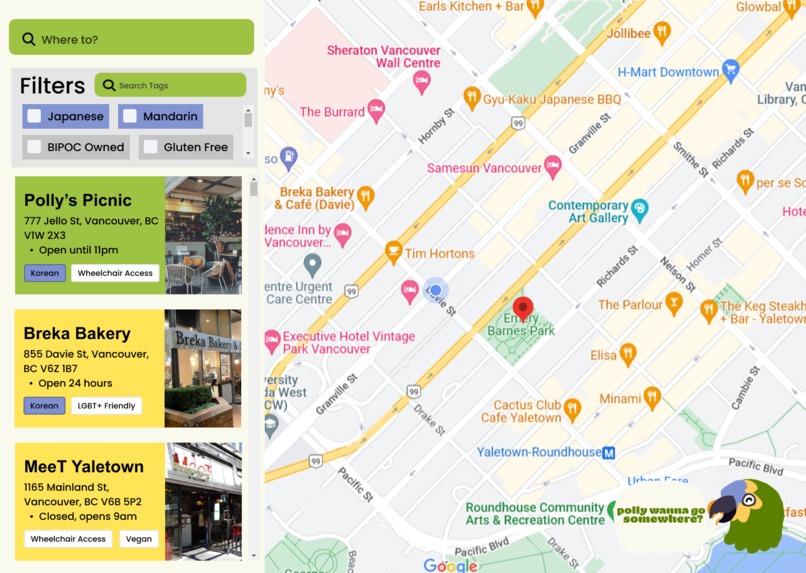
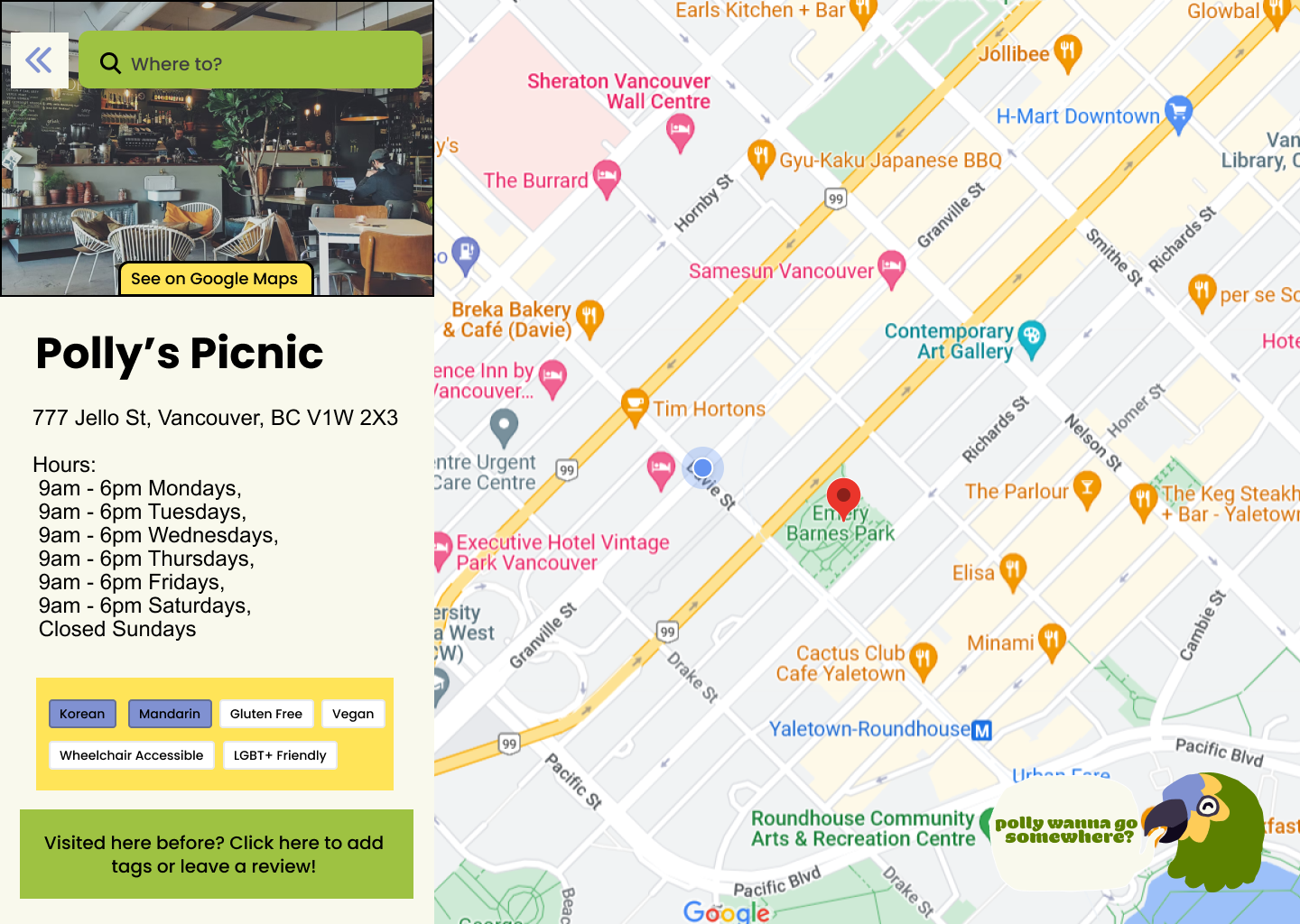
Interactive Map
-
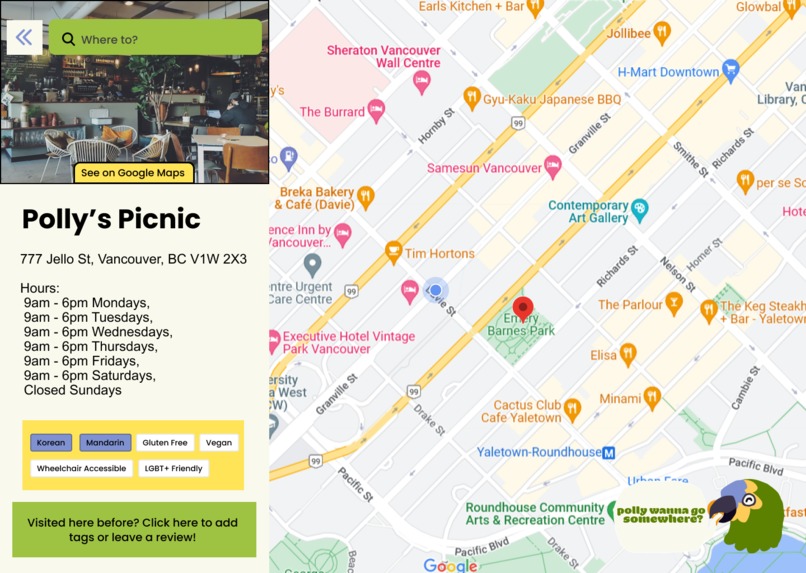
Store Information
-
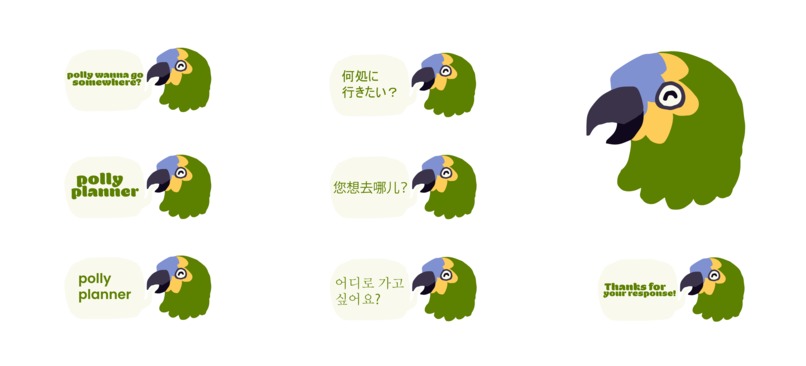
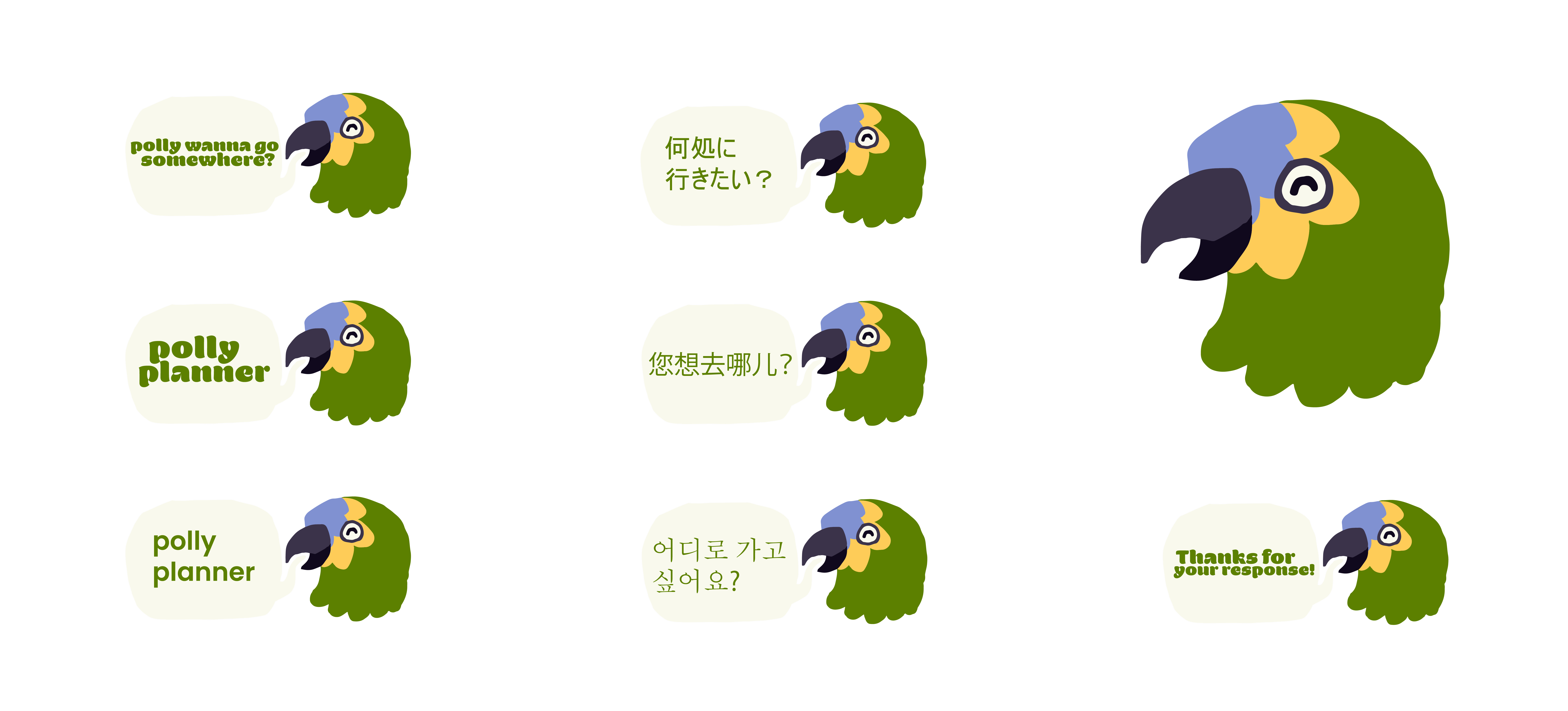
Different Language Variations for Polly Logos

Inspiration
We believe a multicultural and diverse city like Vancouver should be accessible to everyone and inclusive of all cultural backgrounds. One of the challenges commonly faced by non-native English speaking immigrants to Vancouver is overcoming the language barrier, especially when seeking services. In our team, many of us have had the experience of seeing a parent struggle with communication when doing essential tasks like banking or receiving customer service due to the language barrier. We believe that Vancouver as a city, having its roots built on immigration, demands clear accessibility options for communication. Our inspiration behind our project is to provide an encompassing resource to search through businesses in local communities and readily filter the options available to suit every person’s accessibility needs.
What it does
Our web application is designed to search through communities in downtown Vancouver, and return a list of locations matching the service, as displayed in a list format and marked on an interactive map. Filters are designed to simplify accessibility needs, which include services offered in specific languages, along with dietary restrictions for restaurants. As the markers appear on the map, a list is also curated on the sidebar, which can be clicked and redirected to the exact location on the map with further information for directions. We were careful in also choosing colors focused on accessibility, with our scheme being colourblind-friendly, and offering our logo in different languages.
How we built it
We used Google Cloud Maps API using TypeScript and JavaScript to source the map and gather information on local restaurants in the area, as well as place search inquiries within the downtown Vancouver community. We created prototypes of different variations and features for the app using Figma, which we then translated into React for the homepage. Additionally, HTML and CSS were used for formatting and styling all around.
Challenges we ran into
We encountered many challenges, as this was our entire team’s first Hackathon. We faced challenges in learning how to work with a new API, writing code in an unfamiliar language, and debugging said code. Because our project used an API in multiple languages, we had difficulty implementing certain features and translating our figma concept into code. The longer we spent on the project, a common theme that occurred was realizing how we could have structured or organized certain aspects of our code/design better, but given the limited time frame, there wasn’t an opportunity to restart what we had already built.
Accomplishments that we're proud of
We are proud of how well-constructed our prototype is in terms of organization and the extent the features cover. We created a logo, mascot, and colourblind-friendly colour-scheme based on our branding, which we believe embodies the theme of the project of accessibility. Our web application itself has map functionalities centered in the downtown Vancouver location, and search enquiries do display the results as a list on the sidebar. Despite not having all of the features we intended to implement, our vision for the sidebar tool alongside the map is similar to our prototype we envisioned.
What we learned
With Figma, we learned to create wireframes and prototypes for our project, as well as gained familiarity with the various tools available. One in particular we found useful was discovering the ability to create components, which saved us a large amount of time by allowing us to edit multiple copies of the same object in different frames at once. This was many of our members’ first times using Figma, so it was a great learning experience. The Google Maps API taught us ways to incorporate languages like TypeScript/JavaScript into standard HTML, as well as better ways to structure (and not structure) code.
What's next for Pollyplanner: Implementation
Our next step for PollyPlanner is to continue implementing more accessibility features and expanding our areas of operation. This includes adding more filters and categories to the tags list and adding more accessibility options to the interface itself such as colorblind modes. In addition, we are also hoping to expand our reach beyond just restaurants to services like banking or healthcare, where language accessibility is especially important. This can be done by possibly webscraping to gather more information with certain filters that aren’t available as public list information. Lastly, we would like to expand our geographic range beyond just Downtown Vancouver to areas such as Kitsilano, Kerrisdale, and UBC.


Log in or sign up for Devpost to join the conversation.