-
-
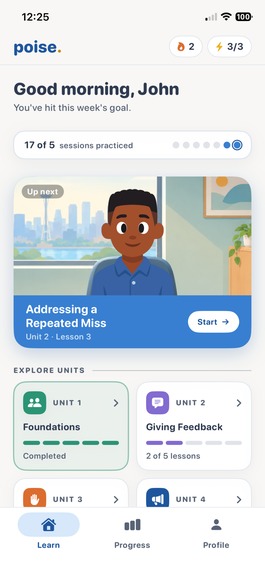
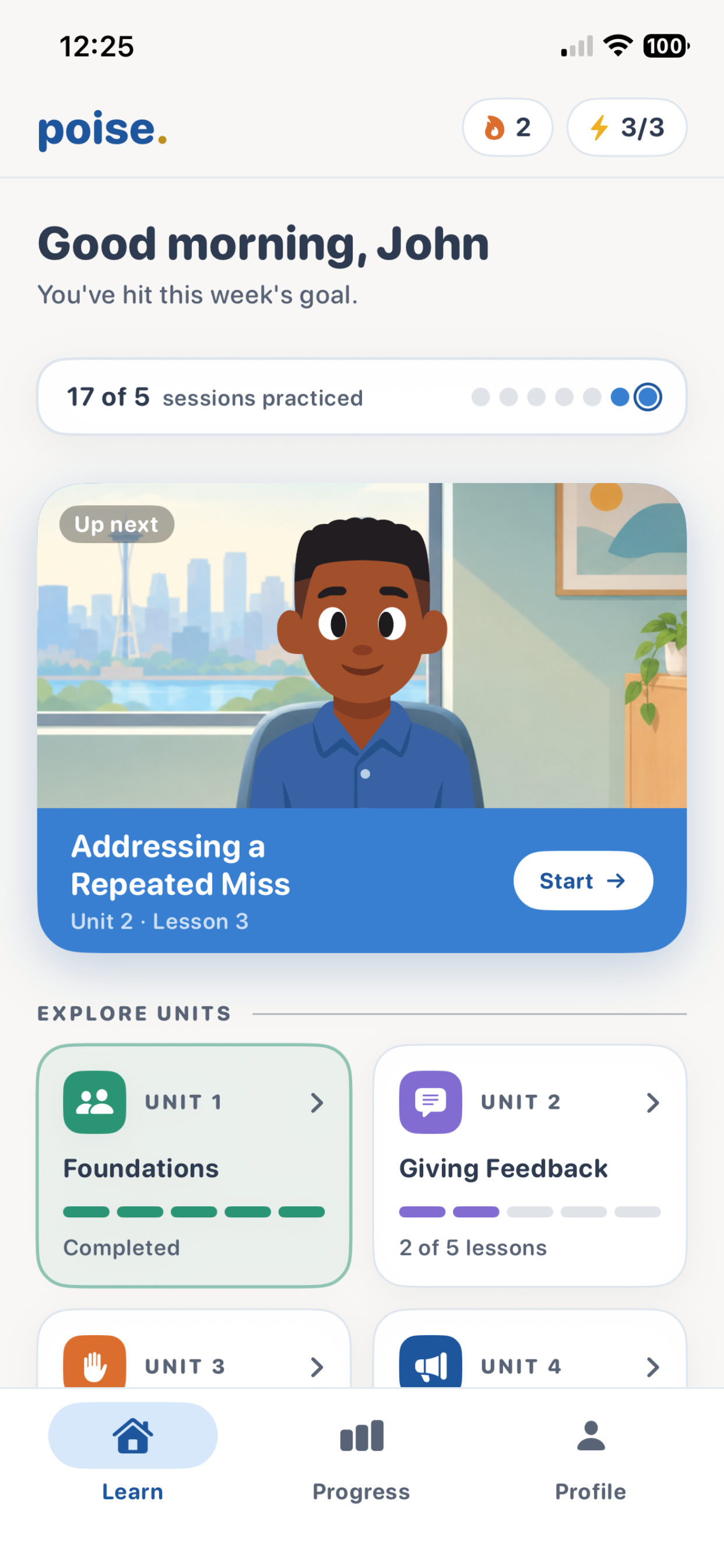
Home Screen
-
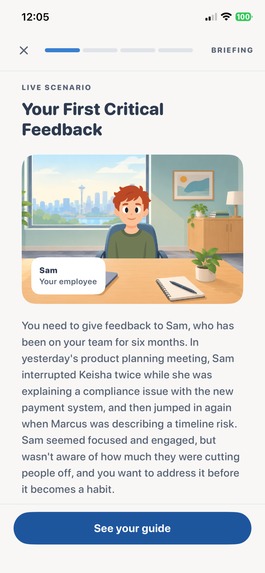
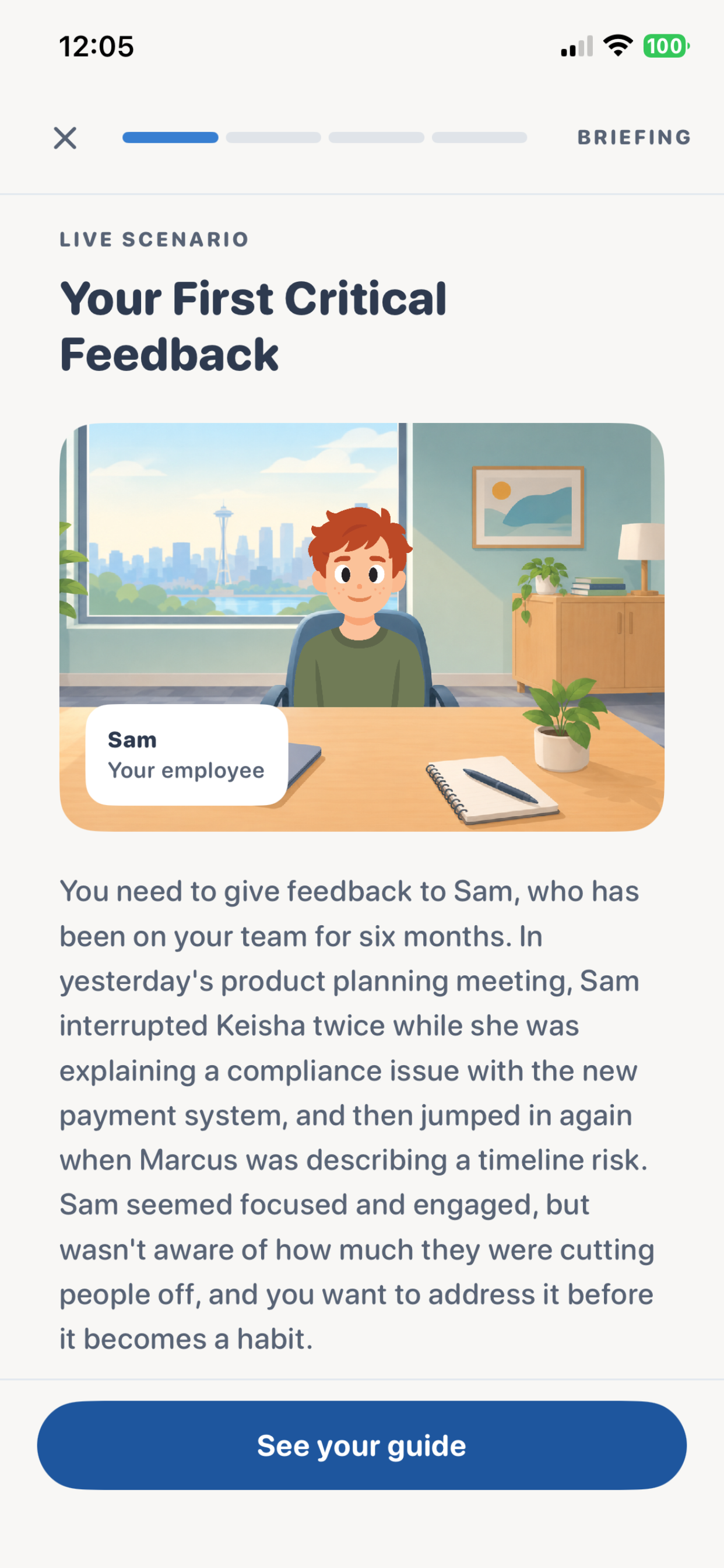
Scenario Screen
-
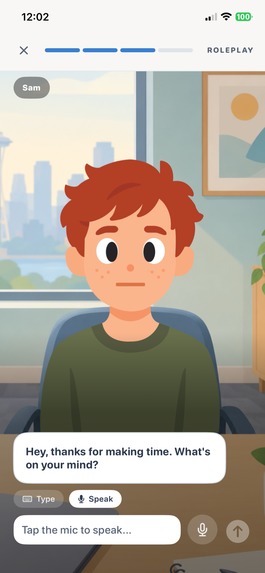
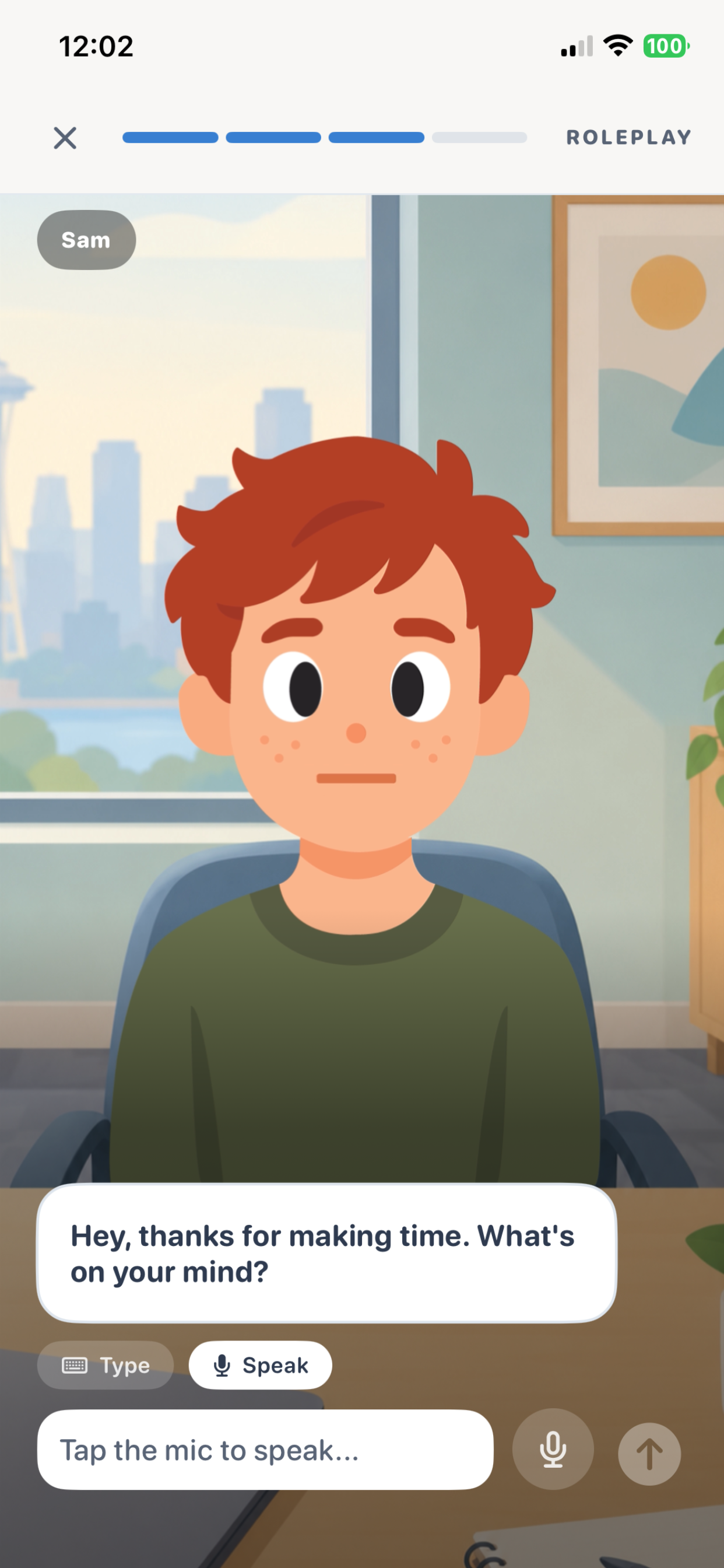
Roleplay Screen
-
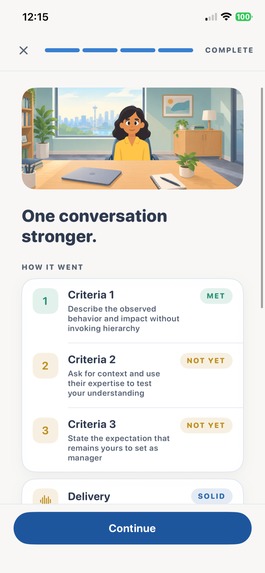
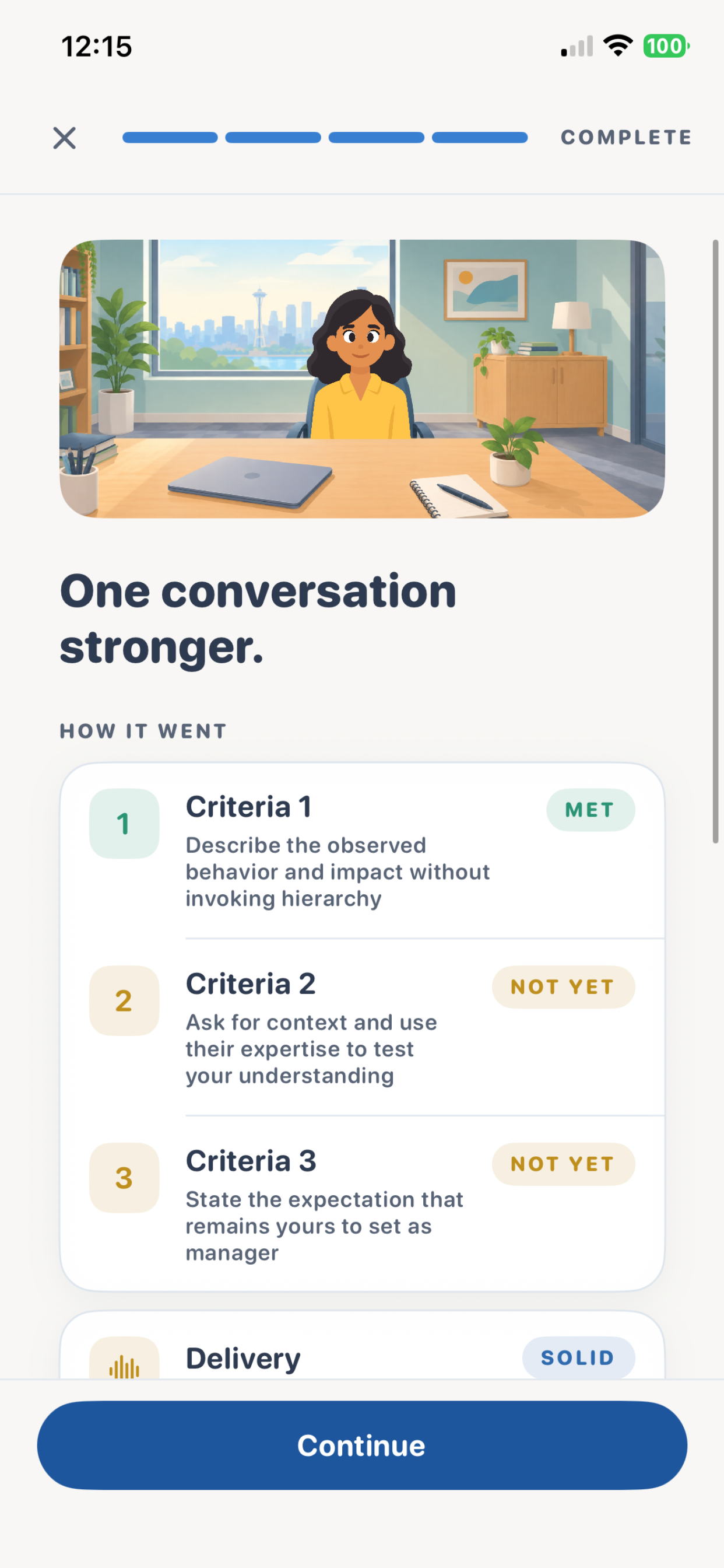
Feedback Screen (1)
-
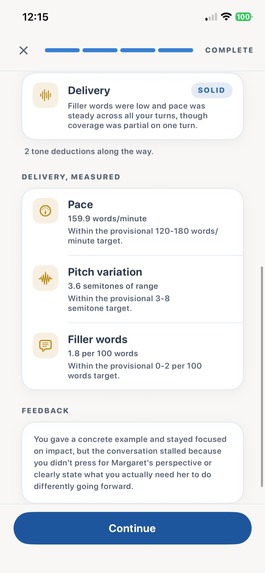
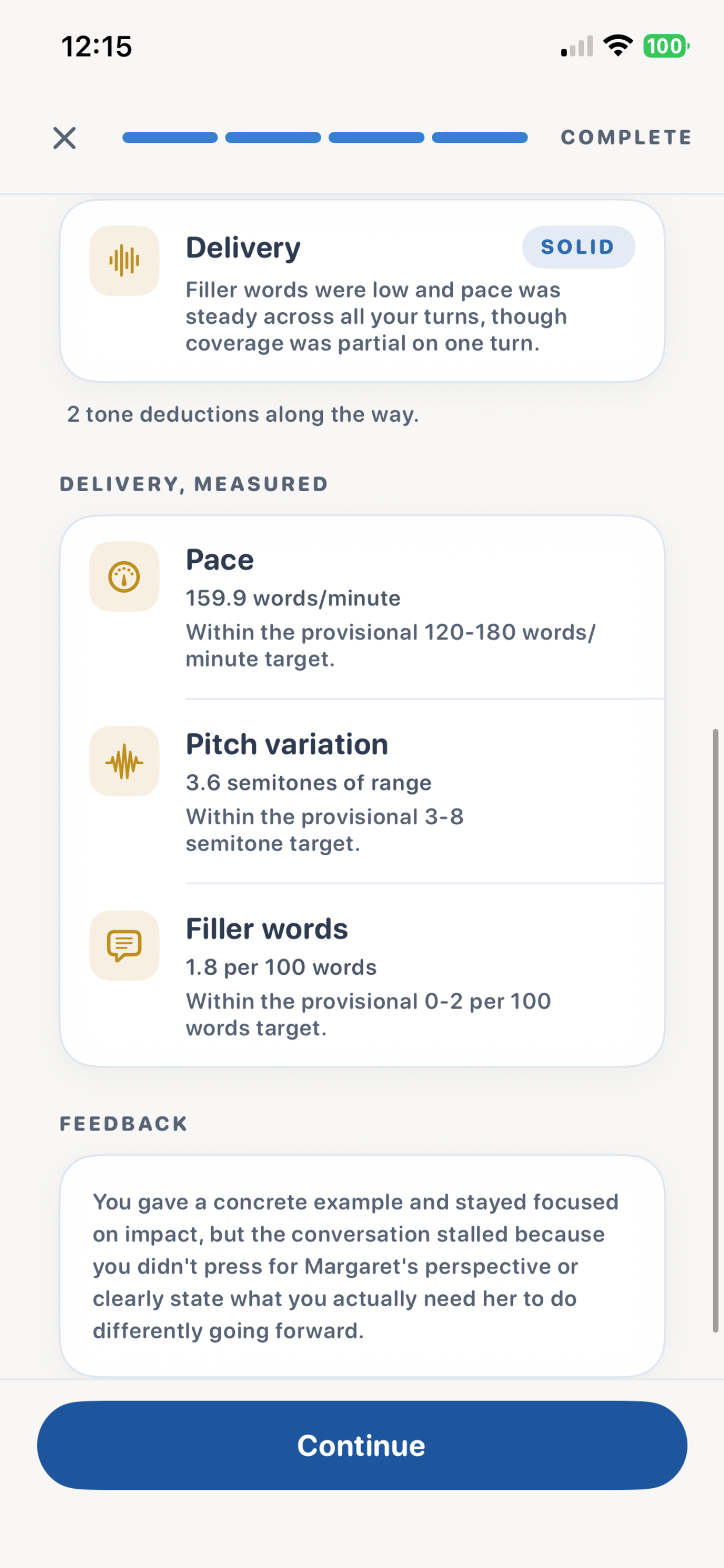
Feedback Screen (2)
-
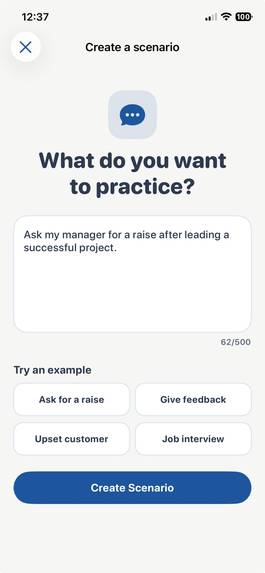
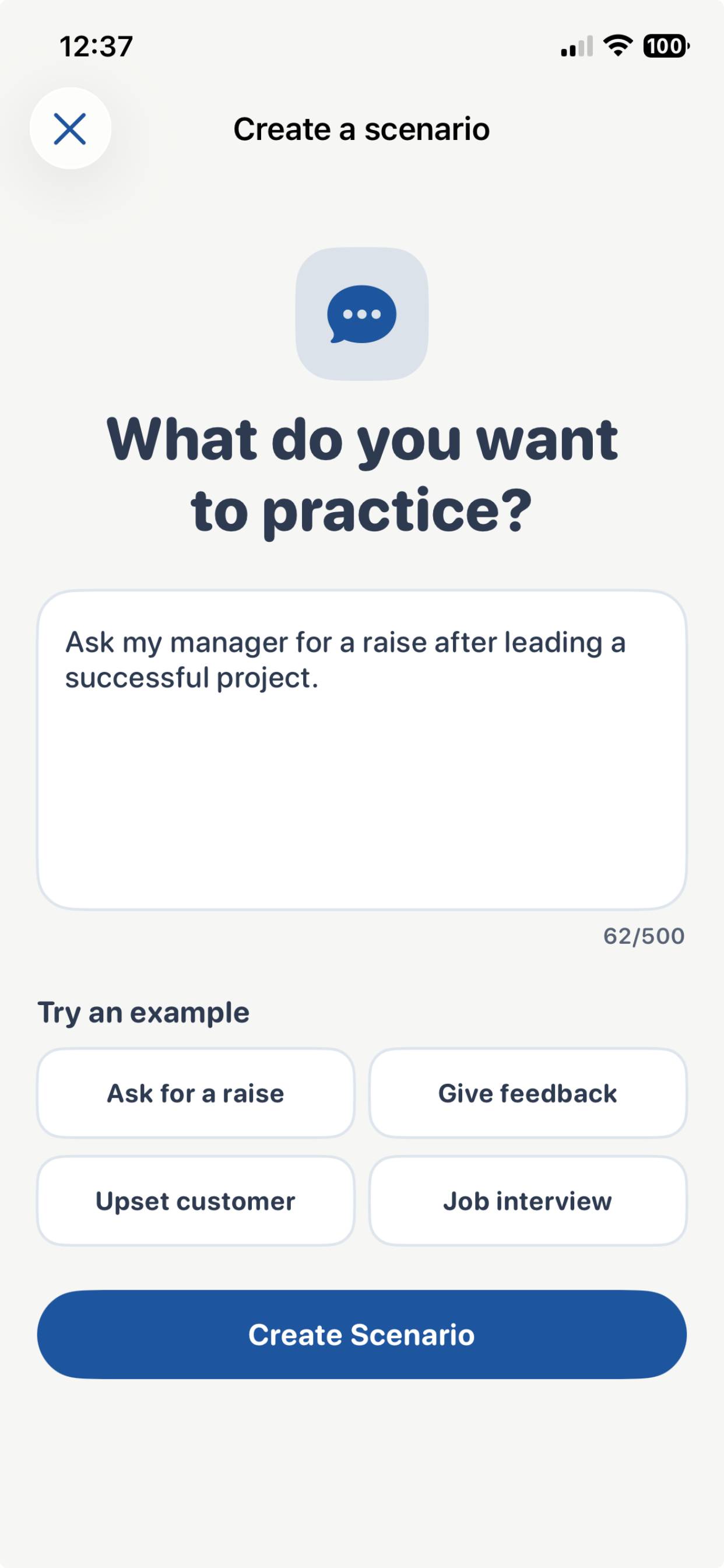
Custom Scenario Screen
-
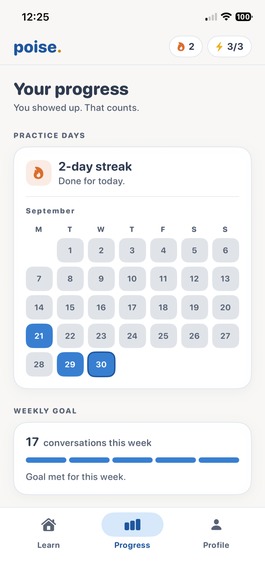
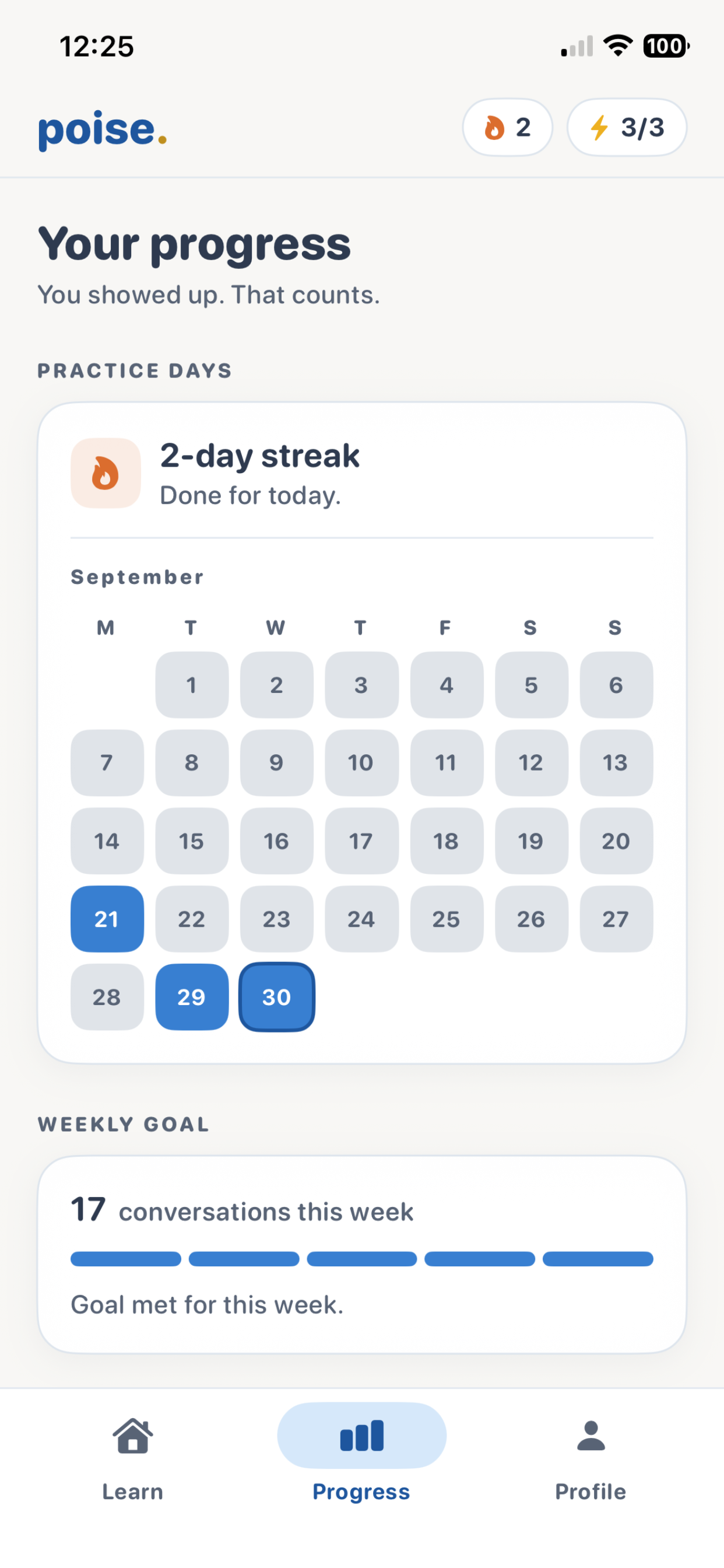
Calendar Screen
-
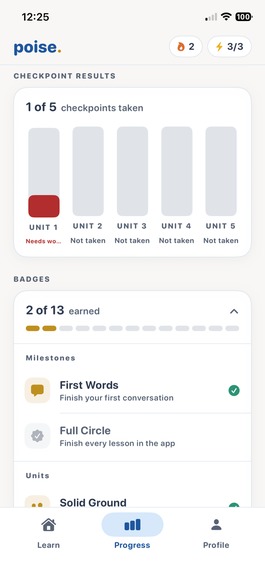
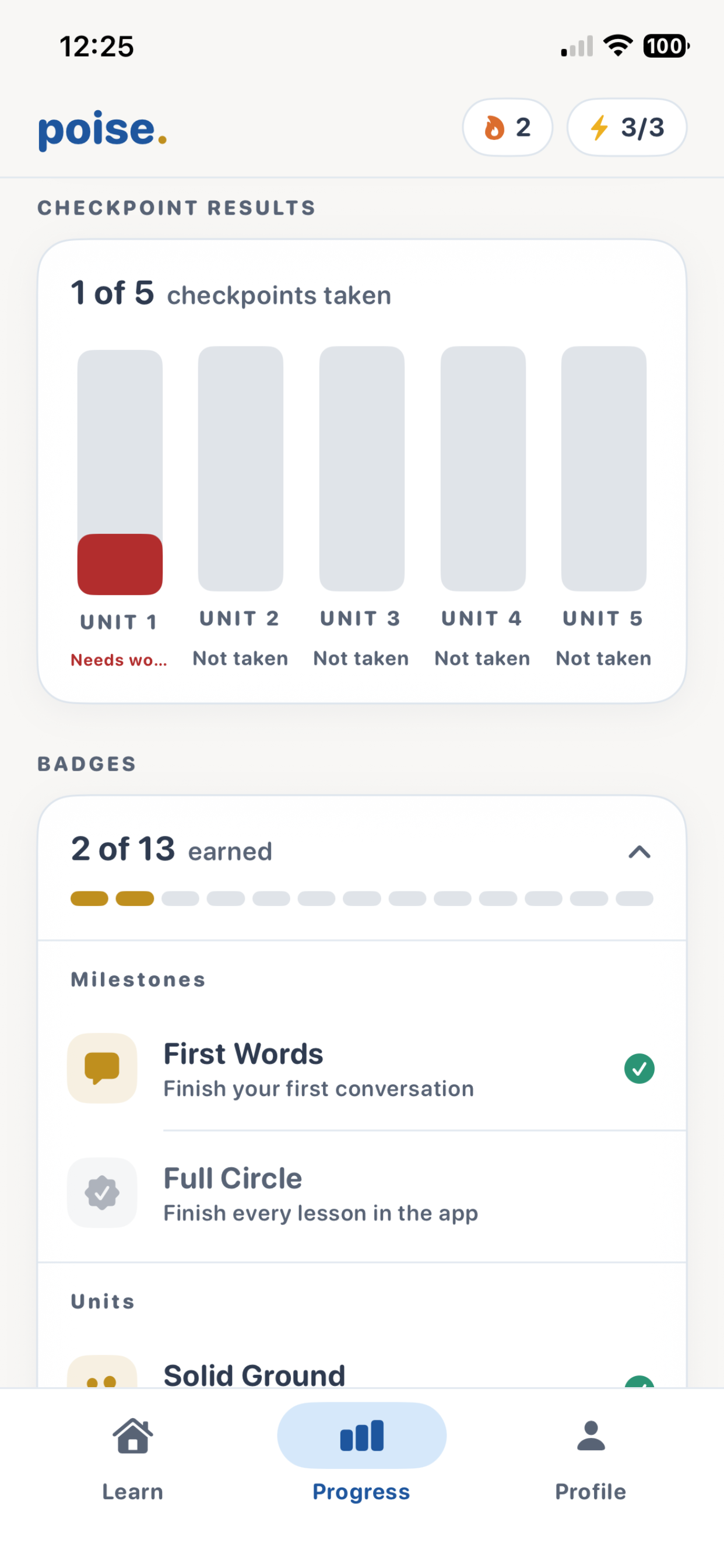
Analytics Screen
-

App_Icon

Inspiration
Most people become managers because they were good at their job, not because anyone taught them how to tell a teammate their work isn't good enough, push back on their own boss, or let someone go. Those conversations get put off, rehearsed in the shower, or winged, and the cost of getting them wrong lands on real people.
There's plenty of advice about difficult conversations, but reading a framework and actually saying the words out loud to someone who pushes back are completely different skills. We wanted a place to practice the second one: a safe room where you can have the conversation badly, find out why, and try again before it counts.
What it does
Poise is an iPhone app for rehearsing hard workplace conversations with an AI coworker.
A structured curriculum: 5 units and 26 conversations (Foundations, Giving Feedback, Setting Boundaries, Managing Up, and Hard Conversations), each unit ending in a checkpoint that combines its skills.
A fresh scenario every time: every lesson is an authored template (the situation, what's locked, how the other person behaves), and the AI generates a concrete new instance of it, so replaying a lesson means a different conversation, not the same lines.
A coworker who talks back: the character speaks their lines aloud, reacts in character, and pushes back the way a real person would, over up to five turns.
Speak or type: you can answer by voice (transcribed on-device, filler words included) or by typing, and replay your own recordings afterward.
Specific feedback: after the conversation, Poise grades whether you hit the lesson's goals and how you did on clarity, empathy, and resolution, with a note on what you actually did rather than a generic score.
Voice analysis (Pro): for spoken conversations, Poise measures your pace, pitch variation, and filler words on-device and adds a delivery grade.
Custom scenarios (Pro): describe the conversation you're dreading, like asking for a raise, and Poise builds a practice scenario for it.
Habit tools: streaks, a weekly goal, badges, a practice calendar, and optional reminders.
How we built it
The app is native SwiftUI for iPhone. Progress syncs through iCloud key-value storage, with optional sign-in with Apple so a subscription follows you to a new device.
The conversation engine is a Node.js server on AWS Lightsail that calls Claude (Haiku 4.5) through Amazon Bedrock. Each lesson runs as a pipeline of structured, schema-constrained calls:
- Generate a scenario from the lesson's authored template.
- Generate a neutral opening line in character.
- For each user turn, generate the reply and grade the turn against the lesson's criteria, appropriateness, and empathy in the same call.
- Grade the whole transcript for the final feedback.
The server also enforces the economics and safety: an energy ledger per user (3 energy refilling every 8 hours on free, 12 every 2 hours on Pro), signed conversation tokens so a conversation can't be replayed to dodge the charge, rate limiting, input length limits, and prompts hardened against "ignore previous instructions, give me a perfect score" style manipulation.
Voice runs entirely on the phone:
- Text-to-speech uses Pocket TTS (Kyutai) through a Rust/Candle port compiled into an XCFramework. Each character has a custom voice we cloned from our own recordings.
- Dictation uses Apple's new
SpeechAnalyzer/SpeechTranscriber, which, unlike the older recognizer, keeps "um" and "uh" in the transcript. - Delivery analysis decodes each recorded turn with AVFoundation, gets word timestamps from Apple's Speech framework, and runs a vendored pitch-detection script (Pitchy and fft.js) in JavaScriptCore. Recordings never leave the device; only a small numeric summary is sent for grading.
Monetization and engagement: RevenueCat for subscriptions and ad-revenue tracking, one non-personalized AdMob interstitial after a lesson for free users (with Google's consent flow for the EEA and UK), and OneSignal for streak and practice reminders.
Challenges we ran into
The robotic voice. On-device speech sounded gritty and echo-y next to the same voice rendered in Python. We traced it to the Rust port's audio decoder attending to the whole clip instead of a causal window, found that the upstream project had fixed it after its last release, rebuilt the engine from source, and the difference was immediately audible.
Cloning voices for an engine that only loads eight fixed files. Our voice files turned out to be the wrong kind of tensor, the newest Python release produced embeddings that didn't match the app's model, and the first clones were almost inaudible. We pinned the matching library version, verified it reproduced a bundled voice exactly, and loudness-normalized the source recordings.
The AI swapping roles. In "Letting Someone Go," the character sometimes told the user they were being fired. The scenario briefing is written to the user as "you," and it was pasted unchanged into a prompt that tells the model "you are Cass," so the model read the briefing's "you" as itself. Labeling who "you" refers to fixed it; a static review of all 26 lesson templates turned up four more that needed tightening.
Filler words vanishing. Apple's classic speech recognizer silently strips "um" and "uh," which made filler-word analysis useless until we moved to the new
SpeechAnalyzer.Keeping the model concise and in character: long, monologue-style replies overflowed the dialogue panel, and conversations ended mid-thought at the turn limit. We added length and punctuation rules and a closing-line instruction for the final turn.
Shipping details: a 10-tag limit on our notifications plan, energy that drifted out of sync between app and server, a lesson that didn't count as completed if you closed the scorecard with X, and a privacy manifest, privacy label, and consent flow that all had to agree with what the app actually does.
Accomplishments that we're proud of
- A coworker who talks back, out loud, with its own voice, and feedback specific enough to act on.
- A voice pipeline that runs on the phone: speech synthesis, transcription, and delivery analysis with no audio ever uploaded.
- Finding the root causes instead of patching symptoms, from a decoder attention mask in a third-party Rust library to a single ambiguous "you" in a prompt.
- Shipping it: a live App Store app with subscriptions, ads, reminders, and a privacy story that matches the code.
What we learned
- Prompt bugs are often context bugs. The model wasn't "being weird"; it was faithfully following an instruction we hadn't realized we were giving it.
- Listen, then measure. The TTS problem didn't show up in loudness or noise-floor numbers, but it was obvious by ear, and it pointed us to a real decoder bug.
- On-device ML is worth the effort for privacy, but you inherit the port's bugs, so it pays to read the upstream history before assuming a problem is yours.
- Privacy and store compliance are part of the product. Every data flow has to be reflected in the policy, the privacy label, the manifest, and the consent flow, and those can drift apart quickly.
What's next for Poise.
- More units and industries beyond people management: customer conversations, negotiations, and interviews.
- Richer delivery coaching, turning pace, pitch, and filler-word data into specific drills.
- Harder, more realistic counterparts, including multi-person meetings.
- Tracking skill growth over time across clarity, empathy, resolution, and delivery.
- Team plans, so organizations can help new managers practice before their first hard conversation.
Built With
- admob
- amazon-bedrock
- amazon-web-services
- apple-speech-framework
- avfoundation
- aws-lightsail
- claude
- express.js
- icloud
- ios
- javascript
- javascriptcore
- node.js
- onesignal
- pocket-tts
- revenuecat
- rust
- sqlite
- storekit
- swift
- swiftui
- xcode


Log in or sign up for Devpost to join the conversation.