Project Story: The Genesis of Mundus_sub_Oculo (Point Zero)
🧭 The Inspiration
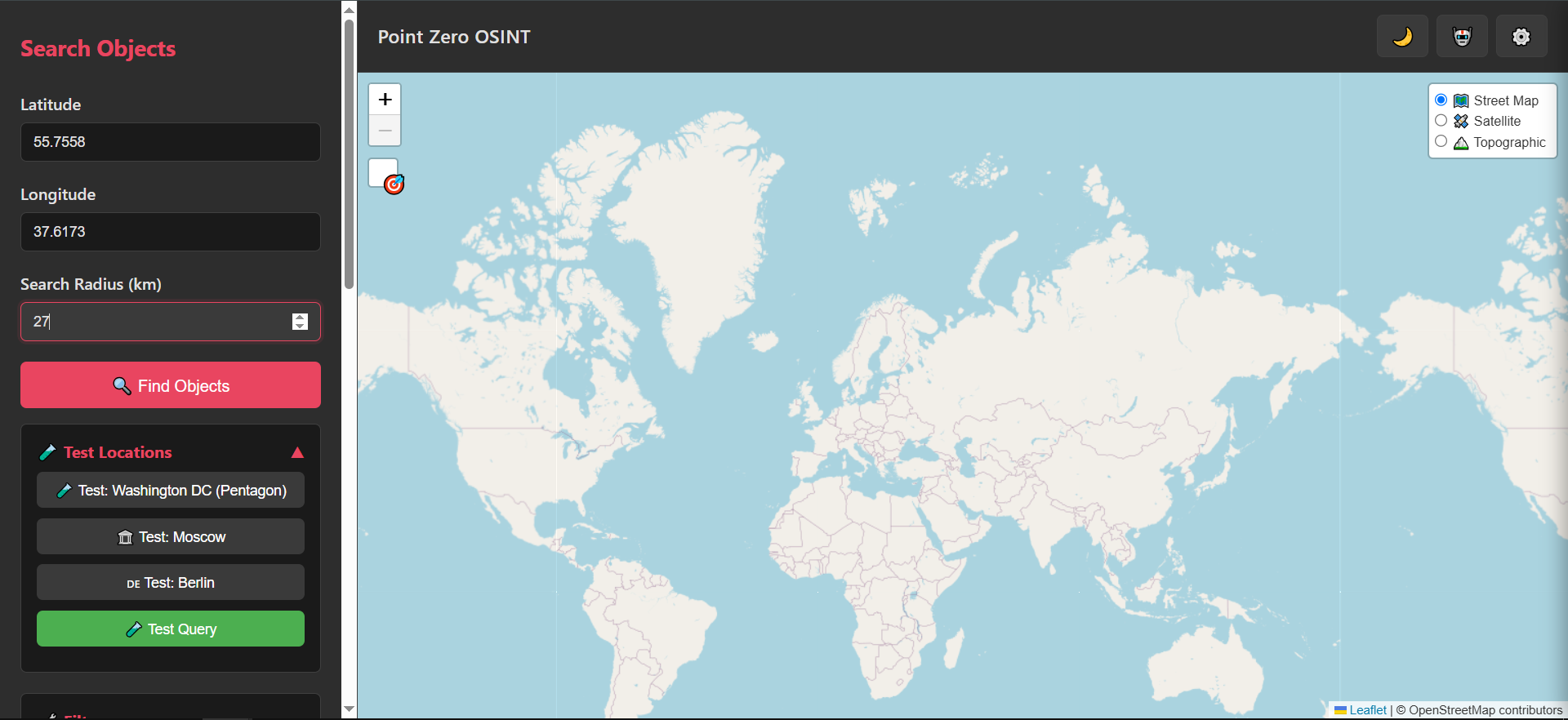
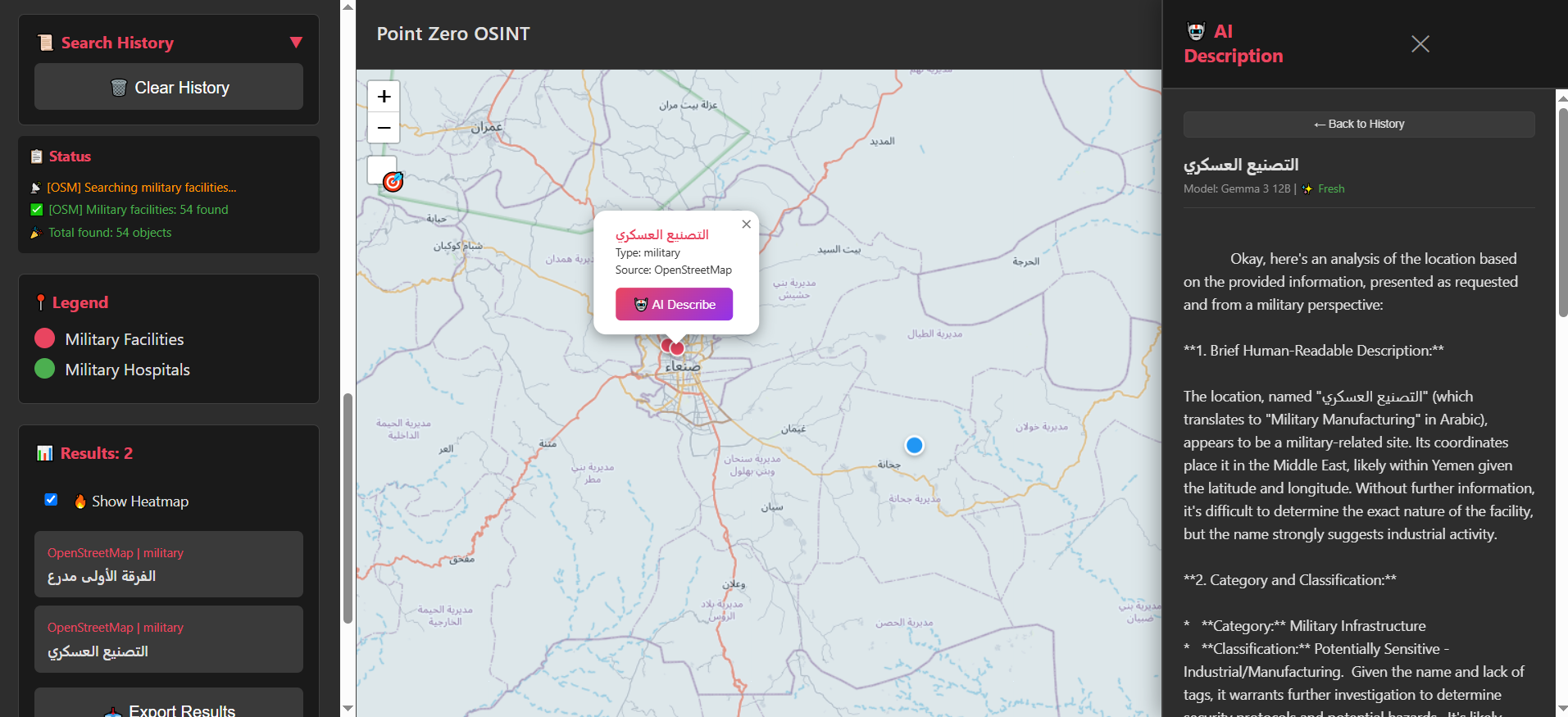
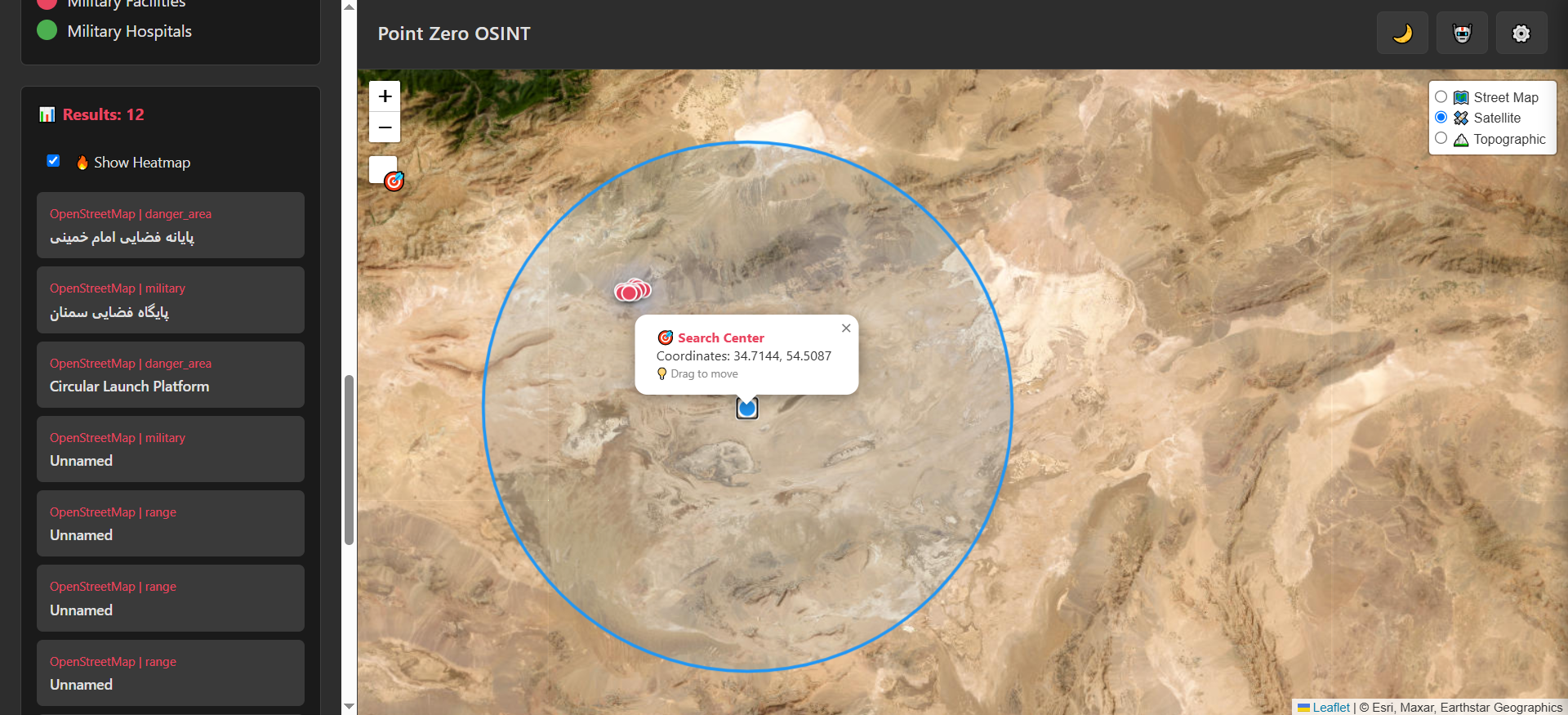
The inspiration for Mundus_sub_Oculo (internally known as Point Zero) came from the intersection of two rapidly evolving fields: Open-Source Intelligence (OSINT) and AI-driven development. I noticed that while geodata is abundant, tools for quickly filtering strategic infrastructure (like military and medical facilities) are often either too complex or hidden behind paywalls. I wanted to create a "zero-point" — a minimalist, fast, and 100% client-side entry point for spatial researchers.
🛠 How I Built It (The "Vibe Coding" Way)
This project is a testament to the AI Vibe Coding philosophy. Instead of manual boilerplate, I acted as an architect, directing a suite of advanced AI models:
- Claude 4.5 (Sonnet): Served as the primary engine for the core logic, implementing the complex Overpass API queries and the data export system.
- Gemini & ChatGPT: Used for refining the UI/UX and ensuring the dark-mode ergonomics were perfect for long research sessions.
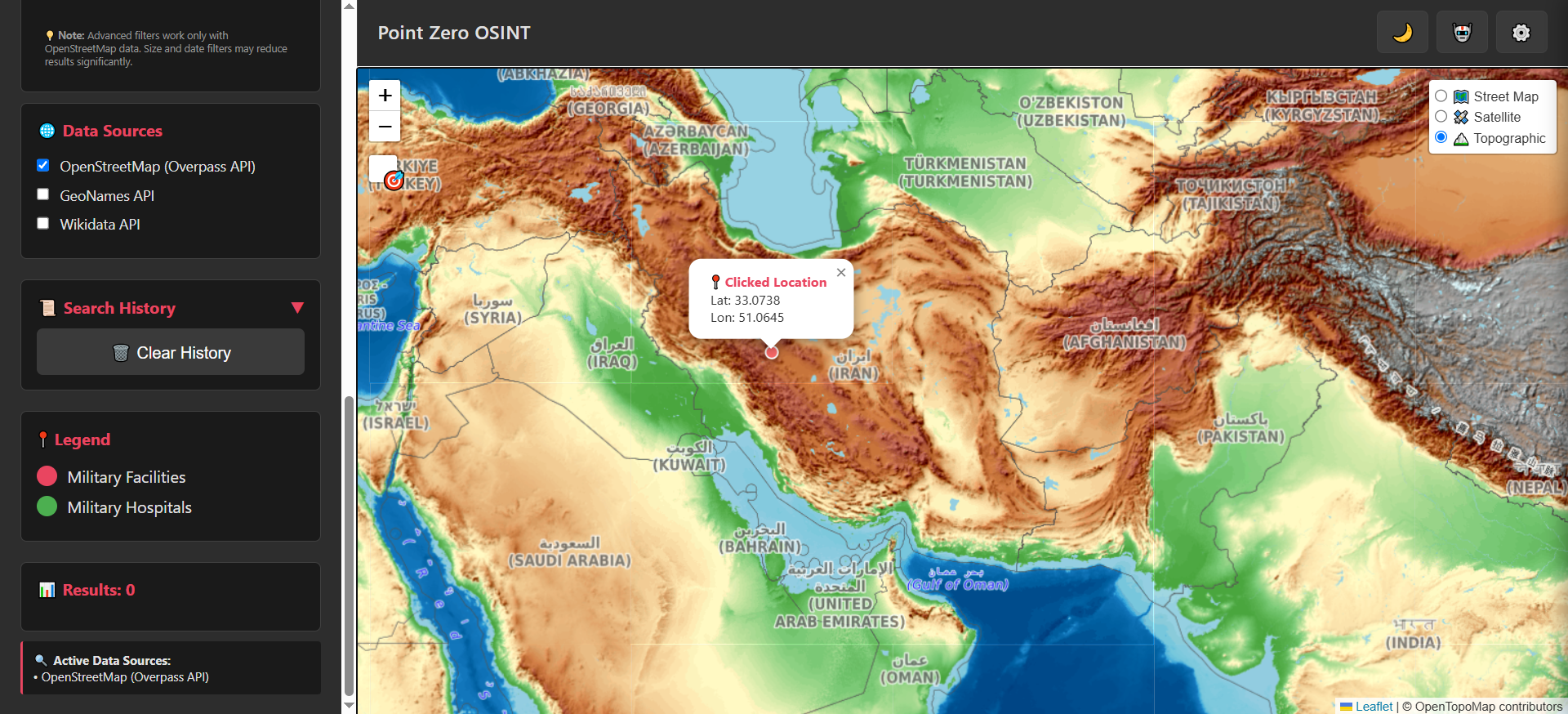
- Tech Stack: We went for a "Serverless OSINT" approach—using Vanilla JS, Leaflet.js for mapping, and OpenStreetMap/Overpass API for real-time data fetching. No backend, no tracking, just pure data.
🧠 Challenges I Faced
- Data Precision: Validating coordinates and managing radius-based searches (from meters to 10,000 km) without breaking the browser's performance was tricky.
- Export Diversity: Implementing 7 different export formats (from GeoJSON to ZIP archives) entirely in the browser required fine-tuning the data serialization logic.
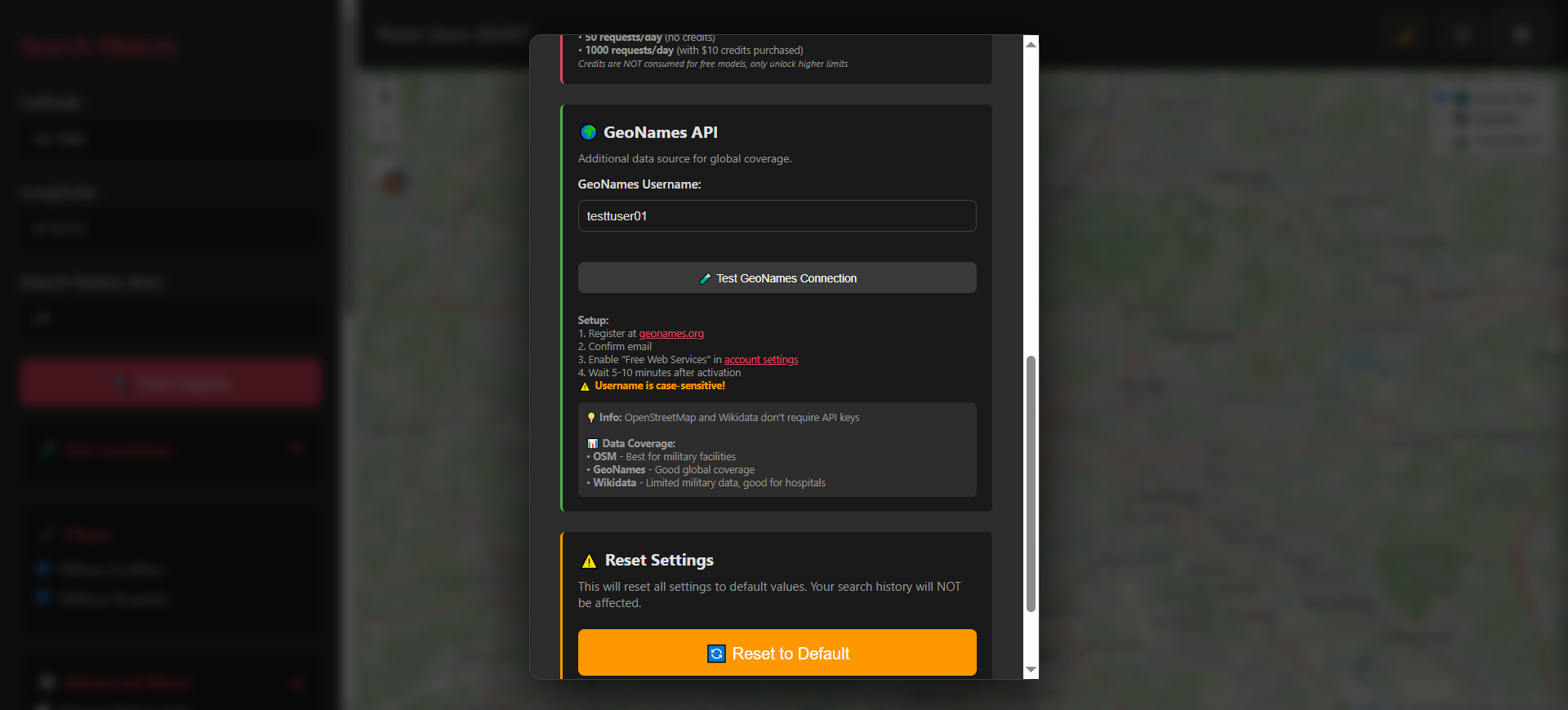
- API Security: Ensuring users could bring their own API keys for services like GeoNames while keeping the app static and secure.
📖 What I Learned
Through this project, I mastered the art of Prompt Engineering for Geospatial Systems. I learned that building complex OSINT tools is no longer about writing every line of code—it's about understanding the underlying data structures (OSM tags) and effectively communicating that vision to AI. I also deepened my understanding of privacy-first software design; keeping everything client-side is the ultimate form of user protection.
📈 Future Roadmap
Mundus_sub_Oculo is designed to be extensible. My next steps include:
- Integrating Satellite Imagery analysis via AI.
- Adding more specialized filters (logistics, energy infrastructure).
- Implementing LaTeX-based reports for professional intelligence documentation.
Rapid Prototyping: Initial MVP developed in just 20 minutes using a single HTML file and OpenCode
Created with ❤️ for AI Vibe Hackathon 2026.


Log in or sign up for Devpost to join the conversation.