Inspiration
Every day, millions of tons of fresh, edible food go to waste in restaurants, cafeterias, and event venues simply because surplus supply cannot meet immediate demand. At the same time, vulnerable communities and nearby shelters struggle with food insecurity. We realized that the gap isn’t a lack of food or a lack of willingness to donate—it is logistical friction, fear of liability, and coordination bottlenecks. We built PlateShare to solve this core challenge, directly aligning with UN SDG 2: Zero Hunger.
What it does
PlateShare is an enterprise-ready full-stack web platform that bridges surplus food to plates in real-time. It features:
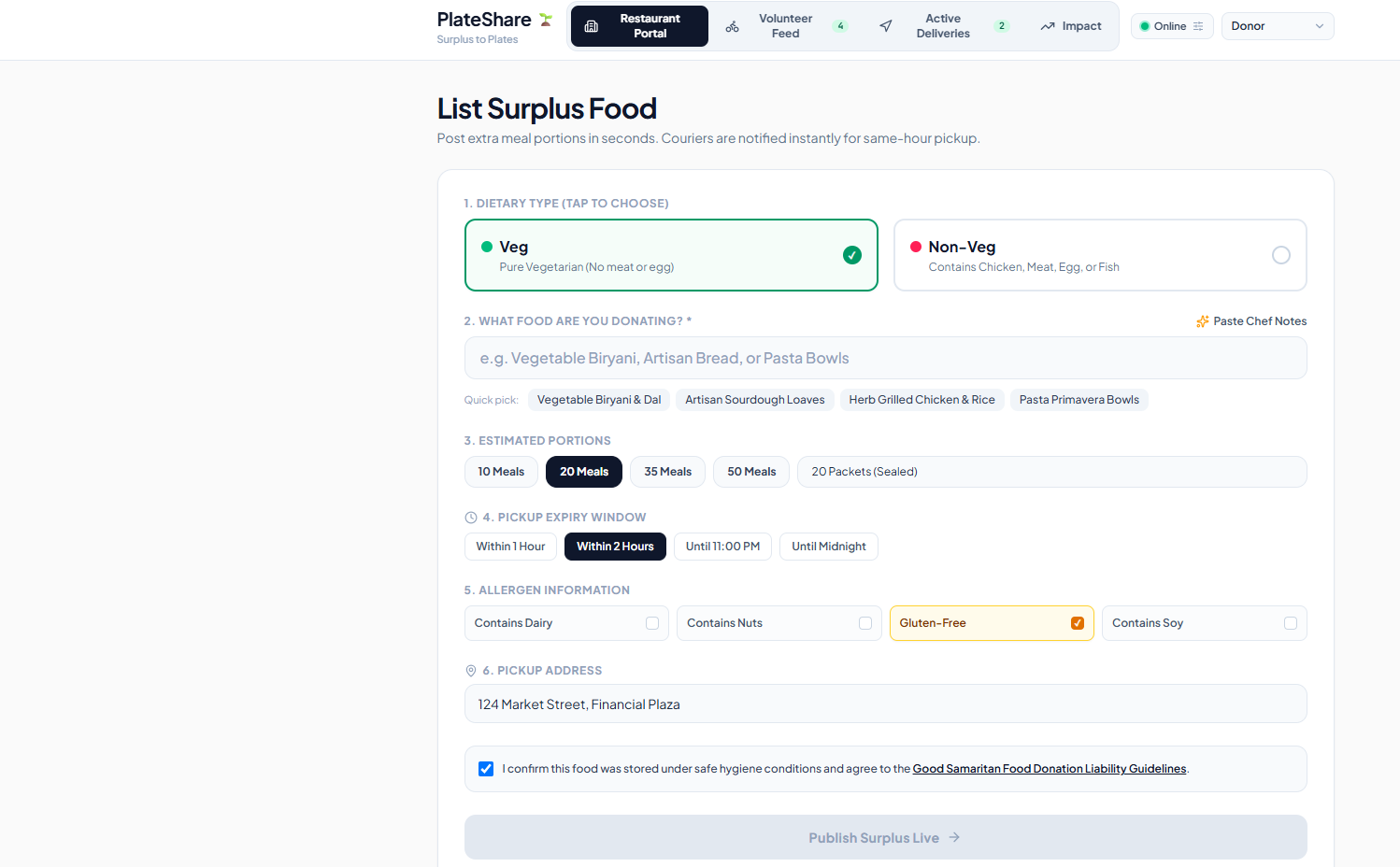
The Restaurant Portal: A frictionless submission form for food businesses to list surplus meals in under 30 seconds, complete with a Good Samaritan Liability Disclaimer and simplified Veg / Non-Veg dietary safety tags.
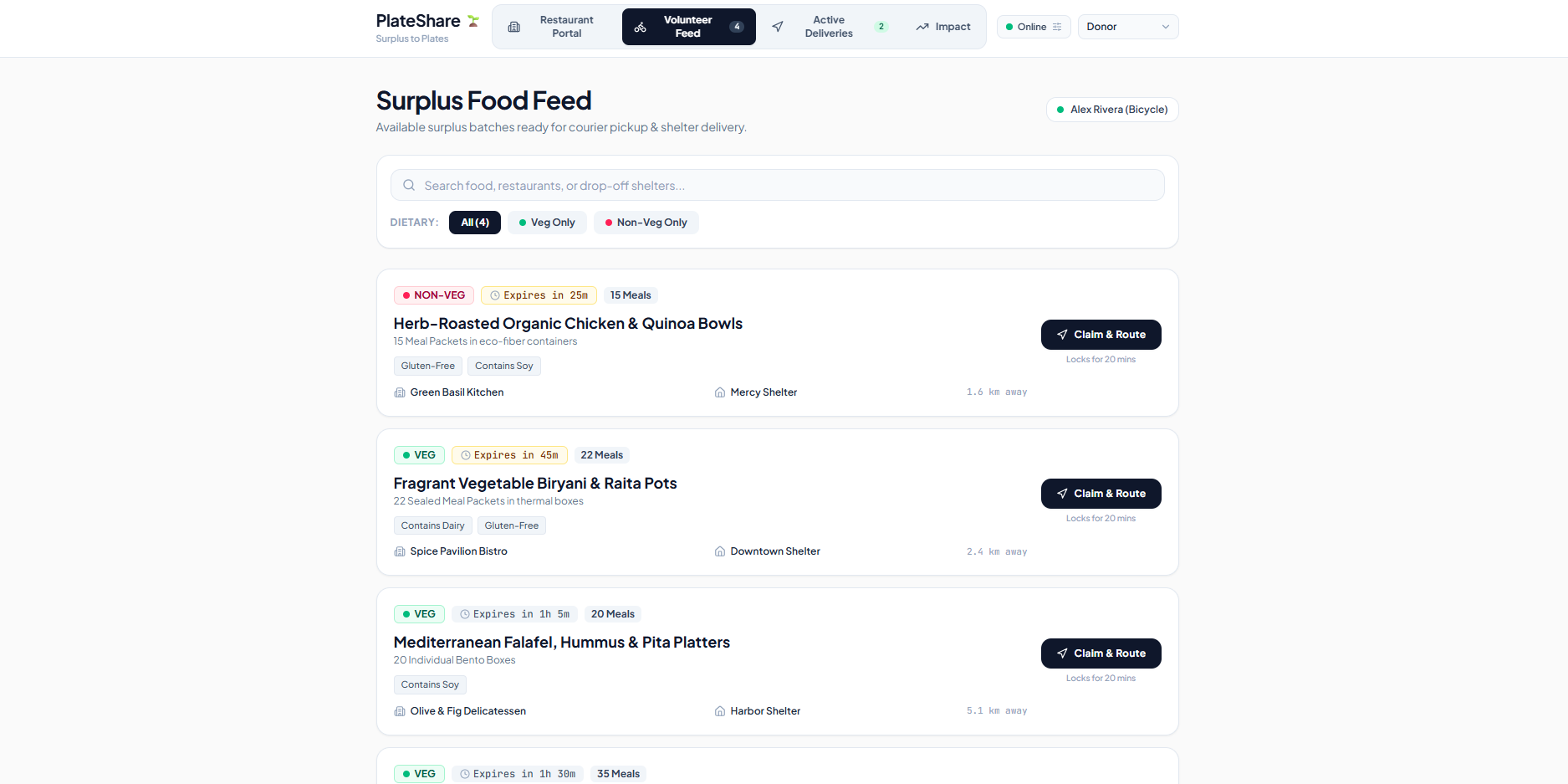
The Volunteer & Logistics Feed: A real-time marketplace where student volunteers and NGO authorities can view available donations, filter by dietary requirements, and click "Claim & Route".
Google Maps Integration: Built-in waypoint routing providing step-by-step navigation from the restaurant pickup point to the community shelter drop-off.
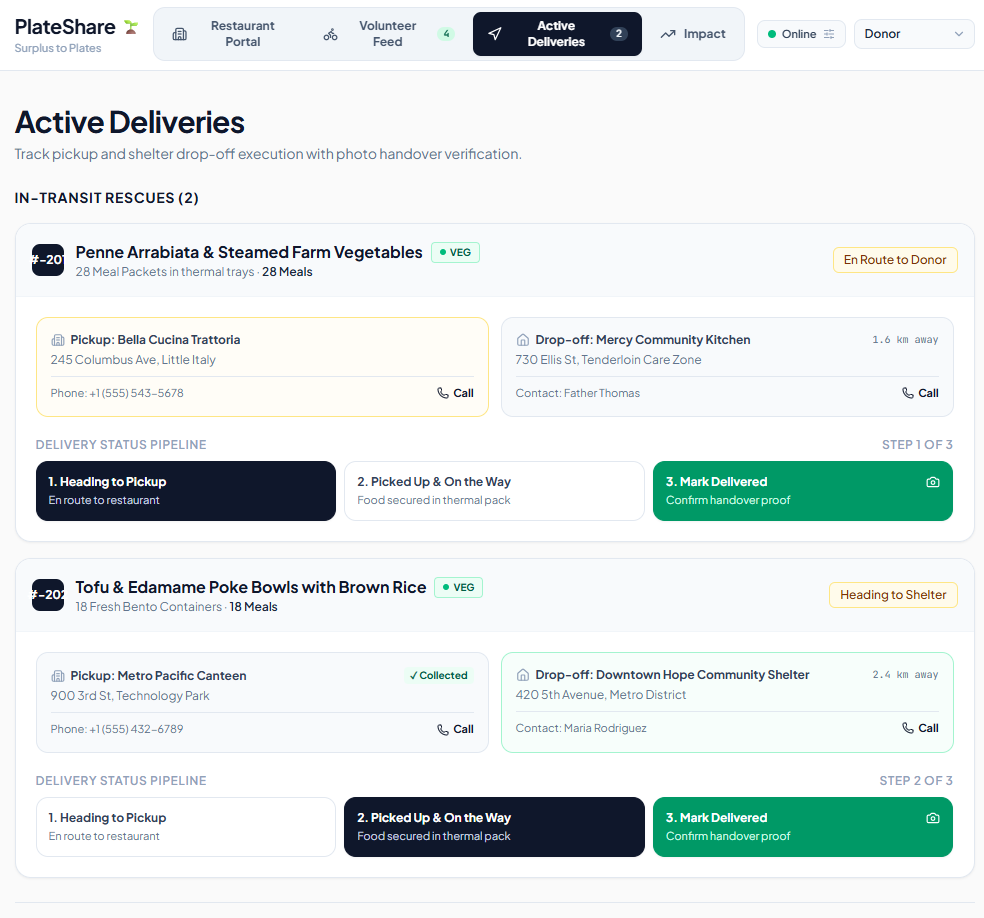
Active Deliveries & Tracking Pipeline: A live execution tracker allowing volunteers to update delivery statuses (Heading to Pickup ➔ Picked Up ➔ Delivered).
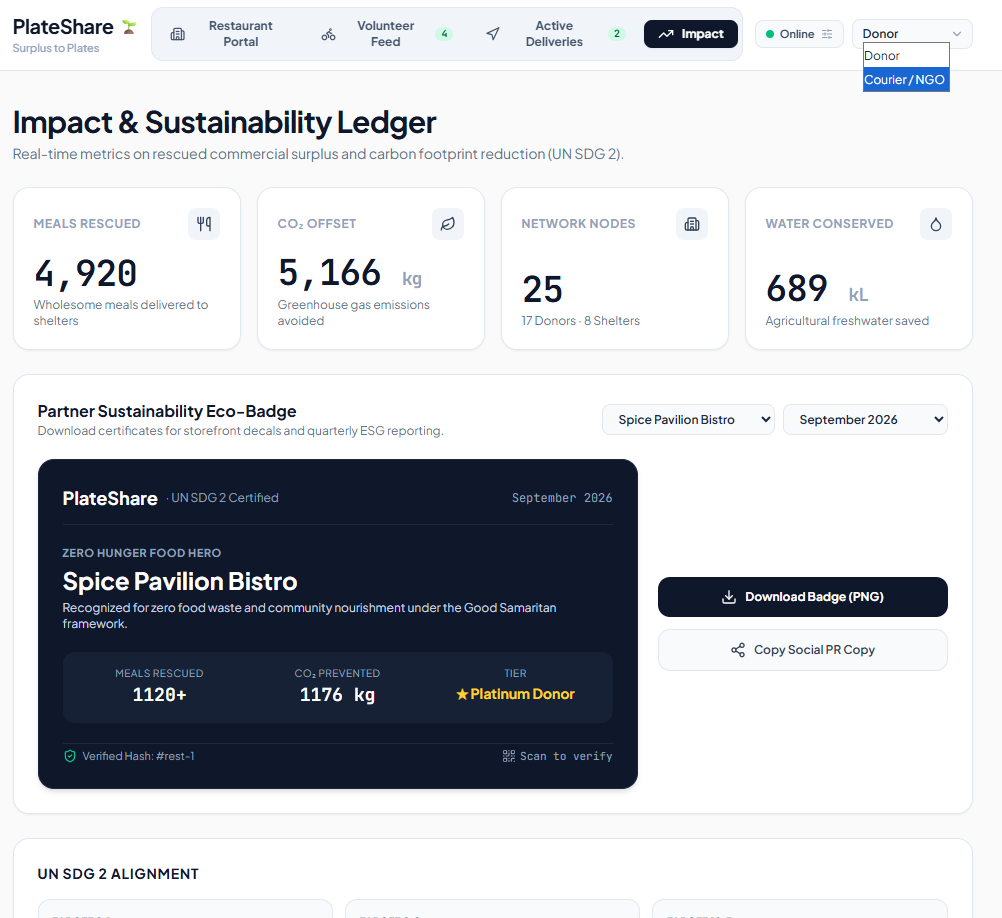
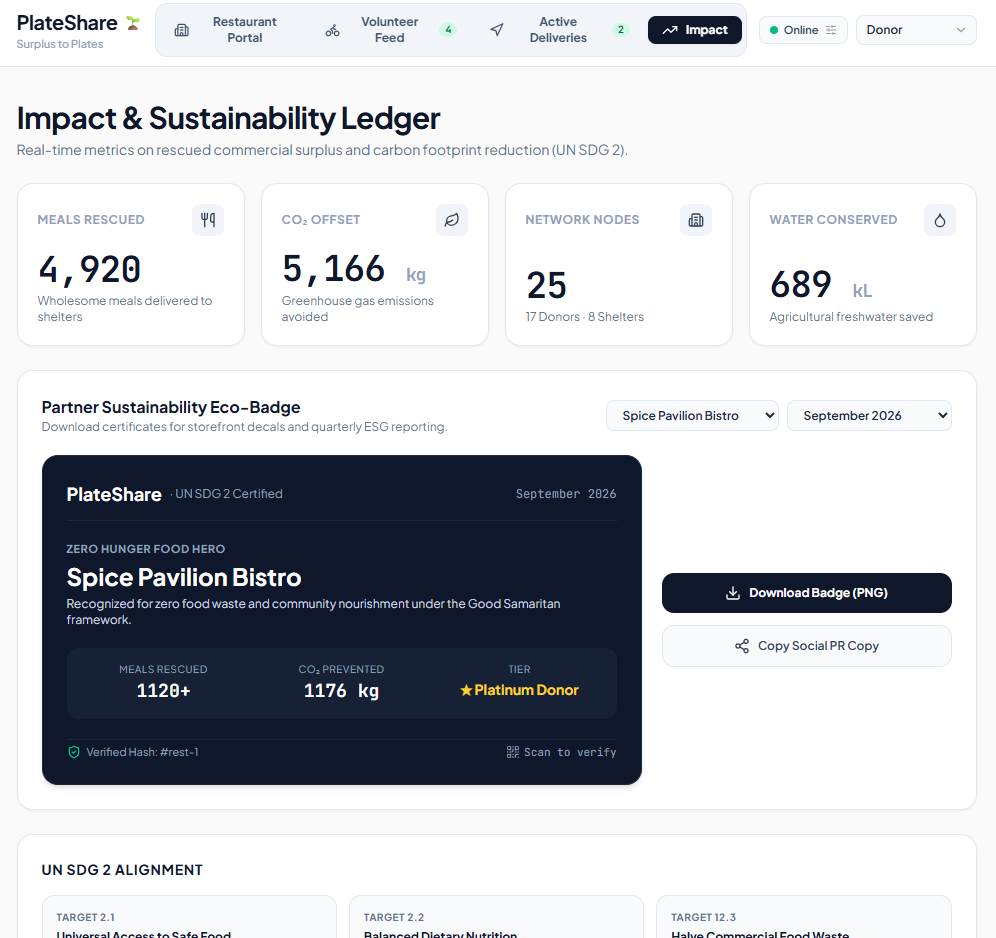
Global Impact Dashboard: Dynamic, animated metrics tracking Total Meals Rescued and CO2 Emissions Prevented.
How we built it
We built PlateShare using a modern, scalable web stack optimized for rapid prototyping and real-time responsiveness:
Frontend: Built with React and styled using Tailwind CSS for a clean, mobile-first, eco-friendly green and white interface.
Backend & State Management: Powered by robust application state synchronization ensuring instant updates across the donor, volunteer, and impact modules.
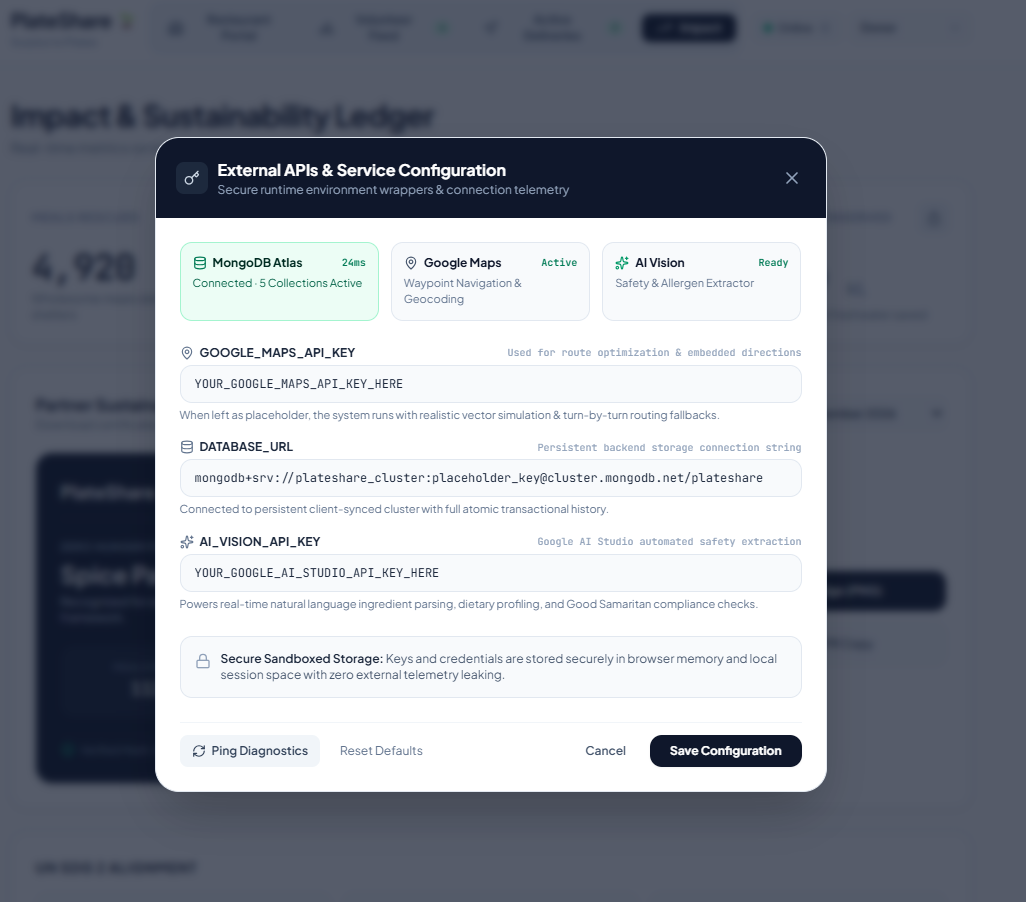
APIs & Tools: Integrated Google Maps API for live route optimization, geocoding, and waypoint navigation, alongside Google AI Studio for rapid application design and architecture scaffolding.
Challenges we ran into
Managing Last-Mile Coordination: Matching surplus food expiring within a tight window (e.g., 2 hours) to the nearest available volunteer required streamlining the UI so claims happen in a single click.
Balancing Safety and Speed: Restaurants often hesitate to donate due to liability fears. Integrating the Good Samaritan checkbox without slowing down the posting process required careful UX placement.
Accomplishments that we're proud of
Enterprise-Ready Trust Layers: Successfully embedding both liability protection and dietary safety tags (Veg / Non-Veg and allergen warnings) without cluttering the interface.
Seamless Real-Time Sync: Creating a fluid experience where a restaurant publishing a meal instantly updates the live volunteer feed and ticks up the global impact counters.
What we learned
In social impact tech, reducing operational friction is everything. If a form takes more than 30 seconds to fill out, busy restaurant managers won't use it. Designing for speed and safety simultaneously was our biggest lesson.
Leveraging modern developer environments drastically accelerated our ability to translate complex logistical workflows into a clean, intuitive product.
What's next for PlateShare
Pilot Deployment: Partnering with local campus dining halls and community shelters for live pilot testing.
Automated Matching Notifications: Implementing push notifications to alert nearby student volunteers instantly when a new surplus drop is published near their GPS location.
Expanded Enterprise Analytics: Providing partner restaurants with downloadable monthly sustainability certificates for their corporate ESG reporting.


Log in or sign up for Devpost to join the conversation.