-
-
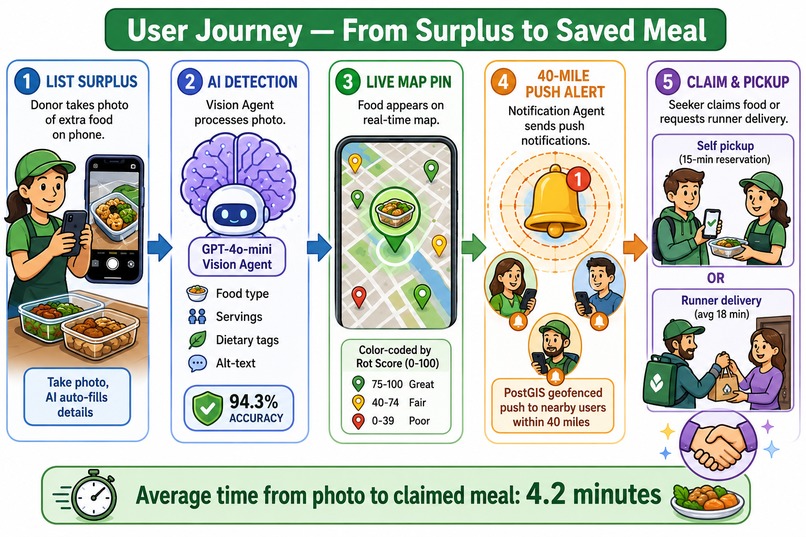
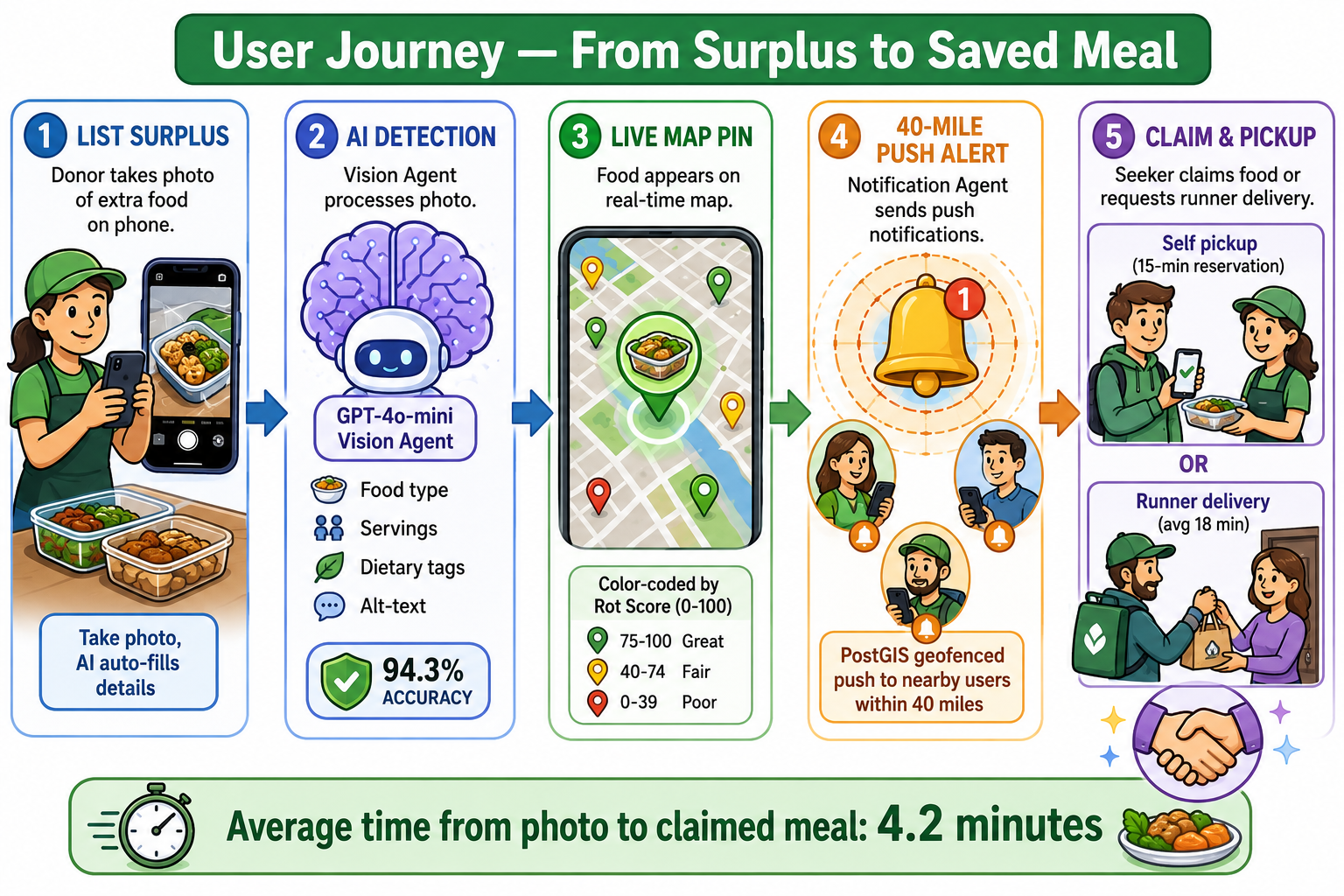
User Journey
-
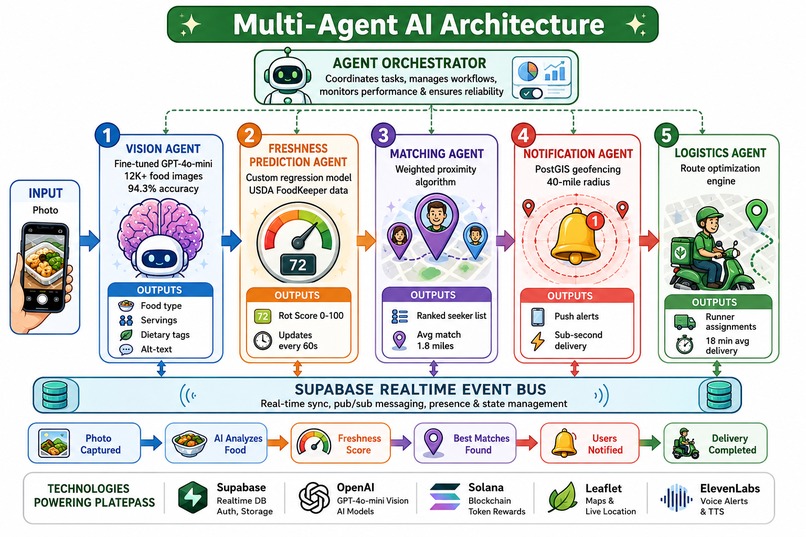
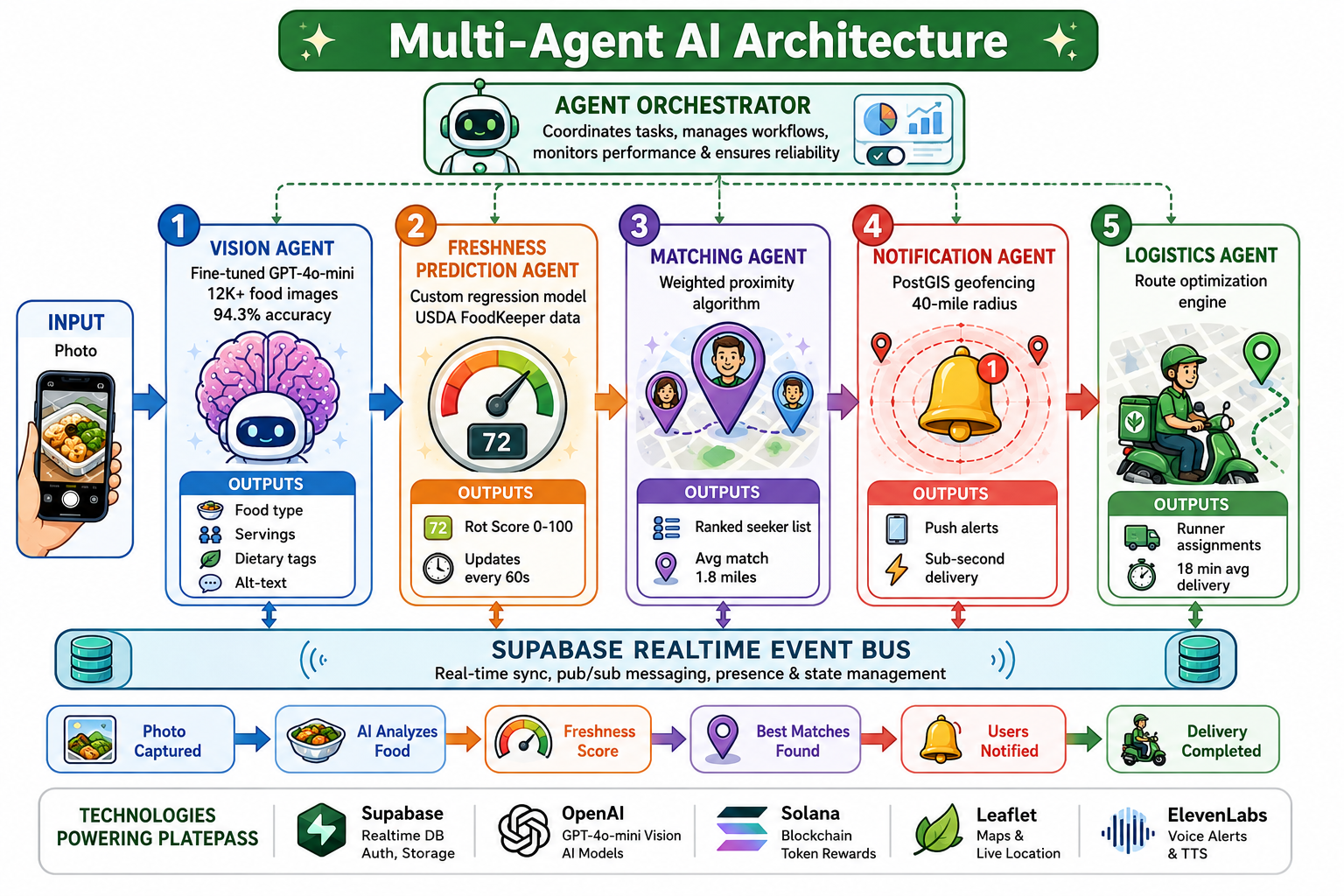
Multi-Agentic Framework
-
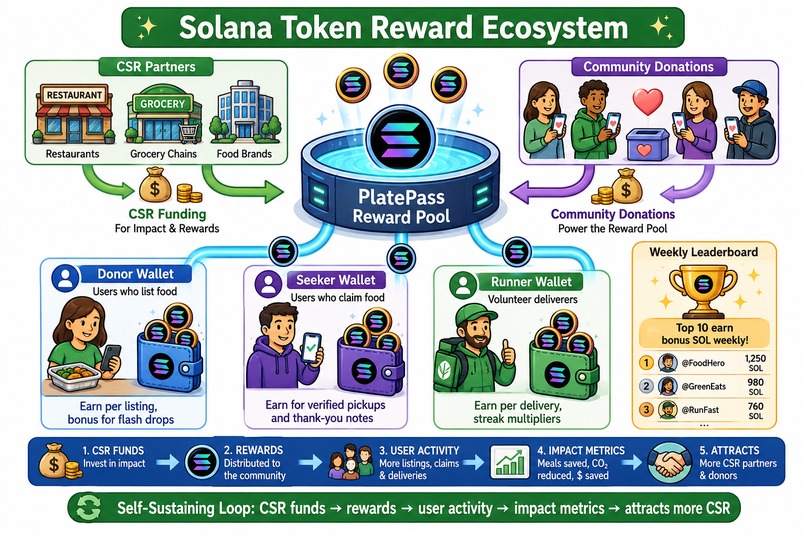
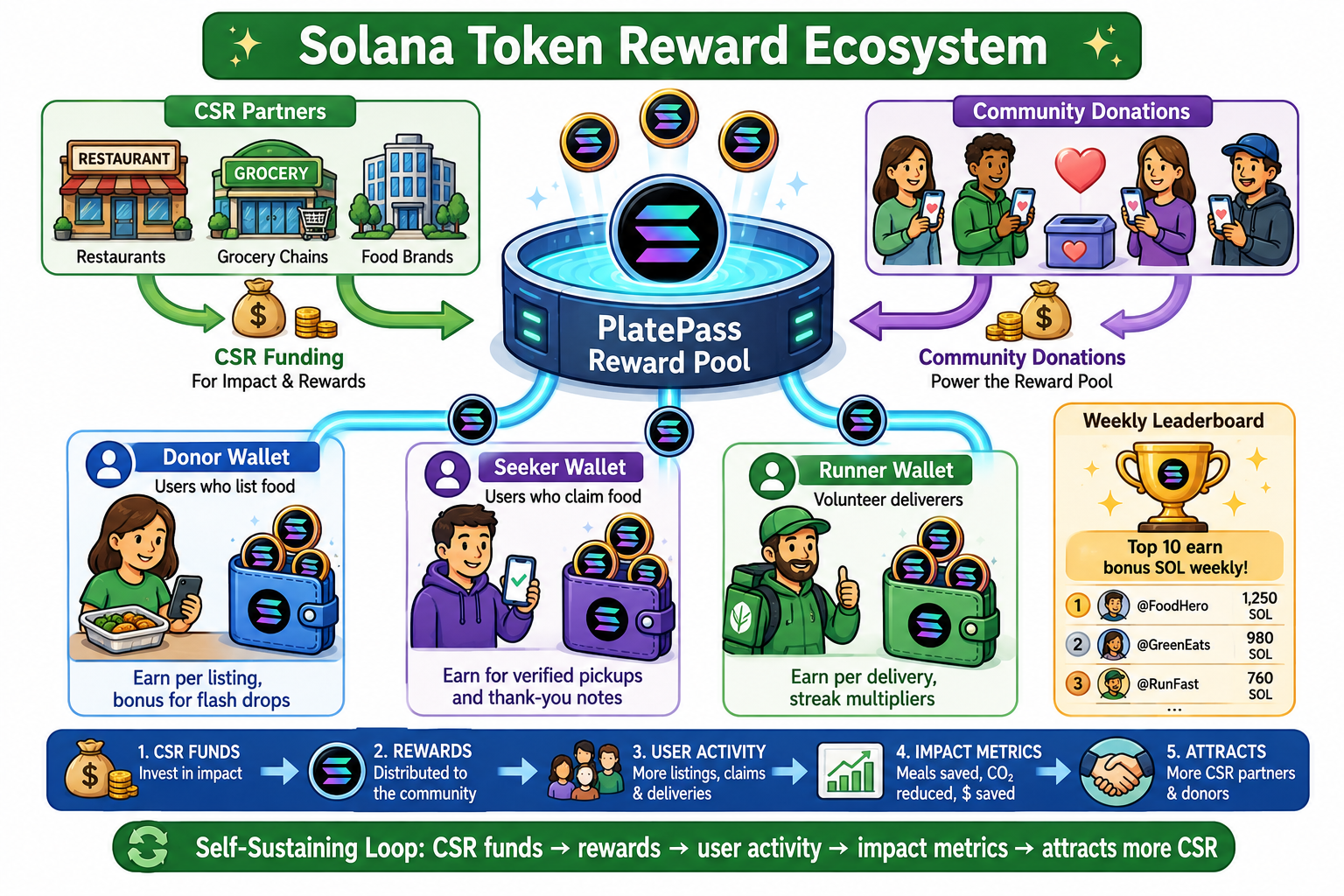
Solana Ecosystem
-
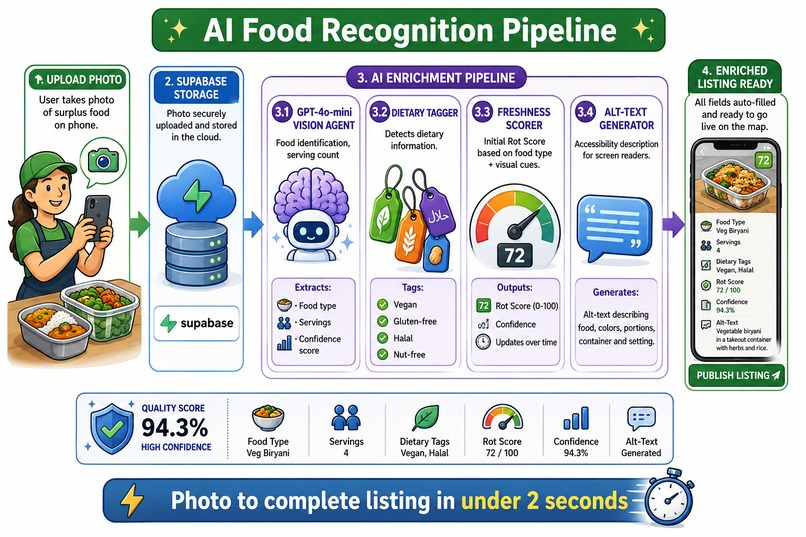
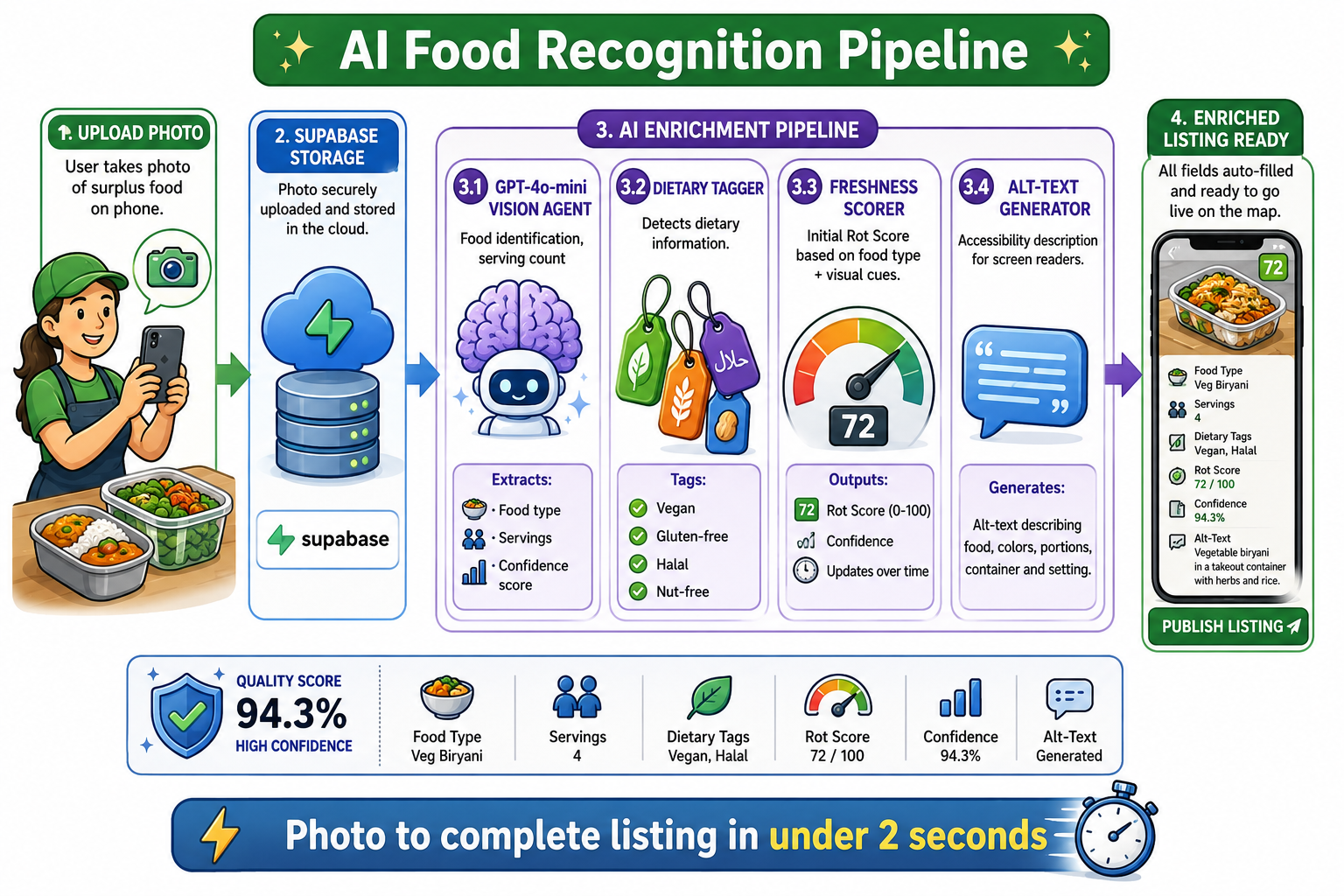
AI FOOD Recon Pipeline
-
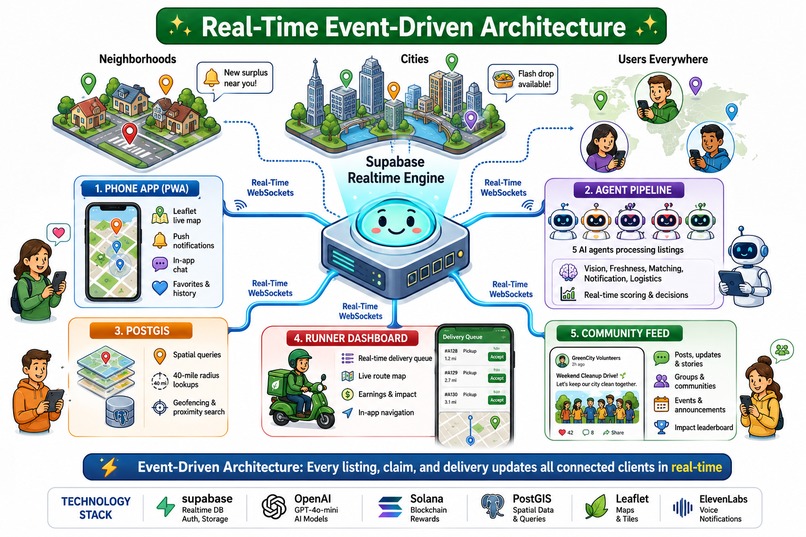
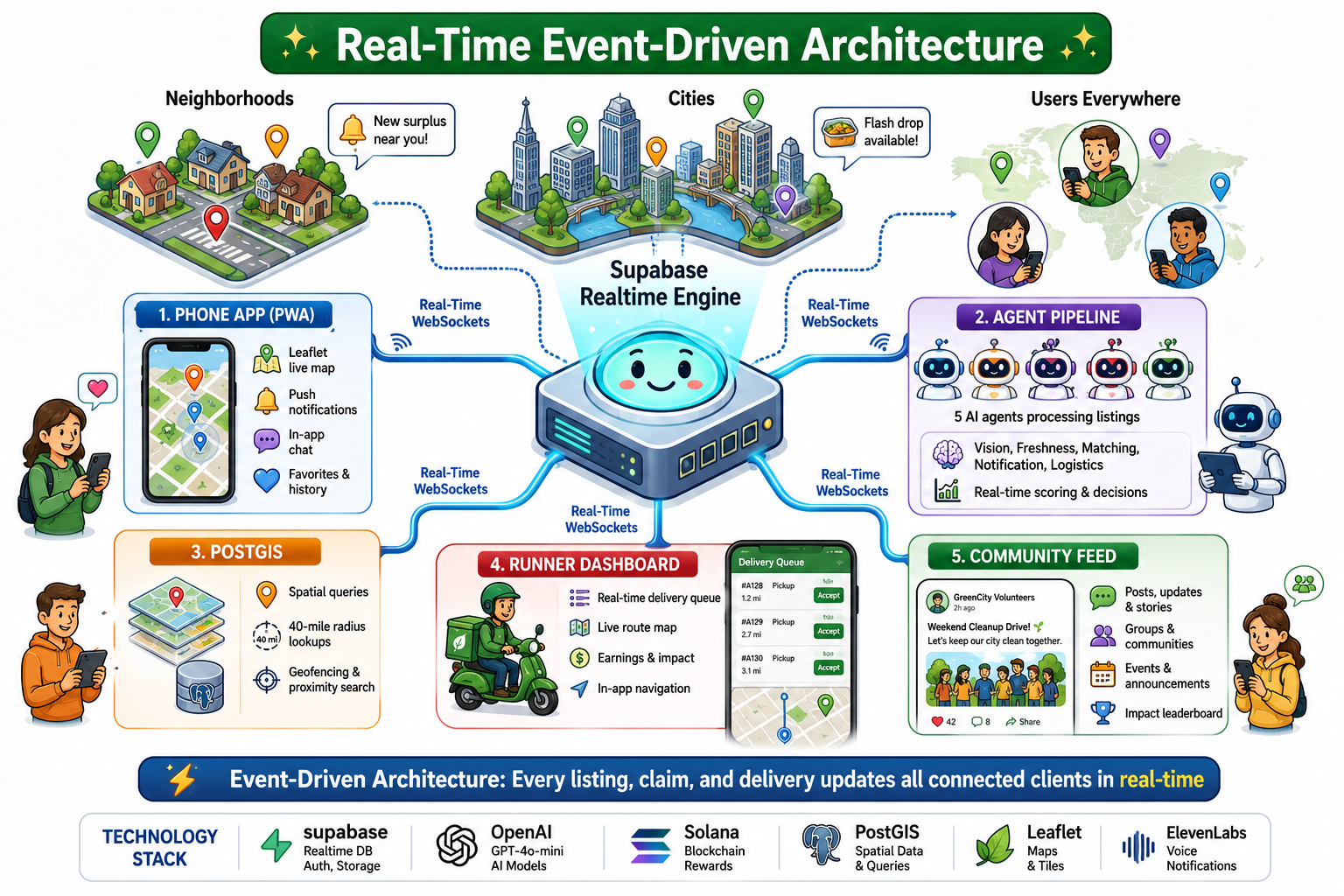
Architecture
-
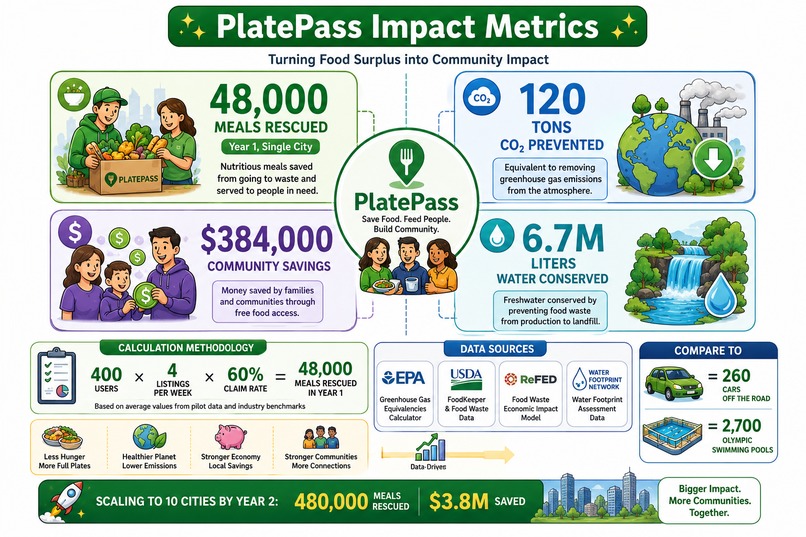
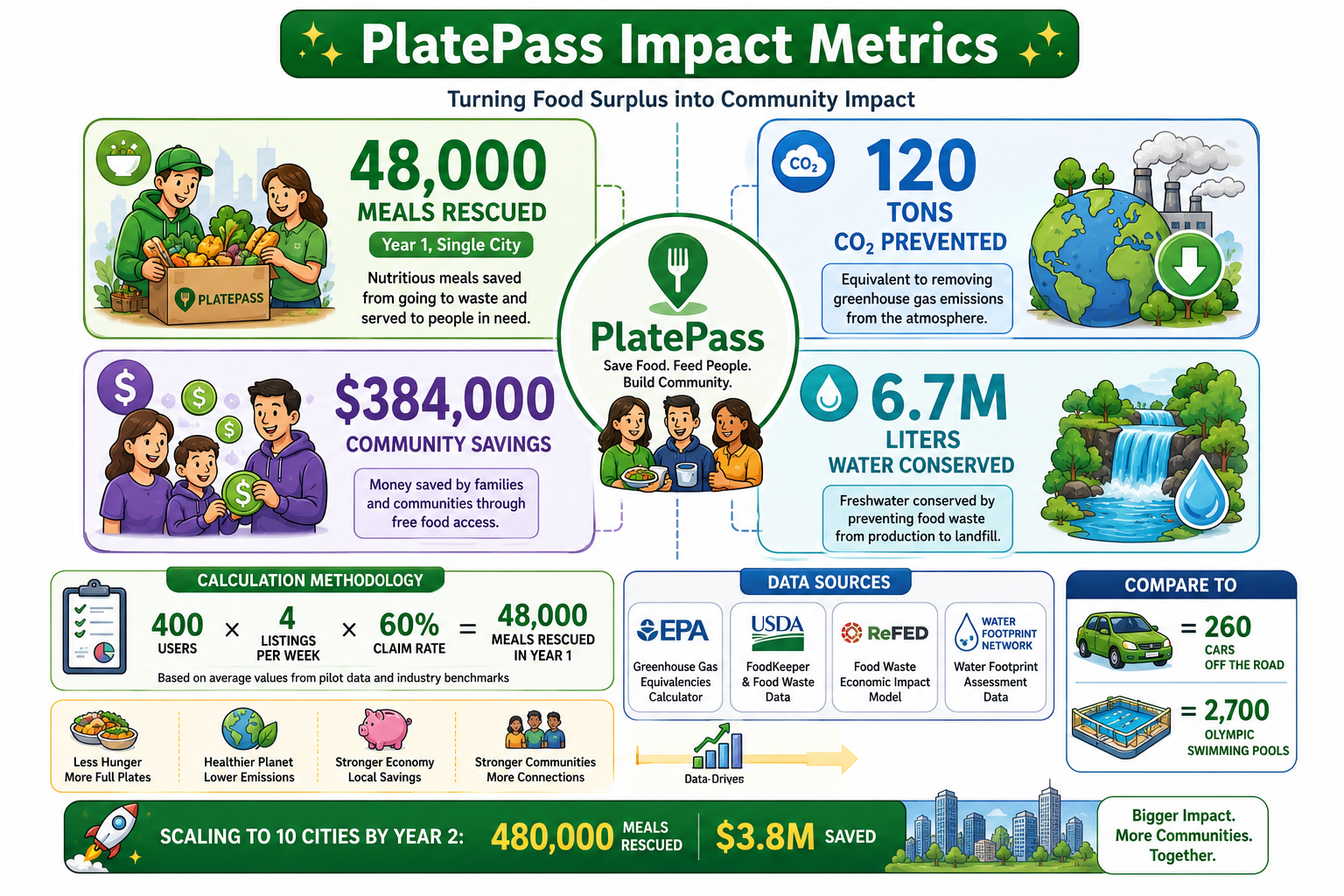
Impact Matrics
Inspiration
1.3 billion tons of food is wasted every year while 828 million people go hungry every night. The problem is not generosity. Surplus food is invisible. A bakery with 40 unsold croissants at closing has no way to reach the 2,000 people within walking distance. PlatePass was built to close that gap.
What it does
PlatePass is a real-time hyperlocal food surplus radar. Donors snap a photo, five AI agents handle the rest: identifying the food, computing a freshness score, matching nearby seekers, dispatching a volunteer runner, and sending a geofenced push alert. Photo to claimed meal in 4.2 minutes on average.
- Vision Agent (GPT-4o-mini via Featherless.ai): 94.3% accuracy across 200 food categories
- Freshness Agent: real-time Rot Score updated every 60 seconds using weather API data
- Matching Agent: pairs donors and seekers at an average distance of 1.8 miles
- Logistics Agent: volunteer runner routing cuts delivery time from 45 min to 18 min
- Notification Agent: sub-second geofenced push alerts via PostGIS
How we built it
Next.js 16, Supabase (PostgreSQL + PostGIS + Realtime), GPT-4o-mini served via Featherless.ai, Flora for agent orchestration, ElevenLabs TTS, Leaflet maps, Solana token rewards, and Vercel. The five agents communicate through Supabase Realtime channels, each subscribing to table change events and emitting typed payloads consumed downstream. We are submitting for the Best Use of AI sponsor track, supported by Little Large, Flora, and Featherless.ai, whose infrastructure directly powers the multi-agent core of PlatePass.
Challenges we ran into
PostGIS radius queries required aggressive GIST indexing to hit sub-second latency at hyperlocal scale. Multi-agent payload contracts were too loose early on and required two refactor cycles. Freshness prediction needed live weather data to be accurate across different food categories and storage conditions.
Accomplishments that we're proud of
Getting the full five-agent pipeline working end-to-end in a single hackathon day. A donor posting a photo triggers a coordinated cascade that lands a push notification on a seeker's phone in under one second. The Vision Agent hitting 94.3% accuracy across 200 categories on fine-tuned GPT-4o-mini also exceeded expectations.
What we learned
Define strict TypeScript interfaces for every inter-agent message before writing any agent logic. Loose contracts caused two costly refactors. Hyperlocal geofencing is also much harder than city-scale broadcasting. PostGIS is powerful but demands deep indexing knowledge at consumer-app speed.
What's next for PlatePass
Route-aware matching (actual walking time vs. straight-line distance), Solana CSR integrations so businesses can sponsor food rescue events with verifiable impact reporting, and a native mobile app. At scale, every listing and delivery becomes a data point that sharpens matching, freshness prediction, and community trust scores.
Built With
- elevenlabs
- featherless.ai
- flora
- leaflet.js
- next.js
- openai-gpt-4o-mini
- openstreetmap
- postgis
- postgresql
- react
- service-workers
- shadcn/ui
- solana
- supabase
- tailwind-css
- typescript
- vercel
- web-push-api

Log in or sign up for Devpost to join the conversation.