-
-
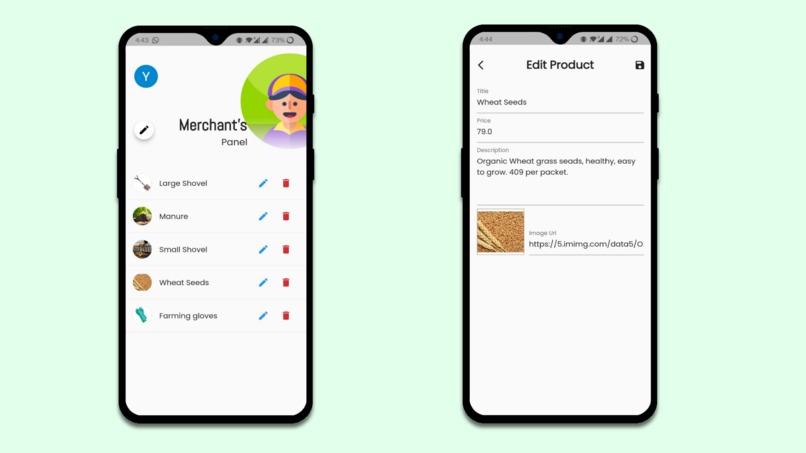
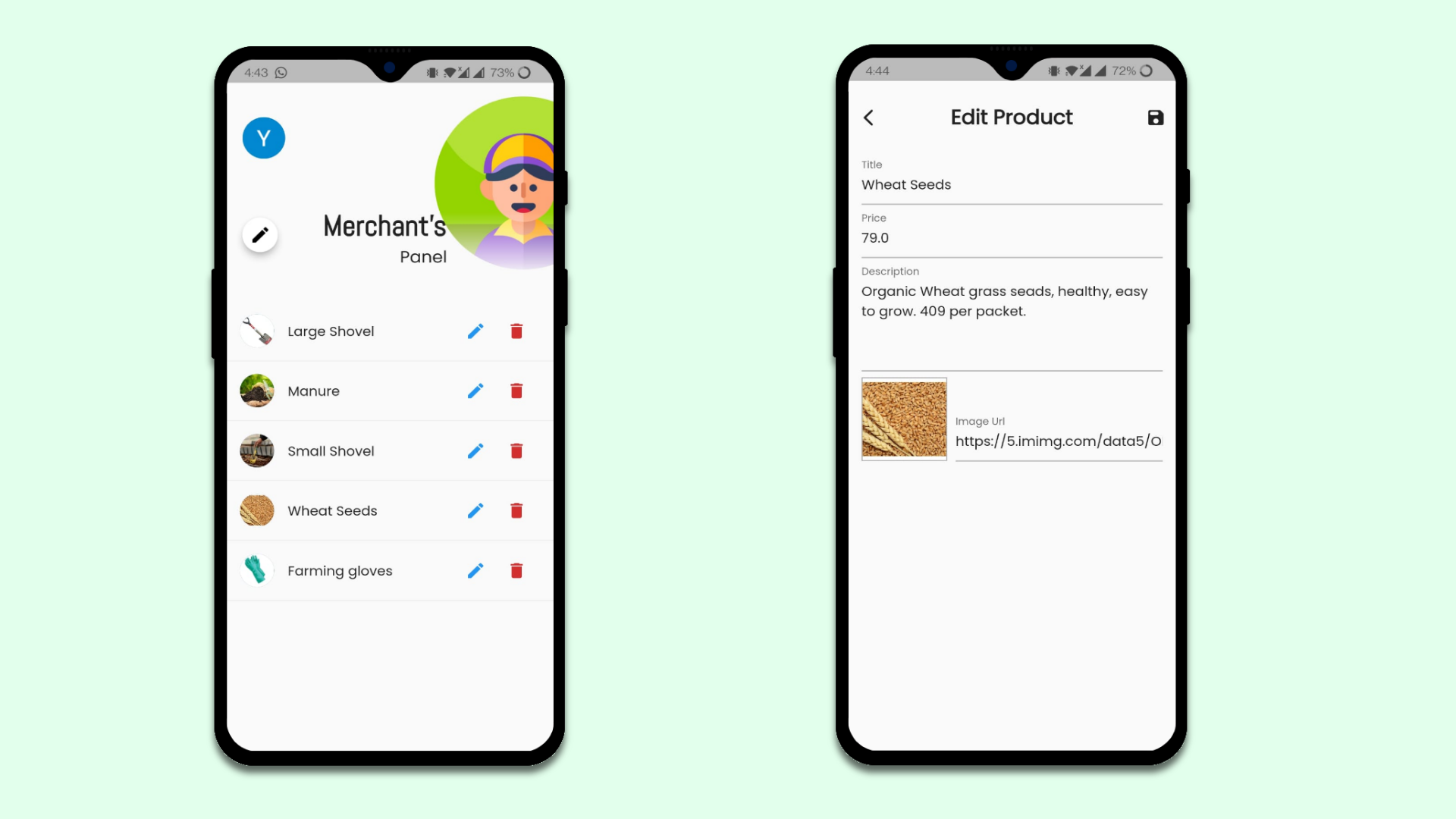
Merchant's Panel
-
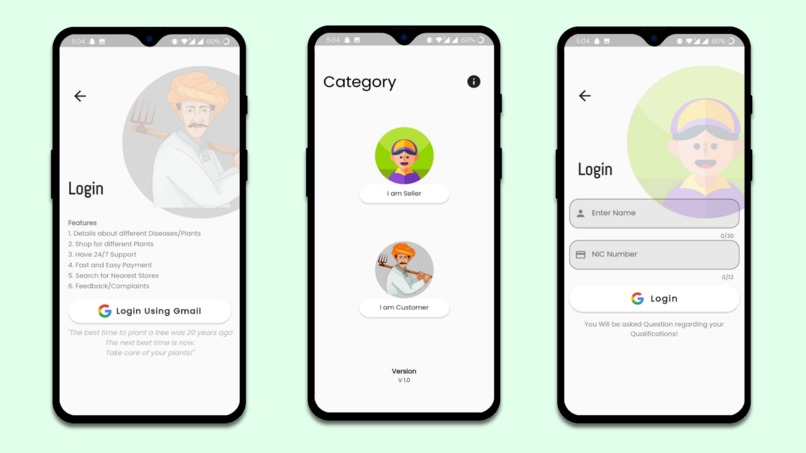
Category Slides
-
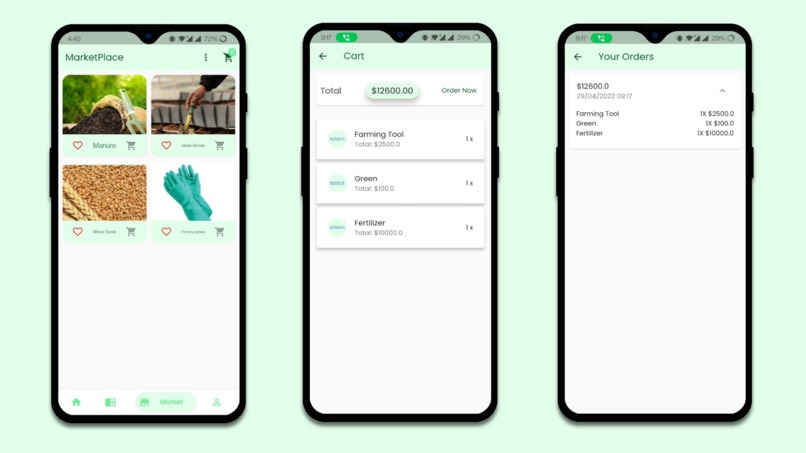
Customer Marketplace
-
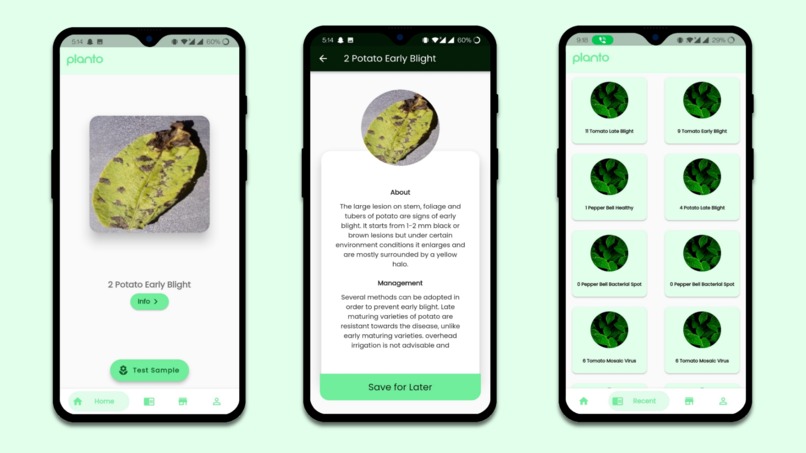
Plant Disease Classification
💡 Inspiration and social impact
Earlier, the agrarian specialists, or as we call them farmers, just had the information passed down to them from their ancestors that assisted them with managing the entire plant-related illnesses. However restricted, farmers or agrarian specialists had the option to move gradually up through the different seasons and unforgiving and conflicting weather patterns. All plant species, be it crops or the normally developing fauna, are presented to or are inclined to infections. These infections can prompt dry season, starvation, or a general abatement resulting from yields that can both, straightforwardly and in a roundabout way, influence individuals depending on them for their endurance. In this study, we were able to incorporate the use of technologies like deep learning to create a tool that can help aid in the detection of plant diseases as well as the remedy phase.
This project has been developed for the agricultural sector. Everywhere, agricultural practitioners, or as some call them farmers are at major stakes and about 45% of the population of the world is involved in the said sector. Having such an enormous impact on the world, more consideration ought to be paid to this present area's turn of events and development.
📱 What it does
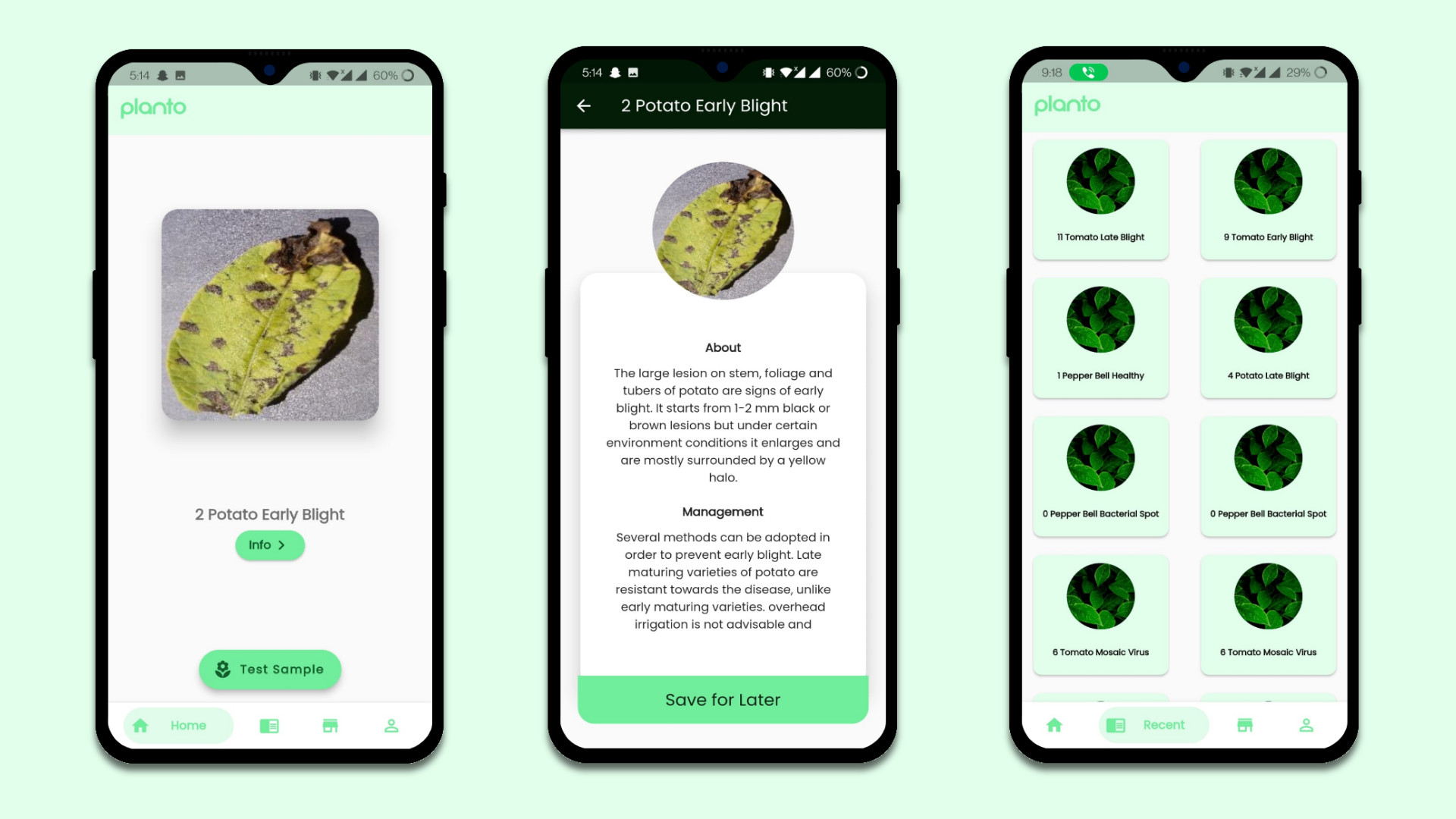
1. Plant Disease Prediction & Management: Our app is user-friendly and has been built keeping in mind the difficulties that the farmers face and provides them the solution as well. Planto focuses on the condition (diseases they may carry) of leaves. It scans the leaves and informs the farmer about any discrepancy that may arise in a long run and help them save their plantation from getting destroyed. Our app also guides users and shows the remedies or methods that should be adopted to deal with the situation at hand. It also states the symptoms that help farmers understand more about the problem and what can be done to protect their plants. It gives them a heads up about it and highlights the precautionary steps that the farmer can consider to prevent the disease altogether. A user can also keep track of their prediction history using the plant disease prediction history screen.
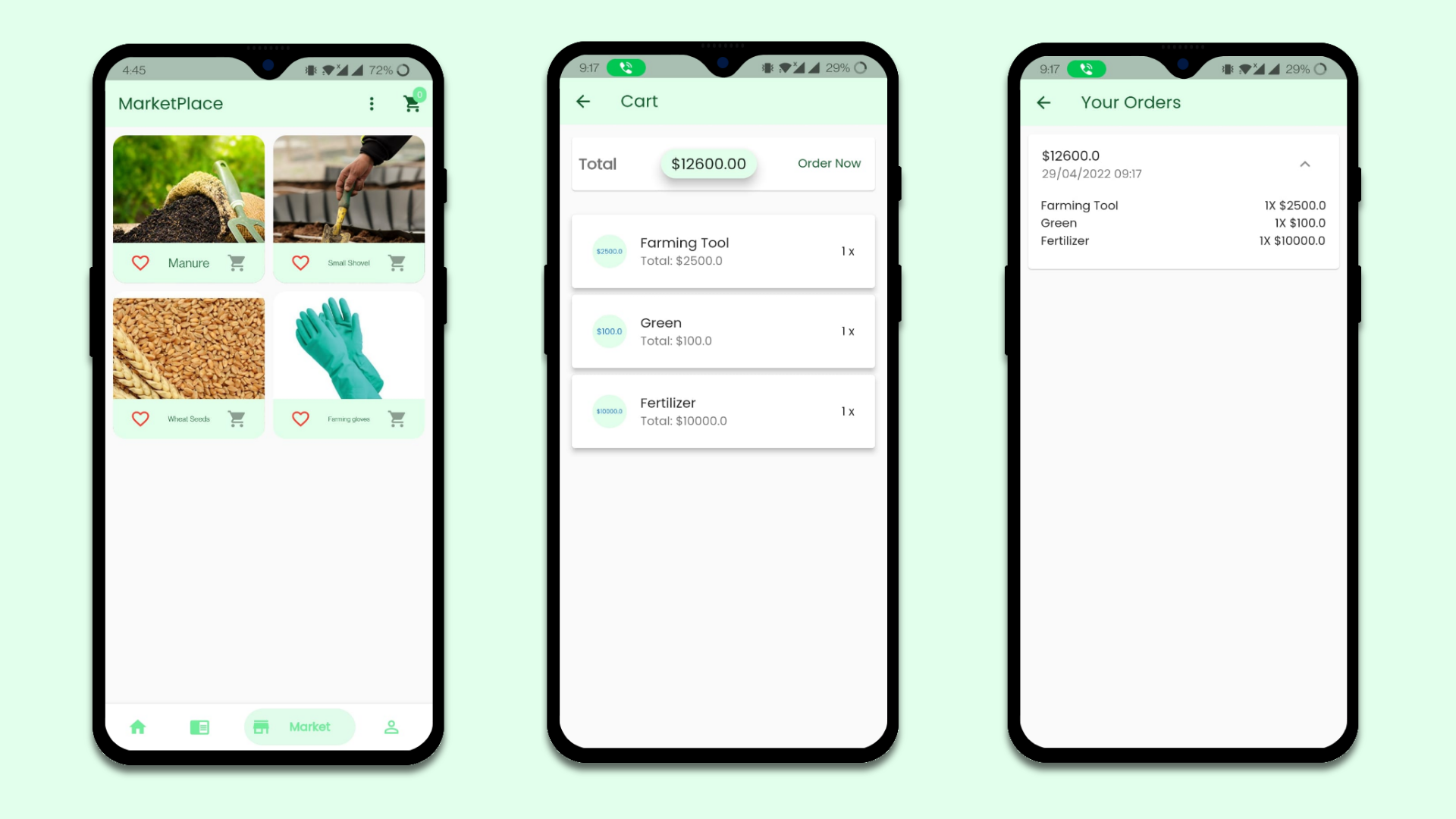
2. Customer Marketplace: Once the customer gets informed about the said disease he/she can purchase the said fertilizer or other equipment needed for the proper treatment of the plant disease. A user has access to all the goods that a seller has listed on his or her online store. You can see each product's description and add them to your cart and then place an order. There is also an order history screen where all the orders, that have been placed are shown.
3. Merchant's Panel: In the seller category, any person (manufacturer or merchant) who wishes to sell their agricultural material can add any equipment/fertilizers which they want to sell. All the data is displayed on the marketplace screen which is only visible to the customers who want to buy them. The seller can also edit or delete their marketplace according to their needs.
👷 How we built it
1. Deep Learning Model: We collected the data used in this study from several open sources. For plant disease prediction and classification, a convolution neural network (sequential model) was built using TensorFlow and Keras libraries of python. Next, we calculated our model accuracy and were able to achieve an accuracy of 98.75%. Then, we exported our deep learning model as a .tflite file from the Jupyter notebook and embedded it into the android application.
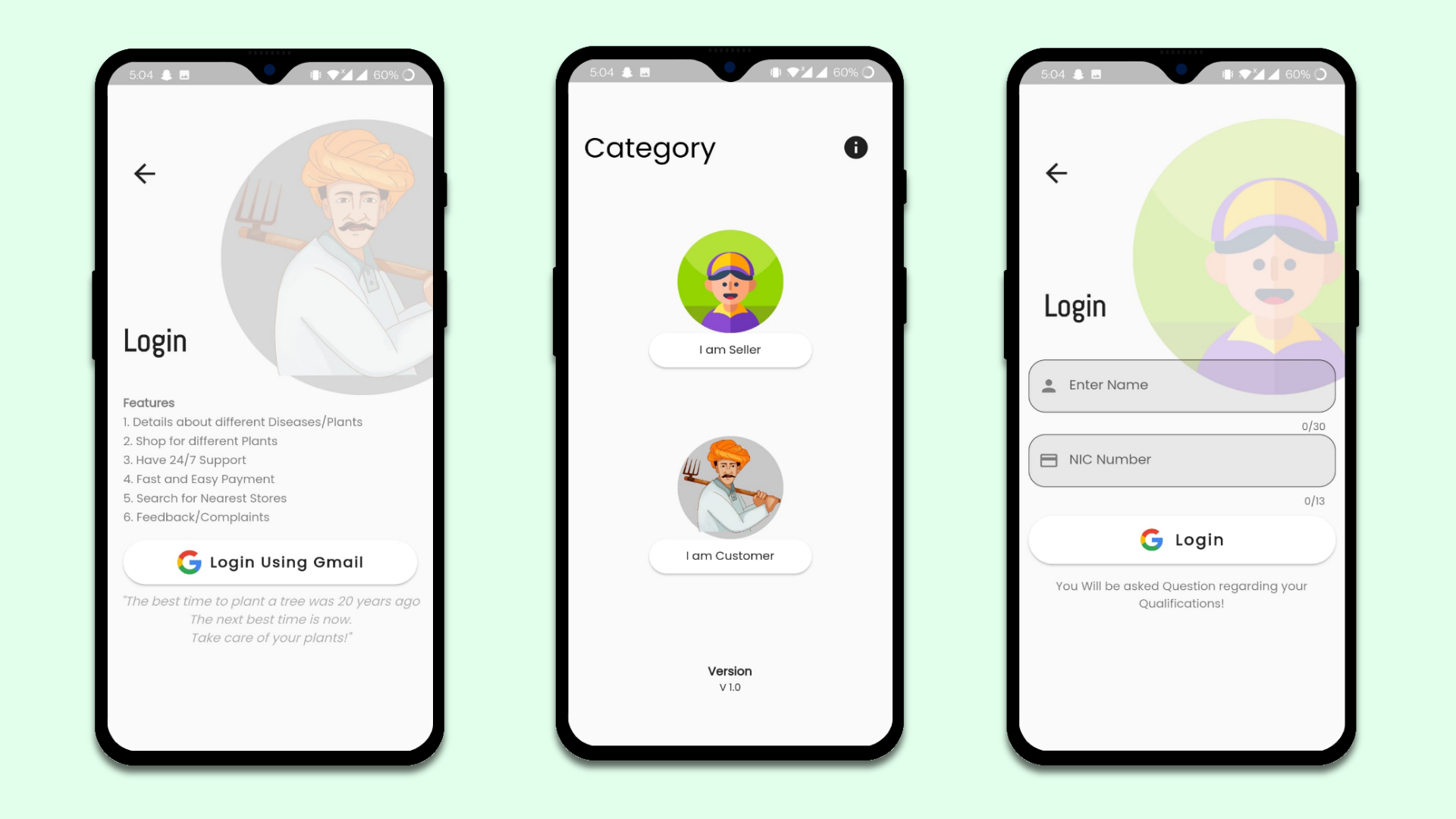
2. Android Application: Firstly, we used the firebase firestore database to store the plant disease data of all the classes. It was further used in the recent screen part of the application. The whole flutter application has been built using Android Studio and Visual Studio Code. Our introductory screen consists of two categories which are for sellers and customers. Each of them has its functionalities and different but somewhat similar implementations. In the seller category, any person (manufacturer or merchant) who wishes to sell their agricultural material can add any equipment/fertilizers which they want to sell. All the data is stored in the firebase firestore storage and then displayed on the marketplace screen which is only visible to the customers who want to buy them. The seller can also edit or delete their marketplace according to their needs. The customer category consists of many functionalities like plant disease detection, a marketplace for fertilizers/agricultural equipment, and disease remedies. Once the customer uploads the image of any plant’s leaves, our plant disease detection software which is built using our deep learning model using python, will give out the results after analysis, including information about the disease in the leaf of that plant and what all can be done to treat it / manage it.
🧠 Challenges we ran into
Our biggest challenge was to create the deep learning model and embed it into our android application. During the commencement of the project, we had limited knowledge about developing a deep learning model and embedding them in a mobile application. We had previously worked on machine learning models, so, within three hours, we researched and grasped the technical skills and concepts needed to implement the same.
🏅 Accomplishments that we're proud of
We had made several classification & regression models, but had no idea about neural networks. Implementing a neural network was the tricky part. I had to read the documentation and watch tutorial videos to make the model more optimized.
We collected and organized disease management data in firebase via various sources and simultaneously built an aesthetic UI/UX in just 2 hours.
📑 What we learned
Deep Learning (Convolution Neural Network)
Embedding deep learning model as
.tflitefile in a flutter application.Using firebase for authentication purposes and fetching data from it.
🔜 What's next for Planto
Implementing a multilingual chatbot for farmers to interact and discuss their problems.
Developing awareness articles that cover agricultural topics like discussing the condition of the soil, before the plantation takes place and how to maximize the field output etc.
Provide a calendar inside our application that would provide farmers and other agricultural practitioners with a timeline and best practices for farming.
To make the research results more prominent, we plan to extend our project by adding more data to our deep learning model. Also, other factors play a vital role in the yield of crops, like weather data, quality of soil, and many more. We plan to focus on them as well.

Log in or sign up for Devpost to join the conversation.