
Inspiration
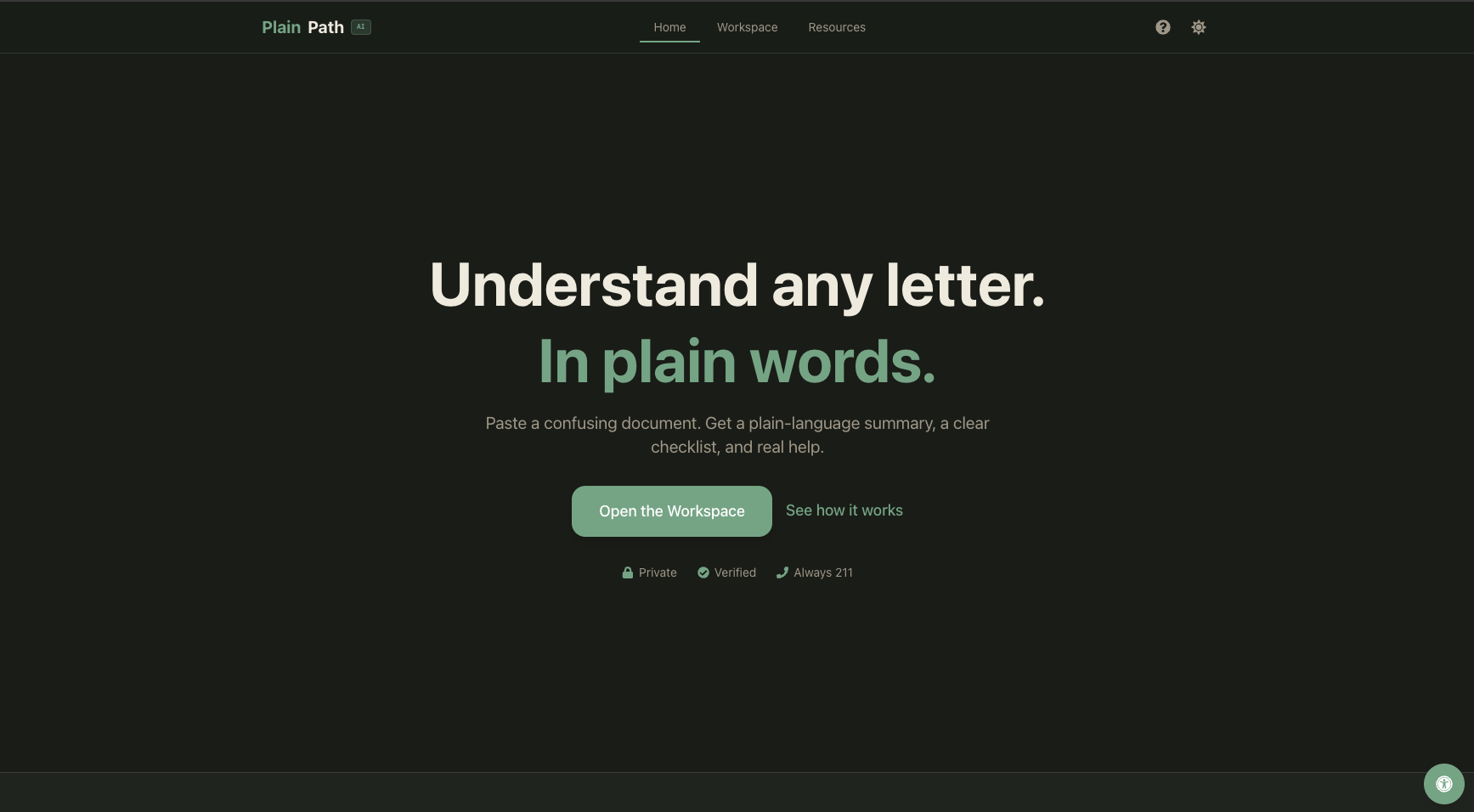
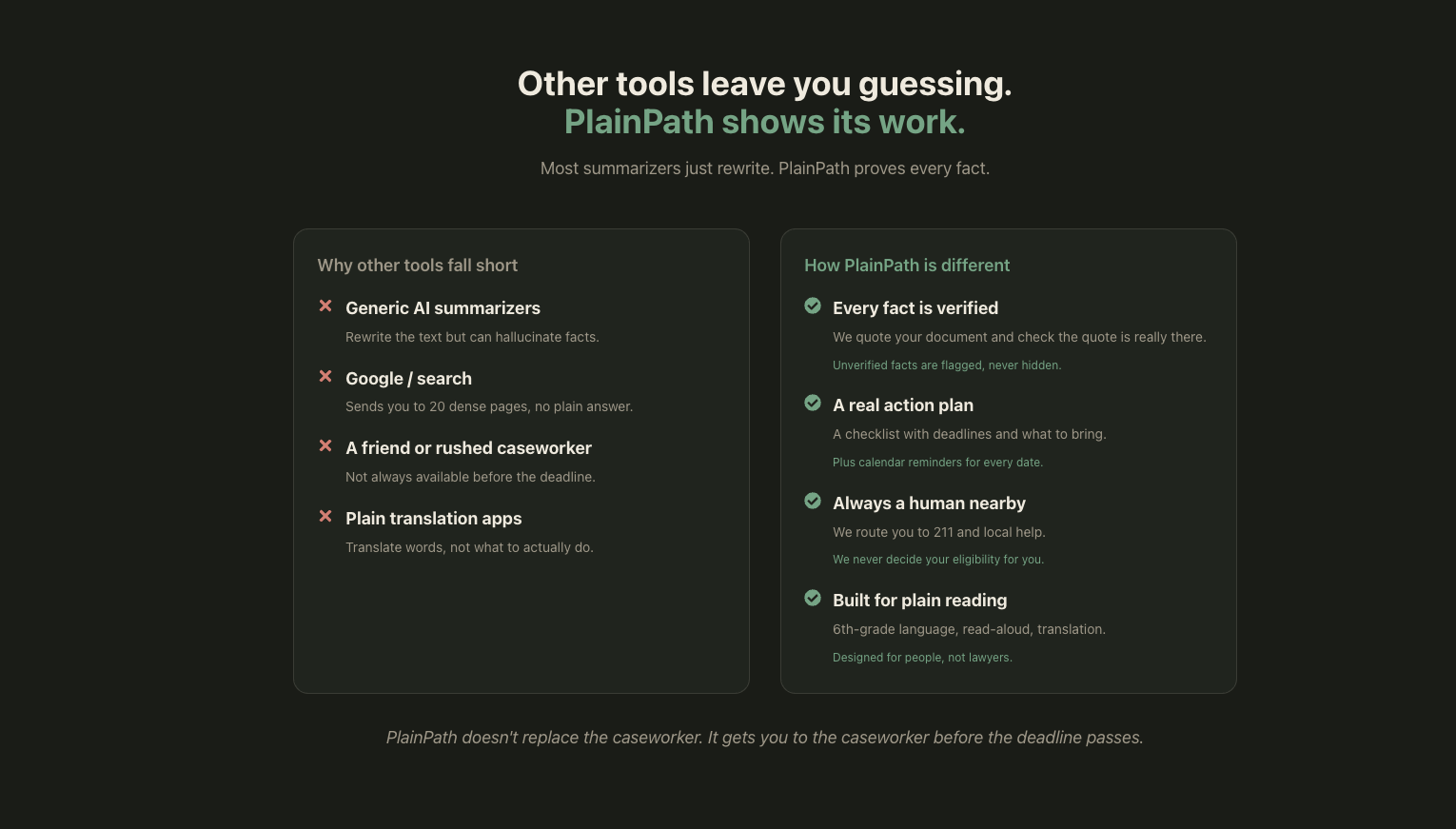
We were inspired by the fact that our product could not only help people but also help ourselves directly. For example, help comes in the form of food, housing, and benefit programs, and they are in every community, but people miss out because the letters are confusing, as the notices that tell people about them are dense, full of jargon, and often hide the deadline on the third page. We built PlainPath for anyone who has stared at a government letter and had no idea what to do next. It can also be used for competitions. For TSA (Technology Student Association), the rule sheets are very complex and submission requirements are sometimes unclear, and PlainPath would allow competitors to make sure they meet all the requirements and we do not get disqualified.
What it does
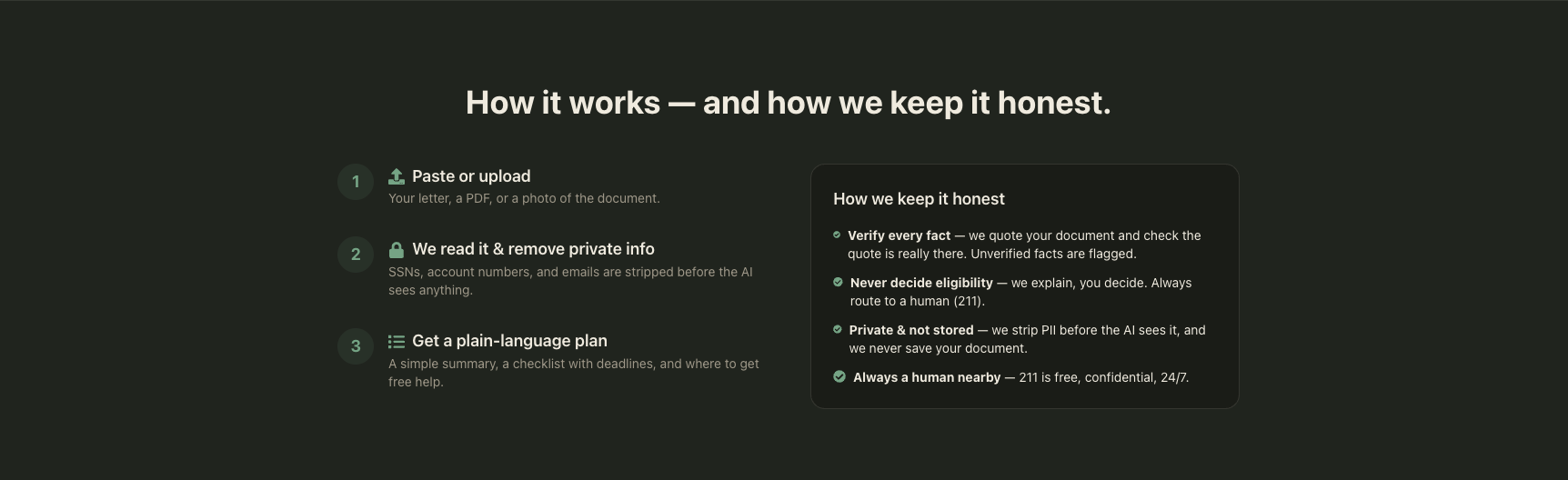
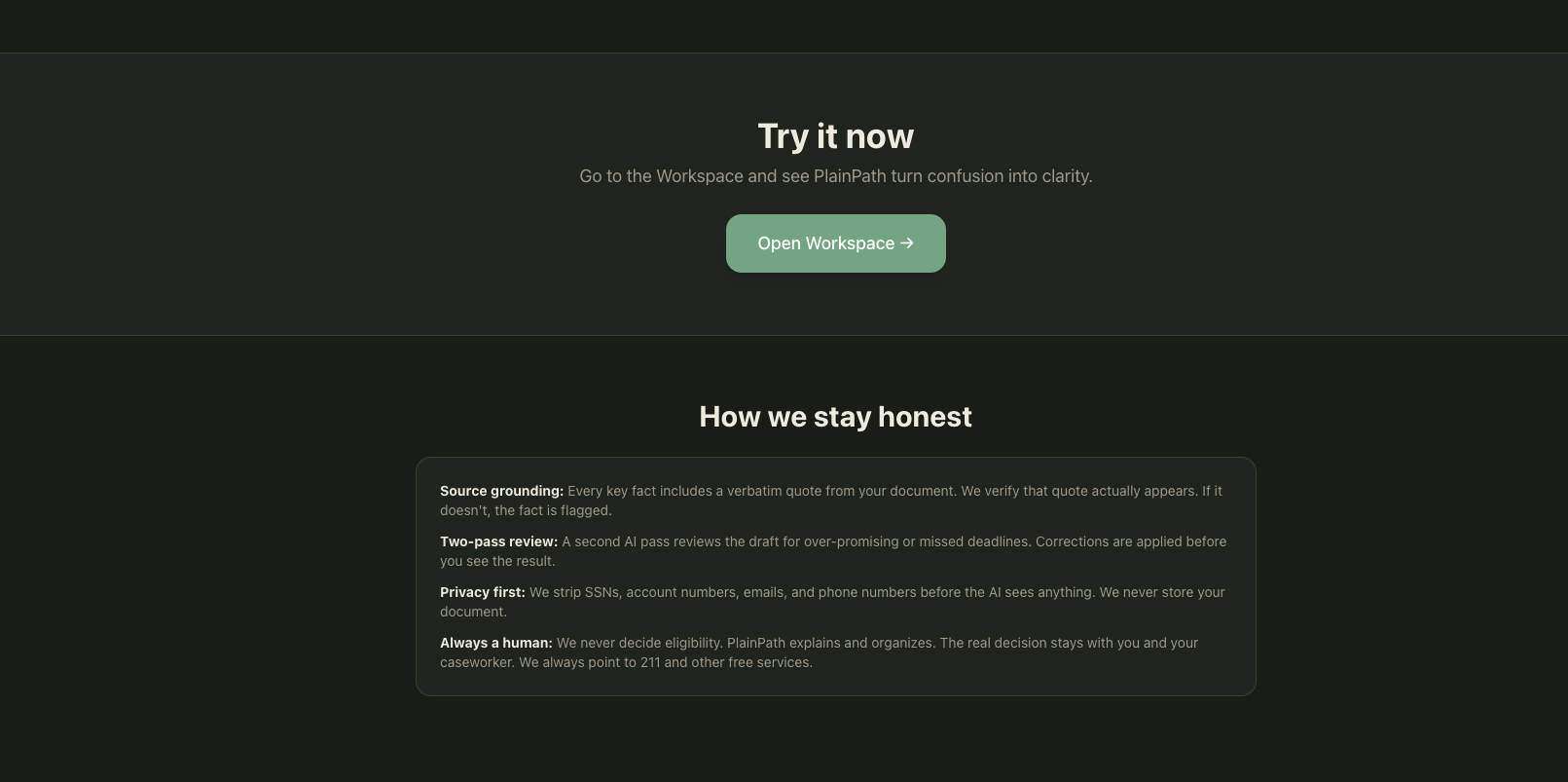
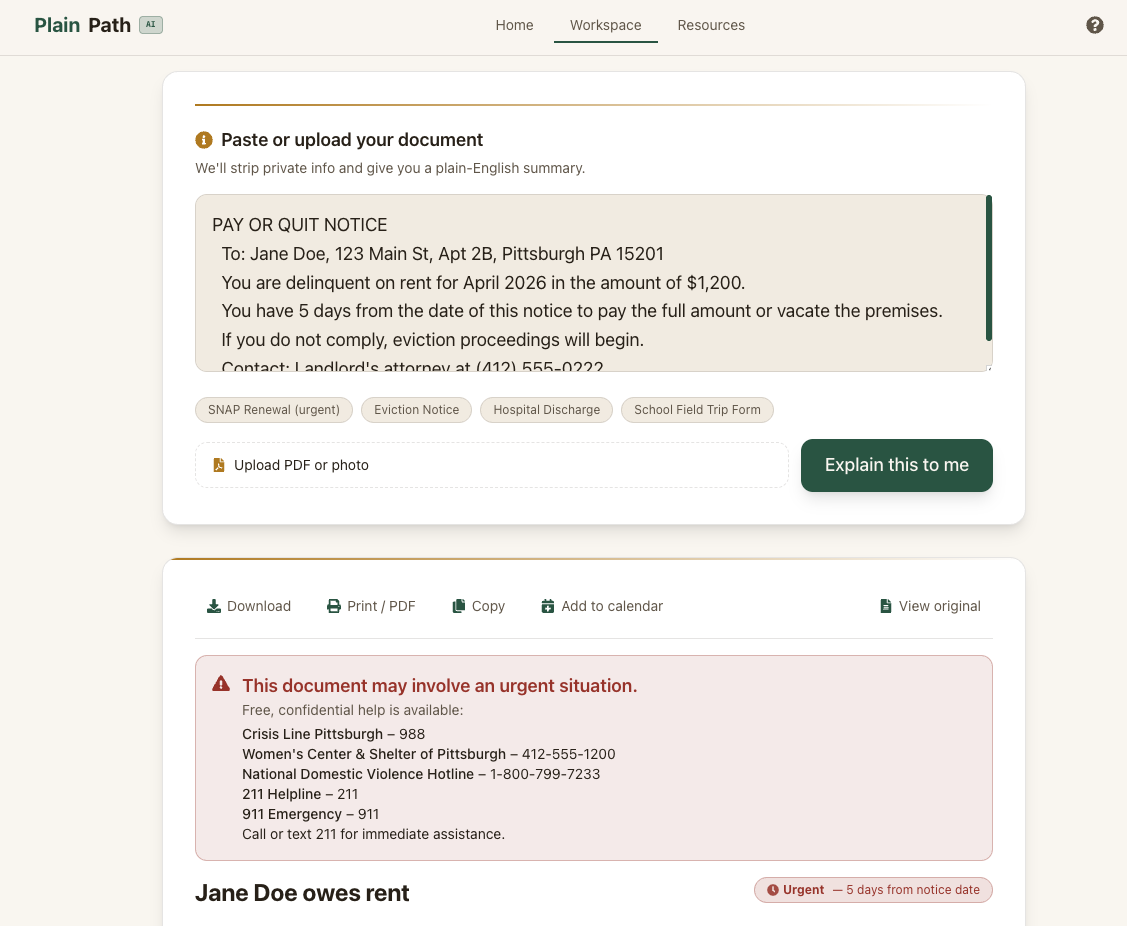
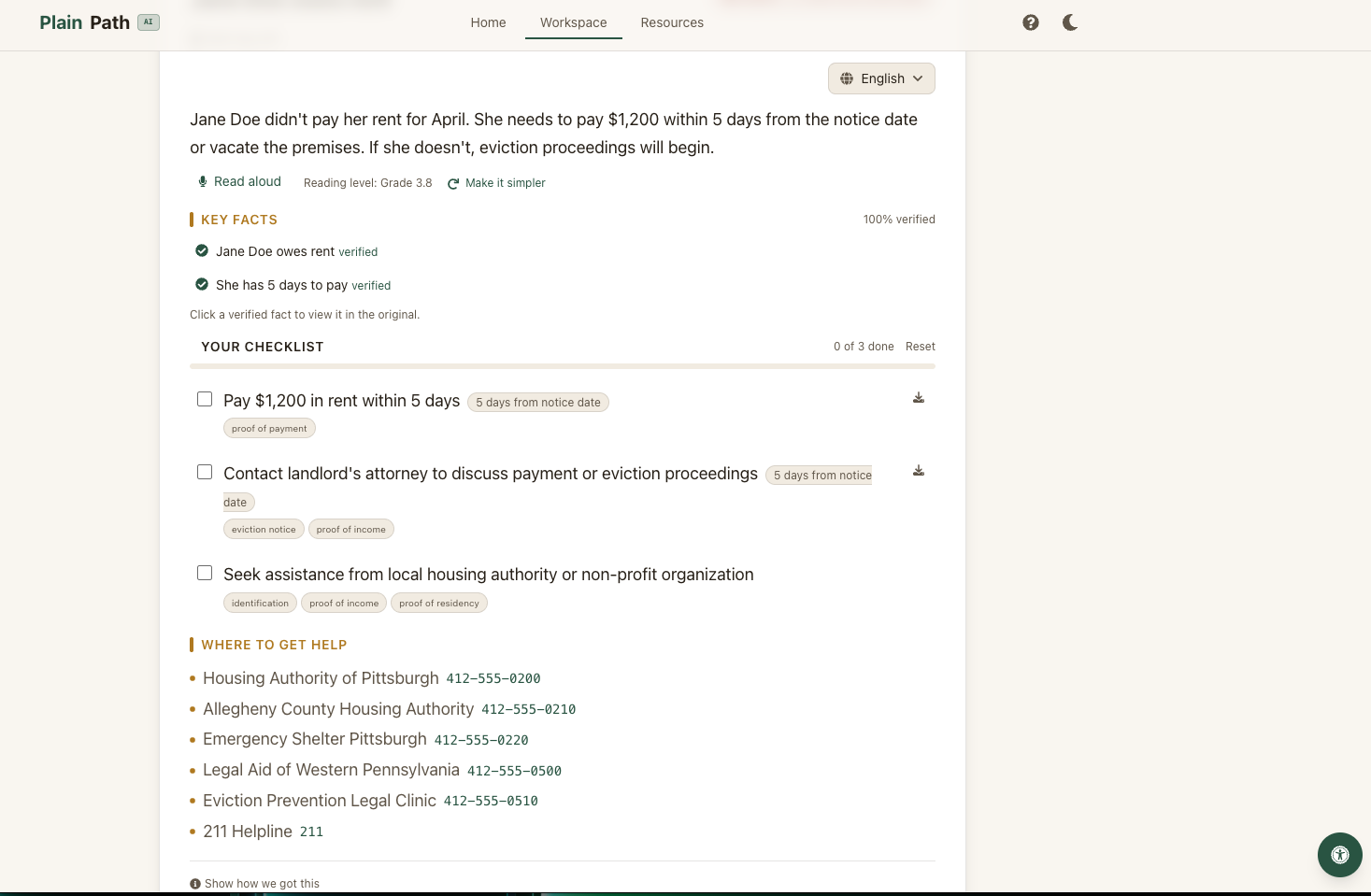
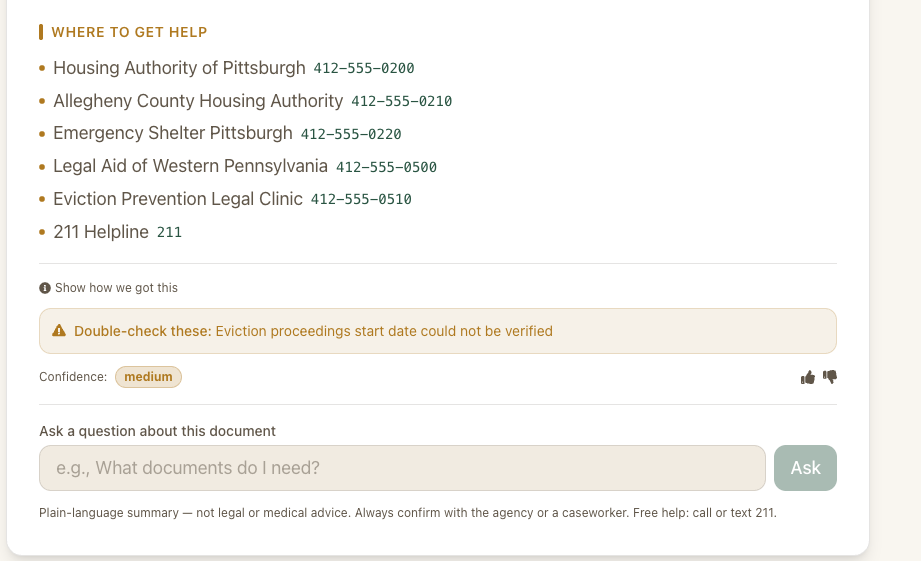
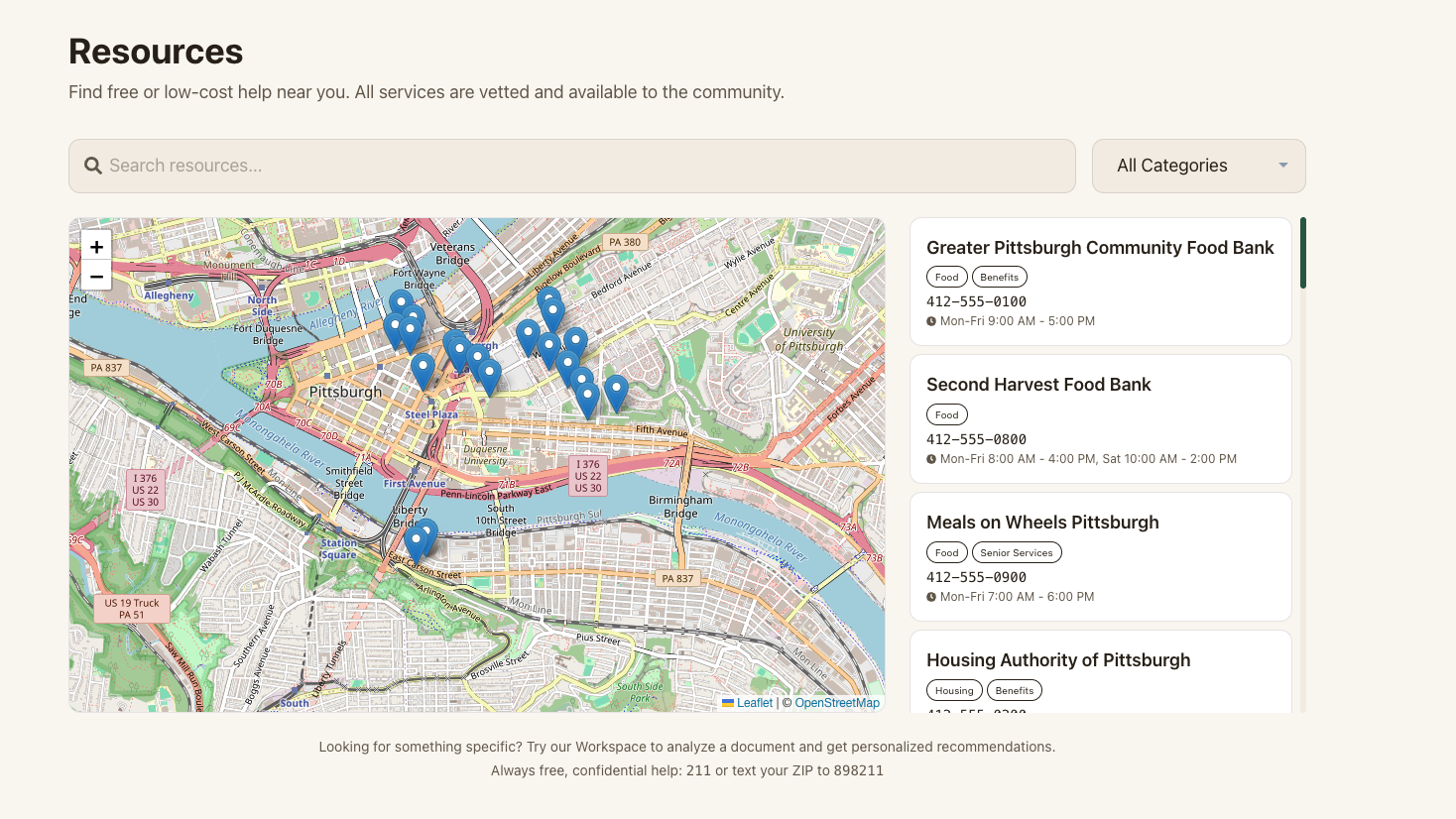
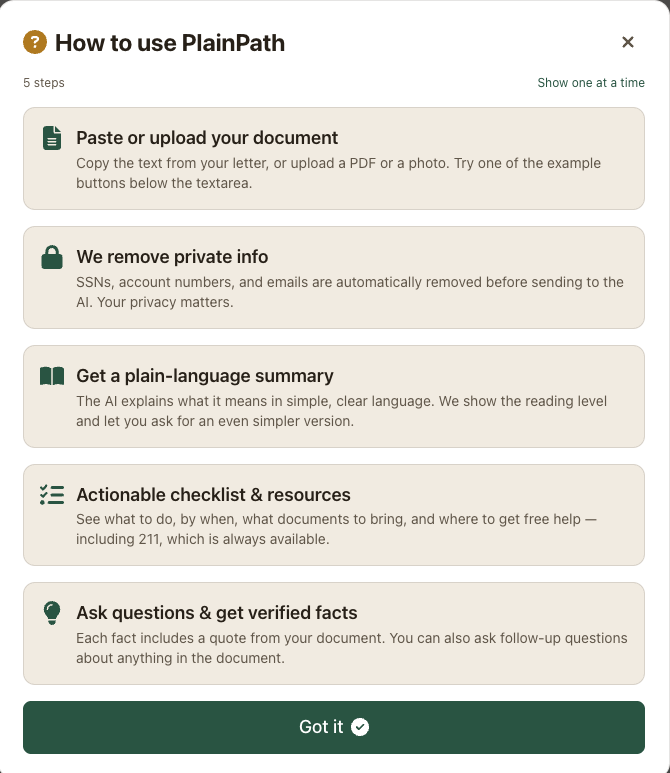
PlainPath turns confusing official documents into plain language, a personalized checklist, and clear next steps. Users can paste text, upload a PDF, or take a photo of a letter. The system would then strip private information, analyzes the document, and returns a plain language summary at a 6th-grade reading level, verified key facts that the user should know, and it shows the user quotes from the source document showing where the key facts came from, an interactive checklist with deadlines and documents the user is required to bring/submit, a visual timeline of all dates, and lastly, a map showcasing local resources (primarily Pittsburgh area as I am from there) and 24/7 help via 211.
How we built it
We built our project with a React + Vite frontend and a Flask backend, and we also utilized Groq's Llama 3.3 70B model. The system uses a six-stage pipeline that is described in further depth in the AI architecture section further on.
Challenges we ran into
The biggest challenge was making the source highlighting work reliably, because PDFs and pasted text differ in whitespace, line breaks, and smart quotes. We built a normalization system that handles these variations and maps back to the original text, so clicking a fact always highlights the correct quote. Another challenge was keeping everything free and accessible, as we used only free APIs and open-source libraries, and we designed for stressed users who were not comfortable with technology, and this directly affected our UI, as we used large text, generous spacing, and a warm, calm color palette.
What's next for PlainPath
We plan to connect to real open referral HSDS data feeds, implement a RAG system over benefits knowledge, and add accounts with saved history and deadline reminders.
Built With
- flask
- flask-cors
- framer-motion
- groq
- openstreetmap
- pdfplumber
- pydantic
- rank-bm25
- rapidocr
- react
- react-icons
- react-leaflet
- react-router
- reportlab
- sqlite
- tailwind
- textstat
- vite
- webspeechapi
- zustand

Log in or sign up for Devpost to join the conversation.