-
-
Loading page for landing page
-
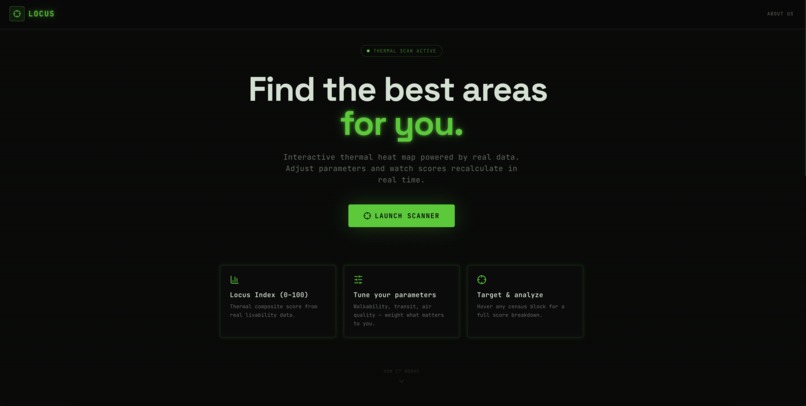
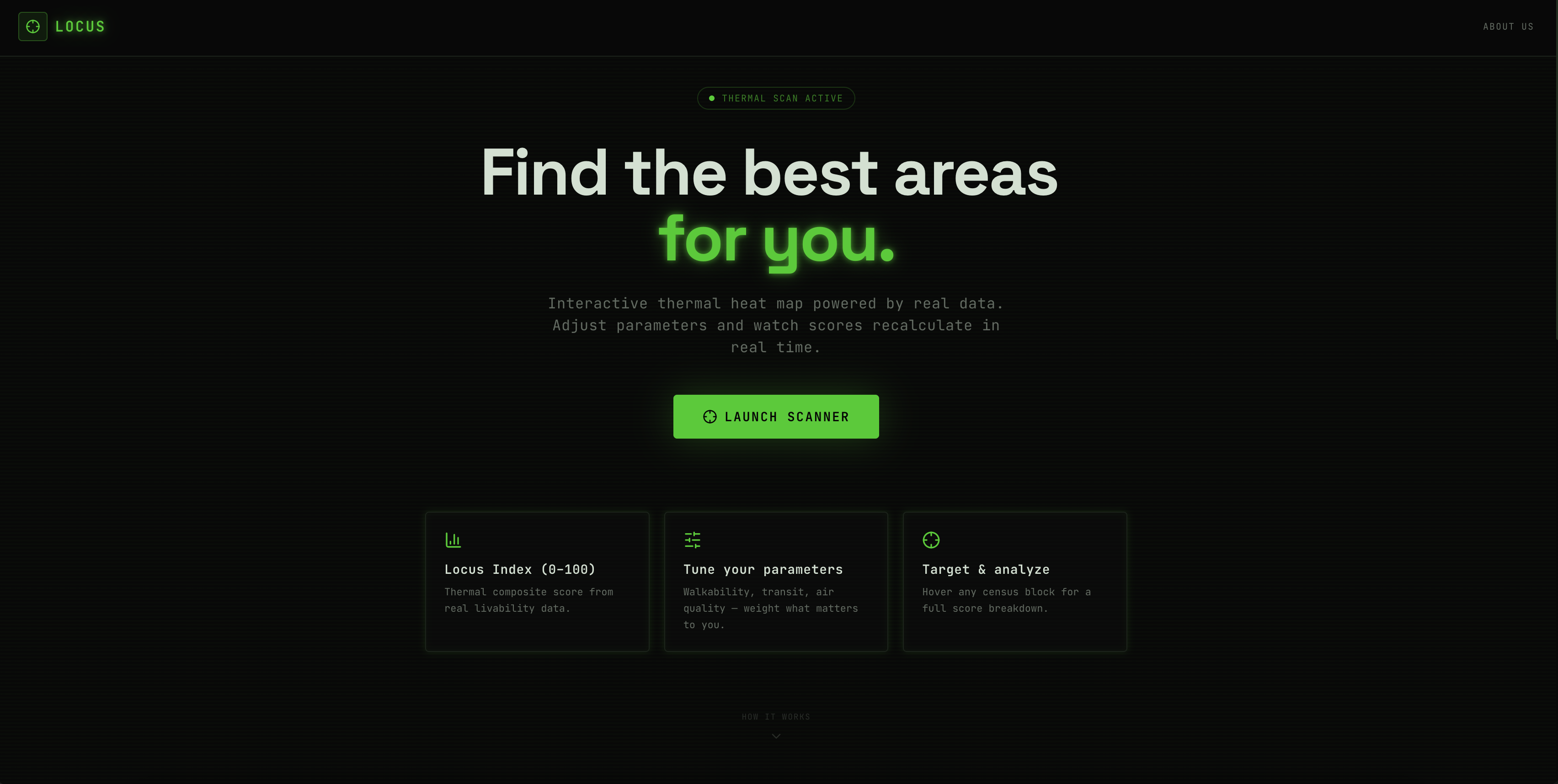
Landing page presented to user
-
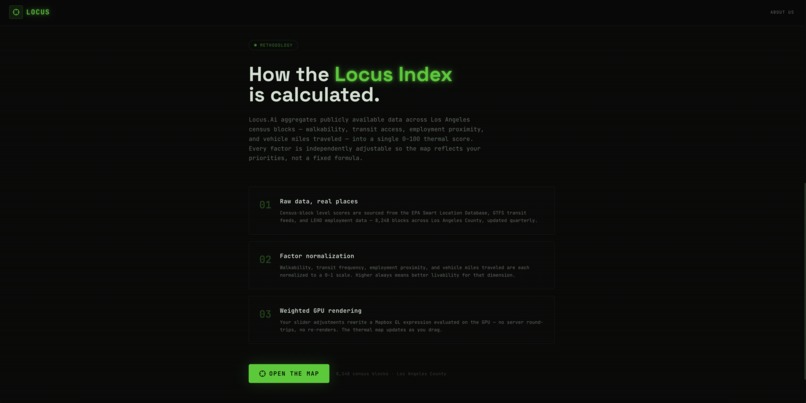
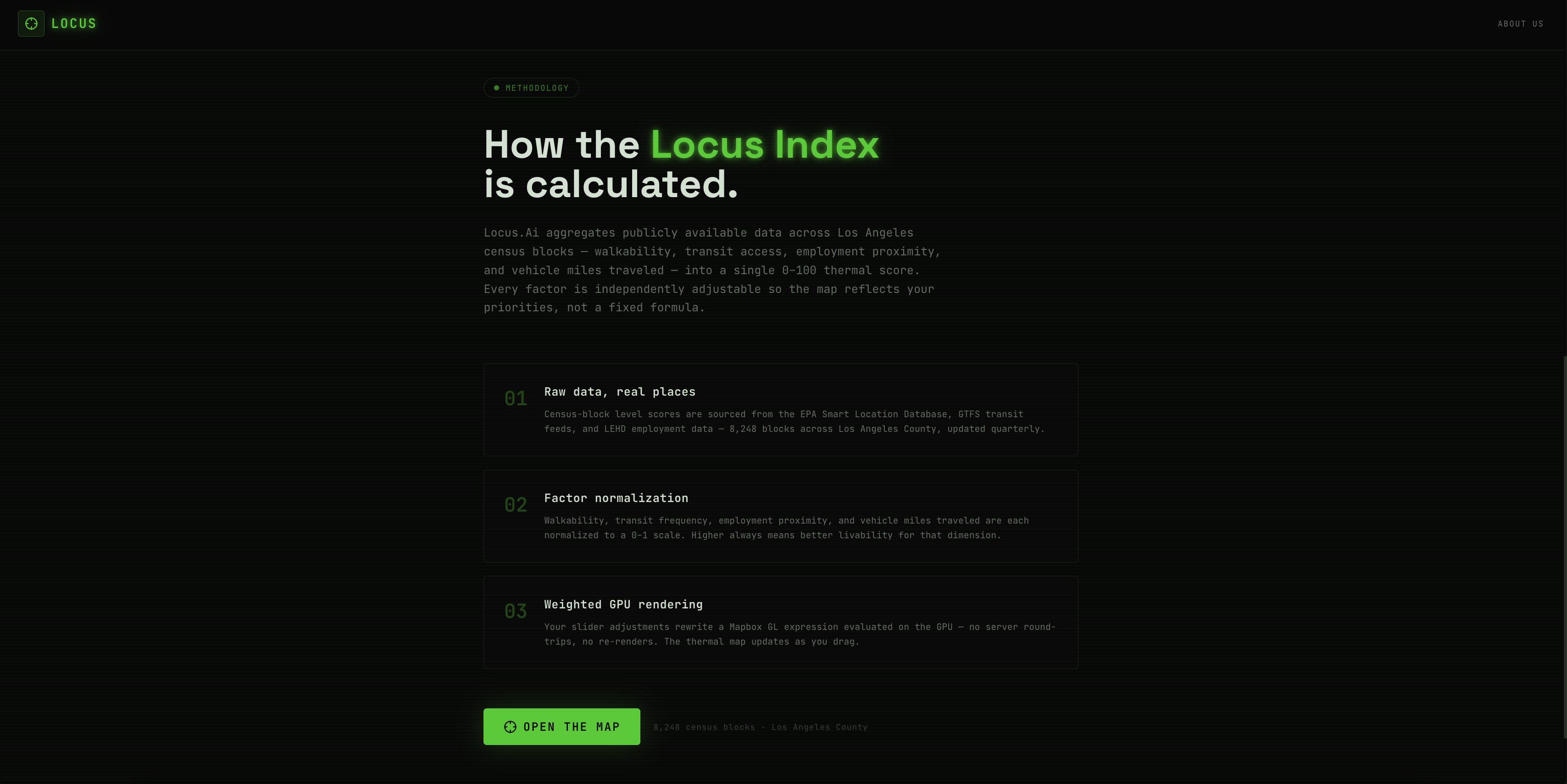
About section detailing methodology and functionality
-
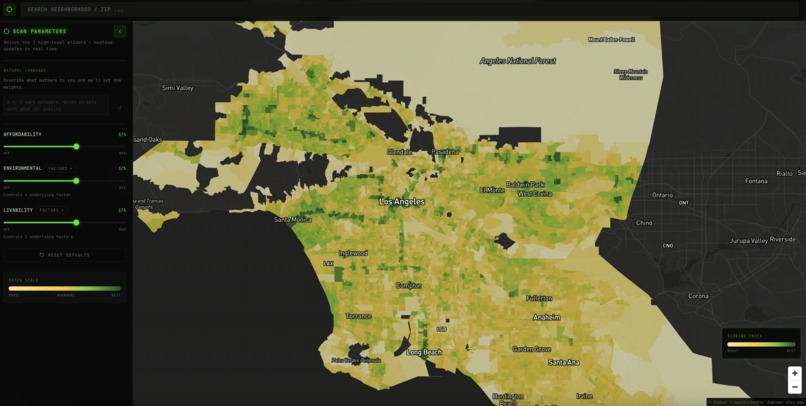
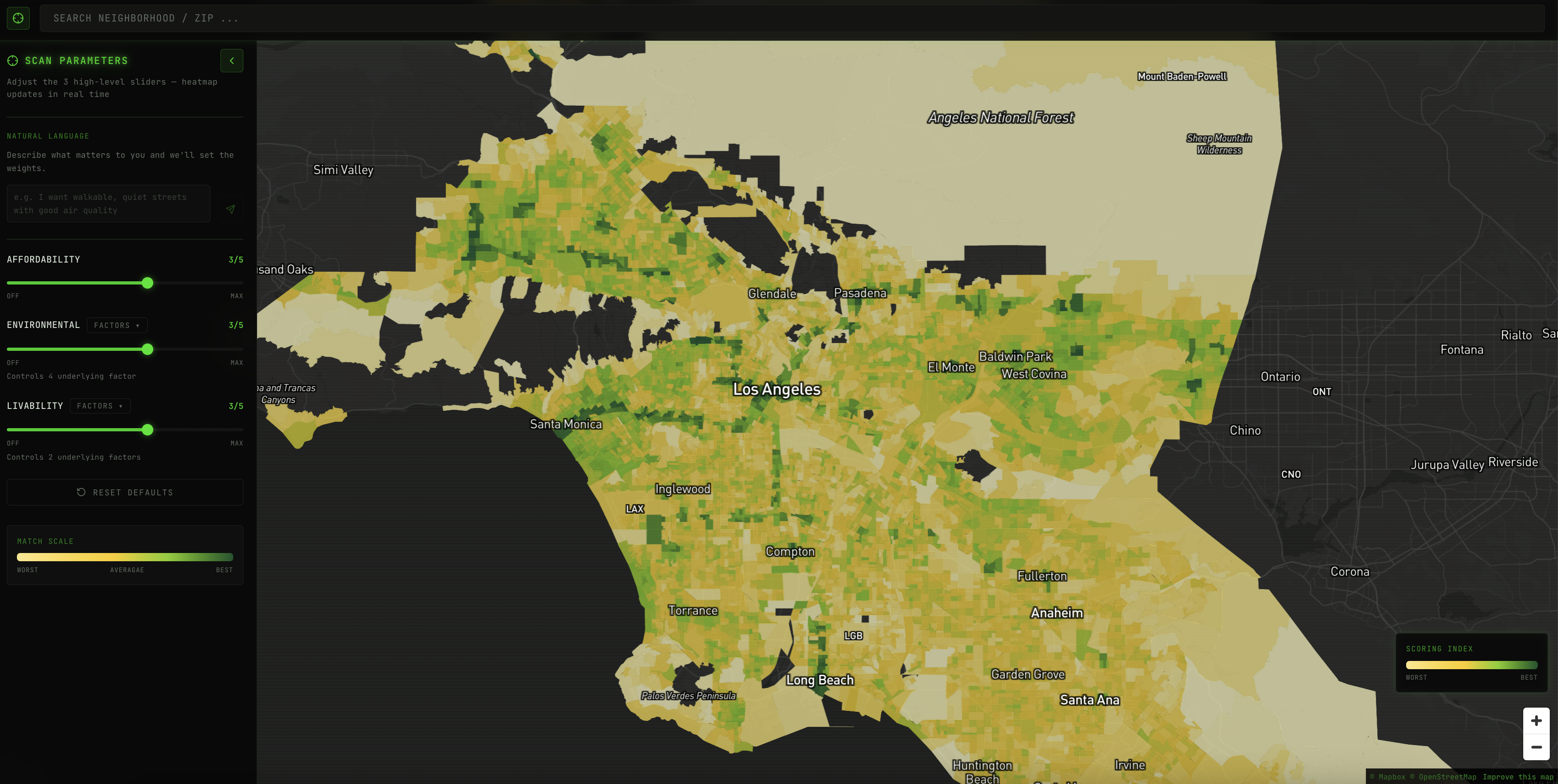
Default map and parameters when opening map
-
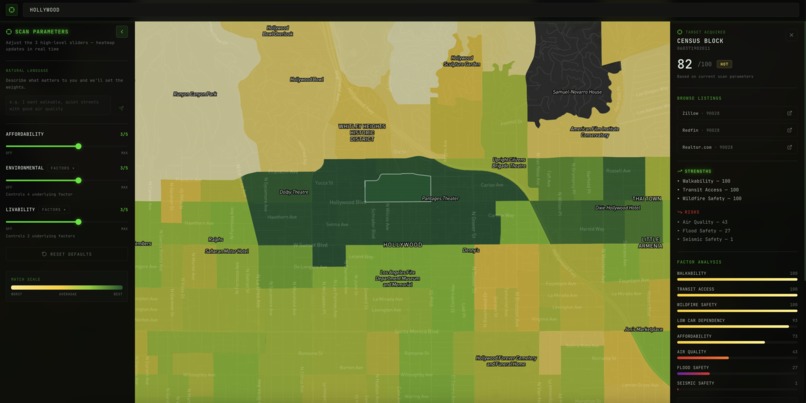
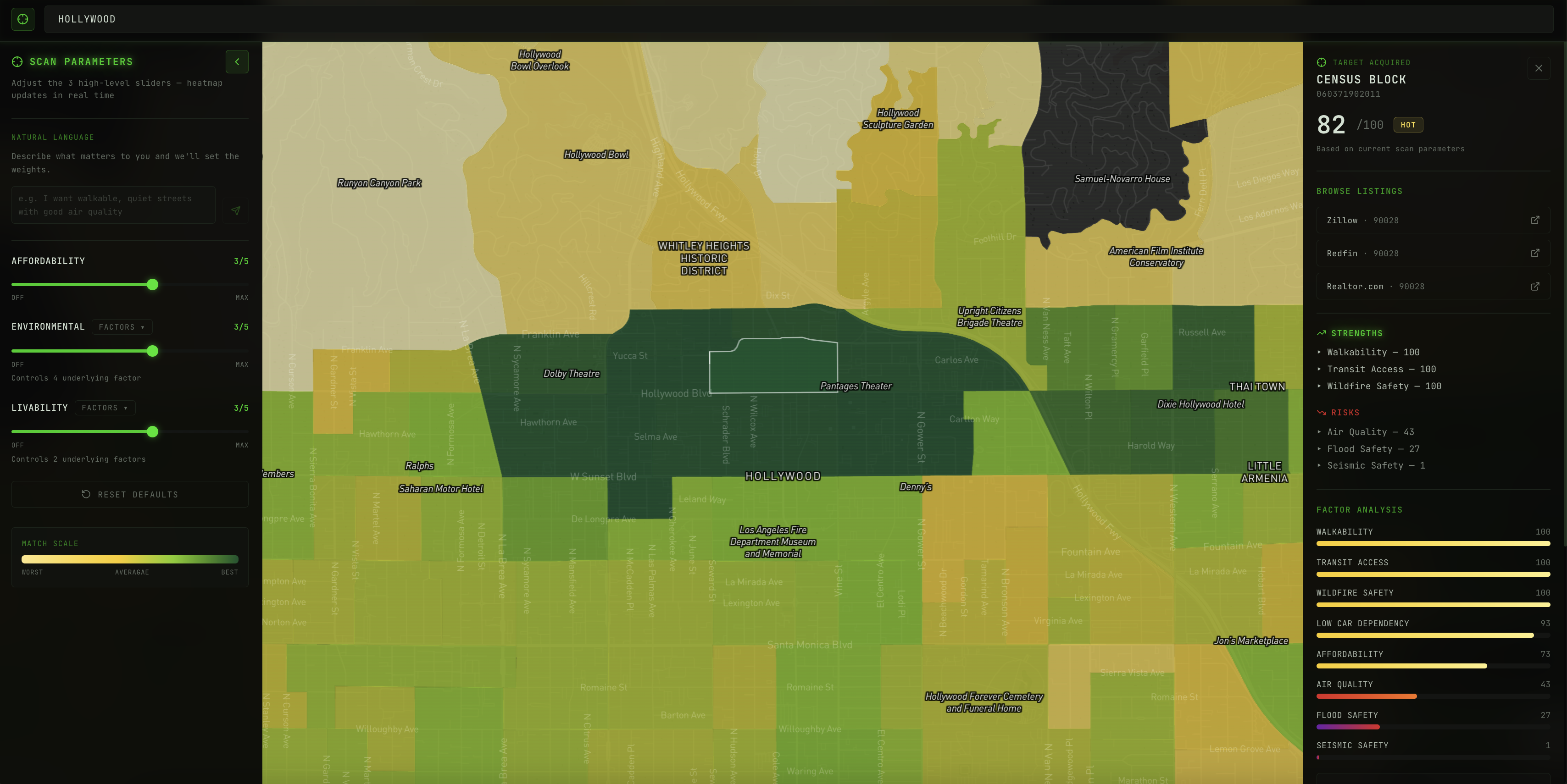
Result after using search function, brings users to the block they searched
-
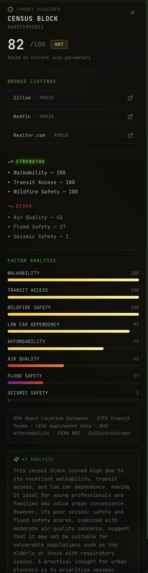
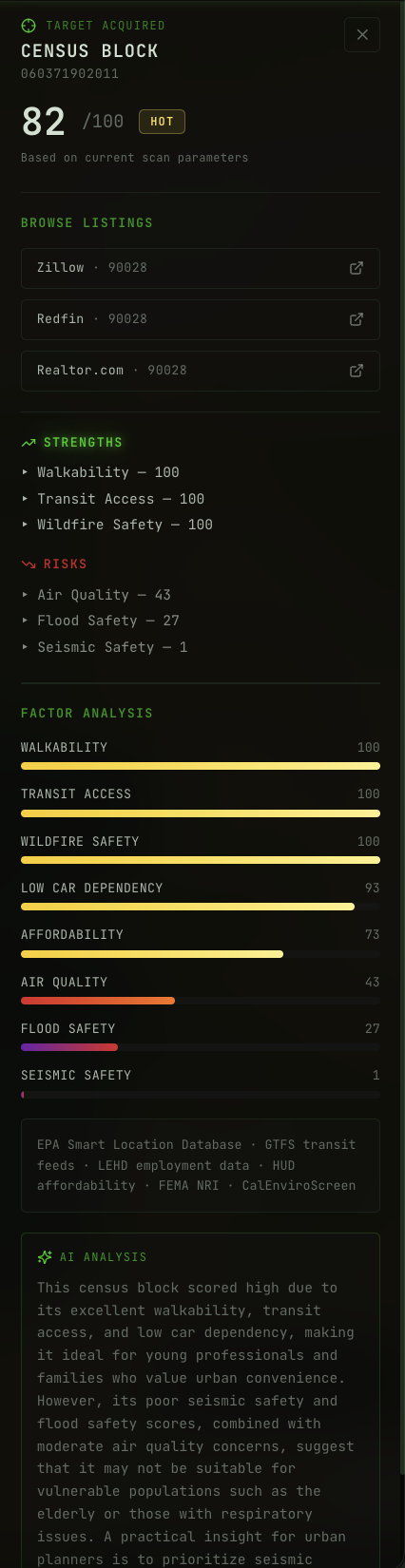
Overview sidebar for selected block, provides AI overview of the score and links to homes in that area
-
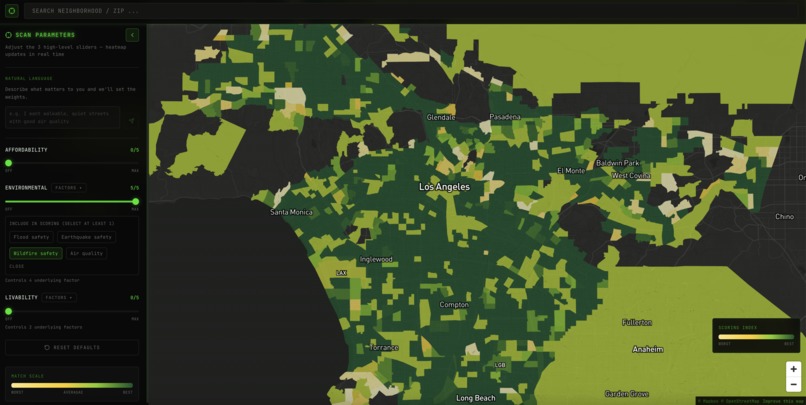
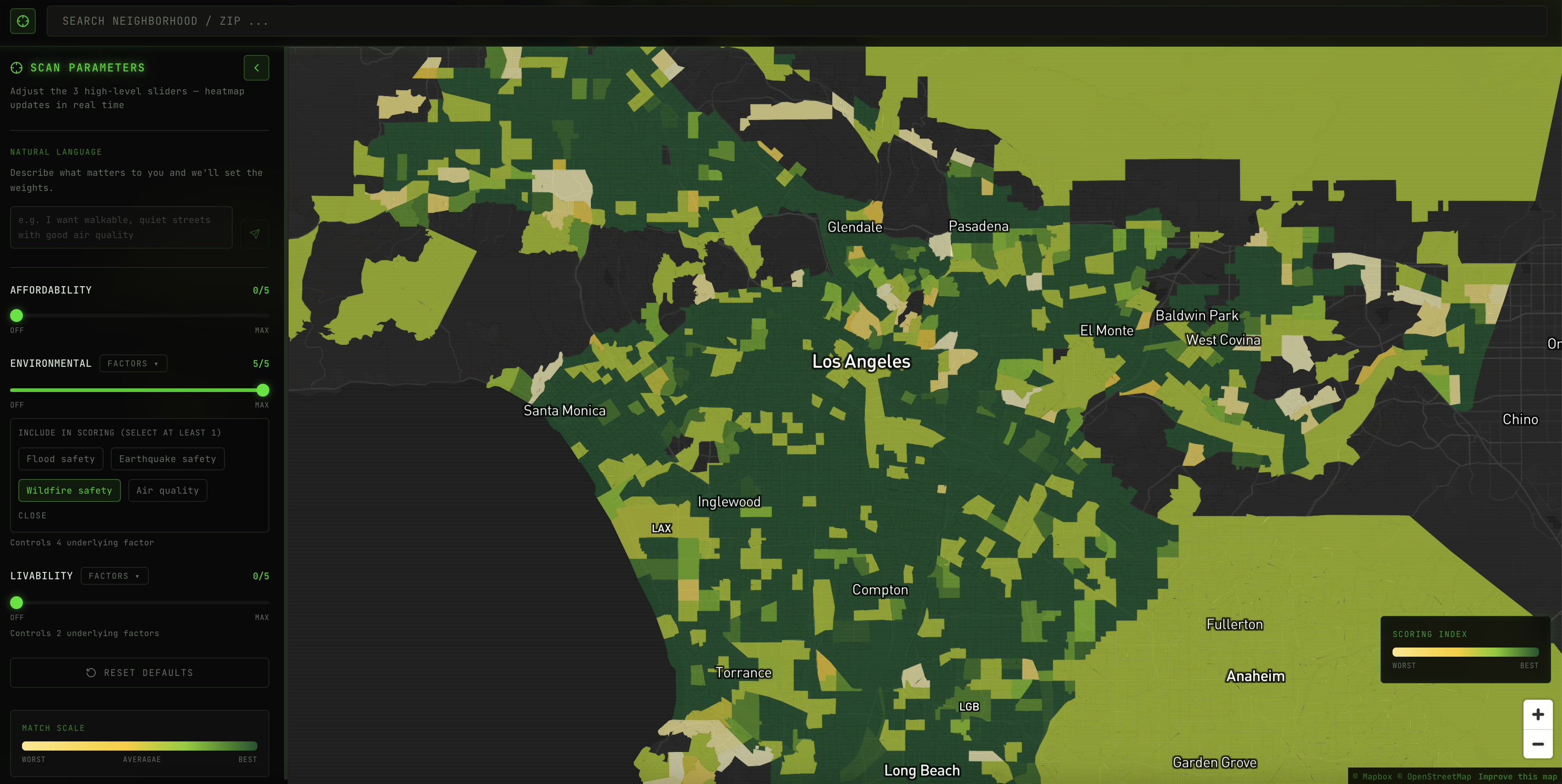
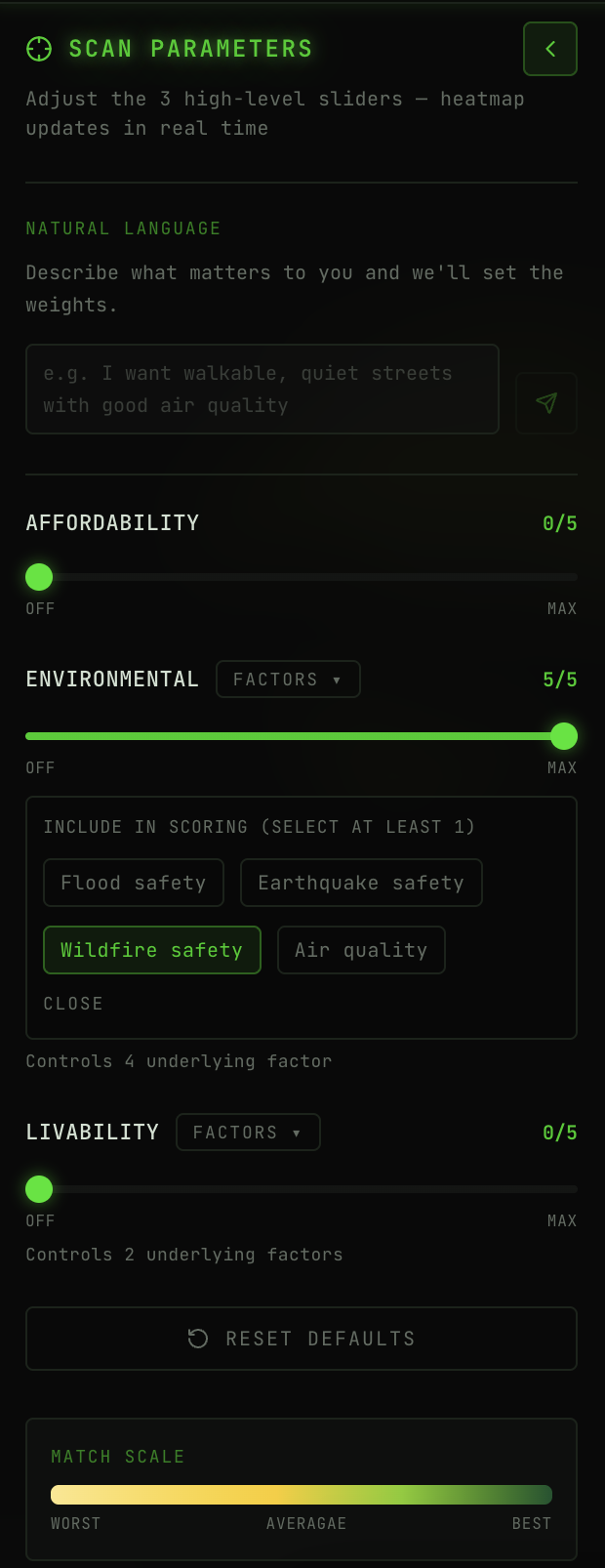
Only parameter with wildfire safety selected, so the map shows areas with low wildfire risk in dark green
-
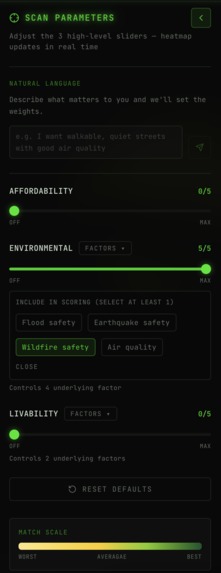
Left sidebar with natural language query, parameter sliders and filters
-
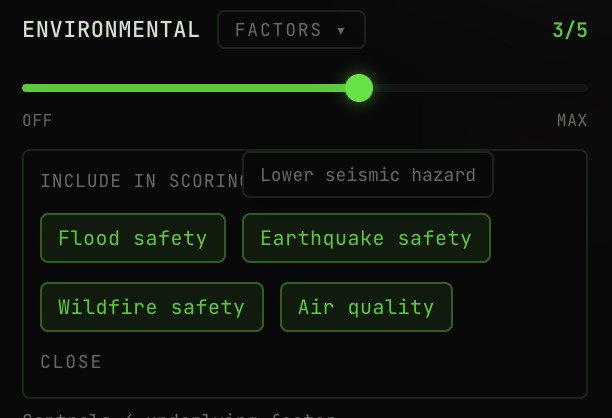
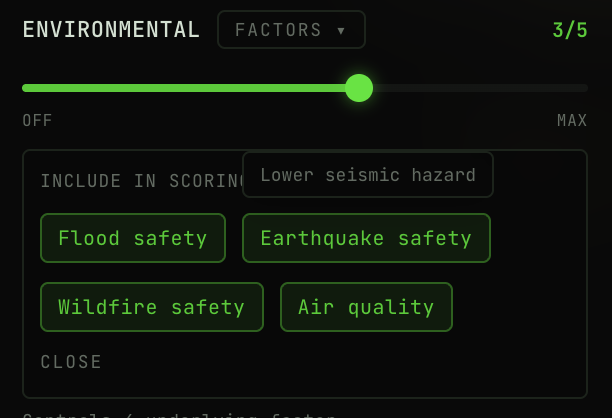
Hover over filter adds small tooltip
LocusAI
Pinpoint Your Locus
Inspiration
Our team identified a noticeable gap in providing users personalized livability preferences that modern property listing apps like Zillow and Redfin don’t currently offer.
What it does
LocusAI bridges this gap by allowing users to personalize neighborhood discovery through adjustable livability factors that go beyond traditional listing filters.
Users can dynamically weigh criteria such as:
- Walkability
- Traffic
- Transit access
- Air quality
- Environmental risks
The platform calculates a composite score, as well as AI evaluations, for each neighborhood in real time. These rankings are visualized on an interactive map, making tradeoffs clear and easy to understand. By transforming subjective preferences into a transparent, data-driven scoring system. Furthermore, users can give a broad prompt, which will allow our AI to preset slider values and filters.
How we built it
We used a tech stack composed of:
- React (Vite)
- TypeScript
- Express.js
- Vercel
Our tech stack was ideated with the thought of fast deployment and rapid iteration. The frontend handles dynamic state management and real-time recalculation of neighborhood scores based on user-weighted livability factors, while Express.js structures and serves the normalized datasets efficiently. We implemented a composite scoring system to rank neighborhoods and visualized the results through an interactive map interface, ensuring both performance and scalability for future expansion.
Challenges we ran into
Ideation was the biggest hurdle. We initially planned on creating a ML model to learn from datasets that involved crime rate, and approach this track with the idea that users could find neighborhoods with lower crime rates to live in. However, the data presented was very skewed and would’ve given us a biased model. Moreover, we thought that with a limited time frame, there could be an easier way to approach this idea. Therefore, we pivoted toward a more transparent, user-weighted scoring system.
Accomplishments that we're proud of
We’re proud that we were able to:
- Deliver a fully functional web application
- Successfully pivot under time pressure
- Build a real-time scoring system
- Collaborate effectively, especially with first-time hackathon participants
What we learned
Through building LocusAI, we learned that impactful AI is not just about complex models, but about fairness, transparency, and thoughtful design. Our initial attempt to incorporate crime rate data showed us how easily biased datasets can distort outcomes, reinforcing the importance of critically evaluating data before deployment. We also gained experience in rapid prototyping, pivoting under time constraints, and determining the complexity of our minimum viable product. Most importantly, we strengthened our full-stack development skills and learned how to collaborate effectively as a team in a fast-paced environment.
What's next for LocusAI
Our next steps:
- Expand beyond LA and OC
- Cover all major U.S. cities
- Integrate richer datasets
- Continue tuning our composite scoring formula to better capture real-world tradeoffs and ensure fairness across diverse datasets
- Develop a machine learning model that learns from historical data and user interactions to produce adaptive, personalized, and predictive neighborhood recommendations over time
- Eventually scale globally


Log in or sign up for Devpost to join the conversation.