-
-
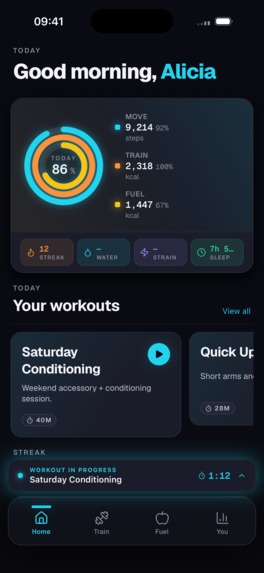
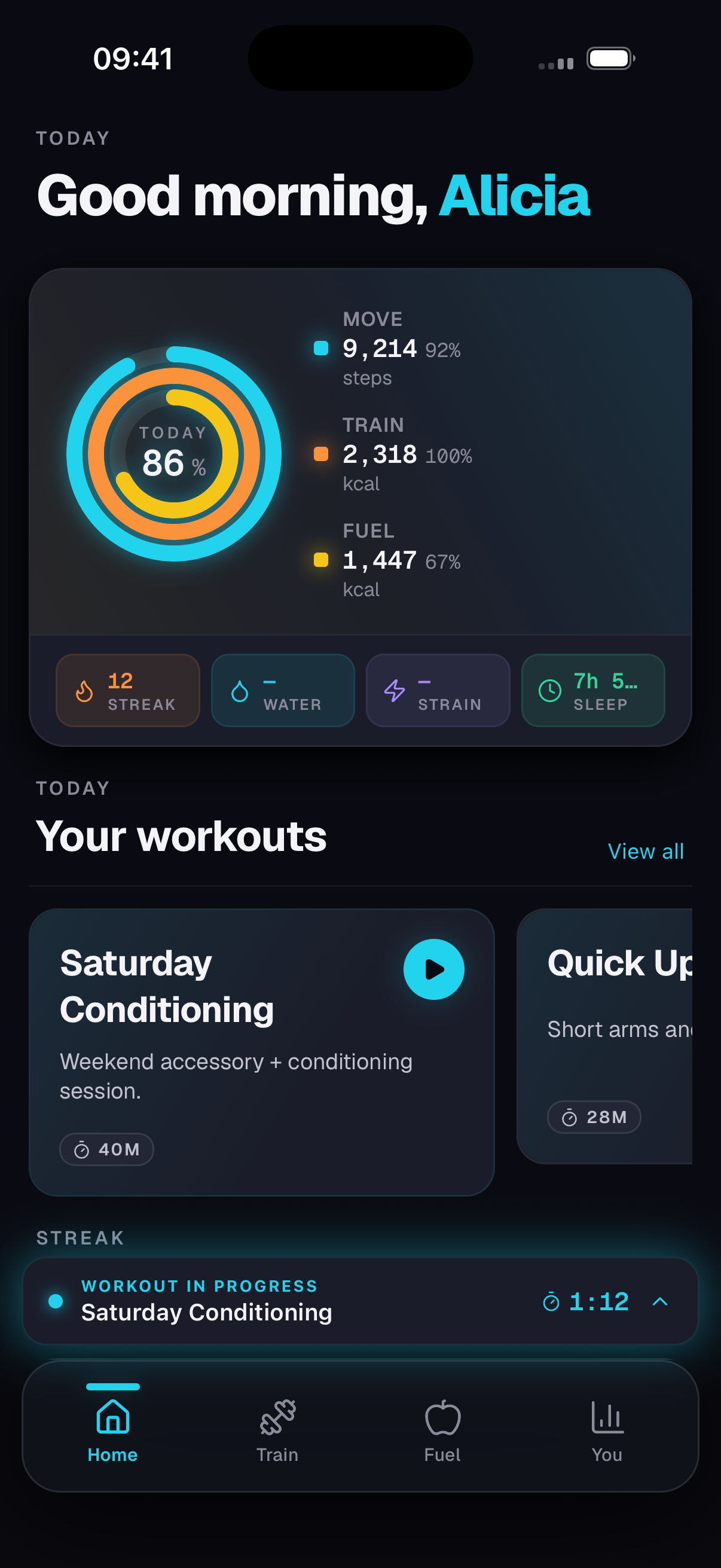
Athlete Home View
-
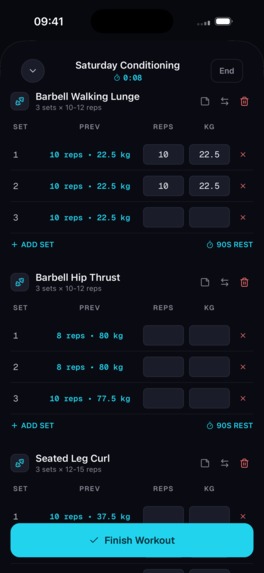
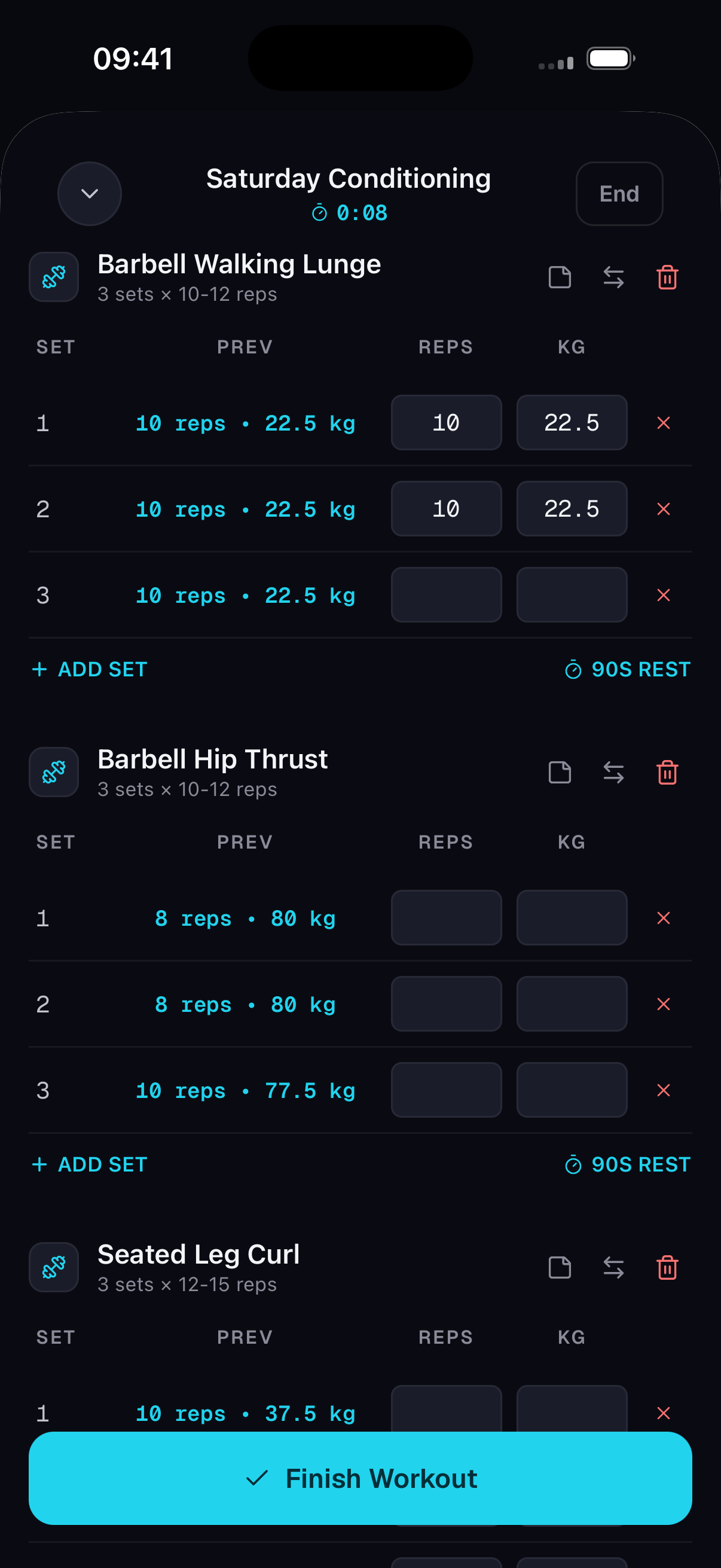
Active Workout View
-
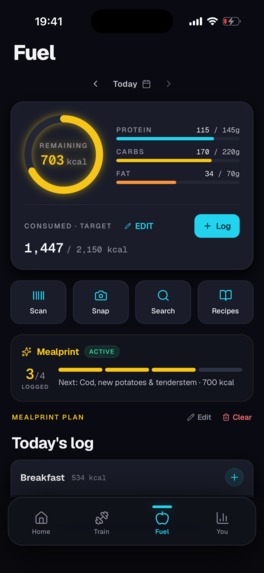
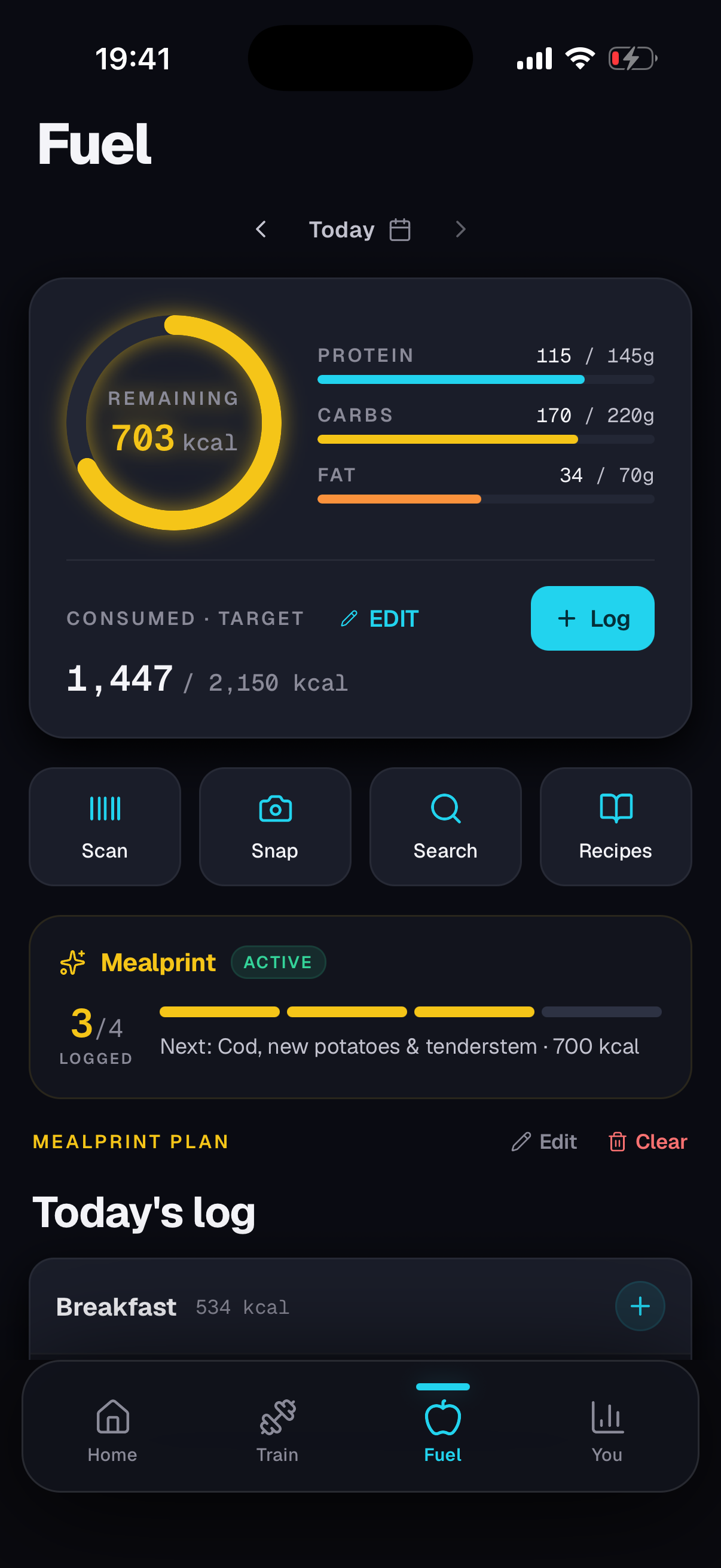
Nutrition Page
-
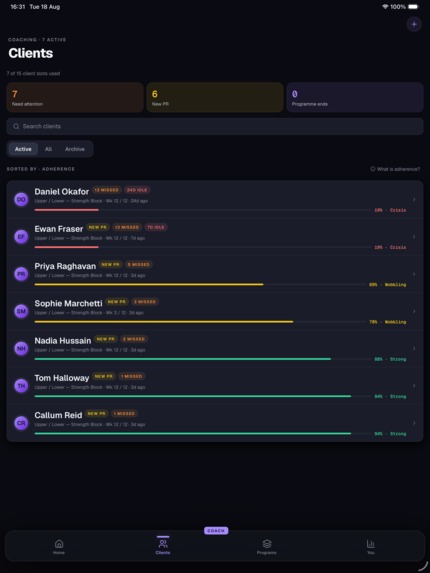
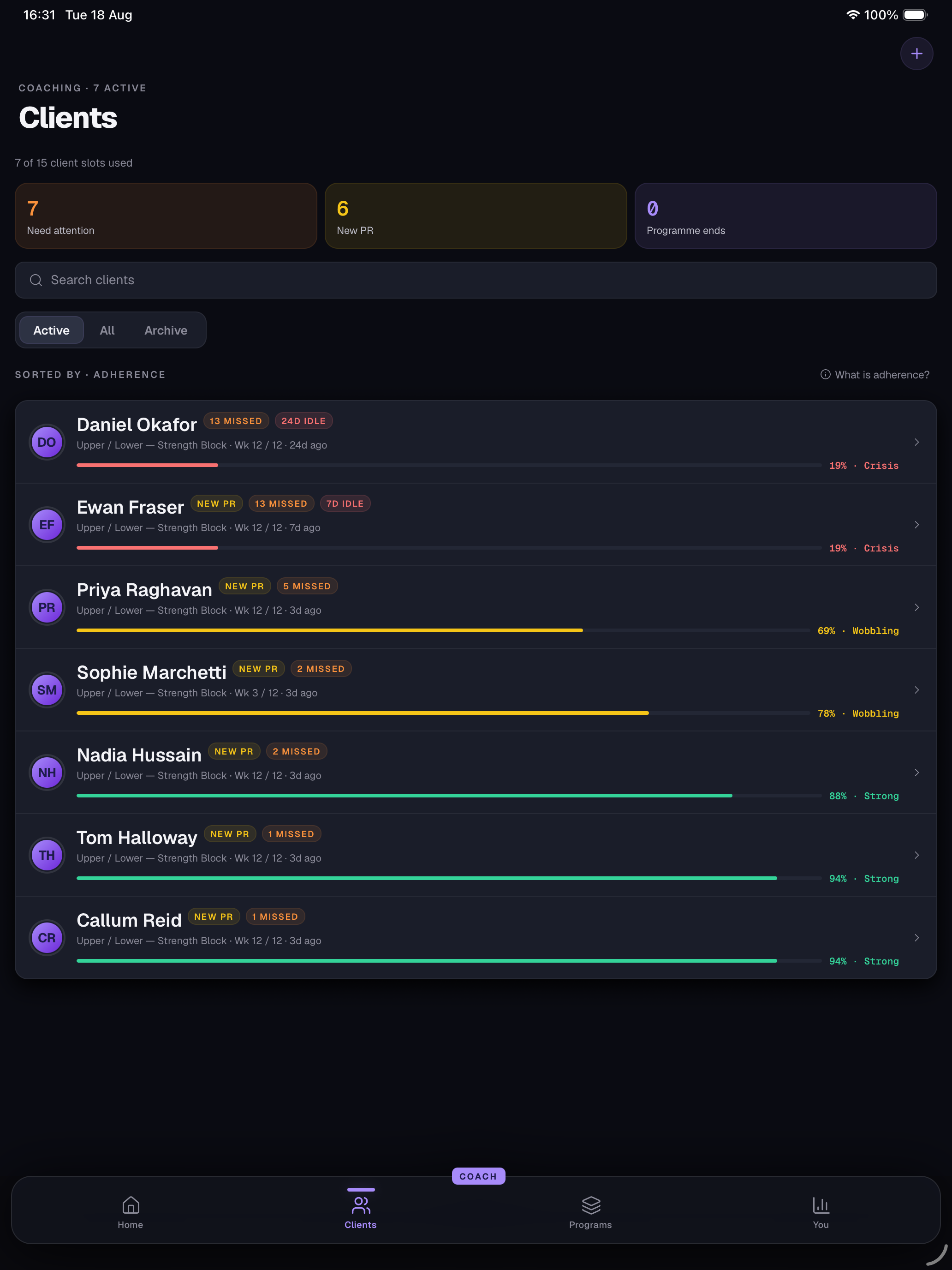
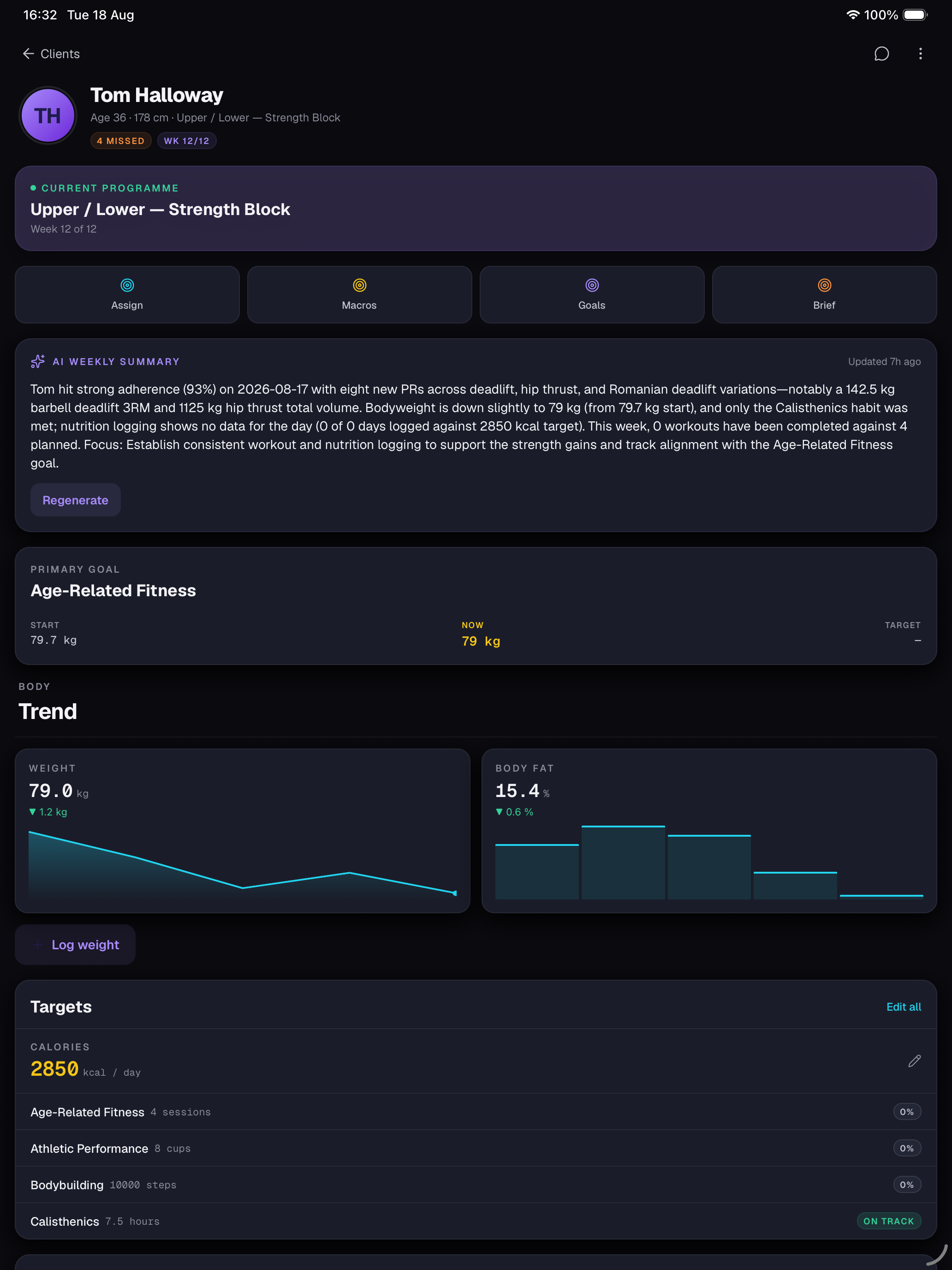
Coach Client View Ipad
-
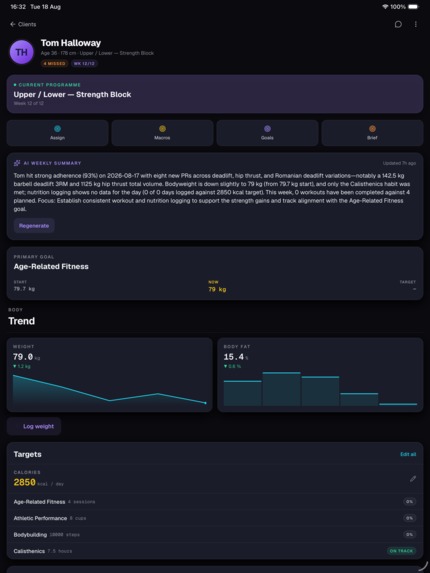
Coach: Client Details Ipad View
-
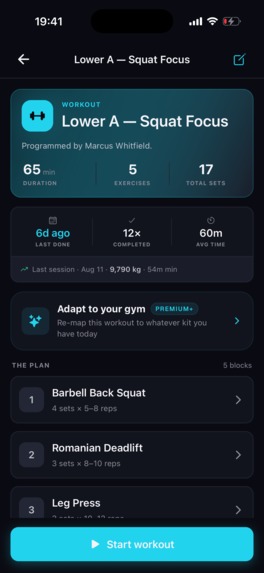
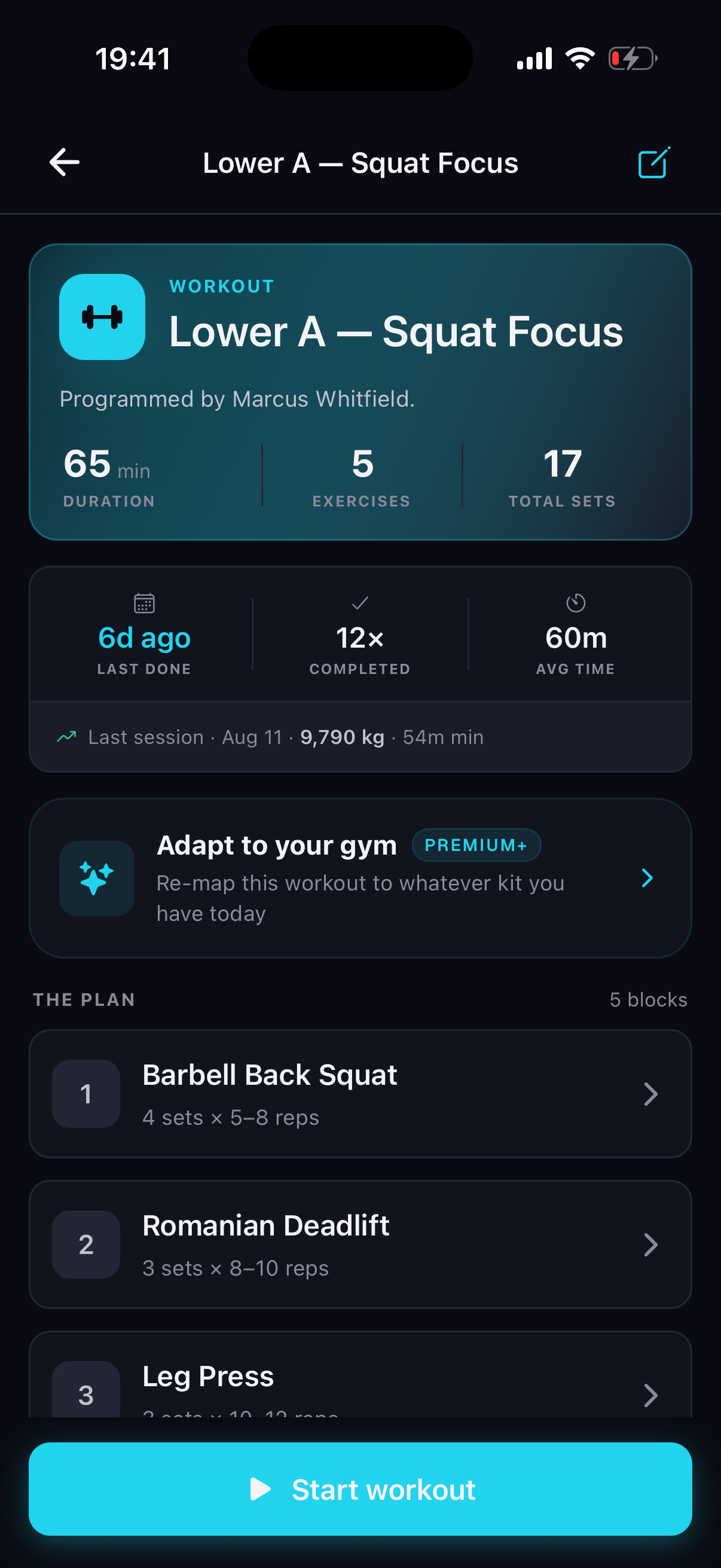
Workout Detail Page
-
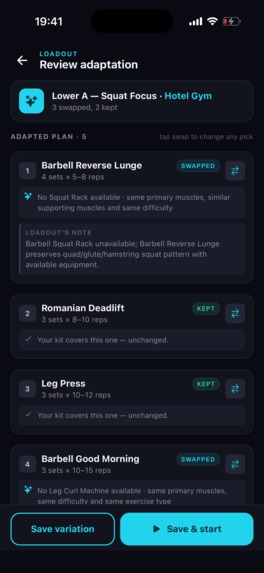
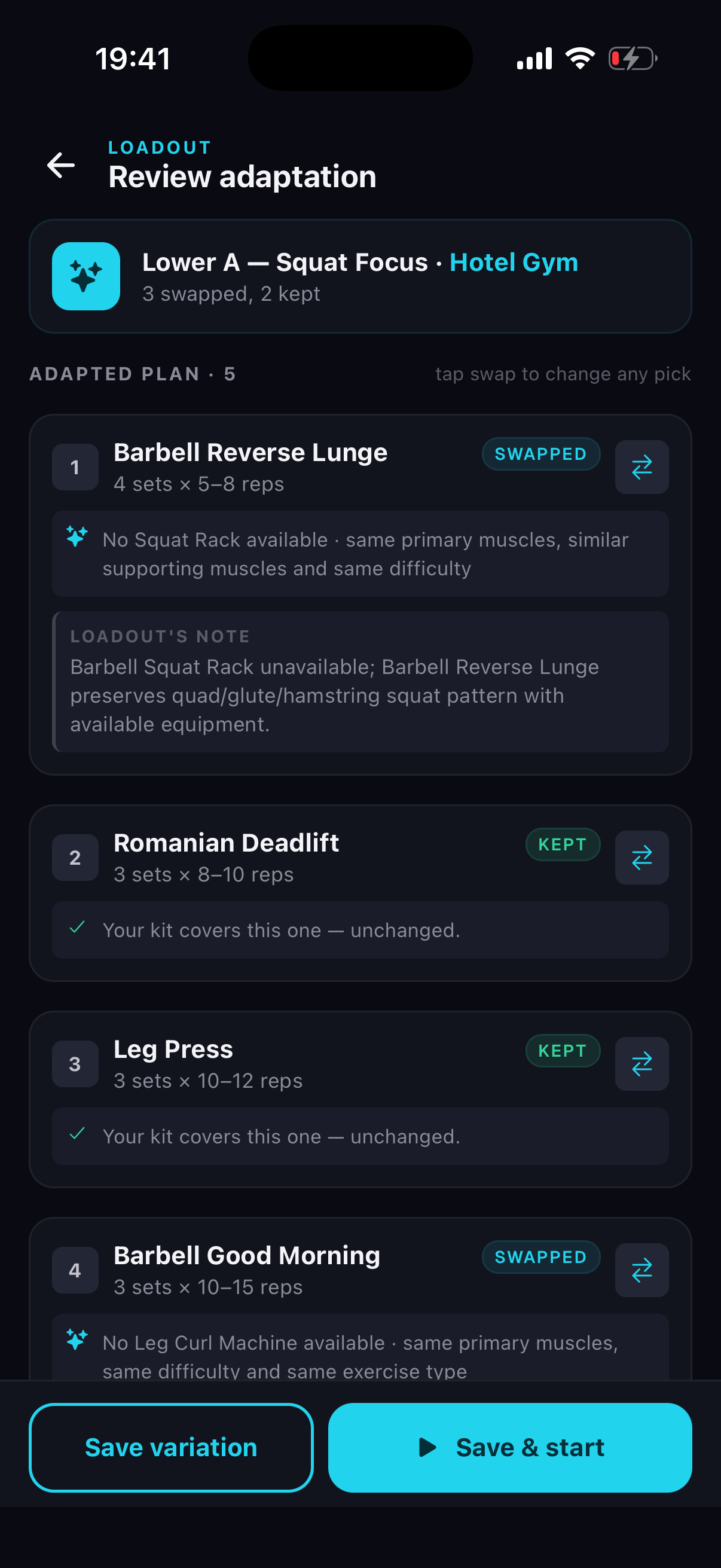
Loadout Feature in action
-
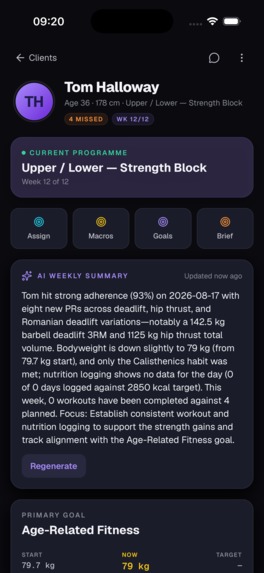
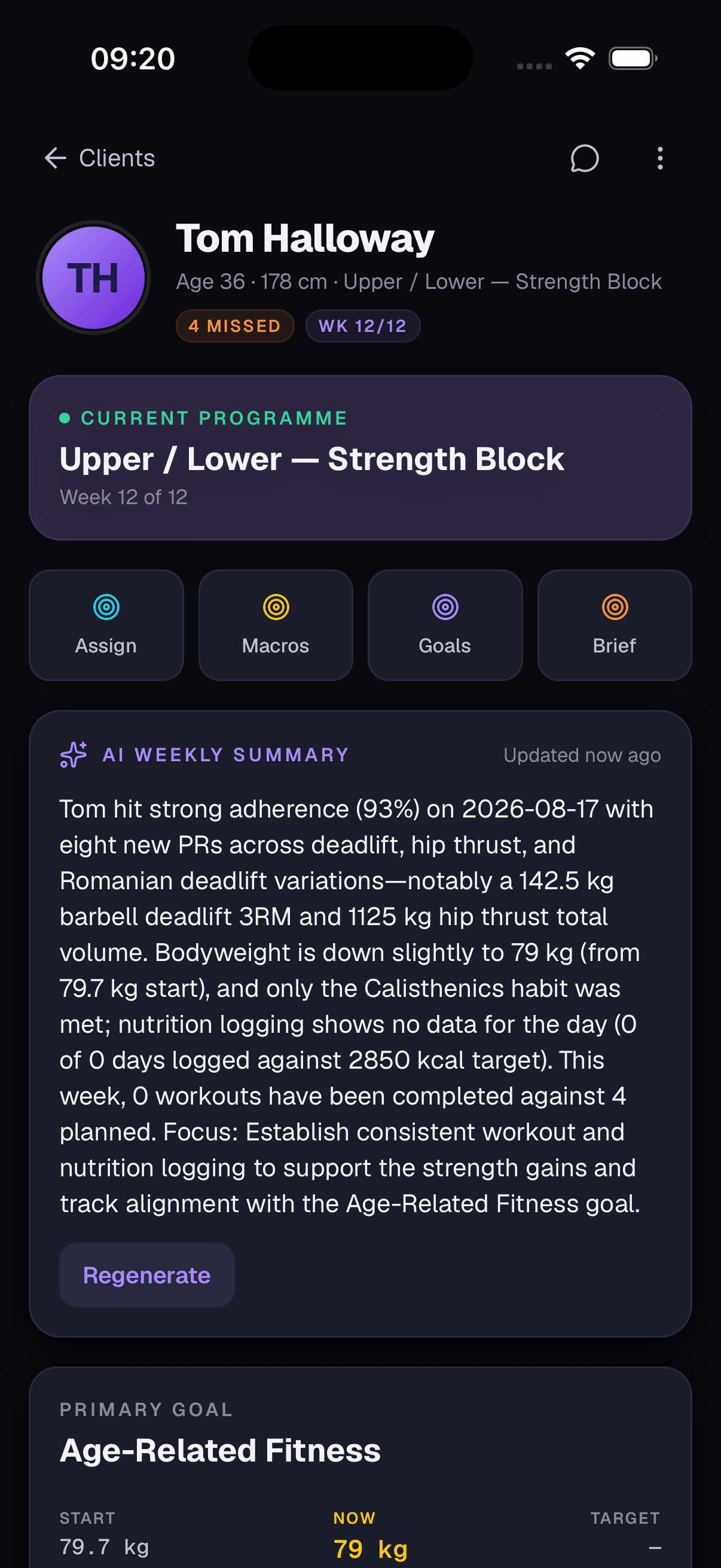
Coach: Client View Mobile
-

Persistence app icon — 1024 × 1024

Inspiration
In October 2021 I started a fitness journey that changed my life. Over 40kg lost — no shortcuts, just chipping away, session after session. Then in October 2025, a serious knee injury, and surgery, stopped me mid-stride.
Recovery is where the idea was born. I suddenly had a physio programme to follow, a return-to-the-gym plan to rebuild, and nutrition that had to keep working while I couldn't train the way I wanted — and nothing would hold it all in one place. My rehab lived in a PDF, my workouts in one app, my food in another, and none of them could adapt a plan to what my body could actually do that week, or to what I actually liked eating.
So I built it. Persistence was born on nights and weekends from October 2025 — the app my own journey needed: training, rehab, nutrition and wellbeing in one place, adjustable to a real body and a real life. Somewhere between the first commit and today it stopped being a tool for me and became the dream itself: building products people love, and making health and nutrition have minimal barriers from people with all different situations.
What it does
Loadout — the hero moment. Photo-scan any gym and Persistence detects the equipment, then adapts your workout to exactly what's available — sets, reps, rest, supersets. Meaning that if the user's cable machine is broken, they have alternatives to still follow their plan. Swap suggestions also stay equipment-aware mid-session.
Offline-first, on purpose. Gyms with bad signal are the bane of anyone trying to track. So, every workout in Persistence can be logged fully offline and syncs cleanly when you're back in the world, because a tracker that dies without signal isn't a tracker.
One App, for all tracking needed. Nutrition, Gym, setting up habits to follow are easier to maintain when in one place. My app allows the user, as the athelete, to build or follow workouts, log active sessions, log their nutrition, setup manageable and scalable habits to improve their routine. Best of all, if they've connected their health platform to integrate, their weight & steps automatically log into the application also. Coaches, physios or personal trainers or any of those that run a sports society, are able to use it to help their clientele follow a plan and guide their plans too. Making it even more accessible to others.
Mealprint + Fuel. AI meal planning with real portion guardrails, nutrition tracking, and day-scoped shopping lists — adjustable to your needs, your likes, and your training.
A real coach side. PT and physio roles, client invites, program assignment, full visibility of client logging, and consent-controlled health-data sharing. That one's personal: physios are first-class citizens in Persistence because my own recovery needed a physio, a gym plan and a nutrition plan to work as one thing — and nowhere did.
AI client summaries for coaches. PTs live in back-to-back sessions. Persistence summarises what each client has done since you last looked — with adherence ratings — so a 30-second glance before a session replaces an evening of catching up on spreadsheets.
AI safety by design. The AI never writes to your data directly — every generation is a draft you confirm, with per-tier daily ceilings enforced server-side.
How we built it
First, who "we" is: me. I graduated in Computer Science & Mathematics in Nottingham in 2020, started my software career in March 2021, and four years later I head up engineering at a London fintech. Persistence was built solo around that job — nights and weekends — with AI agents as the team. But the agents came second.
The foundations came first: a monorepo template and hexagonal architecture I designed and had learned to trust before AI wrote a line of this codebase. That's what makes agent-driven development actually work — agents operating inside clear boundaries, not improvising on a blank canvas. Around them, guardrails: spec-first discipline (requirements → design → tasks before any code), a state ledger every session reads before starting, and a 90% coverage bar — keeping not just code quality high, but readability and each session's understanding of the product just as high. Six thousand tests across 490+ suites hold the line.
Stack: React Native / Expo, TypeScript end-to-end, Elysia on AWS Lambda (SST), Supabase Postgres/Auth, AWS Bedrock (Claude) for all AI features, RevenueCat + react-native-purchases for the entire monetisation rail on both stores, Sentry for error tracking and Resend to communicate with emails.
How RevenueCat is used
The subscription catalog is server-side single-source-of-truth mapped to RevenueCat entitlements; the paywall renders whatever the offering returns. Different products across consumer and coach tiers on both the App Store and Google Play (Play base plans + trial phases, replacement modes for plan changes), server webhook → entitlement sync, promotional entitlements for founding-coach comps, and an introductory offer with 70% off for the first 200 to entice those first paying users.
Challenges we ran into
- Offline-first, but always in sync. The most important engineering in the app: a workout must be fully loggable with zero signal, then reconcile cleanly with the backend later — across devices, mid-programme, without ever losing a set. Getting that reliable was months of work, and it's the foundation everything else stands on.
- Building the data sources from scratch. My own exercise library, and a nutrition database built from Open Food Facts — gigabytes of open data cleaned, reconciled and reshaped — so the running costs stay low enough for a self-funded solo founder to carry, instead of renting someone else's API forever.
- Trusting the AI with food. An open-food-database 100g reference row was once presented to the model as a real "serving" — fixed with server-derived per-item and per-meal ceilings enforced before and after model output. AI features earn trust through guardrails, not vibes.
- Being the entire QA department. No device farm, no test team, minimal cash — so I test everything myself, deliberately breaking the app on both platforms before App Review or a real user can.
- App Review on an IAP-heavy app, as a solo dev, on two stores at once.
Accomplishments that we're proud of
- The app's first transformation story is its founder: 40kg down, one rebuilt knee, and the product that came out of it
- AI pointed at real pain, not gimmicks: Loadout kills the unfamiliar-gym problem, Mealprint kills meal-planning fatigue, and coach summaries with adherence ratings give back-to-back PTs their evenings back
- A true offline-first experience — built that way because real gyms have bad signal
- Gaining early user feedback, since launch in the middle of august, we are at over 61 users signed up.
- 496 test suites / 6,248 tests passing, with a 90% coverage bar held throughout
- A real coach platform (PT + physio roles) most funded competitors don't have
What we learned
Consistency beats intensity — in training and in shipping. The same discipline that lost the 40kg is what shipped the app: small sessions, logged honestly, repeated for years. AI agents changed what one person can build, but they didn't change that.
What's next for Persistence
Attending startup and founder events to help gain experience and knowledge for others in a similar position. I know my strengths and that lies within the tech, but understanding how to build a brand, market the product and gain traction lies with other people. I've already attended the Nottingham tech meetup this September which helped me to gain valuable connections whilst also understand what builds a brand. Building authenticity and trust, in a world of marketing that is swamped by AI generated content feels like the biggest lesson and the main aim that is going to help not just grow my traction in the short term, but give me users confidence and trust as a staple brand. Feedback from these conversations is also informing which proposed enhancements deserve priority.
Growth: advertising, a referral loop, share cards, and our first physical activation — the University of Nottingham freshers fair on 25 September, in front of 14,000 students. As of the deadline for this submission, this was a fantastic success, managing to present and share with many different students, leading to the growth of the brand. Further talks and conversations are to happen in the coming weeks to try and grow this even more.
Then the B2B motion: org seats for gyms and employers, offered as an employee benefit. The market I most want to break into is airlines — cabin crew live out of hotel gyms, changing time zones and unpredictable schedules, which is exactly what Loadout's adapt-to-any-gym generation and Mealprint were built for. If your gym changes every night, Persistence is the app that changes with it. The brand and ethos of my app is to become an everyday brand; a brand that anyone, the hardcore gym goers, the coaches that need to support their peers, or even just those university students who want a bit of structure and guidance in a time where their lives have changed drastically. Persistence is there to help every type of person get consistent and use persistence in their career.
Alongside product work, I'm refining Persistence's brand strategy and have further conversations planned for October. I've secured discounted branded tops with local printing support for in-person outreach. These are concrete steps towards building awareness and learning from people; they are not yet evidence of increased signups or revenue.
Built With
- amazon-ses
- api-gateway
- aws-bedrock
- aws-lambda
- bun
- claude
- eas
- elysia
- expo.io
- health-connect
- healthkit
- openfoodfacts
- postgresql
- react-native
- resend
- revenuecat
- sentry
- sst
- supabase
- typescript
- vitest

Log in or sign up for Devpost to join the conversation.