-
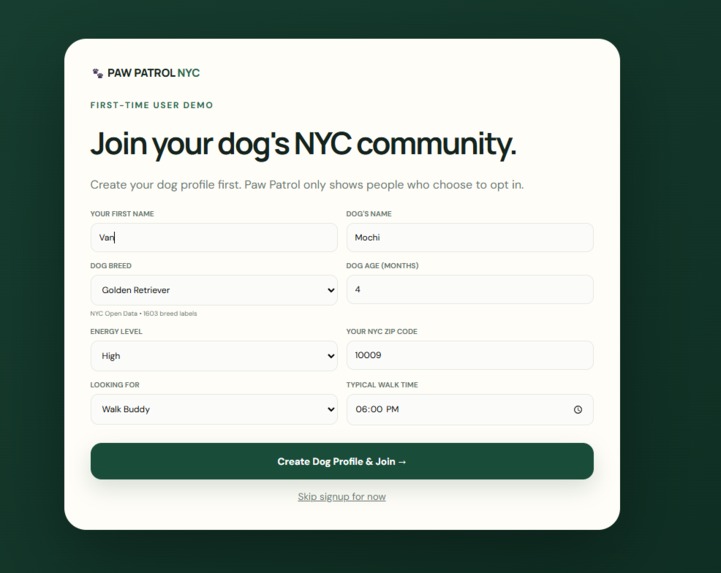
Sign in
-
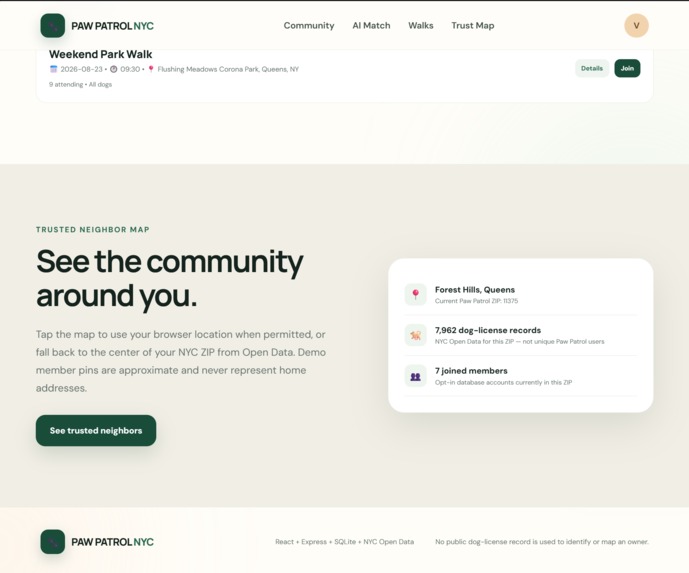
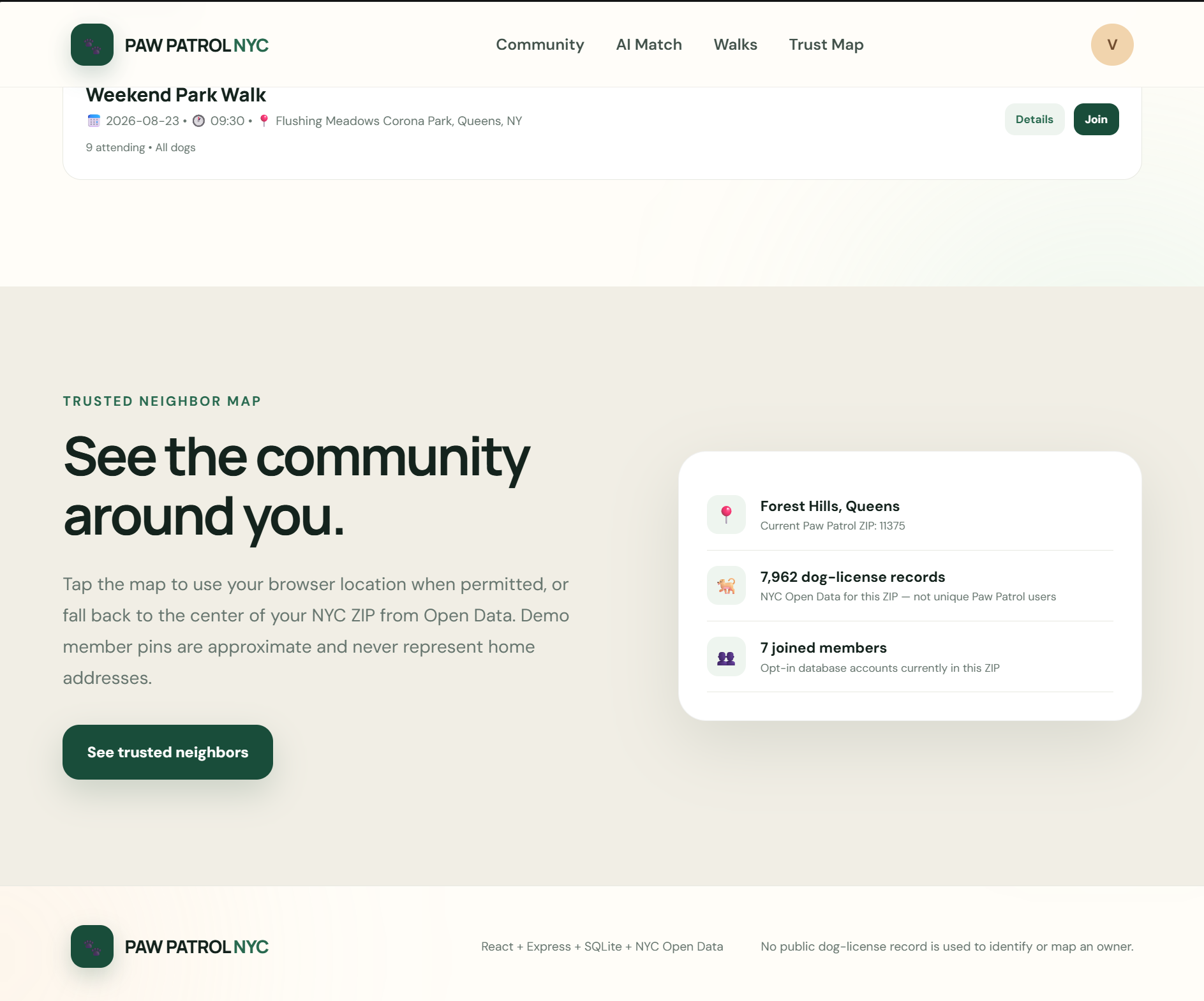
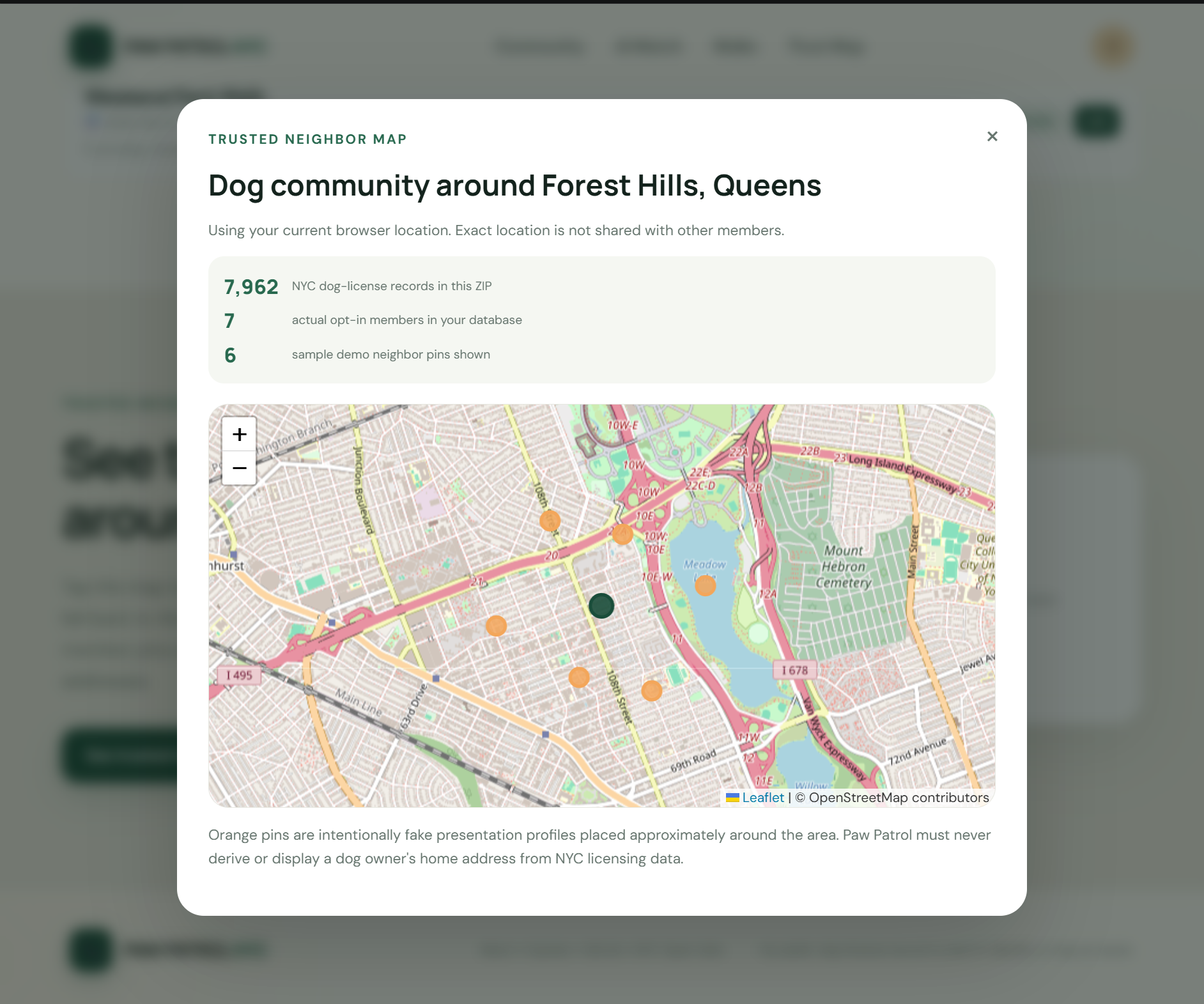
Trusted Neighbor Map
-
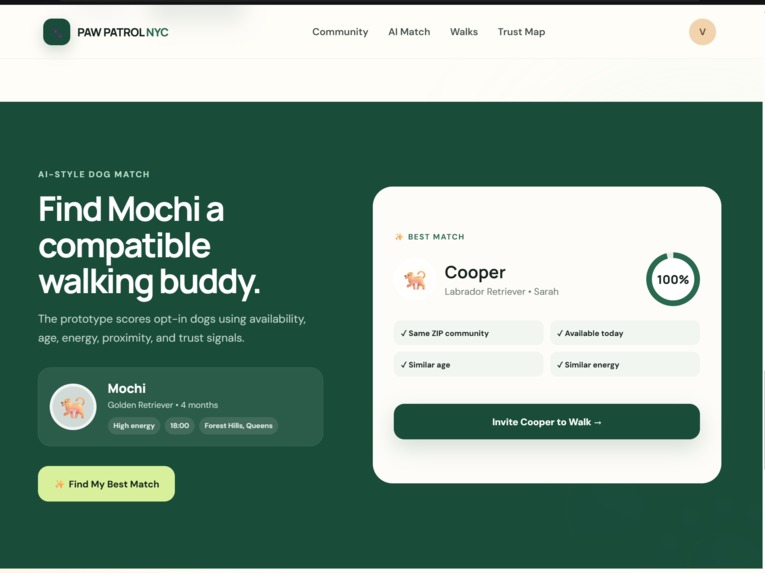
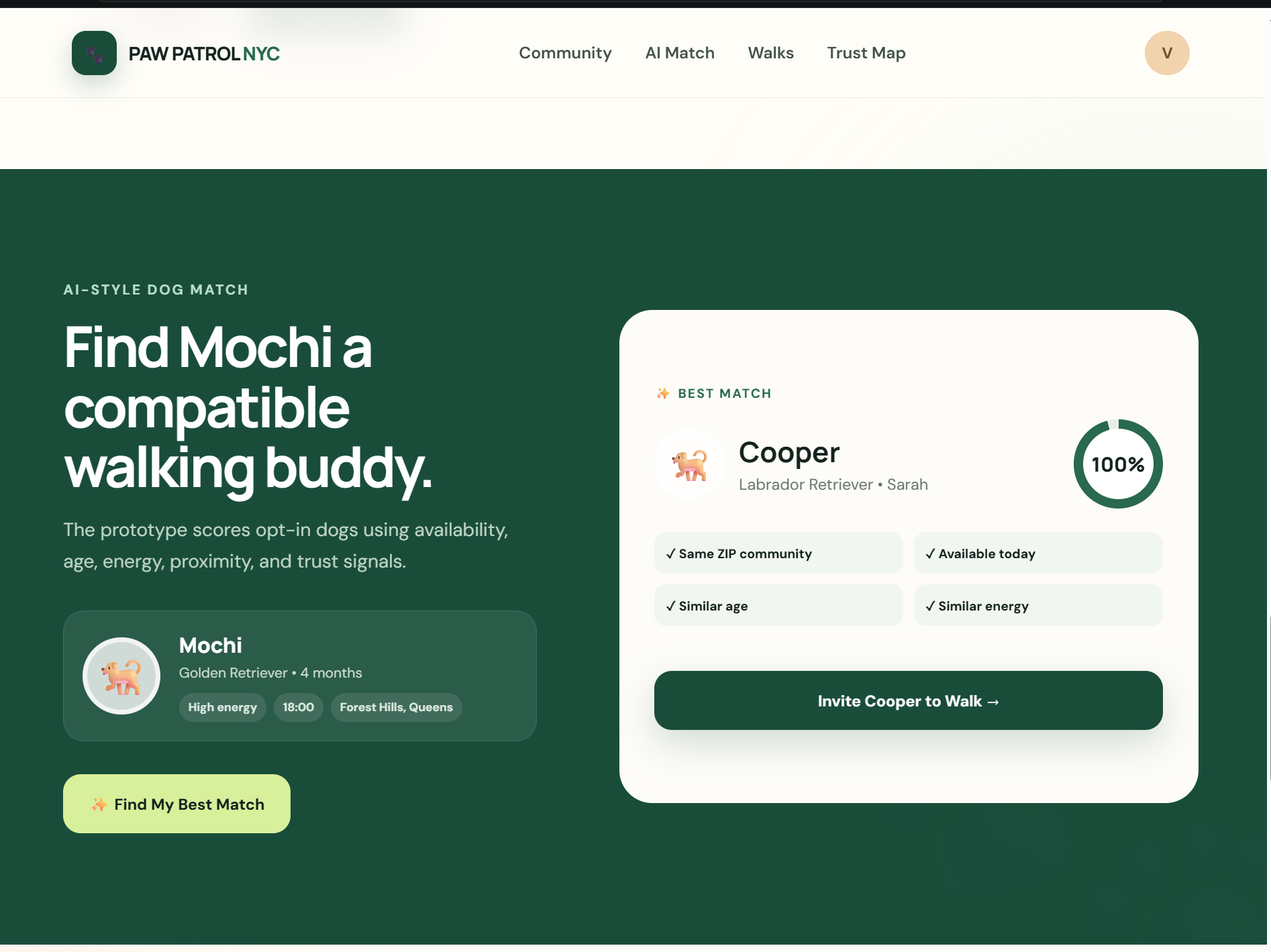
Best match
-
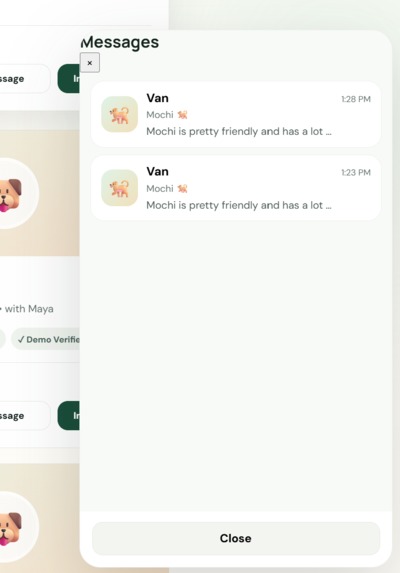
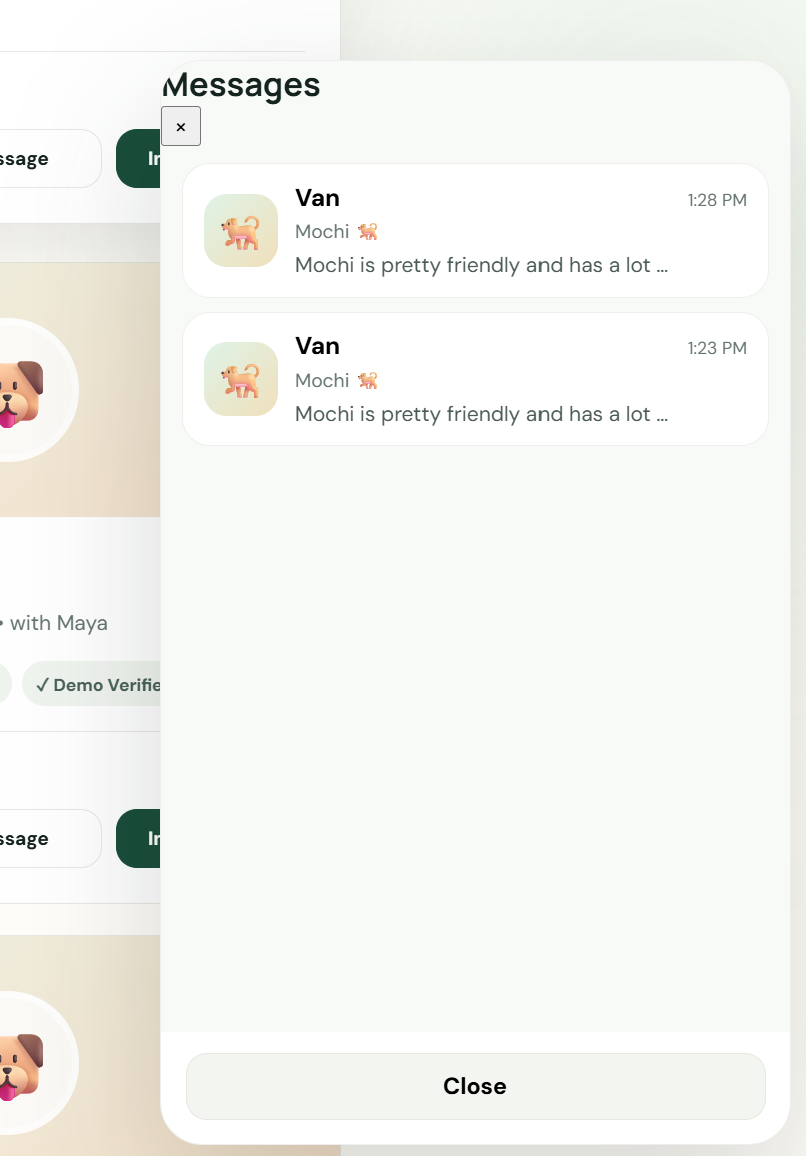
DMs pop up
-
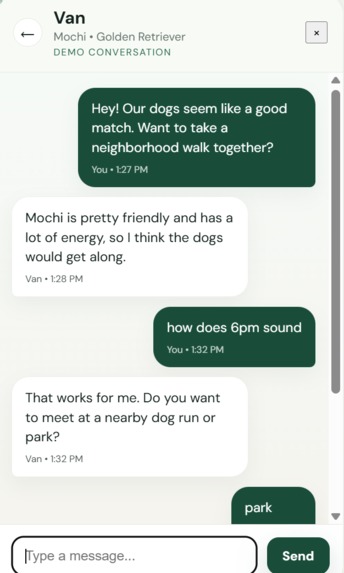
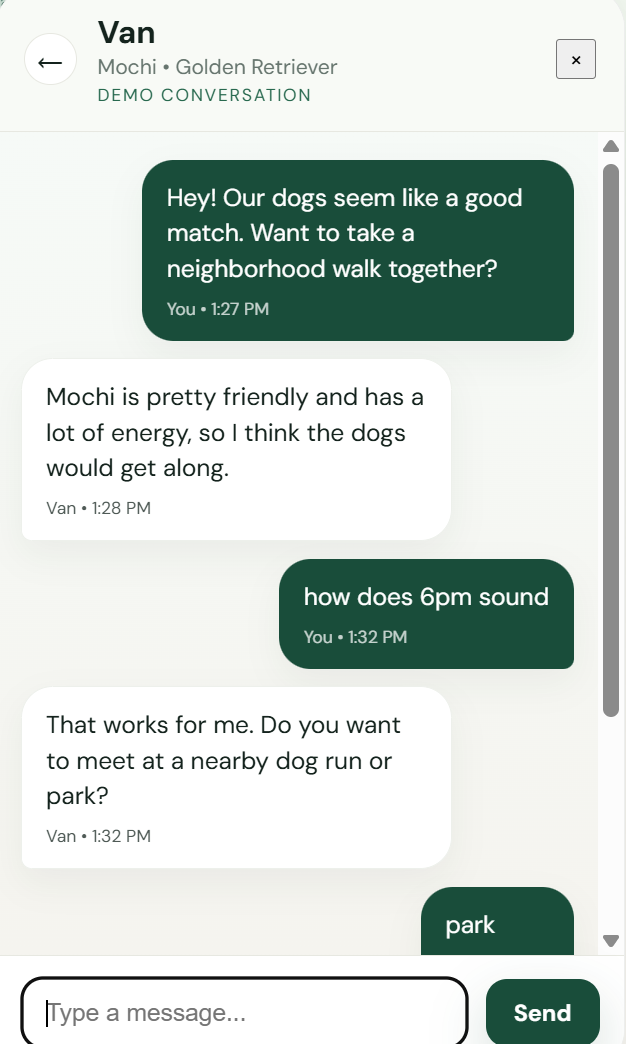
Chat function
-
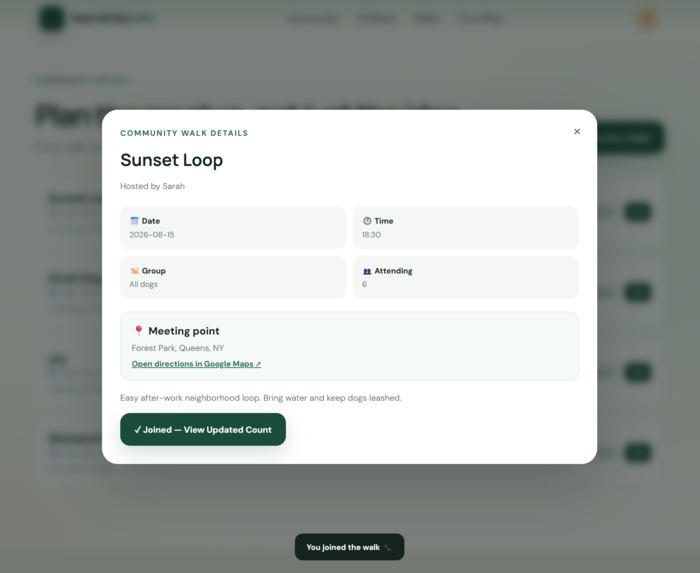
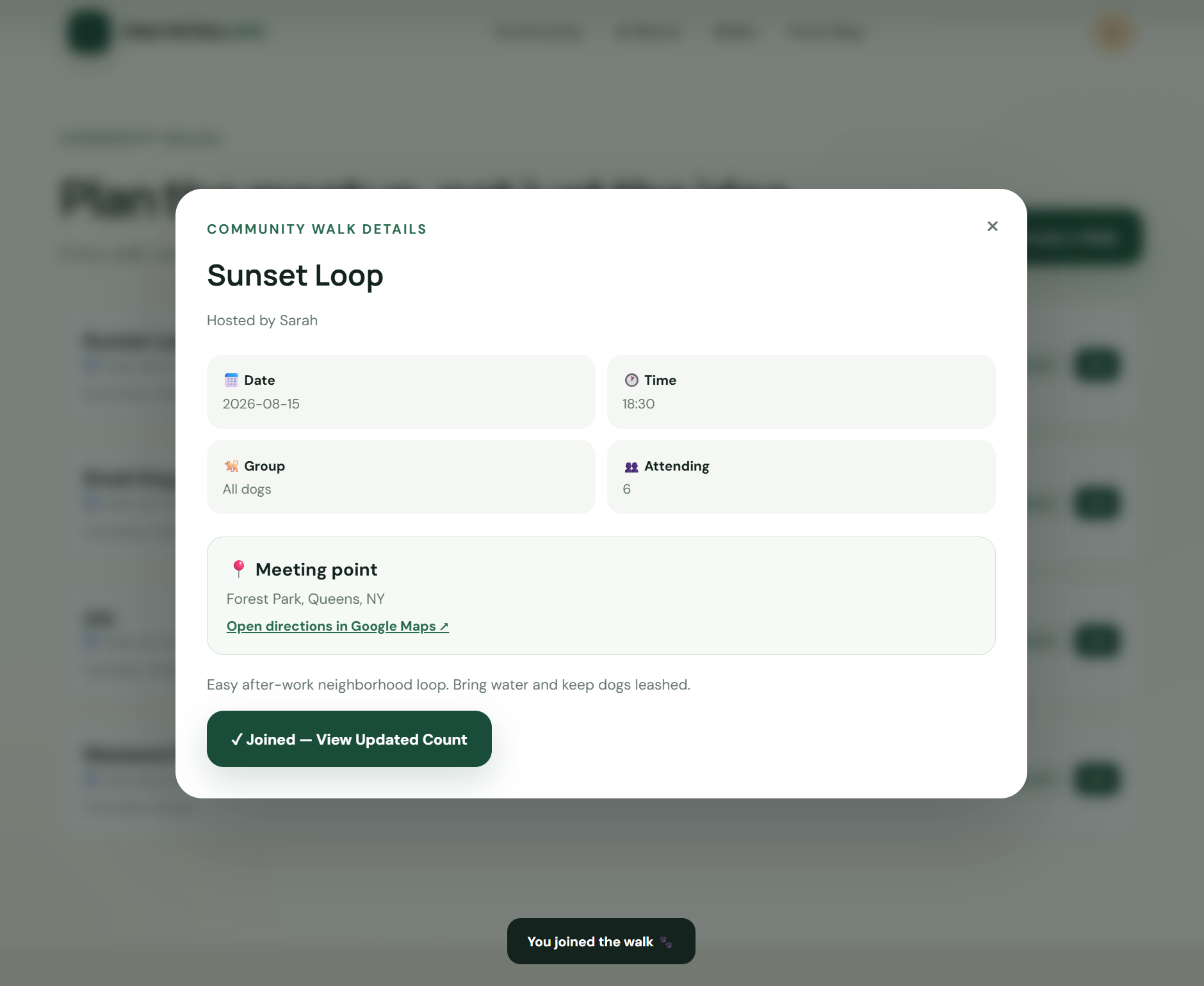
Walk details
-
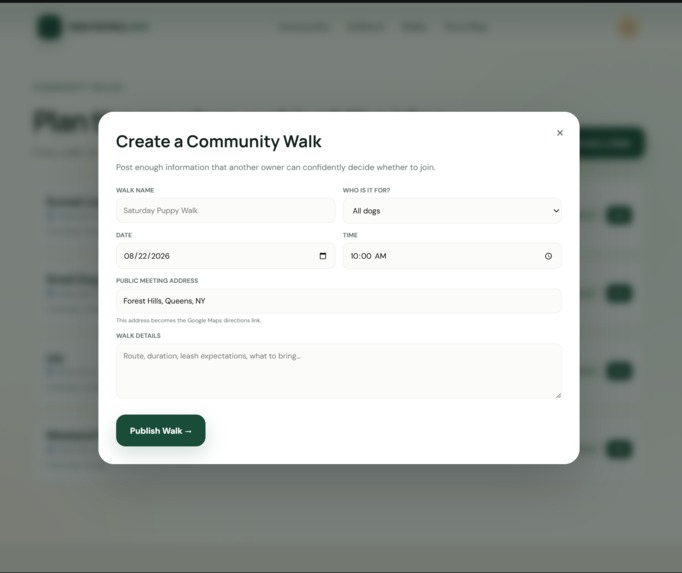
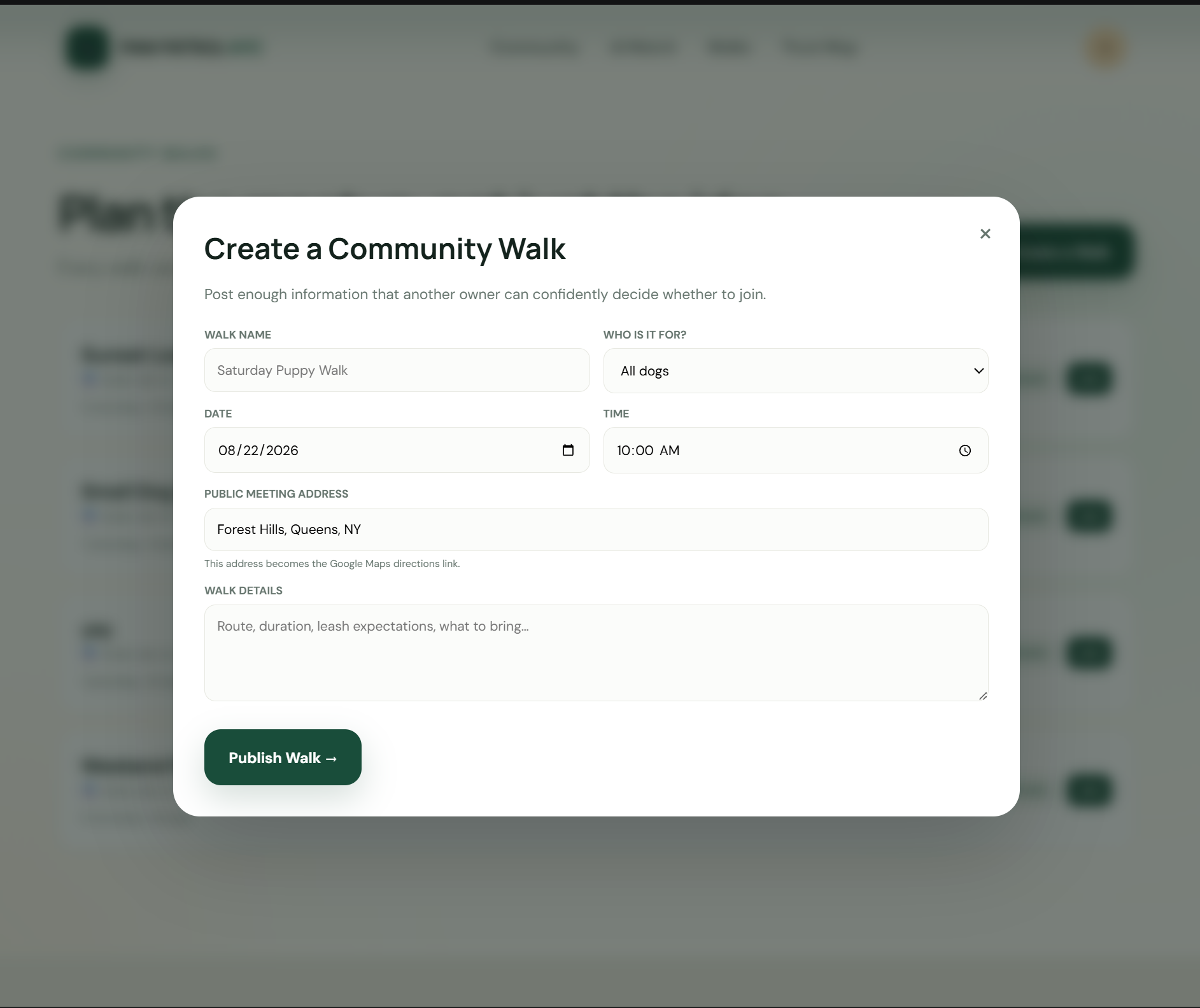
Create a walk
-
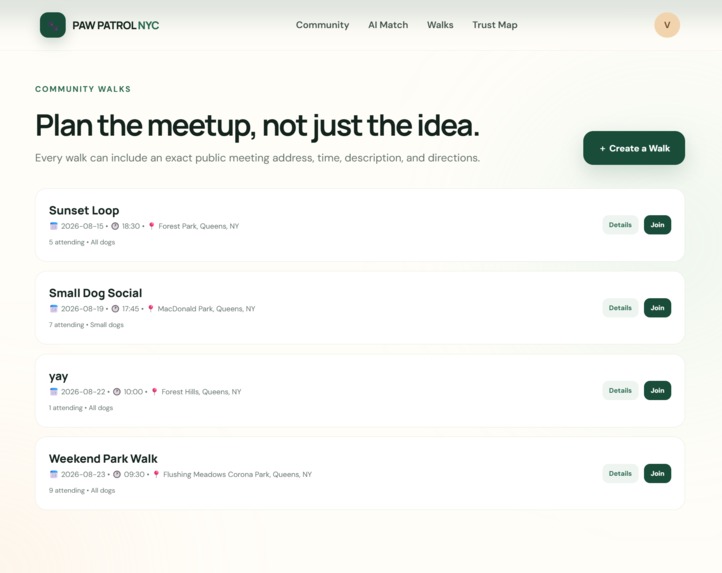
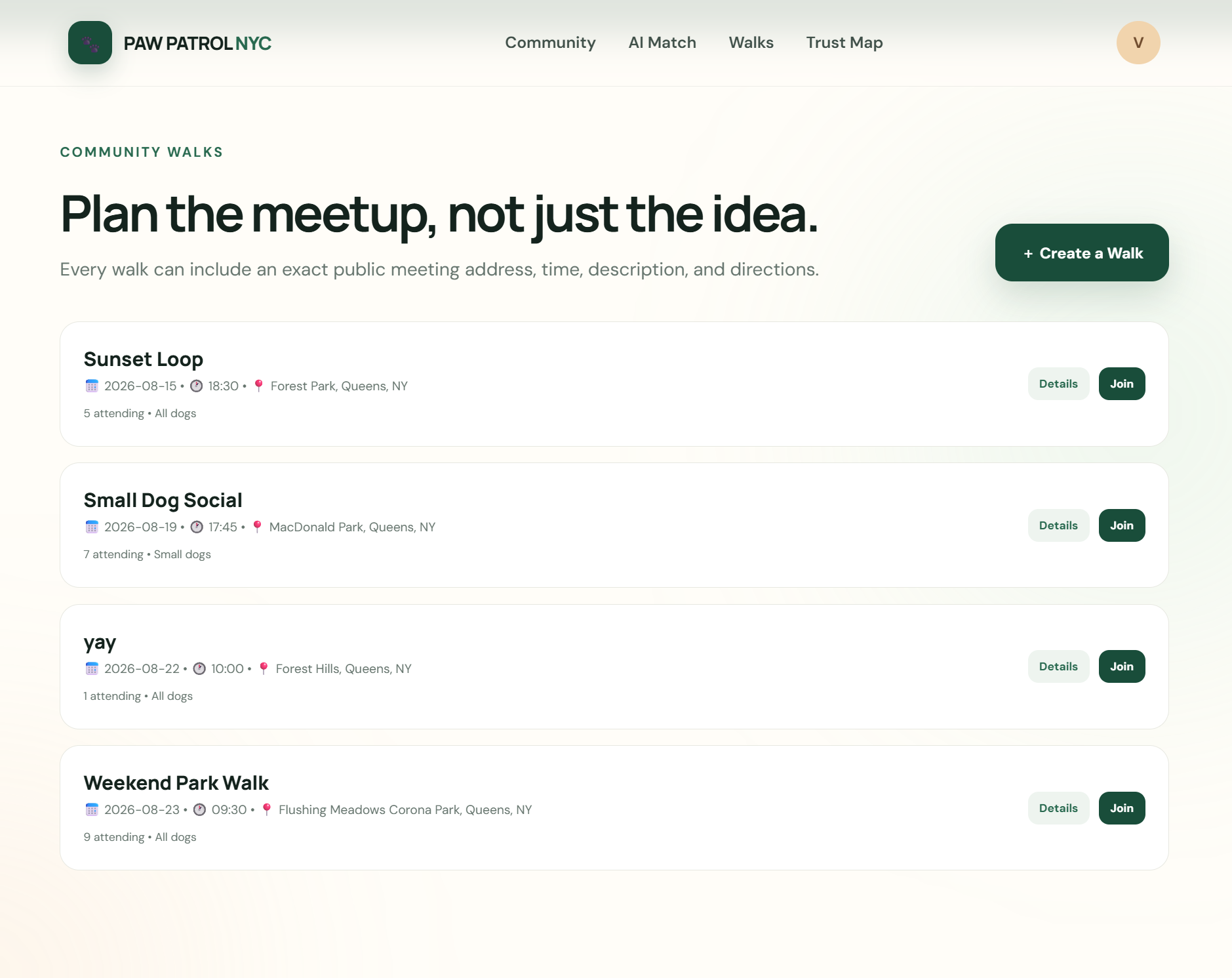
Community walks
-
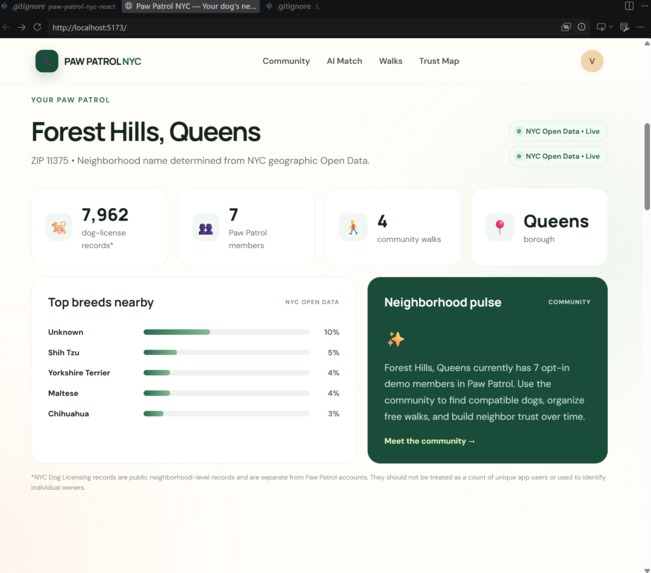
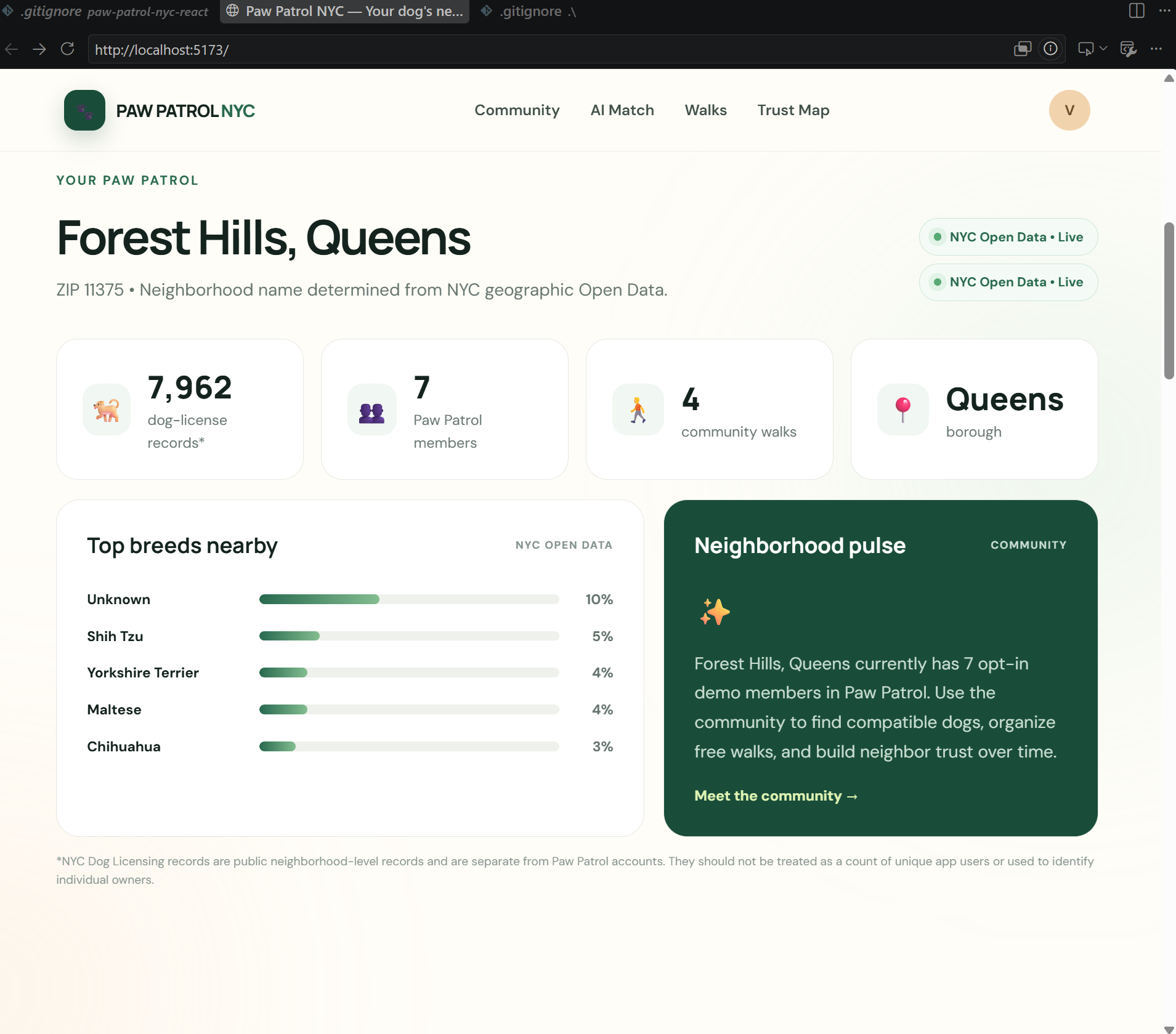
Dog information
-
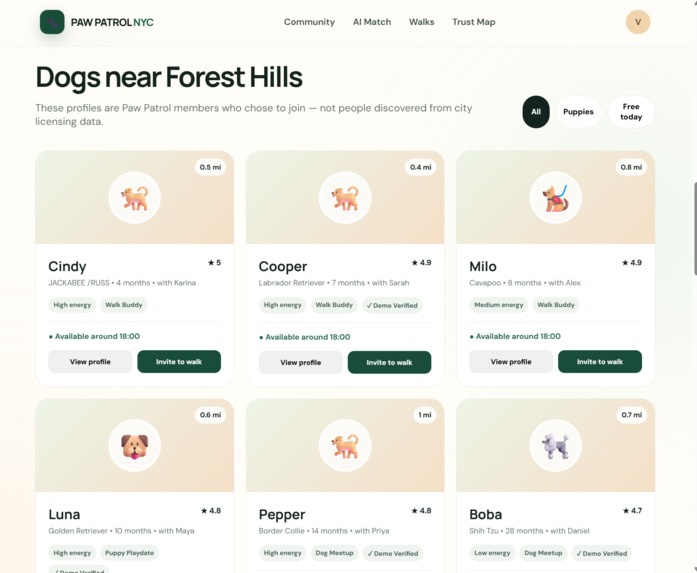
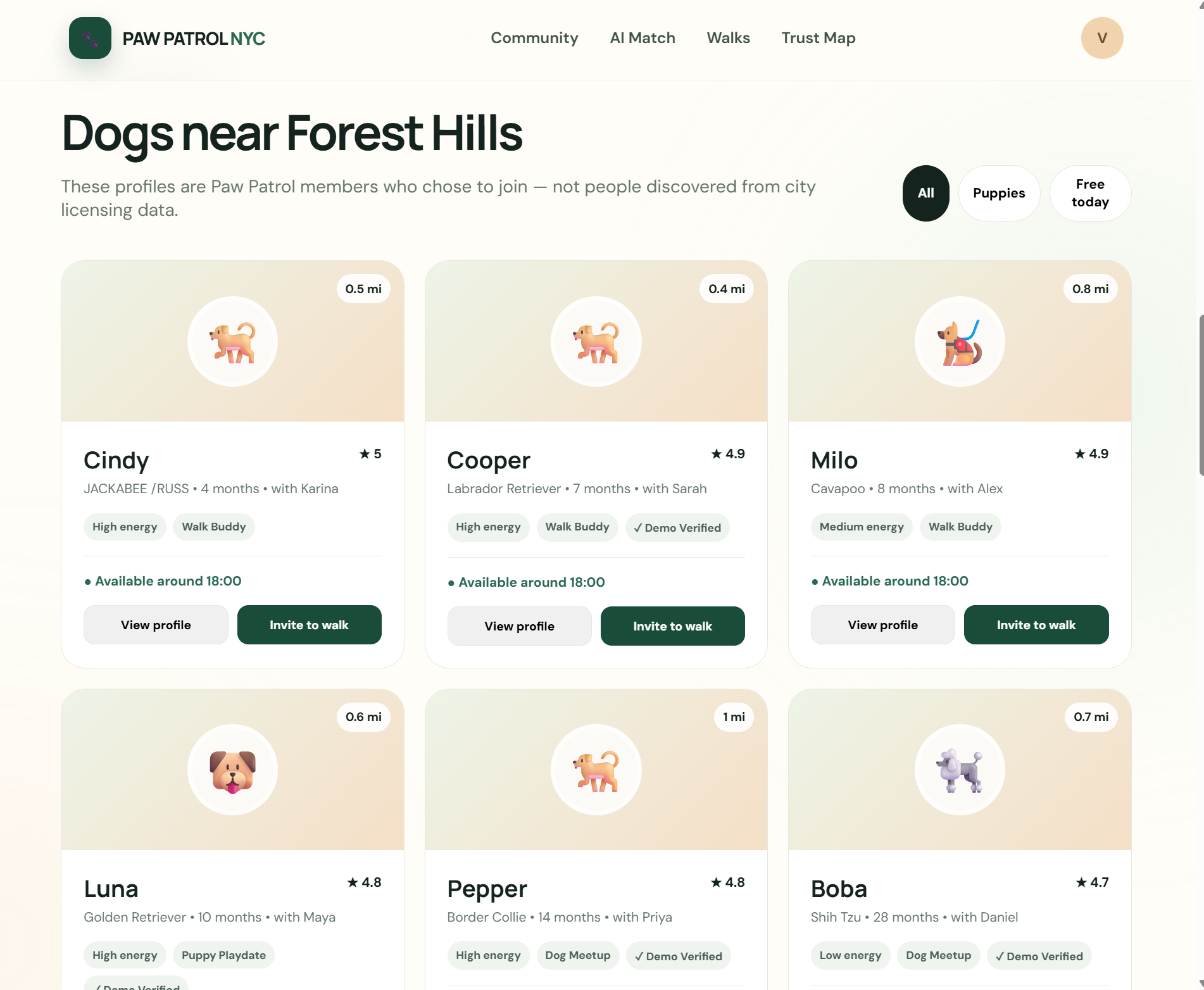
Nearby members
-
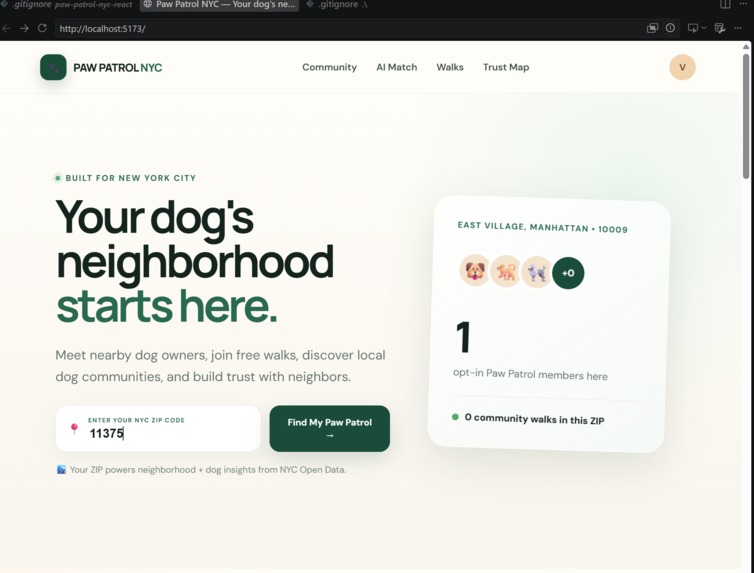
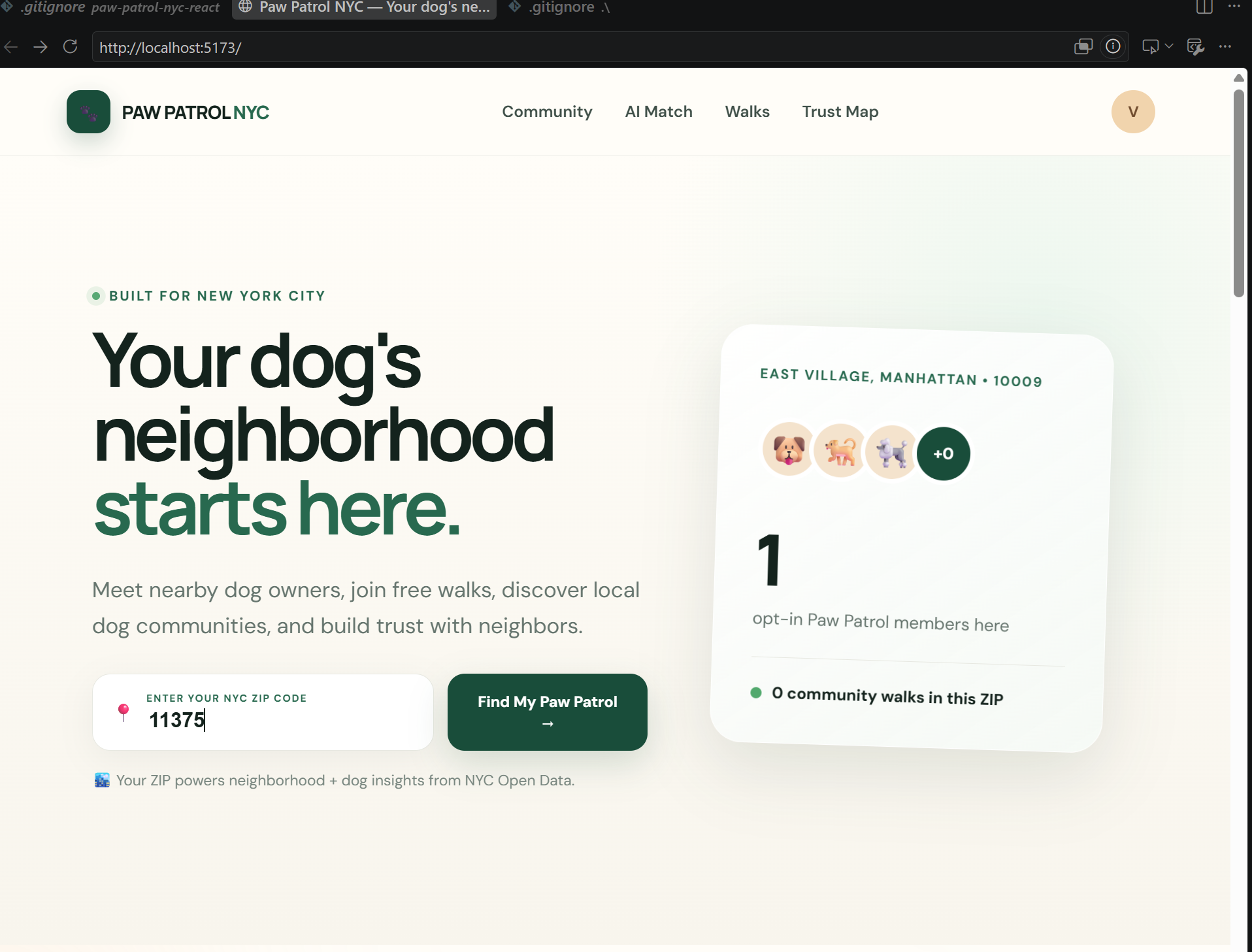
Entering zip code
-
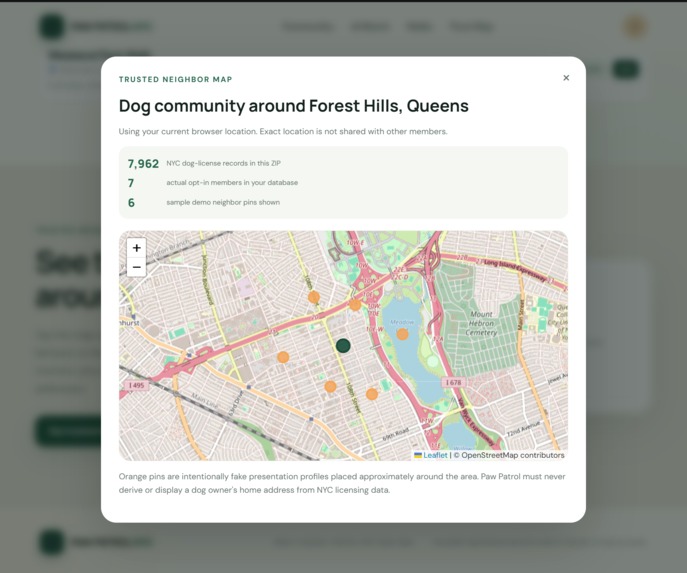
Map of owners near you
-
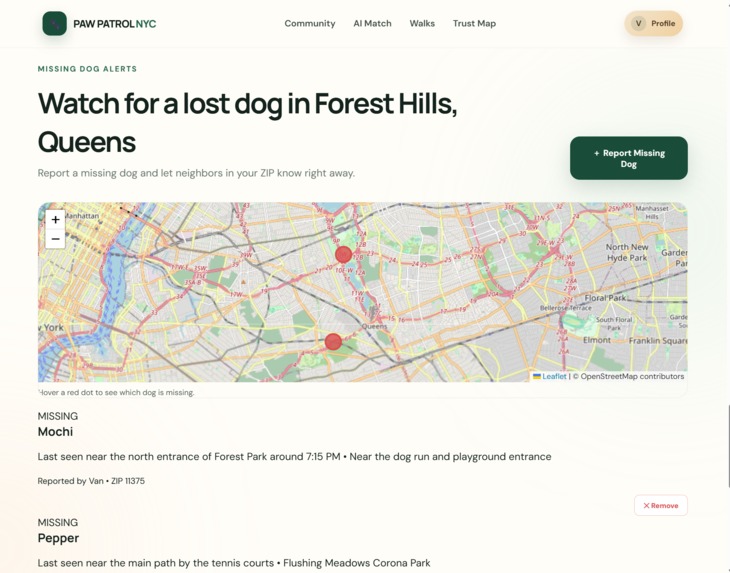
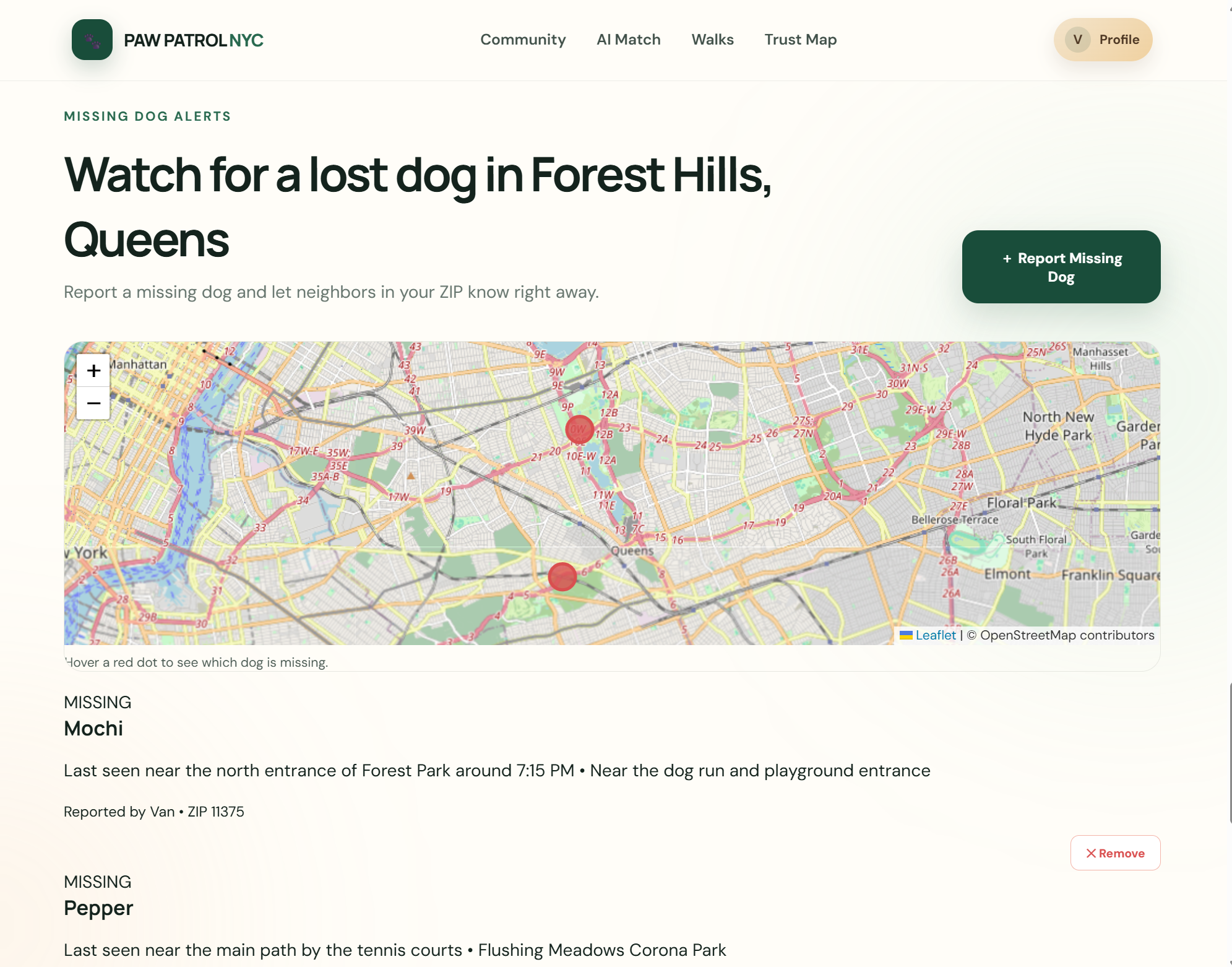
Missing dogs map
Inspiration
The idea for Paw Patrol NYC came from a friend who lost his dog and worked really hard to find him. It made me think that if nearby dog owners already knew each other and had a strong local community, it could be much easier to notice when a dog is missing and help prevent them from staying lost for long. Paw Patrol NYC is meant to connect dog lovers in the same neighborhood so their dogs can have walking buddies while owners build relationships and look out for each other. The goal is to create a close-knit community where people are not meeting for the first time after something goes wrong.
What it does
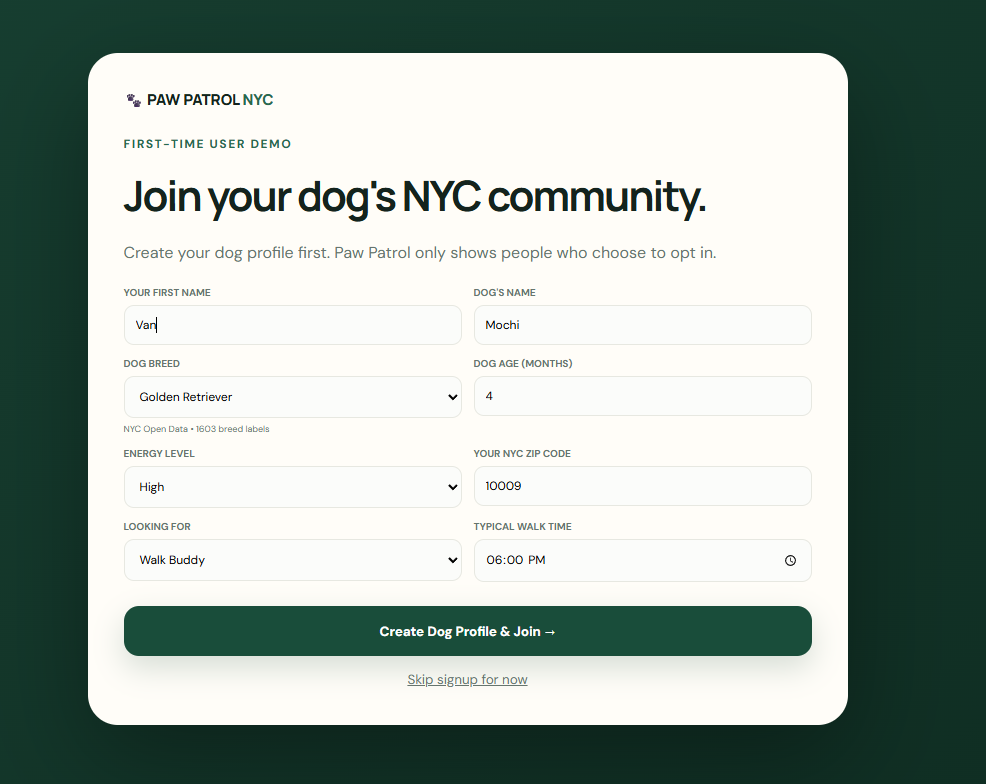
Paw Patrol NYC helps dog owners find other owners near them based on their ZIP code. Users can create a profile for themselves and their dog, see dog activity in their neighborhood, find nearby community members, and join or create local dog walks. We also use NYC Open Data to show real dog information for each area, including dog breed data and neighborhood information. The app uses NYC geographic data to figure out the correct area from the ZIP code. Users can also create community walks with a date, time, meeting address, and description. Other people can view all the details and open the meeting location in Google Maps. The trusted neighbors feature shows nearby dog owners on a map so users can start seeing who is part of the dog community around them.
How we built it
We built Paw Patrol NYC as a full-stack web application, with the frontend built with React and Vite and the backend built with Node.js and Express. We use SQLite to store community members and their dog information so the data can be embedded. We connected the app to NYC Open Data for information on dog licensing, breed statistics, ZIP code geography, and neighborhood data. We also used Leaflet and OpenStreetMap to create the map for nearby dog owners.
Challenges we ran into
One challenge was figuring out how to use ZIP codes correctly. It was easy to just hardcode locations like Forest Hills, but we wanted the app to actually work across NYC. We had to connect ZIP code geography with NYC neighborhood data so the location could be figured out automatically. Another challenge was making sure the dog breed data was accurate. We did not want to show percentages based on only a small sample, so we changed the way we query NYC Open Data to use the full set of records for the selected ZIP code. We also kept privacy in mind since NYC Open Data can tell us how many dog records are in an area, but it should not be used to find individual owners. That is why all Paw Patrol members are separate, opt-in profiles.
Accomplishments that we're proud of
We are proud that NYC Open Data powers real features in the app like neighborhood lookup and local dog breed statistics. Our database also stores community members and walk information so the app can be updated as new users join.
What we learned
We learned a lot about full-stack development, working with databases, connecting APIs, and using mapping tools. We also learned how to make the app reliable even when an outside service like NYC Open Data is unavailable.
What's next for Paw Patrol NYC
The next step is to make Paw Patrol NYC feel like a real neighborhood network. We want to add real user accounts, messaging, walk invitations, notifications, and better trust features. We also want to use AI to match dogs based on things like age, energy level, temperament, and availability. Eventually, the app could automatically notice when several compatible dog owners are free at the same time and suggest a community walk. The goal is for people to build enough trust through walks and meetups that they can help each other with their dogs without everything needing to become a paid service.
Built With
- api
- data
- express.js
- html
- javascript
- leaflet.js
- node.js
- nyc
- open
- openstreetmap
- react
- rest
- socrata
- sqlite
- vite

Log in or sign up for Devpost to join the conversation.