-
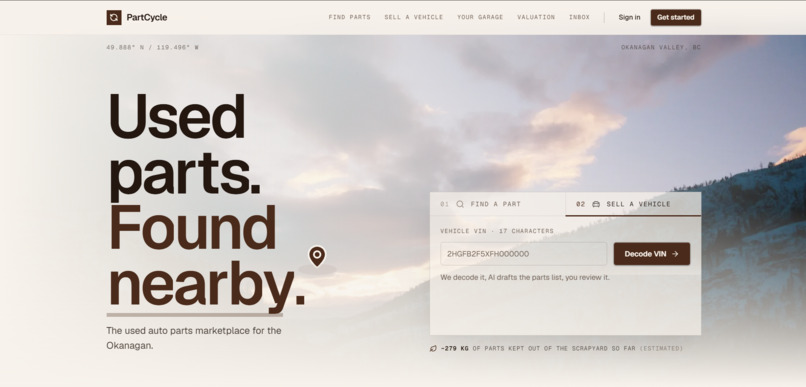
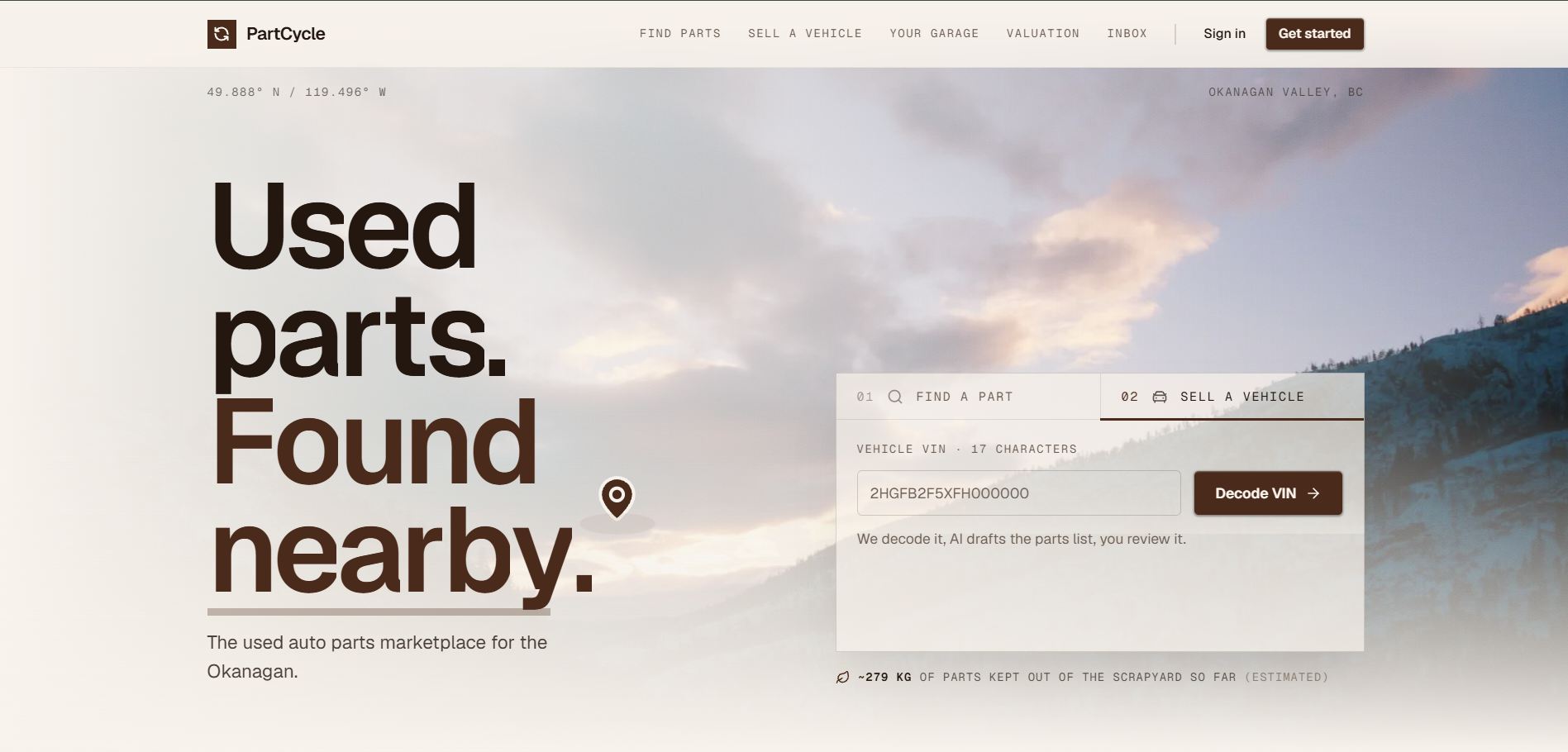
Homepage
-
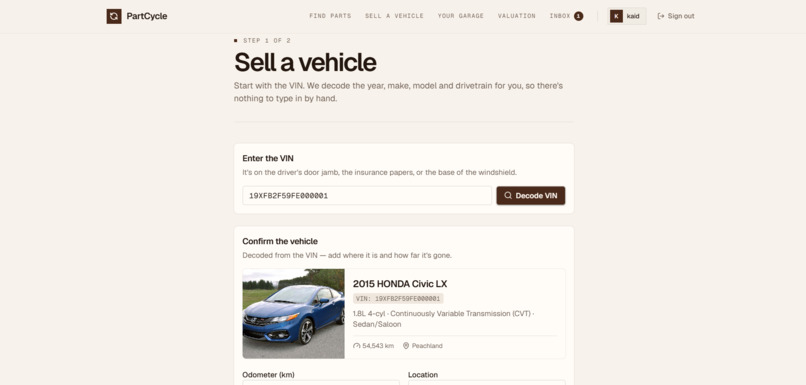
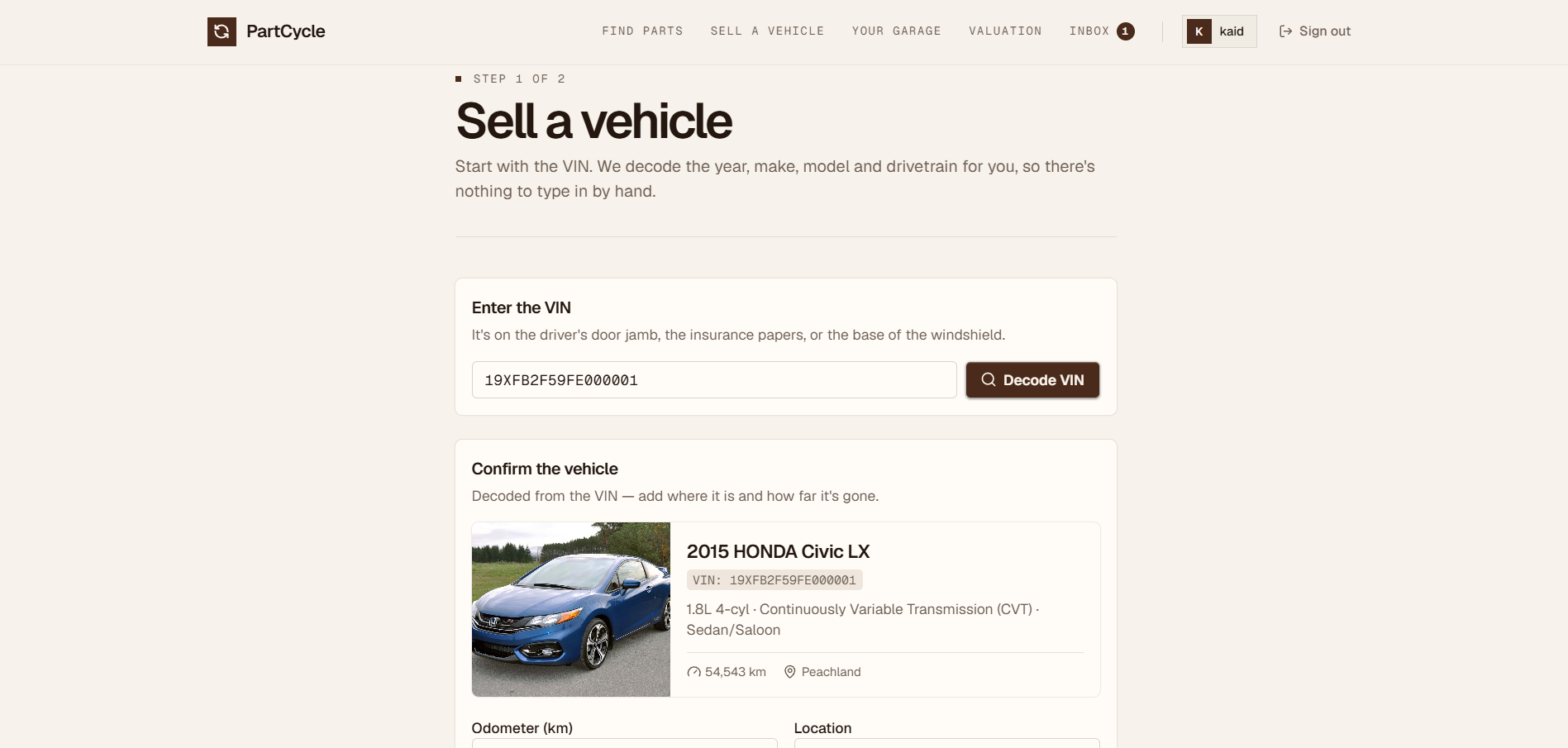
Sell a vehicle
-
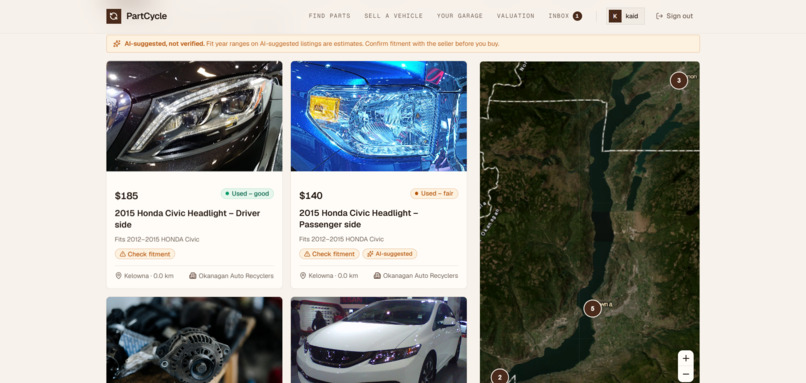
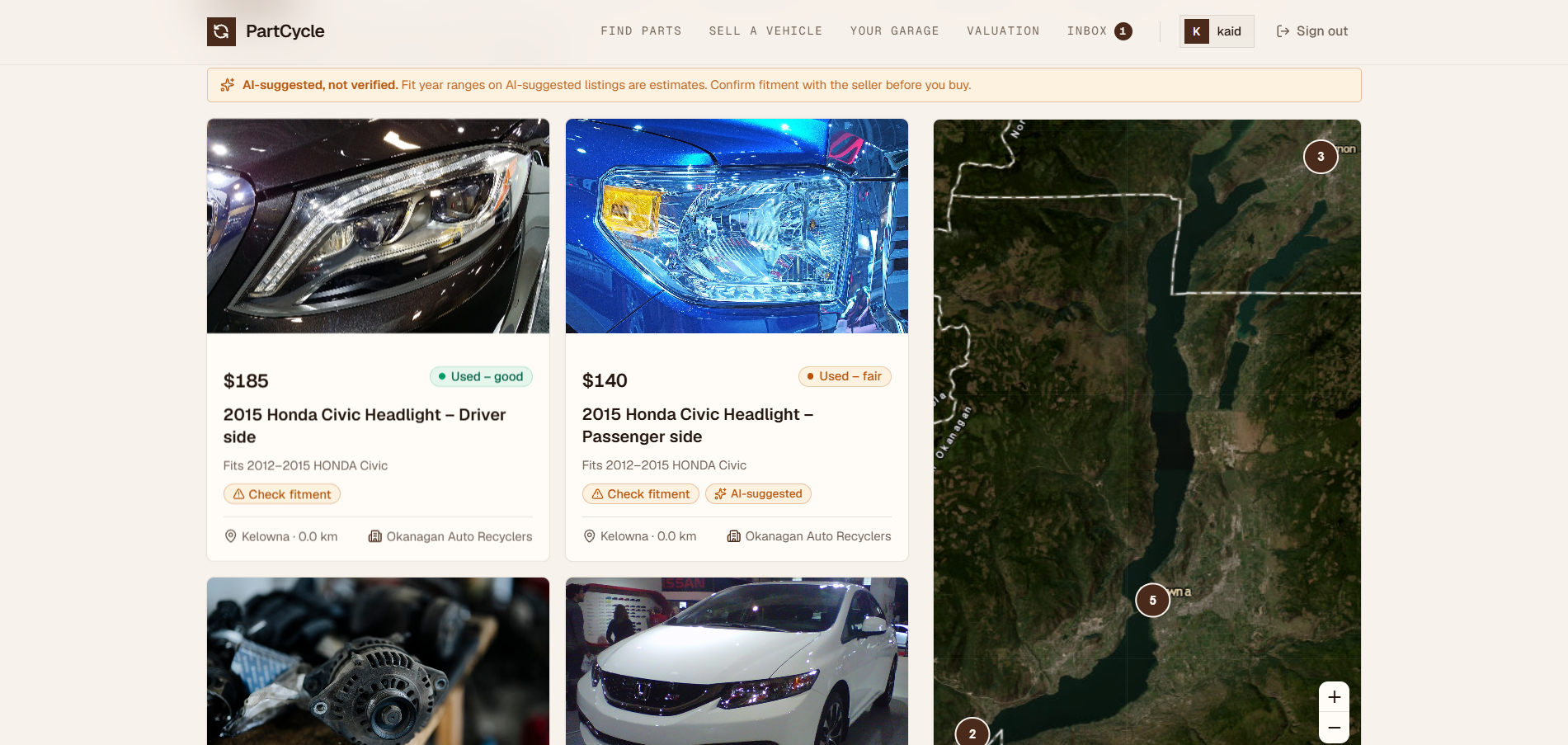
Search for parts
-
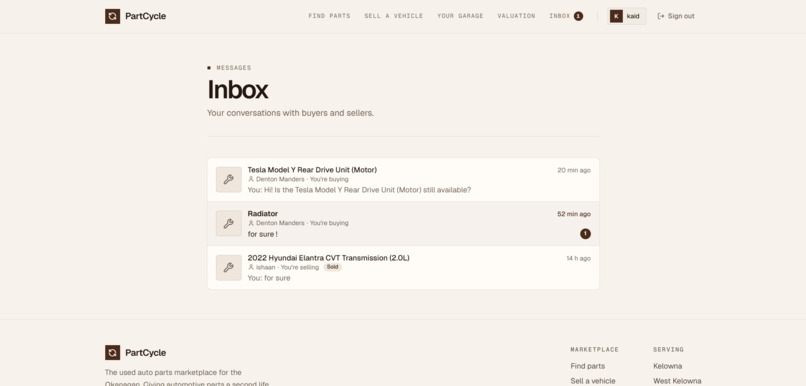
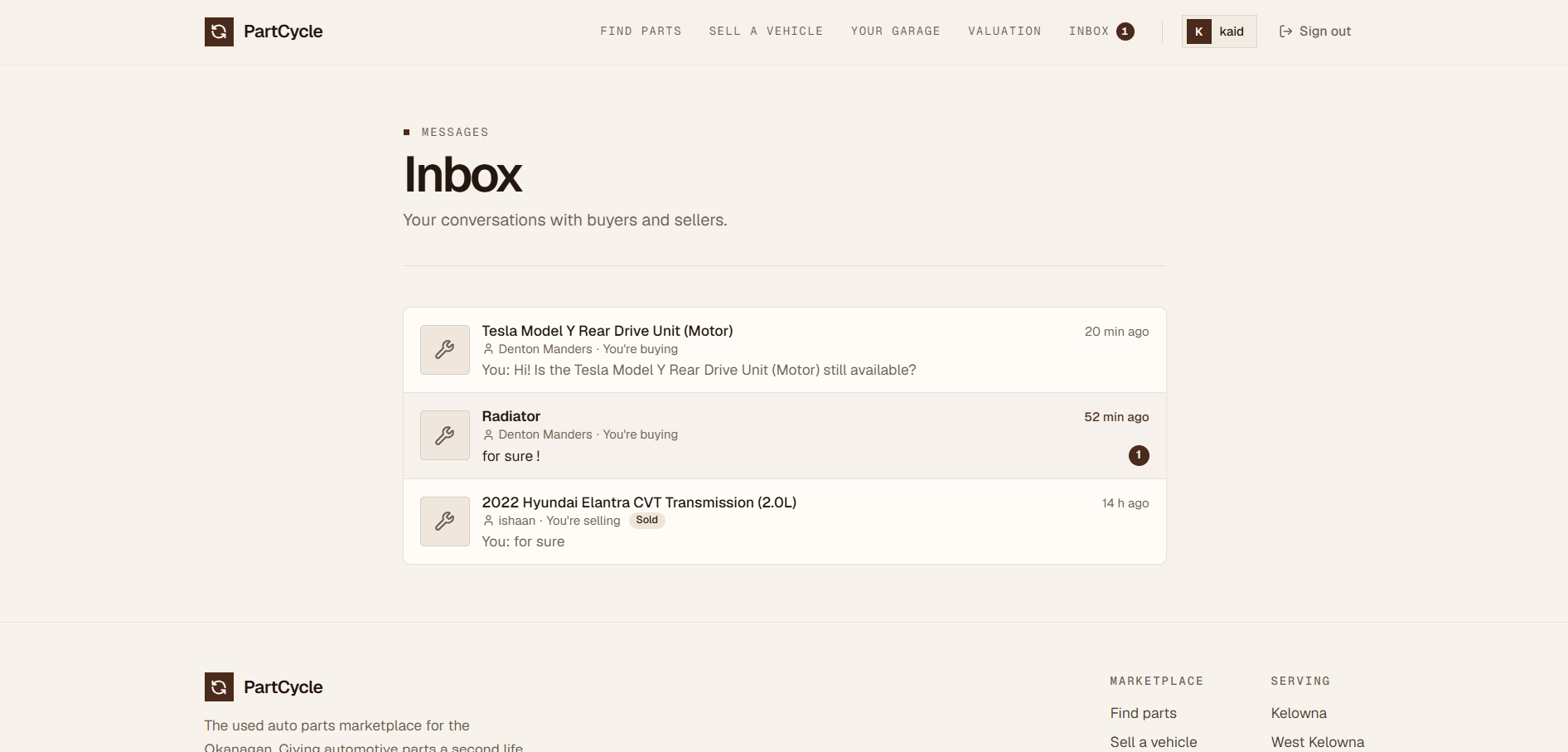
Inbox
Inspiration
A vehicle's end of life doesn't have to be the end of its value.
When vehicles are damaged, abandoned, or no longer worth repairing, many of their individual components are still perfectly usable. Meanwhile, vehicle owners face expensive repairs and difficulties finding affordable, compatible replacement parts.
Inspired by this year's hackathon theme, Afterlife, we wanted to bridge this gap by creating a platform that gives automotive parts a second life while making vehicle repairs more accessible, affordable, and sustainable.
What it does
PartCycle is an AI-assisted automotive parts marketplace that connects salvage yards and private sellers with mechanics and vehicle owners across the Okanagan.
Rather than simply creating another marketplace, PartCycle simplifies the entire journey from identifying and valuing automotive parts to finding them a new home.
How we built it
We built PartCycle as a full-stack web application using:
Frontend: Next.js, TypeScript, Tailwind CSS, and shadcn/ui Backend: Next.js API routes Database and Services: Supabase, PostgreSQL, Auth, Storage, and Realtime Artificial Intelligence: OpenCode Go Vehicle Identification: NHTSA vPIC API Mapping: Leaflet and OpenStreetMap Testing: Vitest Deployment: Vercel and Docker
Challenges we ran into
One of our biggest challenges was integrating AI-generated information into a marketplace where accuracy matters. Automotive compatibility can be complex, and AI-generated suggestions cannot always be treated as reliable.
To address this, we implemented input and output validation, clear AI disclaimers, and a seller review process that gives users control over their listings before publishing.
Accomplishments that we're proud of
- Building and deploying a functional full-stack marketplace.
- Integrating AI-assisted inventory generation, vehicle valuation, and location-based search.
- Prioritizing security, automated testing, and maintainability within the hackathon timeframe.
What we learned
Throughout this hackathon, we gained hands-on experience integrating AI into a full-stack application, working with external APIs, designing relational databases, and implementing secure user interactions.
Beyond technical skills, we strengthened our teamwork, communication, problem-solving, and ability to prioritize features under tight deadlines.
What's next for PartCycle
We envision PartCycle growing beyond the Okanagan and:
- Introducing seller verification and customer reviews.
- Improving valuation accuracy using real-world market data.
- Measuring the environmental impact of automotive part reuse.
Built With
- docker
- git
- github
- glm
- leaflet.js
- next.js
- nhtsa
- openstreetmap
- postgresql
- shadcn/ui
- supabase
- tailwind
- typescript
- vercel
- vitest
