-
-
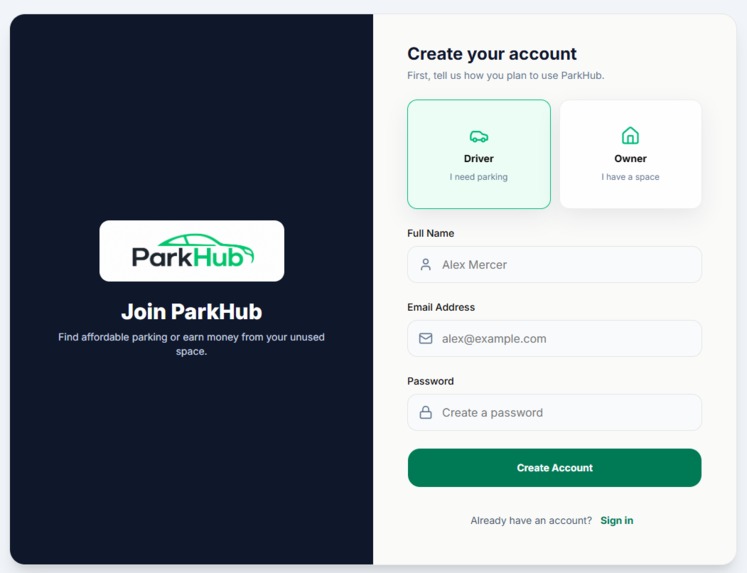
Sign Up page
-
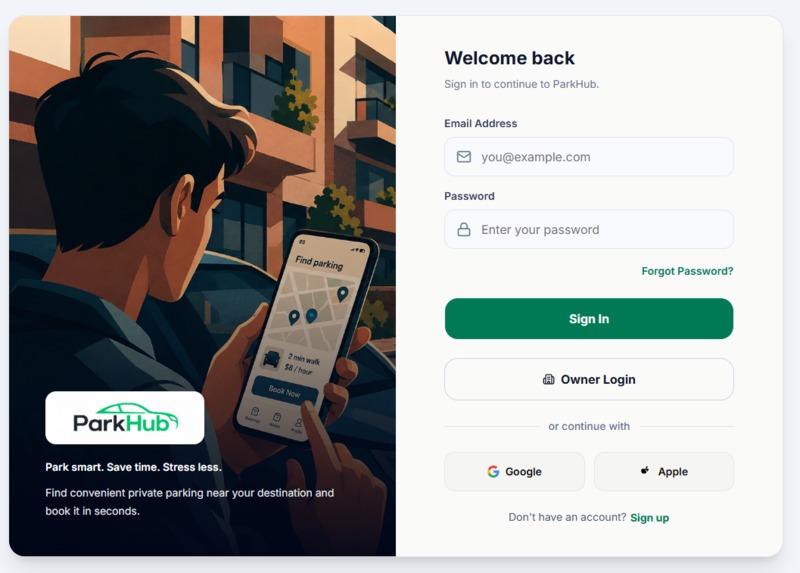
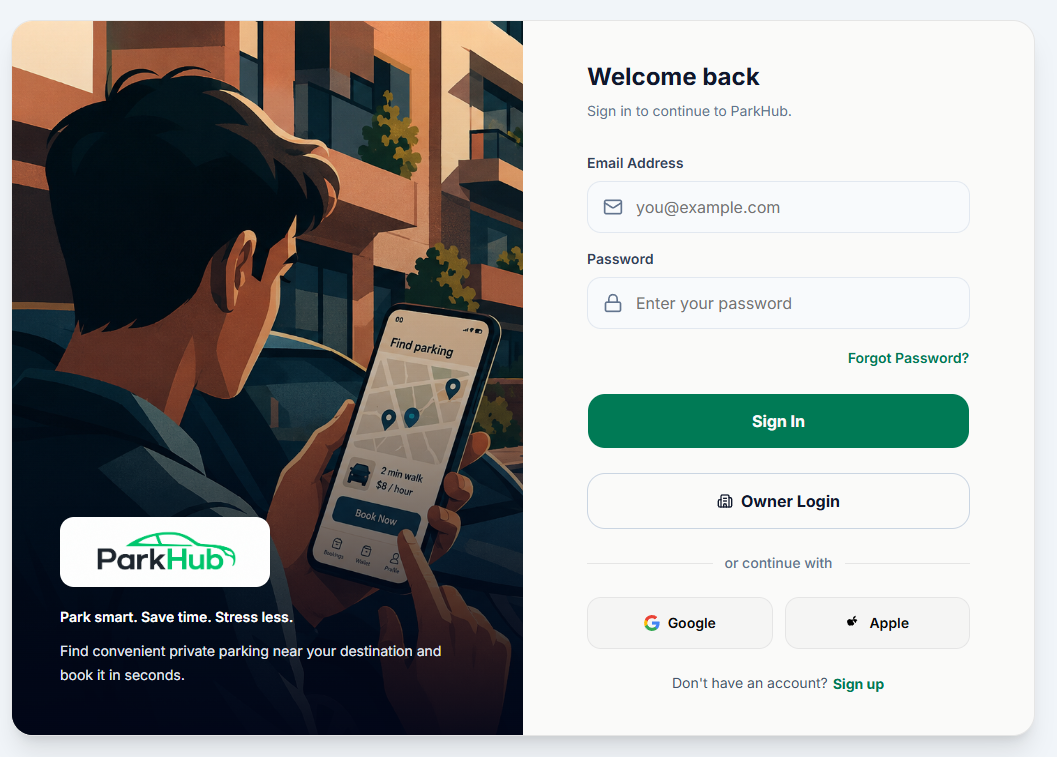
Login (Owner + Driver) Page
-
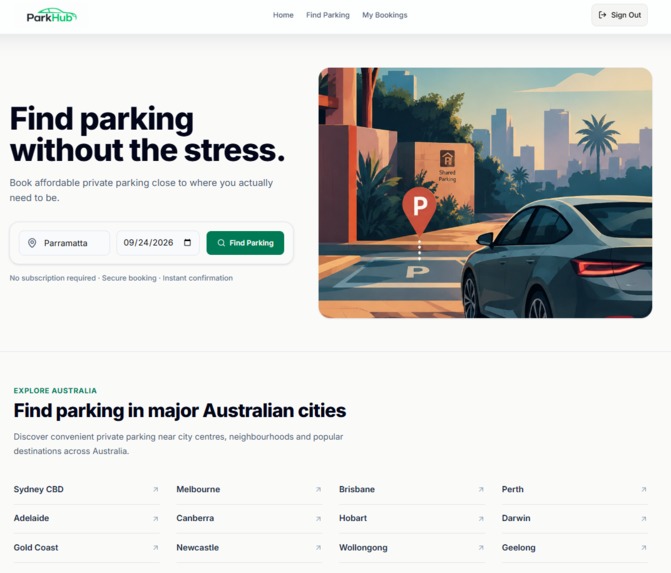
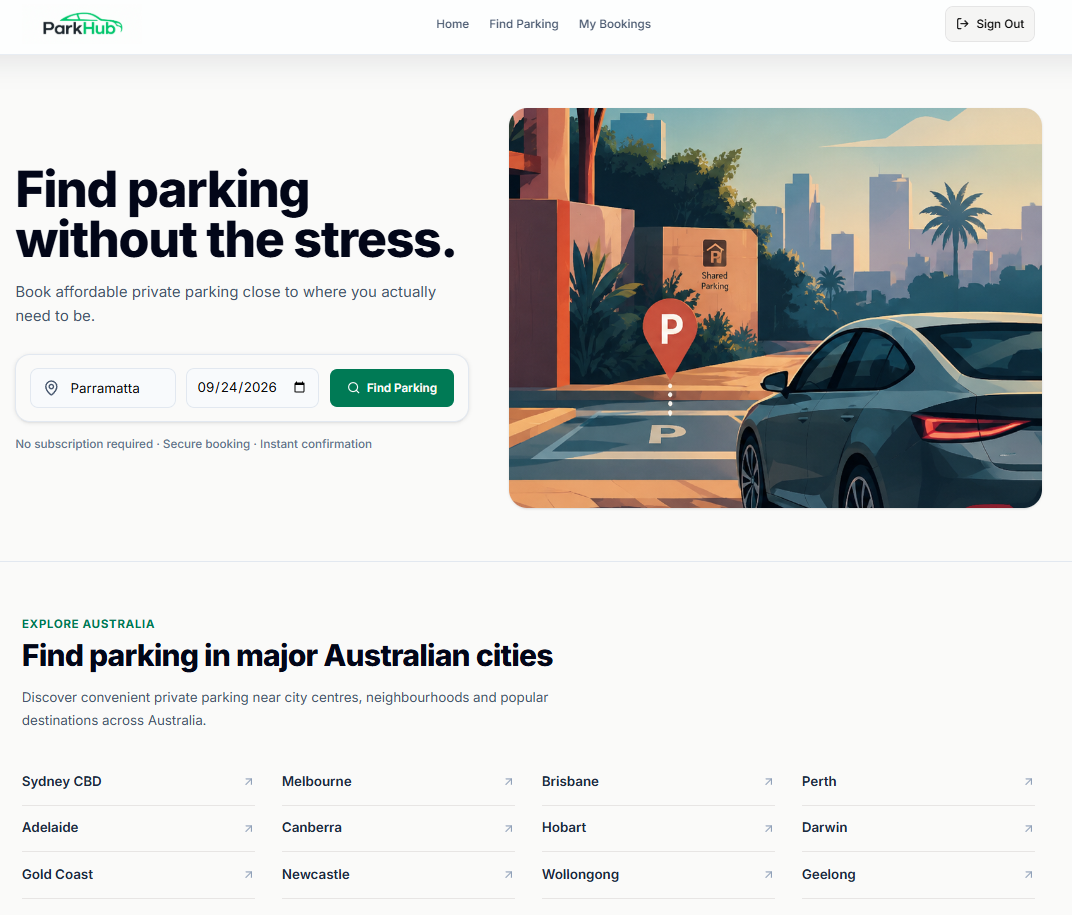
Hero section
-
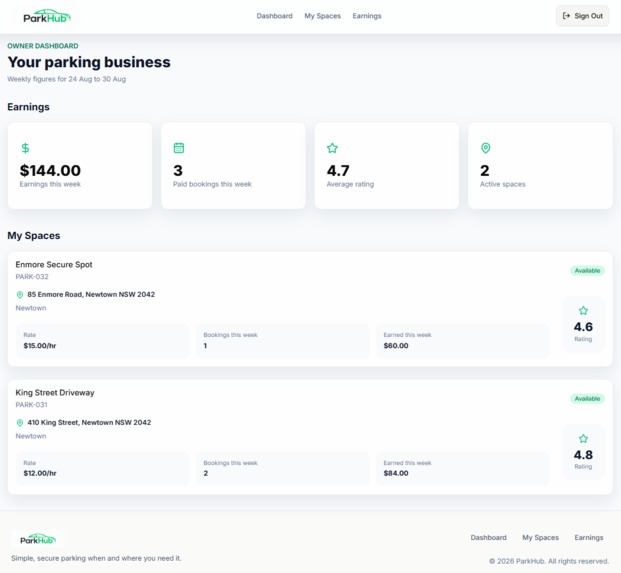
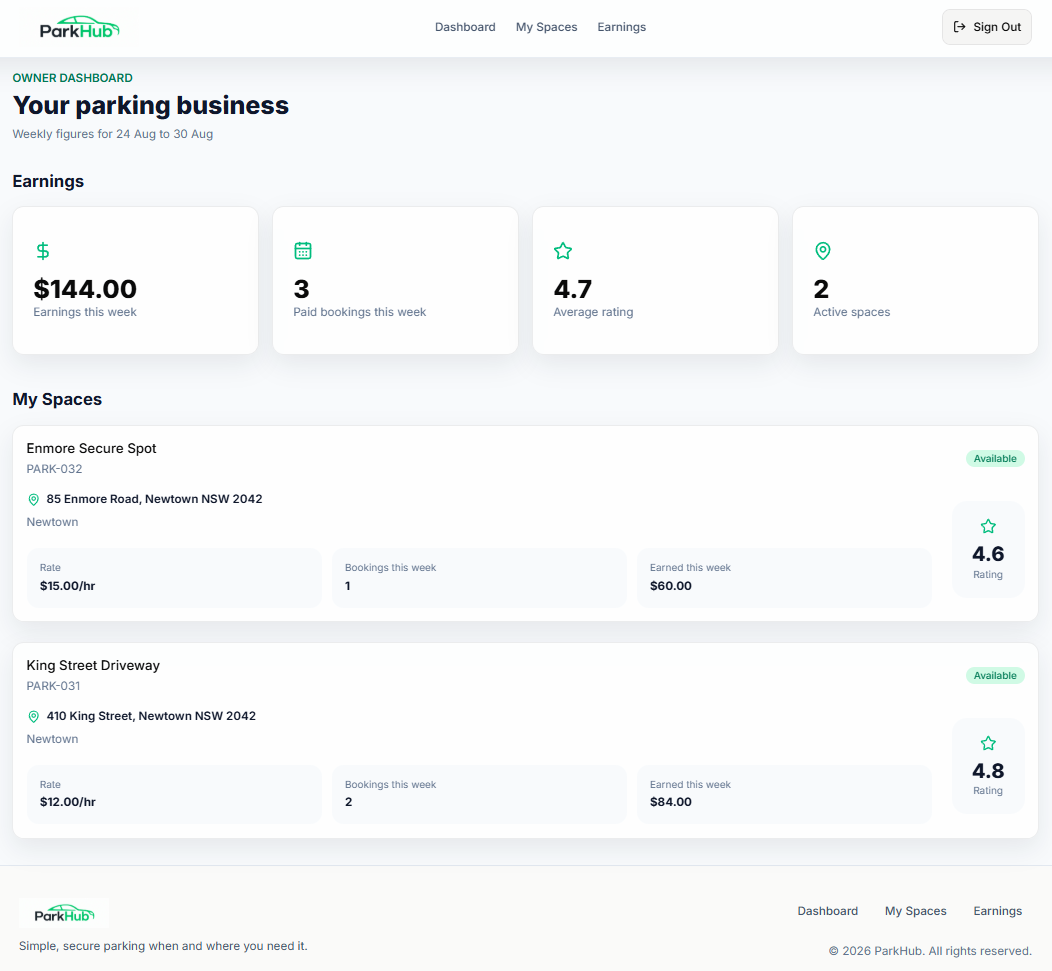
Owner Dashboard (for owner login)
-
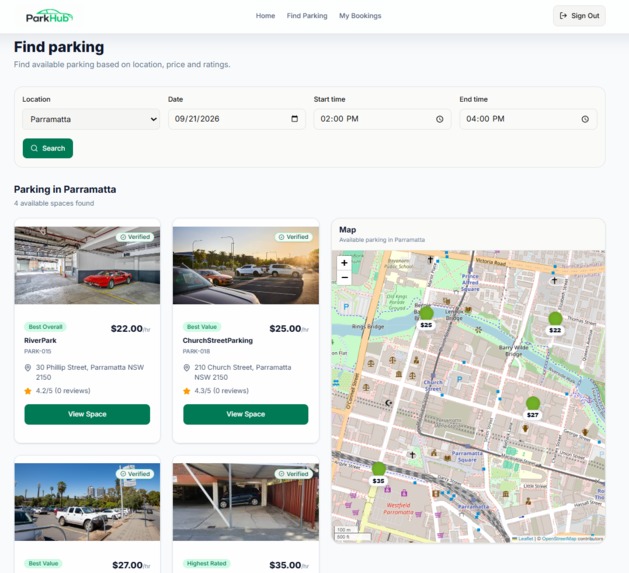
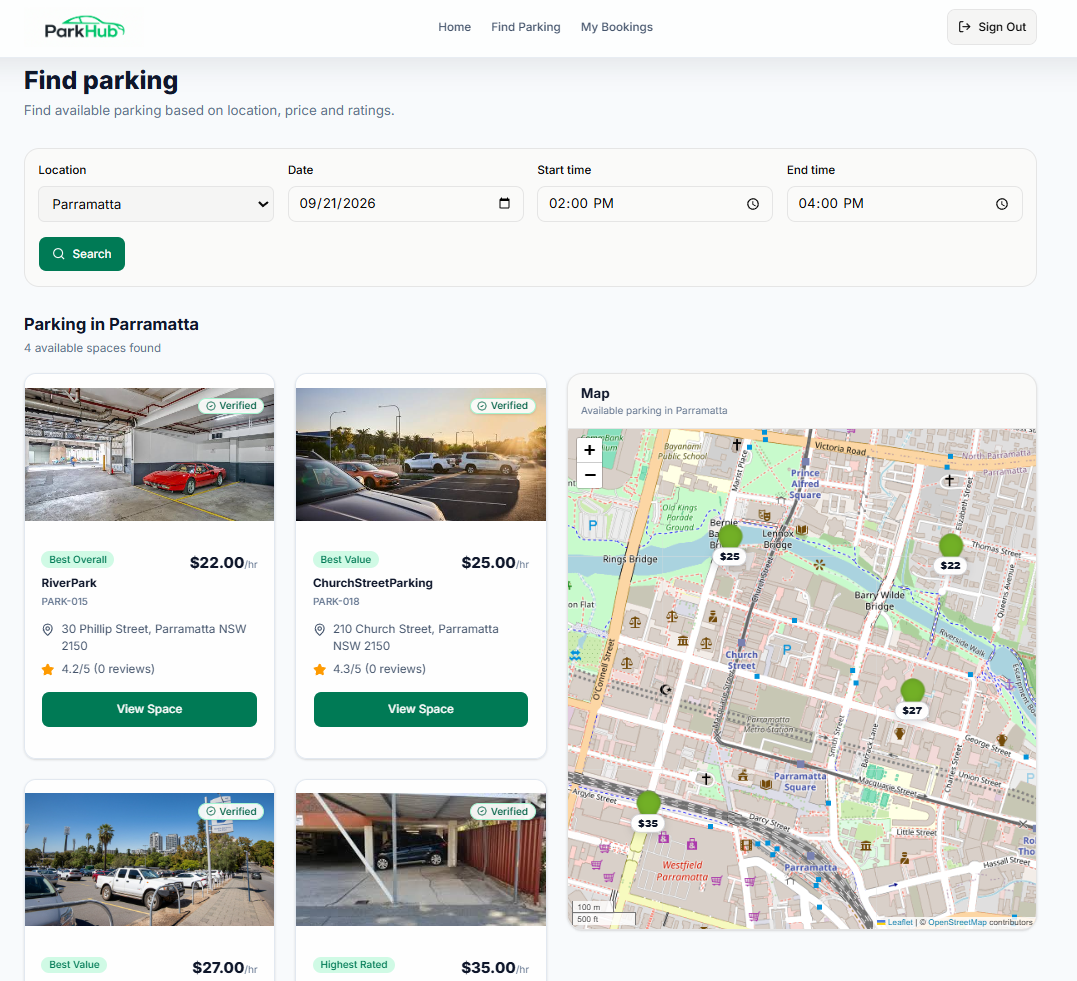
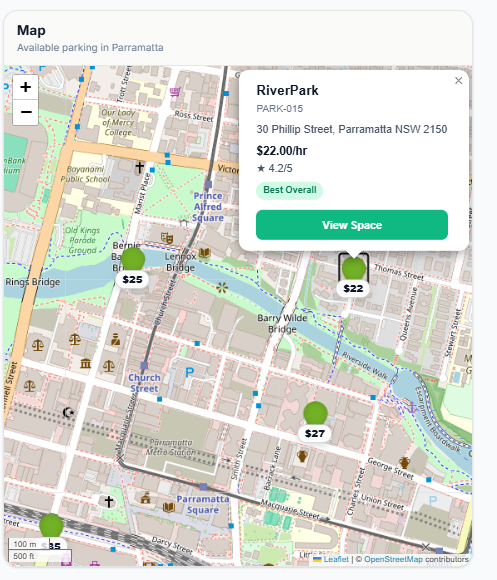
Find Spaces
-
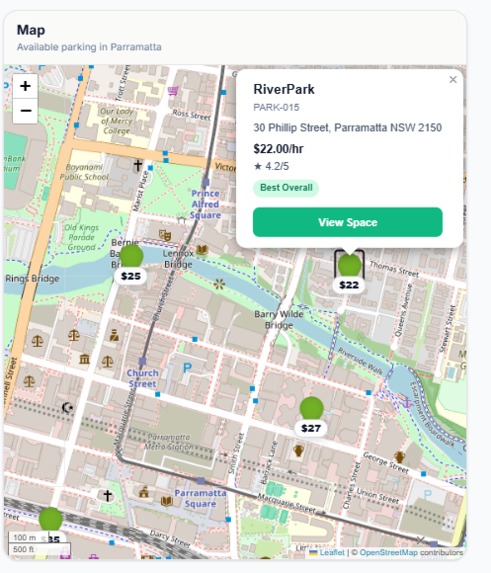
User can click on map markers for more details
-
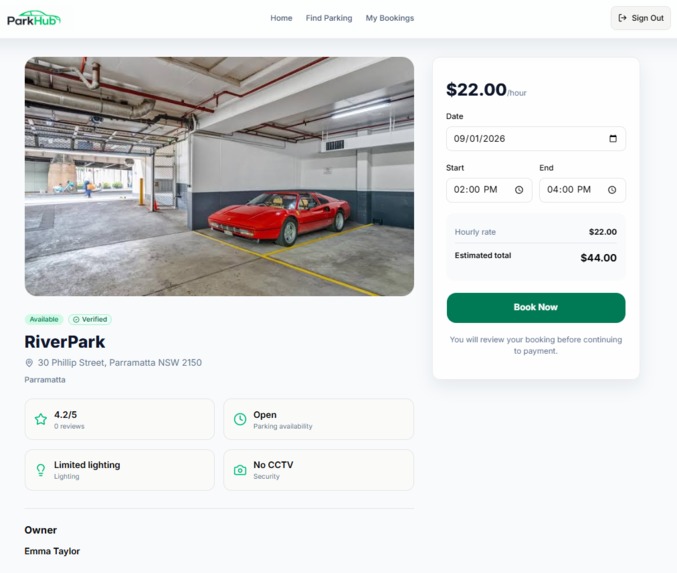
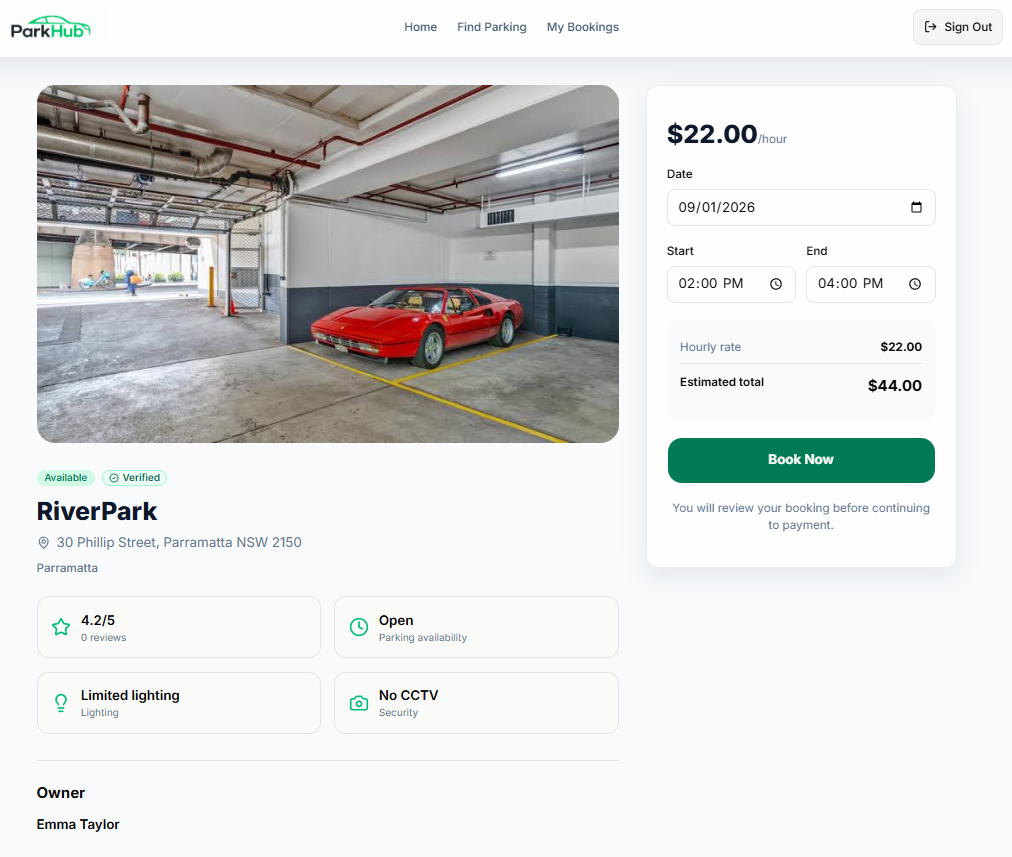
View a space
-
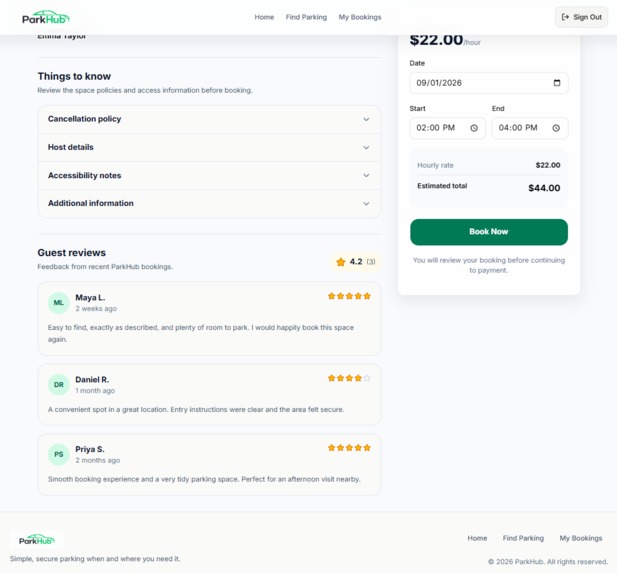
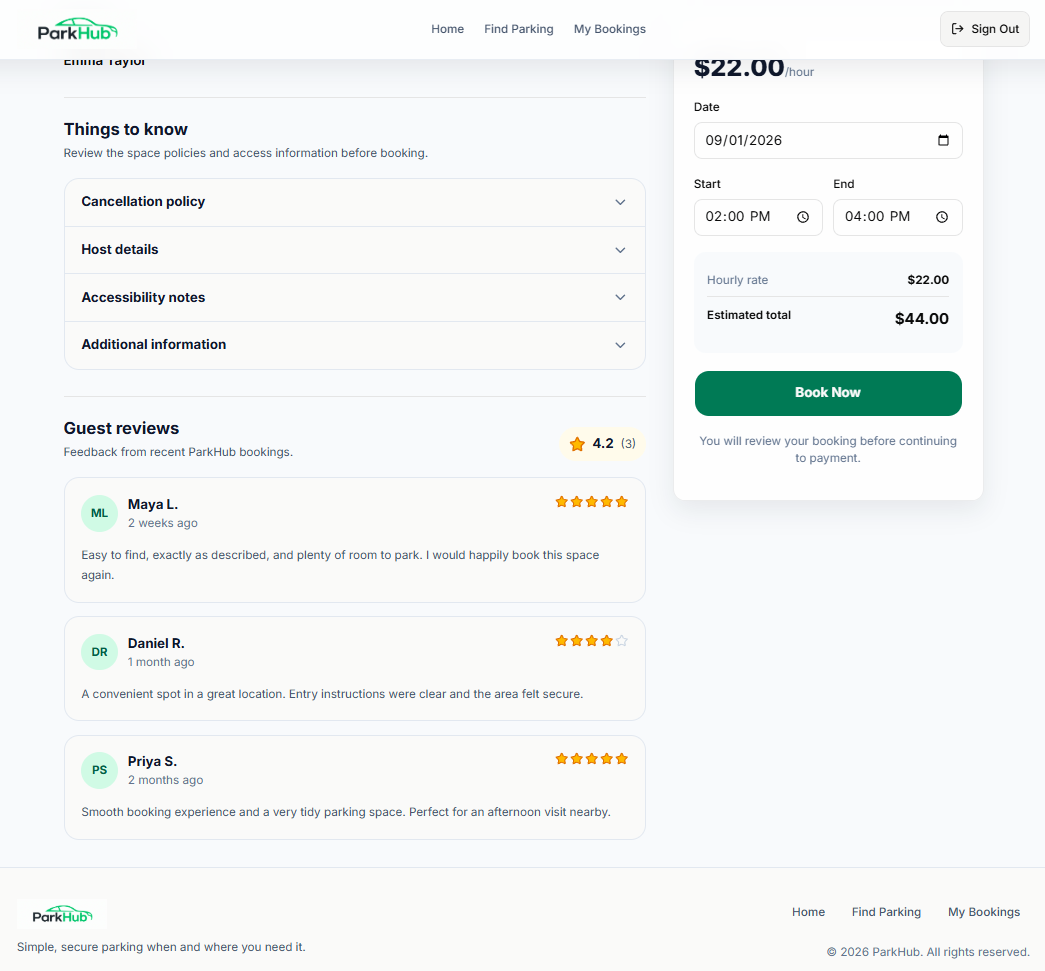
Space ratings and details
-
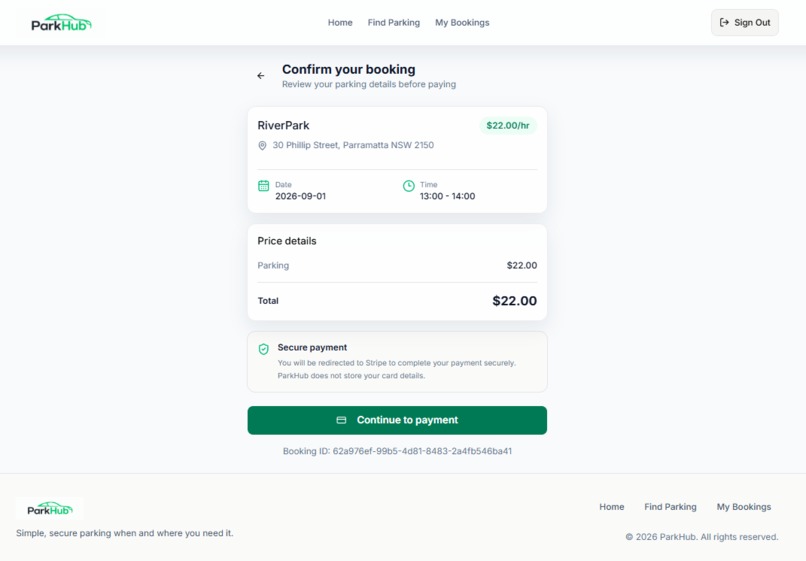
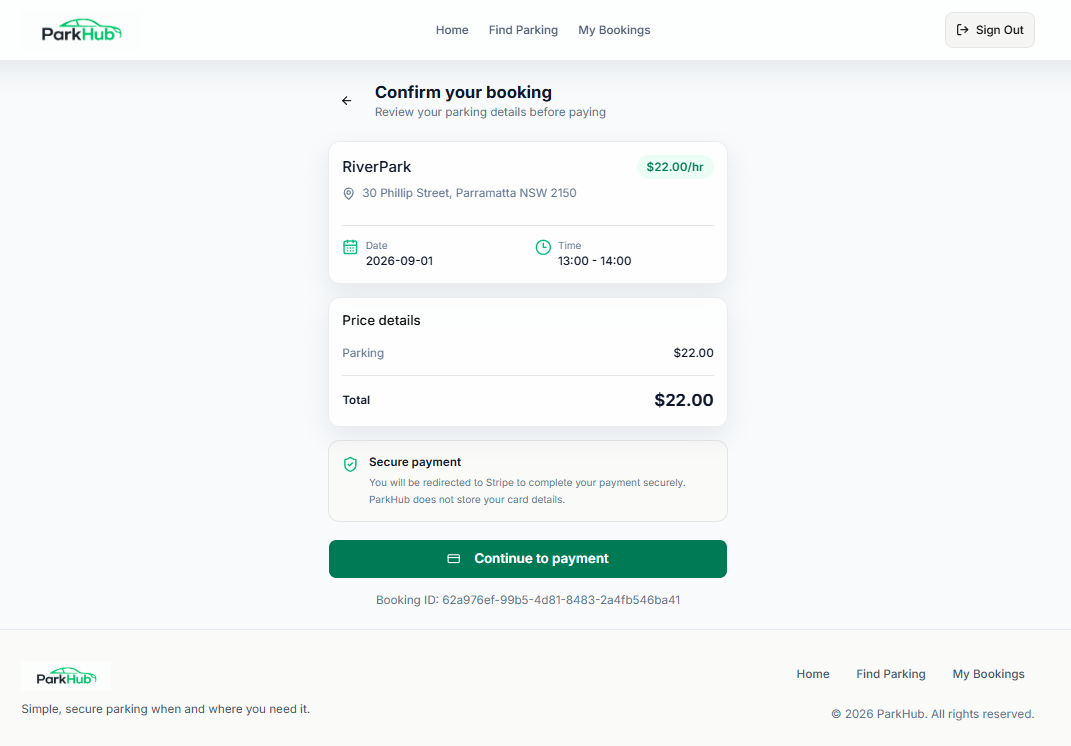
Confirm Booking page
-
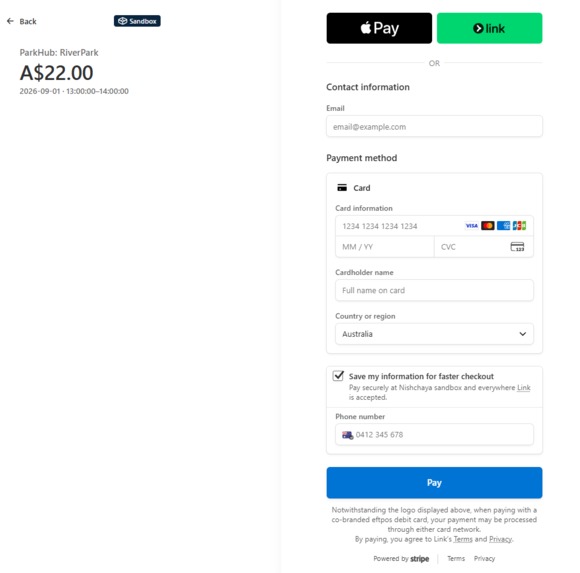
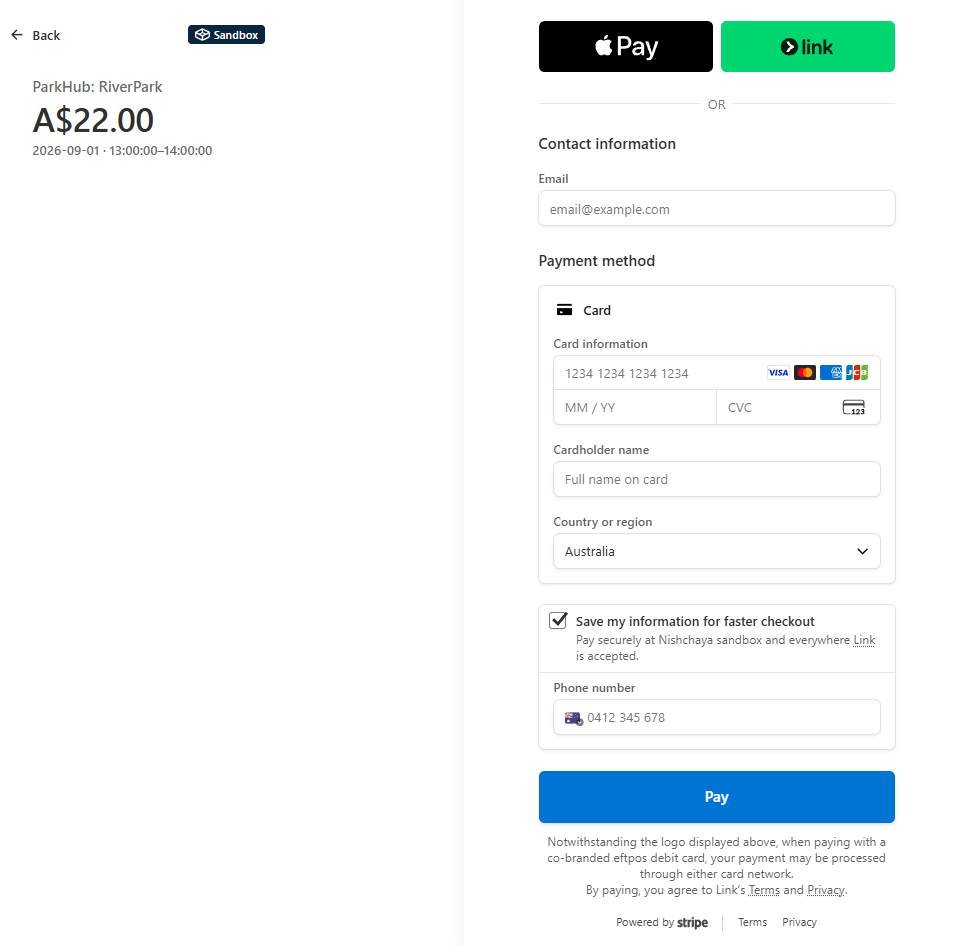
Stripe payment gateway
-
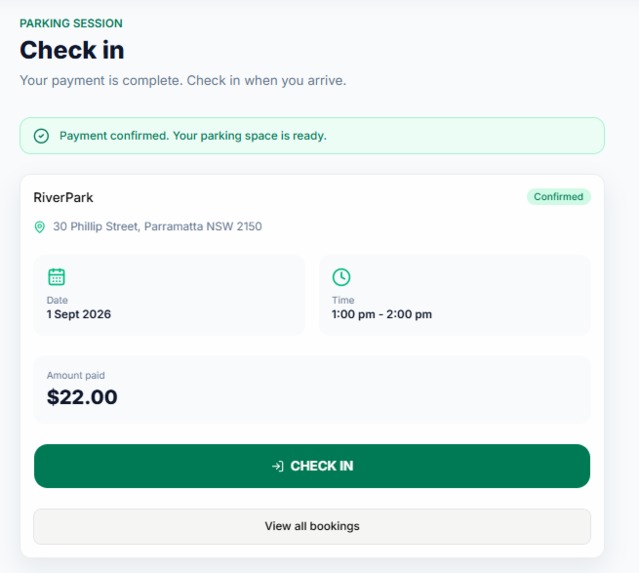
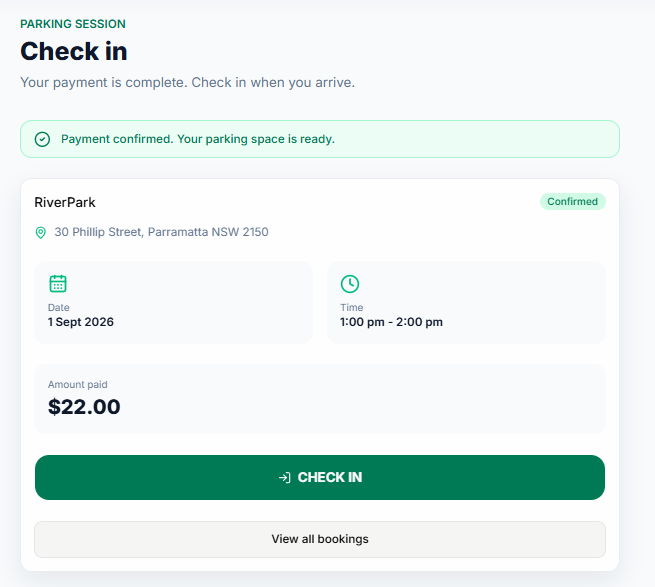
Check in page
-
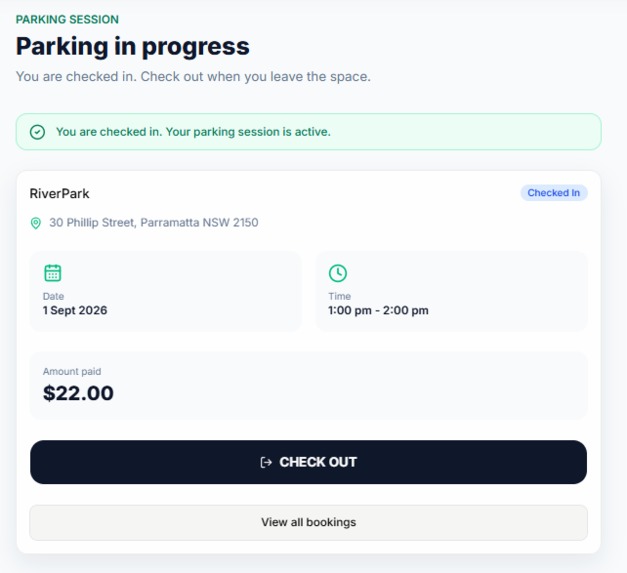
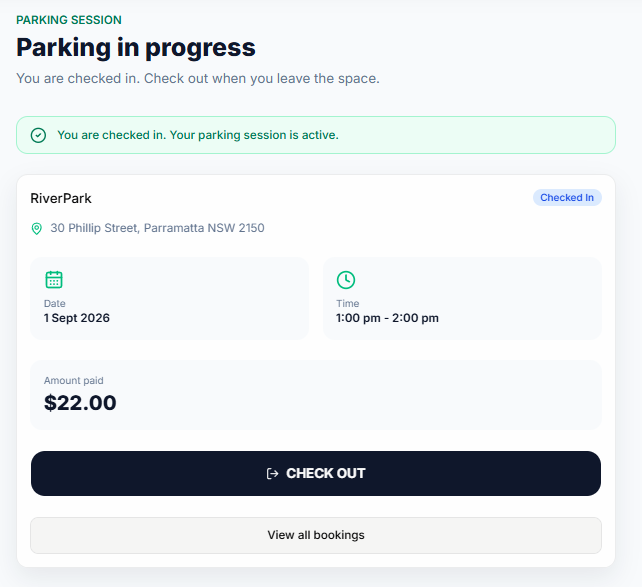
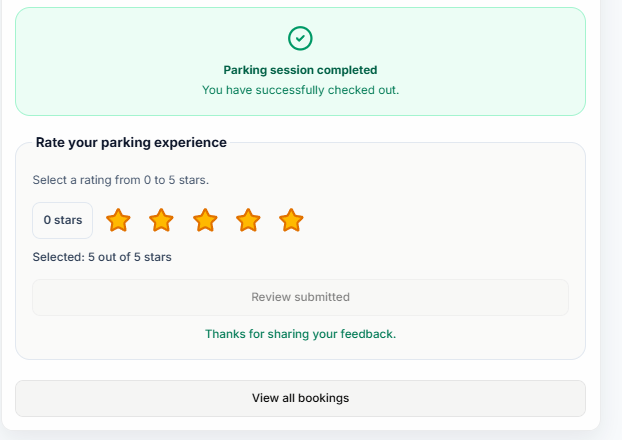
Check out page
-
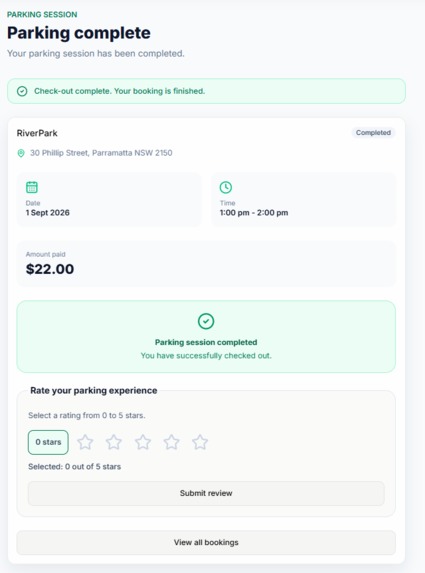
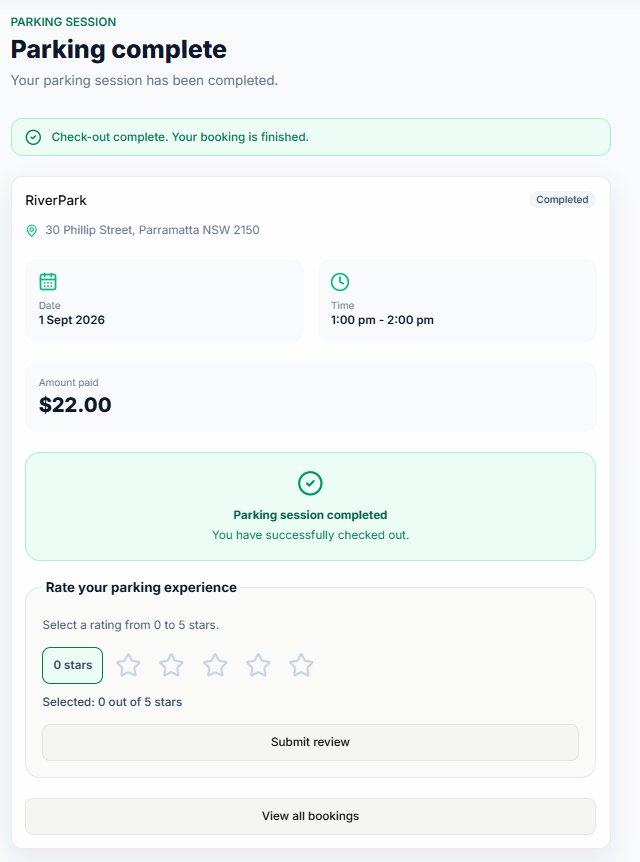
Parking complete
-
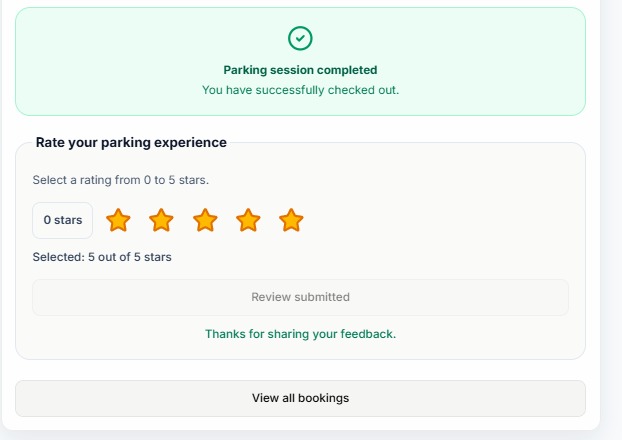
Review the parking space
-
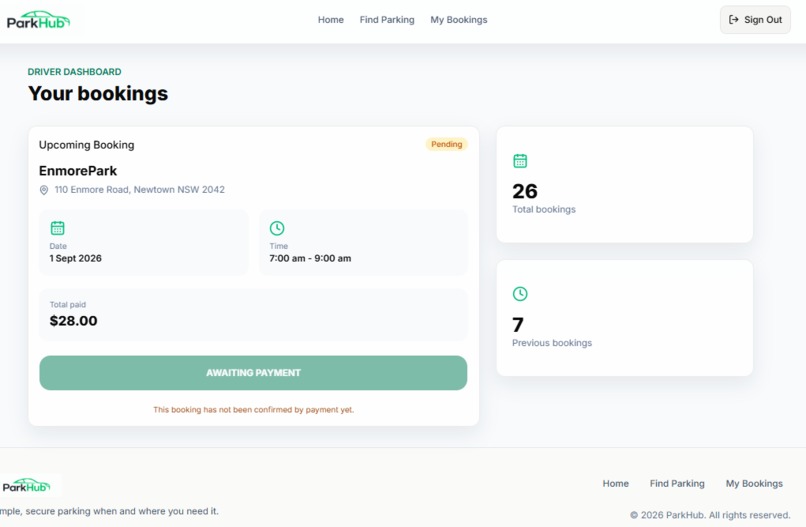
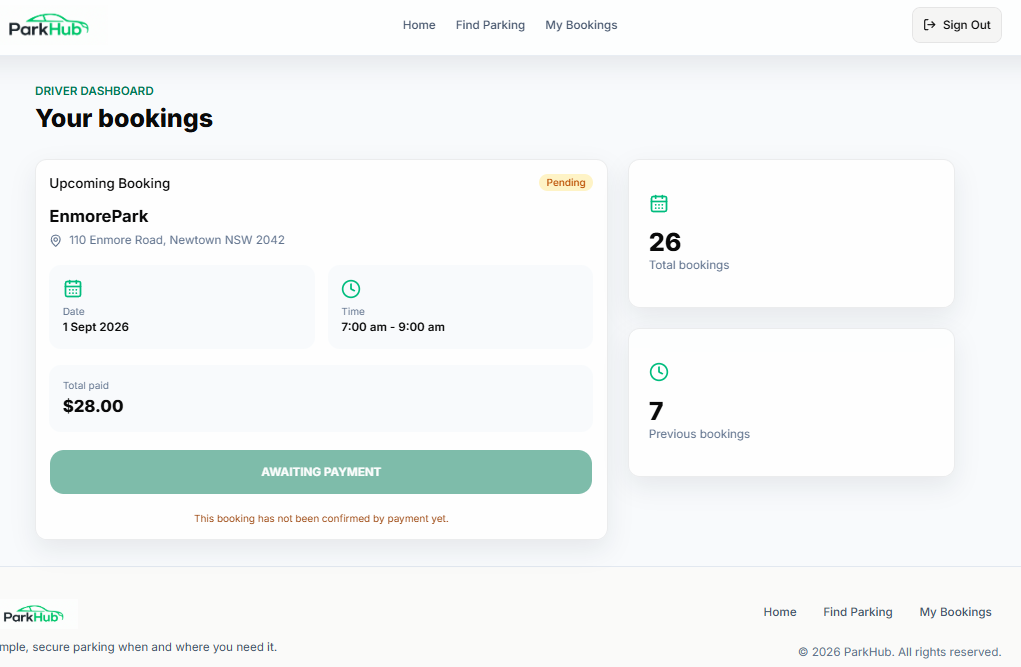
My bookings page
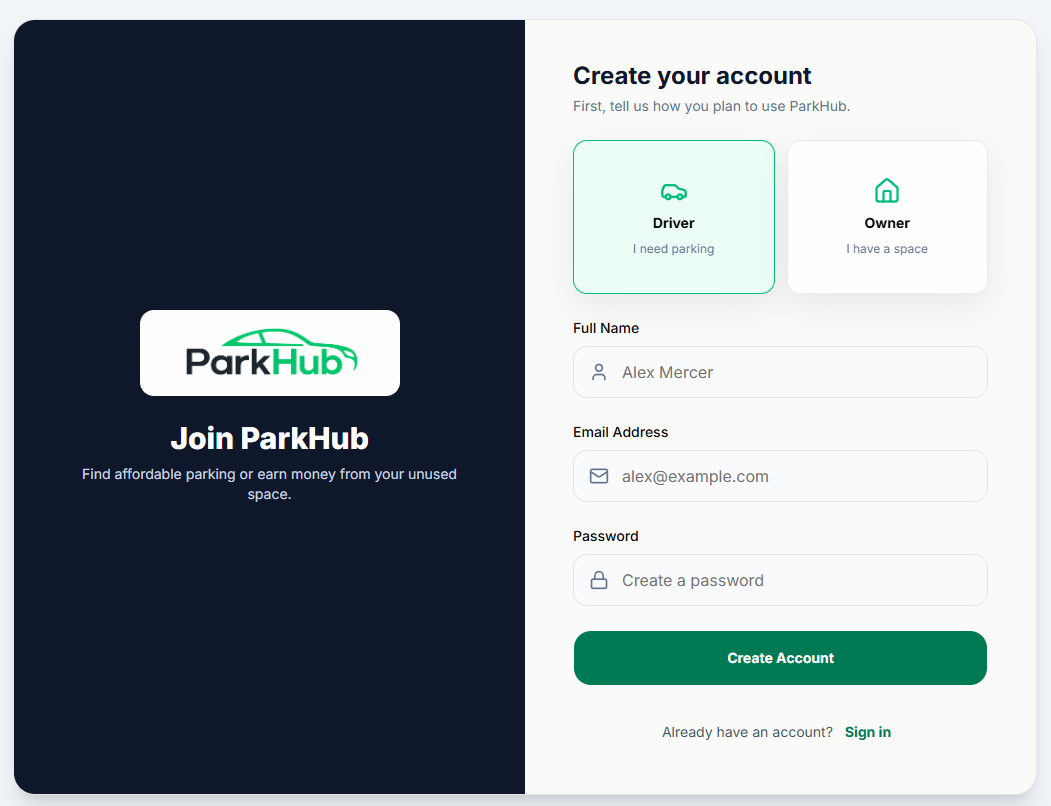
ParkHub: "Can't park there, mate!"
Inspiration
Finding affordable parking in Sydney can turn a simple trip into a stressful experience.
Around universities, the CBD, transport hubs, and popular suburbs, drivers often leave early but still arrive late. The problem is not always traffic. It is the time spent circling streets, checking full car parks, reading parking signs, and hoping that a space appears.
For university students, this can mean missing the start of a lecture, arriving late to a tutorial, or wasting valuable study time searching for a spot. For commuters, it means wasted fuel, extra cost, and unnecessary stress before work even begins.
At the same time, many private driveways, garages, and parking spaces remain empty for large parts of the day.
We saw an opportunity in that gap.
Instead of building more parking, what if we could connect drivers with parking spaces that already exist?
That is the idea behind ParkHub: a peer-to-peer parking space sharing platform that connects people looking for affordable parking with people who have unused private parking spaces.
What We Built
ParkHub helps drivers search for parking by location, date, and time. Instead of returning a long, unorganised list, it filters spaces based on availability and booking conflicts, then recommends the best available options.
The recommendation considers:
- Hourly price
- Customer ratings
- Lighting
- CCTV or security
- Covered parking
- Convenience features
Drivers can see options such as:
- Best Overall
- Cheapest
- Highest Rated
- Best Value
They can compare hourly prices, ratings, safety features, parking details, and locations on a map before selecting a space.
Once a driver chooses a parking space, they can follow the complete booking journey:
[ \text{Search} \rightarrow \text{Select Parking} \rightarrow \text{Review Booking} \rightarrow \text{Payment} \rightarrow \text{Booking Confirmed} ]
The app then provides simple, large actions for the real-world parking experience:
[ \text{CHECK IN} \rightarrow \text{Park} \rightarrow \text{CHECK OUT} ]
For parking owners, ParkHub provides a dashboard where they can:
- List unused parking spaces
- Set hourly prices
- Set availability windows
- Receive bookings
- Track weekly earnings
- View paid booking counts
- View average ratings
- Manage active parking spaces
This turns an unused driveway or garage into a potential income opportunity.
How We Built It
We built ParkHub as a full-stack web application focused on delivering one polished end-to-end parking journey.
| Component | Technology |
|---|---|
| Frontend | React 19 and Vite 8 |
| Styling and UI | Tailwind CSS 4, shadcn/ui, Base UI |
| Typography | Inter |
| Backend | FastAPI |
| Database | PostgreSQL via psycopg, compatible with Supabase |
| Maps | Folium with OpenStreetMap tiles |
| Payments | Stripe Test Mode |
| Version control | Git and GitHub |
The application follows a straightforward architecture:
React + Vite frontend
        |
        | REST API and Folium map HTML
        v
FastAPI backend
        |
        +---- PostgreSQL via psycopg
        +---- Folium + OpenStreetMap tiles
        `---- Stripe Test Mode
We created database-backed application sessions for separate driver and owner roles. The core database structure includes accounts, profiles, parking spaces, availability windows, bookings, reviews, favourites, payments, and sessions.
We also seeded the project with demonstration parking spaces across Sydney locations including Newtown, Sydney CBD, Parramatta, Bondi, and Manly.
Challenges We Faced
The biggest challenge was keeping the scope realistic.
A parking marketplace could include real-time GPS tracking, navigation, insurance, identity verification, review moderation, dynamic pricing, tax handling, notifications, and native mobile applications. However, attempting to build everything would have resulted in an incomplete prototype.
Instead, we focused on the most important journey:
LOGIN
  |
  v
SEARCH LOCATION
  |
  v
SELECT DATE AND TIME
  |
  v
GET TOP PARKING RESULTS
  |
  v
VIEW RATINGS AND REVIEWS
  |
  v
SELECT PARKING
  |
  v
BOOK
  |
  v
STRIPE TEST PAYMENT
  |
  v
BOOKING CONFIRMED
  |
  v
CHECK IN
  |
  v
CHECK OUT
  |
  v
OWNER SEES BOOKING AND EARNINGS
Another challenge was balancing recommendation quality with simplicity. A parking space is not automatically the best option just because it is cheap. A cheaper space may be further away, while a closer space may lack lighting, CCTV, or a strong rating.
ParkHub addresses this by filtering spaces by availability first, then ranking them using practical factors that drivers care about: price, rating, lighting, security, covered parking, and convenience.
Stripe integration was also a key challenge. We used Stripe Test Mode so the demo could show a realistic checkout workflow without processing real money. This allowed us to demonstrate:
BOOK NOW
  |
  v
STRIPE CHECKOUT
  |
  v
PAYMENT SUCCESSFUL
  |
  v
BOOKING CONFIRMED
What We Learned
We learned that the strongest hackathon projects do not need to solve every possible problem. They need to solve one real problem clearly, reliably, and end to end.
We also learned the importance of thinking from both sides of a marketplace.
Drivers need affordable, safe, available parking. Owners need control over pricing, availability, bookings, and earnings. ParkHub only works when both users receive clear value.
Most importantly, we learned that technology does not always need to create new resources.
Sometimes, it simply needs to make existing resources easier to discover, trust, and use.
Students can spend less time circling campus looking for parking. Drivers can waste less fuel. Owners can earn from spaces that would otherwise be empty. Communities can make better use of the parking they already have.
ParkHub does not just find parking. It finds the best parking for you, makes private parking more trustworthy, and helps unused spaces become useful.
Built With
- api
- css
- fastapi
- folium
- javascript
- lucide
- openstreetmap
- postgresql
- psycopg
- python
- react
- rest
- router
- shadcn/ui
- stripe
- supabase
- tailwind
- vite


Log in or sign up for Devpost to join the conversation.