-
PairUp Logo
-
-
-
-
-
-
-


Inspiration
At the Innovative Approaches to Educational Issues workshop, our mentors spoke passionately about the importance of channeling efforts into improving education at the earliest possible moments in a student’s academic career. According to the One World Literacy Foundation, two-thirds of the students who cannot read proficiently by the end of fourth grade will end up in jail or on welfare (source).
In a further conversation with Dr. David M. Malone, Professor of the Practice of Education, we began to consider the significant impact that parents - and their busy schedules - have on young students’ study habits. It can be even more difficult for immigrant parents to overcome the language barrier they encounter in public schools. In the Durham Public Schools district alone, there are 4,619 English Language Learning students who could benefit from a hack that connects these students to older mentors who can help them overcome this language barrier (source). With these critical factors in mind, we created PairUp.
Research has shown that the presence of mentors in a child’s life is associated with improved academic outcomes. This is especially so for people of minority populations. PairUp was created with the hope that children for whom English is not the primary language spoken at home may be put into contact with a mentor who can act as a cultural liaison between the child’s home and external community (source).
What it does
PairUp is an application for iOS that matches high school students seeking service hours with the parents of elementary school students who are interested in finding an older student in the local community to act as a mentor for their child. The program begins with approval from the elementary school, which provides access codes to both parents and tutors. This approval step ensures that all users of the app are credible and authorized and also allows high school students to receive community service credits for their volunteer hours.
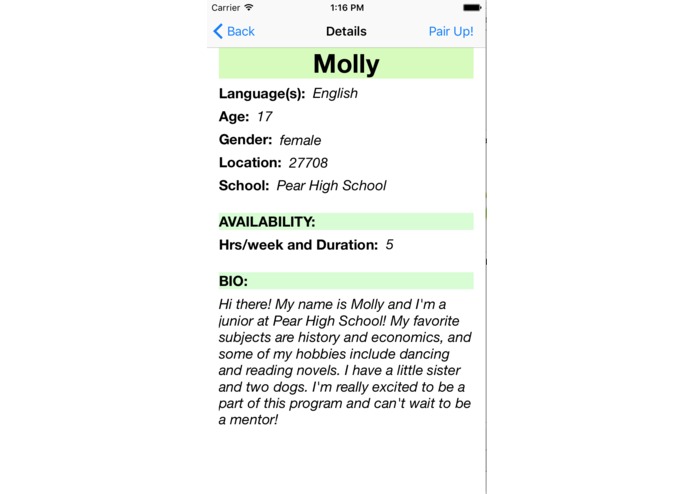
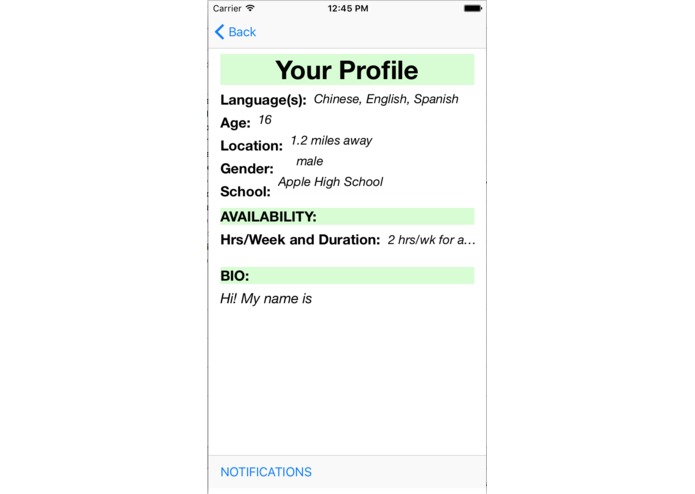
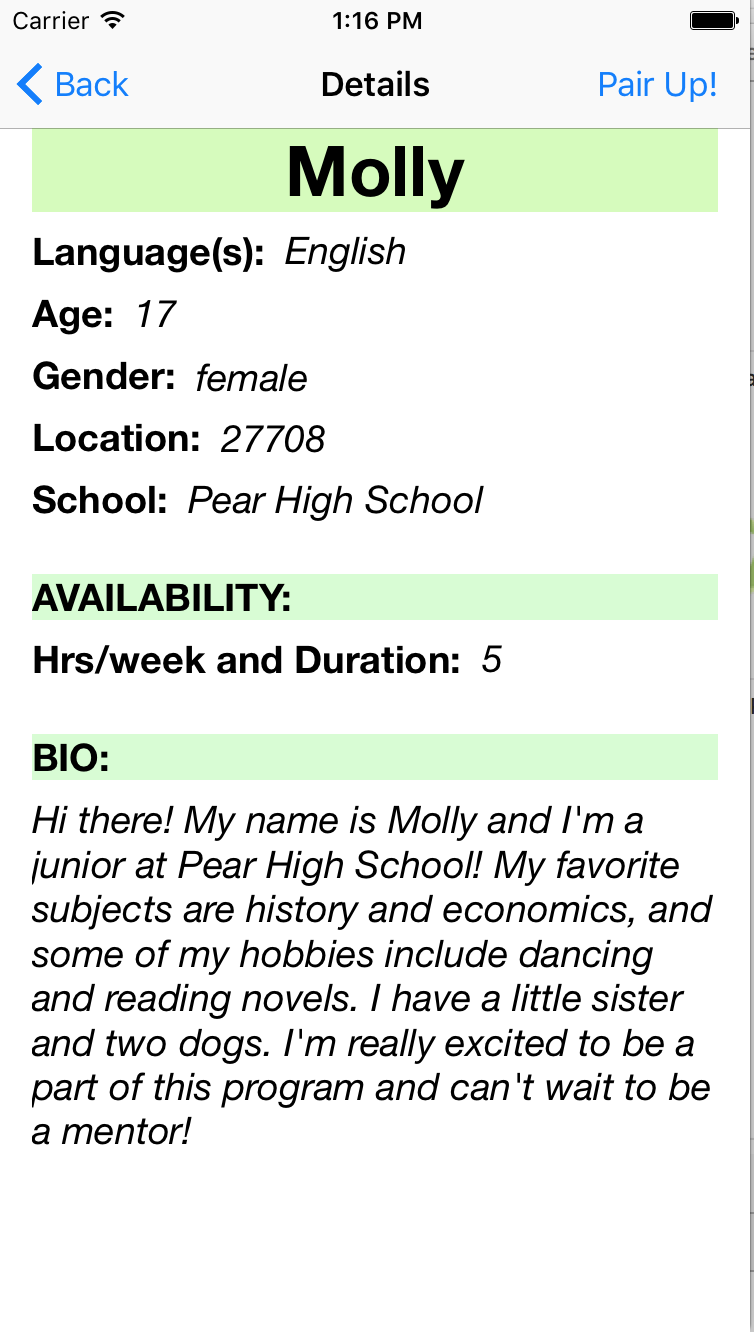
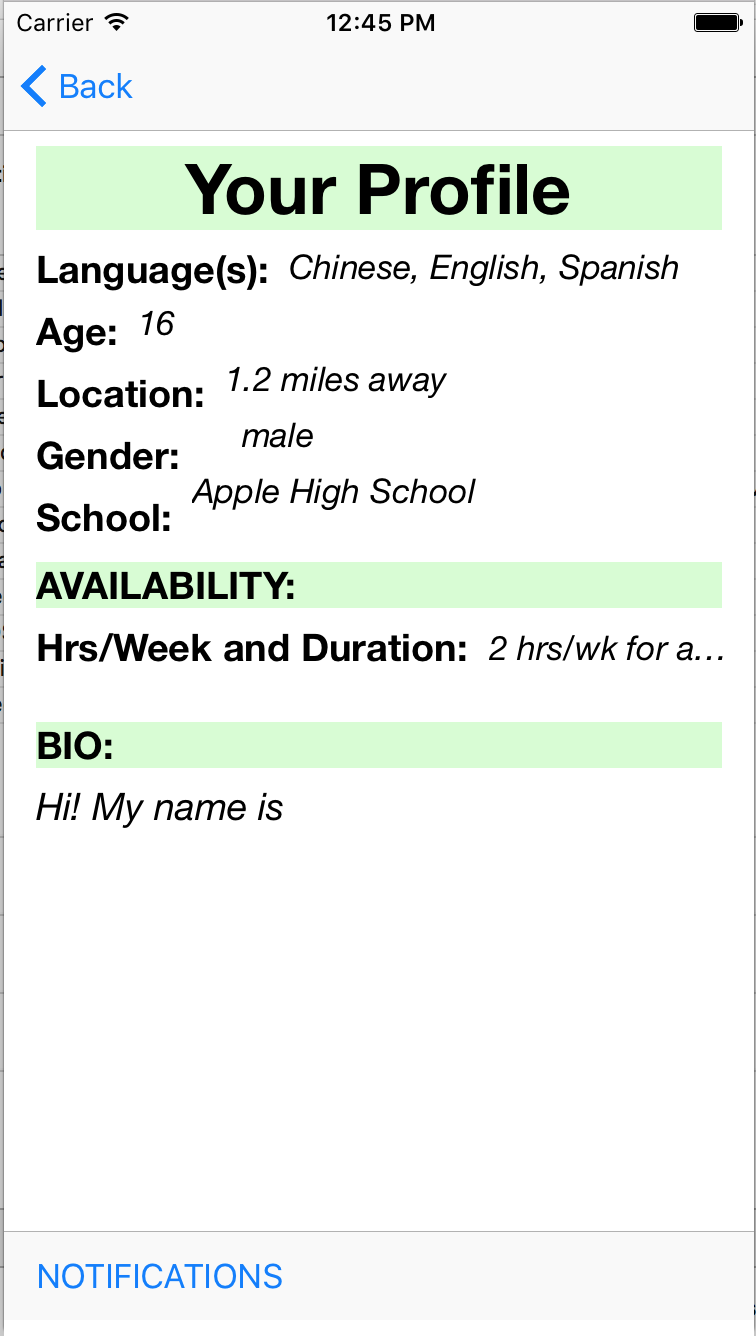
Once students log in with their access code, they can build their profile with a photograph, biography, and details of their gender, age, school, language, availability, and professional references.
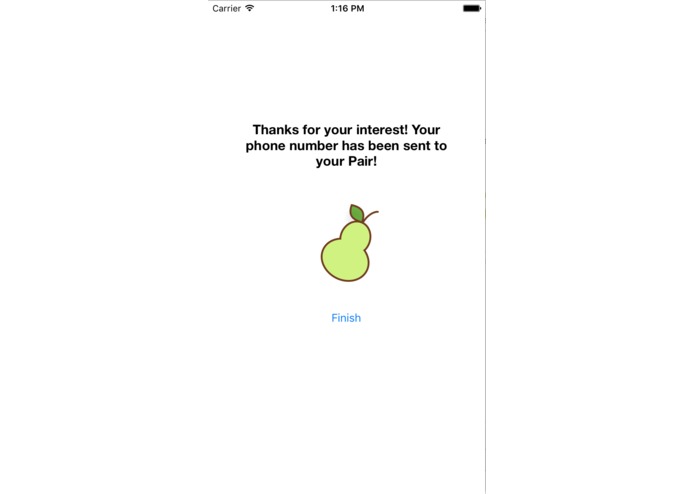
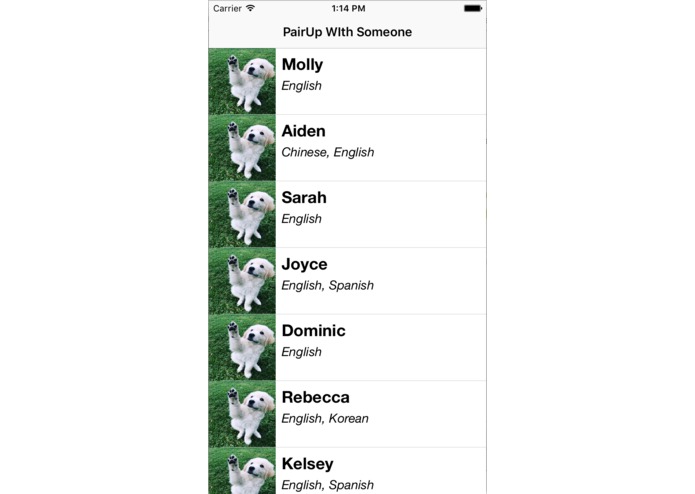
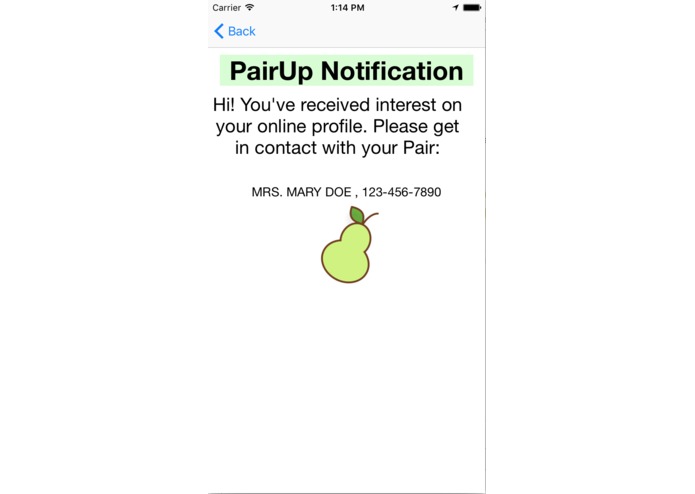
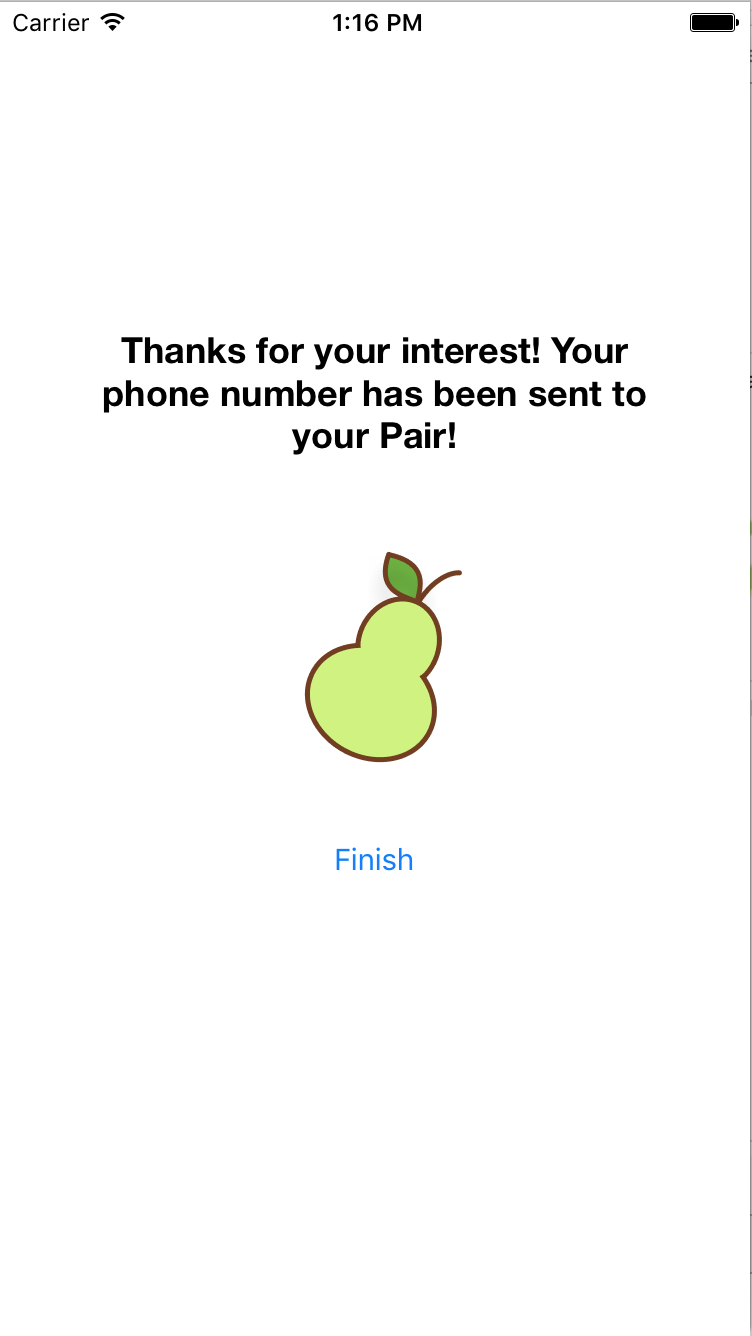
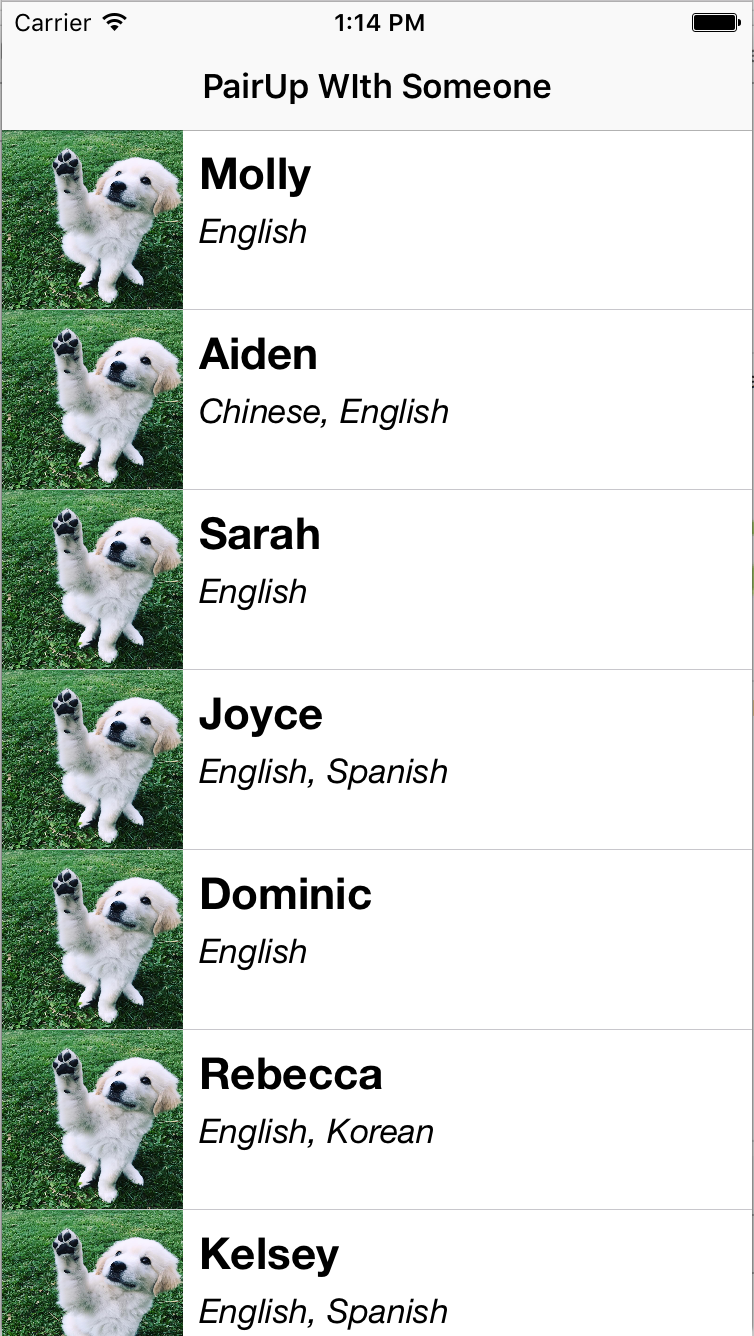
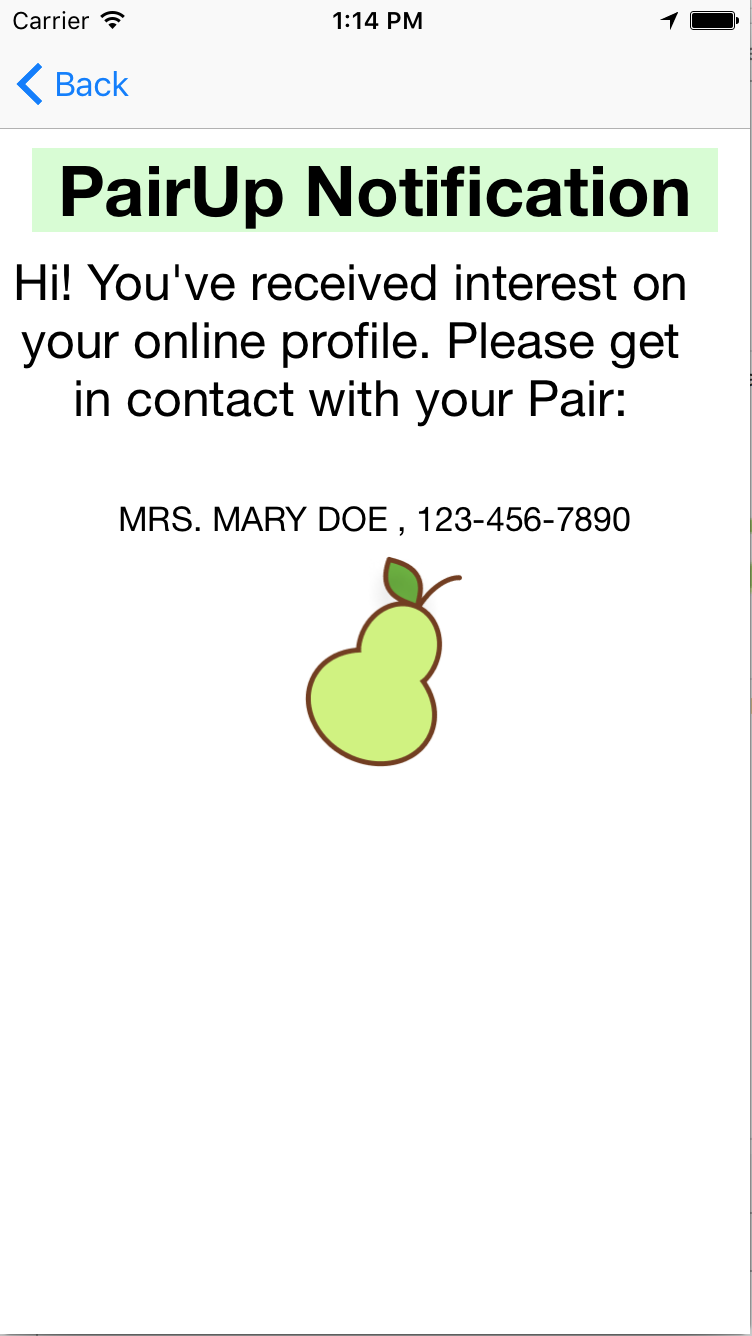
When parents log in, they are able to view a list of all students or set filter parameters to find more specific matches. If a parent is interested in a tutor, the parents can choose “Accept,” and his or her phone number will be sent to the high school mentor for further communication. Tutors can log in to view notifications about parent phone numbers or update their profile. They are then responsible for initiating contact with the parent.
How we built it
The PairUp app was built in Xcode using the Swift programming language. We started by sketching the designs and components of each screen a user would encounter in the app, and then adding details such as new search filters and other functionalities. We also used transitions through the navigation controller.
Challenges we ran into
While the app can quickly and effectively match parents with passionate high school mentors, there is always the risk of fraudulent or dangerous behavior by people who abuse PairUp. In order to eliminate the possibility of this behavior by mentors, we decided not to allow direct messaging through the app. This way, parents will have direct contact to the mentor by phone, and they can communicate without needing to rely on another messaging system to work. This method also ensures that students will not be flaky in attending their mentoring sessions. The school code requirement is the another layer of security to make the app safer for users.
Accomplishments that we’re proud of
We’re proud that PairUp is able to target one of the fundamental causes of inequality in education - the language barrier - in a simple way. We found a method to help people access and take advantage of the community networks around them. It’s also significant that PairUp reaches education outside of the classroom and serves as a tool for supporting education. It is not always sustainable to attack education policy problems from the top-down, and PairUp starts at the root and works its way up from there.
Though we didn’t try to fix the school system, we did find a way to incorporate existing public schools into the use of the app by thinking through avenues for public policy collaborations. In the end, we created a simple, safe product that addresses issues of inequality in education for young students at the time when they need it most.
What's next for PairUp
In terms of development, we hope to add support for more languages so that PairUp can reach more people in need, as the number of immigrants and refugees in the United States continues to grow. We’d also like to implement a system of check-ins to see if and when matched students complete a mentoring session. Though PairUp can currently help parents find mentors for their children, we do not yet have a way to see if any mentoring occurs after the student receives the parent’s phone number. A check-in system would provide data about the number of successful meetings and the frequency of these meetings, as studies have shown that consistent mentoring is necessary for effective improvement in an elementary school student’s learning (source).
Furthermore, the PairUp team would seek school district approval of the app for use among students and parents. Durham Public Schools would be the place to start. Ultimately, the success of the PairUp app will depend on teamwork from the entire community, and we look forward to tackling more issues of inequality and education policy in the future. Our hope is that PairUp can initiate a new conversation and collaboration between public school systems and nonprofit organizations to improve the resources available to students of all needs, languages, and origins.

Log in or sign up for Devpost to join the conversation.