Open Mic Empire
About the Project
Open Mic Empire is a comedy club management game where players grow a rough basement open mic into a thriving comedy venue.
The game is built around one central idea:
What if running a comedy club was not just about making money, but about reading the room?
Most management games ask players to optimize buildings, workers, production chains, or profit. Open Mic Empire takes that familiar management satisfaction and puts the emotional state of a live audience at the center.
A comedy show already has the perfect structure for short-session play. It has preparation, tension, performance, disruption, recovery, audience reaction, and payoff. One good show can feel like a complete story: the room starts uncertain, the crowd warms up, something goes wrong, the player responds, and the night either ends in awkward silence or applause.
The fantasy is simple:
Your club. Your show. Your legacy.
Inspiration
Open Mic Empire began with the idea that a comedy club could become a management game where the most important resource is not just cash, but audience belief.
The player is not simply trying to build a better venue. They are trying to keep the room alive.
Comedy creates natural management pressure. A nervous comic may need support. A heckler may interrupt the show. Tourists may become impatient. Regulars may expect a certain standard. The player has to read those signals and respond before the room turns cold.
At its heart, the game is about turning awkward silence into applause.
What It Does
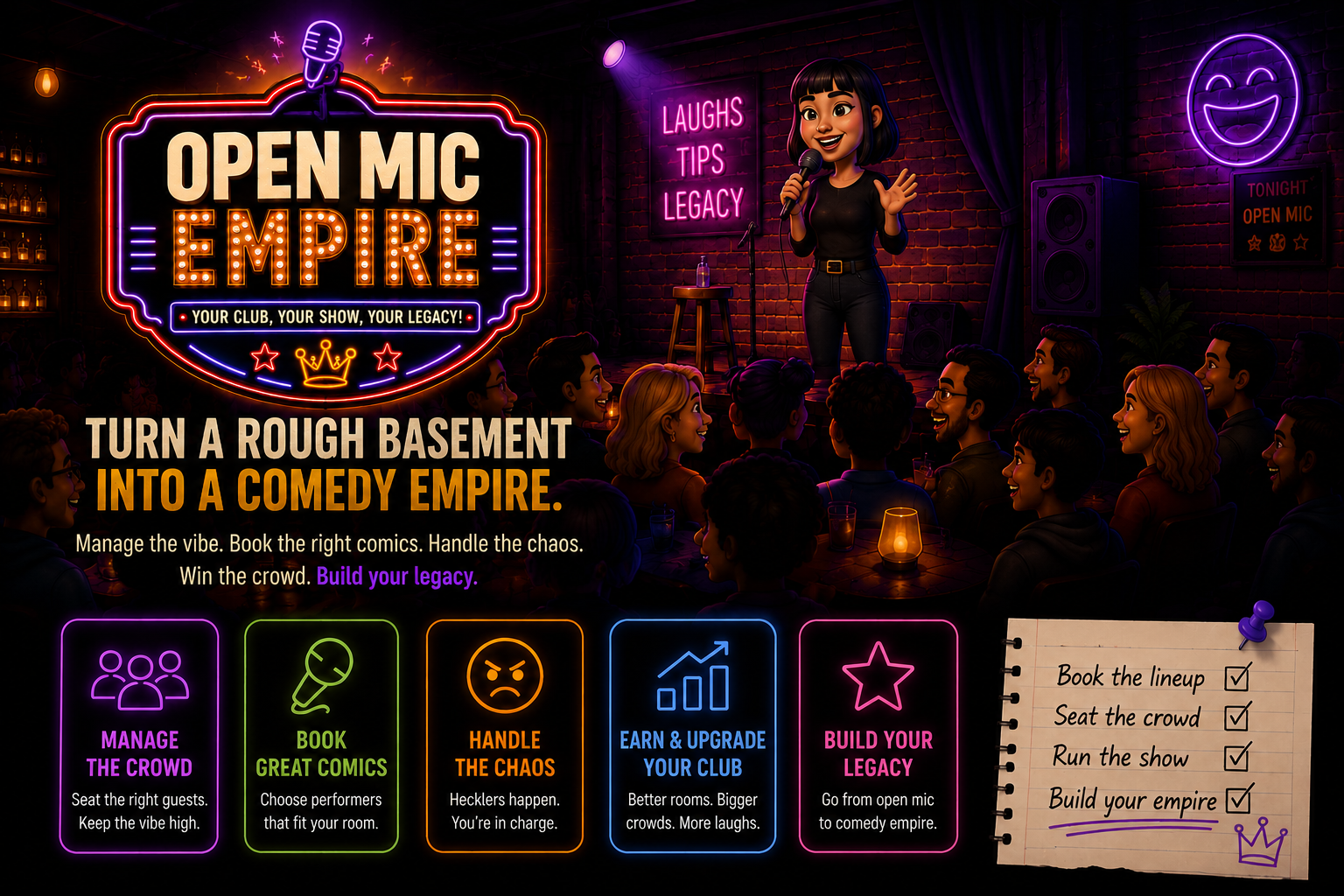
Players book comics, seat guests, manage audience mood, respond to disruptions, support performers, earn rewards, and reinvest those rewards into club upgrades, comic growth, and reputation.
The central system is Room Vibe.
Room Vibe represents the emotional health of the show. It rises when the player makes smart choices, such as seating the right guests, choosing the right comic, handling disruptions quickly, and using support actions at the right moment.
It drops when guests wait too long, comics lose confidence, audience types clash, or a heckler damages the room’s momentum.
The core loop is:
- Prepare the club.
- Choose the comic lineup.
- Seat the audience.
- Run the show.
- Handle disruptions.
- Collect results.
- Upgrade the club.
- Return for the next show.
The player’s goal is not just to earn currency. The goal is to deliver better shows, build momentum, and grow a legendary comedy venue.
At a systems level, the game is built around a simple equation:
Room Vibe + Smart Timing + Better Upgrades = A Better Show
How We Built It
We built Open Mic Empire as a production-ready game design package for a focused simulation and management experience.
The design is built around three pillars:
1. Manage the Vibe, Not Just the Money
Cash, upgrades, and reputation matter, but the player’s most important job is emotional management.
Every major decision asks:
Is the audience still with us?
This gives the game a different feel from a generic tycoon. The player is not just building a venue. They are managing a live room.
2. Small Decisions, Big Reactions
The game is designed around quick, mobile-friendly decisions that create immediate audience feedback.
Choosing the right comic, seating guests correctly, calming a heckler, using a spotlight boost, or supporting a nervous performer all affect Room Vibe.
The player sees the result through:
- Mood icons
- Audience posture
- Applause
- Silence
- Tips
- Final results feedback
3. Basement to Empire Progression
The long-term fantasy is growth.
The player starts with a tiny basement open mic: weak lighting, rough seating, low capacity, and limited guest comfort.
Over time, the club becomes more polished and successful.
Better lighting improves comic confidence. Better seating reduces audience impatience. Better sound increases laugh impact. Stronger signage increases reputation potential.
Each upgrade has both a gameplay effect and a visible change in the room.
Challenges We Ran Into
The biggest challenge was making Room Vibe feel fair.
Players need to understand why the room is improving or crashing. If Room Vibe drops, the player should be able to trace it back to something clear:
- A long wait
- A poor comic match
- A heckler
- Weak seating
- Bad timing
- A missed support action
The system has to be readable through UI, animation, audio, and results feedback.
The second challenge was mobile readability. A comedy club can easily become visually busy, especially with guests, comics, icons, alerts, reactions, and upgrade feedback all competing for attention.
The interface had to answer three questions instantly:
- How is the room doing?
- Who needs attention?
- What can I do right now?
The third challenge was scope. Open Mic Empire could easily expand into multiple venues, large rosters, deep staff systems, complex decoration, leaderboards, or AI-generated comedy content.
For the first version, we intentionally kept the MVP narrow: one strong room, a small set of audience types, a few comic archetypes, one Room Vibe meter, one disruption, and a simple upgrade path.
The goal is to prove the show loop first.
Accomplishments That We Are Proud Of
We are proud of turning a comedy club into a clear management system.
Open Mic Empire is not just a comedy skin on a tycoon game. The comedy-club fantasy shapes the actual mechanics: reading the audience, choosing performers, recovering from awkward moments, managing crowd patience, and turning silence into applause.
We are especially proud of the Room Vibe system. It gives every player action a shared consequence and makes the audience feel alive.
Instead of managing abstract numbers only, players manage a room full of visible reactions.
We are also proud of the first-session structure. In the first 15 minutes, the player learns the core fantasy:
- Enter the struggling club.
- Choose an opening comic.
- Seat the crowd.
- Watch Room Vibe shift.
- Handle a heckler.
- Save the show.
- Review results.
- Pick the first upgrade.
Finally, we are proud of the visual direction.
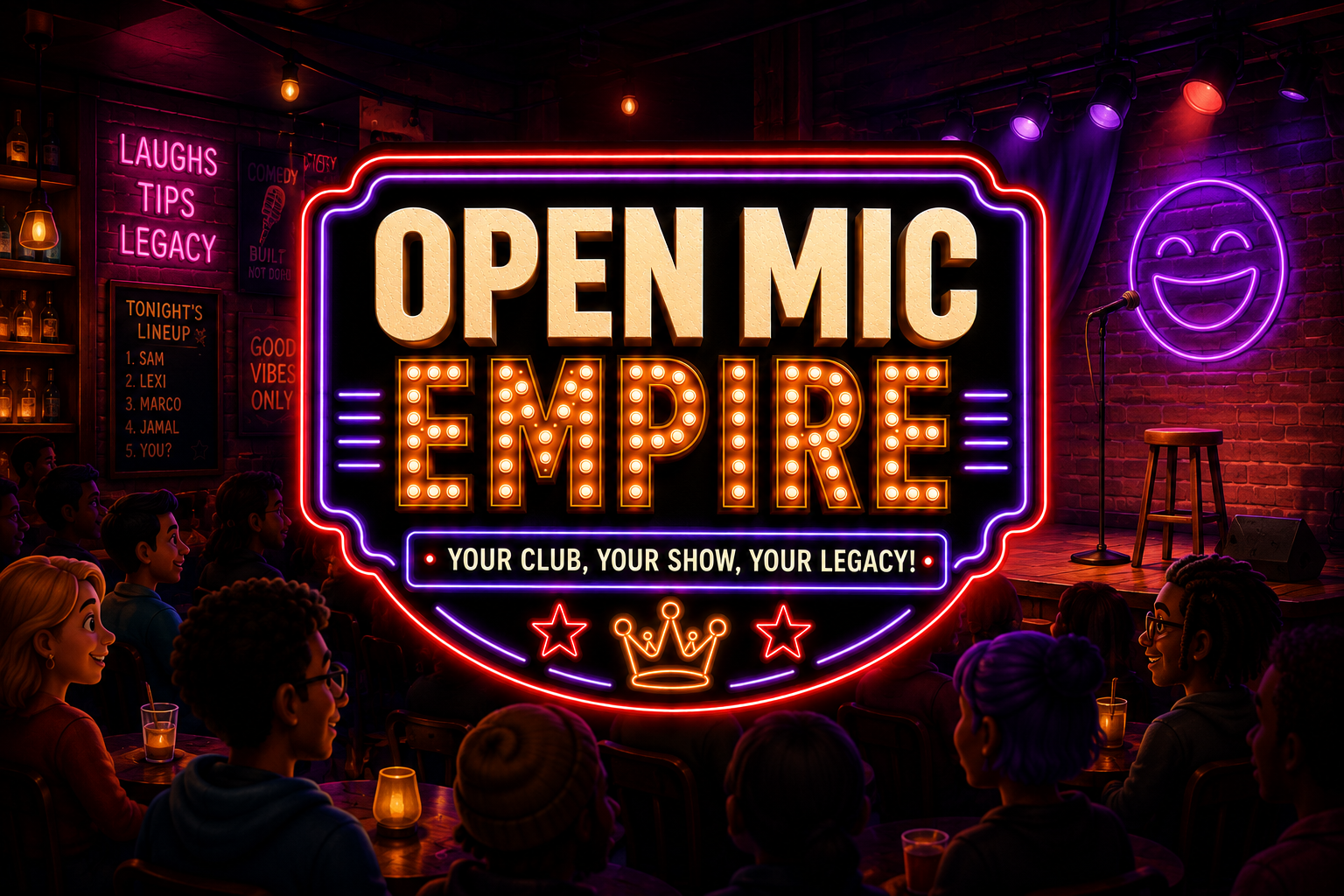
The warm spotlight, neon signs, brick walls, scuffed floors, expressive audience icons, and mobile-first UI give the game a clear identity: cozy, funny, readable, and full of momentum.
A management game where the most important resource is the audience’s belief that the night can still be saved.
What We Learned
The biggest lesson was that management games become more engaging when the player can feel the consequences of their choices immediately.
Open Mic Empire works because every system points back to the room.
Audience types create different problems. Comic archetypes create different strategic answers. Disruptions test timing. Upgrades improve future shows. Results explain what happened and give the player a reason to try again.
We also learned that comedy does not need to rely on a huge library of written jokes to feel funny.
The humor can come from:
- Pressure
- Timing
- Character archetypes
- Audience reactions
- Awkward recovery
- Visual feedback
A heckler interrupting a set, a nervous comic losing confidence, tourists getting impatient, or a room suddenly turning around after one good spotlight moment can all create comedy through systems.
The final lesson was that scope discipline is a design strength.
One strong comedy show loop is more valuable than a broad but unfocused tycoon structure. If the first room is readable, tense, funny, and replayable, the game can expand safely from there.
What Is Next for Open Mic Empire
The next step is to prototype the core show loop in a focused vertical slice.
The MVP would include:
- One playable comedy club room
- One short show format
- One Room Vibe meter
- Three audience types: Regulars, Tourists, and Hecklers
- Three comic archetypes: One-Liner, Storyteller, and Crowd Worker
- Three player actions: Seat Guest, Spotlight Boost, and Handle Heckler
- One results screen with laughs, tips, reputation, comic XP, and feedback
- Three first upgrades: Lighting, Seating, and Sound
- First-session tutorial prompts
The first prototype should prove that a player can complete a short 3-5 minute show, understand why Room Vibe changed, recover from a disruption, and want to replay with a better strategy.
After that, Open Mic Empire can expand through:
- Themed nights
- Deeper comic traits
- Stronger audience combinations
- Additional venue layouts
- New upgrade categories
- Milestone rewards
- VIP events
- Long-term reputation tiers
The strongest version of Open Mic Empire begins narrow, validates quickly, and expands only after the show loop proves itself.
At its heart, Open Mic Empire is about reading a room, making smart decisions under pressure, and turning awkward silence into applause.
Built With
- adobe-illustrator
- canva
- claude
- game-design
- gpt
- level-design
- llama
- mobile-first-ux
- mobile-ux
- photoshop
- player-journey-mapping
- product-planning
- resource-management
- system-design
- ui-wireframing
- visual-concept-development


Log in or sign up for Devpost to join the conversation.