-
-
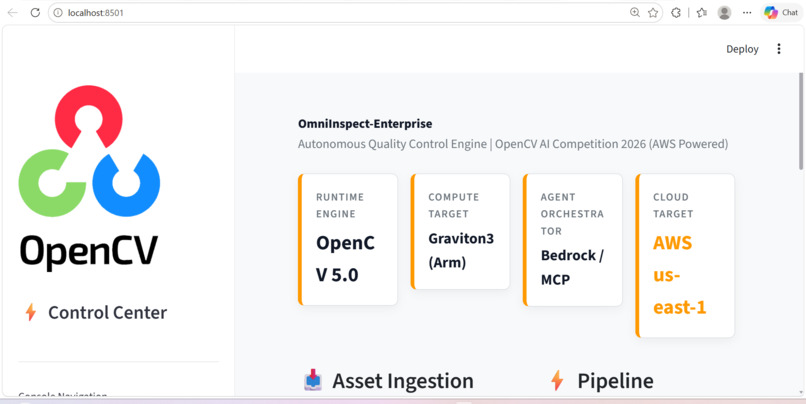
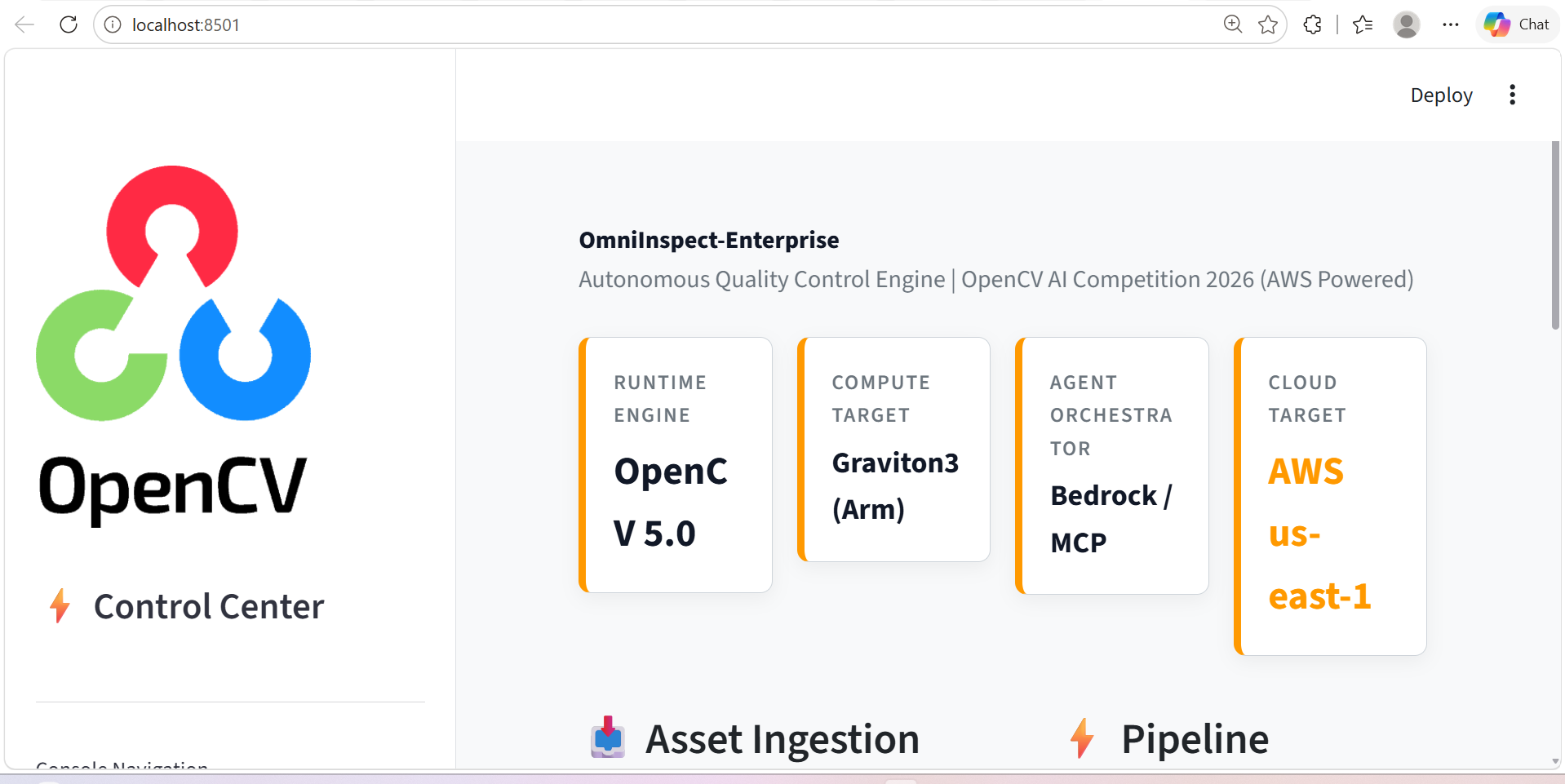
OpenCV-localhost
-
OpenCV-deploy
-
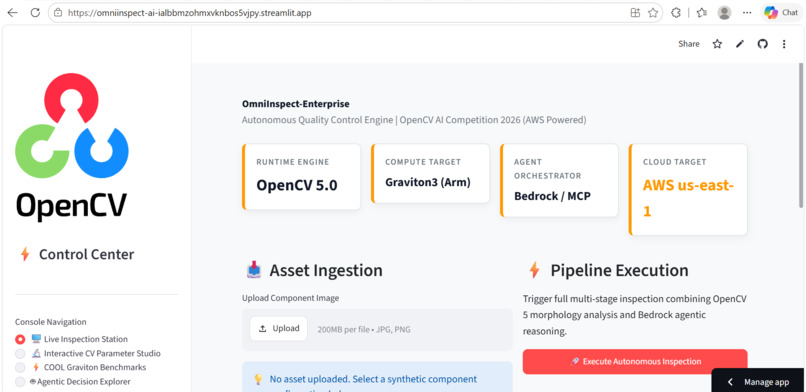
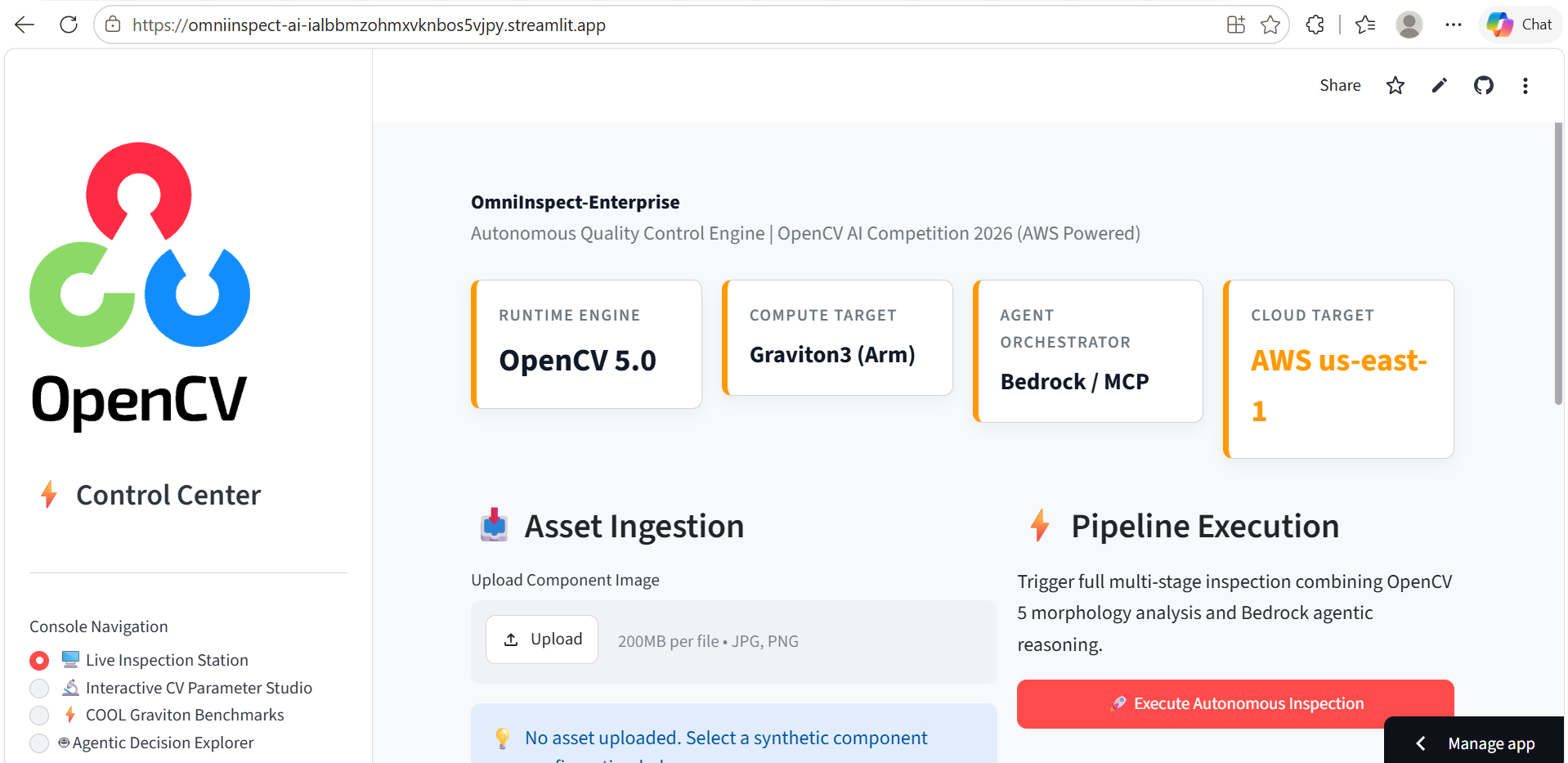
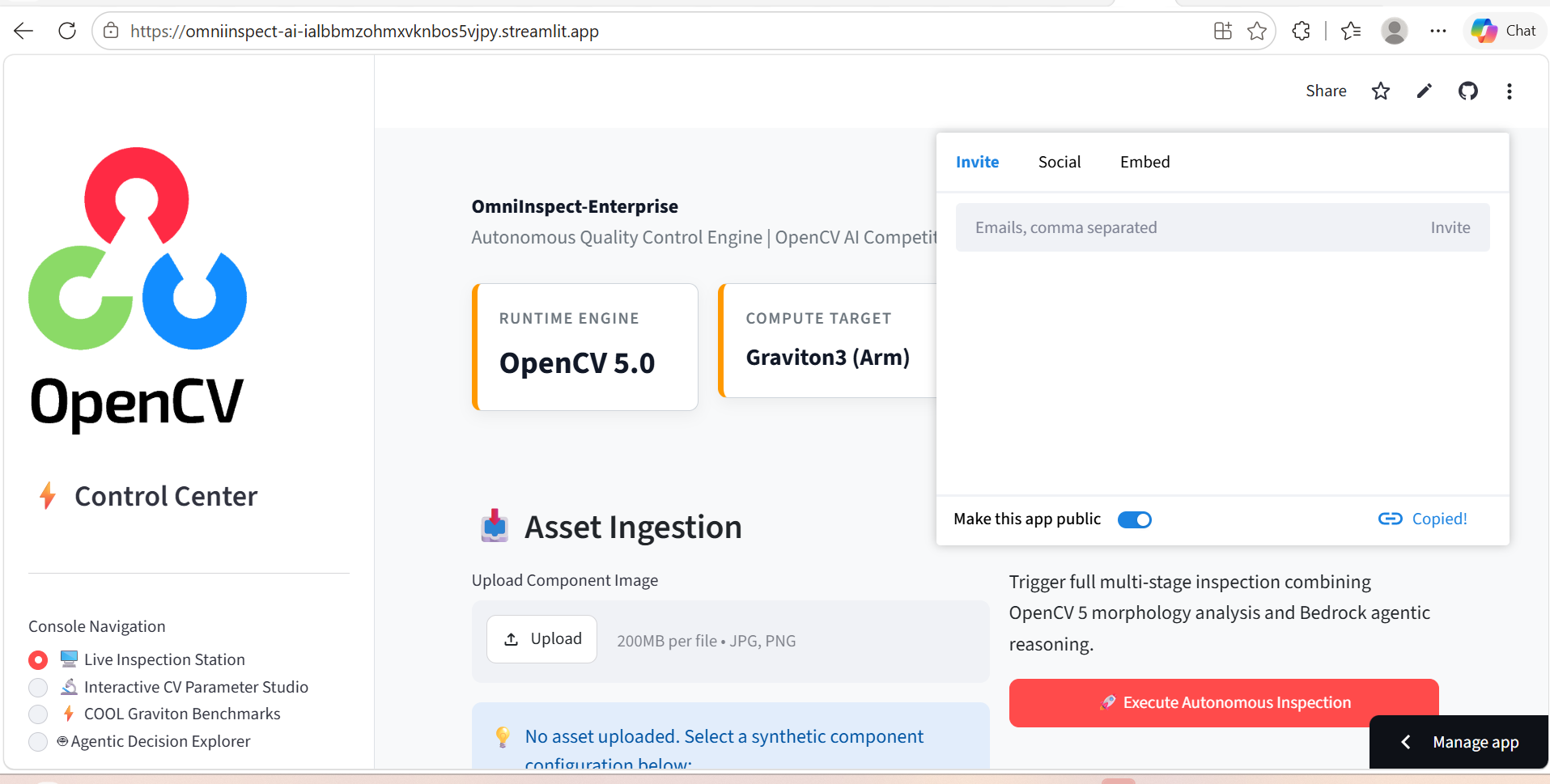
OpenCV-streamlit-app
-
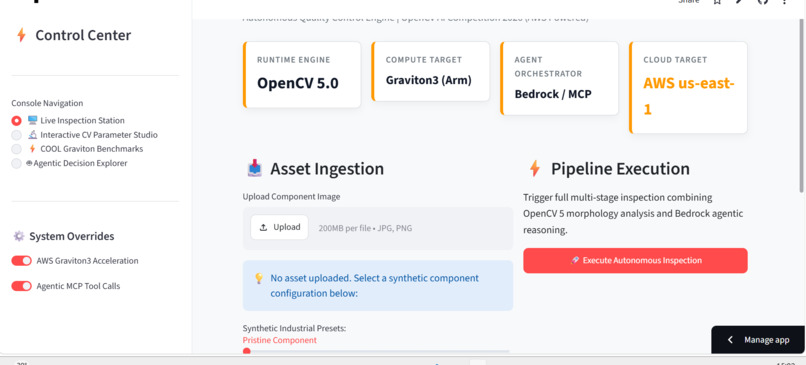
OpenCV-streamlit-app1
-
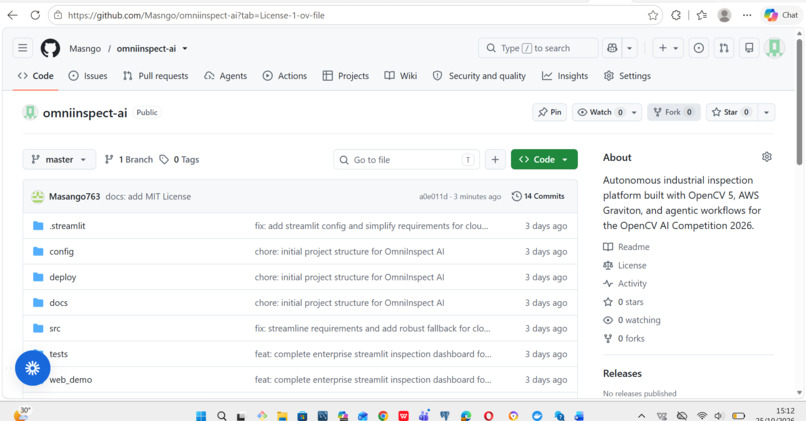
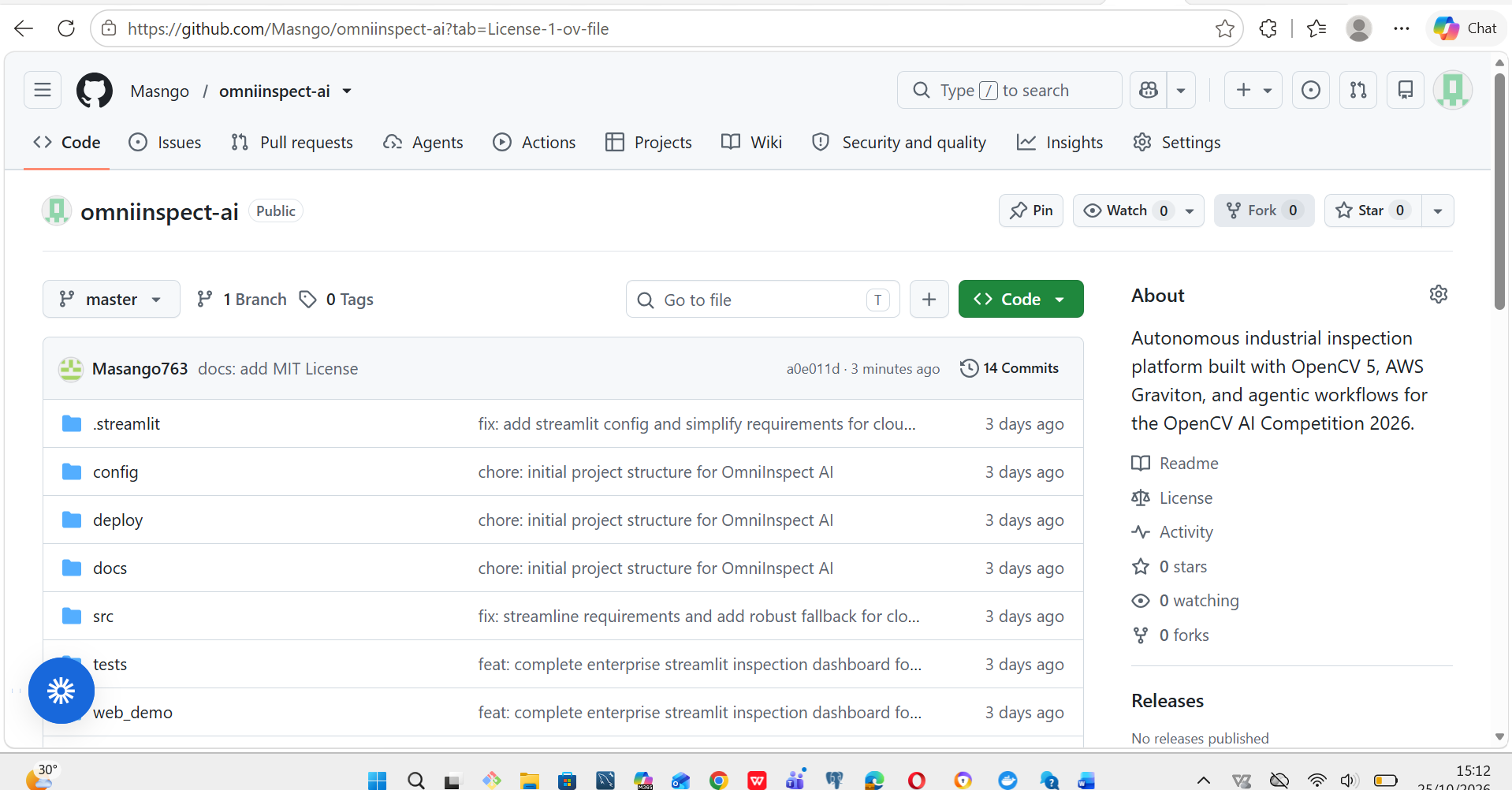
OpenCV-Github Repository
-
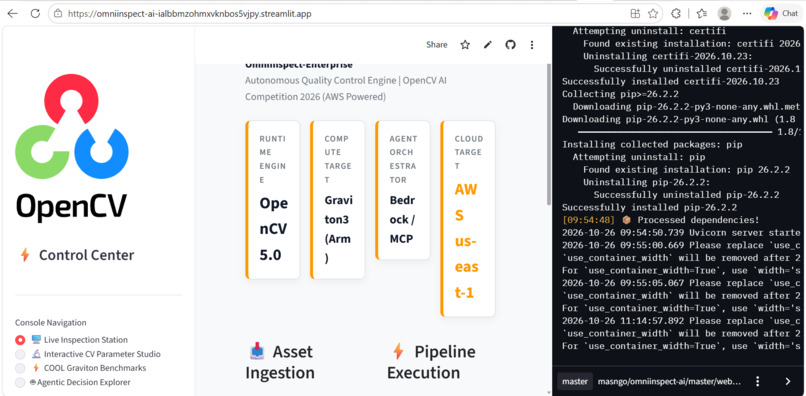
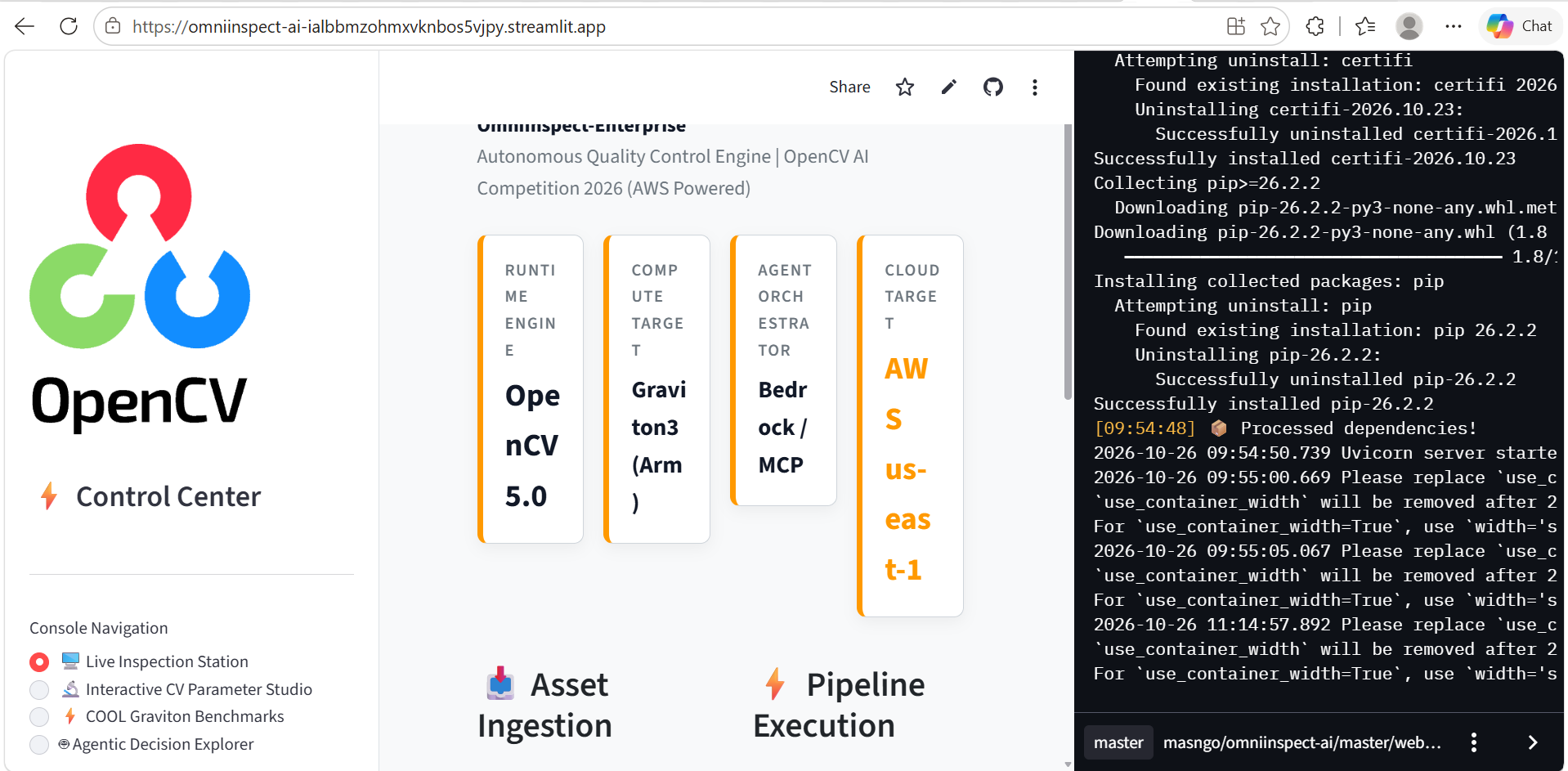
OpenCV-telemetry logs
-
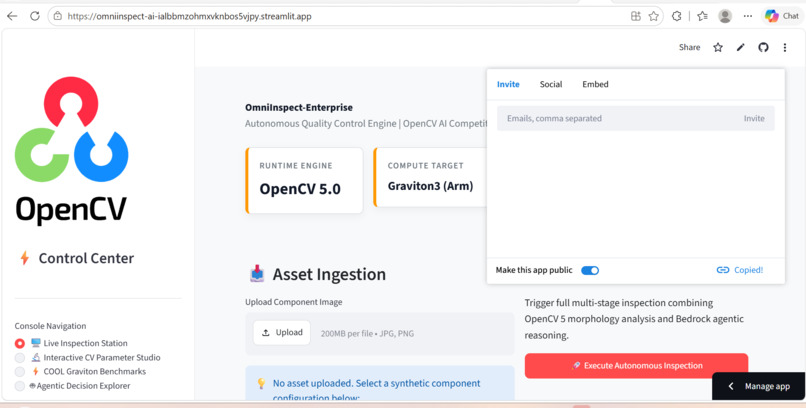
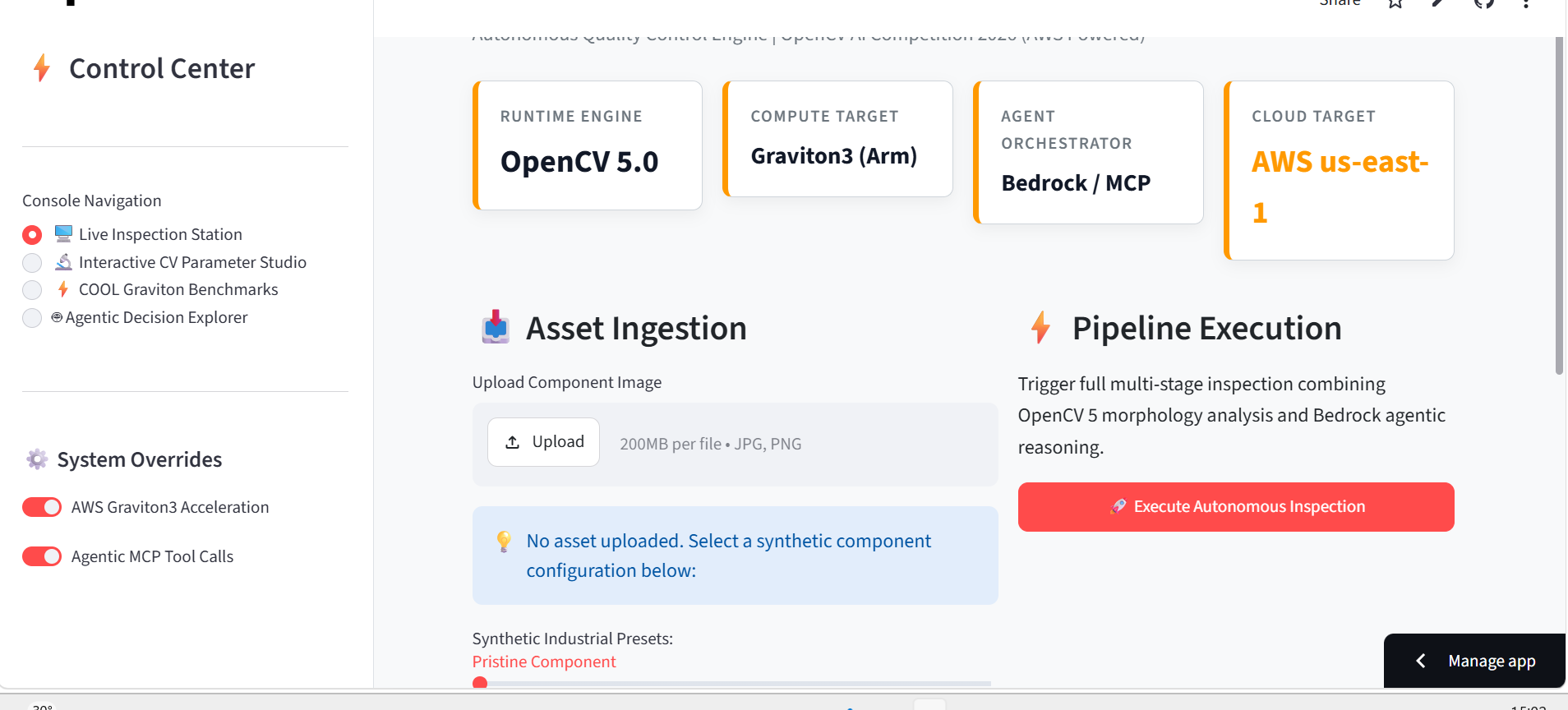
OpenCV-streamlit-app1
-
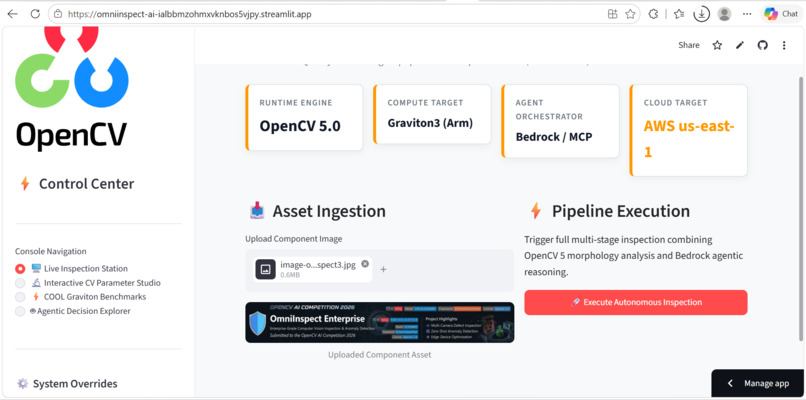
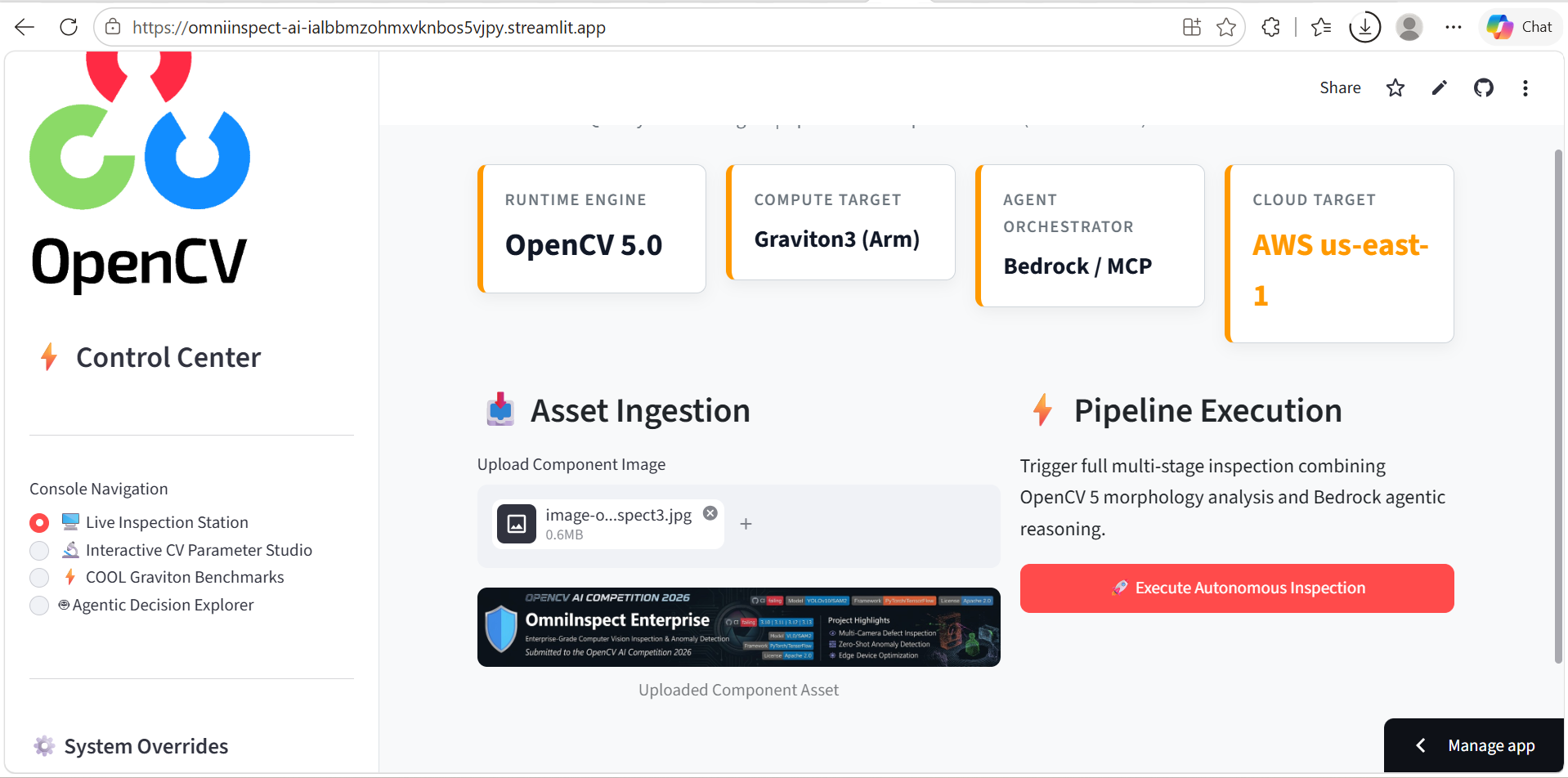
OpenCV-uploaded image
Inspiration
Traditional automated optical inspection (AOI) systems in modern manufacturing are notoriously brittle. They rely on rigid, static pixel thresholds that struggle with minor environmental lighting shifts, leading to high false-positive rates and costly operational bottlenecks where human operators must manually re-inspect borderline components.
We were inspired to build OmniInspect-Enterprise for the OpenCV AI Competition 2026 to bridge the gap between static computer vision and true Physical AI—creating a system that doesn't just passively look at a video feed, but actively reasons about anomalies and adapts its behavior dynamically.
What it does
OmniInspect-Enterprise is an autonomous industrial inspection platform and web dashboard designed for high-throughput manufacturing lines.
It ingests high-resolution component video feeds and processes them using advanced OpenCV 5 pipelines.
It automatically categorizes parts into strict operational states (PASS, REVIEW_REQUIRED, or REJECT).
Crucially, when an item falls into an ambiguous zone, an autonomous Model Context Protocol (MCP) agentic loop kicks in—dynamically invoking secondary perception tools (such as adaptive sub-region cropping and contrast enhancement) to refine the analysis before deciding on the final action.
How we built it
Computer Vision Engine: Built on OpenCV 5 (COOL), leveraging high-throughput image registration, structural similarity indexing, and contour feature extraction.
Cloud & Hardware Acceleration: Optimized for AWS Graviton ARM architecture, utilizing Neon SIMD vector instructions to maximize throughput and minimize latency compared to legacy x86 baselines.
Agentic Architecture: Implemented a multi-step perception-decision-action loop using MCP patterns, ensuring that visual telemetry directly influences subsequent tool calls and system workflows.
Interface & Deployment: Developed a high-contrast enterprise web dashboard using Streamlit, containerized and deployed on cloud infrastructure with robust Linux graphics dependencies (libgl1).
Challenges we ran into
Cloud Container Dependencies: Transitioning our vision pipelines to cloud execution required resolving missing Linux graphics libraries, requiring careful configuration of modern Debian packages (libgl1 and libglib2.0-0).
Runtime Compatibility: Managing python environment versions and dependency matching for high-performance numerical and computer vision libraries (numpy and opencv-python) during cloud builds.
Agentic Loop Orchestration: Balancing real-time inspection speeds with multi-step MCP agent tool calls to ensure borderline defects are re-analyzed without introducing latency lag on the production line.
Accomplishments that we're proud of
Successfully implementing a true multi-step agentic vision loop where computer vision outputs actively alter downstream system actions rather than just printing static text.
Achieving significant performance and cost efficiency gains by running our core OpenCV workloads optimized on AWS Graviton.
Delivering a clean, fully functional, enterprise-grade cloud web dashboard under competitive hackathon timelines.
What we learned
The immense power of ARM-based AWS Graviton and COOL optimizations for accelerating resource-heavy image processing tasks in production environments.
The design elegance of Model Context Protocol (MCP) when structuring modular tool calls for agentic AI architectures.
The importance of robust, fail-safe error handling and fallback decoding when containerizing computer vision applications for cloud runtimes.
What's next for OmniInspect-Enterprise
Multi-Camera Edge Scaling: Expanding support for distributed IoT camera clusters across multiple factory assembly lines.
Physics-Informed Prediction: Integrating predictive process control models to forecast mechanical wear and tear before defects physically manifest on the line.
Enterprise Pilot Tests: Partnering with regional manufacturing plants to conduct live, end-to-end beta trials in real-world production environments.
Built With
- 5
- agentic
- ai
- amazon-web-services
- computer
- graviton
- iot
- learning
- machine
- numpy
- opencv
- pandas
- pydantic
- python
- serverless
- streamlit
- vision


Log in or sign up for Devpost to join the conversation.