-
-
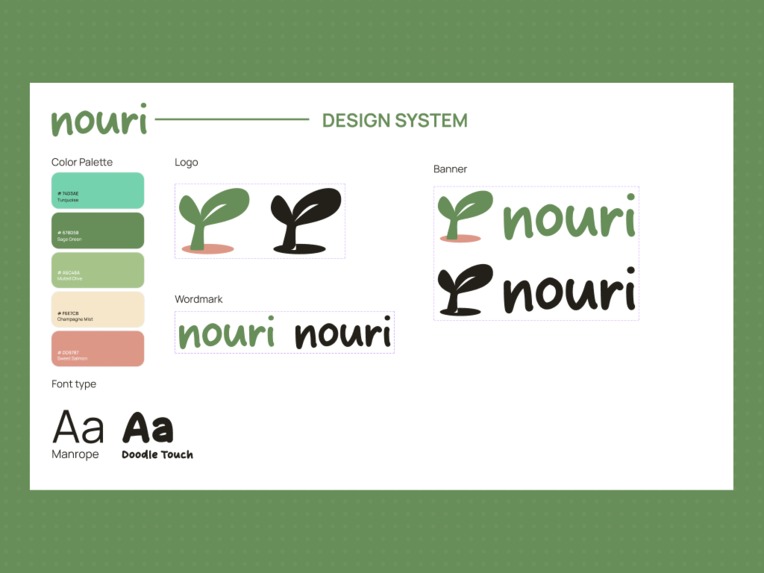
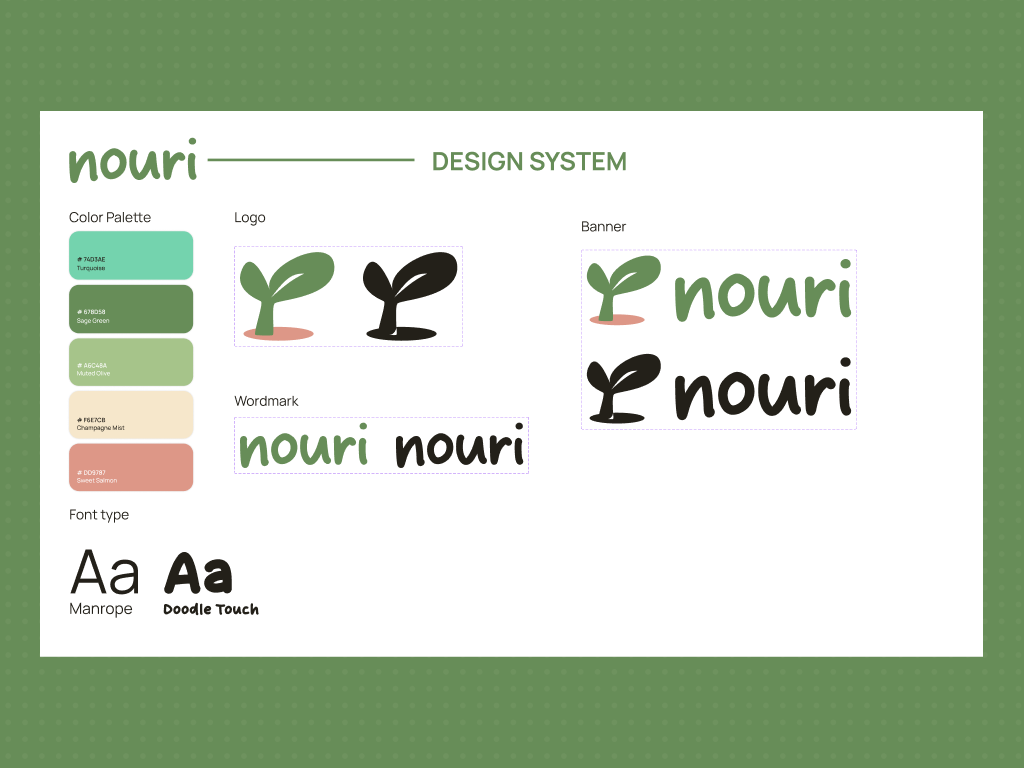
branding guidelines
-
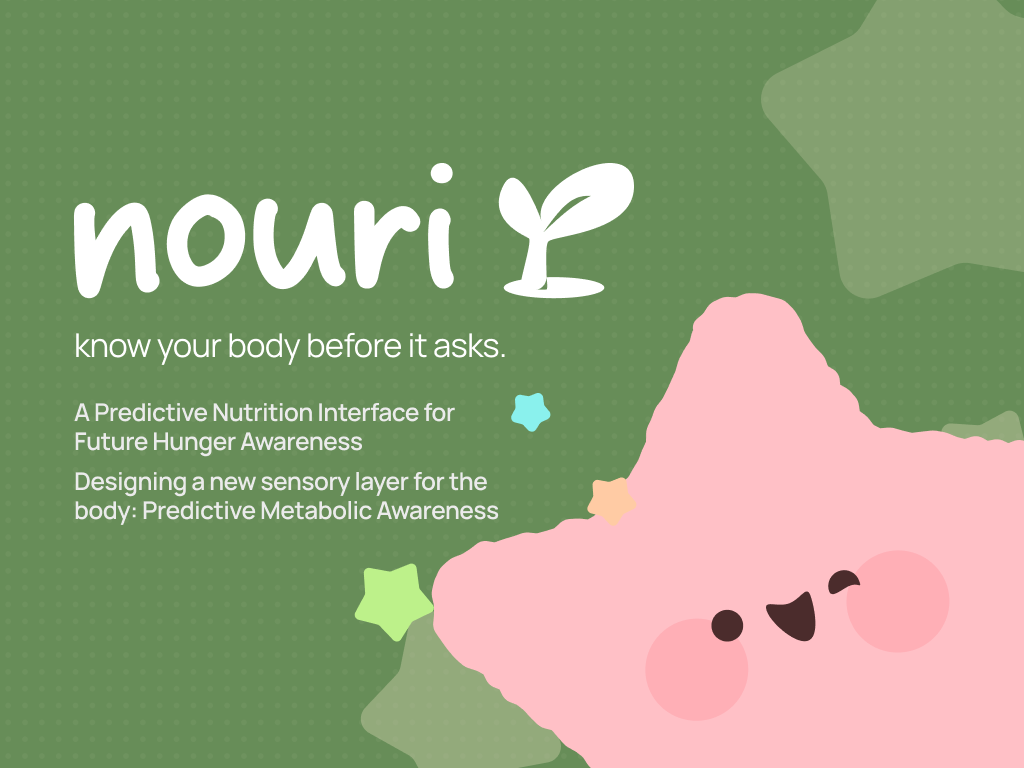
welcome to nouri!
-
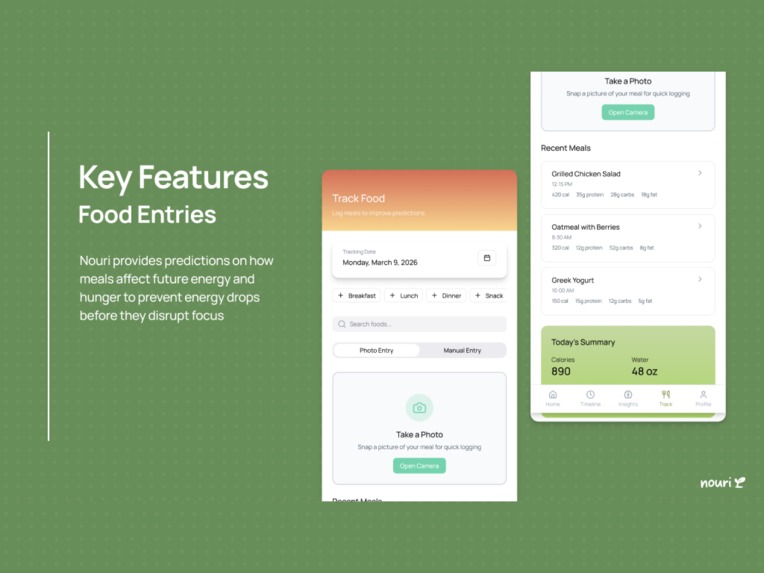
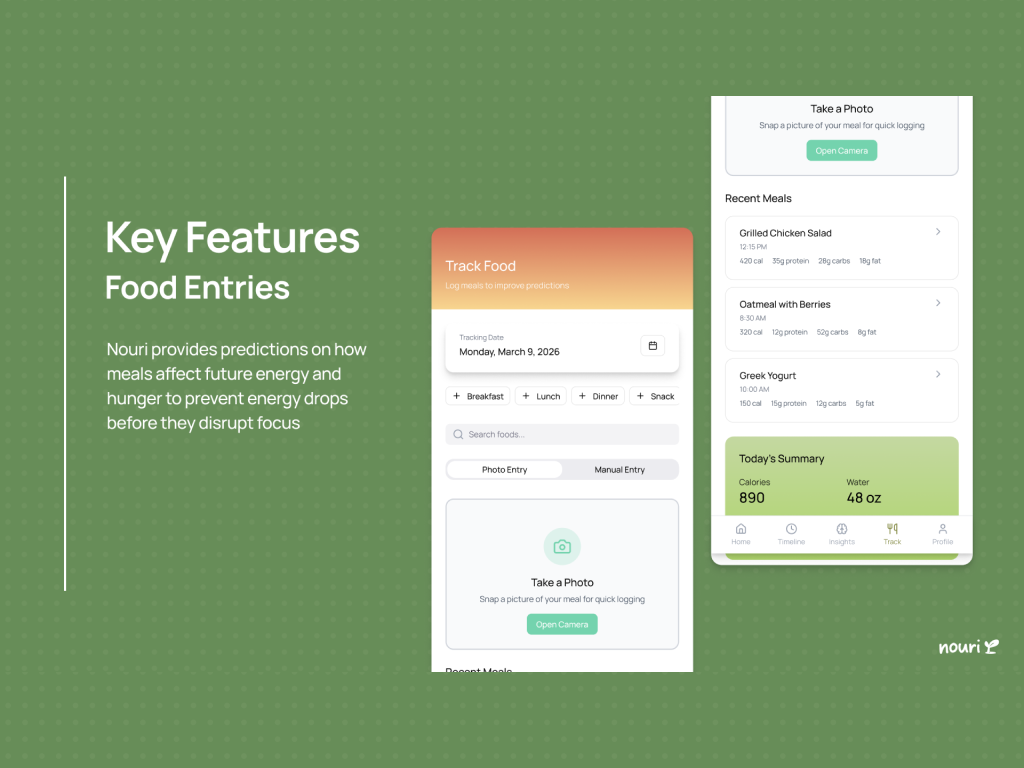
key features - food
-
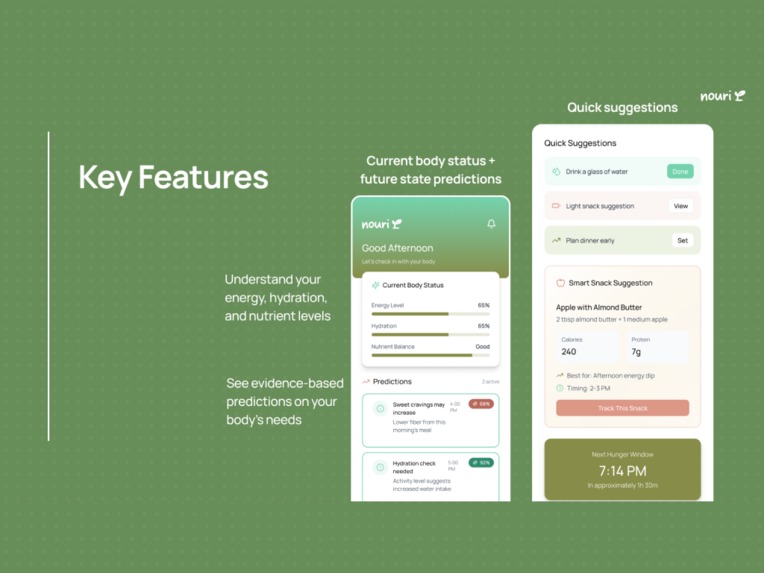
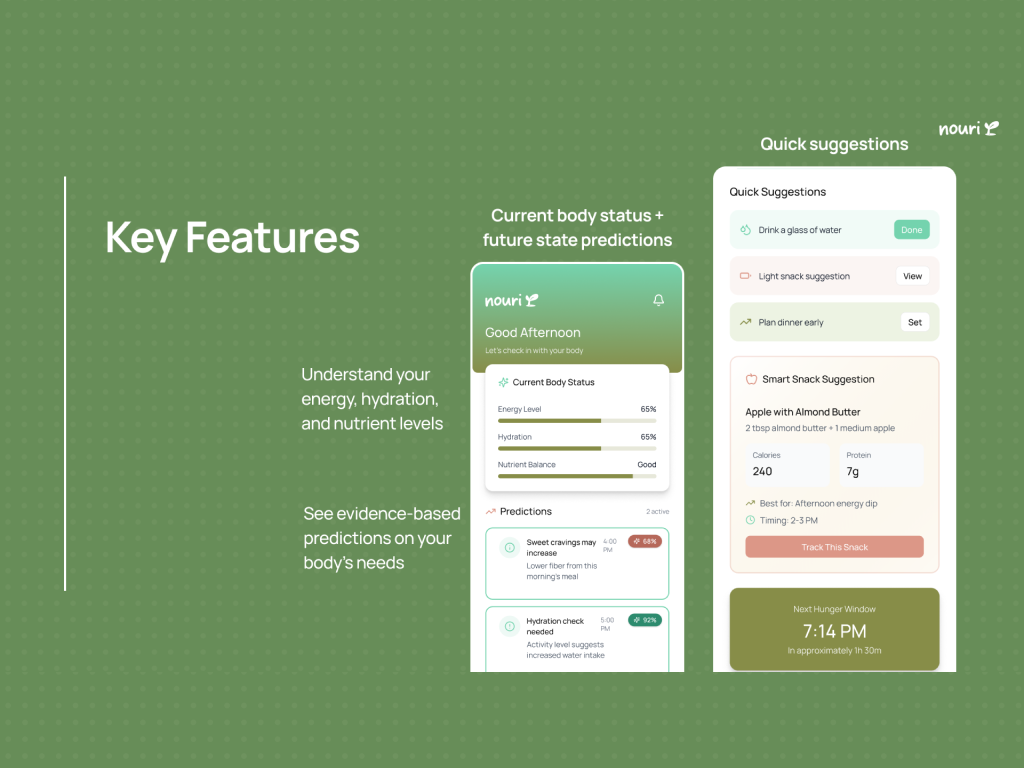
key features
-
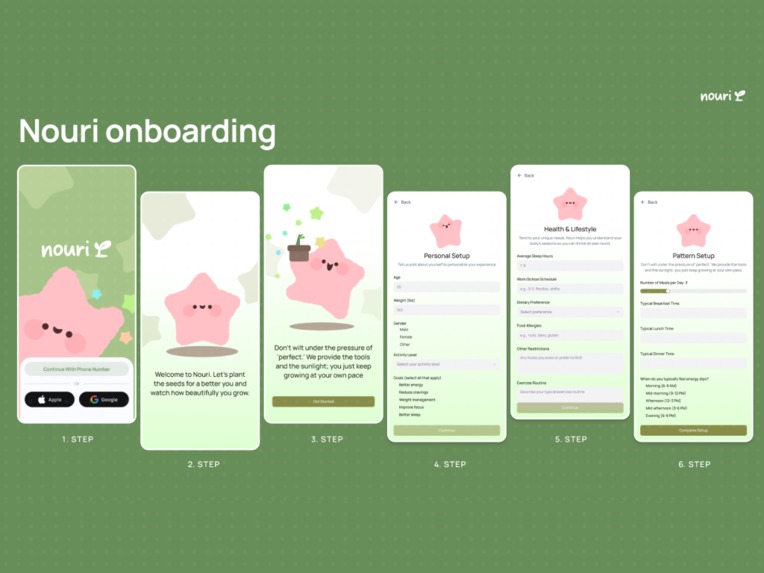
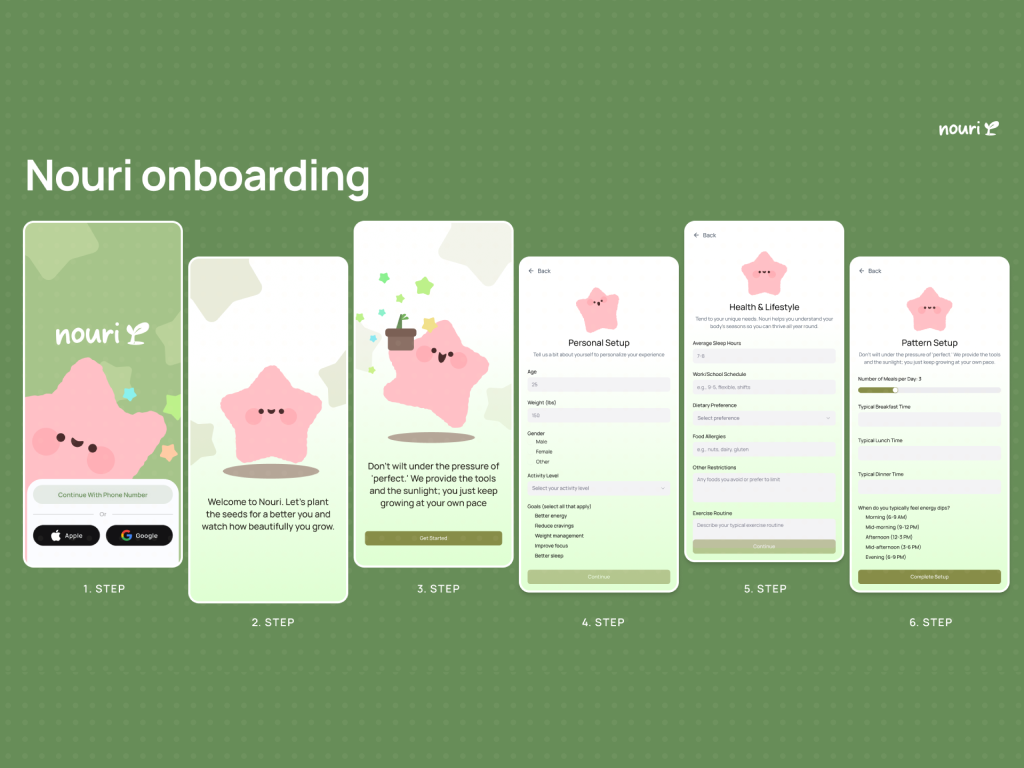
nouri's onboarding
Inspiration
While at the Figma Launch Party, we were happily munching on pizza provided by the ambassadors when we realized something obvious but profound… everyone gets hungry. Even between bites, we started thinking. Why do we only notice hunger when it’s already screaming at us? Through our user research, we found that most people only notice hunger, cravings, or fatigue after their bodies are already uncomfortable. This reactive approach often leads to poor nutrition, energy crashes, and unhealthy eating habits. Inspired by the quantified self movement and wearable technology, we imagined a tool that helps people sense their body’s needs before problems arise. That’s how Nouri was born—so you don’t have to wait until you’re hangry to take action.
What it does
Nouri introduces a predictive sensory layer called predictive metabolic awareness. It:
Predicts upcoming hunger, energy dips, and nutrient needs
Interprets cravings as signals rather than failures
Simulates the future impact of meals on energy and satiety
Detects nutrient drift over days to prevent long-term deficiencies
How we built it
Used Figma Make to design the entire prototype, including screens, workflows, and interactive elements
Created custom graphics, icons, and visuals
Developed a unique branding style to make Nouri feel futuristic, approachable, and premium
Designed mock notifications, timelines, and weekly pattern summaries to illustrate how predictive insights could appear
Built user flows and personas to show practical use cases and interactions, even without real data integration
Challenges we ran into
One of our main challenges was balancing this project alongside our other time commitments, including school and work. Because of this, we had to be intentional about how we divided tasks and used our time efficiently. We focused on prioritizing the core idea and key interactions rather than trying to design every possible feature.
Accomplishments that we're proud of
Several members of our team were new to the design process, so we’re especially proud of how quickly we were able to collaborate, learn, and turn our ideas into a cohesive concept. Despite different levels of experience, we were able to translate our research and brainstorming into a clear product vision and prototype.
What we learned
Through this project, we learned how to use Figma Make to accelerate our design workflow. It helped us quickly generate and iterate on interface components, allowing us to spend more time refining the user experience and storytelling rather than building everything from scratch.
What's next for Nouri
Next, we want to explore how Nouri could extend beyond a mobile app and integrate into everyday environments. One idea is connecting Nouri with smart fridge displays, allowing users to see personalized meal suggestions based on both their predicted nutritional needs and the ingredients already available in their fridge. For example, if Nouri detects that a user may need protein soon, the fridge interface could surface quick meal ideas using ingredients the user already has. This would help bridge the gap between knowing what your body needs and deciding what to eat, making it easier for users to act on the insights Nouri provides.
Built With
- adobe-illustrator
- figma
- figmamake
- procreate


Log in or sign up for Devpost to join the conversation.