-
-
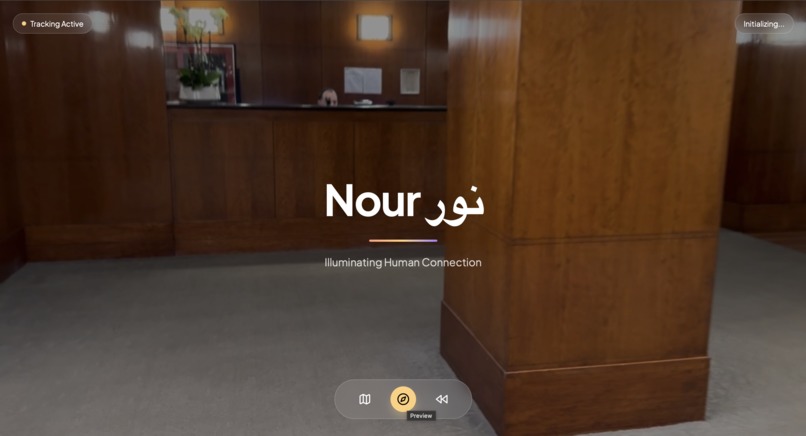
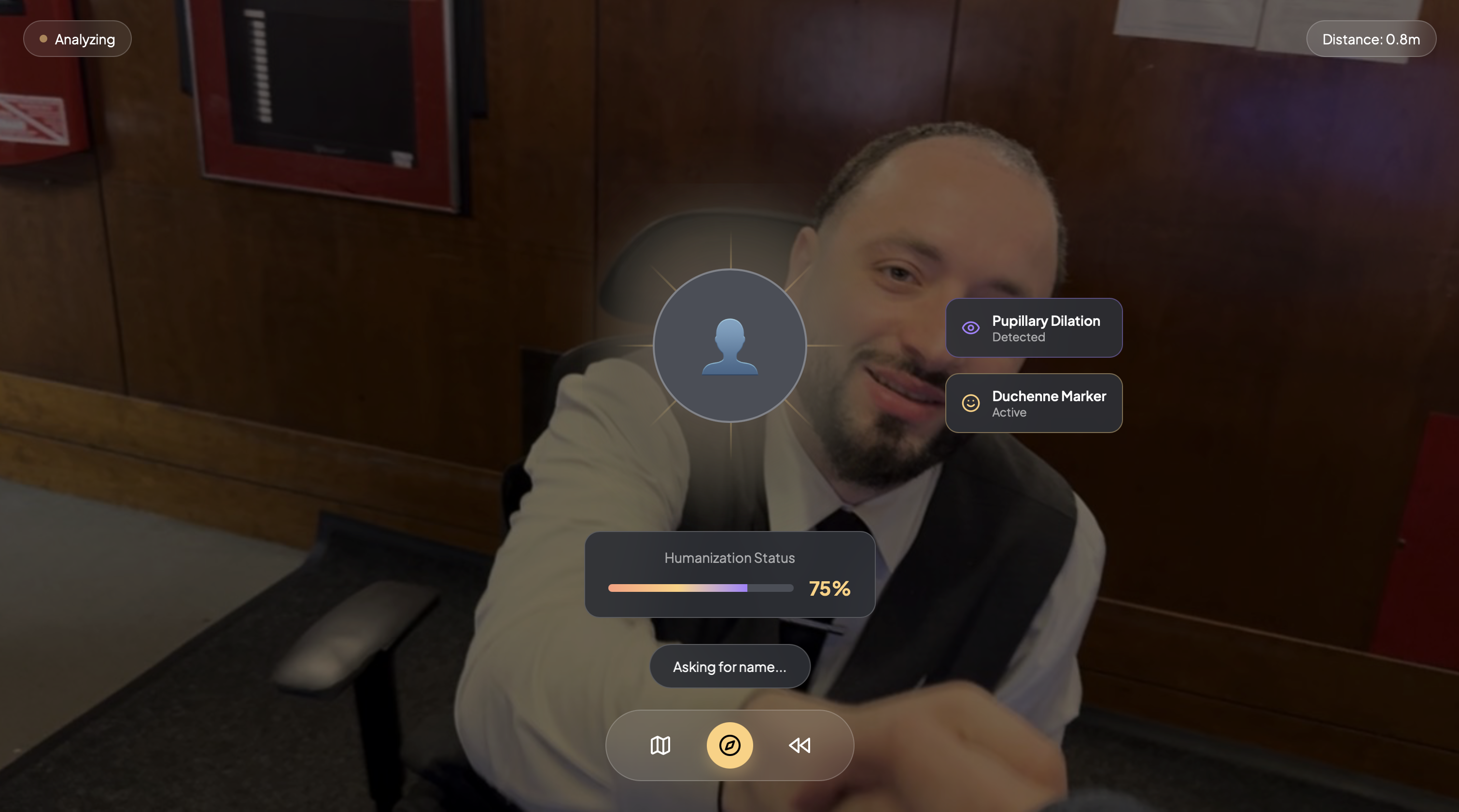
Start up page that leads directly to AR mode.
-
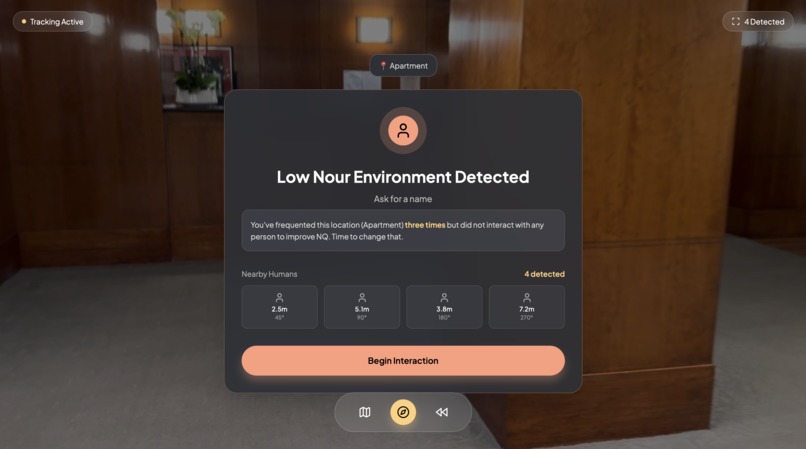
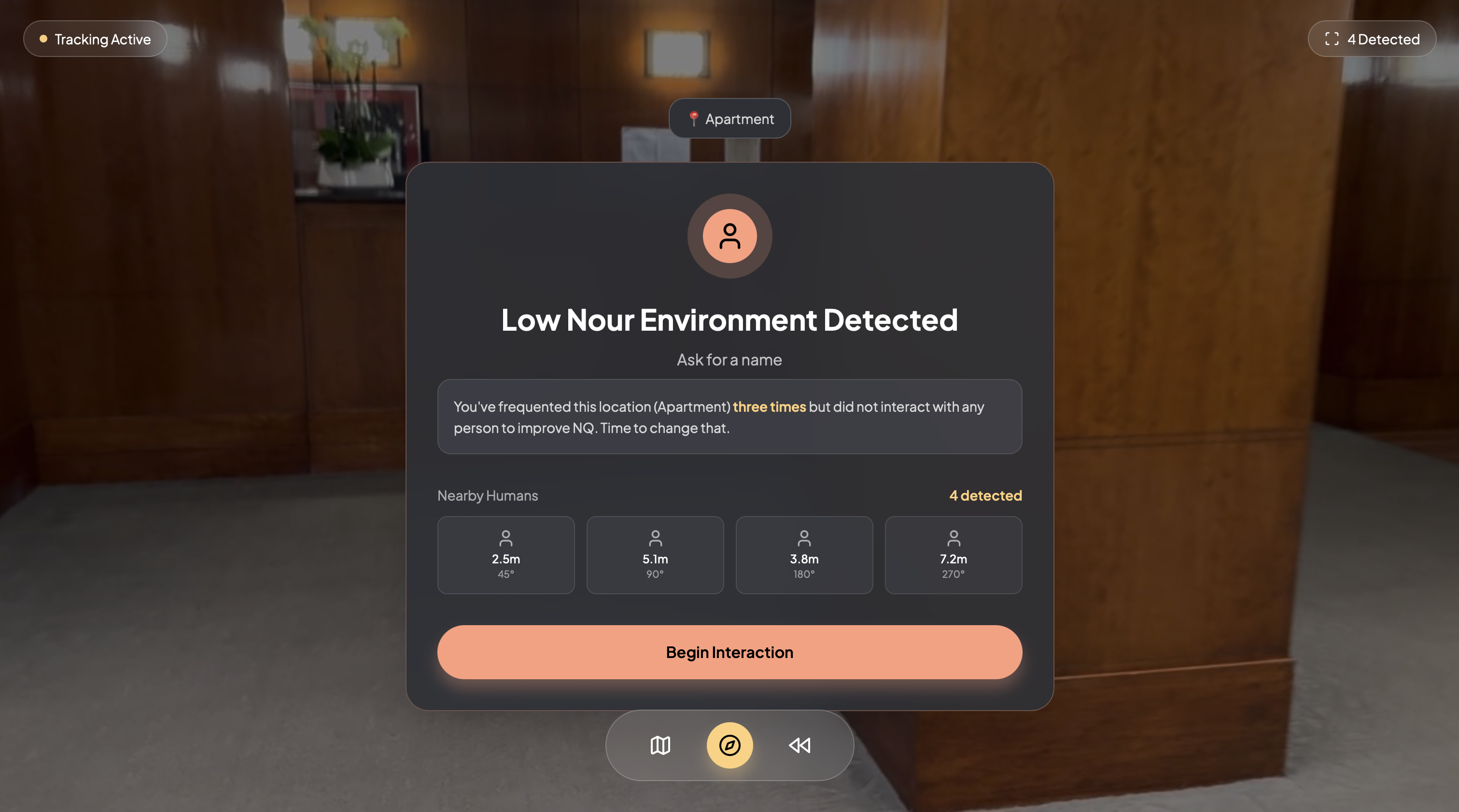
Pop up that warns user they need to interact with somebody and spike up NQ
-
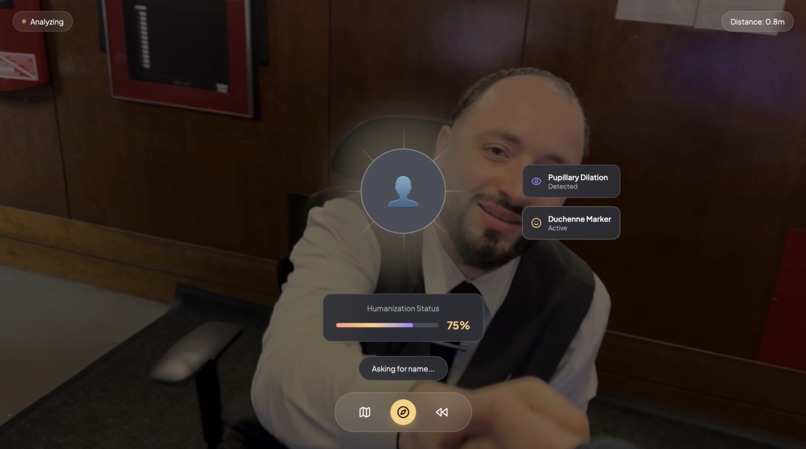
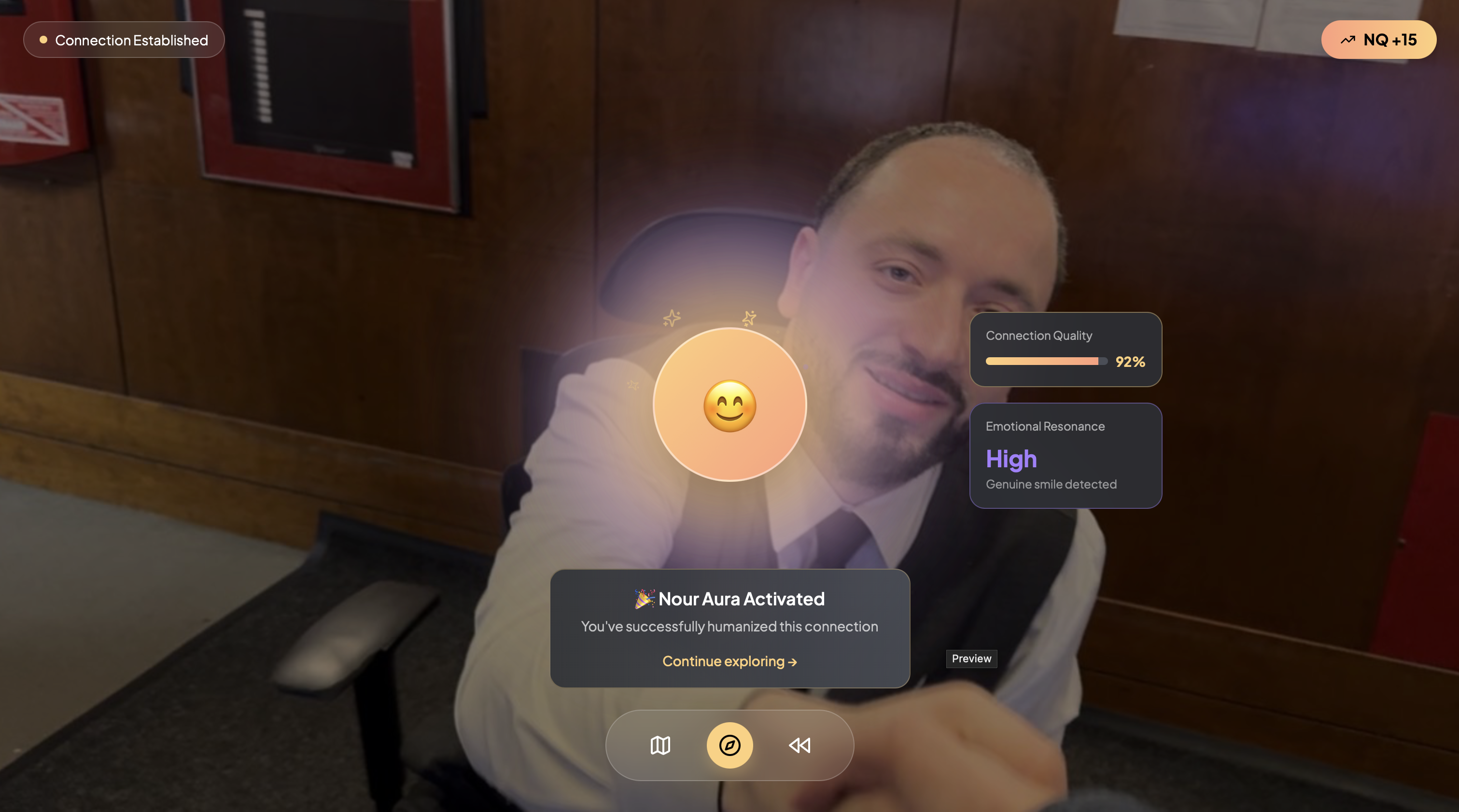
Establishing connection after asking name
-
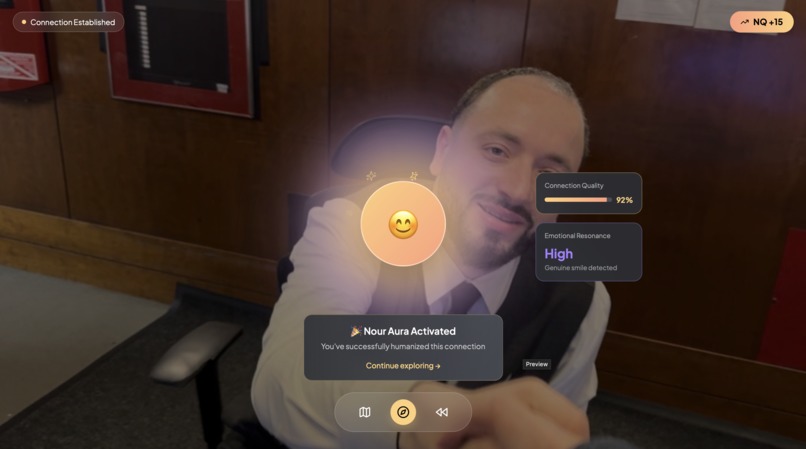
Hello Mo!
-
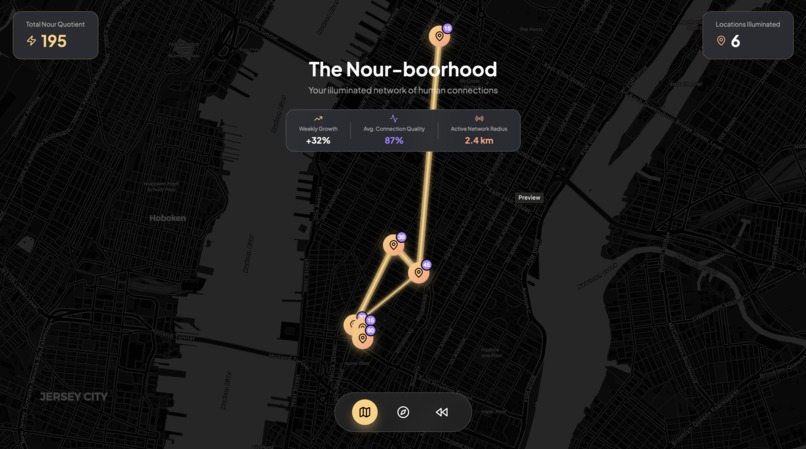
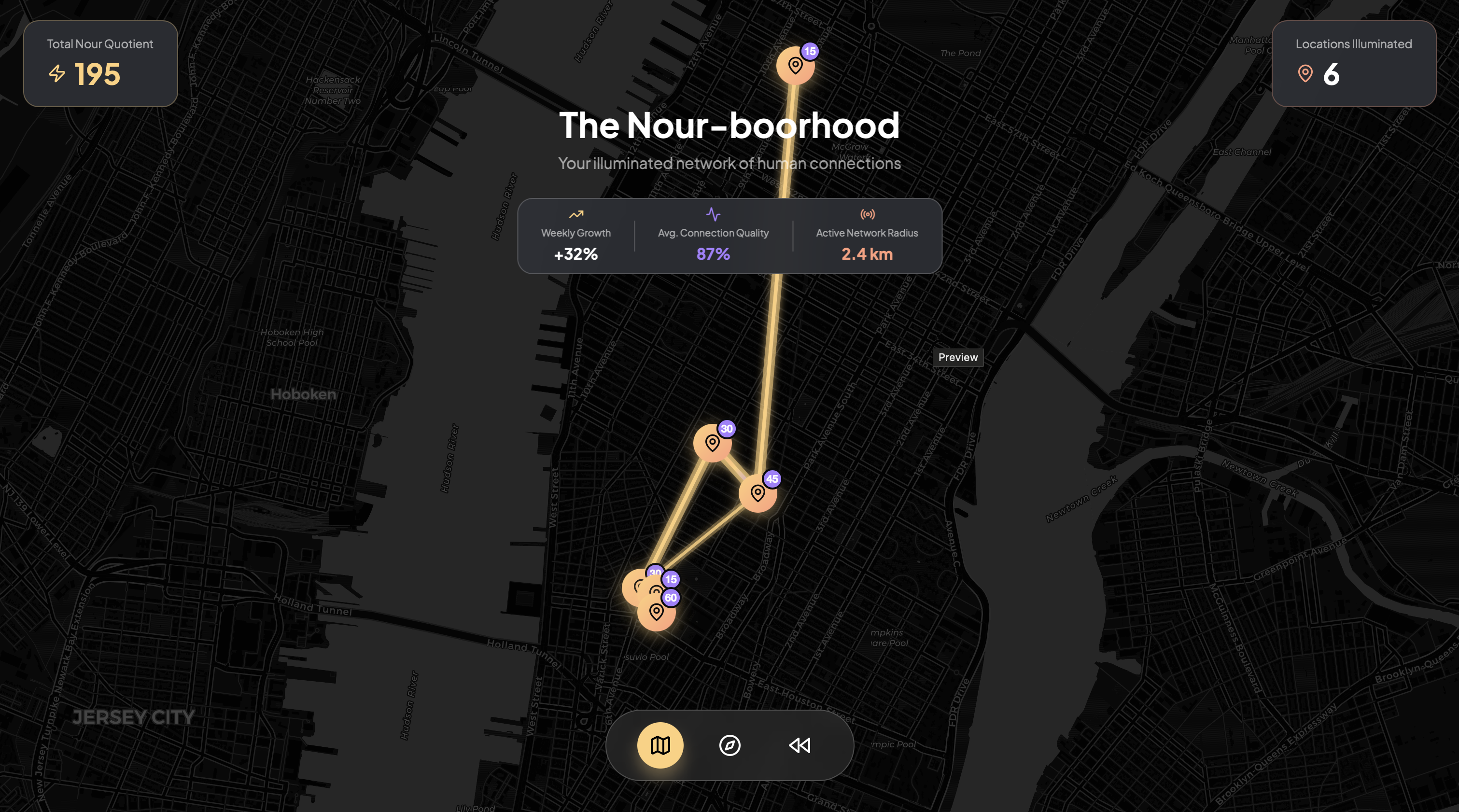
The Nour-borhood: a visualization of all the places the user has "lit up" by asking strangers names at locations frequently visited.
-
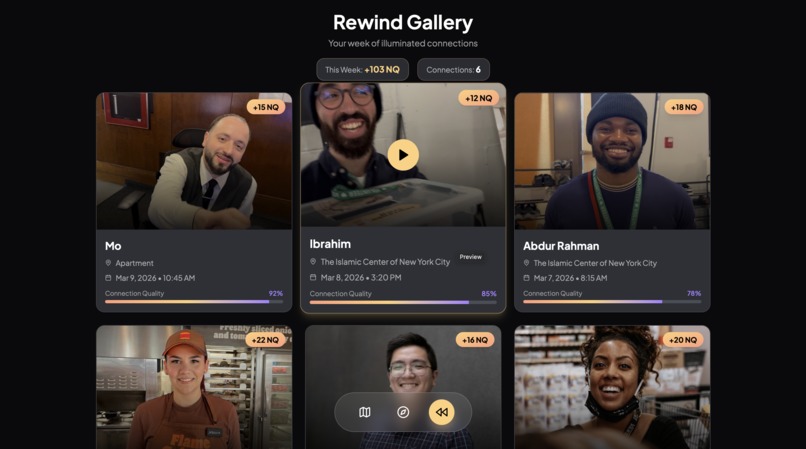
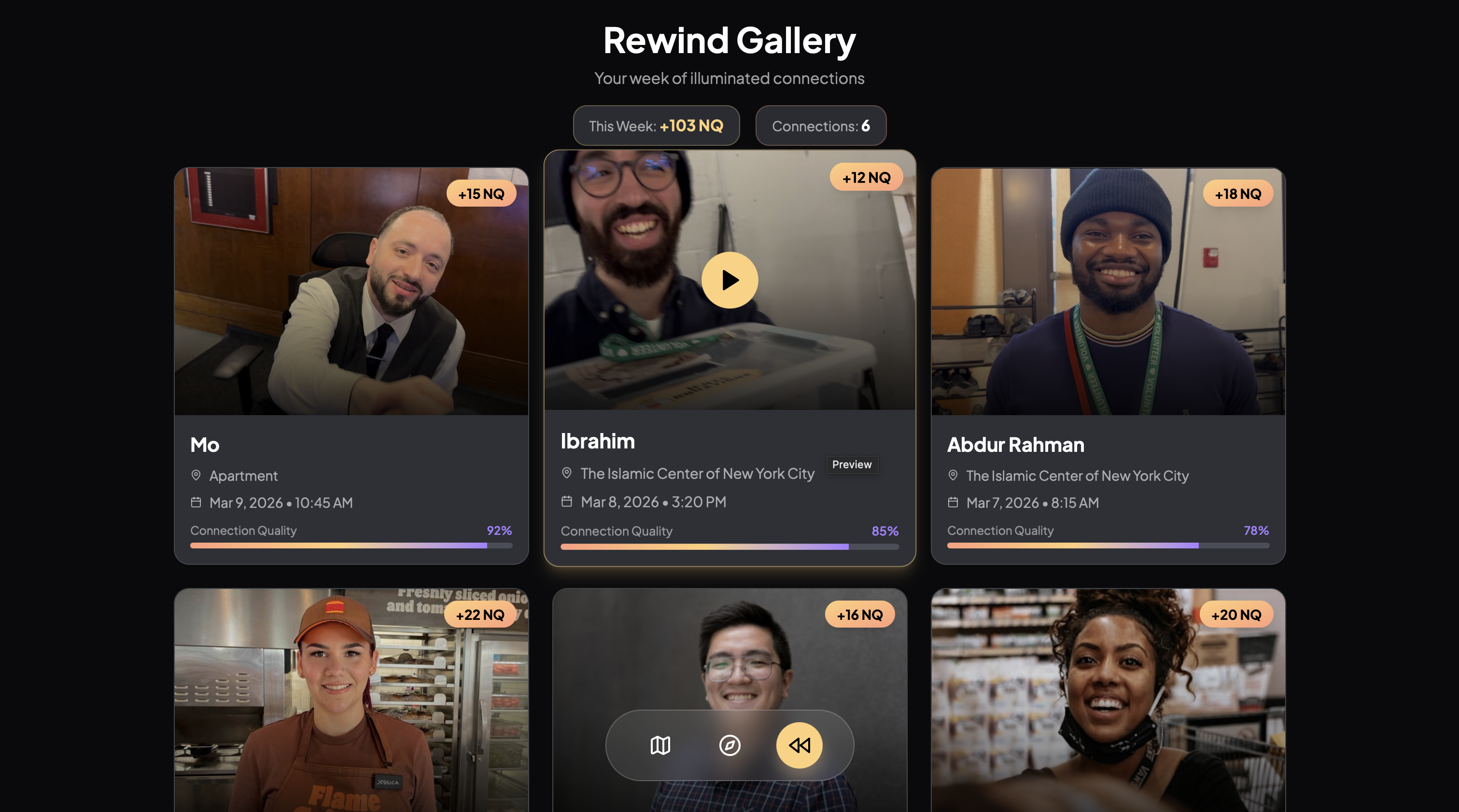
The rewind gallery: User can re-watch and capture the memories of the exact moment when the connection was established.
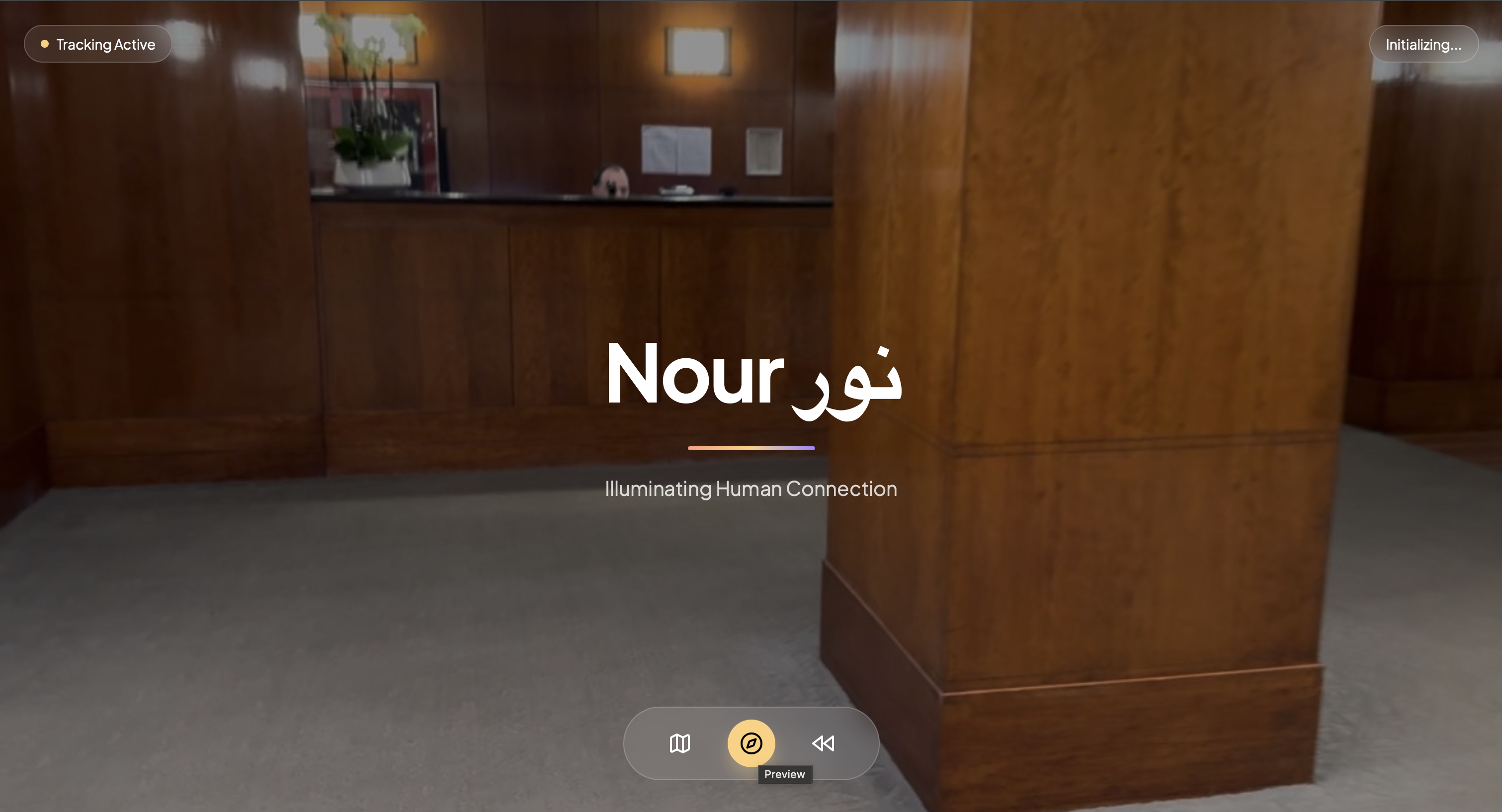
Nour: Illuminating Human Connection
Background and Inspiration
The Invisible Wall Problem
We live in a world of "Functional Ghosts." The barista who hands us our latte, the cashier who scans our groceries, the doorman at the front desk—we see their roles, but we rarely see them. To our brains, they are often just obstacles or utilities. We have lost the sensory data of Human Recognition.
My Story
I started a small experiment: I began asking for the names of people at locations I visited frequently—people whom others might not speak to aside from completing a transaction. I noticed something a heart rate monitor couldn't capture. When a stranger is recognized by name, their entire "frequency" shifts. A dull, disconnected expression doesn't just turn into a smile; it blooms. I realized I was witnessing an extra-sensory phenomenon—a transfer of internal light. I call this Nour.
Enter Project “Nour”
What is Nour?
Nour (نور) is the Arabic word for light—specifically, an internal radiance that suggests clarity and soul. This application is designed for speculative wearable devices, such as smart glasses, that merge AR technology with advanced sensory optics.
The "New" Sense and Metric
In this challenge, Nour acts as a tool that tracks Social Luminance. It measures the transition from Objectification (seeing a barista as a coffee-machine) to Humanization (seeing them as a person). The primary metric is the Nour Quotient ($NQ$), defined as the change in a person's "inner light" from the moment of approach to the moment of recognition.
Tracking your $NQ$ ensures that human recognition fuels your own mental well-being and community health.
User Journey and Functions
You are Yousuf, an introvert who has just moved into a new apartment in Midtown. You crave community, but you know that community is built, not found. You begin small by talking to the people you see every day. Through the Nour interface, Yousuf can:
Engage: Interact with a stranger and watch his $NQ$ bloom in real-time.
Rewind: Access a "Radiance Playback" gallery of past interactions to boost his own serotonin.
Navigate: View the Nour-borhood map—a data visualization of all the locations Yousuf has "lit up" with human connection.
Process and Design
Craft and Execution
The visual language was built on keywords like glass-texture, bioluminescence, and fluidity. I used reference imagery for AR HUDs (Heads-Up Displays) to ensure the interface felt non-intrusive yet magical.
Tools: Figma, Figma Make, Gemini, Zoom, Figma Slides.
Assets: I used photos and videos of real people from my life—individuals whose names I have asked and who consented to be part of this "humanization" demo.
The Make Journey
This was my first time using Figma Make. As a relatively new tool, documentation was scarce; YouTube and Slack recordings were my primary "saving graces." This was both exhilarating and daunting. I wanted to use this challenge to push my boundaries and prove that a strong concept can drive technical execution, even when the tools are still evolving.
Challenges and Learning
The primary challenge was the technical constraint of the platform. I struggled with direct video integration within the Figma Make environment, a feature I believe would elevate the realism if given more development time. However, I overcame this by leveraging integrated APIs like Open Street Map and the MixKit sound library to add layers of environmental realism.
The Takeaway
More than anything, I learned the power of Adaptive Prompting. We are fortunate to live in an era where the distance between a "spark" of an idea in your head and a functional prototype on a screen has exponentially decreased. Nour is a testament to that speed—a poetic idea turned into a speculative reality.
Built With
- figma
- mixkit
- openstreetmap

Log in or sign up for Devpost to join the conversation.