-
-
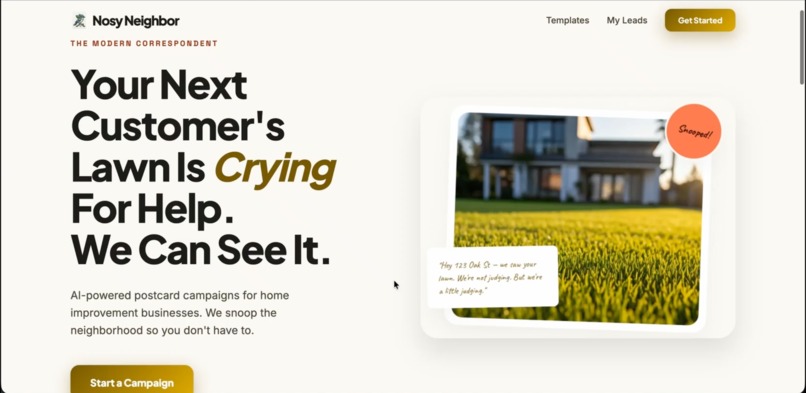
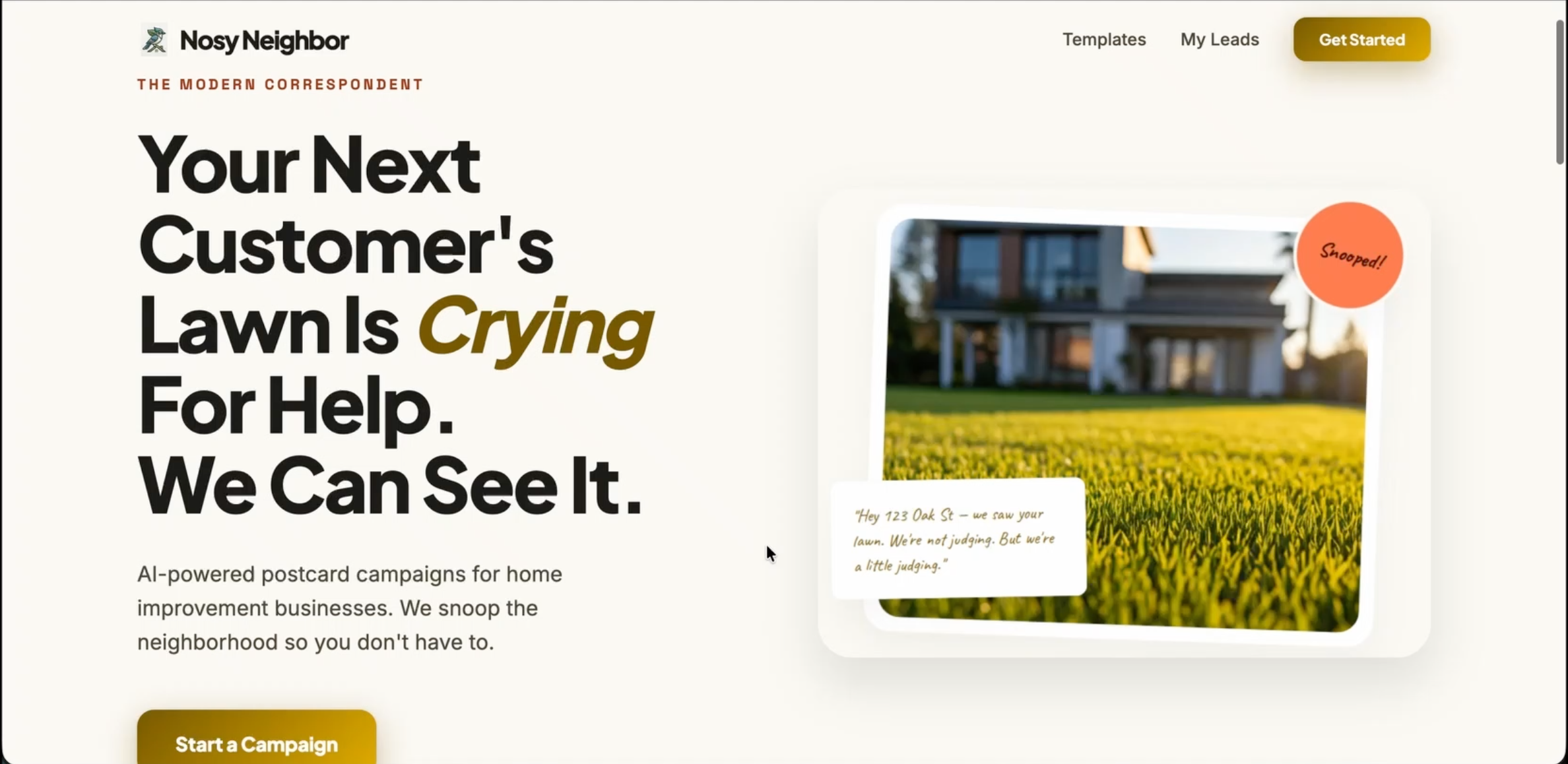
Our product's home page.
-
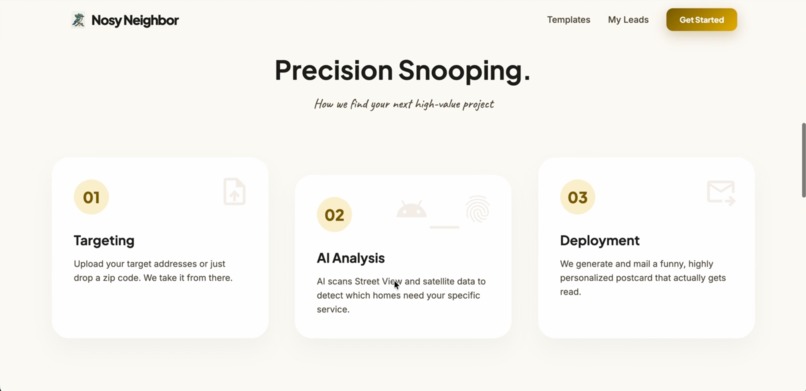
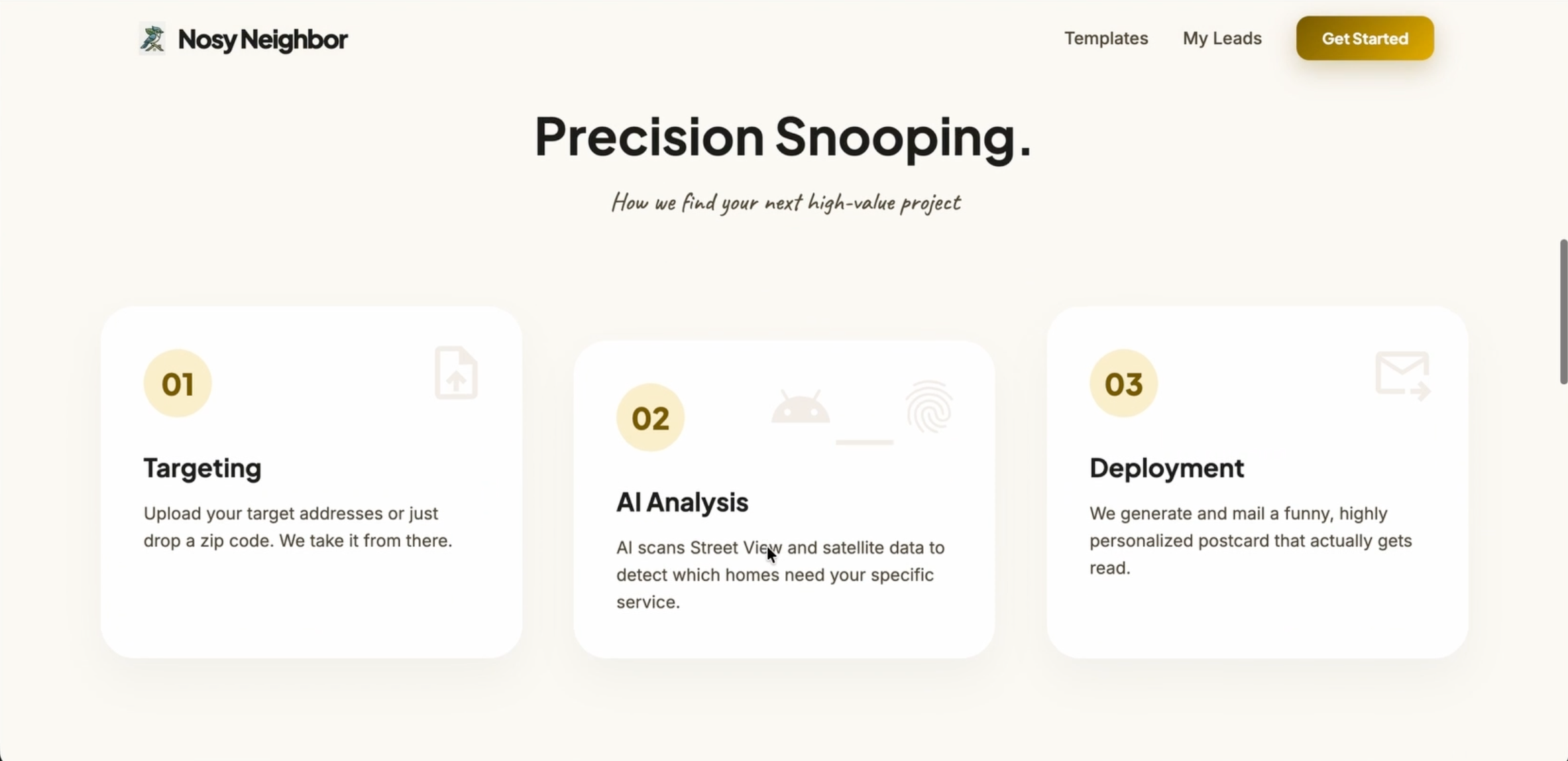
Product description on the home page.
-
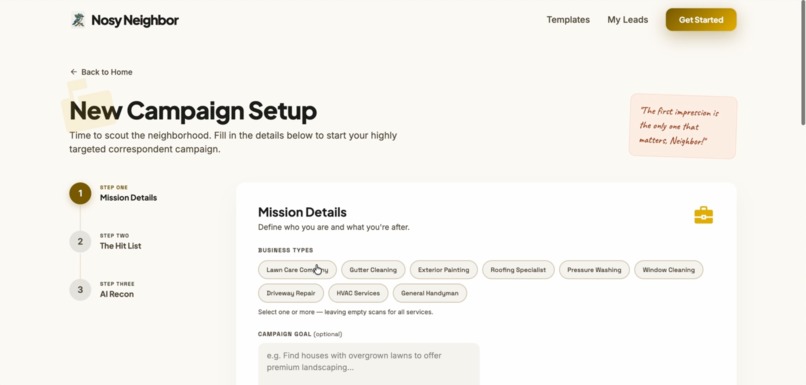
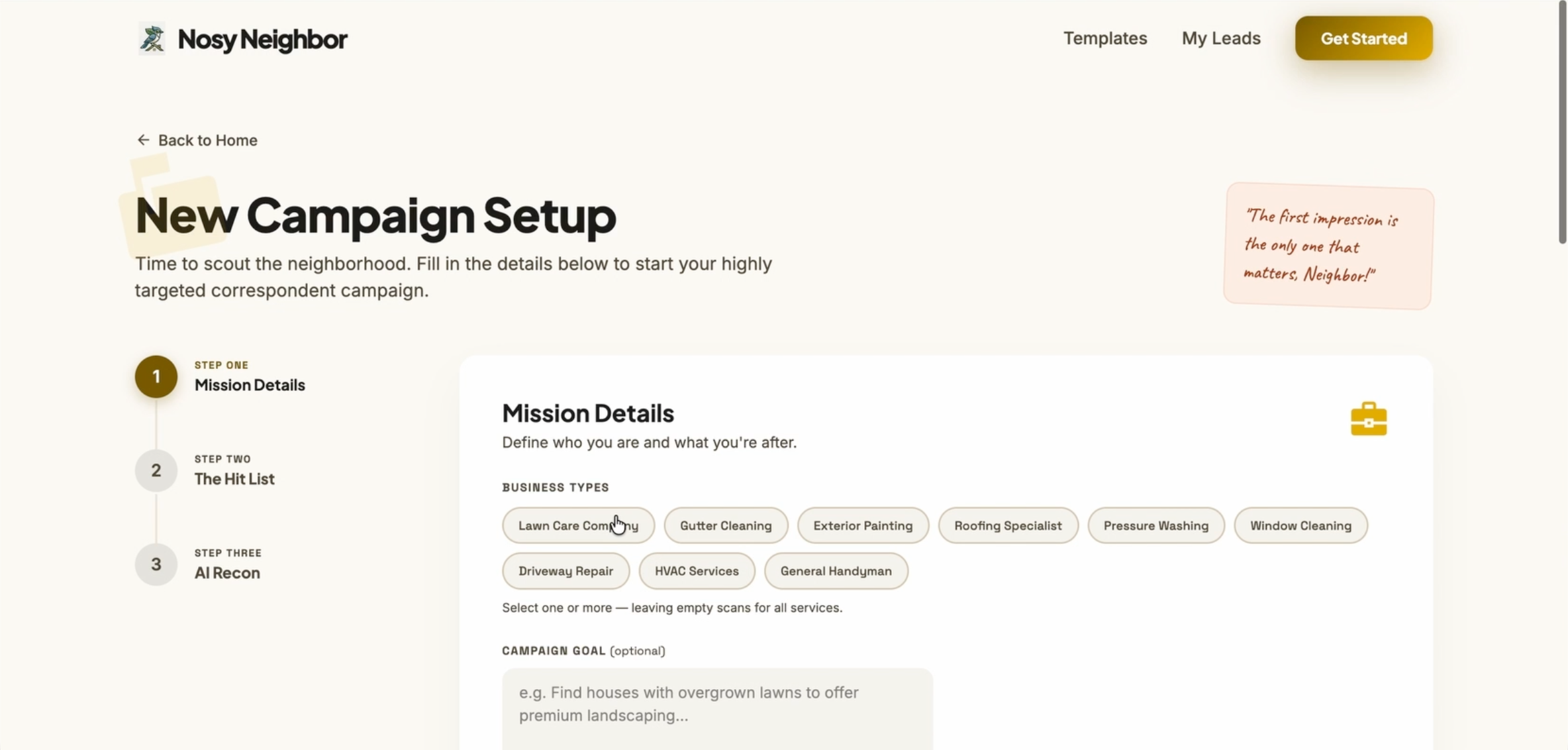
The new campaign set up page. Select your business type to get started!
-
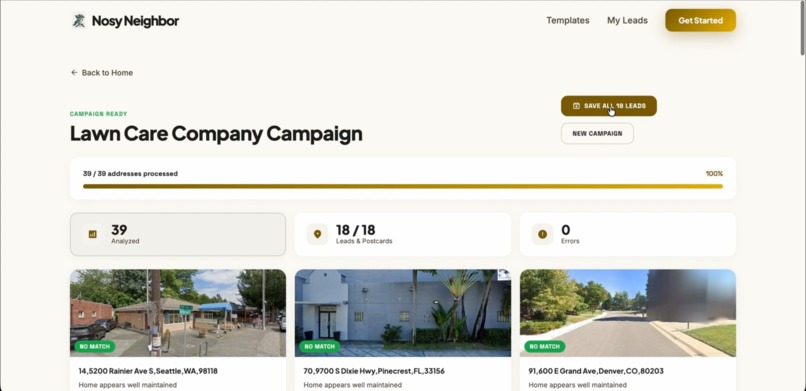
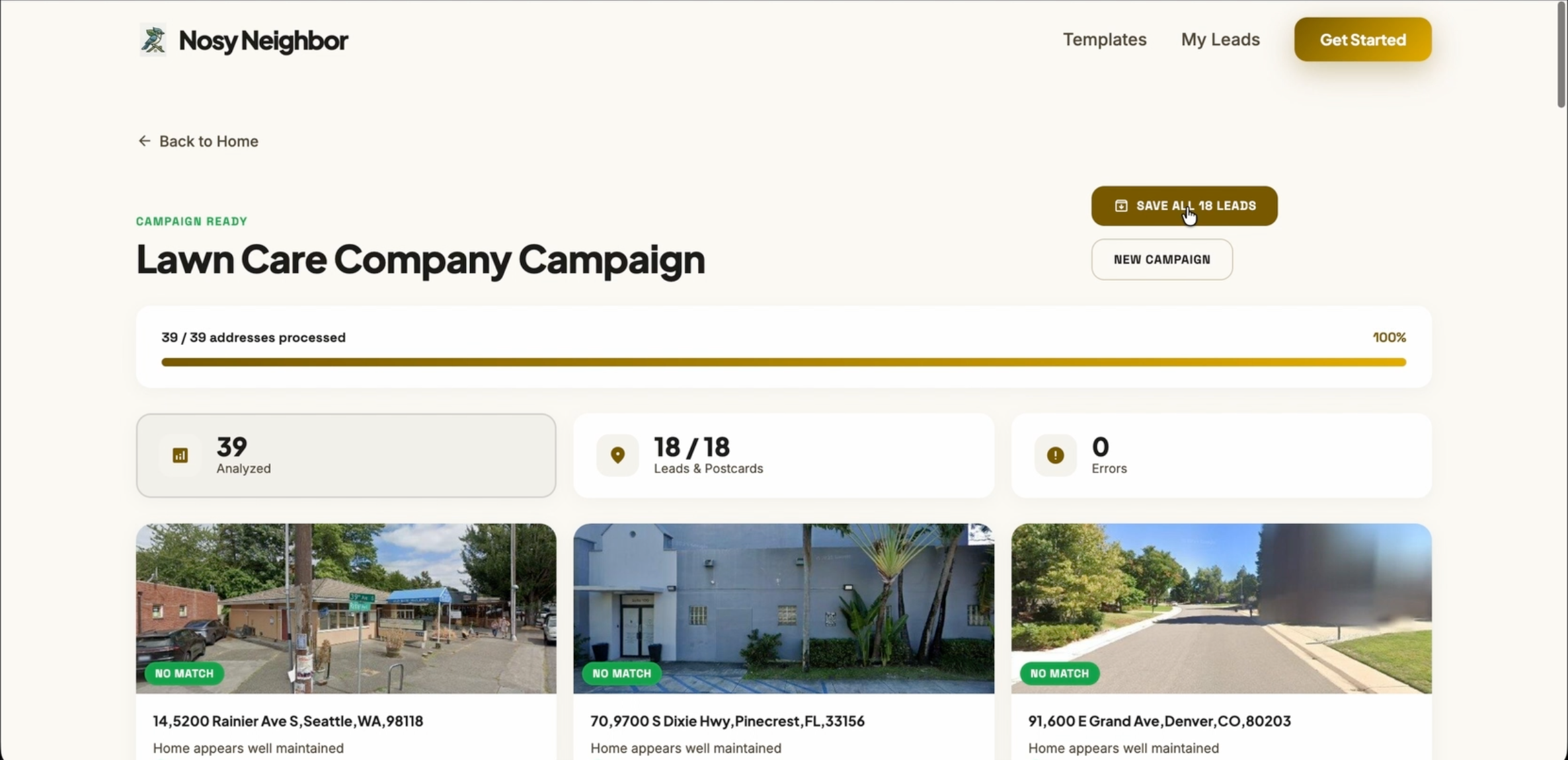
Our app pulls street-view images of potential leads and analyzes them to determine if they're a match for your home service business.
-
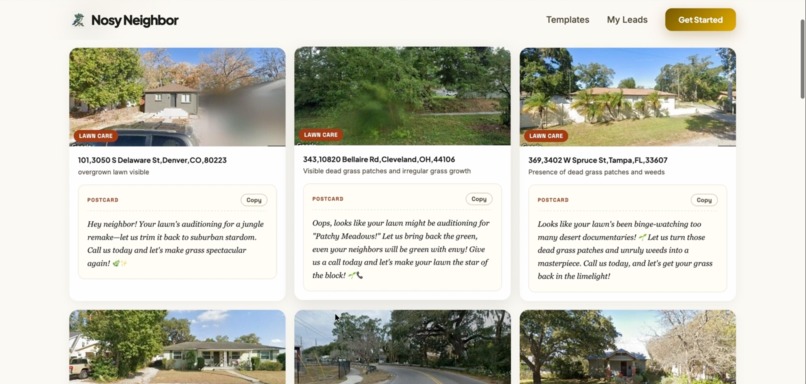
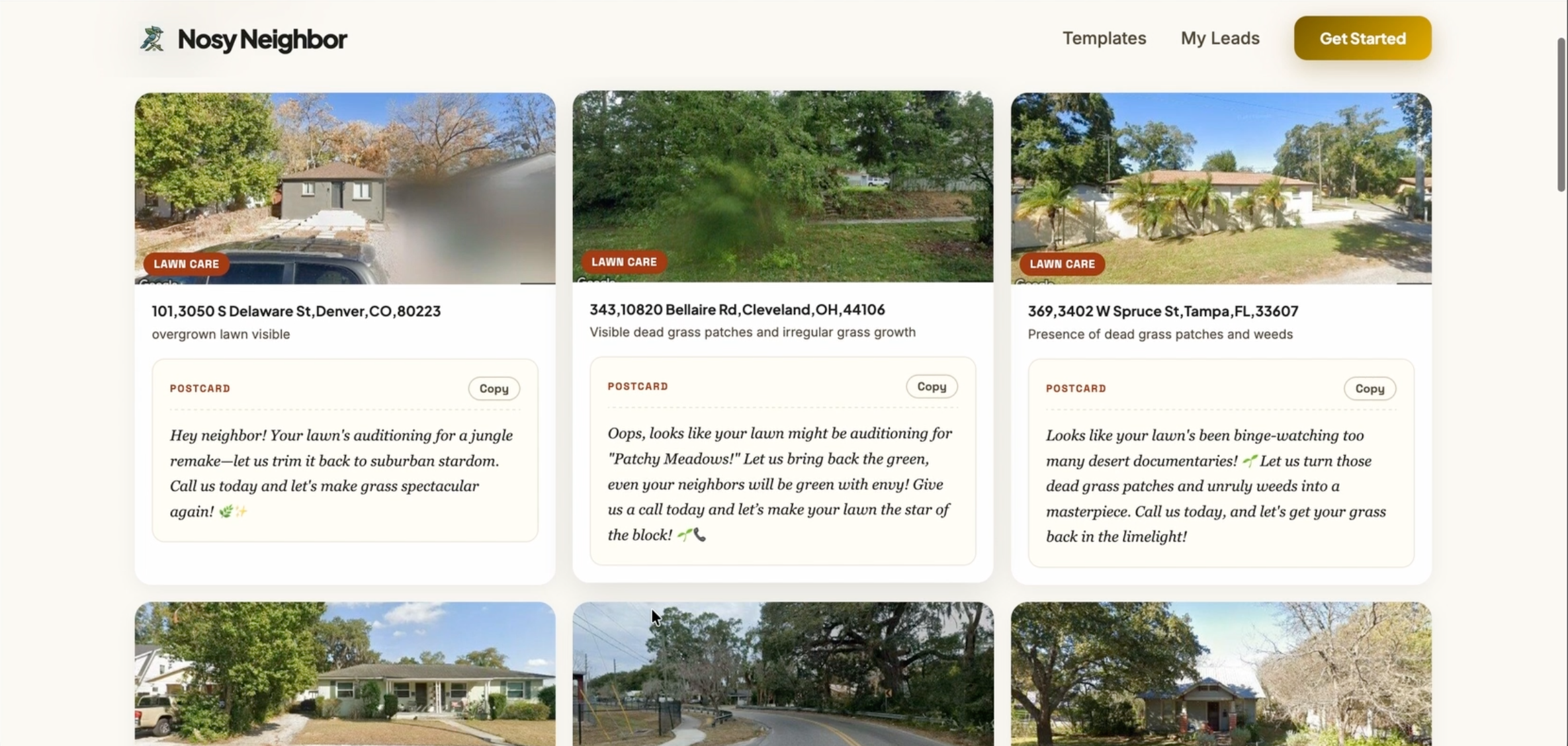
Then you can see the best matches to market to and a brief explanation of why.
-
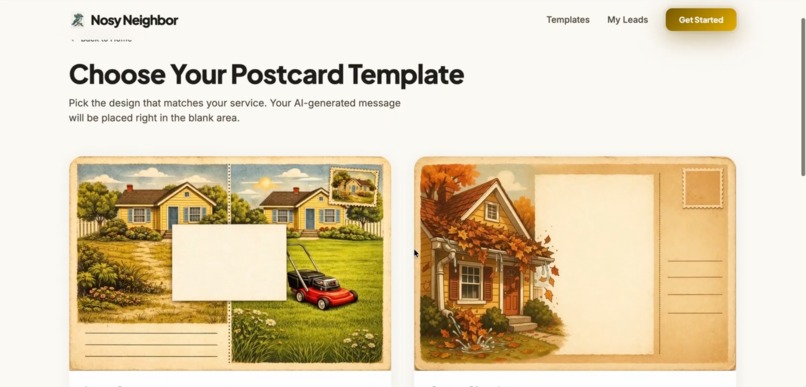
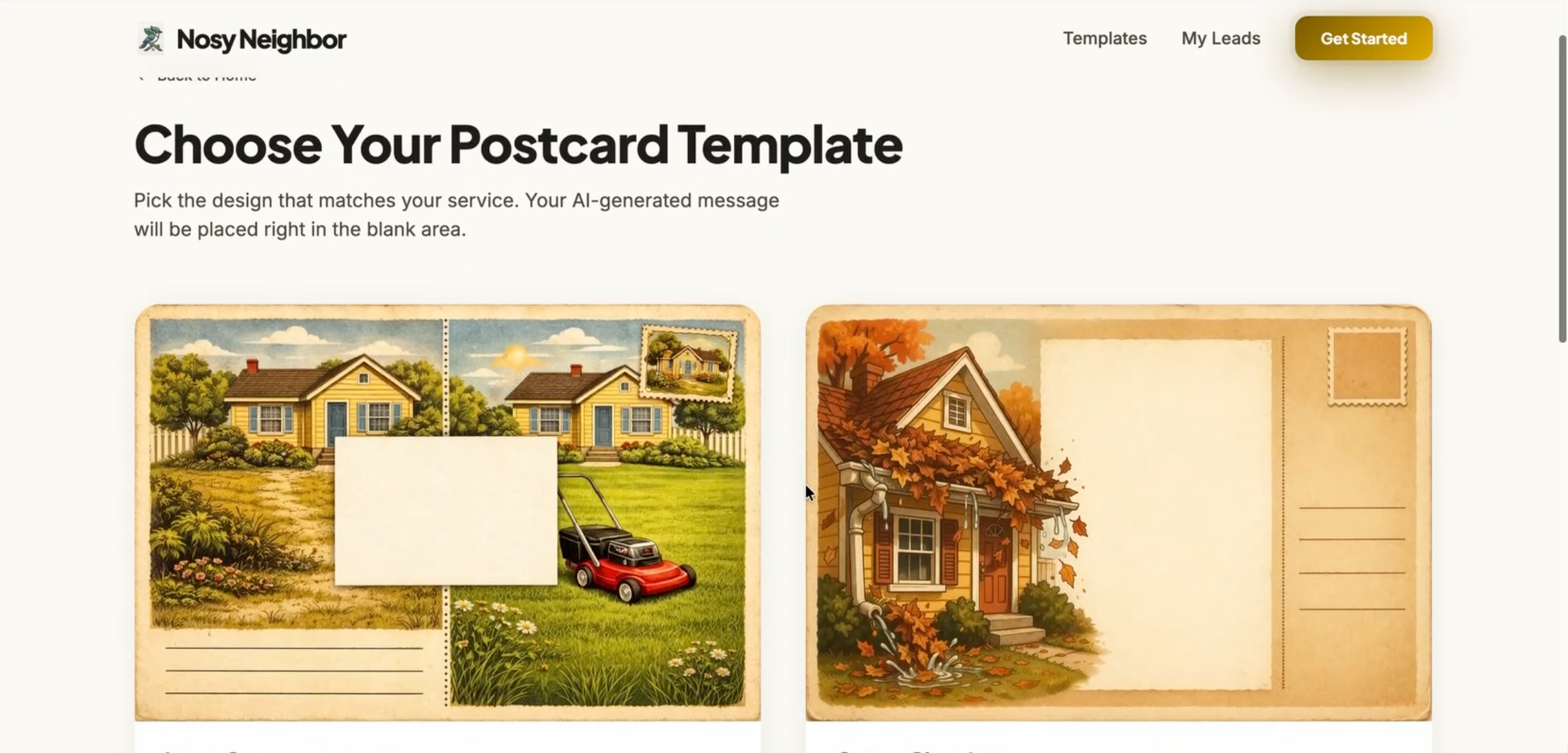
Finally, the app will generate personalized postcards based on your business and their home.
Nosy Neighbor
AI-powered lead qualification that shows home service businesses exactly which homes need their services, before they spend a dime on marketing.
Inspiration
Home service businesses, roofers, landscapers, HVAC companies, waste enormous marketing budgets blasting postcards at addresses that have no need for their service. We wanted to flip that: what if you could see a lead's home before you reached out, and only contact the ones that actually need your help? Nosy Neighbor was born from that question, with a healthy dose of humor about how aggressively useful it could be.
What it does
Our app lets home service businesses upload a list of prospect addresses. It pulls Google Street View imagery for each address, uses OpenAI's vision capabilities to analyze the property's condition, and identifies which homes show visible signs of needing a specific service, an aging roof, overgrown landscaping, a cracked driveway. For every qualified lead, the app automatically generates a personalized postcard message tailored to what was actually observed at that property. The costumer can them choose one of our postcard templates and have a personalized postcard ready to send.
How we built it
Our stack is a React front end and PHP back end, containerized in Docker. The core pipeline works like this: uploaded addresses are geocoded and passed to the Google Street View API to retrieve property level images. Those images are then sent to OpenAI API with a structured prompt that asks the model to assess property condition against a specific service category. When a property qualifies, a second GPT call generates a personalized postcard message grounded in the visual observations. We coordinated development across the team using GitHub.
Challenges we ran into
Getting Street View images to work reliably was harder than expected. The API would return images of the wrong property or a generic street view rather than a front-facing shot of the home. We solved this by tuning our parameters to discard unusable images before they hit the AI pipeline. On the model, getting GPT-4 Vision to return consistent assessments required several iterations of prompt engineering.
Accomplishments that we're proud of
We are proud that we were able to build a product that can help small and large business owners reach their target audience in a fashion that is more efficient and cost effective.
What we learned
We gained experience using multiple AI APIs in sequence like using vision models as a filtering layer before passing results to a text generation step. We learned a lot about prompt design for structured output. We also learned how to efficiently work as a team to create a full stack app.
What's next for Nosy Neighbor
The most important next step is addressing privacy: Street View imagery is publicly available, but a commercial product that systematically analyzes homes should be transparent about data handling and align with applicable regulations. Beyond that, we'd prioritize user authentication, caching to reduce redundant API calls, CRM integrations so qualified leads flow directly into a sales workflow.

Log in or sign up for Devpost to join the conversation.