-
-
Award-winning AI platform that verifies rumors, images, and voice notes using trusted sources and context analysis.
-
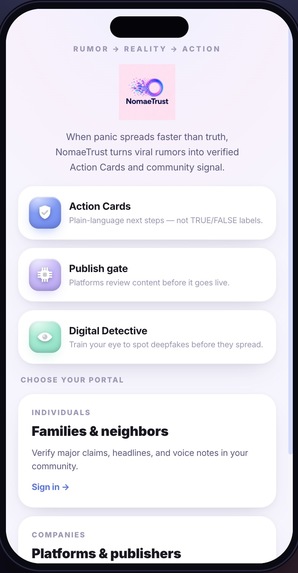
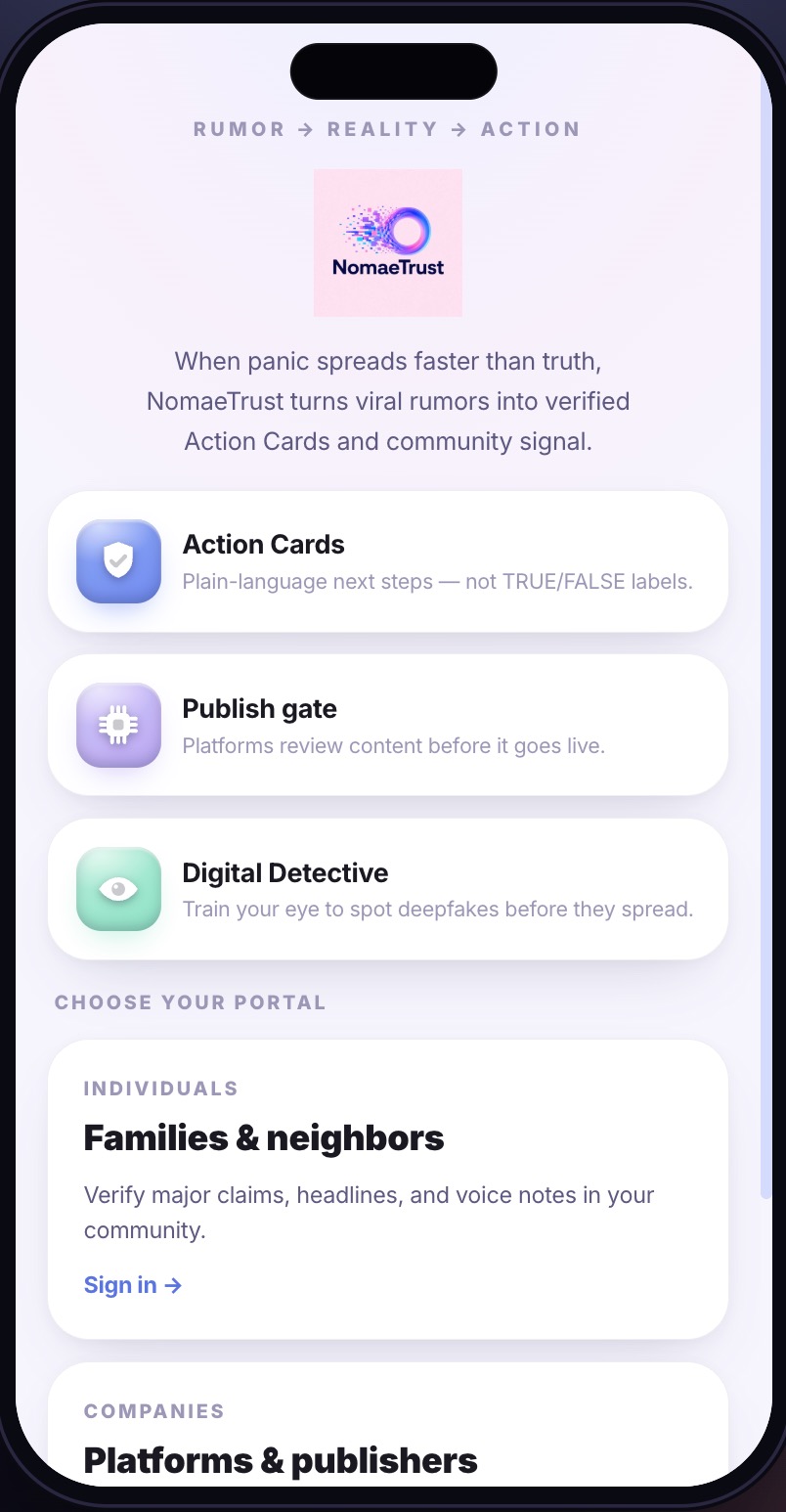
When rumors spread faster than truth, NomaeTrust helps communities verify claims, trace sources, and take informed action.
-
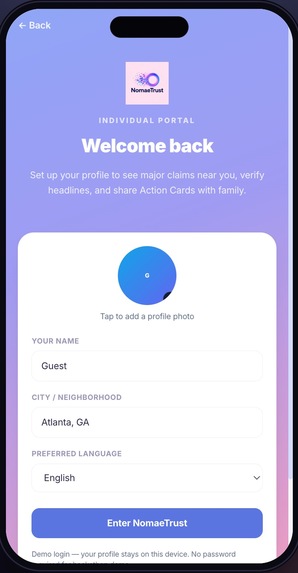
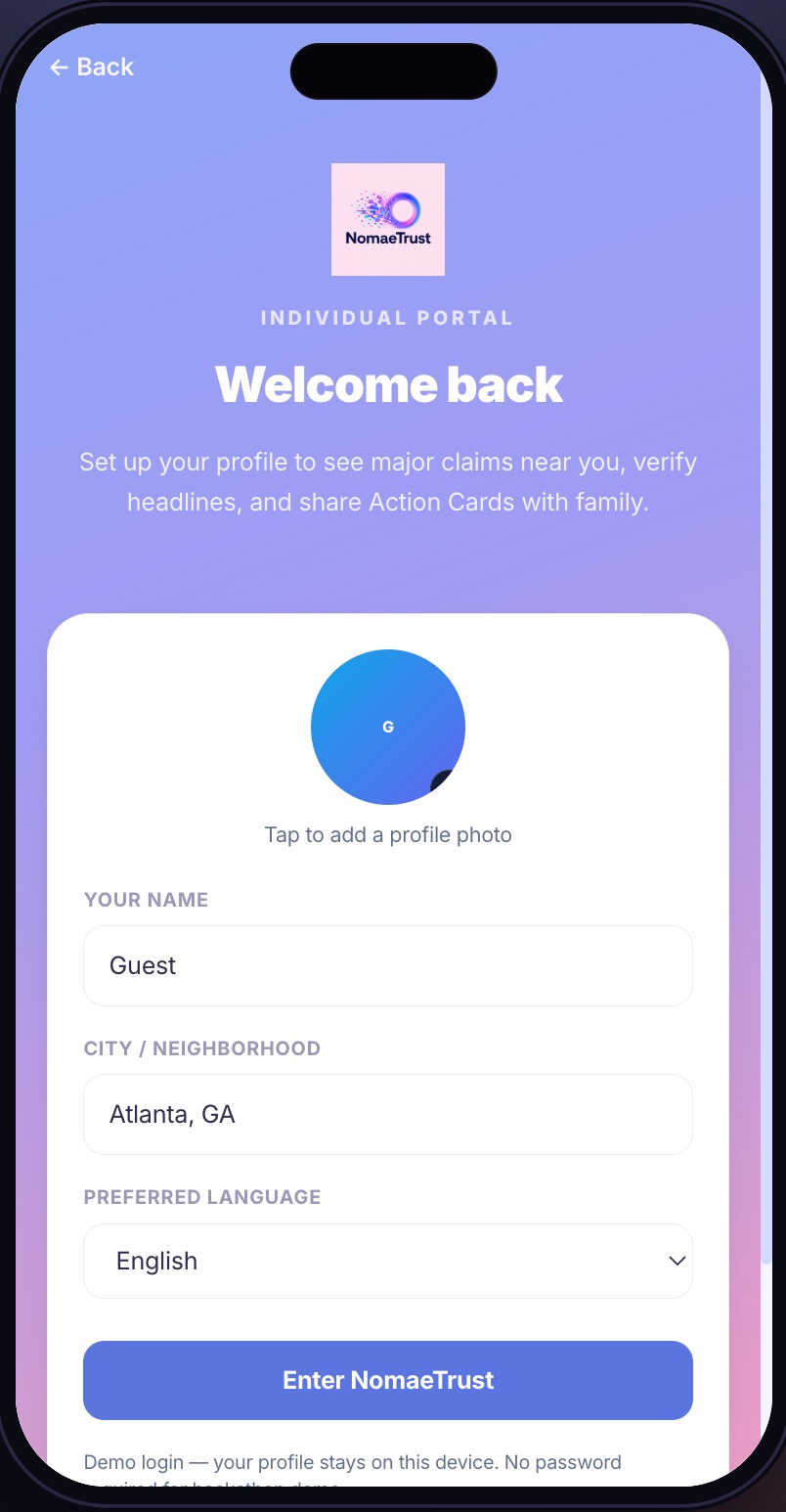
Create your NomaeTrust profile to receive local alerts, verify community claims, and share trusted information with those around you.
-

Verify rumors, uncover context, and protect your community with trusted information.
-
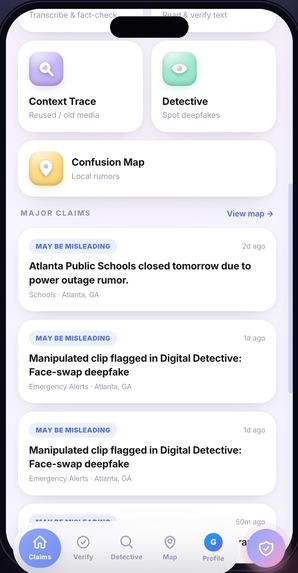
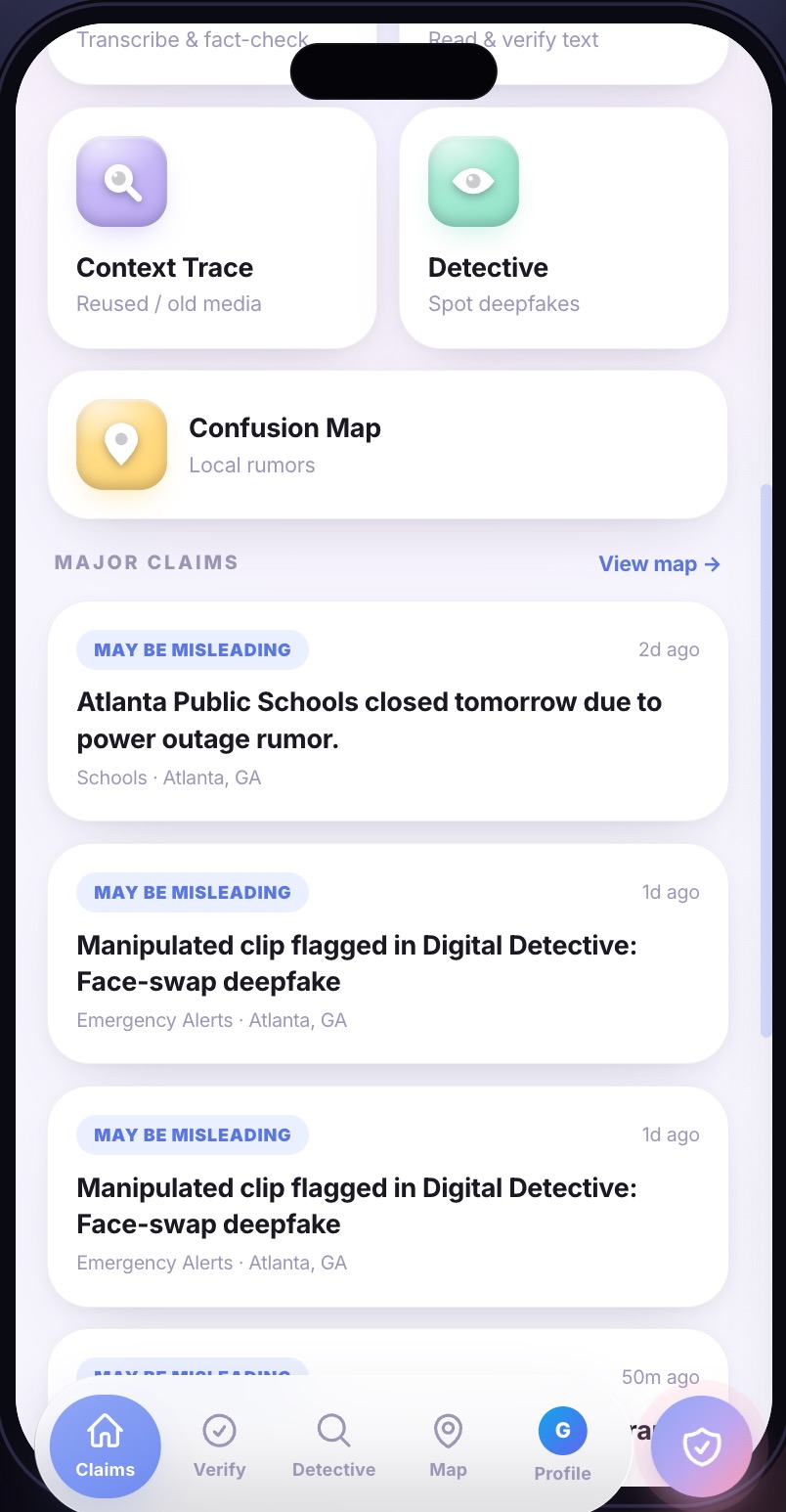
Track emerging rumors, breaking claims, and verification activity in your area.
-
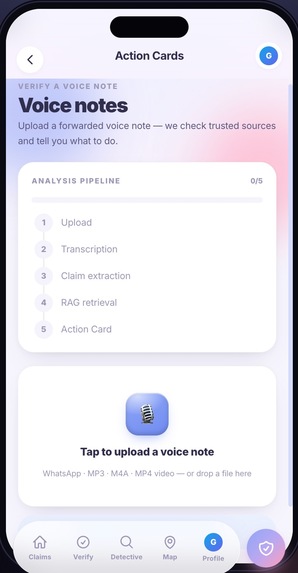
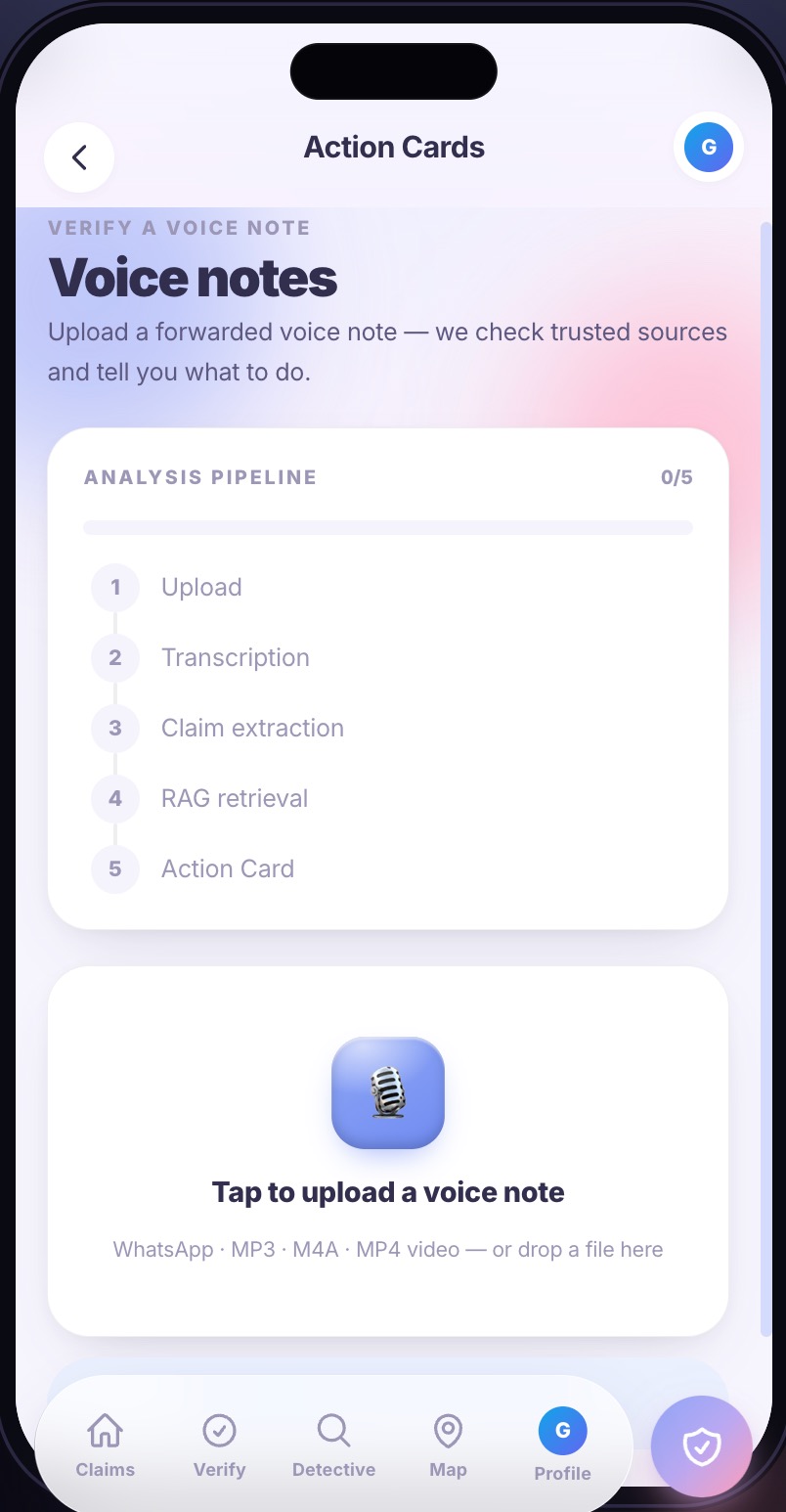
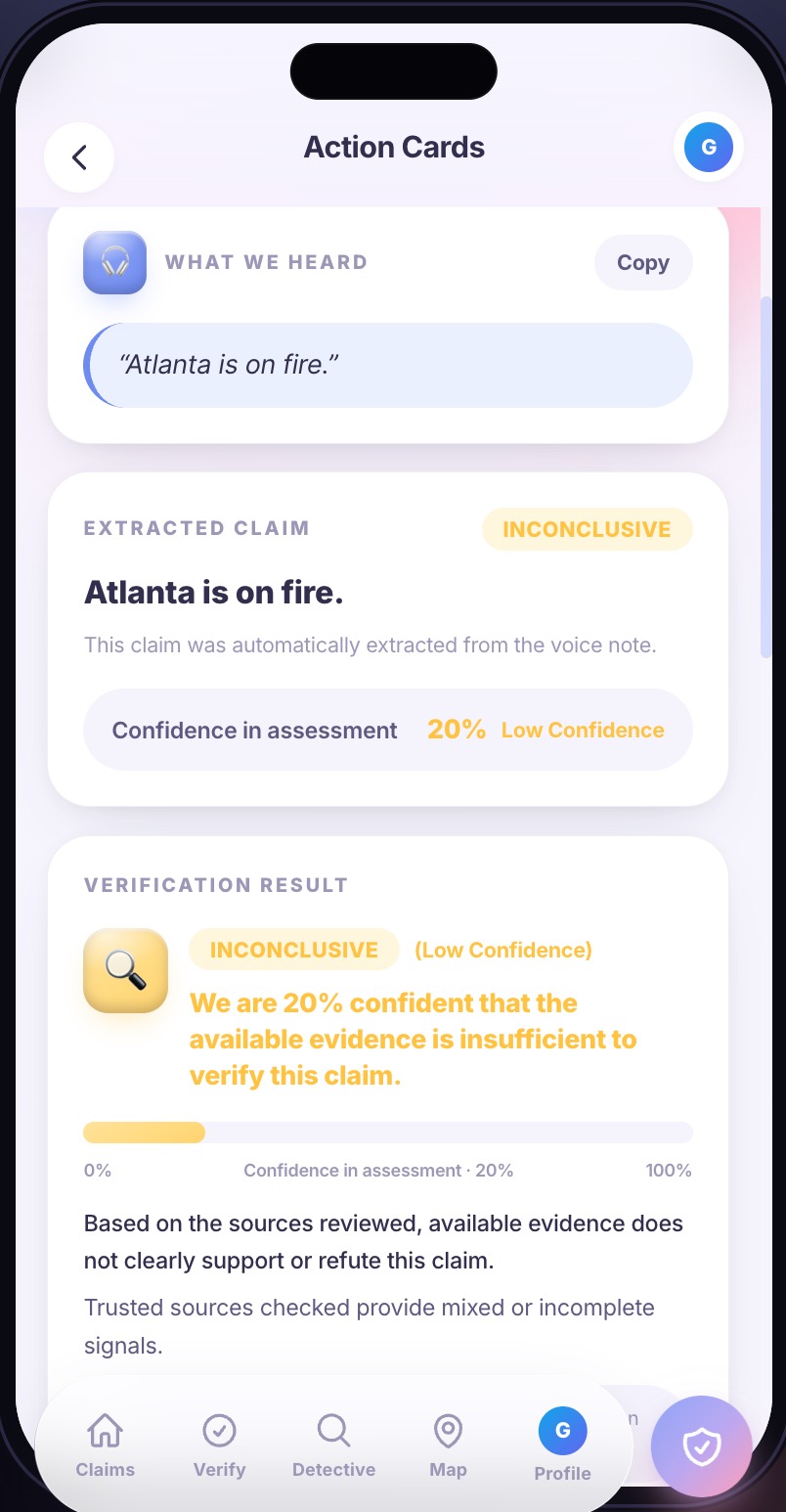
Upload a forwarded voice note and we'll verify the claim, check trusted sources, and explain what it means.
-
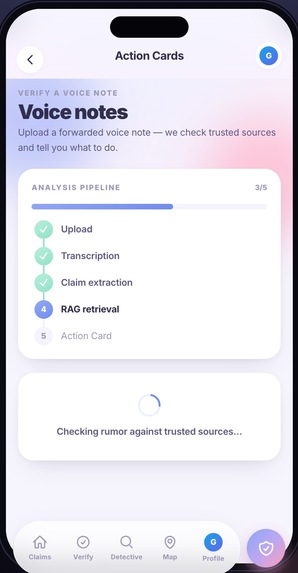
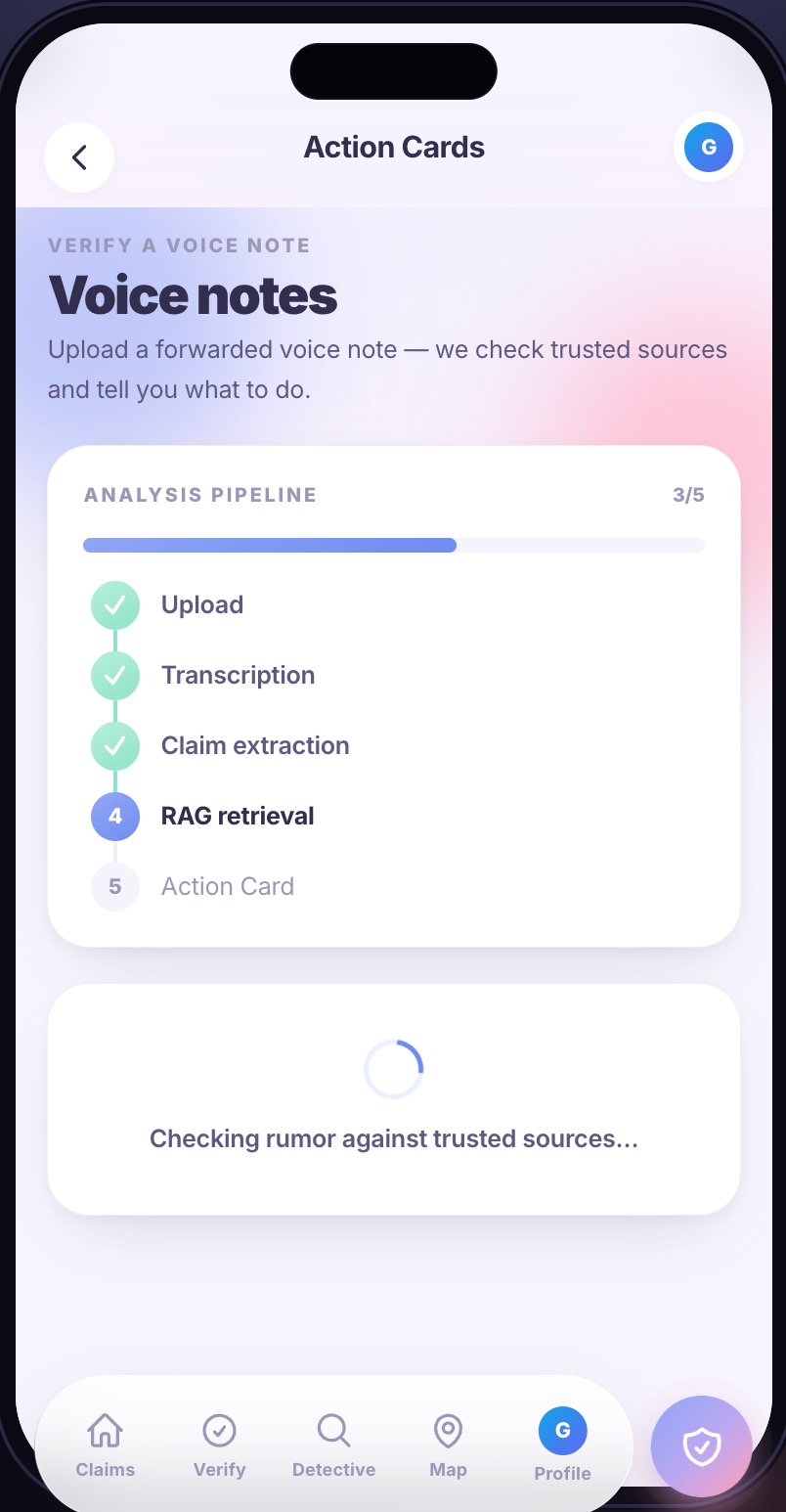
We're transcribing the voice note, verifying the claim against trusted sources, and preparing your Action Card.
-
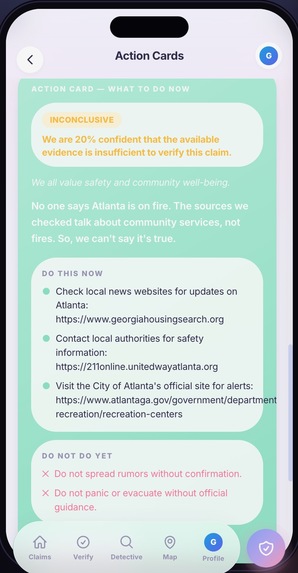
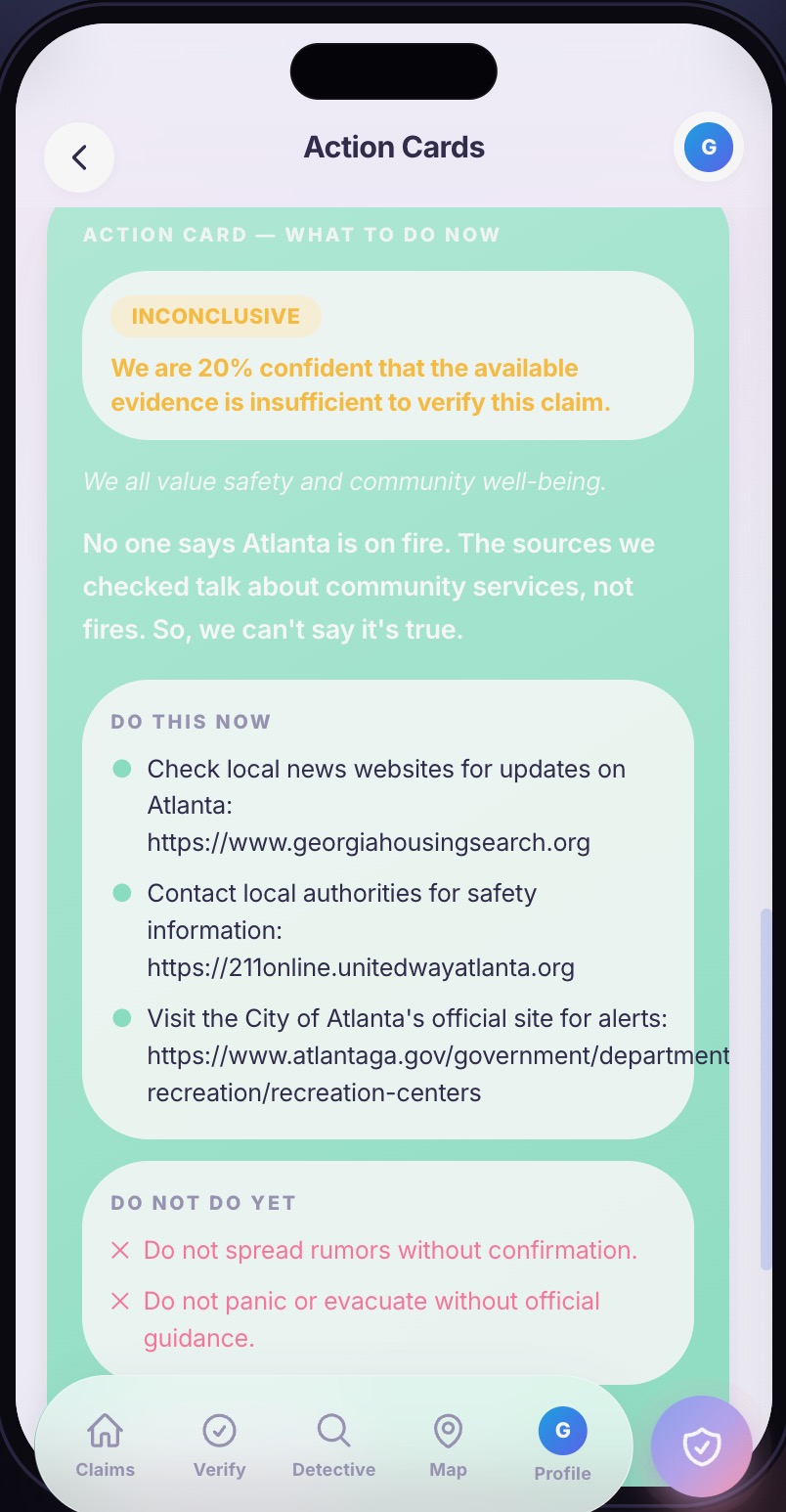
Transforms verified evidence into clear, actionable guidance so users know what to do next.
-
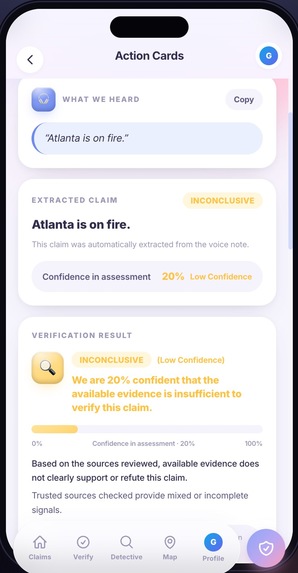
AI extracts claims from voice notes, checks trusted evidence, scores confidence, and generates actionable guidance.
-
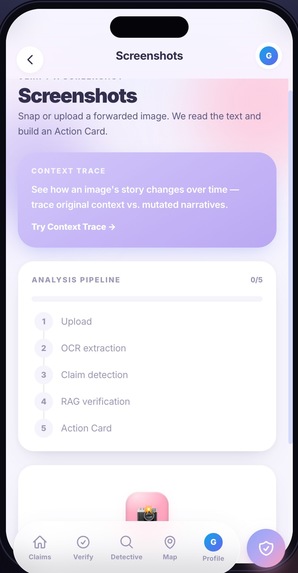
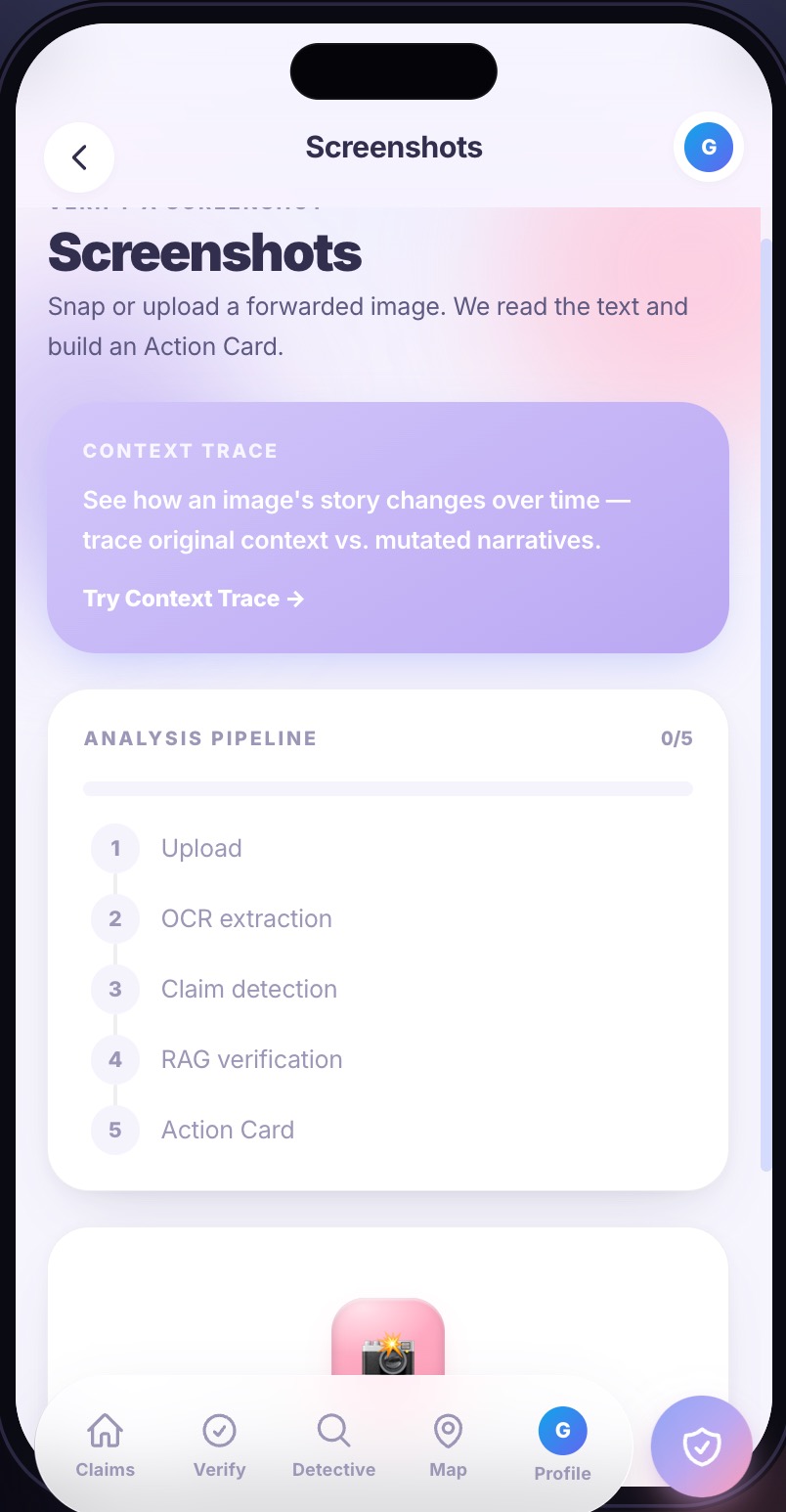
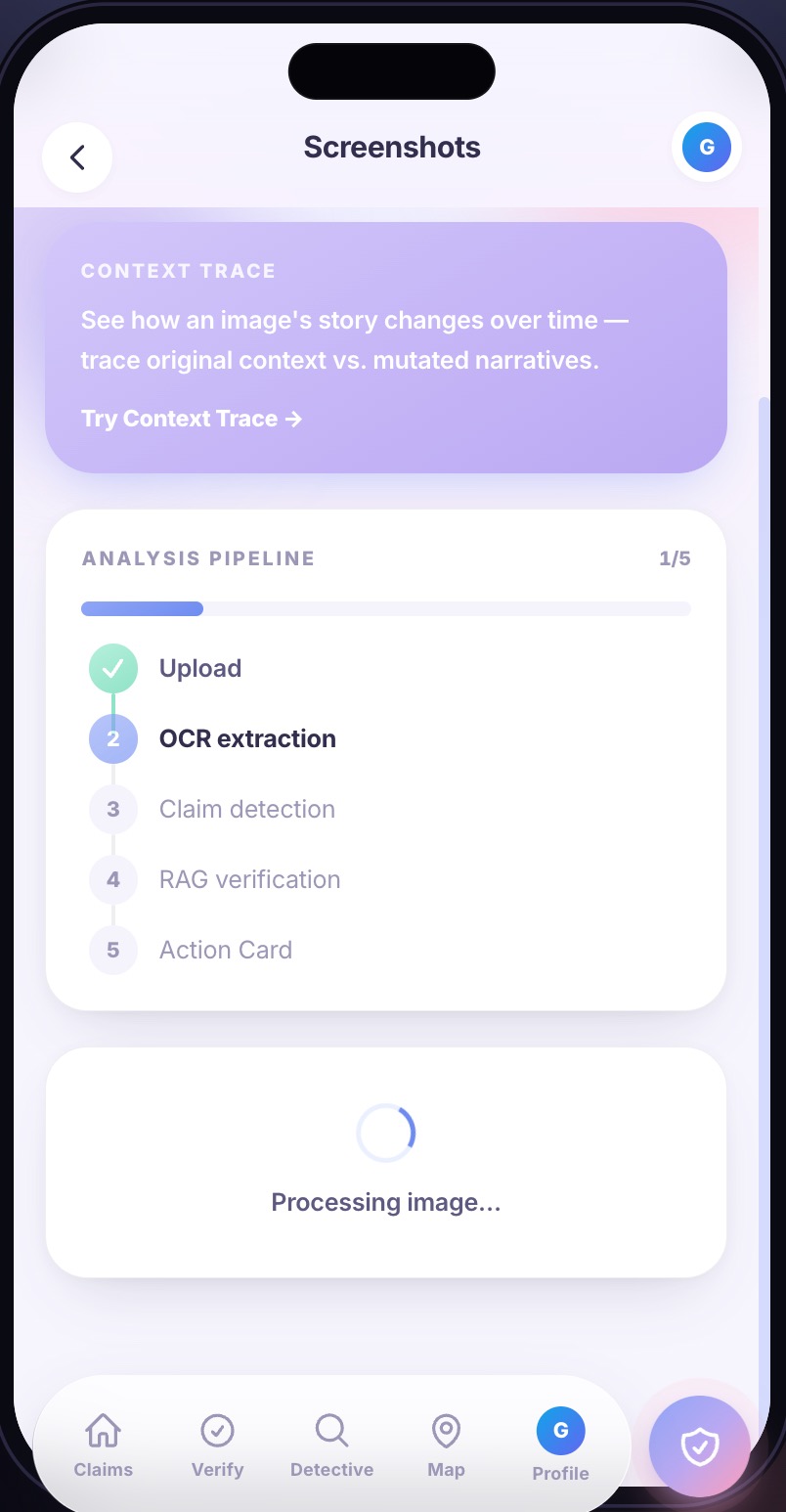
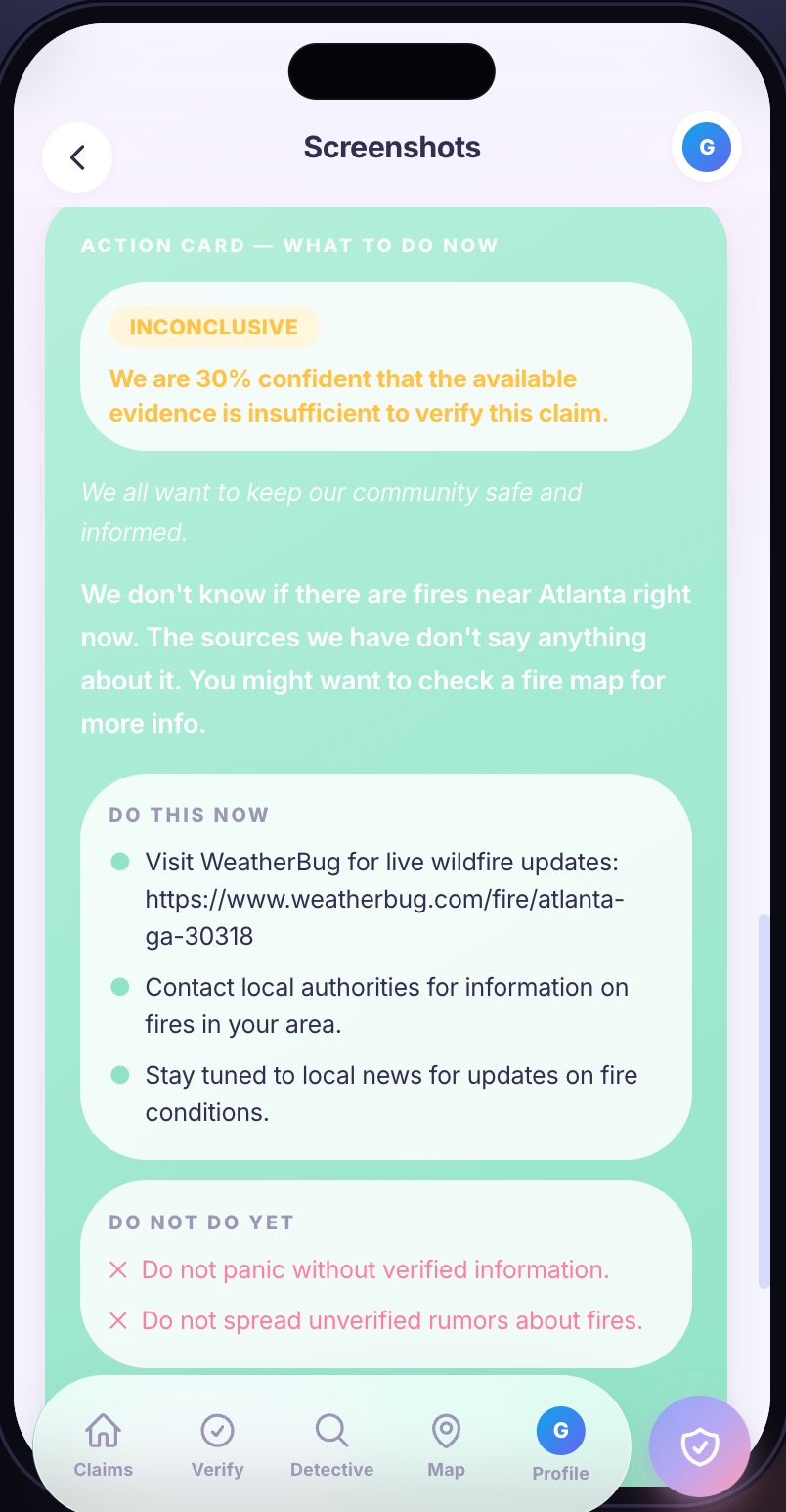
Extracts text from screenshots, verifies claims with trusted sources, and generates actionable guidance.
-
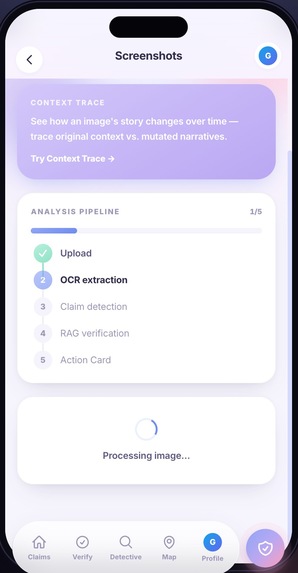
Reading the image, extracting key claims, and cross-checking trusted sources to determine what’s true, misleading, or unverified.
-
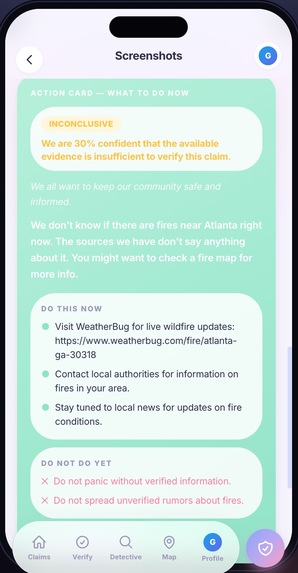
AI transforms screenshots into verified Action Cards, tracing claims to trusted evidence and turning uncertainty into clear next steps.
-

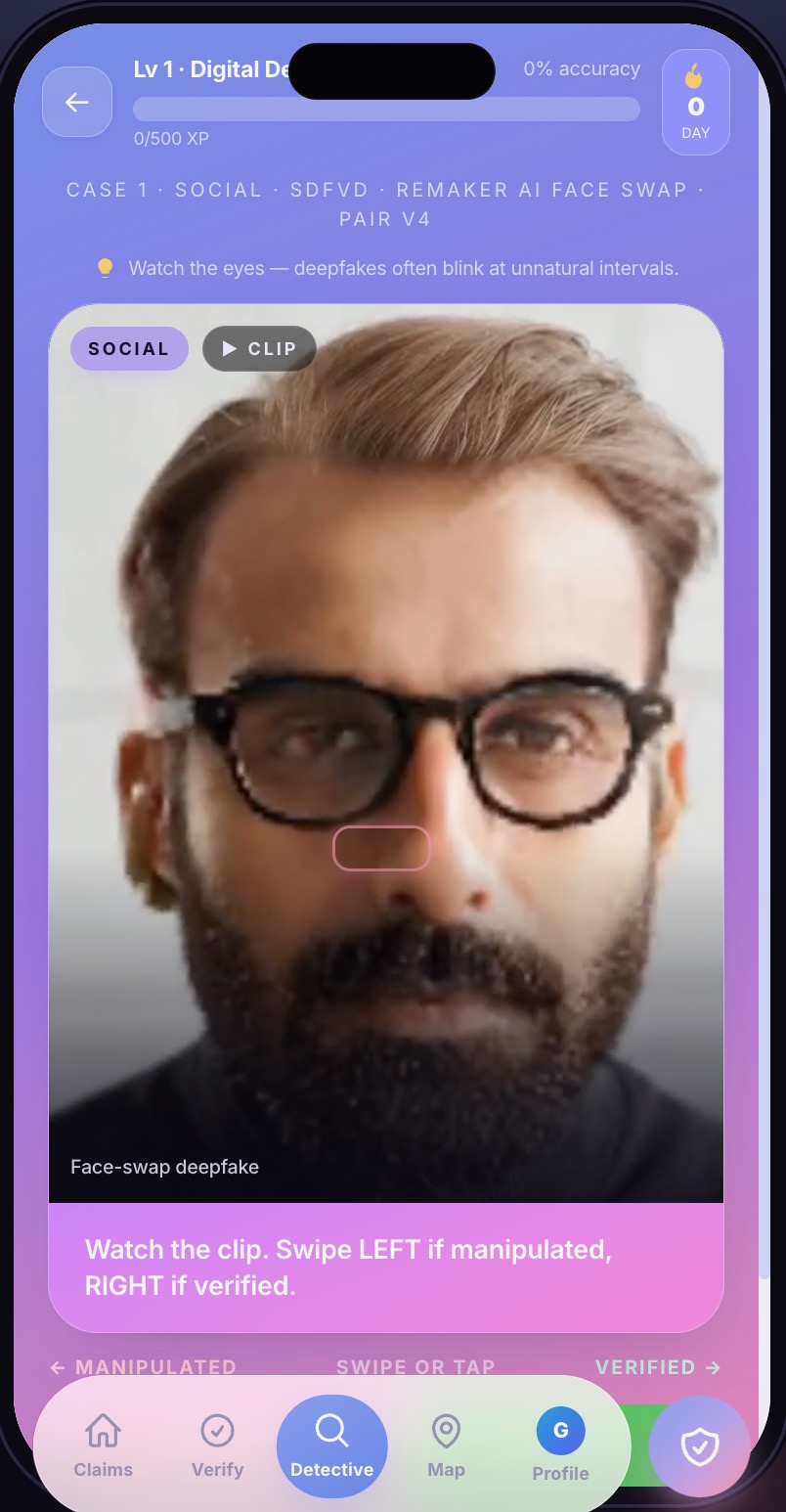
A gamified deepfake detection experience where users investigate media, spot manipulation clues, and level up their verification skills.
-

Gamified deepfake training reveals manipulation clues, explains the verdict, and builds real-world misinformation detection skills.
-
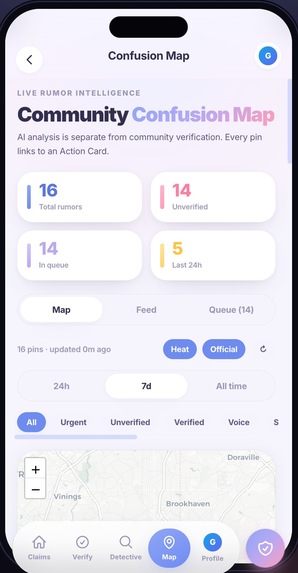
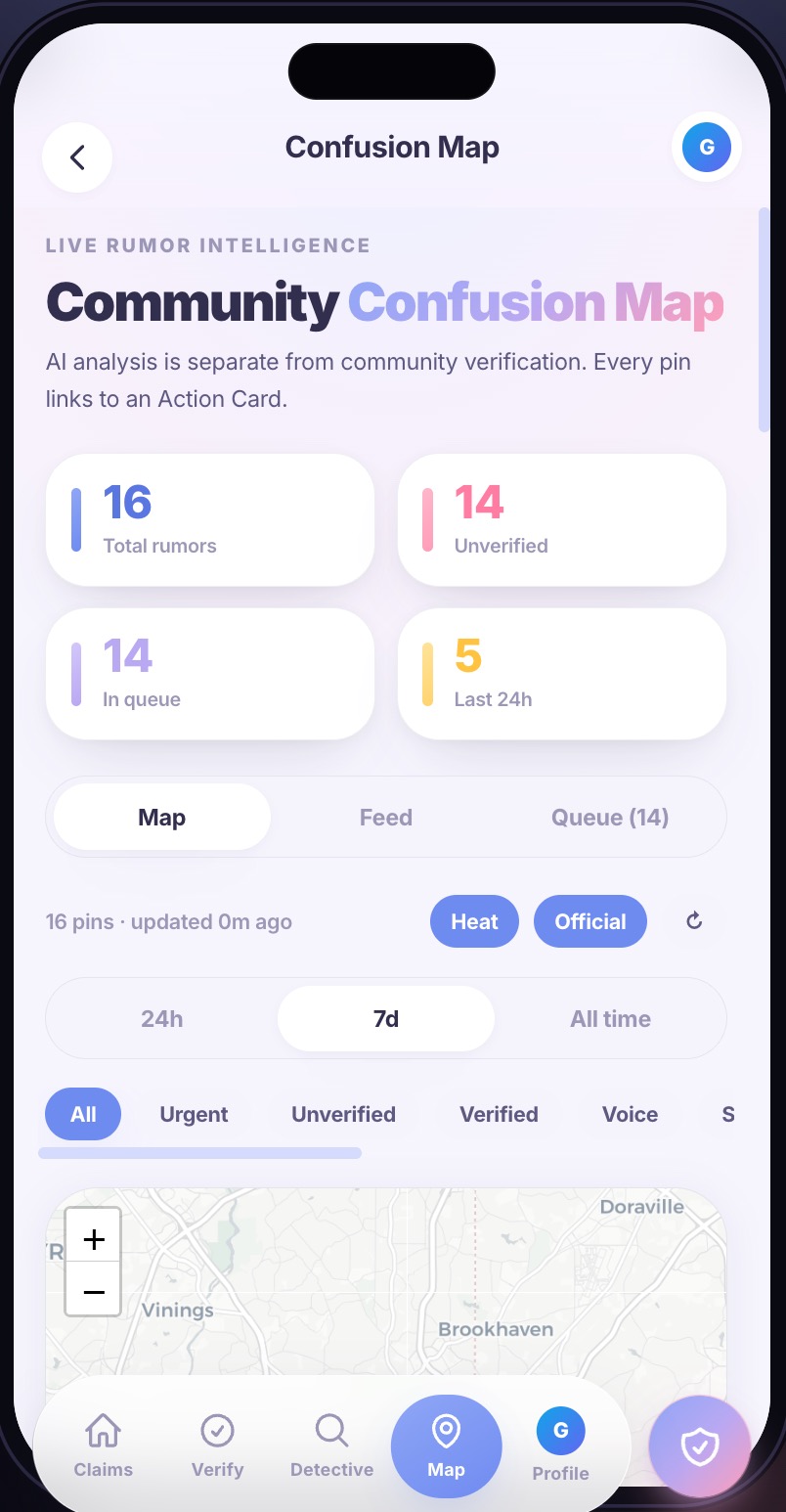
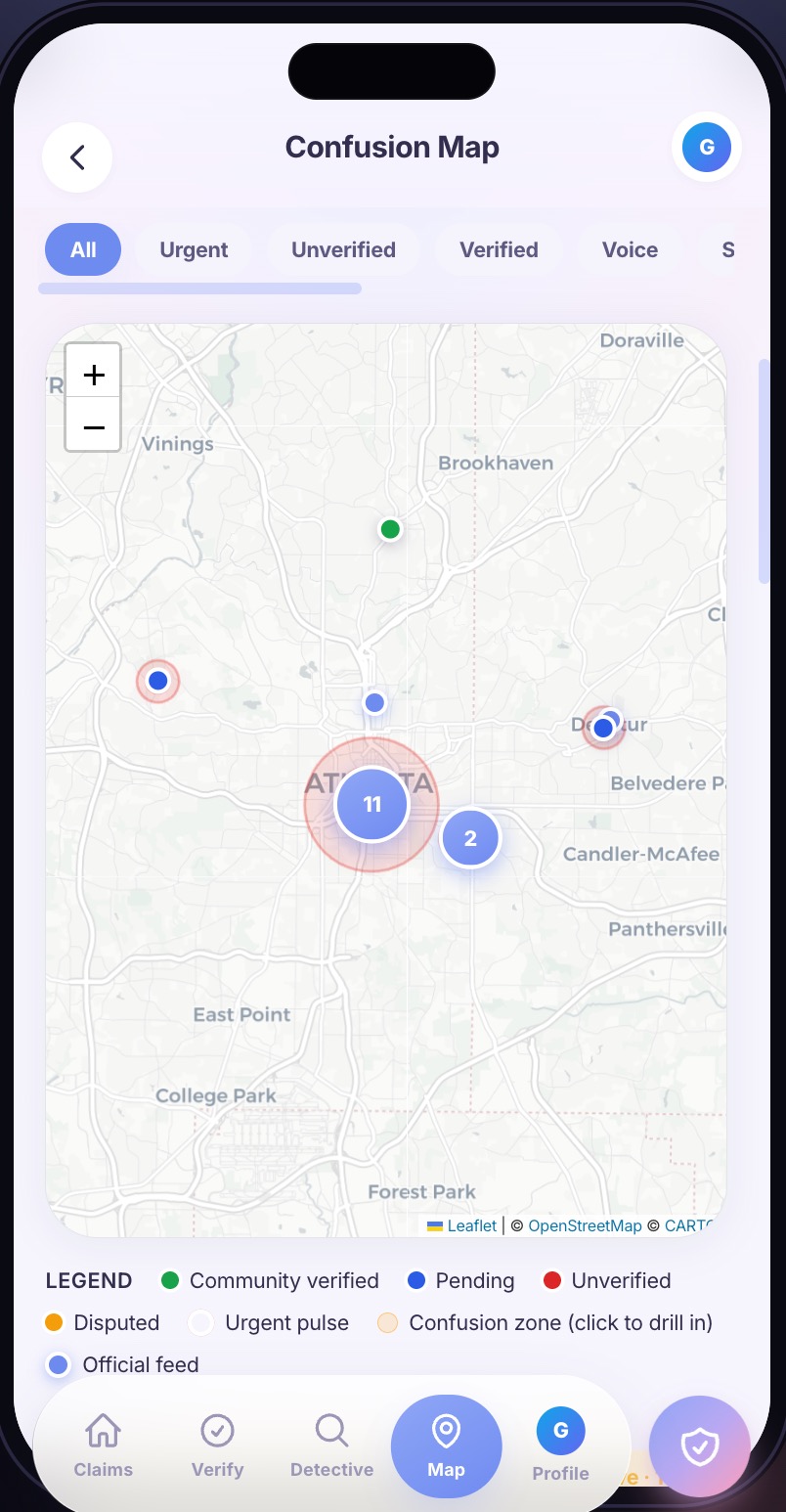
Community Confusion Map visualizes emerging rumors, verification status, and local misinformation hotspots in real time.
-
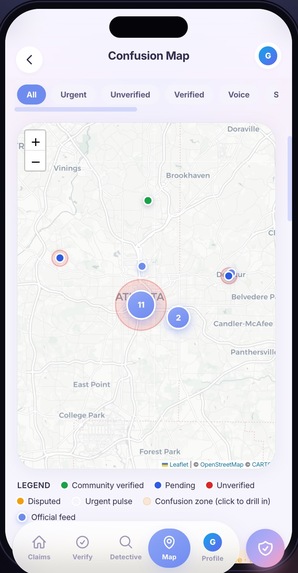
Interactive map showing rumor hotspots, verification status, and community reports, helping users track misinformation geographically.
-
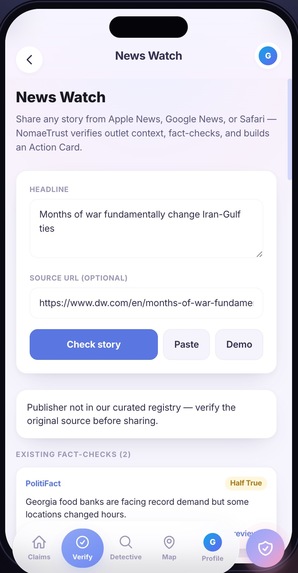
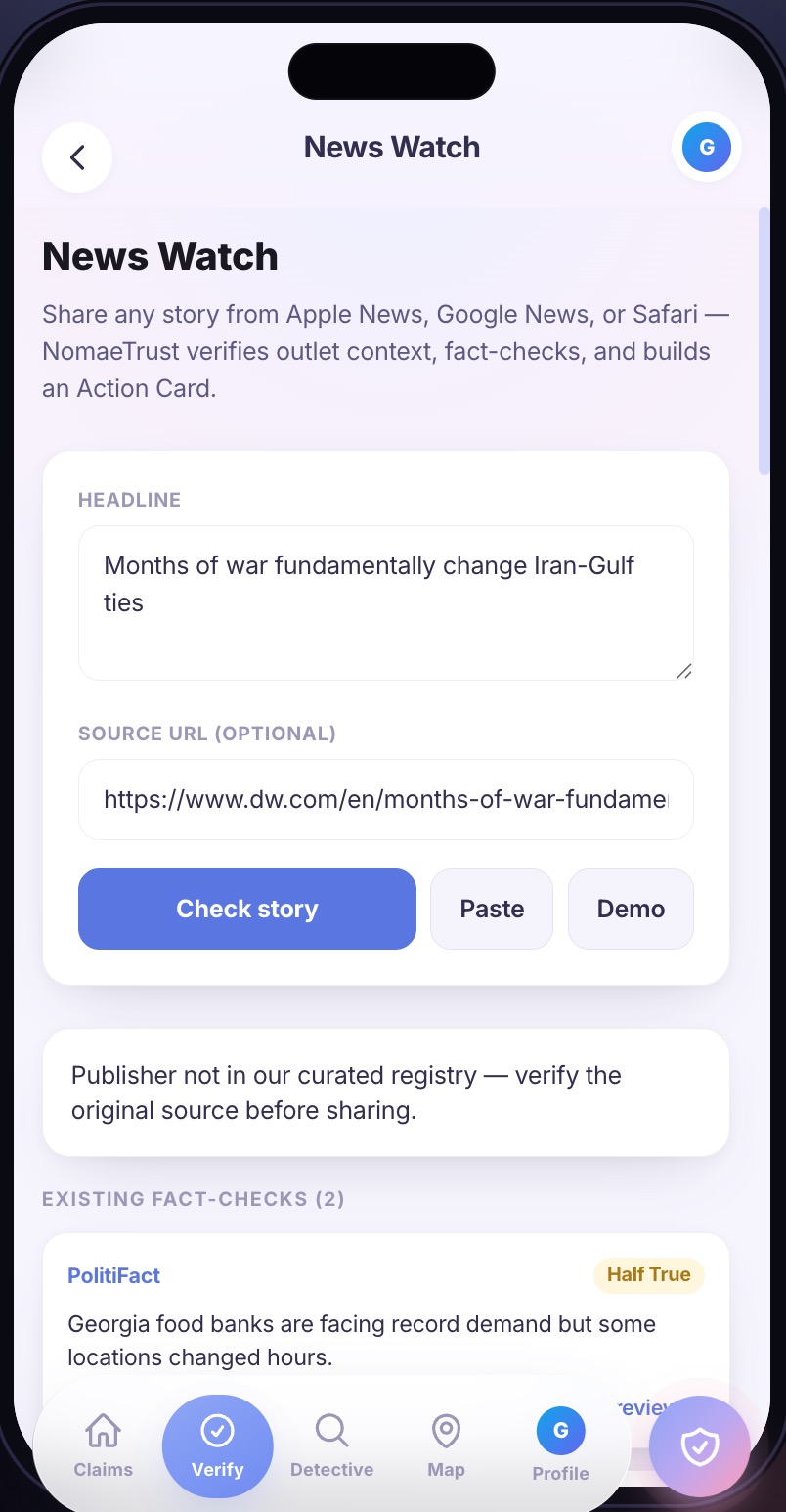
News Watch analyzes headlines, checks source credibility, surfaces fact-checks, and converts news into actionable guidance.
-
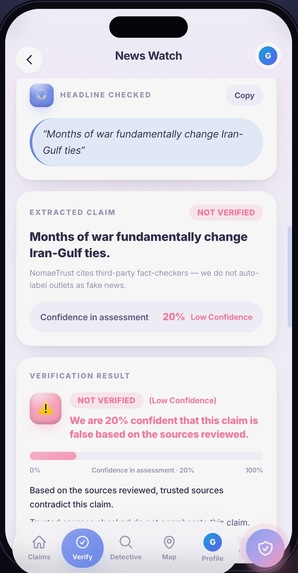
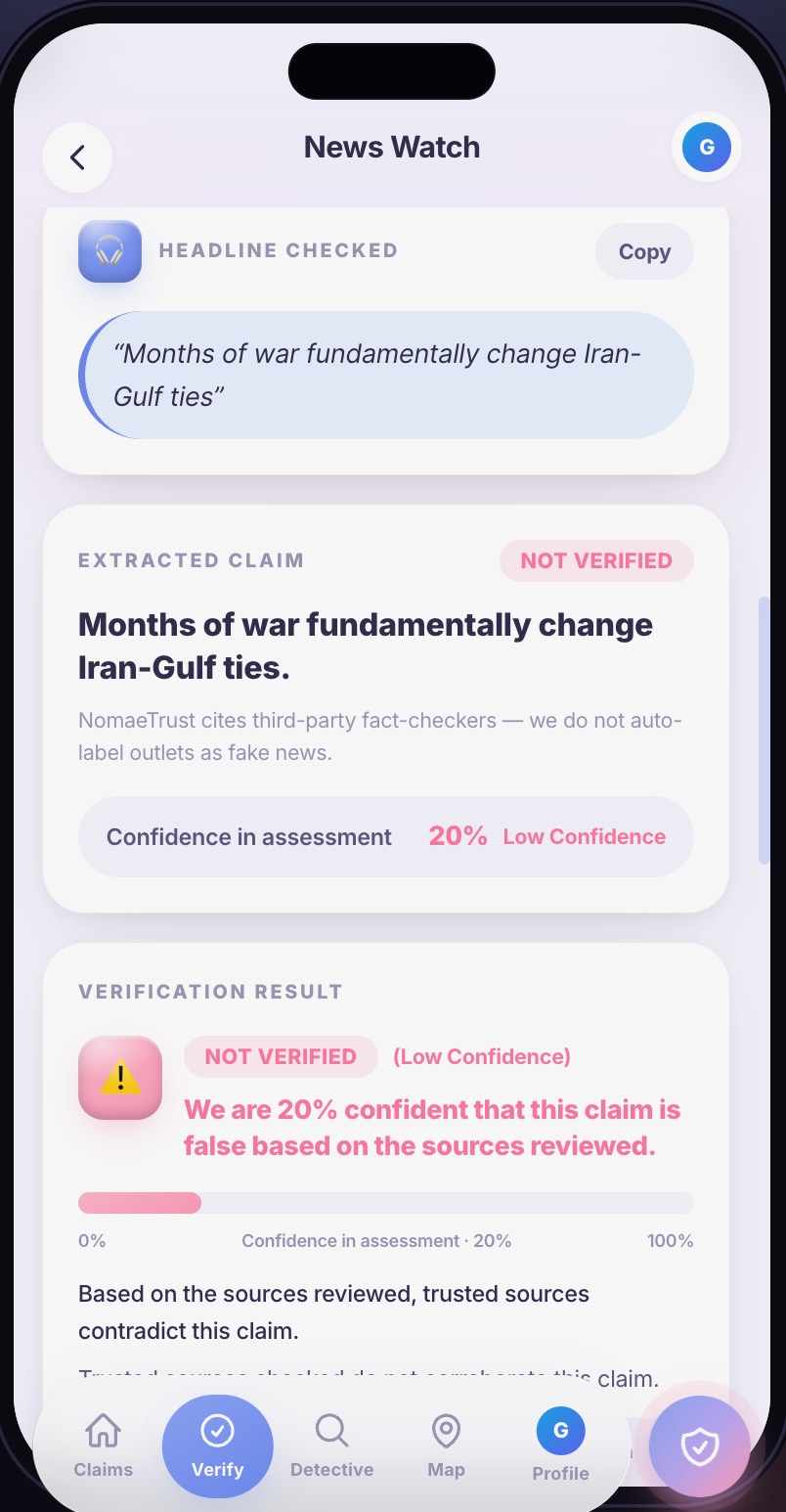
News Watch analyzes headlines, compares trusted sources, assigns confidence scores, and explains why a claim may be true or false.
-
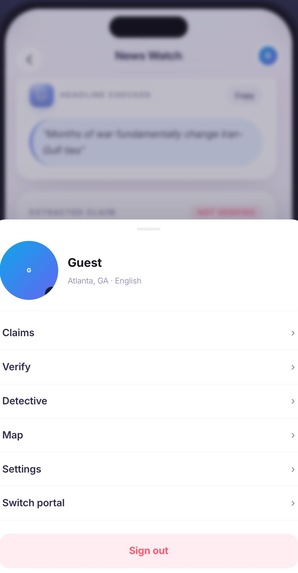
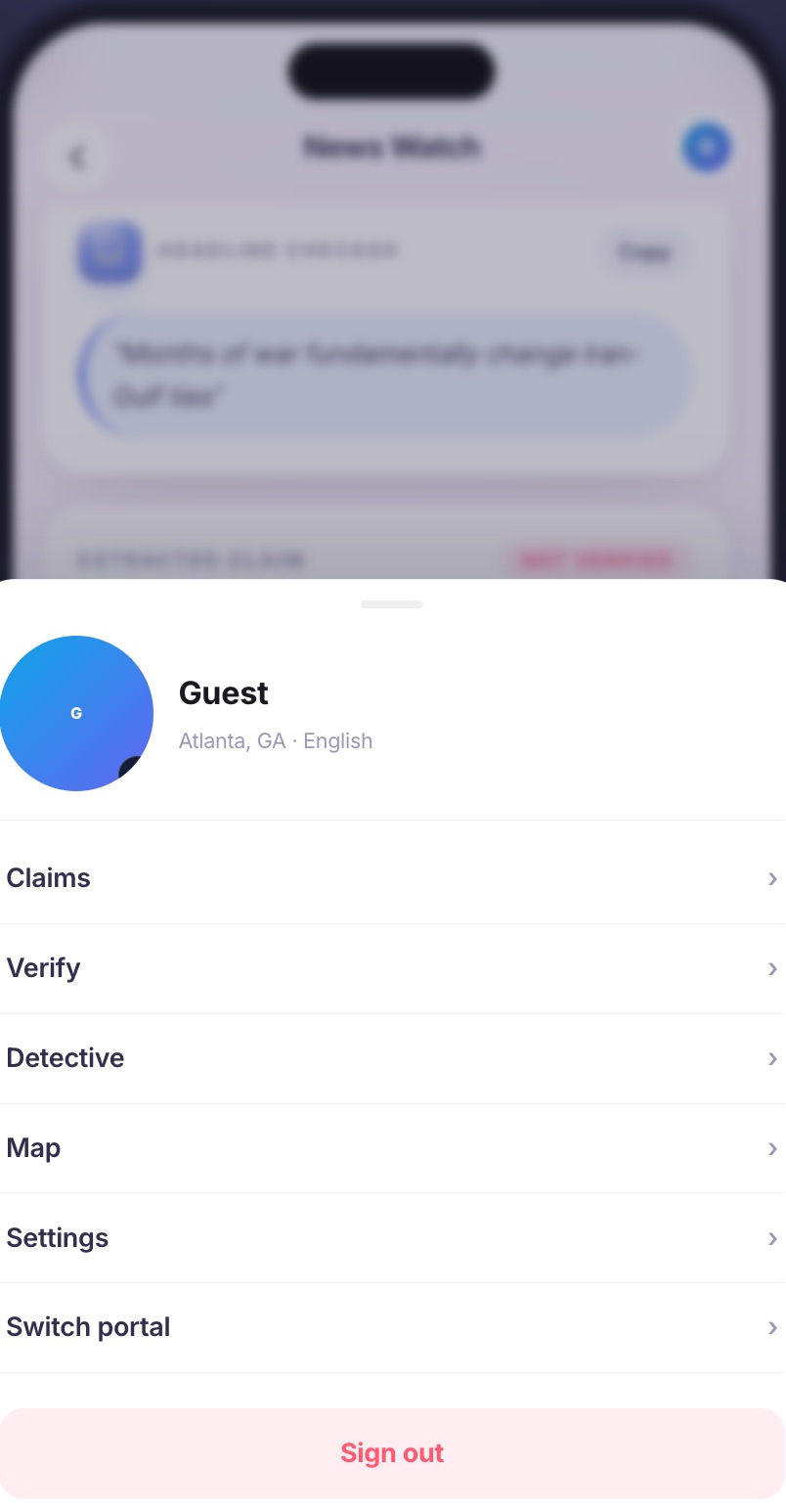
Personalized profile hub where users manage settings, switch community portals, and access tailored verification tools.
-
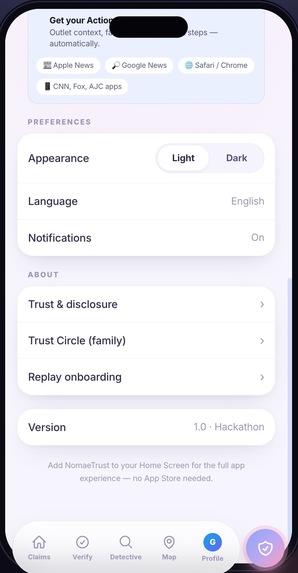
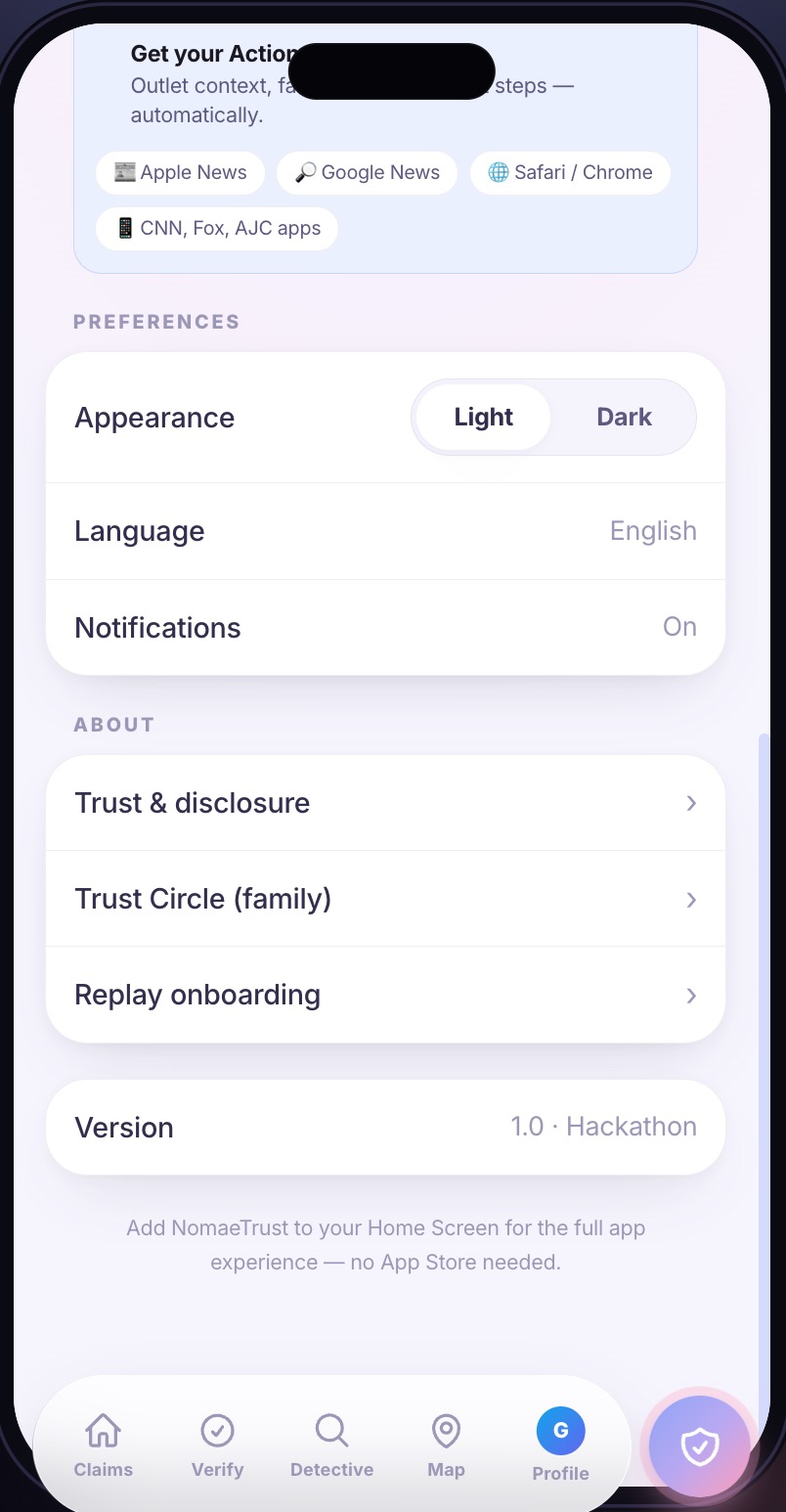
Accessibility settings let users switch between light and dark modes, improving readability and supporting diverse visual needs.
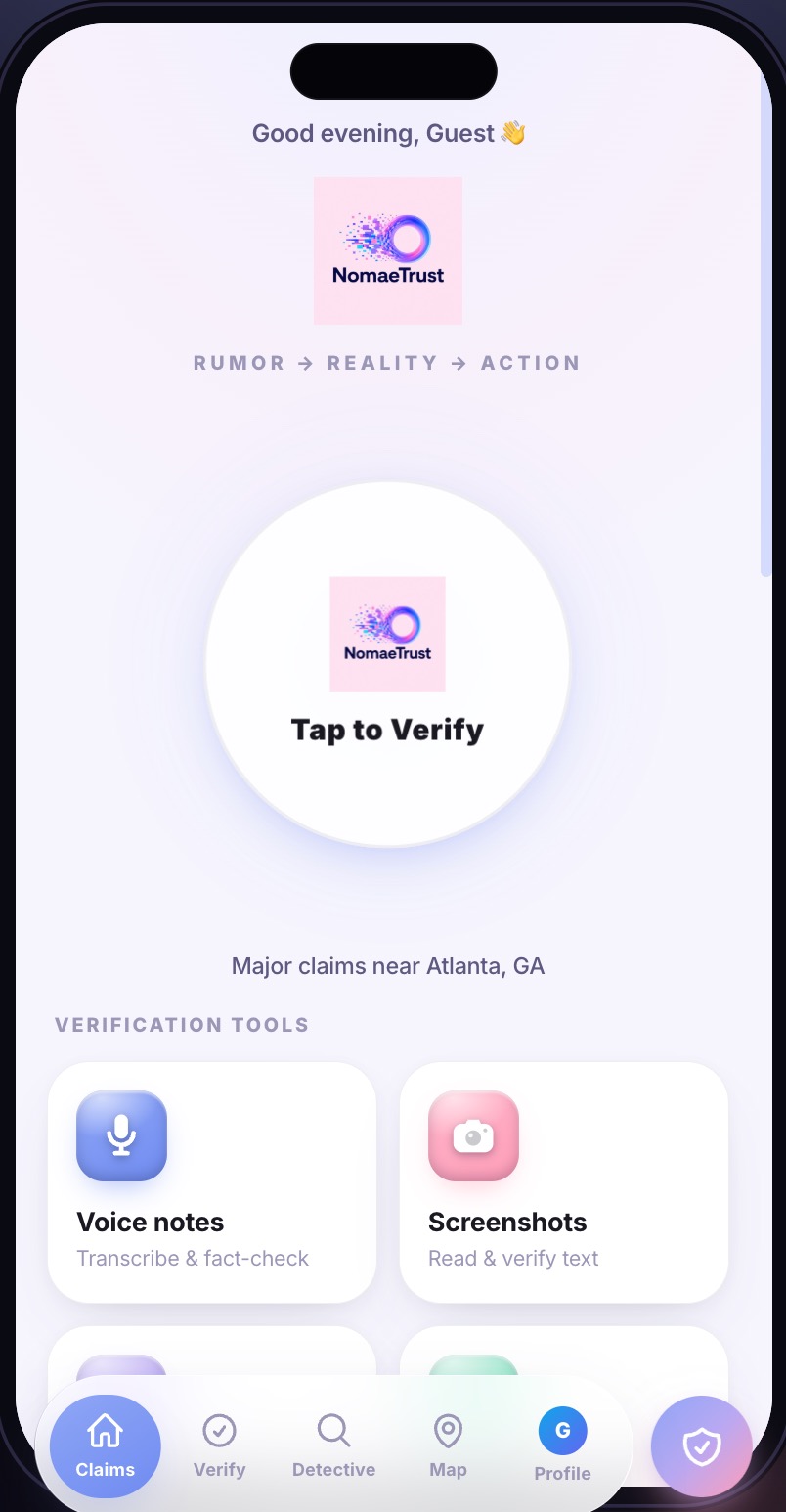

Inspiration
For many vulnerable families, misinformation is not just confusing—it directly affects access to food, education, and safety. A single rumor in a WhatsApp group (“the food bank closed today” or “school is shutting down now”) can spread faster than official updates. Our specific user is a parent who receives a sudden, stressful local rumor and needs immediate clarity and trusted next steps. Most fact‑checking tools stop at “true or false,” but families under pressure need something more actionable. This inspired us to build NomaeTrust, a platform that transforms confusion into clarity by verifying local claims and guiding users toward real‑world support.
What it does
NomaeTrust evaluates local rumors and turns them into clear, multilingual Action Cards. Users submit screenshots, voice notes, images, or text. The AI extracts the core claim, retrieves credible local sources, classifies what is verified vs. uncertain, and generates a plain‑language Action Card with next steps. When confidence is low, the claim is routed to a human validator before anything is marked as verified. Each Action Card includes trusted‑source citations, confidence indicators, and simple explanations that help families make informed decisions during stressful moments.
How we built it
We built NomaeTrust with a React + TypeScript frontend and a Node.js + Express backend. OpenAI models handle speech‑to‑text, claim extraction, summarization, and multilingual Action Card generation. A retrieval pipeline gathers relevant evidence, while a human validation queue allows trusted community reviewers to approve or correct AI outputs before they reach users. The system is designed around a responsible AI workflow that blends automation with human oversight.
Challenges we ran into
Our biggest challenge was balancing speed with trust. Families need answers quickly, but misinformation about schools or food assistance can cause real harm if misclassified. We designed a hybrid workflow that keeps humans involved in critical decisions without slowing down urgent guidance. Another challenge was supporting multimodal inputs—voice, screenshots, and text—while ensuring the final Action Cards remained simple and accessible.
Accomplishments we’re proud of
We’re proud that NomaeTrust goes beyond traditional fact‑checking. It doesn’t just say whether something is true—it tells people what to do next. Our multimodal AI pipeline, human validation layer, multilingual support, confidence indicators, and transparent citations work together to create trustworthy, shareable Action Cards that families can rely on.
What we learned
We learned that responsible AI is about more than accuracy—it’s about transparency, accountability, and user trust. The most effective systems support human decision‑making rather than replacing it. We also gained experience designing AI workflows that prioritize accessibility, explainability, and real‑world impact for communities under stress.
What’s next for NomaeTrust
Next, we plan to expand NomaeTrust to more regions and languages, strengthen our evidence retrieval system, and partner with schools, libraries, and nonprofits. We aim to build community‑specific validation networks and integrate automated rumor clustering to detect emerging misinformation patterns in real time.
Built With
- css
- cursor
- discord-api
- discord.js
- exifr
- express-4
- faceforensics++
- ffmpeg-static
- git
- google-fact-check-tools-api
- gpt-4o-mini
- hive-ai
- html
- javascript
- jspdf
- multer
- node.js
- npm
- openai-whisper
- openstreetmap
- react-19
- react-leaflet
- react-router-7
- sdfvd
- serpapi
- tailwind-css-4
- typescript
- vercel
- vite-6


Log in or sign up for Devpost to join the conversation.