-
-
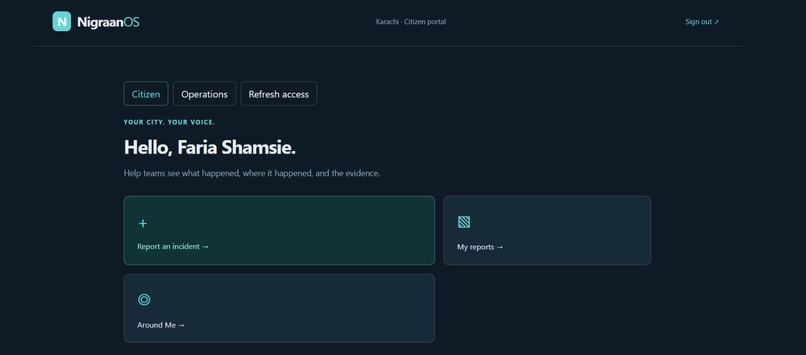
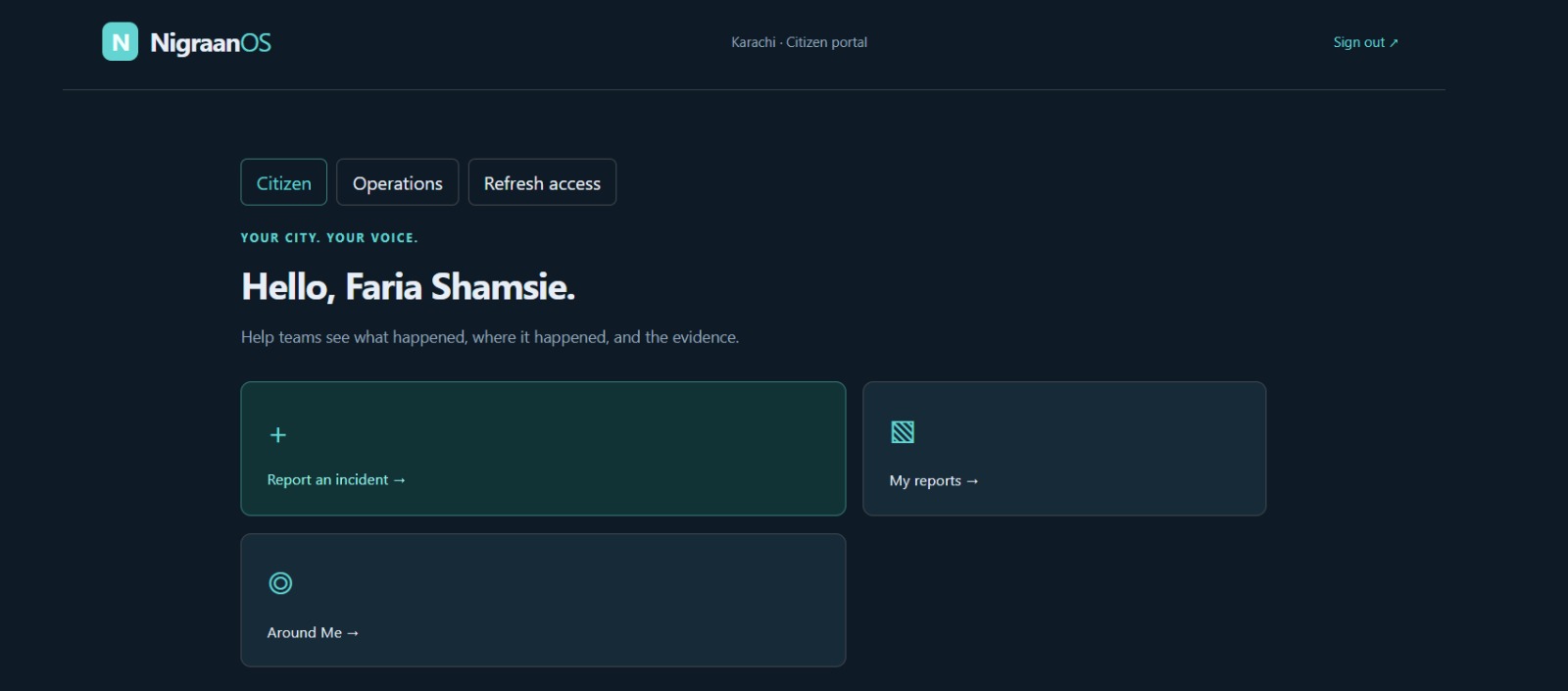
The Citizen workspace makes it easy to report a city problem, follow existing reports, and explore nearby issues.
-
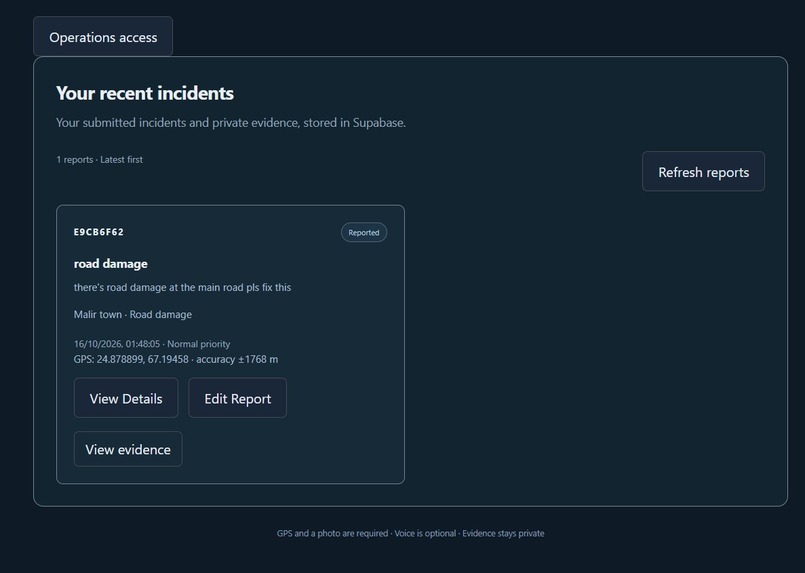
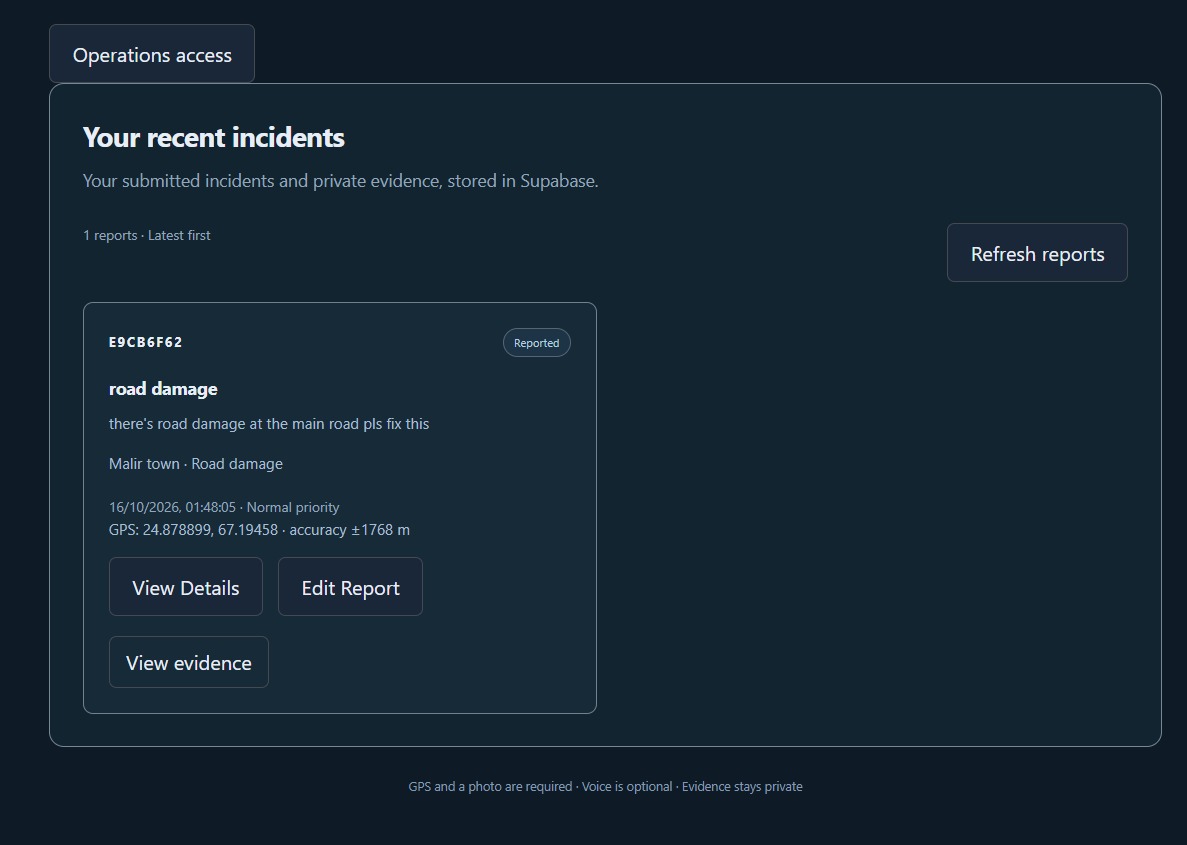
Citizens can track their submitted reports, view evidence, and edit report details when allowed.
-
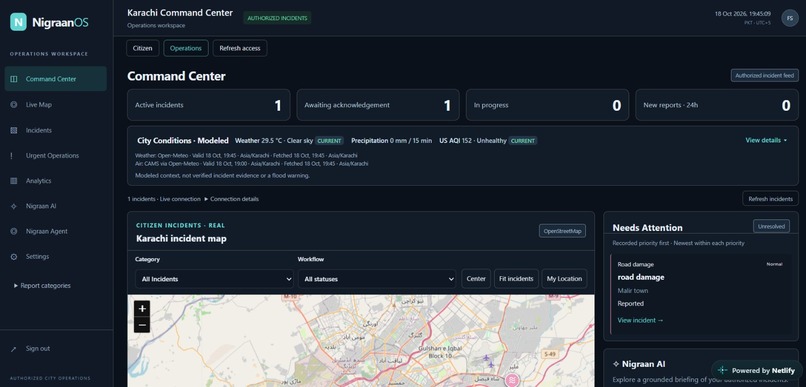
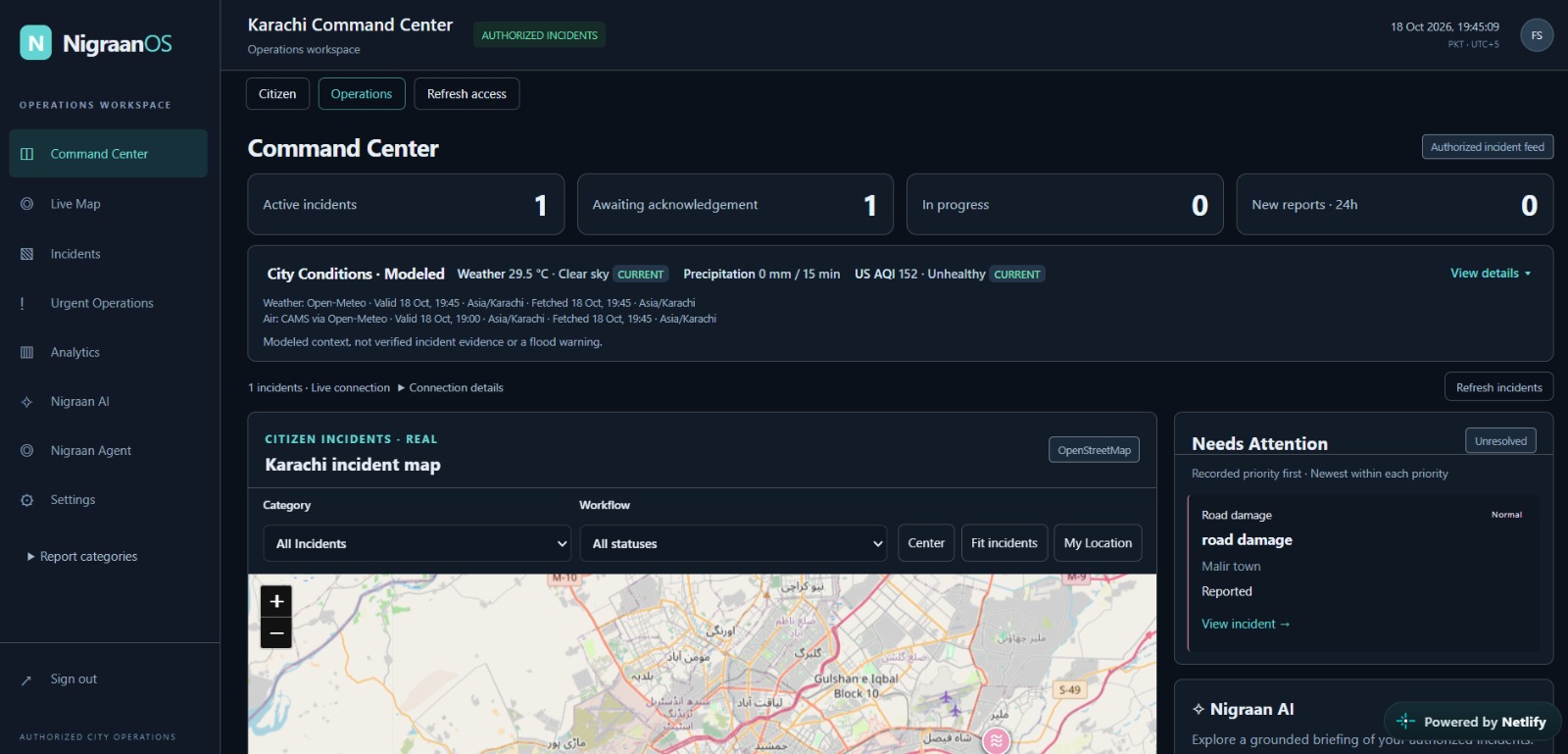
The Operations dashboard brings reported incidents, a live map, and city condition information together in one place.
-
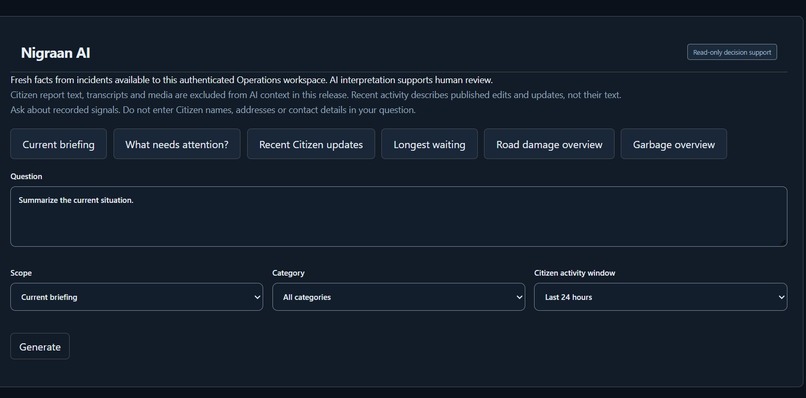
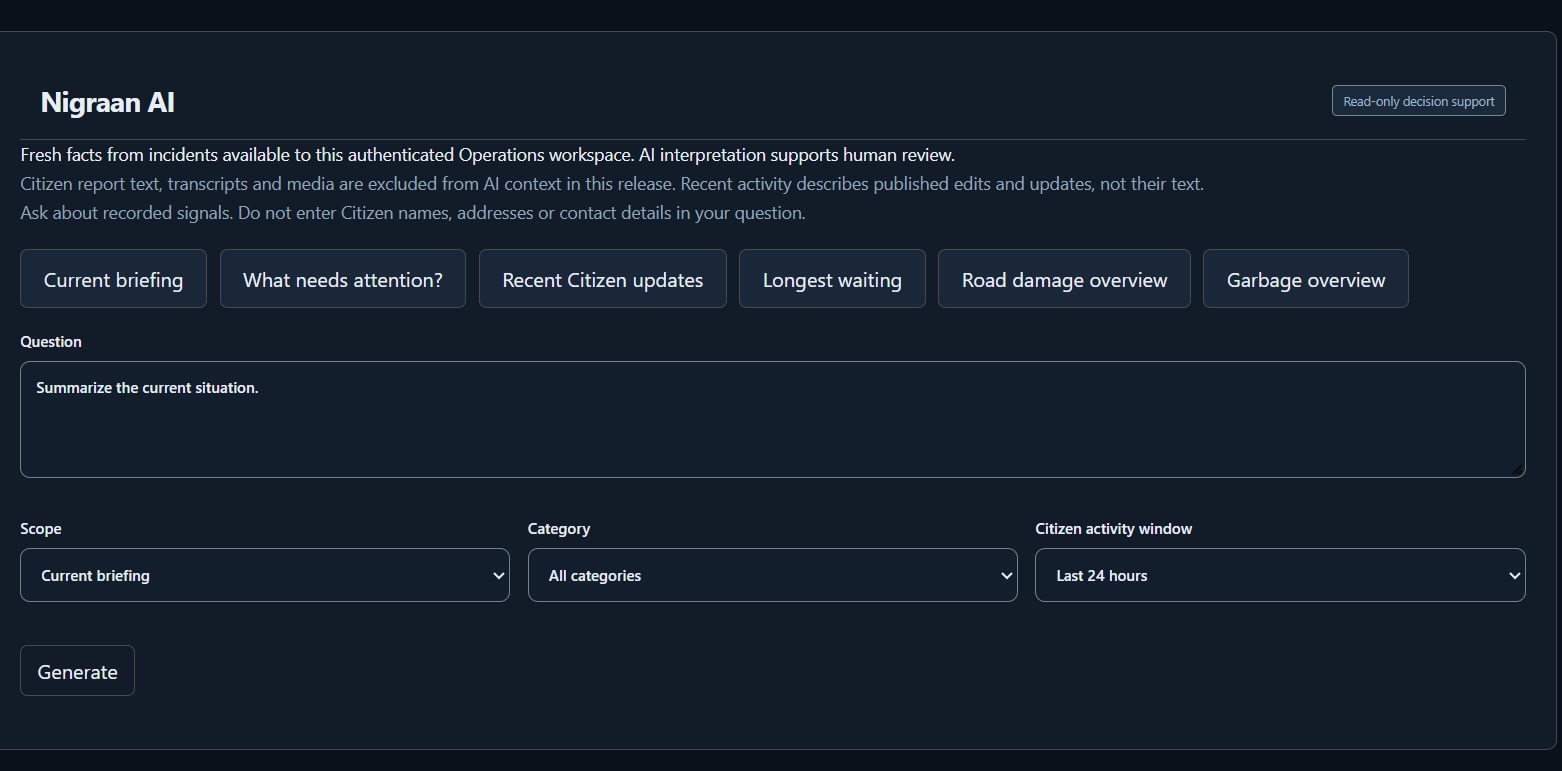
Our AI assistant helps operations teams explore incident trends, recent updates, and issues that may need attention.
-
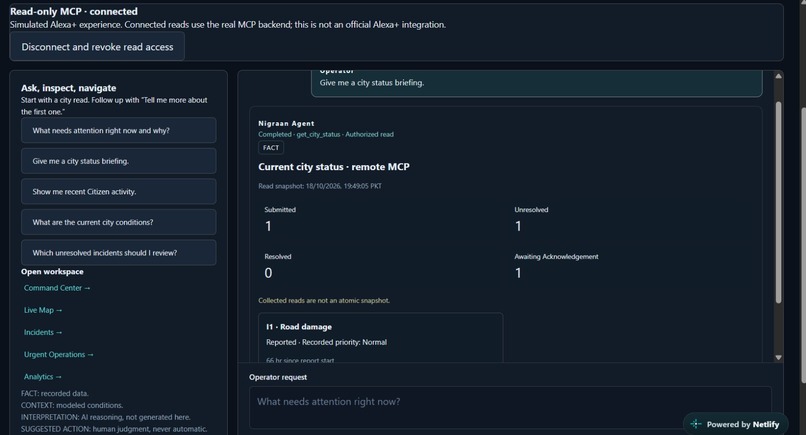
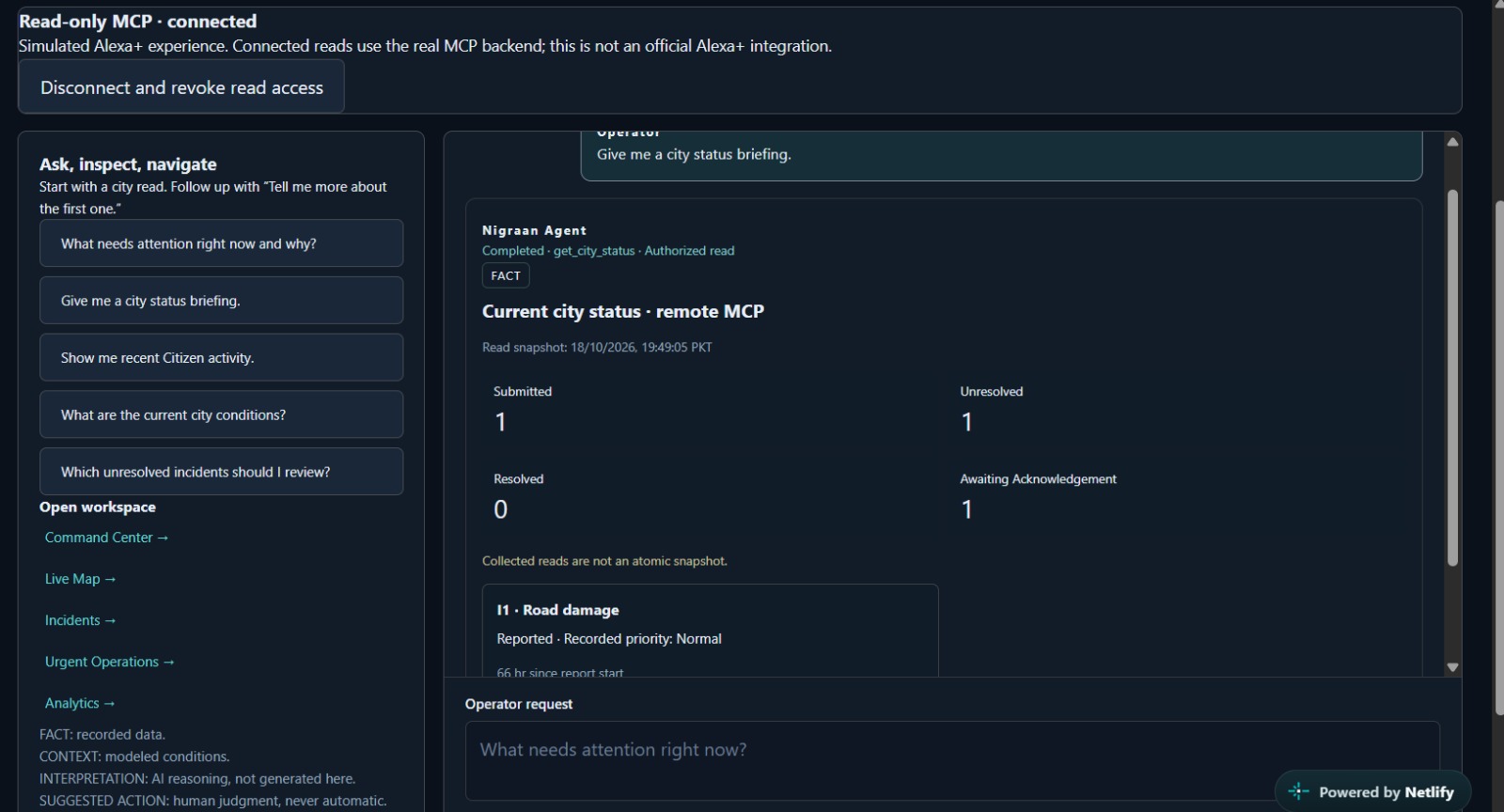
A real, authorized MCP response showing the current incident summary and city status through a simple question.
-
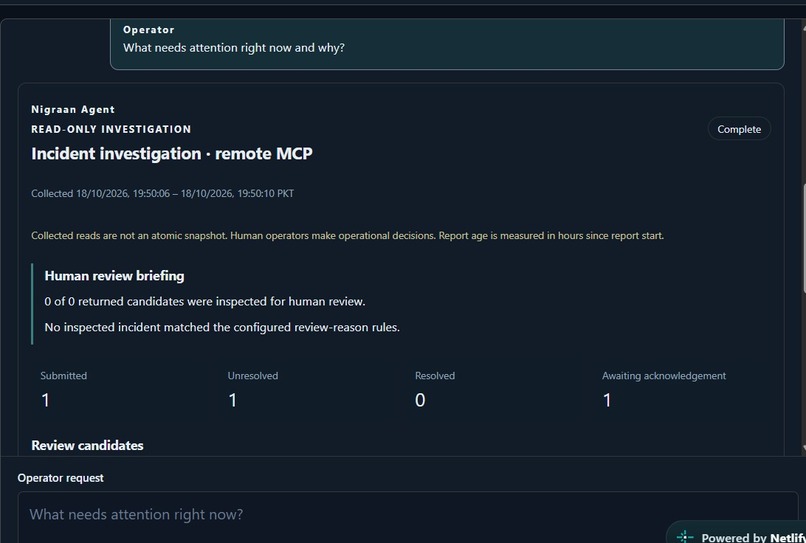
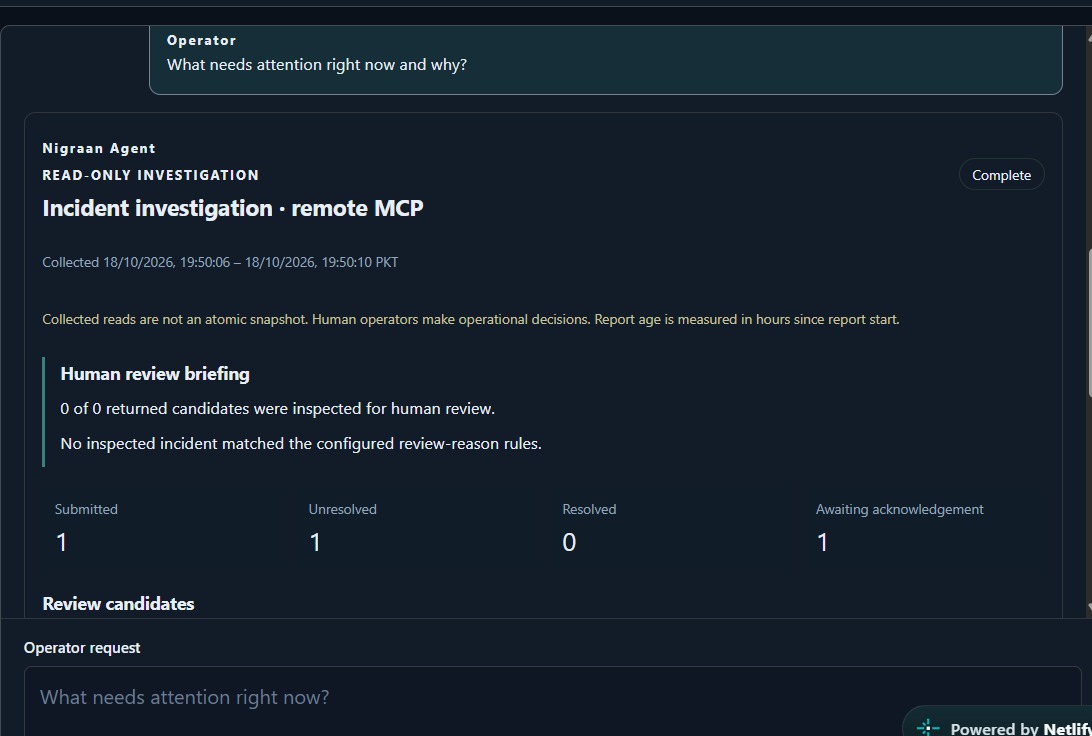
Nigraan Agent uses our AWS-hosted MCP service to check incident information and help operators understand what needs attention.
Inspiration
Living in Pakistan, especially in a city like Karachi, you come across civic problems almost every day. Broken roads, overflowing garbage, water shortages, flooding after rain, and traffic problems are things we've all seen.
What bothered us was that reporting these problems and getting updates isn't always easy. Citizens often don't know where to report an issue, while the people responsible for handling complaints may not have all the information in one place.
We started thinking: what if citizens could report problems directly from their phones, and city teams could see those reports on a live map, understand which issues need attention, and keep everyone updated?
That's where the idea for NigraanOS came from.
We didn't want to build just another complaint form. We wanted to create something that could eventually help cities understand what's happening and respond more effectively.
What it does
NigraanOS is a smart city reporting and operations platform that connects citizens, city teams, and AI-assisted insights in one place.
It has two main workspaces:
1. Citizen Workspace
Citizens can report everyday problems such as broken roads, garbage, flooding, water shortages, and other civic issues.
When submitting a report, they provide a description, photo evidence, and GPS location. They can also use voice recording with transcription support in English and Urdu.
After submitting, citizens can track their reports, make permitted edits, and add updates while the issue is being handled.
2. Operations Workspace
Authorized operations users can view reports through a dashboard and interactive map.
They can filter incidents, review available evidence, manage report statuses, and follow the progress of ongoing issues.
The goal is to make it easier for a city team to understand what has been reported instead of working through disconnected information.
3. Nigraan Agent and AWS MCP
We also built Nigraan Agent, an AI-assisted feature that helps operations users explore city information through natural-language questions.
For example, an operator can ask:
- "Give me a city status briefing."
- "What needs attention right now and why?"
To support this, we built an AWS-hosted Model Context Protocol (MCP) service that provides controlled, read-only access to approved city information.
For the Alexa+ track, we're demonstrating the intended conversational experience through an Alexa+ simulation, rather than claiming a completed native Alexa+ integration.
The idea is to make useful city information easier to access without requiring operators to search through multiple screens.
How we built it
We built NigraanOS as a web application using React, Vite, and JavaScript, with Supabase handling authentication, database records, storage, and backend functions.
We used Leaflet and OpenStreetMap for the interactive city map, allowing users to view reported incidents geographically.
For AI features, we integrated Groq for supported AI workflows, including voice transcription through Whisper.
The MCP integration was one of the biggest parts of our hackathon work. We deployed an MCP service on AWS, using services including Lambda and API Gateway, and connected it to our authorized operations workflow.
We also worked on OAuth authorization, permission checks, limited access sessions, and read-only MCP tools so the agent could retrieve approved information without having unrestricted access to citizen data.
The frontend is hosted on Netlify, and our source code is available on GitHub.
We focused on building a working end-to-end product rather than just designing screens.
Challenges we ran into
One of our biggest challenges was connecting all the different parts of the system.
Building a reporting form was only the beginning. We also had to handle user accounts, evidence uploads, maps, report permissions, operations access, and updates without making the experience confusing.
Another challenge was making the AI and MCP integration secure. We had to think carefully about which information the agent should be allowed to access and how temporary authorization should work.
Deploying and testing the AWS infrastructure also took time. We ran into configuration and authorization issues, and some things that worked locally needed additional fixes before they worked in the hosted environment.
We also had to balance our ideas with the time available. There were many features we wanted to add, but we learned to focus on making the important parts work properly first.
Accomplishments we're proud of
The biggest accomplishment for us is that NigraanOS became a working web application, not just an idea or prototype design.
We built a Citizen workspace for reporting and tracking problems, an Operations workspace for managing incidents, and an interactive map to bring those reports together.
We're also proud of getting our AWS-hosted MCP service working with an authorized city briefing workflow. Seeing the system return real, permission-controlled information was an important milestone.
We put effort into testing, protecting access, and keeping the project organized so it could be developed further.
Most importantly, we built something connected to problems we see around us.
What we learned
This project taught us a lot more than just writing code.
We learned how different technologies work together in a real application, from the frontend and database to cloud services and AI.
We also learned that security, user experience, and reliability matter just as much as adding features.
Working with MCP helped us understand how AI assistants can interact with external tools and information in a more structured way.
And we learned that building a useful product means making decisions about what to prioritize, testing things properly, and improving them when they don't work the first time.
What's next for NigraanOS?
We see NigraanOS as a starting point.
In the future, we'd like to improve city data integrations, make the AI insights more useful, and explore a native Alexa+ experience.
We also want to improve the mobile experience, make the platform easier for city organizations to adopt, and eventually support more cities beyond Karachi.
Right now, NigraanOS is a working project and demonstration, not an officially adopted city-government system. There's still a lot to build and validate before it could be used at a larger scale.
But our goal remains the same:
Make it easier for citizens to speak up about problems in their city, and easier for the people responsible to understand and respond to them.
Try NigraanOS
Live website: https://nigraanos.netlify.app/
GitHub: https://github.com/Shamsie687/NigraanOS
The project includes protected Citizen and Operations workspaces. Operations and MCP features require authorized access.
Built With
- amazon-api-gateway
- aws-lambda
- css
- groq
- html
- javascript
- leaflet.js
- model-context-protocol-(mcp)
- netlify
- oauth-2.0
- openstreetmap
- postgresql
- react
- supabase
- vite
- whisper


Log in or sign up for Devpost to join the conversation.