
Inspiration
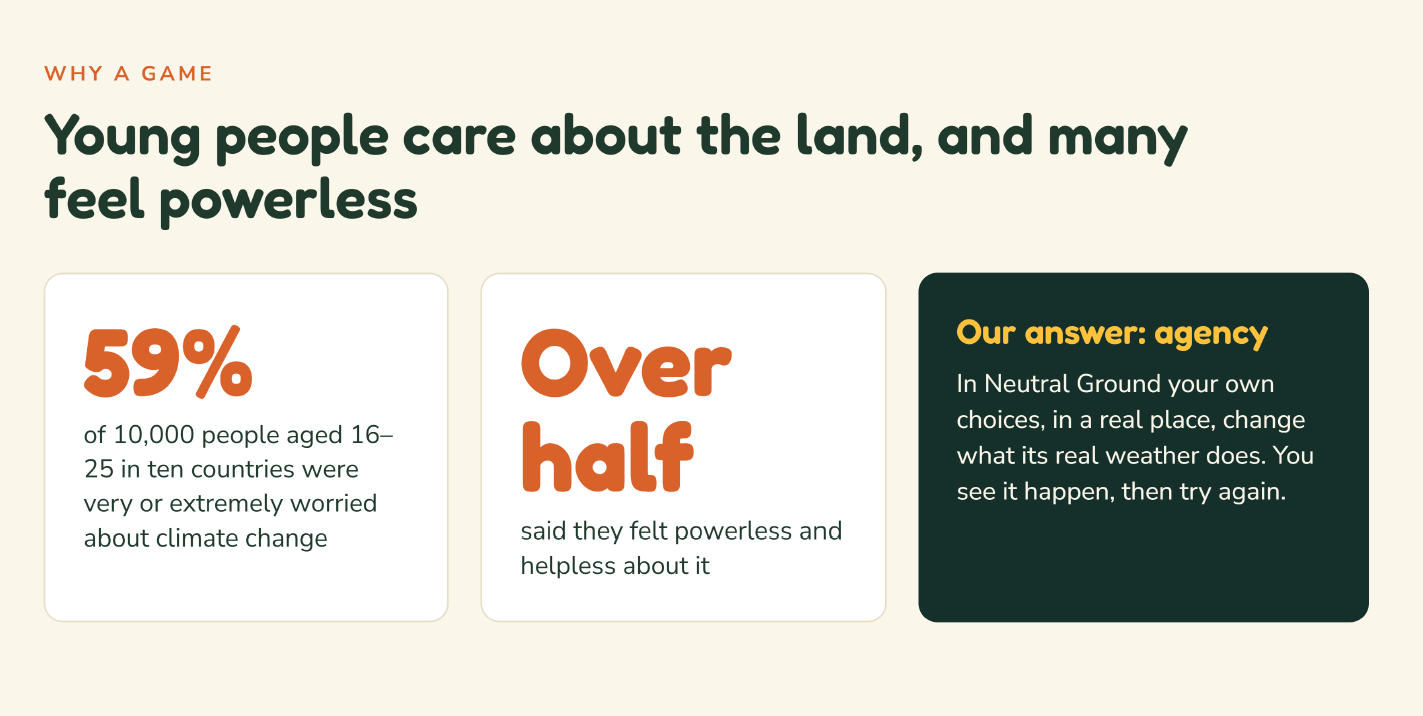
In the largest survey of its kind (Hickman et al., The Lancet Planetary Health, 2021), 59% of 10,000 people aged 16–25 in ten countries were very or extremely worried about climate change, and more than half felt powerless. Lectures don't fix powerlessness. Agency does.
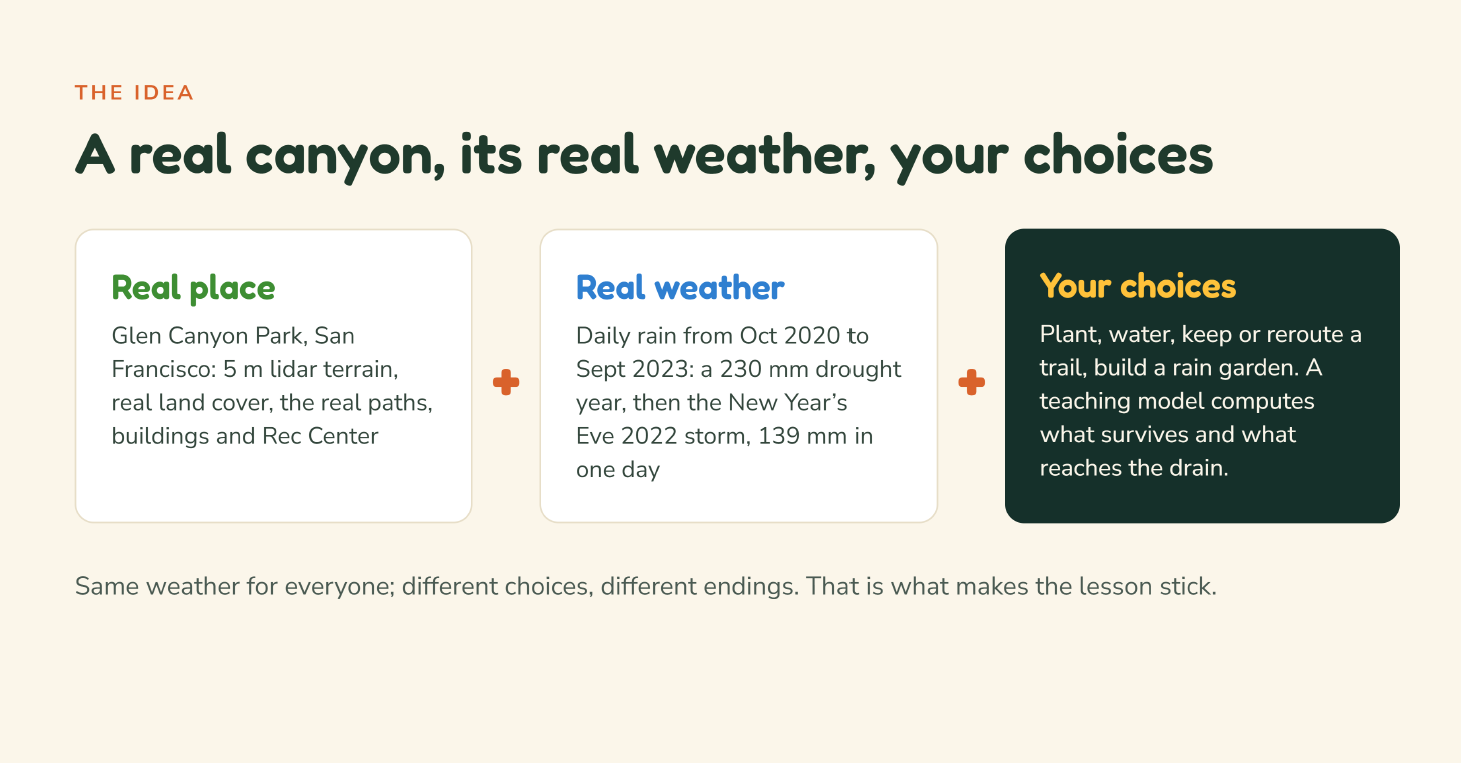
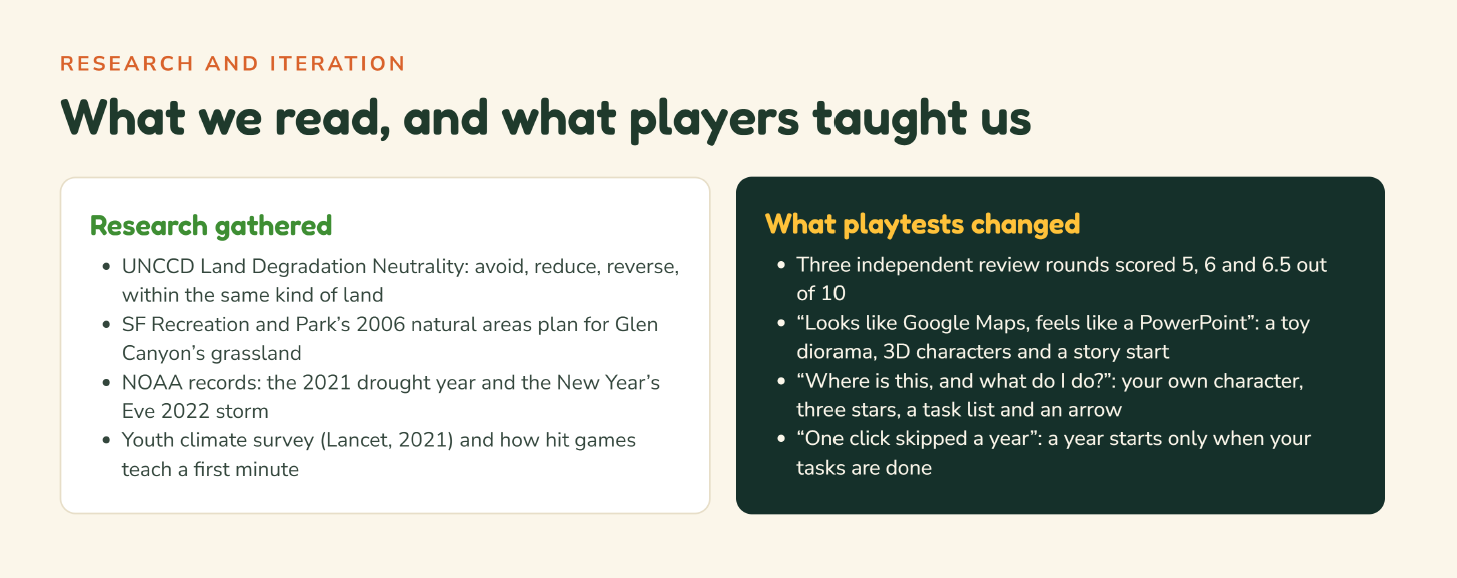
So we asked: what if a teenager could take a real piece of land, in its real weather, and watch their own choices change what happens to it? The UNCCD's idea of Land Degradation Neutrality (avoid, reduce, reverse degradation, and never offset one kind of land against another) turned out to map neatly onto game rules.
We chose Glen Canyon Park in San Francisco, a place you can find on a map, and gave it a real boss fight: the New Year's Eve 2022 storm, when downtown San Francisco recorded 139 mm of rain in a single day (NOAA).
What it does
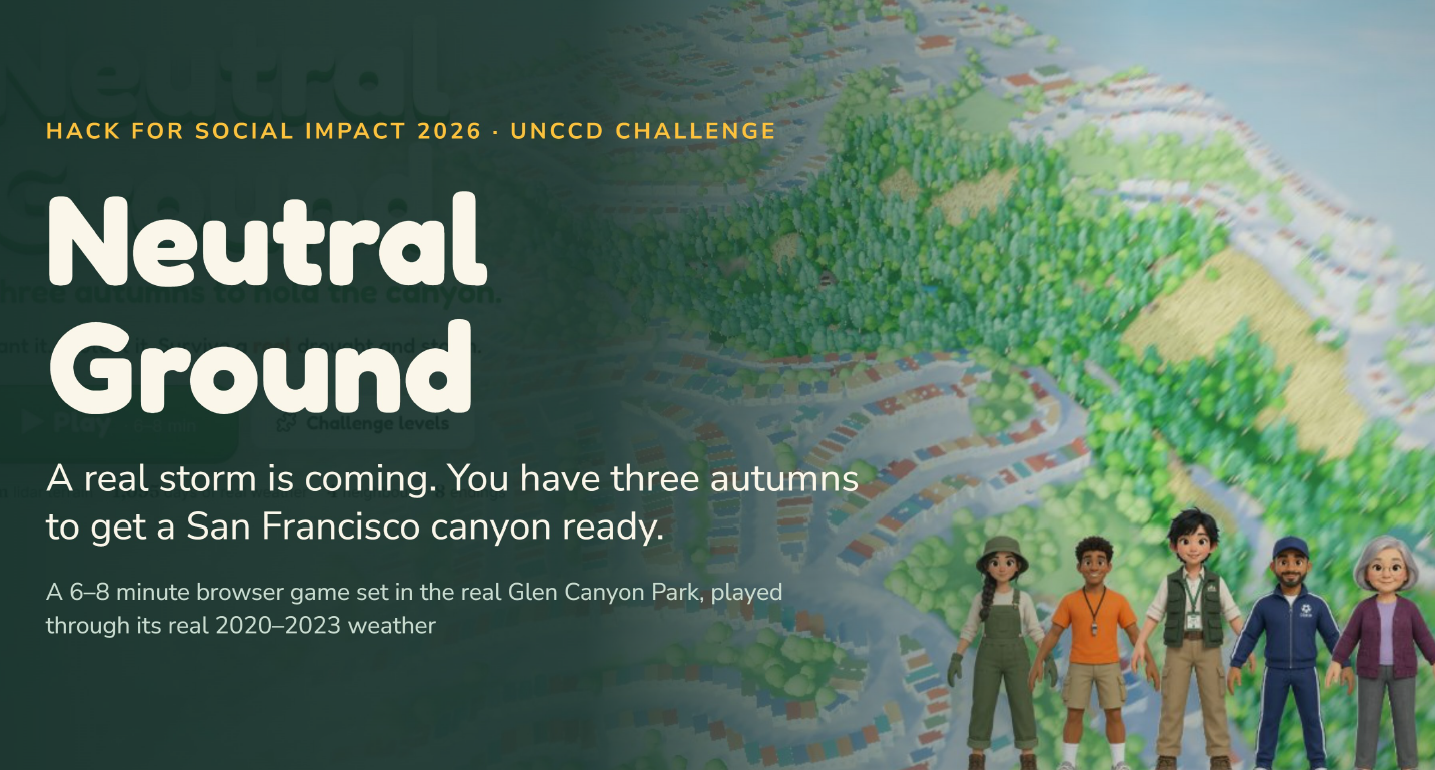
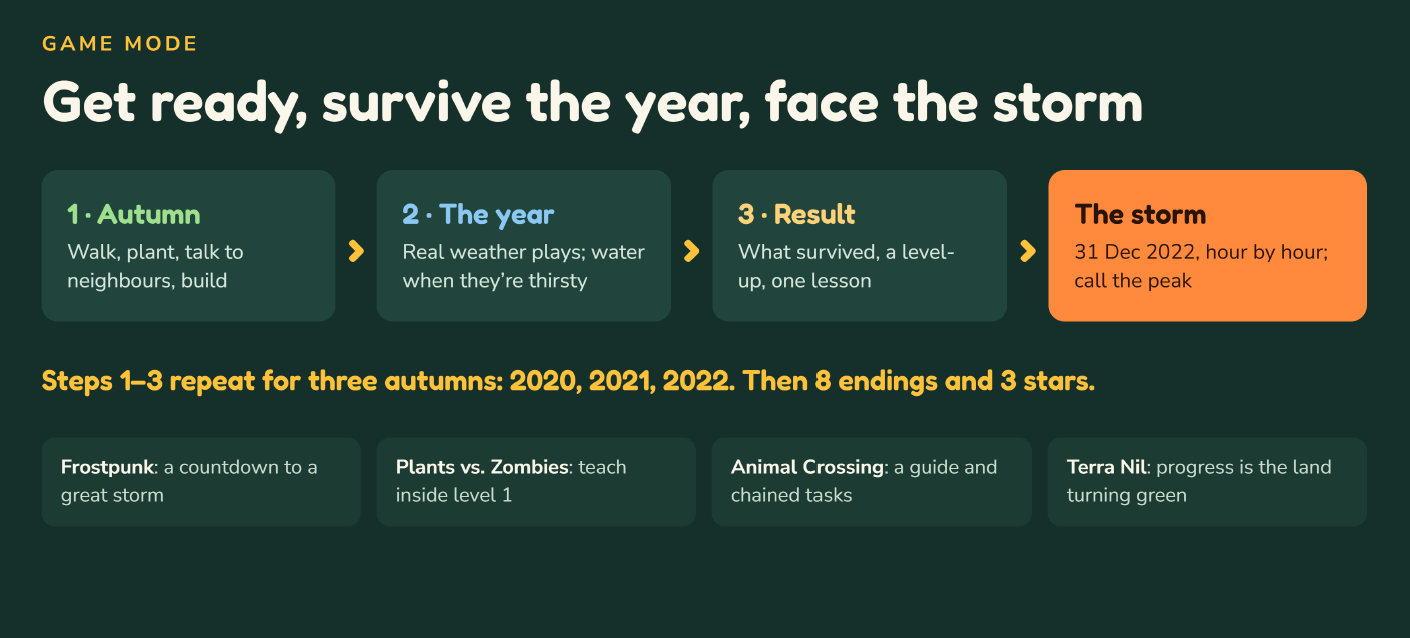
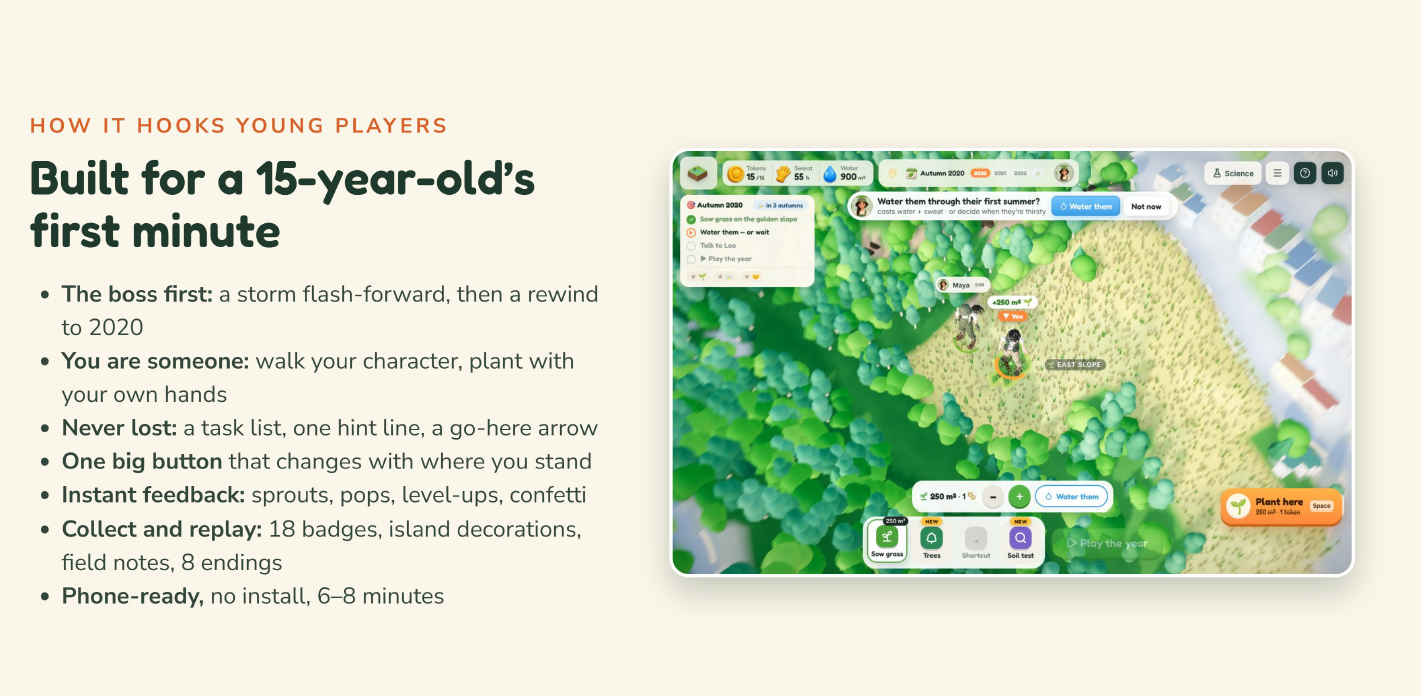
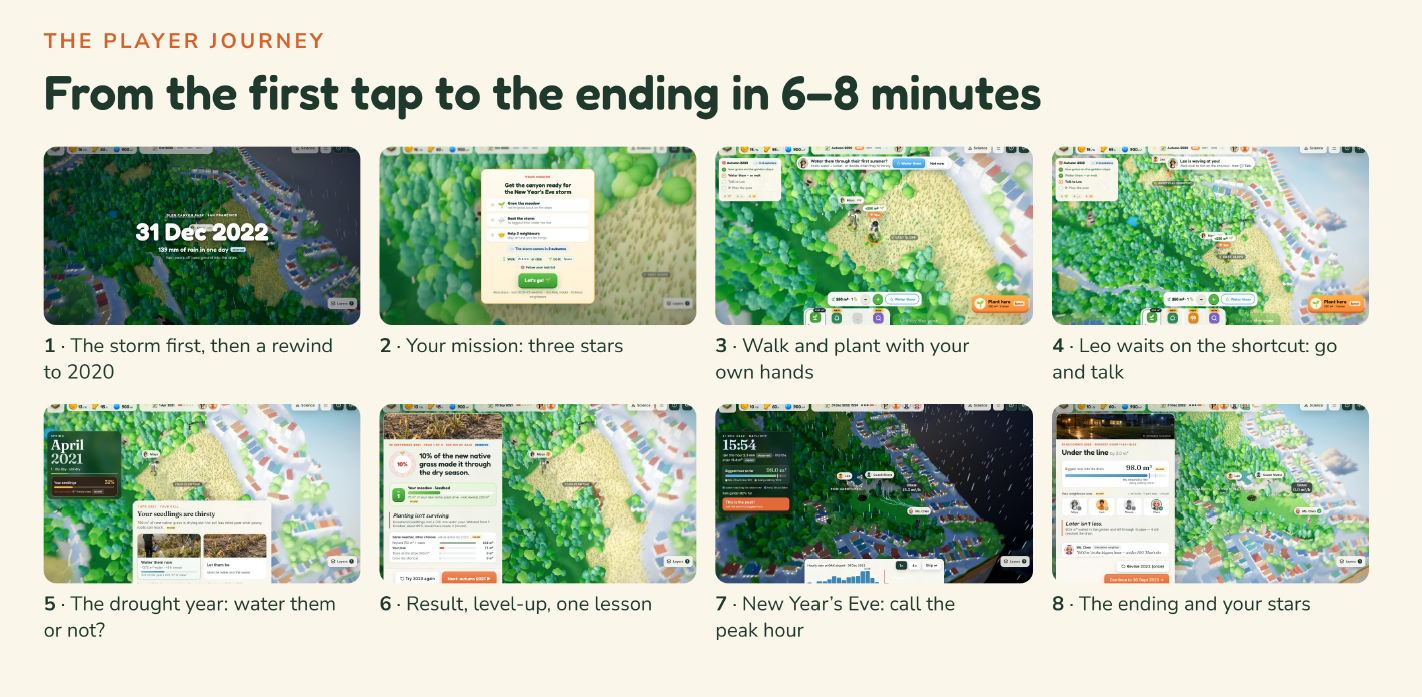
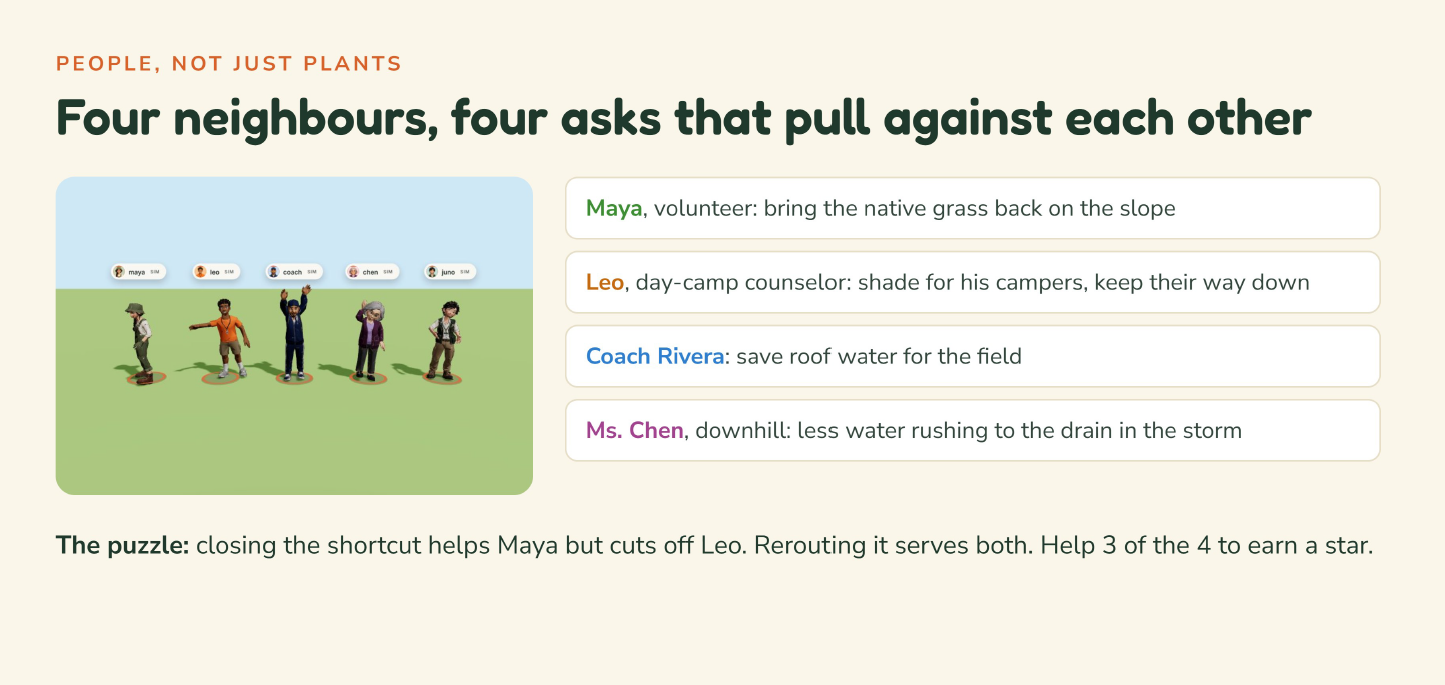
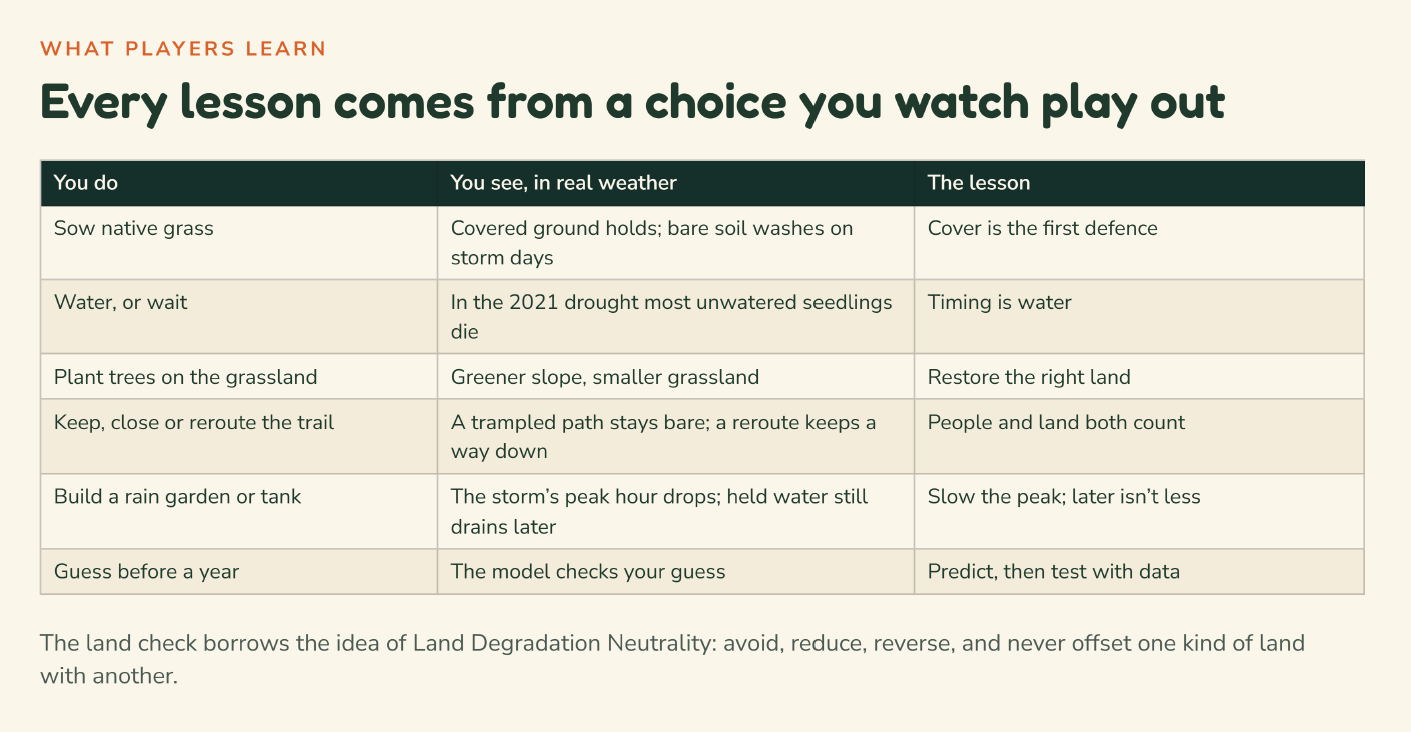
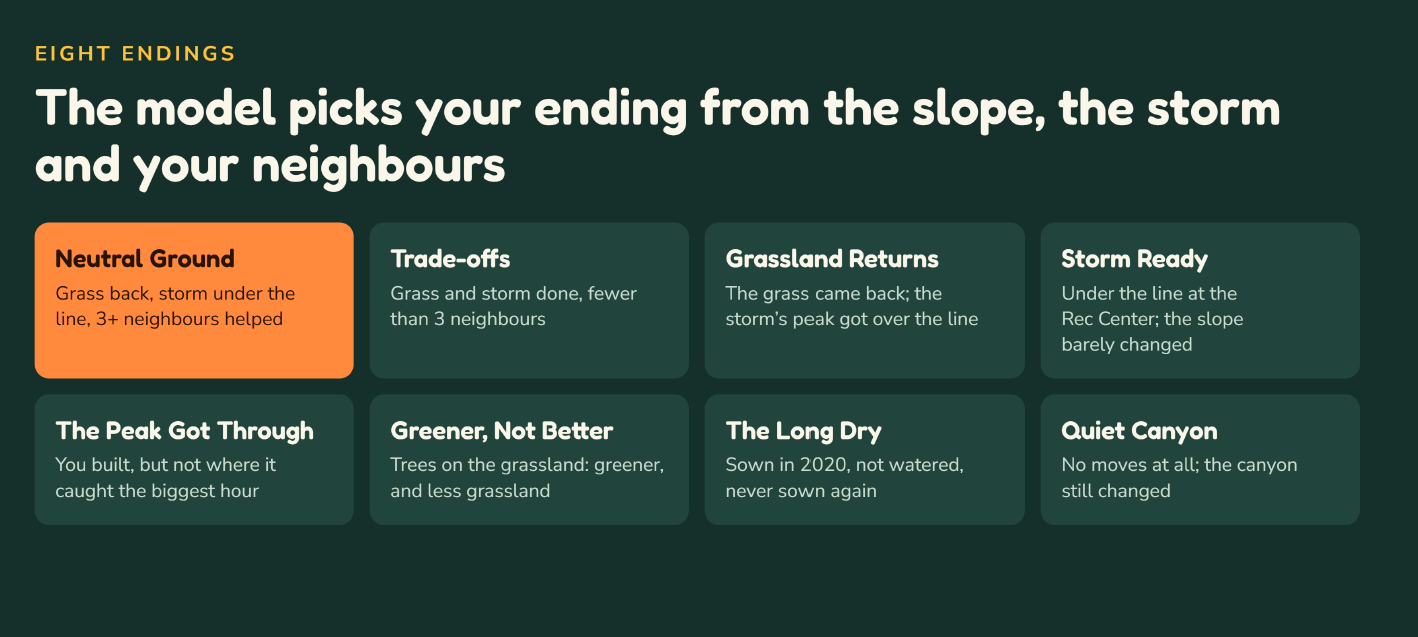
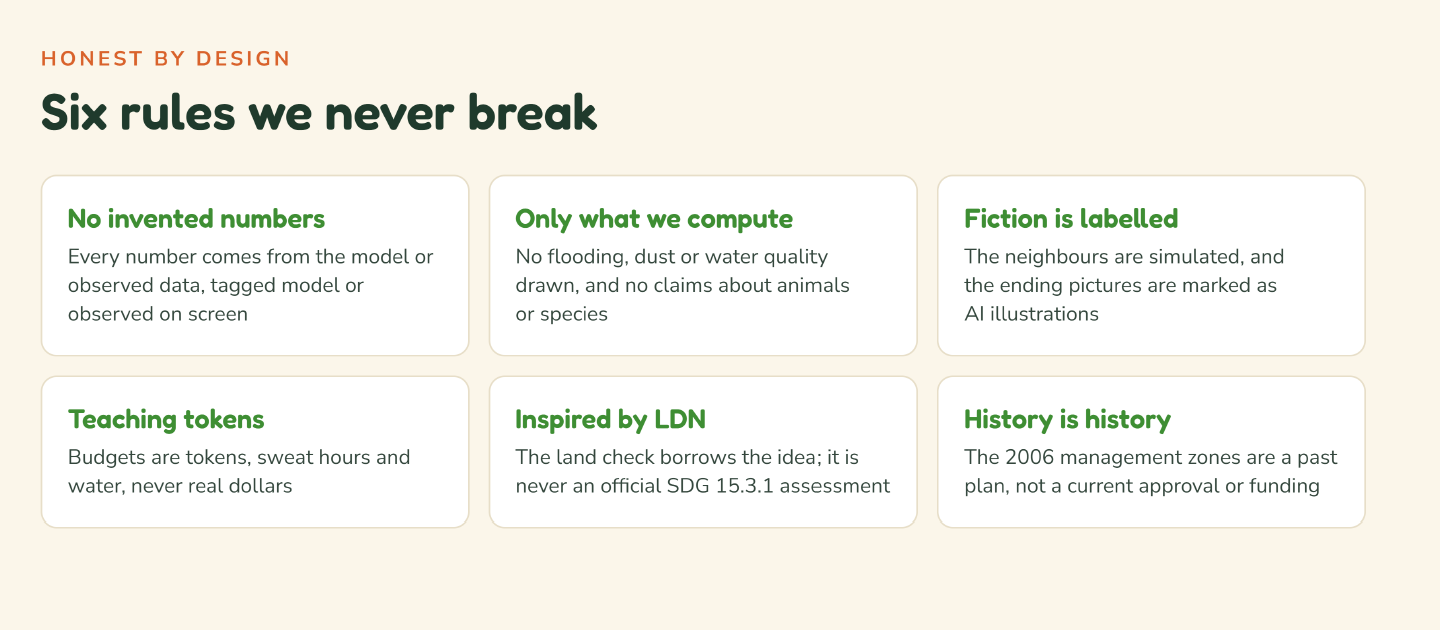
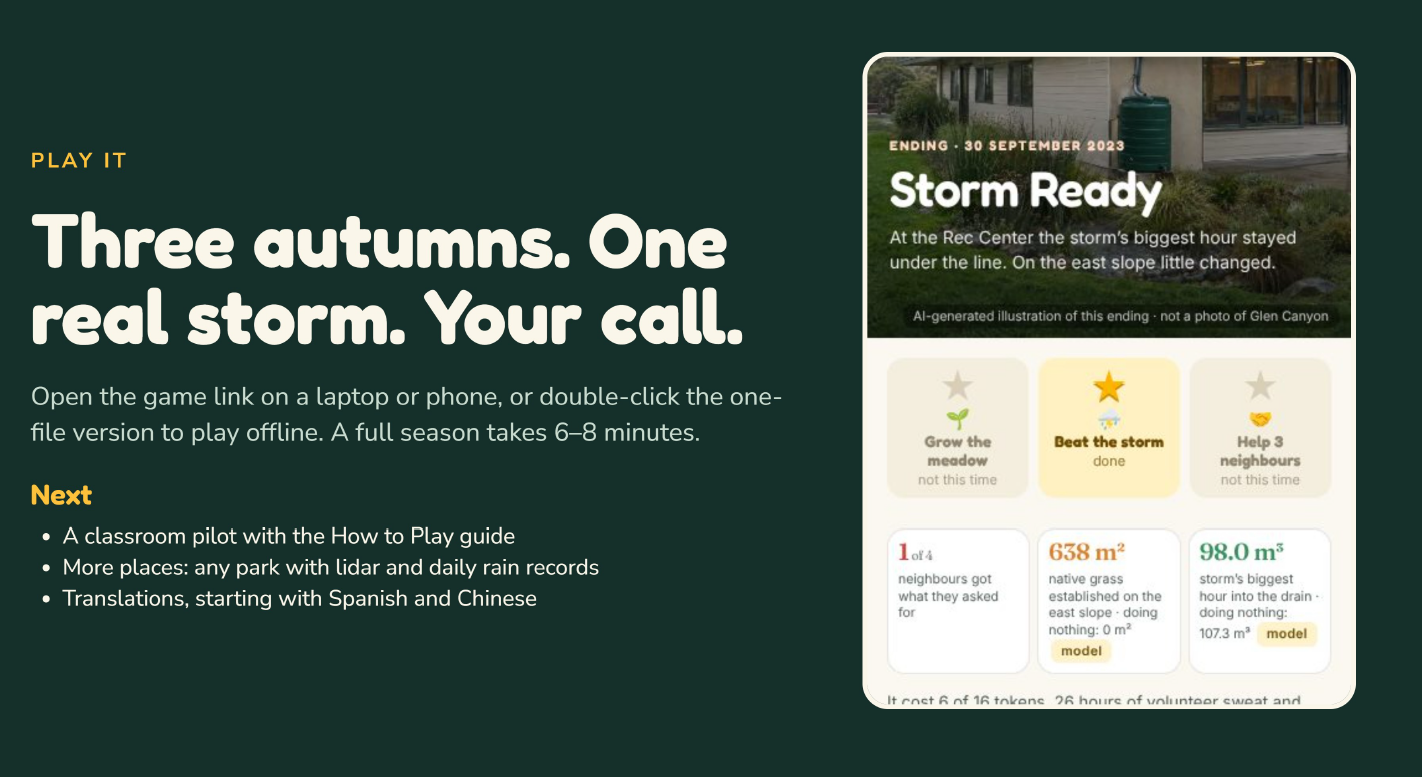
Neutral Ground is a 6–8 minute web game for players aged 15–24. It opens with the storm, then rewinds to autumn 2020: you have three autumns to get the canyon ready. Walk your character across a toy-like 3D island built from real lidar terrain. Sow native grass, water seedlings, deal with a trampled shortcut, build a rain garden or a tank, and help four (fictional) neighbours with their requests. The real 2020–2023 weather then plays back day by day, including the 2021 drought, while you run over to water thirsty seedlings and see what survives. The storm plays hour by hour. Three goals give three stars, and there are 8 endings, 18 badges and "what if?" replays. Every number on screen is tagged model or observed. Nothing is invented.
How we built it
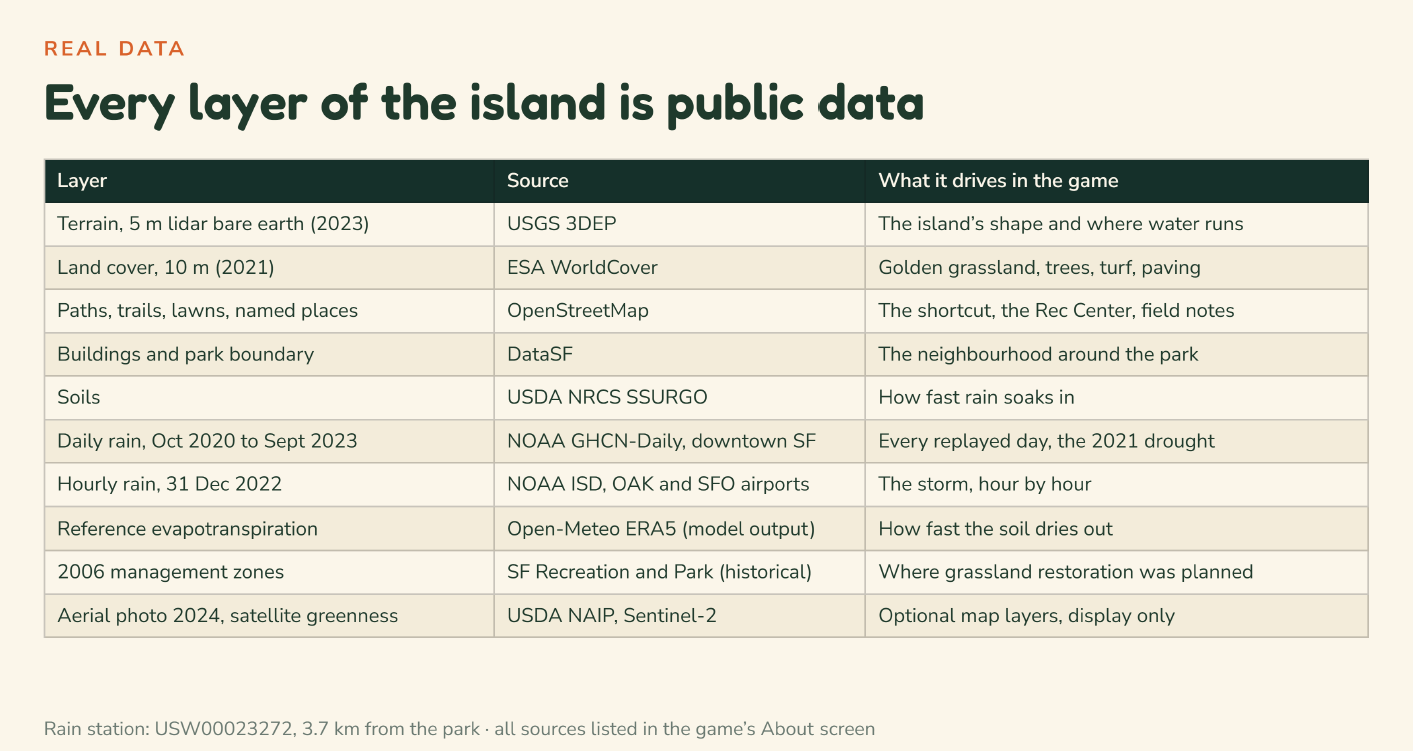
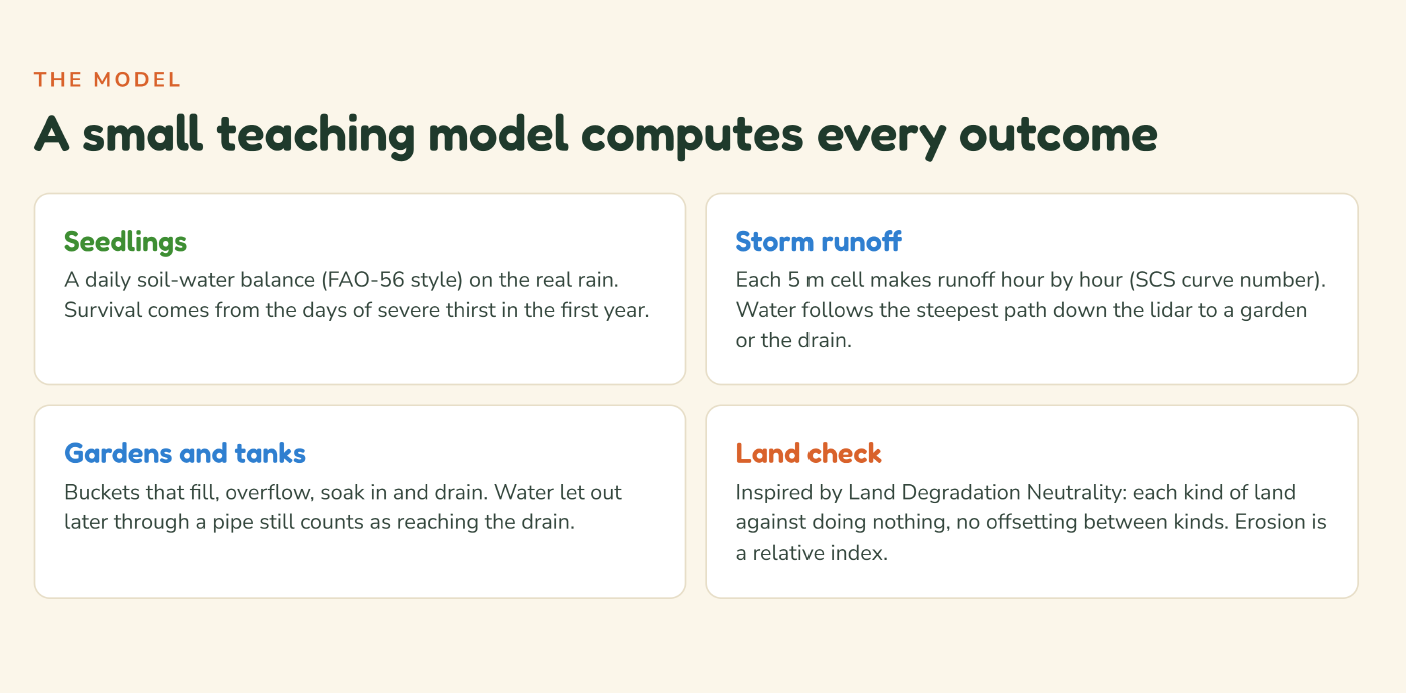
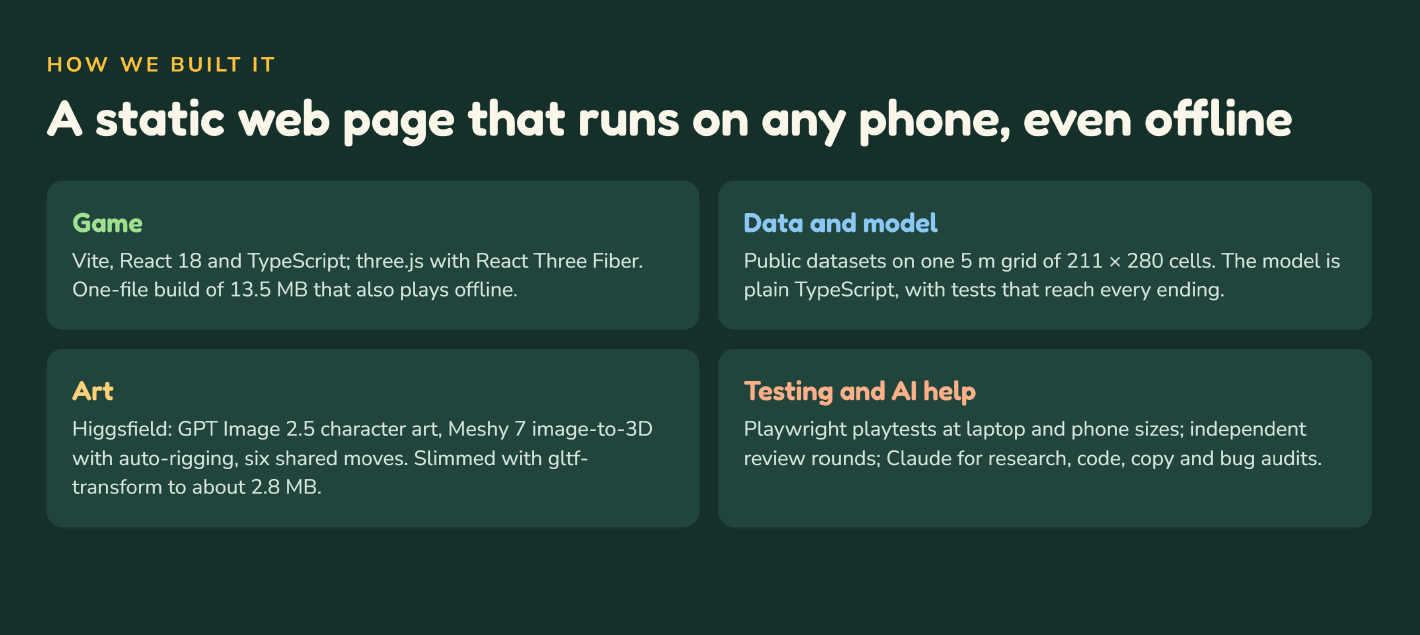
Data (all public): USGS 3DEP 5 m lidar, ESA WorldCover land cover, OpenStreetMap paths and places, DataSF buildings and park boundary, USDA SSURGO soils, NOAA GHCN-Daily rainfall (Oct 2020 – Sep 2023), NOAA hourly airport records for the storm, Open-Meteo ERA5 evapotranspiration, and SF Recreation and Park's 2006 management zones (historical). Everything sits on one 5 m grid of 211 × 280 cells. Model: a small, explainable TypeScript model that runs in the browser. Seedlings live or die by a daily FAO-56-style soil-water balance on the recorded rain. Storm runoff is computed hour by hour for every cell with the SCS curve-number method The water then follows the steepest path down the real terrain to a garden or the drain. Tests check that every ending can be reached. Game: Vite, React 18, TypeScript, three.js with React Three Fiber, and zustand. It ships as one 13.5 MB static file that also plays offline on a phone: no server, no accounts, no data collected. Art: character art made with Higgsfield (GPT Image 2.5), turned into rigged, animated 3D figures with Meshy image-to-3D, and slimmed with gltf-transform. Testing and AI help: automated Playwright playthroughs at laptop and phone sizes, plus real first-time players. We used Claude as a partner for research, code, copy and bug audits, but no AI ever writes a number in the game.
Challenges we ran into
"This is a teaching video, not a game." Our first playtests were brutal. It "looked like Google Maps" and "felt like a PowerPoint"; players asked where is this, why am I here, what do I do?, and a whole year passed in two clicks. We rebuilt the first minute the way hit games do: the storm first, a character you control, one context button, a mission card with three stars, a task list, a go-here arrow, and years that start only when you're ready. Drama without dishonesty. We wanted big moments but refused to draw anything the model doesn't compute: no floods, no animals, no species claims. The neighbours are labelled as simulated, budgets are teaching tokens rather than dollars, and the land check is inspired by LDN, never an official SDG 15.3.1 assessment. Making real weather playable. Three years of daily rain had to feel like a story, so we replay it at 22 days per second while the island changes and you react. Shipping one file. Our 3D characters vanished inside a sandboxed viewer that blocks data: URLs, so we now decode the models from base64 and parse them in memory.
Accomplishments that we're proud of
What we learned
The first 60 seconds decide everything. Show, don't tell, and never leave a player wondering what to do next. Real data hits differently in a real place. When unwatered seedlings die in the 2021 drought, it's because that drought actually happened. Constraints make better design. "No invented numbers" pushed the trade-offs into the rules instead of the text: planting trees makes the slope greener, but shrinks the grassland.
What's next for Neutral Ground
Playtests with youth groups, a 45-minute lesson guide for teachers, Spanish and Chinese versions, an accessibility check, and a "new place" recipe so other communities can rebuild the game around their own land.
Built With
- chatgpt
- claude
- datasf
- esa-worldcover
- gemini
- gltf-transform
- higgsfield
- meshy
- noaa
- openstreetmap
- playwright
- react
- react-three-fiber
- ssurgo
- three.js
- typescript
- usgs-3dep
- vite
- zustand


Log in or sign up for Devpost to join the conversation.