-
-
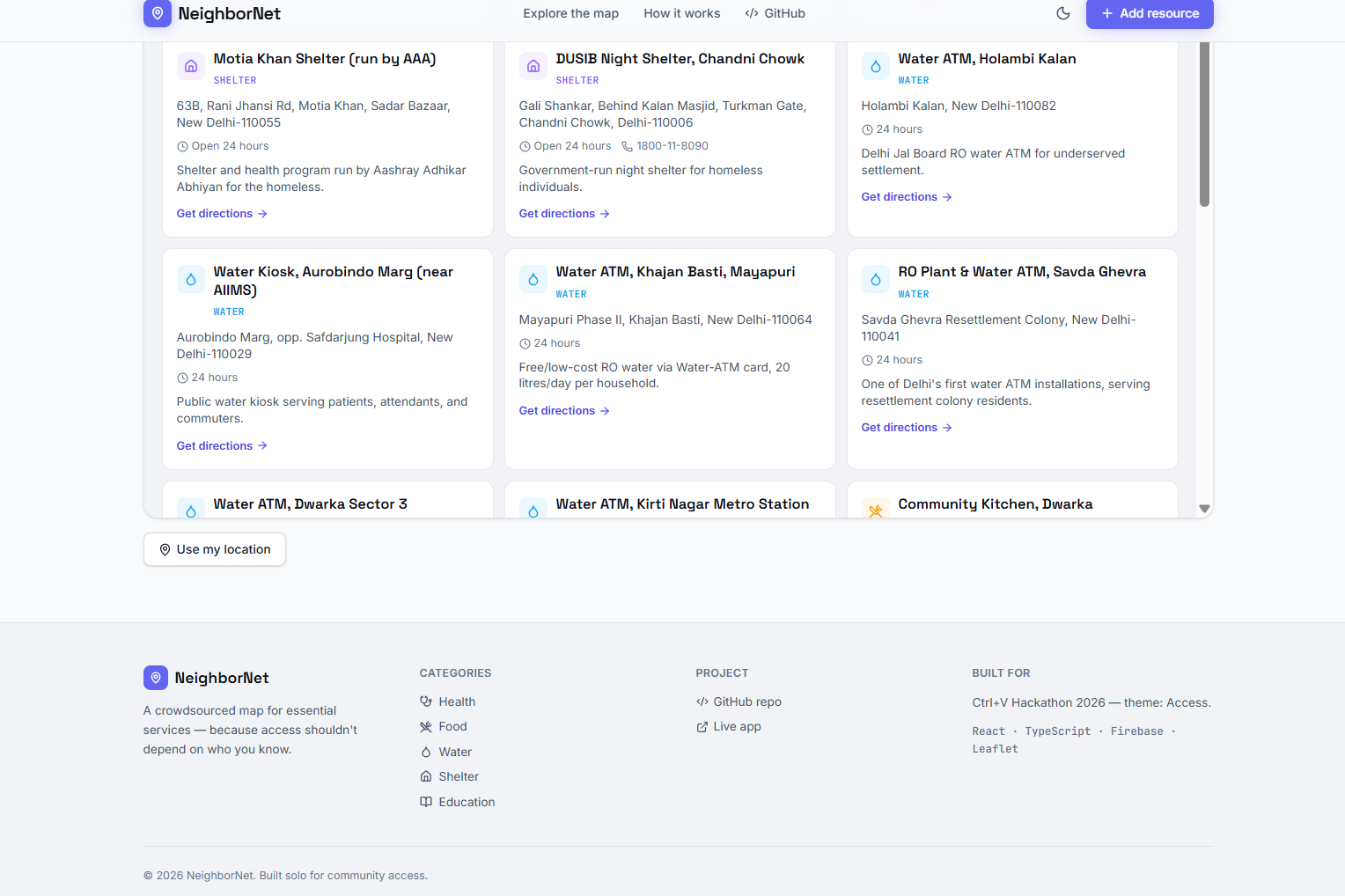
Footer Section
-
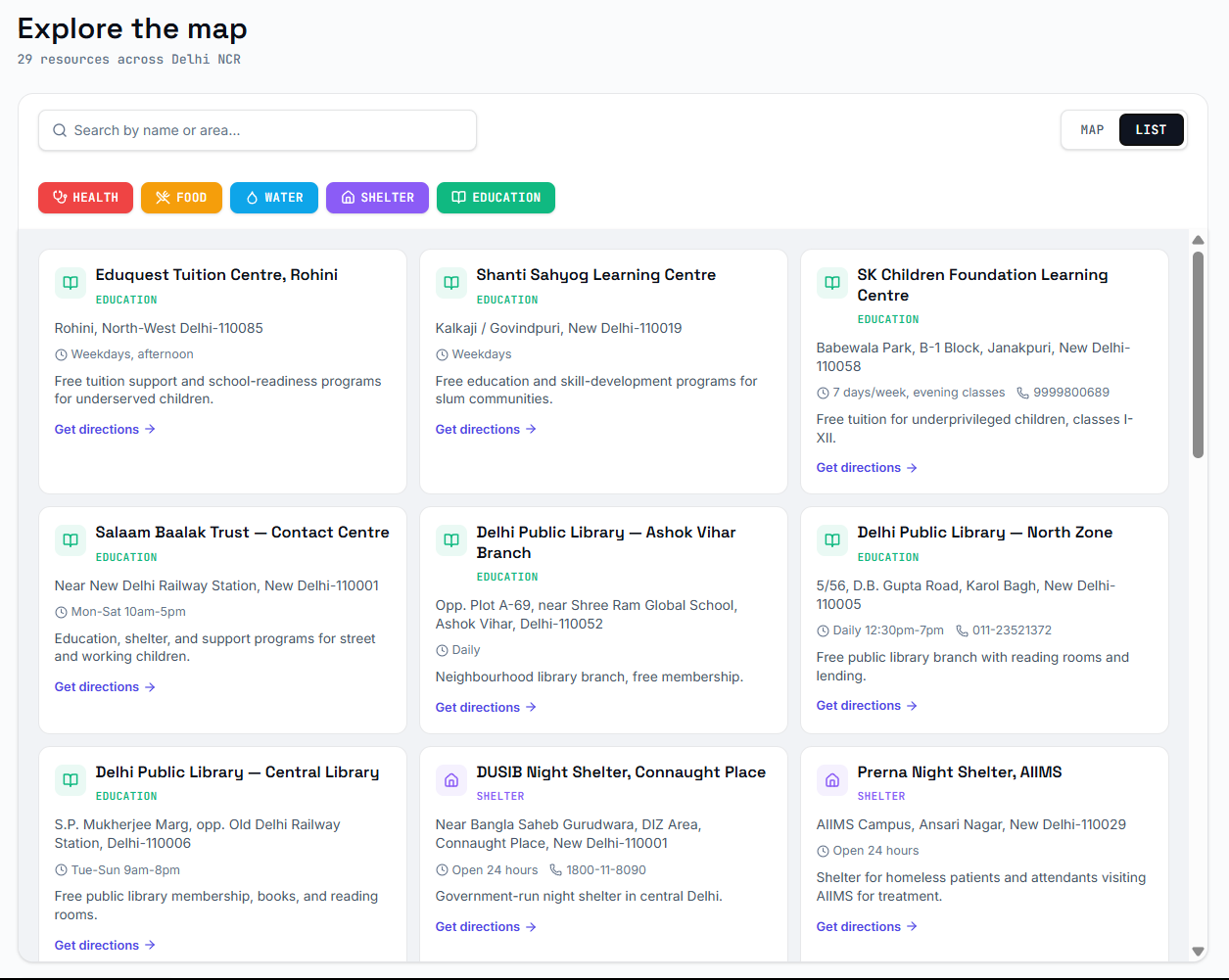
List View
-
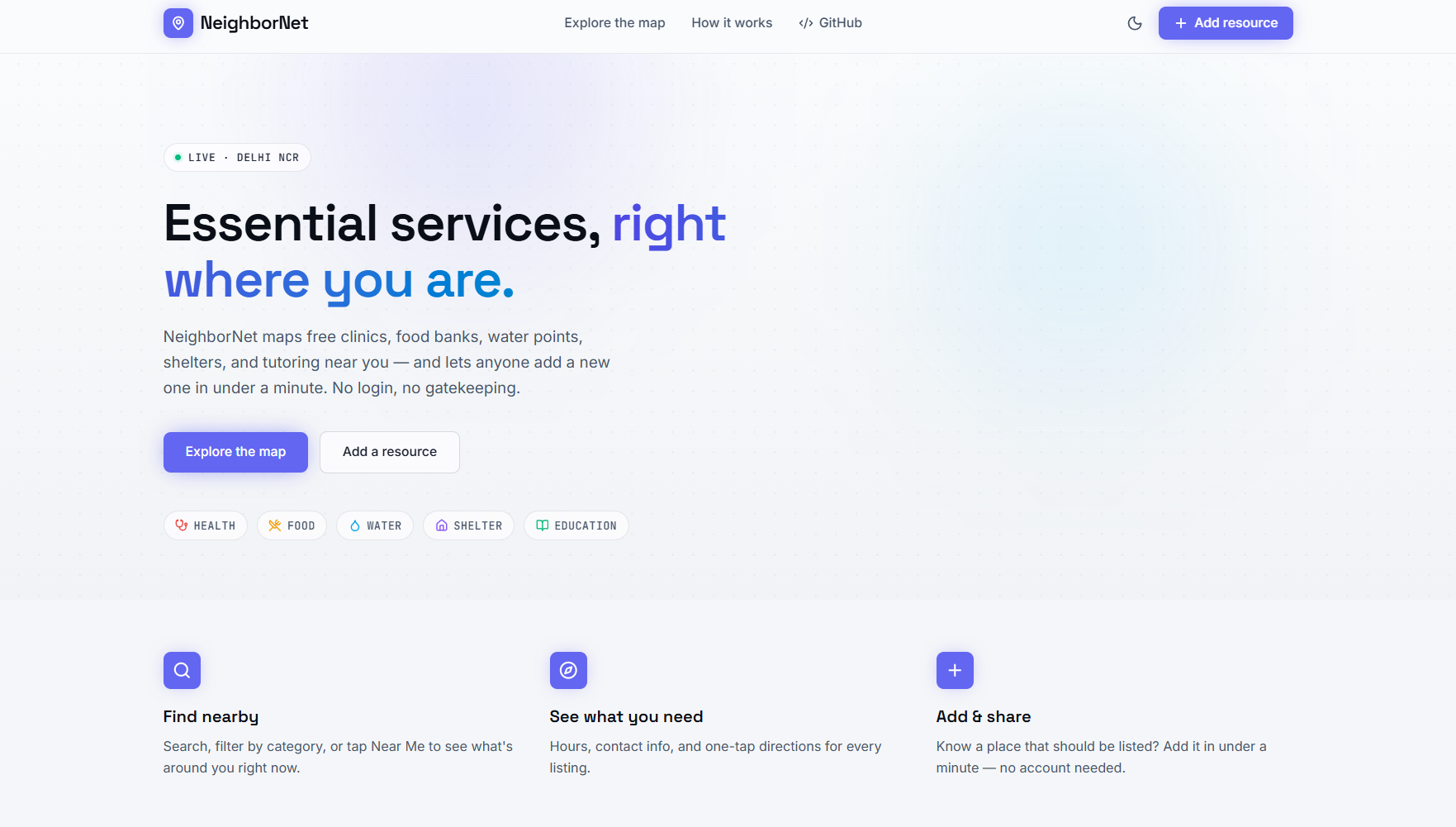
Homepage
-
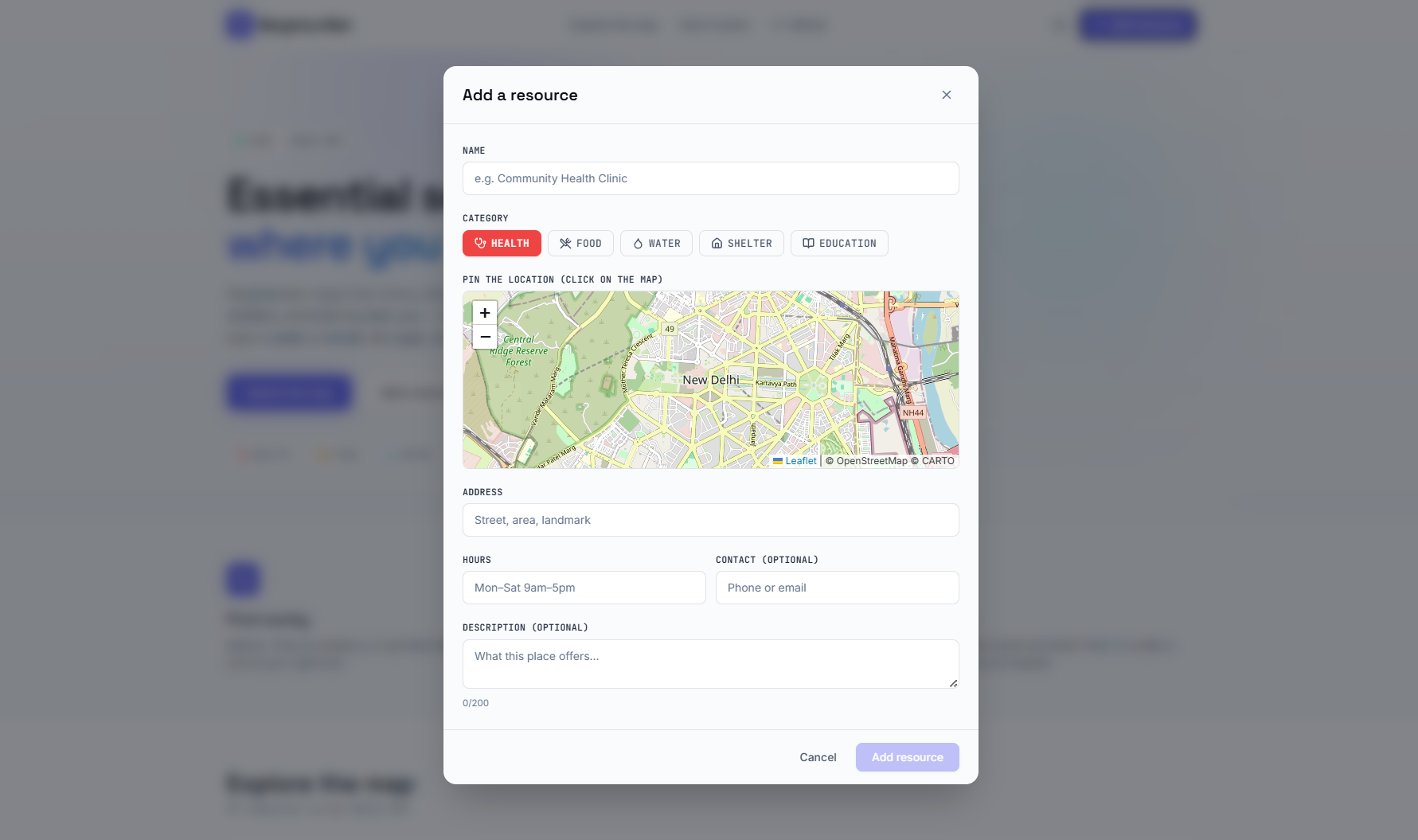
Add a resource
-
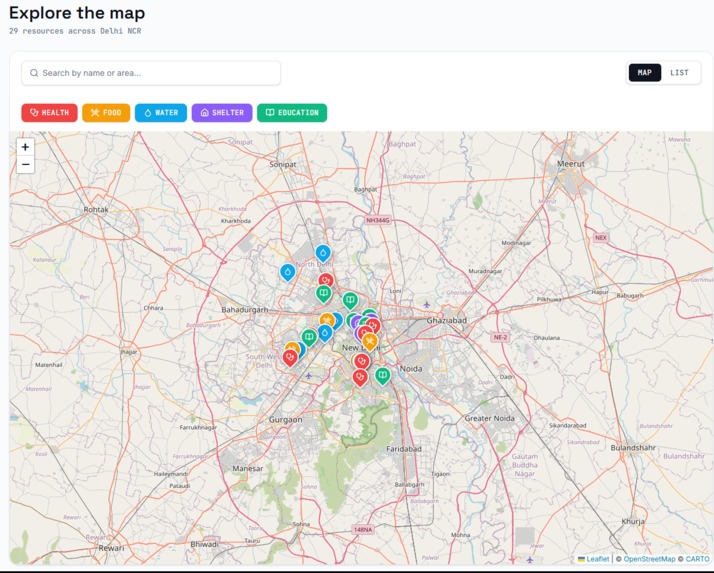
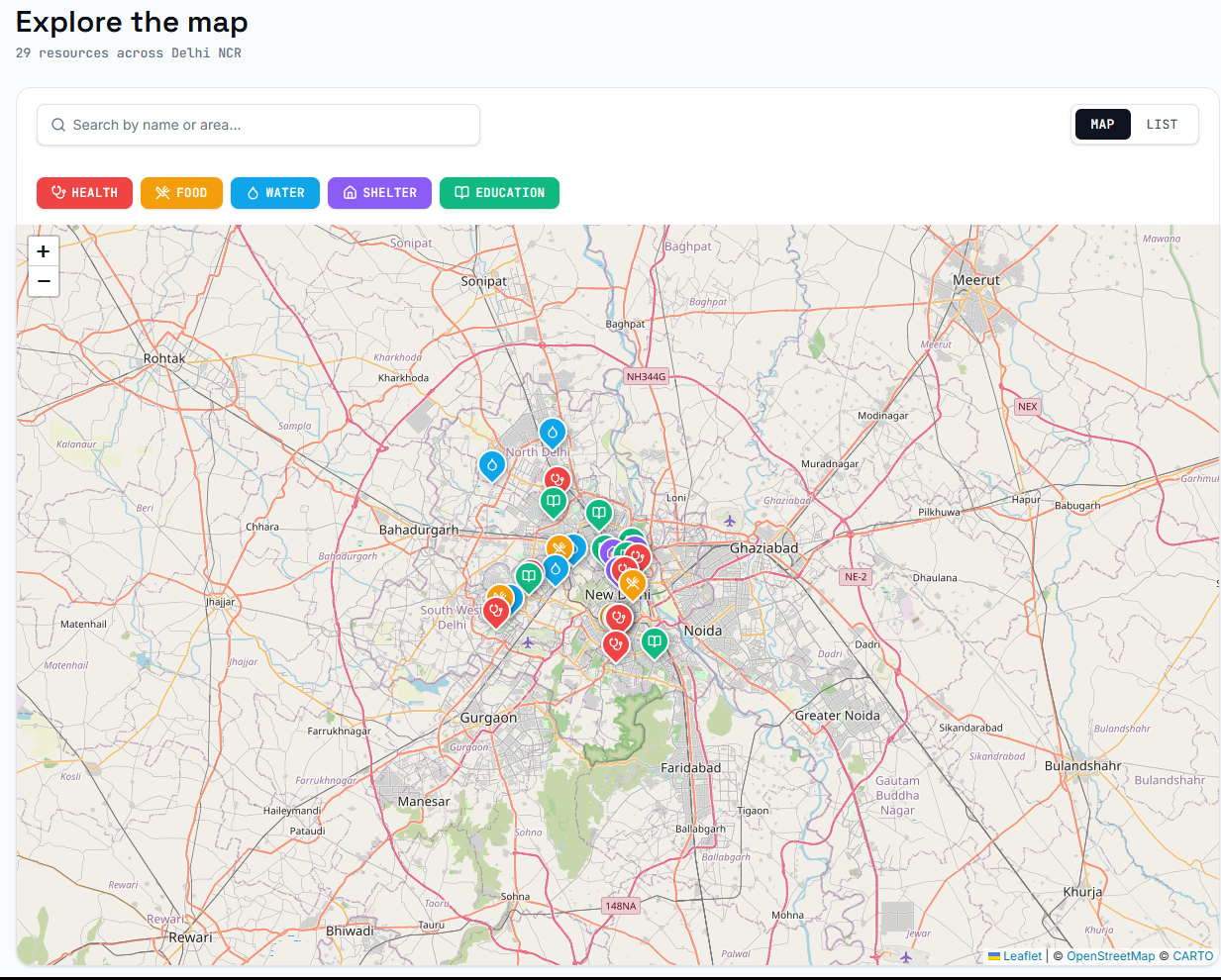
Map View
Inspiration
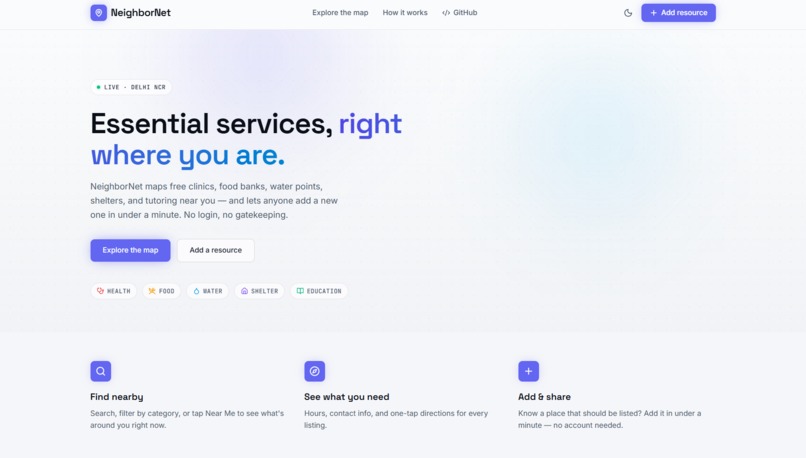
Millions of people live within walking distance of a free clinic, food bank, or shelter and never know it exists — because that information is scattered across government PDFs, NGO websites, and word of mouth. Access to essential services shouldn't depend on who you happen to know or which website you happen to find. We built NeighborNet to put that information in one place, and let the community keep it growing.
What it does
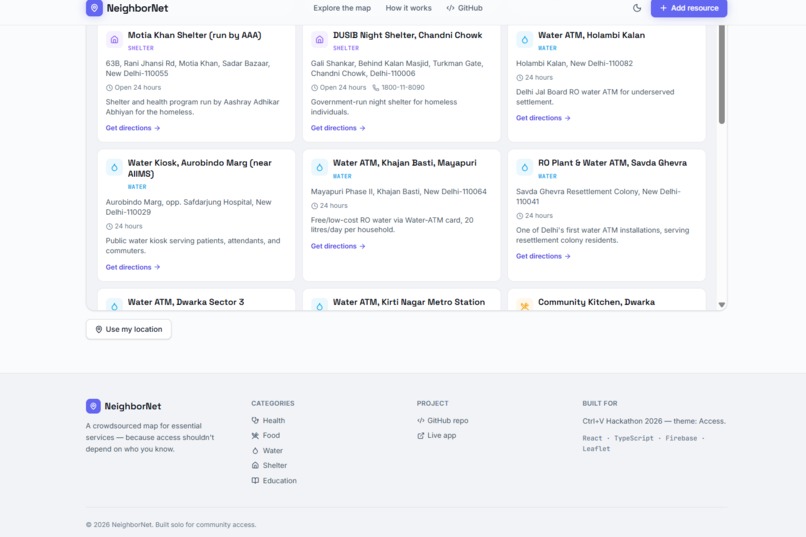
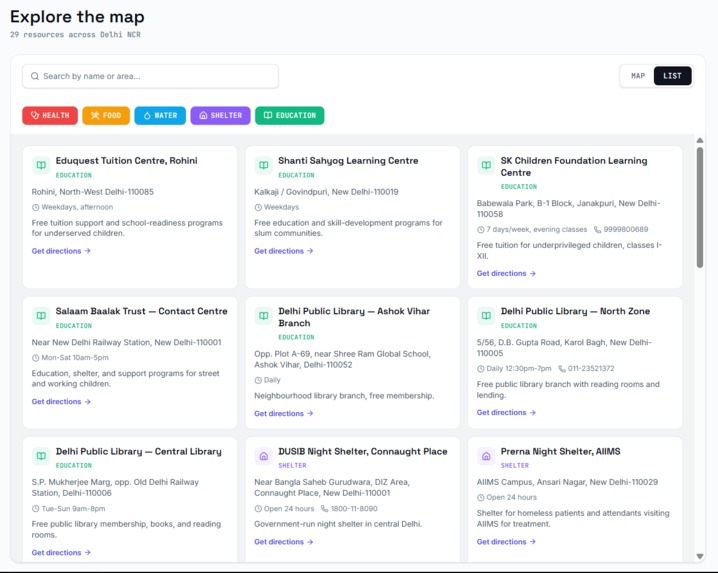
NeighborNet is a map-and-list app where anyone can find — and add — nearby essential services across five categories: Health, Food, Water, Shelter, and Education. Users can:
- View services on an interactive map or as a searchable list, in light or dark theme
- Filter by category
- Use "Near me" to center the map and sort by distance
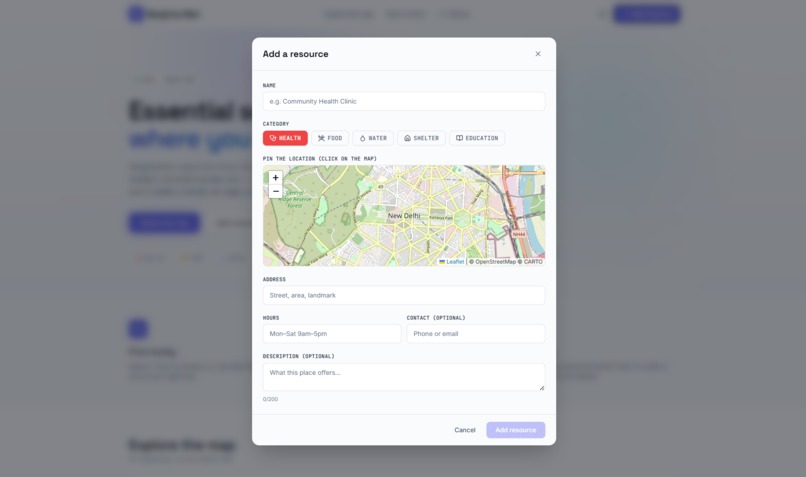
- Add a new resource in under a minute — pin a location, fill a short form, done — no account required
- See new listings appear live for everyone, instantly
The app launches pre-seeded with 51 real essential services across Delhi NCR — Delhi, Gurugram, Noida, Ghaziabad, and Faridabad. Aam Aadmi Mohalla Clinics, DUSIB night shelters, Delhi Public Library branches, Indian Red Cross blood banks, Noida Authority water ATMs, municipal night shelters, gurudwara community kitchens, and verified NGOs — all sourced from public records, not fabricated, so the map is genuinely useful from day one, not an empty shell waiting for users.
How we built it
- Frontend: React + TypeScript + Vite, styled with Tailwind CSS
- Map: Leaflet.js with OpenStreetMap tiles (light theme) and CartoDB dark-matter tiles (dark theme) — no API key needed for either
- Backend: Firebase Firestore — real-time listeners mean new resources appear for every user instantly, with no custom server
- Geolocation: Browser Geolocation API for "Near me"
- Theming: A full light/dark mode toggle, persisted per user, with no flash of the wrong theme on load
- Security: Firestore rules allow public read/create with field validation, but block edit/delete — a lightweight safety net against vandalism without requiring user accounts
- Hosting: Vercel
We deliberately kept the stack server-less and auth-less: every barrier we removed for the builder (no backend to maintain) mirrors the barrier we removed for the user (no signup to add a resource).
Challenges we ran into
- Sourcing real, verifiable data across five different cities instead of placeholder/fake entries — we researched actual government hospital directories, municipal shelter programs, and public library initiatives across Delhi, Gurugram, Noida, Ghaziabad, and Faridabad rather than inventing organizations, which took real research time but made the demo honest.
- Balancing zero-friction contribution (no login) against spam/abuse risk — solved with Firestore rules that allow anyone to add but no one to edit or delete, plus field validation at the database level.
- Making a Leaflet map genuinely feel native in dark mode — swapping tile providers based on theme, rather than just inverting UI chrome around a jarringly bright map.
- Keeping scope tight under hackathon time pressure — we explicitly cut ratings, moderation dashboards, and offline mode from v1 to ship a working, polished core loop.
Accomplishments we're proud of
- A fully working add → live-update loop with zero backend code
- Real, verified seed data spanning an entire metro region, not just one city
- A complete light/dark theme system, including the map tiles themselves
- A clean, distinct visual identity rather than a generic template look
What we learned
How much Firestore's real-time listeners simplify what would otherwise be a websocket/polling problem, and just how scattered essential-service information is across a region as large as Delhi NCR — even when every individual piece of it is technically public.
What's next for NeighborNet
- Offline/PWA support for low-connectivity areas
- Multi-language support (Hindi and beyond)
- A lightweight community-verification layer so trusted contributors can confirm listings stay accurate over time
- Expand seed coverage to more NCR towns and beyond
Built With
- cartodb
- firebase
- firestore
- leaflet.js
- openstreetmap
- react
- tailwindcss
- typescript
- vercel
- vite


Log in or sign up for Devpost to join the conversation.