
Inspiration
Some of our teammates have visually impaired or elderly family members who struggle to navigate campuses and modern spaces. We wanted to create something that could genuinely help them move freely and safely.
What it does
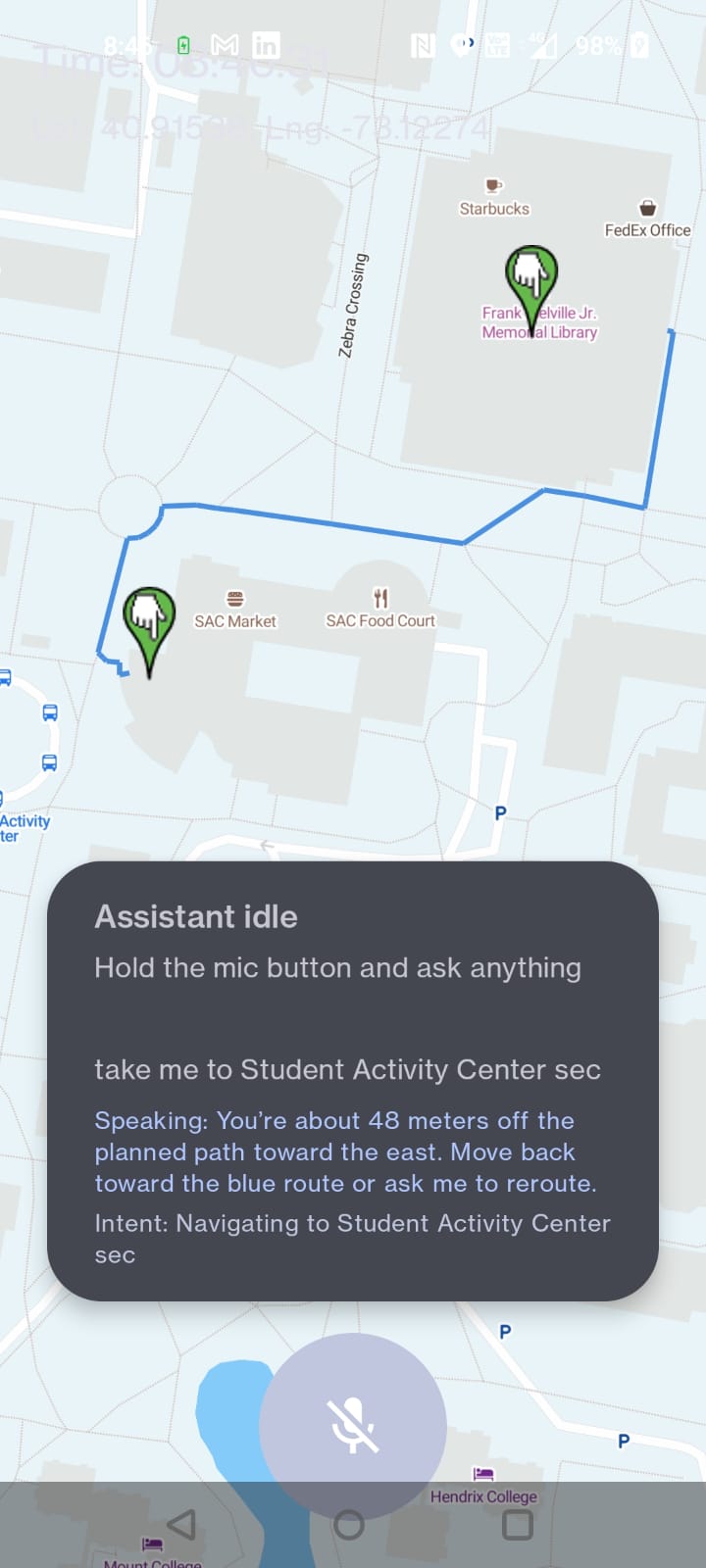
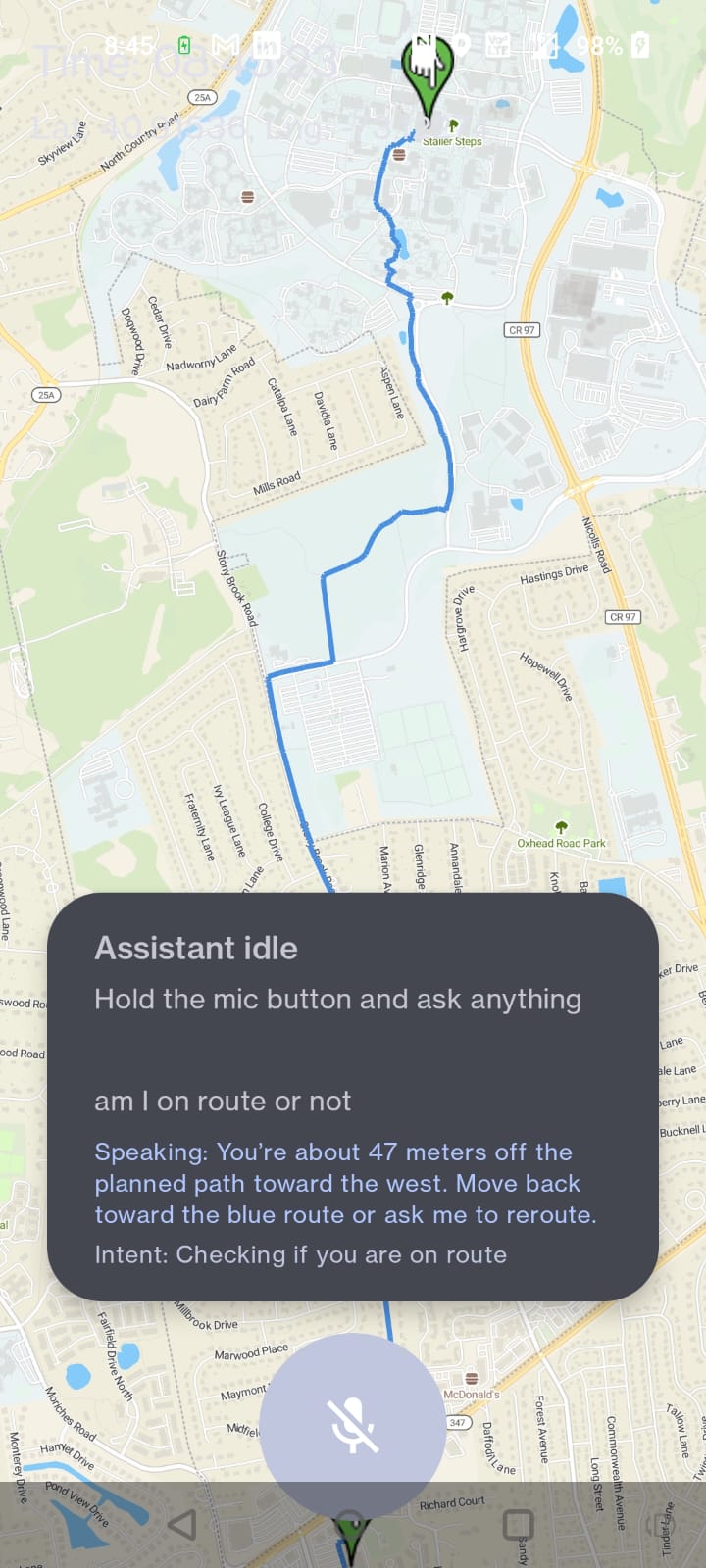
Navis provides voice-guided, full-route navigation for visually impaired people. It helps users know if they’re on the right path and guides them across campus without needing to look at a map.
How we built it
We used GPS and mapping APIs to generate campus routes, integrated text-to-speech for voice guidance, and designed a simple speech-to-text interface focused on accessibility and clarity.
Challenges we ran into
GPS signals and map data were often noisy or inaccurate, especially around buildings, which made route tracking inconsistent.
Accomplishments that we're proud of
We built a functional prototype in just two days that provides accessible, voice-based campus navigation — a real step toward independence for visually impaired users.
What we learned
We learned how complex accessibility challenges can be and how important user-centered design is, especially for those who rely on audio cues instead of visuals.
What's next for Navis
We plan to expand into indoor navigation by collaborating with institutions to gather floor maps, and eventually develop hands-free or wearable versions for easier, more natural navigation.
Built With
- elevenlabs
- gemini
- java
- kotlin
- neuralseek
- openstreetmap
- osrm

Log in or sign up for Devpost to join the conversation.