-
-
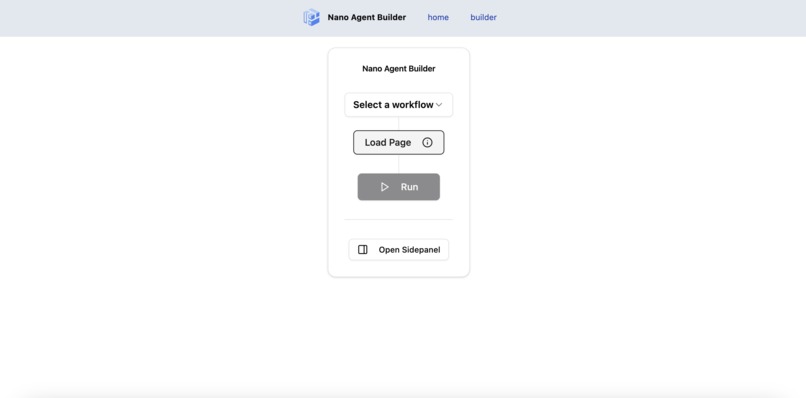
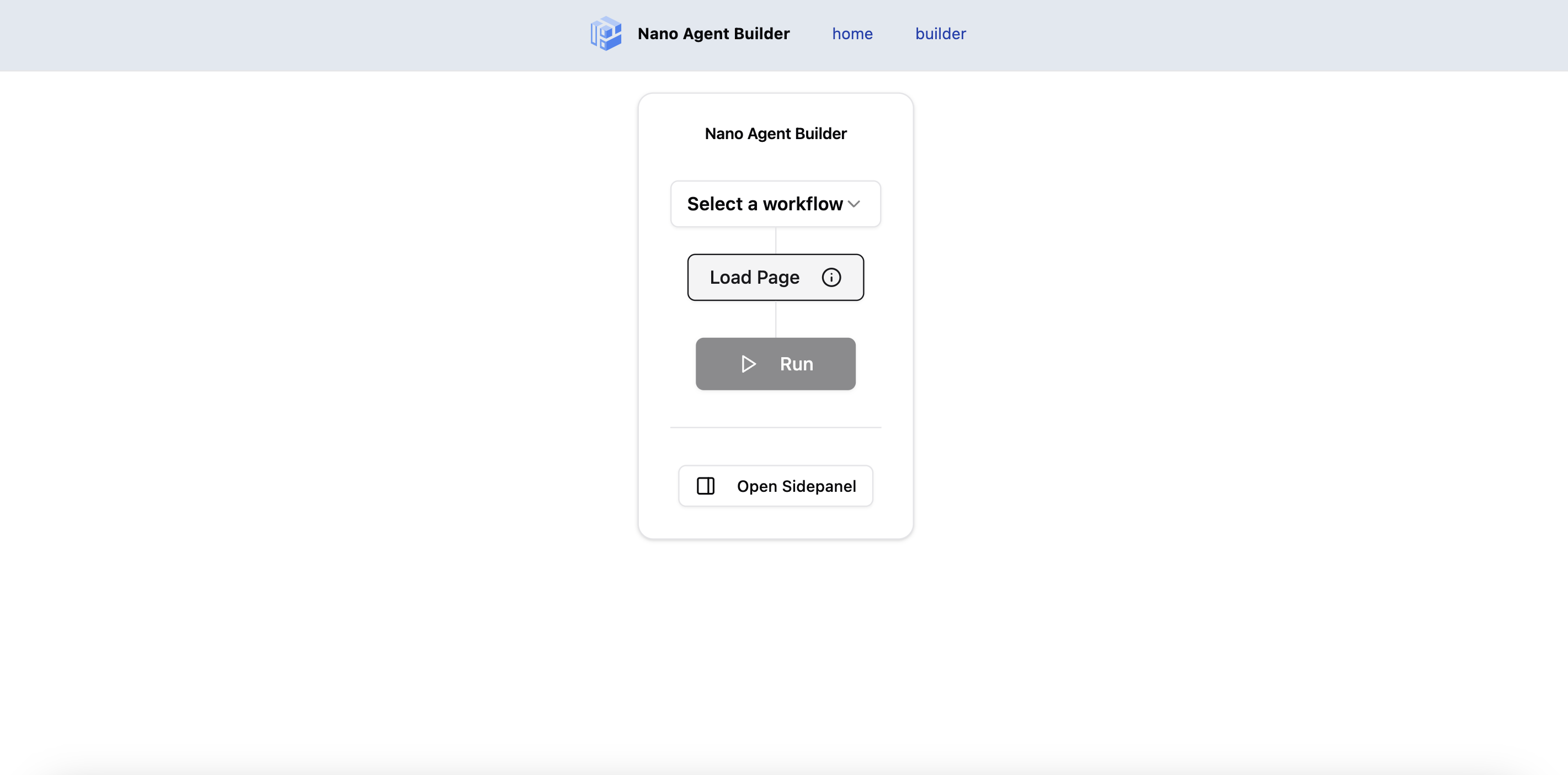
Nano ai agent builder interface
-
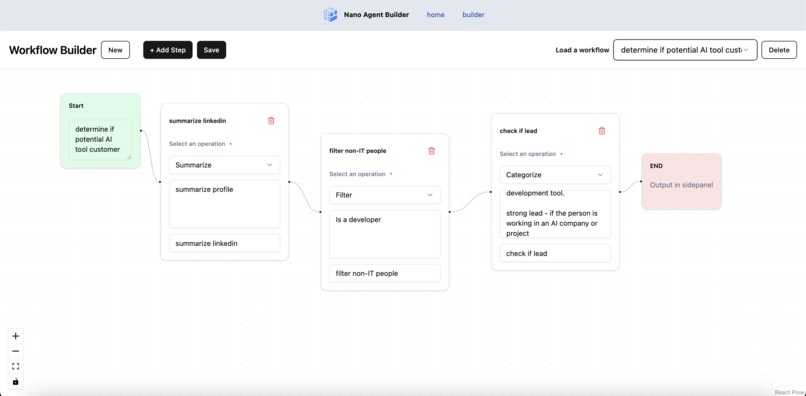
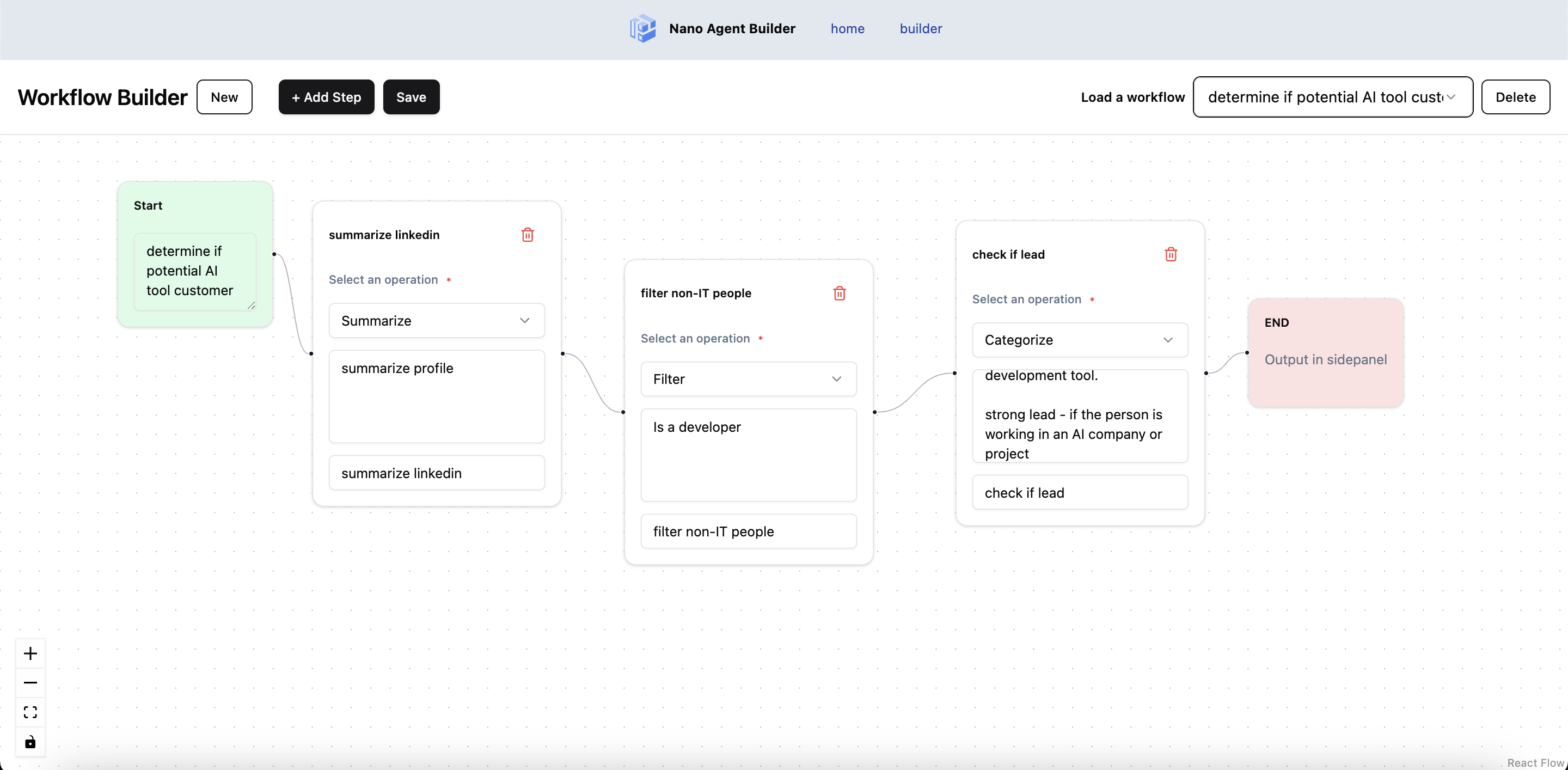
Build AI agent workflows to automate your tasks
-
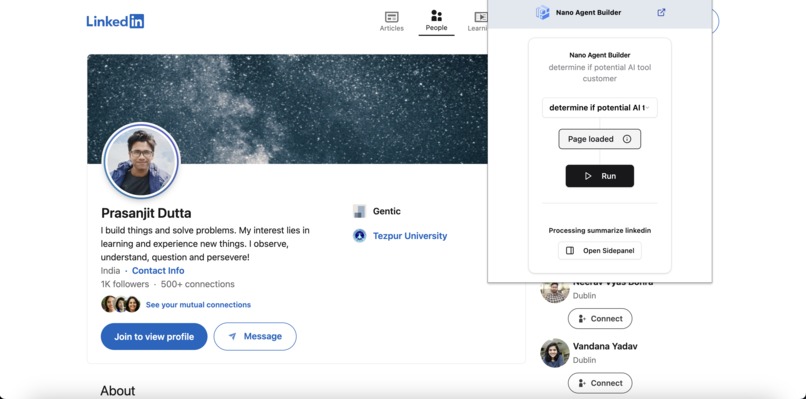
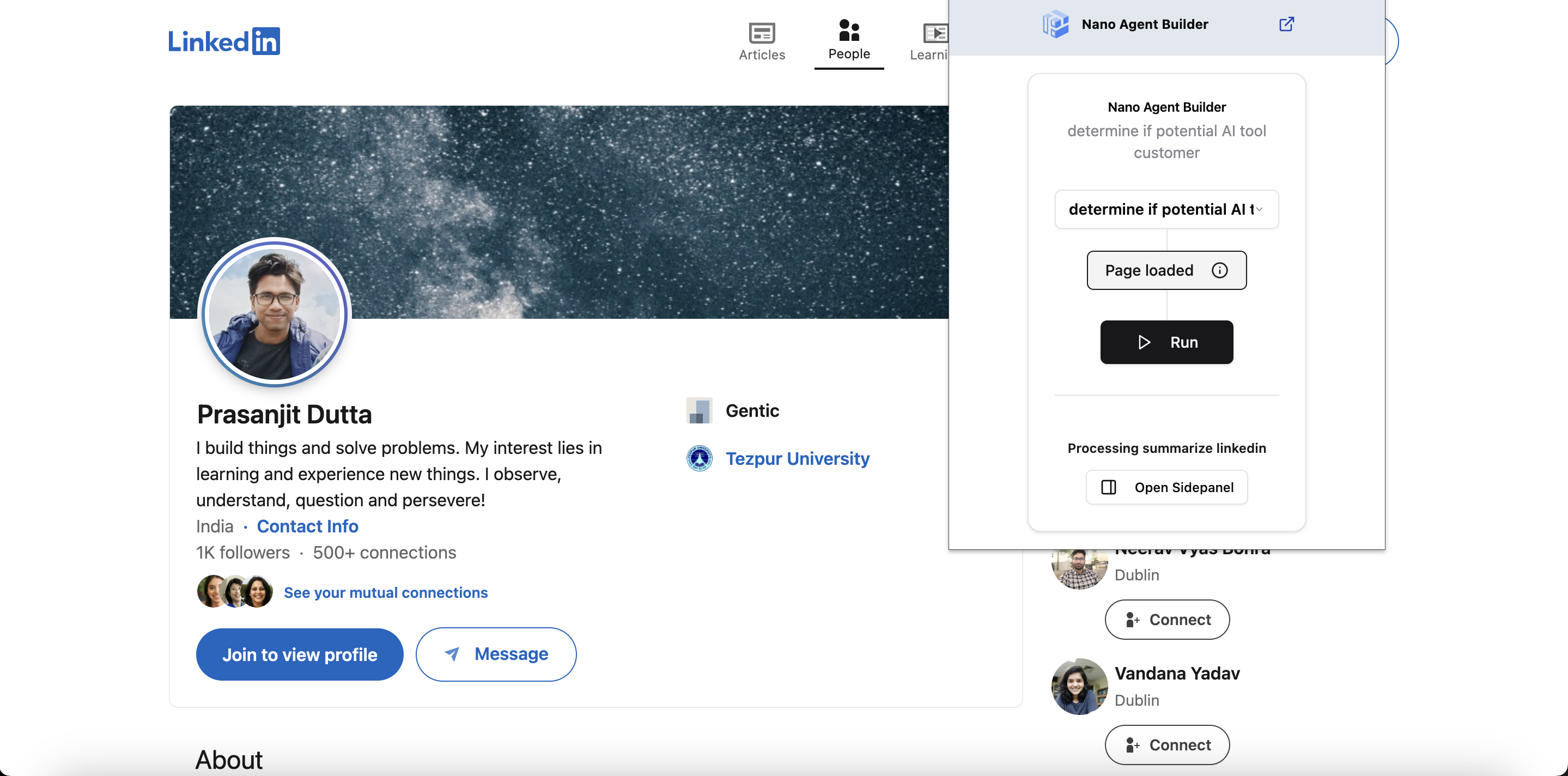
Select a workflow, scrape a page and run the workflow
-
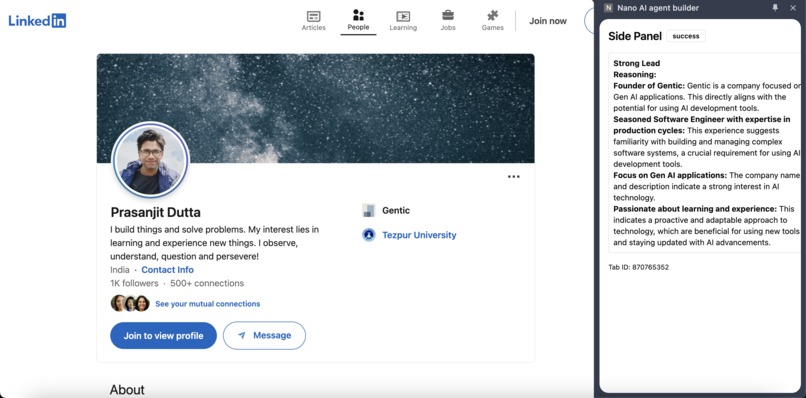
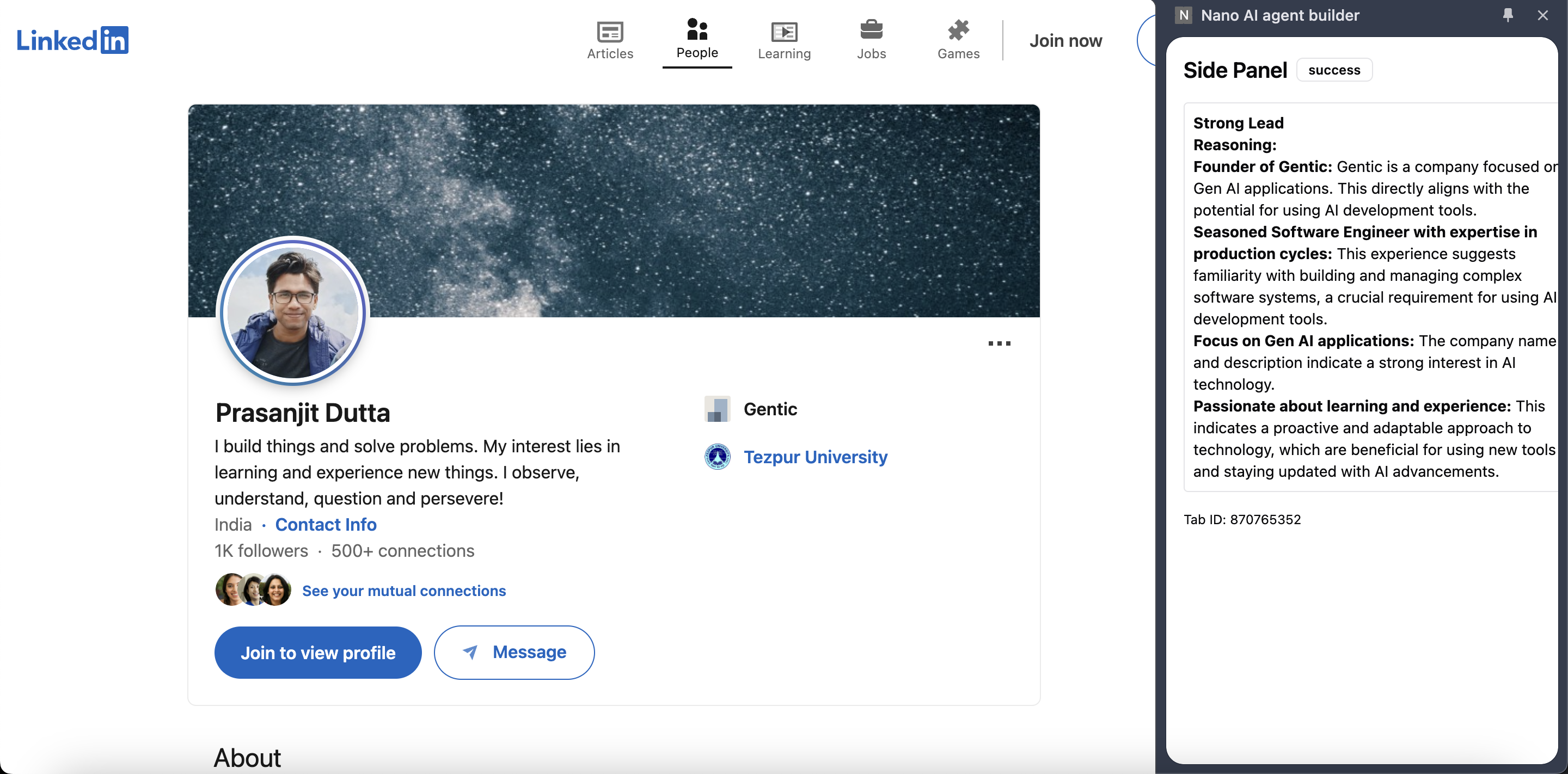
Get the AI workflow generated result in side panel
Inspiration/ Problem it is solving
Managing repetitive tasks while ensuring privacy and cost-effectiveness has become a major challenge. Also, running AI automation tasks can incur costs and it can be a topic of concern for some people to let private data ingested into AI models in control of enterprises. Besides, Chrome's built-in AI can be of some help for simple tasks. But for complex tasks, accuracy as well as context length can prevent the desired goal from being achieved.
What it does
Nano Agent Builder is a Chrome extension that enables users to design and execute custom workflows. These workflows leverage chrome's built-in AI for task automation directly within browsers. Users can automate tasks like Crafting a personalized cold message out of someone's LinkedIn page, summarize a page, do sentiment analysis on a message and many more. It processes everything locally, without relying on cloud-based processing or incurring high costs ensuring complete privacy and eliminating dependency on cloud services.
Features
- Create workflows with drag and drop. That suite your automation use case
- Scrape web page
- Pre-defined nodes/functionality - a. Summarize b. Write c. Categorize d. Sentiment Analysis e. Custom AI call f. Filter the user can use the combination of above nodes or a subset of it to create any automation they want!
How to use
- In the extension, open the builder page.
- create a linear workflow (as only linear workflows are supported for the time being).
- Now go the page which you want to pass through the workflow.
- Click on the extension icon.
- Now select a workflow, load the page and then click on 'run'.
- Once done you can see the result in side panel.
How we built it
The extension was developed using React and Chrome's extension API. For AI capabilities, we utilized the browser's built-in AI functions. To ensure offline processing, we implemented data storage in local storage. For the workflow builder, we used reactflow library. When the workflow is saved it is saved as a graph. This graph is processed node by node with a BFS algorithm. At each step the output from the previous is received as additional context. And the node's own data along with the context is used to generate the output. Which is then passed on to the next node as an output.
Challenges we ran into
- Creating a user-friendly interface that caters to both tech-savvy and non-technical users.
- Graph processing
- Message sync between the background worker process and the frontend.
Accomplishments that we're proud of
- Successfully built a tool that processes tasks entirely offline, prioritizing user privacy.
- Developed a highly customizable workflow builder that is intuitive and efficient.
- Made task automation accessible at zero cost, breaking barriers for non-technical users.
- Learned and implemented chrome APIs within a week!
What we learned
- The importance of balancing performance and functionality in local processing.
- Using chrome's API
- Exposure to Chrome's built-in AI API
What's next for Nano Agent Builder
- Expanding the library of pre-built workflows for common tasks.
- Allowing more type of nodes like - if nodes, GET api call, etc
- Making it more robust with better graph processing allowing for loops and multiple branches
Limitations
- It can only process linear workflows as of now
Built With
- chrome
- react
- tailwind
- typescript
- vite


Log in or sign up for Devpost to join the conversation.