Inspiration
Mert, one of us, lives in Munich and has a car. On weekdays he doesn't use it, and at Christmas he flies home to Turkey for three weeks while it stays parked on his street. He isn't unusual. In Germany about one in two cars doesn't move at all on an average day, and the average car is driven only 42 minutes a day (Mobilität in Deutschland 2023). There are 49.5 million cars in Germany (KBA, January 2026), and most of them stand still most of the time.
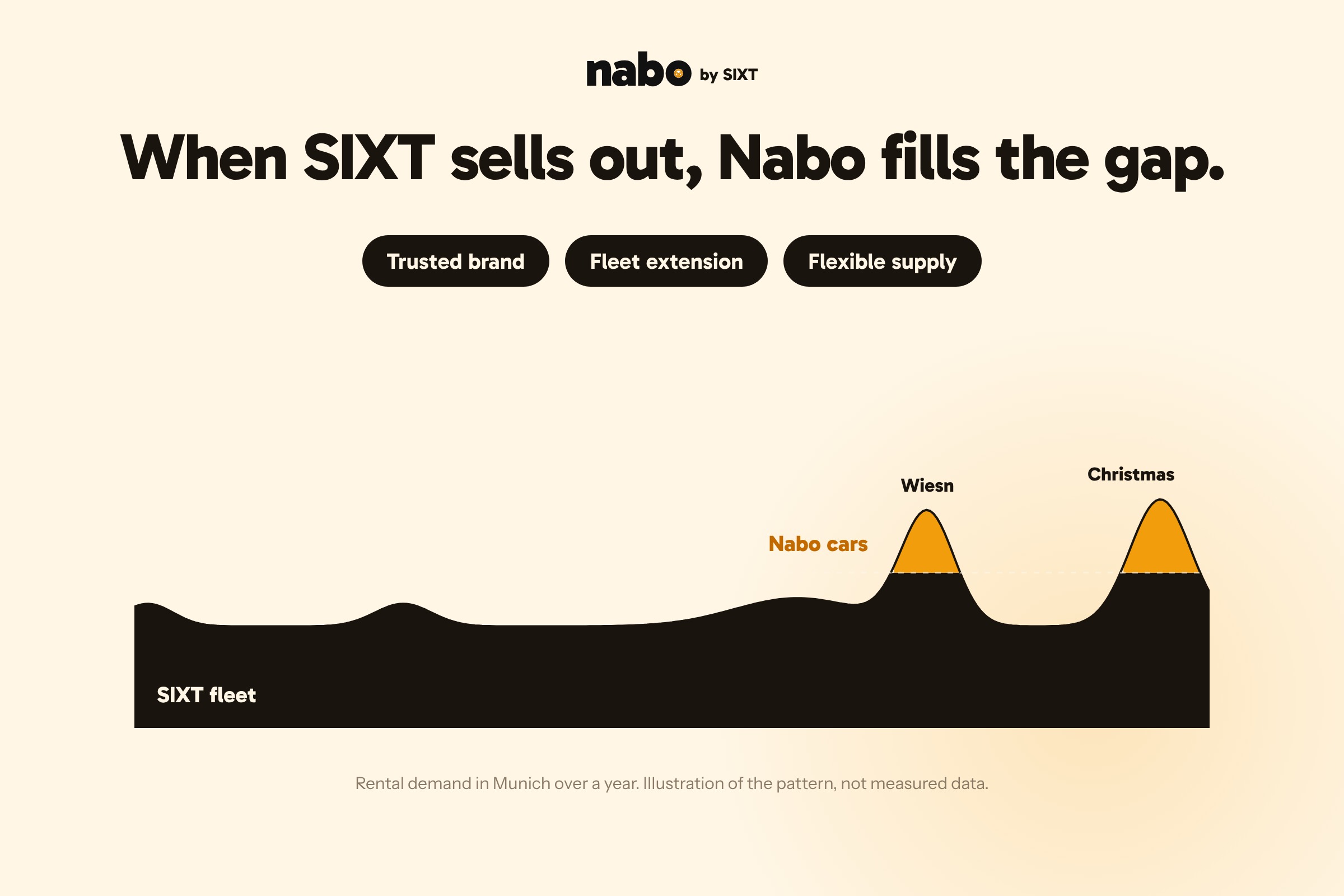
Homes went through this years ago: people started renting out their flat while they travel. Car rental never did. A rental company can only rent the cars it owns, so its supply is fixed, and it runs out exactly when demand peaks, at Wiesn or at Christmas.
What it does
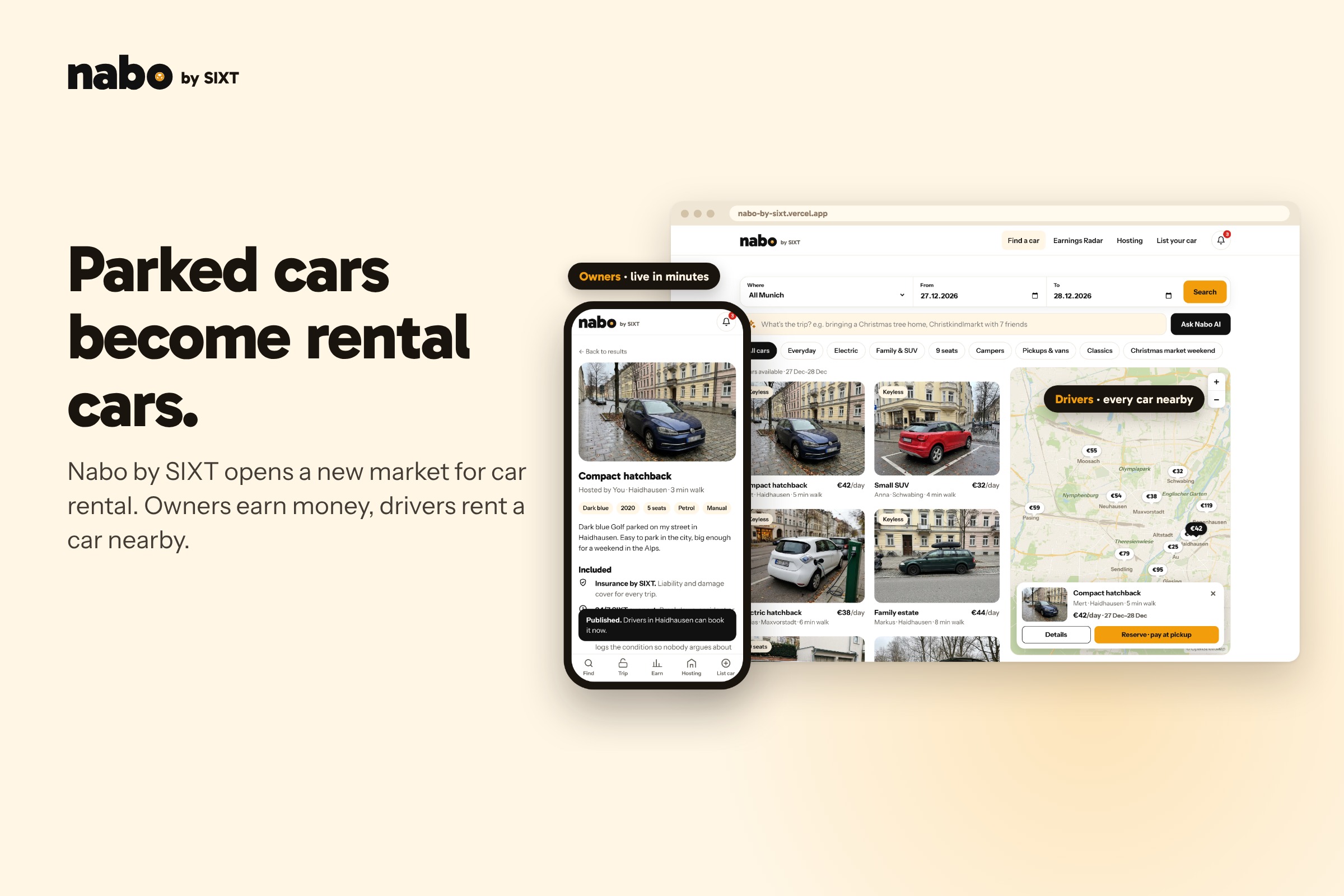
Nabo by SIXT opens a new market for car rental by changing where the supply comes from. Idle private cars become rental cars: owners earn money, drivers rent nearby, and SIXT gets cars it doesn't own.
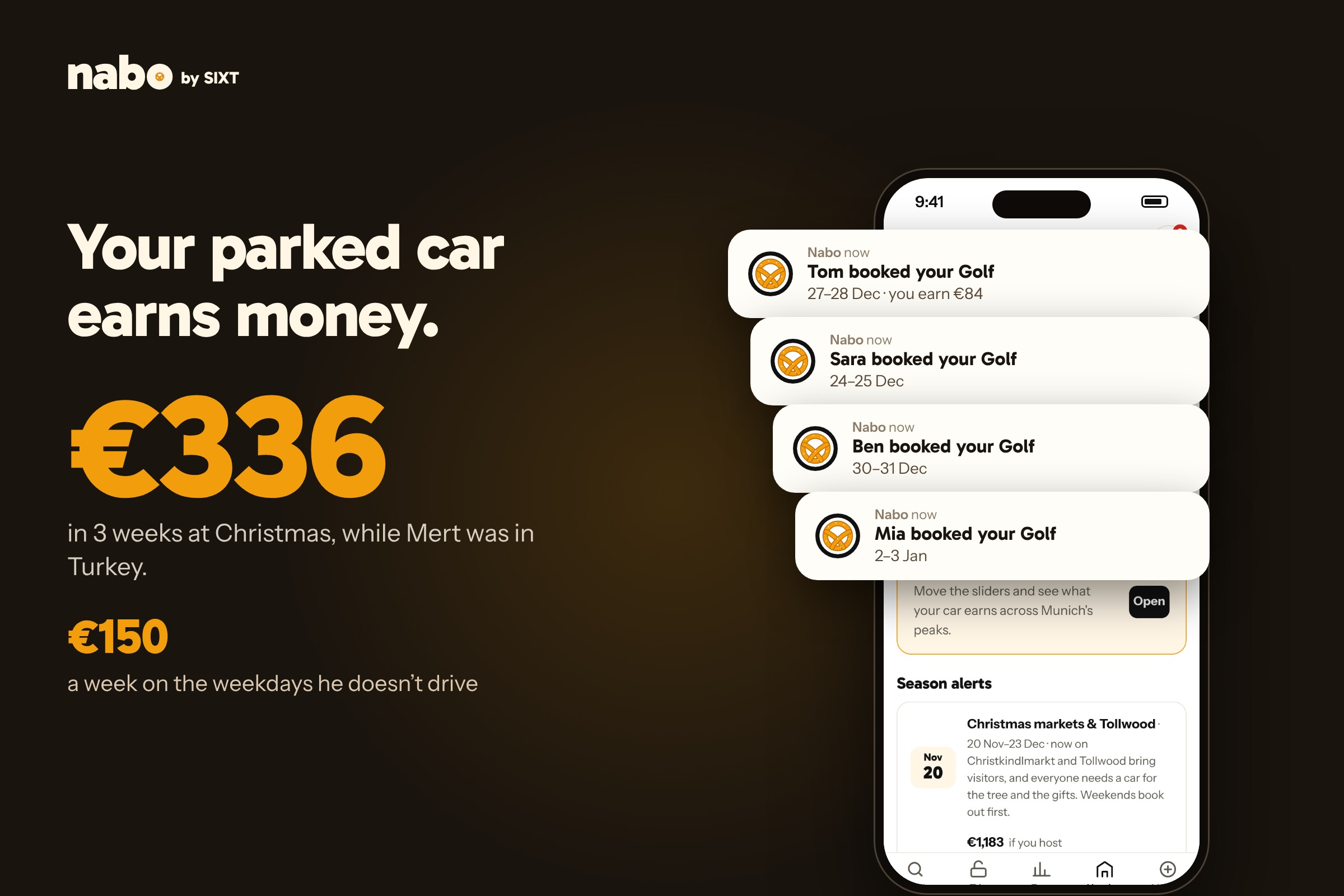
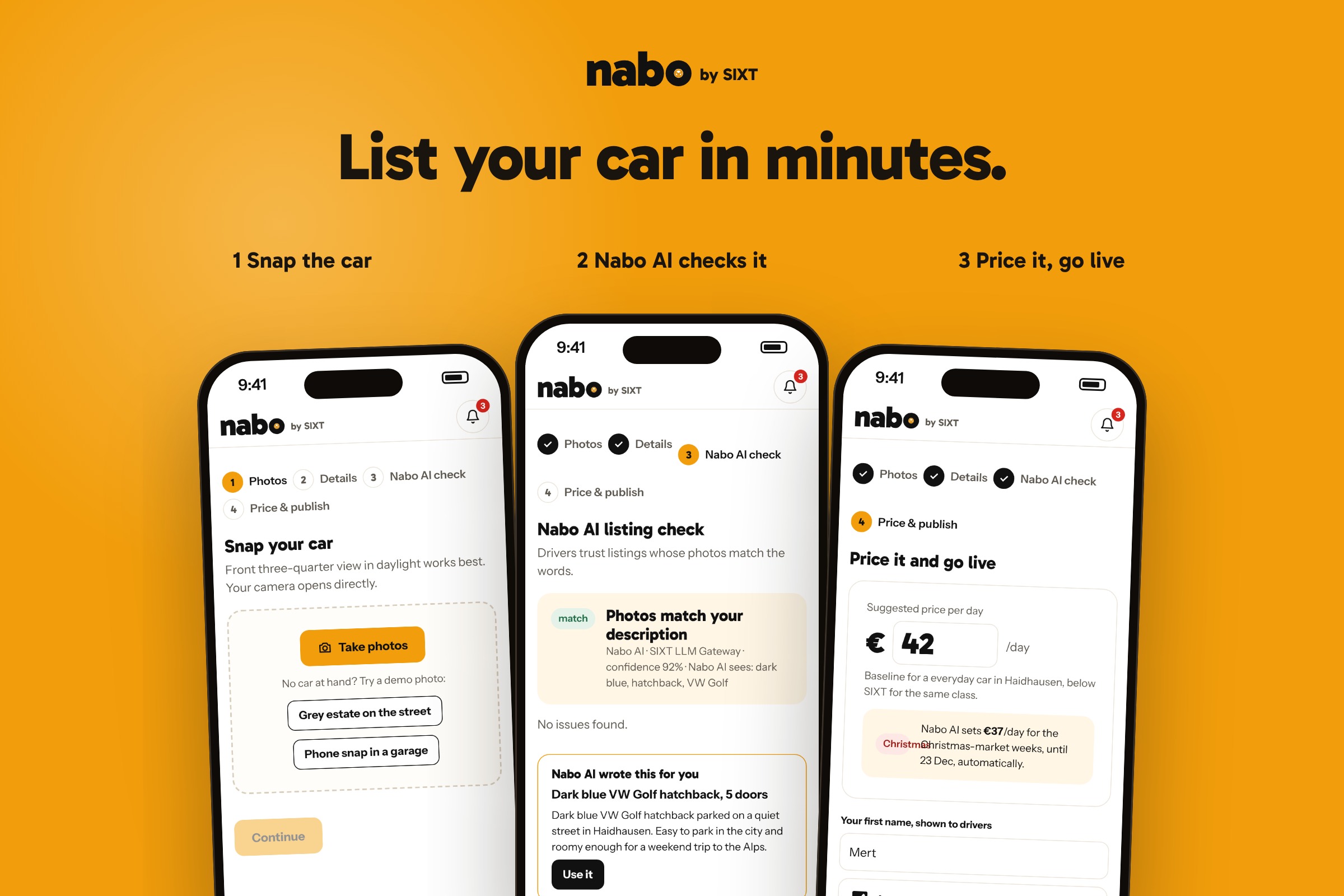
Owners list a car from their phone in a few minutes. They take photos and describe the car, and Nabo AI checks that the photos match the description and writes the listing text. It suggests a day price, and Earnings Radar raises it for Munich's peaks: the Christmas markets, Wiesn, trade fairs and school holidays. Owners pick the days, can pause at any time and keep 75% of the price. By the Earnings Radar estimate, Mert's Golf would earn about €150 a week on the weekdays he doesn't drive and €336 over his three weeks in Turkey.
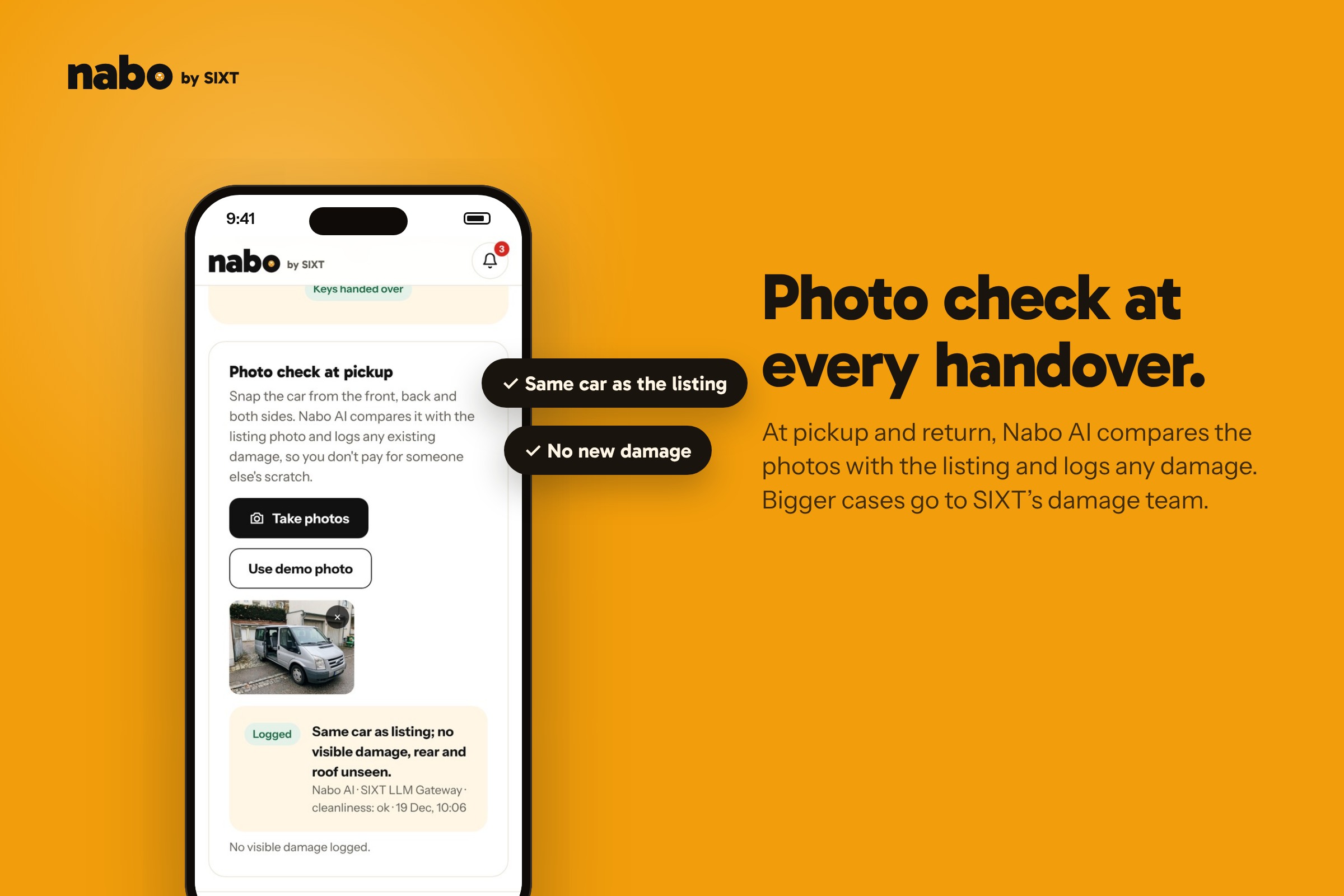
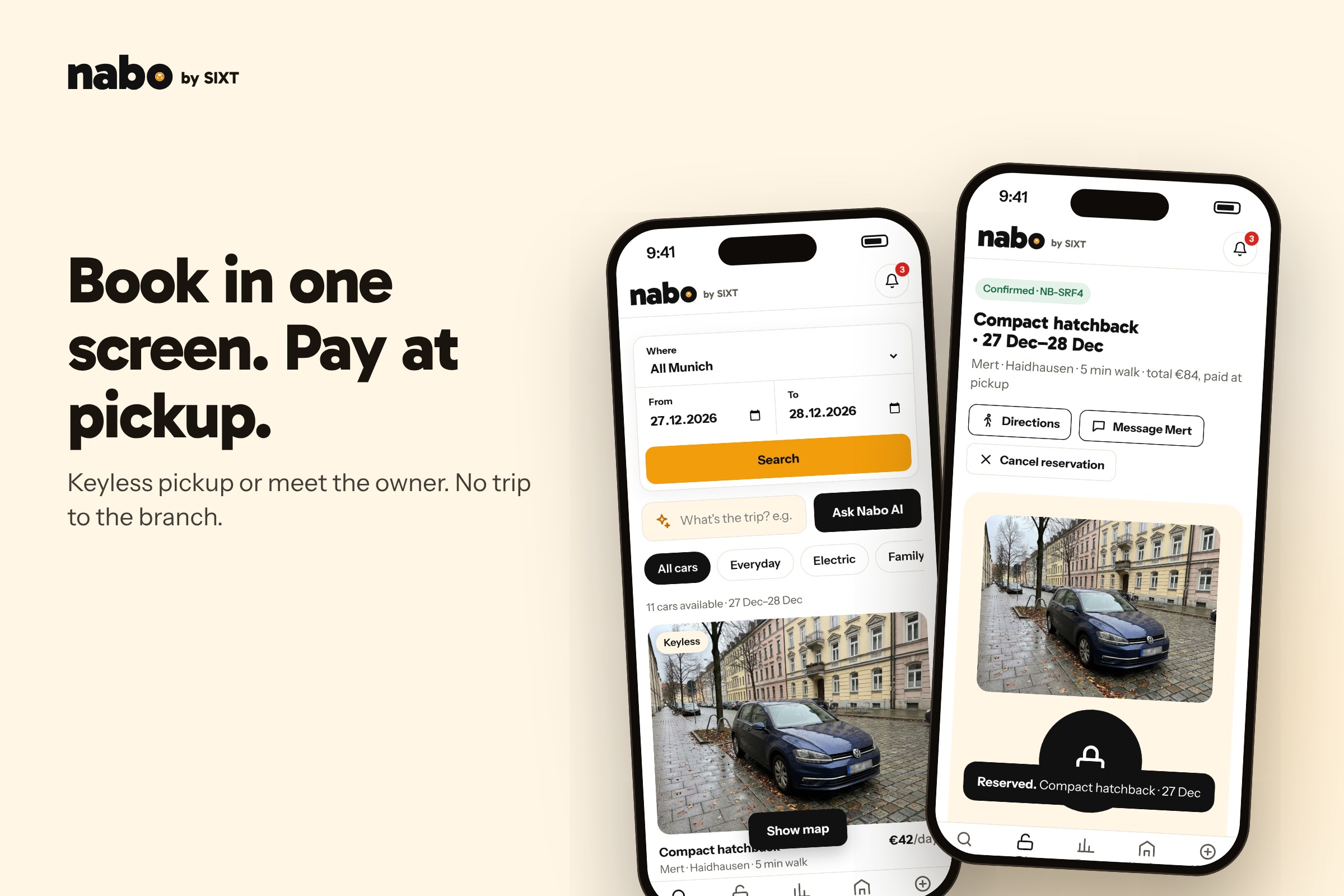
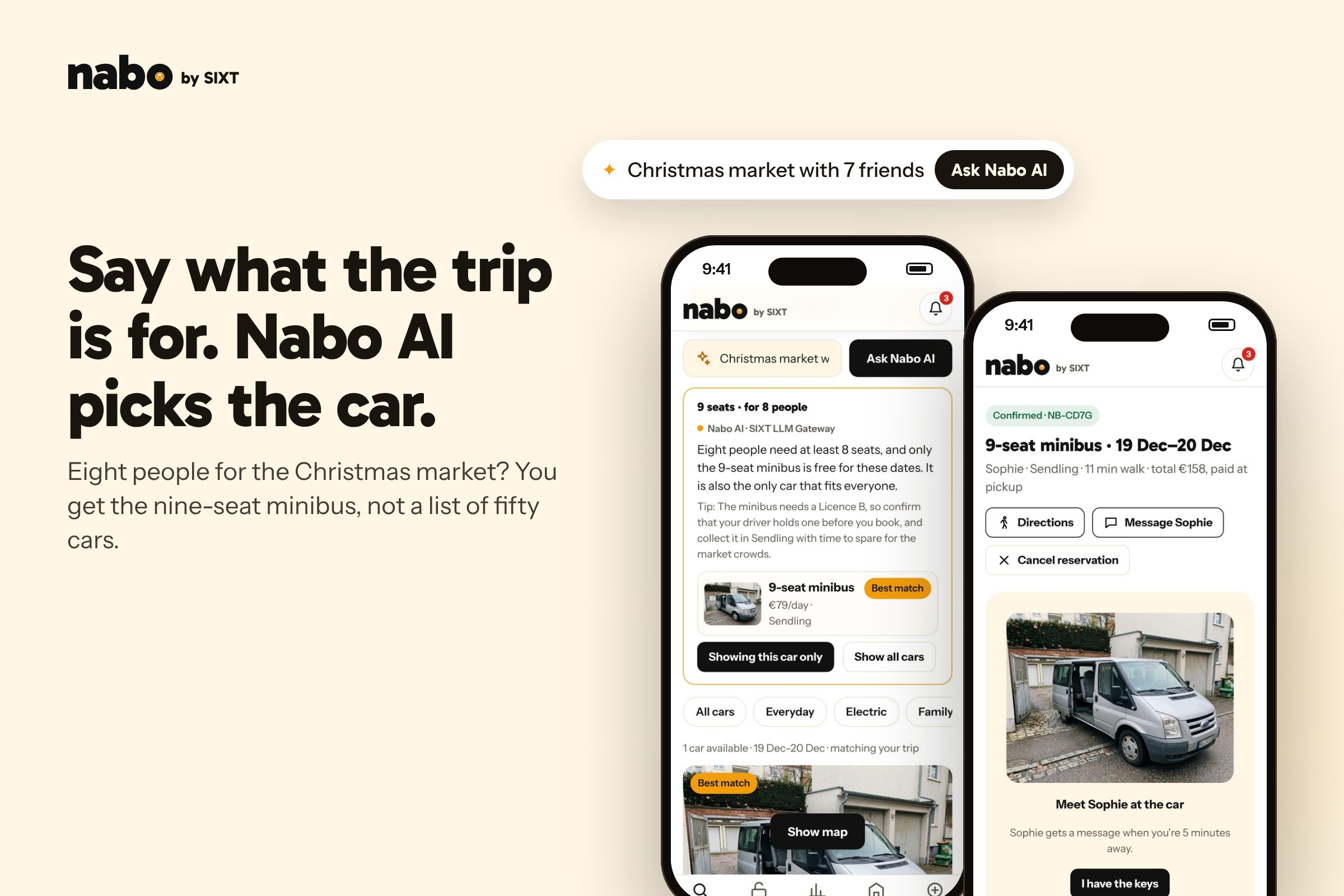
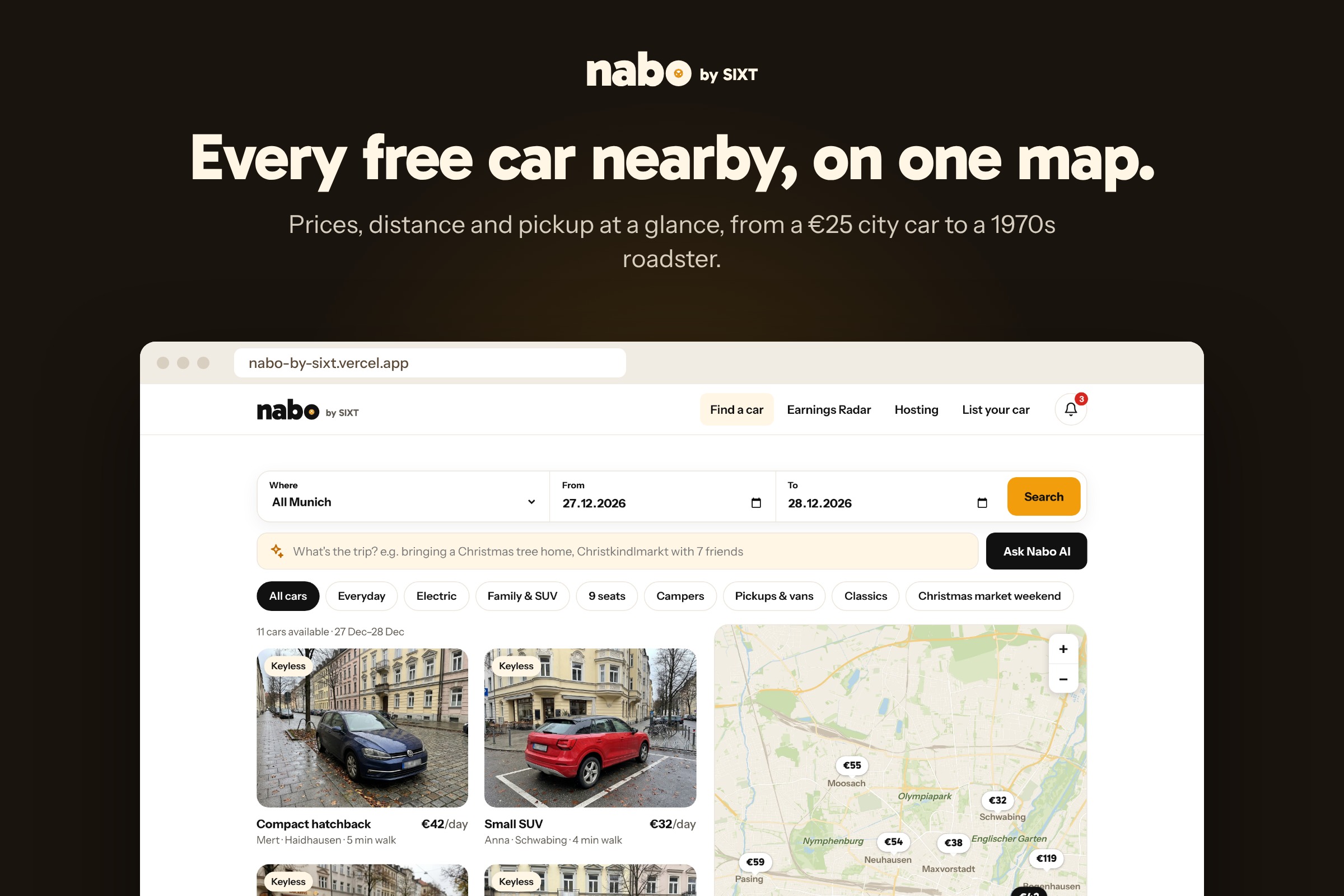
Drivers see every free car nearby on one map, from a €25 city car to a nine-seat minibus or a 1970s roadster. They can type what the trip is for ("Christkindlmarkt with 7 friends") and Ask Nabo AI picks the right car. Booking takes one screen, and they pay at pickup. At pickup and at return, Nabo AI compares new photos with the listing and logs any damage.
Why SIXT
People lend and rent because SIXT is behind it. Nabo extends the SIXT fleet with cars SIXT doesn't own, like a minibus for a group trip or three classic cars for a graduation. When a branch sells out at Wiesn or Christmas, cars from the neighbourhood fill the gap. The app also shows which SIXT cars are free at Munich Hauptbahnhof for the same dates.
How we built it
Nabo is one responsive web app in plain JavaScript that works on phones and desktops and installs like an app. It runs on Vercel with serverless functions. Every Nabo AI step (trip matching, listing check, price suggestions, photo checks and the host's chat replies) runs on the SIXT LLM Gateway with claude-haiku-5.5, called from the server so the key never reaches the browser. SIXT availability comes live from the hackathon's SIXT MCP server. Listings, bookings and chats are stored in Upstash Redis, so a car listed on one phone shows up on every other device. Earnings Radar uses the real dates of the Christkindlmarkt, Tollwood, Wiesn, the Messe München fairs and the Bavarian school holidays.
Challenges we ran into
The hardest question was trust. A UC Berkeley study found that only about one in four car owners would share their car, and liability and trust hold the rest back. That's why the SIXT name, photo checks at every handover and the owner's own calendar are part of the first version.
On the technical side, the SIXT MCP stage server returns test prices, so the app shows which SIXT models are free and leaves out their prices. We also keep the gateway at about one call per second to stay under the 60 requests a minute limit.
What's next for Nabo by SIXT
A Nabo option on sixt.de that shows neighbours' cars next to SIXT's own, starting in Munich.
Built With
- claude
- css3
- html5
- javascript
- mcp
- nextjs
- node.js
- openstreetmap
- pwa
- redis
- serverless
- sixt-llm-gateway
- supabase
- tailwind
- typescript
- upstash
- vercel
